

Introduction to Beer
 |
Description
Book Introduction
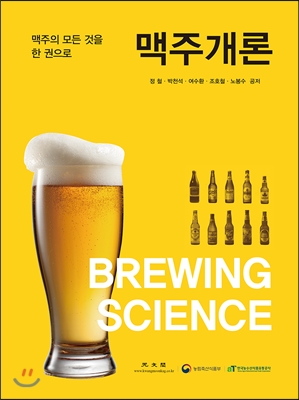
This book was written with a focus on writing a beer book that combines theory and practice, taking into account the lack of specialized books on beer in Korea.
And, it covers a wide range of topics, including raw materials, processing technology, and quality control, so that the brewing theory and technology of beer can be applied not only in the beer industry but also in traditional liquor and other types of alcoholic beverages.
And, it covers a wide range of topics, including raw materials, processing technology, and quality control, so that the brewing theory and technology of beer can be applied not only in the beer industry but also in traditional liquor and other types of alcoholic beverages.
index
preface
Ⅰ.
The Evolution of Beer Brewing
01 Origin of Beer 1.
Etymology of beer ㆍ 2.
The Birth of Beer ㆍ 3.
Beer in the Greek and Roman Era ㆍ 4.
Beer of the Ancient Germanic Peoples ㆍ 5.
Beer blessed by God ㆍ 6.
The Dazzling Development of German Beer ㆍ 7.
Ale of Ancient England ㆍ 8.
The Birth of Bottom-Fermented Beerㆍ9.
The Myth of Pilsen Beer ㆍ 10.
Invention of the refrigerator ㆍ 11.
Pure culture and low-temperature sterilization of yeast ㆍ 12.
The golden age of lager
02 History of beer brewing in Korea
03 Current Status of the Domestic and International Beer Industry
Ⅱ.
Malt manufacturing process
01 Beer Barley 1.
Barley varieties ㆍ 2.
Current status of barley cultivation ㆍ 3.
Barley form ㆍ 4.
Chemical composition of barley
02 Preparation of barley malt 1.
Barley Evaluation ㆍ 2.
Purification and storage of barley
03 Malt Manufacturing Practice 1.
Barley Soaking ㆍ 2.
Barley germination ㆍ 3.
Germination method
04 Malt fermentation 1.
Changes during the fermentation process ㆍ 2.
The practice of arranging ㆍ 3.
Management of the ship
05 Malt management after fermentation 1.
Cooling of malt ㆍ 2.
Malt processing and purification ㆍ 3.
Storage of malt ㆍ 4.
Malt refinement
06 Loss of ingredients during the barley processing
07 Malt Evaluation 1.
Appearance Evaluation ㆍ 2.
Mechanical inspection ㆍ 3.
chemical method
08 Types and characteristics of malt 1.
Dark malt ㆍ 2.
Dark malt ㆍ 3.
Vienna Malt ㆍ 4.
Brew malt or melanoidin malt ㆍ 5.
Caramel Malt ㆍ 6.
Acidic malt ㆍ 7.
Single-sprouted malt and sprouted malt ㆍ 8.
Smoked Malt ㆍ 9.
Diastase Malt ㆍ 10.
Roasted malt ㆍ 11.
Wheat malt ㆍ 12.
Wort concentrate ㆍ 13.
Malt made from other grains ㆍ 14.
Physicochemical properties of malt by type
Ⅲ.
Wort manufacturing process
01 Raw Materials 1.
Malt ㆍ 2.
Malt substitute raw material ㆍ 3.
Brewing water ㆍ 4.
hop
02 Malt grinding 1.
Crushing method ㆍ 2.
Composition and characteristics of the crushed material
03 Pickling 1.
Pickling theory ㆍ 2.
Pickling Practice ㆍ 3.
Pickling method
04 Filtration of wort 1.
Wort filtration tank ㆍ 2.
Wort filtration practice
05 Composition and preparation of wort 1.
Dissolution and transformation of hop components ㆍ 2.
Protein precipitation ㆍ 3.
Moisture evaporation ㆍ 4.
Wort sterilization ㆍ 5.
Enzyme inactivity ㆍ 6.
Aroma components and color changes in wort ㆍ 7.
Acidification of wort ㆍ 8.
Volatilization of unpleasant aroma components ㆍ 9.
Wheat self-sufficiency ㆍ 10.
Wort mercy practice
06 Wort yield
07 Composition of wort production equipment
08 Whirlpool
09 Cooling and clarification of wort 1.
Cooling the wort ㆍ 2.
Oxygen supply
Ⅳ.
fermentation process
01 Overview of Yeast 1.
Yeast morphology ㆍ 2.
Yeast composition ㆍ 3.
Yeast enzyme ㆍ 4.
Yeast growth and physiology ㆍ 5.
Yeast coagulation ㆍ 6.
Types of yeast and fermentation characteristics
02 Yeast metabolism 1.
Carbohydrate metabolism of yeast ㆍ 2.
Protein metabolism of yeast ㆍ 3.
Fat metabolism in yeast ㆍ 4.
Mineral and vitamin metabolism in yeast
03 Fermentation by-product 1.
High-grade alcohol ㆍ 2.
Esther ㆍ 3.
Aldehyde ㆍ 4.
Organic acids ㆍ 5.
Low molecular weight free fatty acids ㆍ 6.
Diacetyl ㆍ 7.
sulfur compounds
04 Practice of yeast 1.
Yeast selection ㆍ 2.
Yeast cultivation ㆍ 3.
Yeast activity
05 Detailed process of fermentation 1.
Adding yeast ㆍ 2.
Fermentation process ㆍ 3.
Fermentation degree ㆍ 4.
Changes in ingredients during fermentation ㆍ 5.
Beer transport
06 Beer Maturation? Storage 1. Structure and shape of CCT ㆍ 2. Structure of CCT ㆍ 3. Internal components of CCT
07 Fermentation and Maturation Practice 1.
Low-temperature fermentation-low-temperature maturation ㆍ 2.
Low temperature fermentation - high temperature maturation ㆍ 3.
High temperature fermentation - high temperature maturation ㆍ 4.
Yeast recovery and washing ㆍ 5.
Yeast degeneration ㆍ 6.
Beer recovery process from yeast ㆍ 7. CO2 recovery
V.
beer filtration
01 Filtration Theory
02 Filtration Aid
03 Filtration process 1.
Sheet filter filter ㆍ 2.
Powder filter ㆍ ?3.
Membrane filter ㆍ 4.
Carbonation
Ⅵ.
beer infusion process
01 Keg Injection Room 1.
Keg ㆍ 2.
Keg Washing ㆍ 3.
Keg Injection ㆍ 4.
Cleaning and filling practices for cylindrical metal kegs
02 Bottle and can filling room 1.
Courage ㆍ 2.
Bottle washing ㆍ 3.
Bottle injection ㆍ 4.
Cleaning and sterilization of the injector ㆍ 5.
The Battle of the Bottle ㆍ 6.
Dissolution of oxygen after injection ㆍ 7. PET injection
03 Low-temperature pasteurization and sterilization injection of beer 1.
Sterile injection ㆍ 2.
Low temperature sterilization ㆍ 3.
beer loss
Ⅶ.
Cleaning and disinfection
01? Equipment materials and cleaning
02?Detergent
03? Disinfectant
04? Cleaning and disinfection practices
Ⅷ. Beer quality control and special beers
01 Beer composition ingredients 1.
X-part of beer ㆍ 2.
Volatile components
02 Classification of Beer
03 Characteristics of beer 1.
General characteristics ㆍ 2.
Oxidation-reduction potential of beer ㆍ 3.
Color of beer
04 Taste of Beer 1.
Taste characteristics ㆍ 2.
Factors affecting beer taste ㆍ 3.
Beer's taste? Off-flavor ㆍ 4.
The body of the beer
05 Beer foam 1.
Bubble Theory ㆍ 2.
Technical factors affecting beer foam
06 Physicochemical stability of beer 1.
Composition of colloidal turbidity ㆍ 2.
Formation of colloidal turbidity ㆍ 3.
Technical methods for improving colloidal stability ㆍ 4.
Stabilization of beer ㆍ 5.
Beer flavor stability ㆍ 6.
Chemical turbidity ㆍ 7.
The beer's gusher
07 Filtration of beer 1.
Reasons for poor beer filterability ㆍ 2.
How to improve
08 Biological stability of beer 1.
Cause of pollution ㆍ 2.
Physiological characteristics of brewer's yeast and wild yeast ㆍ 3.
Beer contaminant bacteria
09 Physiological effects of beer
10 Special Beers 1.
Diet Beer ㆍ 2.
Nutrition Beer ㆍ 3.
Non-alcoholic beer ㆍ 4.
Alcohol concentration reduction method ㆍ 5.
Physical alcohol removal methods ㆍ 6.
light beer
Ⅸ.? Top fermentation
01 Overview
02 Morphological and physiological characteristics of yeast
03 Top fermentation process 1.
Changes in wort during top fermentation ㆍ 2.
Maturation and storage ㆍ 3.
Filtration and injection
04 Types and manufacturing methods of top-fermented beer 1.
Altbier ㆍ 2.
Quesh ㆍ 3.
Yeast-free wheat beer ㆍ 4.
Wheat beer containing yeast ㆍ 5.
Berlin Weissbier ㆍ 6.
malt beer
Ⅹ.
High-concentration wort manufacturing method
01 Production of high-concentration wort
02 Fermentation and dilution of high-concentration wort
03 Characteristics of beer
?.
Beer sensory evaluation practice
01 Indicators of sensory evaluation
02 Professional Panel Tasting Training
03 How to determine the off-flavor of beer
?.
Beer Quality Abnormalities and How to Deal with Them
XIII.
Beer brewing process diagram (example)
XIV.
small-scale brewing
01 Definition of microbrewery
02? Characteristics of small-scale brewing beer
supplement
1.
Pilsner Beer Recipe (Example) for Small Brew Brewing ㆍ 2.
Wheat beer recipe for small-batch brewing (example) ㆍ 3.
Other Top-Fermented Beer Recipes (Examples) ㆍ 4.
Other bottom-fermented beer recipes (examples) and references
index
Ⅰ.
The Evolution of Beer Brewing
01 Origin of Beer 1.
Etymology of beer ㆍ 2.
The Birth of Beer ㆍ 3.
Beer in the Greek and Roman Era ㆍ 4.
Beer of the Ancient Germanic Peoples ㆍ 5.
Beer blessed by God ㆍ 6.
The Dazzling Development of German Beer ㆍ 7.
Ale of Ancient England ㆍ 8.
The Birth of Bottom-Fermented Beerㆍ9.
The Myth of Pilsen Beer ㆍ 10.
Invention of the refrigerator ㆍ 11.
Pure culture and low-temperature sterilization of yeast ㆍ 12.
The golden age of lager
02 History of beer brewing in Korea
03 Current Status of the Domestic and International Beer Industry
Ⅱ.
Malt manufacturing process
01 Beer Barley 1.
Barley varieties ㆍ 2.
Current status of barley cultivation ㆍ 3.
Barley form ㆍ 4.
Chemical composition of barley
02 Preparation of barley malt 1.
Barley Evaluation ㆍ 2.
Purification and storage of barley
03 Malt Manufacturing Practice 1.
Barley Soaking ㆍ 2.
Barley germination ㆍ 3.
Germination method
04 Malt fermentation 1.
Changes during the fermentation process ㆍ 2.
The practice of arranging ㆍ 3.
Management of the ship
05 Malt management after fermentation 1.
Cooling of malt ㆍ 2.
Malt processing and purification ㆍ 3.
Storage of malt ㆍ 4.
Malt refinement
06 Loss of ingredients during the barley processing
07 Malt Evaluation 1.
Appearance Evaluation ㆍ 2.
Mechanical inspection ㆍ 3.
chemical method
08 Types and characteristics of malt 1.
Dark malt ㆍ 2.
Dark malt ㆍ 3.
Vienna Malt ㆍ 4.
Brew malt or melanoidin malt ㆍ 5.
Caramel Malt ㆍ 6.
Acidic malt ㆍ 7.
Single-sprouted malt and sprouted malt ㆍ 8.
Smoked Malt ㆍ 9.
Diastase Malt ㆍ 10.
Roasted malt ㆍ 11.
Wheat malt ㆍ 12.
Wort concentrate ㆍ 13.
Malt made from other grains ㆍ 14.
Physicochemical properties of malt by type
Ⅲ.
Wort manufacturing process
01 Raw Materials 1.
Malt ㆍ 2.
Malt substitute raw material ㆍ 3.
Brewing water ㆍ 4.
hop
02 Malt grinding 1.
Crushing method ㆍ 2.
Composition and characteristics of the crushed material
03 Pickling 1.
Pickling theory ㆍ 2.
Pickling Practice ㆍ 3.
Pickling method
04 Filtration of wort 1.
Wort filtration tank ㆍ 2.
Wort filtration practice
05 Composition and preparation of wort 1.
Dissolution and transformation of hop components ㆍ 2.
Protein precipitation ㆍ 3.
Moisture evaporation ㆍ 4.
Wort sterilization ㆍ 5.
Enzyme inactivity ㆍ 6.
Aroma components and color changes in wort ㆍ 7.
Acidification of wort ㆍ 8.
Volatilization of unpleasant aroma components ㆍ 9.
Wheat self-sufficiency ㆍ 10.
Wort mercy practice
06 Wort yield
07 Composition of wort production equipment
08 Whirlpool
09 Cooling and clarification of wort 1.
Cooling the wort ㆍ 2.
Oxygen supply
Ⅳ.
fermentation process
01 Overview of Yeast 1.
Yeast morphology ㆍ 2.
Yeast composition ㆍ 3.
Yeast enzyme ㆍ 4.
Yeast growth and physiology ㆍ 5.
Yeast coagulation ㆍ 6.
Types of yeast and fermentation characteristics
02 Yeast metabolism 1.
Carbohydrate metabolism of yeast ㆍ 2.
Protein metabolism of yeast ㆍ 3.
Fat metabolism in yeast ㆍ 4.
Mineral and vitamin metabolism in yeast
03 Fermentation by-product 1.
High-grade alcohol ㆍ 2.
Esther ㆍ 3.
Aldehyde ㆍ 4.
Organic acids ㆍ 5.
Low molecular weight free fatty acids ㆍ 6.
Diacetyl ㆍ 7.
sulfur compounds
04 Practice of yeast 1.
Yeast selection ㆍ 2.
Yeast cultivation ㆍ 3.
Yeast activity
05 Detailed process of fermentation 1.
Adding yeast ㆍ 2.
Fermentation process ㆍ 3.
Fermentation degree ㆍ 4.
Changes in ingredients during fermentation ㆍ 5.
Beer transport
06 Beer Maturation? Storage 1. Structure and shape of CCT ㆍ 2. Structure of CCT ㆍ 3. Internal components of CCT
07 Fermentation and Maturation Practice 1.
Low-temperature fermentation-low-temperature maturation ㆍ 2.
Low temperature fermentation - high temperature maturation ㆍ 3.
High temperature fermentation - high temperature maturation ㆍ 4.
Yeast recovery and washing ㆍ 5.
Yeast degeneration ㆍ 6.
Beer recovery process from yeast ㆍ 7. CO2 recovery
V.
beer filtration
01 Filtration Theory
02 Filtration Aid
03 Filtration process 1.
Sheet filter filter ㆍ 2.
Powder filter ㆍ ?3.
Membrane filter ㆍ 4.
Carbonation
Ⅵ.
beer infusion process
01 Keg Injection Room 1.
Keg ㆍ 2.
Keg Washing ㆍ 3.
Keg Injection ㆍ 4.
Cleaning and filling practices for cylindrical metal kegs
02 Bottle and can filling room 1.
Courage ㆍ 2.
Bottle washing ㆍ 3.
Bottle injection ㆍ 4.
Cleaning and sterilization of the injector ㆍ 5.
The Battle of the Bottle ㆍ 6.
Dissolution of oxygen after injection ㆍ 7. PET injection
03 Low-temperature pasteurization and sterilization injection of beer 1.
Sterile injection ㆍ 2.
Low temperature sterilization ㆍ 3.
beer loss
Ⅶ.
Cleaning and disinfection
01? Equipment materials and cleaning
02?Detergent
03? Disinfectant
04? Cleaning and disinfection practices
Ⅷ. Beer quality control and special beers
01 Beer composition ingredients 1.
X-part of beer ㆍ 2.
Volatile components
02 Classification of Beer
03 Characteristics of beer 1.
General characteristics ㆍ 2.
Oxidation-reduction potential of beer ㆍ 3.
Color of beer
04 Taste of Beer 1.
Taste characteristics ㆍ 2.
Factors affecting beer taste ㆍ 3.
Beer's taste? Off-flavor ㆍ 4.
The body of the beer
05 Beer foam 1.
Bubble Theory ㆍ 2.
Technical factors affecting beer foam
06 Physicochemical stability of beer 1.
Composition of colloidal turbidity ㆍ 2.
Formation of colloidal turbidity ㆍ 3.
Technical methods for improving colloidal stability ㆍ 4.
Stabilization of beer ㆍ 5.
Beer flavor stability ㆍ 6.
Chemical turbidity ㆍ 7.
The beer's gusher
07 Filtration of beer 1.
Reasons for poor beer filterability ㆍ 2.
How to improve
08 Biological stability of beer 1.
Cause of pollution ㆍ 2.
Physiological characteristics of brewer's yeast and wild yeast ㆍ 3.
Beer contaminant bacteria
09 Physiological effects of beer
10 Special Beers 1.
Diet Beer ㆍ 2.
Nutrition Beer ㆍ 3.
Non-alcoholic beer ㆍ 4.
Alcohol concentration reduction method ㆍ 5.
Physical alcohol removal methods ㆍ 6.
light beer
Ⅸ.? Top fermentation
01 Overview
02 Morphological and physiological characteristics of yeast
03 Top fermentation process 1.
Changes in wort during top fermentation ㆍ 2.
Maturation and storage ㆍ 3.
Filtration and injection
04 Types and manufacturing methods of top-fermented beer 1.
Altbier ㆍ 2.
Quesh ㆍ 3.
Yeast-free wheat beer ㆍ 4.
Wheat beer containing yeast ㆍ 5.
Berlin Weissbier ㆍ 6.
malt beer
Ⅹ.
High-concentration wort manufacturing method
01 Production of high-concentration wort
02 Fermentation and dilution of high-concentration wort
03 Characteristics of beer
?.
Beer sensory evaluation practice
01 Indicators of sensory evaluation
02 Professional Panel Tasting Training
03 How to determine the off-flavor of beer
?.
Beer Quality Abnormalities and How to Deal with Them
XIII.
Beer brewing process diagram (example)
XIV.
small-scale brewing
01 Definition of microbrewery
02? Characteristics of small-scale brewing beer
supplement
1.
Pilsner Beer Recipe (Example) for Small Brew Brewing ㆍ 2.
Wheat beer recipe for small-batch brewing (example) ㆍ 3.
Other Top-Fermented Beer Recipes (Examples) ㆍ 4.
Other bottom-fermented beer recipes (examples) and references
index
Publisher's Review
Beer is a low-alcohol fermented beverage and is the most popular alcoholic beverage in the world.
Global beer consumption has been growing steadily over the past several decades, and countries around the world are fostering the beer industry as a key strategic industry to increase domestic agricultural consumption, farm income, and create jobs.
In Korea, government policy support has been provided to ease restrictions on beer manufacturing facilities and revitalize the small-scale beer industry through partial revisions to the Liquor Tax Act.
Meanwhile, the domestic beer market is experiencing an increase in imported beer due to FTAs, and consumers are demanding high-quality beer flavors and a variety of beer brands.
Accordingly, beer manufacturers are also pursuing diversification through new product development and are making efforts in research and development to strengthen quality competitiveness.
In advanced countries, in response to this beer consumption trend, specialized books on brewing have been distributed to manufacturers to help them develop their technology, contributing to the production of high-quality and diverse beers.
This book was written with a focus on writing a beer book that combines theory and practice, taking into account the lack of specialized books on beer in Korea.
And, it covers a wide range of topics, including raw materials, processing technology, and quality control, so that the brewing theory and technology of beer can be applied not only in the beer industry but also in traditional liquor and other types of alcoholic beverages.
Additionally, to promote domestic barley consumption and specialize in local beer, small-scale beer brewing technology and processes are also included.
Although it is regrettable that this book does not cover all aspects of beer brewing, I am proud that by publishing the first specialized book on beer, it has laid a small foundation for the development of domestic brewing technology and the training of brewing personnel.
Global beer consumption has been growing steadily over the past several decades, and countries around the world are fostering the beer industry as a key strategic industry to increase domestic agricultural consumption, farm income, and create jobs.
In Korea, government policy support has been provided to ease restrictions on beer manufacturing facilities and revitalize the small-scale beer industry through partial revisions to the Liquor Tax Act.
Meanwhile, the domestic beer market is experiencing an increase in imported beer due to FTAs, and consumers are demanding high-quality beer flavors and a variety of beer brands.
Accordingly, beer manufacturers are also pursuing diversification through new product development and are making efforts in research and development to strengthen quality competitiveness.
In advanced countries, in response to this beer consumption trend, specialized books on brewing have been distributed to manufacturers to help them develop their technology, contributing to the production of high-quality and diverse beers.
This book was written with a focus on writing a beer book that combines theory and practice, taking into account the lack of specialized books on beer in Korea.
And, it covers a wide range of topics, including raw materials, processing technology, and quality control, so that the brewing theory and technology of beer can be applied not only in the beer industry but also in traditional liquor and other types of alcoholic beverages.
Additionally, to promote domestic barley consumption and specialize in local beer, small-scale beer brewing technology and processes are also included.
Although it is regrettable that this book does not cover all aspects of beer brewing, I am proud that by publishing the first specialized book on beer, it has laid a small foundation for the development of domestic brewing technology and the training of brewing personnel.
GOODS SPECIFICS
- Date of publication: June 10, 2016
- Format: Hardcover book binding method guide
- Page count, weight, size: 528 pages | 188*257*35mm
- ISBN13: 9788970938035
- ISBN10: 8970938036
You may also like
카테고리
korean


korean

![GQ KOREA Mark (Monthly): December [2025]](http://librairie.coreenne.fr/cdn/shop/files/8ef265dbbfbf186523ed75ba7319009d.jpg?v=1765340328&width=3840)


