

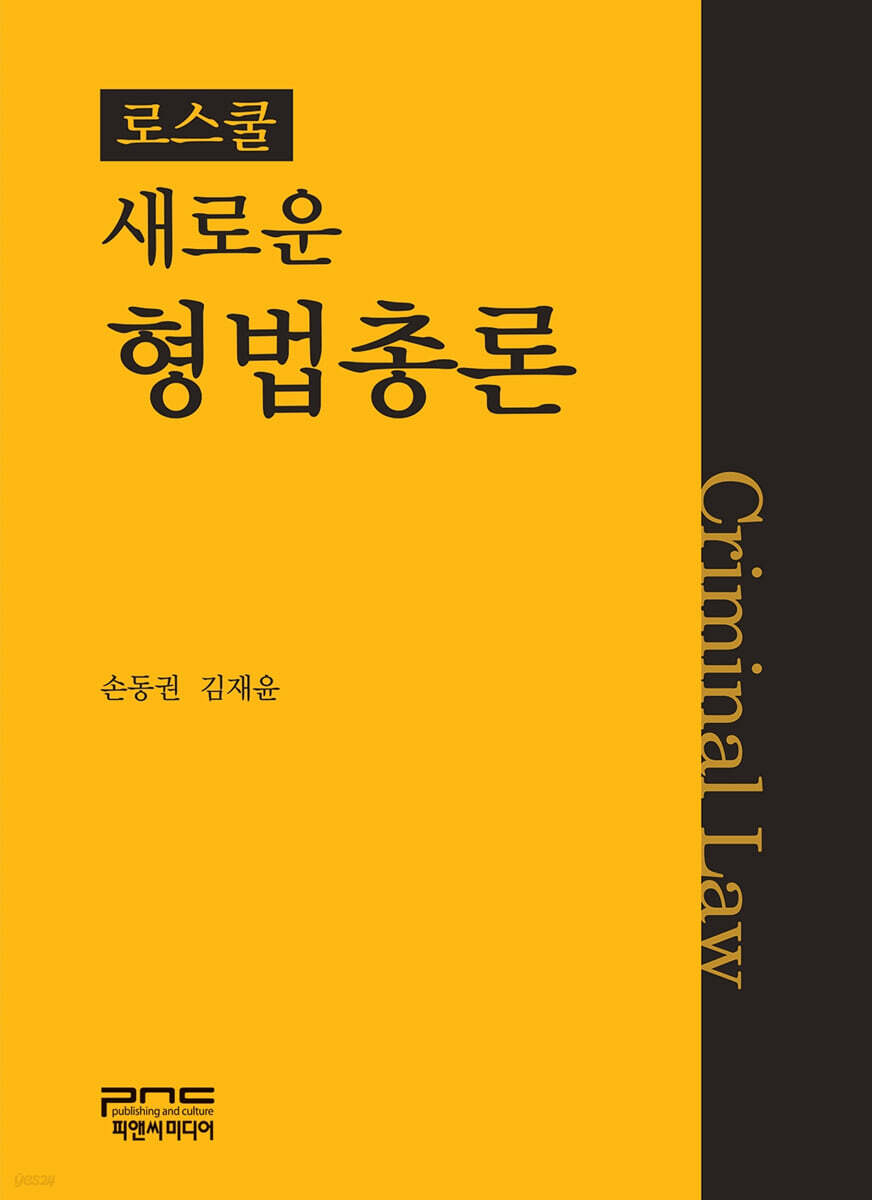
New General Criminal Law Course at Law School
 |
Description
Book Introduction
Fourteen years have passed since the publication of “New General Theory of Criminal Law” co-authored by Son Dong-kwon and Kim Jae-yoon in 2011.
In the meantime, some criminal laws related to the general principles of criminal law were revised, and many related laws and regulations and case law changes were made. However, due to the retirement of Professor Dong-Kwon Son in February 2018 and the transfer of Professor Jae-Yoon Kim to Konkuk University in September 2019, the revised edition reflecting these changes was not published.
Because of this, it has become a criminal law textbook that does not live up to its name of ‘new.’
The circumstances surrounding these co-authors were a factor in the failure to publish a revised edition of 『New General Theory of Criminal Law』, but I believe that the fact that textbooks containing criminal law theory were being ignored by law school students in the law school system launched in 2009 also played a major role.
During the previous law school days, the general criminal law and specific criminal law textbooks were used as teaching materials in university classrooms, regardless of whether or not they were preparing for the bar exam.
However, since law school education is focused on lectures and training aimed at passing the bar exam during the short three-year period, students' interest in legal dogma (Rechtsdogmatick) and criminal law theory gradually faded.
The reality is that when criminal law professors in law school classes give lengthy explanations on the unified criminal system theory (Einheitslehre), the theory of (causal, purposive, social, and personal) acts, the criminal capacity of corporations, the theory of objective attribution, the theory of correspondence, the theory of (formal and substantive) illegality, the theory of responsibility, the basis for punishment of attempts, the standard for judging risk in impossible attempts, the theory of distinction between principals and accomplices, the theory of the essence of joint principals, the theory of principals behind principals, the basis for punishment of accomplices, etc., the lecture inevitably ends up being a 'lecture that is not appropriate for the time.'
We can't just blame law school students for this.
This is due to several factors, such as the Ministry of Justice making it difficult to ask questions that do not include the condition of “in case of dispute, precedent shall apply” in the multiple-choice bar exam, and even in case-based questions, asking “What are the guilt of A, B, and C?”, which requires a mechanical description of the conclusion of precedent rather than deriving a conclusion through a review of the validity of abundant academic theories on the relevant issues.
After much deliberation, I decided to publish this book under the name of “New General Criminal Law for Law Schools” rather than a revised edition of the existing “New General Criminal Law,” to help law school students struggling to pass the bar exam in the law school era.
The newly published book highlights the following:
First, this book introduces as much of the criminal law theory as possible from the existing 『New General Theory of Criminal Law』, but tries to condense the content so that law school students, who are prospective legal professionals, can easily understand the general theory of criminal law.
Second, to achieve this, we have attempted to present frequently asked issues in the bar exam in the form of [cases] or [advanced cases] and provide thorough explanations for them.
And by introducing key case laws that students should be familiar with and presenting multiple-choice questions on them, we aimed to help students gain a more accurate understanding of the case laws.
Additionally, at the end of each chapter, we included recent bar exam multiple-choice and case-based questions and explanations to encourage review of the relevant topic.
Ultimately, this book is a hybrid book that has the characteristics of both a criminal law theory book and an exam preparation book.
Third, rather than including all minority views in criminal law theories published in Korea, this book focuses on the prevailing or majority views, as well as the decisions of the Supreme Court's full bench, and boldly omits footnotes that cite the sources of individual theories.
The sources of various theories and criminal law theories introduced in this book have been replaced with references.
Additionally, in cases where the technical process of this book involved views that conflicted with those of Professor Emeritus Dong-Kwon Son in the existing 『New General Theory of Criminal Law』, Professor Son's views were introduced in footnotes to avoid tarnishing the professor's academic achievements.
Finally, I would like to express my sincere gratitude to Professor Emeritus Dong-Kwon Son for his generous support of the editorial direction of this book and for his meticulous comments on each chapter.
I am deeply ashamed to have published a somewhat new book rather than a revised edition of the 『New General Theory of Criminal Law』.
And despite the difficulties in the publishing market, I would like to express my sincere gratitude to CEO Park No-il of PNC Media, who readily accepted the publication of this co-authored edition, and to the editorial staff who put in their best efforts to edit it.
In the meantime, some criminal laws related to the general principles of criminal law were revised, and many related laws and regulations and case law changes were made. However, due to the retirement of Professor Dong-Kwon Son in February 2018 and the transfer of Professor Jae-Yoon Kim to Konkuk University in September 2019, the revised edition reflecting these changes was not published.
Because of this, it has become a criminal law textbook that does not live up to its name of ‘new.’
The circumstances surrounding these co-authors were a factor in the failure to publish a revised edition of 『New General Theory of Criminal Law』, but I believe that the fact that textbooks containing criminal law theory were being ignored by law school students in the law school system launched in 2009 also played a major role.
During the previous law school days, the general criminal law and specific criminal law textbooks were used as teaching materials in university classrooms, regardless of whether or not they were preparing for the bar exam.
However, since law school education is focused on lectures and training aimed at passing the bar exam during the short three-year period, students' interest in legal dogma (Rechtsdogmatick) and criminal law theory gradually faded.
The reality is that when criminal law professors in law school classes give lengthy explanations on the unified criminal system theory (Einheitslehre), the theory of (causal, purposive, social, and personal) acts, the criminal capacity of corporations, the theory of objective attribution, the theory of correspondence, the theory of (formal and substantive) illegality, the theory of responsibility, the basis for punishment of attempts, the standard for judging risk in impossible attempts, the theory of distinction between principals and accomplices, the theory of the essence of joint principals, the theory of principals behind principals, the basis for punishment of accomplices, etc., the lecture inevitably ends up being a 'lecture that is not appropriate for the time.'
We can't just blame law school students for this.
This is due to several factors, such as the Ministry of Justice making it difficult to ask questions that do not include the condition of “in case of dispute, precedent shall apply” in the multiple-choice bar exam, and even in case-based questions, asking “What are the guilt of A, B, and C?”, which requires a mechanical description of the conclusion of precedent rather than deriving a conclusion through a review of the validity of abundant academic theories on the relevant issues.
After much deliberation, I decided to publish this book under the name of “New General Criminal Law for Law Schools” rather than a revised edition of the existing “New General Criminal Law,” to help law school students struggling to pass the bar exam in the law school era.
The newly published book highlights the following:
First, this book introduces as much of the criminal law theory as possible from the existing 『New General Theory of Criminal Law』, but tries to condense the content so that law school students, who are prospective legal professionals, can easily understand the general theory of criminal law.
Second, to achieve this, we have attempted to present frequently asked issues in the bar exam in the form of [cases] or [advanced cases] and provide thorough explanations for them.
And by introducing key case laws that students should be familiar with and presenting multiple-choice questions on them, we aimed to help students gain a more accurate understanding of the case laws.
Additionally, at the end of each chapter, we included recent bar exam multiple-choice and case-based questions and explanations to encourage review of the relevant topic.
Ultimately, this book is a hybrid book that has the characteristics of both a criminal law theory book and an exam preparation book.
Third, rather than including all minority views in criminal law theories published in Korea, this book focuses on the prevailing or majority views, as well as the decisions of the Supreme Court's full bench, and boldly omits footnotes that cite the sources of individual theories.
The sources of various theories and criminal law theories introduced in this book have been replaced with references.
Additionally, in cases where the technical process of this book involved views that conflicted with those of Professor Emeritus Dong-Kwon Son in the existing 『New General Theory of Criminal Law』, Professor Son's views were introduced in footnotes to avoid tarnishing the professor's academic achievements.
Finally, I would like to express my sincere gratitude to Professor Emeritus Dong-Kwon Son for his generous support of the editorial direction of this book and for his meticulous comments on each chapter.
I am deeply ashamed to have published a somewhat new book rather than a revised edition of the 『New General Theory of Criminal Law』.
And despite the difficulties in the publishing market, I would like to express my sincere gratitude to CEO Park No-il of PNC Media, who readily accepted the publication of this co-authored edition, and to the editorial staff who put in their best efforts to edit it.
index
Chapter 1 Introduction
[* 1] The significance of criminal law and the principle of legality
Ⅰ.
The meaning and function of criminal law
Ⅱ.
The significance of the principle of legality
Ⅲ.
Contents of the principle of legality
[* 2] Scope of application of criminal law
Ⅰ.
Temporal scope of criminal law
Ⅱ.
Scope of application of criminal law
Ⅲ.
Personal scope of application of criminal law
Chapter 2: Theory of Compositional Elements
[* 3] Objective constituent elements
Ⅰ.
Elements of a crime
Ⅱ.
Act (crime) subject
Ⅲ.
Criminal capacity and dual punishment provisions of corporations
Ⅳ.
Causality and objective attribution, competition of independent acts (simultaneous offenses)
V.
(Negative) crime of omission
[* 4] Intention
Ⅰ.
Intention as a component element
Ⅱ.
Intentional intellectual property and constituent errors (mistakes of fact)
[* 5] Negligence
Ⅰ.
Introduction
Ⅱ.
Requirements for a crime of negligence
Ⅲ.
Illegality and responsibility of negligent offenders
[* 6] Resultant weighted crime
Ⅰ.
Introduction
Ⅱ.
Requirements for consequential aggravation
Ⅲ.
Attempted aggravated crime
Ⅳ.
consequential aggravated crime and accomplice
Chapter 3: Theory of Illegality
[* 7] Introduction to illegality
Ⅰ.
General theory on illegality
Ⅱ.
General theory on grounds for excluding illegality or grounds for justification
Ⅲ.
Requirements for the removal of illegality
[* 8] Self-defense
Ⅰ.
Introduction
Ⅱ.
Requirements for establishing self-defense
Ⅲ.
Social and ethical limitations of self-defense
Ⅳ.
Excessive defense
V.
Misdirection and excessive direction
[* 9] Emergency evacuation
Ⅰ.
of the of the
Ⅱ.
This quality
Ⅲ.
Requirements for establishing a justifiable emergency evacuation
Ⅳ.
Evacuation by those who cannot escape danger, excessive evacuation and false evacuation
[* 10] Self-rescue actions
Ⅰ.
of the of the
Ⅱ.
Establishment requirements
Ⅲ.
effect
[* 11] Victim's consent
Ⅰ.
Introduction
Ⅱ.
Understanding as a reason for severing the constituent elements
Ⅲ.
Victim's consent as a ground for exemption from illegality
Ⅳ.
Presumptive consent
[* 12] Legitimate act
Ⅰ.
of the of the
Ⅱ.
Acts by law
Ⅲ.
Work-related actions
Ⅳ.
Other acts that do not violate social norms
Chapter 4 Responsibility
[* 13] Introduction to Responsibility
Ⅰ.
The meaning of responsibility
Ⅱ.
Components of responsibility and objects of responsibility judgment
[* 14] Responsibility
Ⅰ.
The significance of responsibility
Ⅱ.
Free action in the cause
[* 15] Recognition of illegality
Ⅰ.
Recognition and target of illegality
Ⅱ.
Contents of recognition of illegality
Ⅲ.
Systematic status of recognition of illegality
Ⅳ.
Mistake of law
[* 16] Expected probability
Ⅰ.
The significance and criteria for judgment of expected probability
Ⅱ.
Whether the possibility of expectation under positive law and the extra-legal reason for exempting liability are recognized
Ⅲ.
forced acts
Chapter 5: Theory of Numbers
[* 17] Introduction to the theory of numbers
Ⅰ.
Stages of crime
Ⅱ.
Grounds for punishment of attempted crimes
Ⅲ.
Requirements for an attempted crime (with a disability)
Ⅳ.
Punishment of attempted crimes and related issues
[* 18] Attempted crime
Ⅰ.
The meaning of the crime of suspension (attempted) and the basis for special treatment
Ⅱ.
Requirements for the crime of attempted (stopped) crime
Ⅲ.
Punishment of attempted crimes
Ⅳ.
Related issues regarding attempted crimes
[* 19] Impossible (attempted) crime
Ⅰ.
Introduction
Ⅱ.
Requirements for an attempted crime
Ⅲ.
Punishment and related issues
[* 20] Preliminary/Conspiracy
Ⅰ.
Introduction
Ⅱ.
The legal nature of the preliminary crime
Ⅲ.
Elements of a preliminary crime
Ⅳ.
Related issues regarding preliminary crimes
Chapter 6: Theory of Accomplice
[* 21] Basic theory of principal offenders and accomplices
Ⅰ.
Basic concepts
Ⅱ.
The superiority of the concept of principal offender and the criteria for distinguishing between principal offender and accomplice
Ⅲ.
Accomplices are dependent and have varying degrees of dependence.
Ⅳ.
Grounds for punishment of accomplices
[* 22] Accomplice
Ⅰ.
Introduction
Ⅱ.
Requirements for establishing joint crime
[* 23] Indirect perpetrator
Ⅰ.
Introduction
Ⅱ.
Requirements for establishing an indirect perpetrator
Ⅲ.
Punishment of indirect perpetrators and related issues
[* 24] Teacher
Ⅰ.
Introduction
Ⅱ.
Requirements for the establishment of a teacher-teacher crime
Ⅲ.
Punishment of teachers
Ⅳ.
Teacher's mistakes and inconsistencies
V.
Problems related to teacher training
[* 25] Jong Beom
Ⅰ.
Introduction
Ⅱ.
Requirements for establishing an accessory
Ⅲ.
Punishment of accomplices and related issues
[* 26] Accomplices and status
Ⅰ.
Introduction
Ⅱ.
Interpretation of Article 33 of the Criminal Act
Ⅲ.
Issues related to Article 33 of the Criminal Act
Chapter 7 Prisoner Theory
[* 27] Basic theory of prisoners
Ⅰ.
of the of the
Ⅱ.
Criteria for sentencing prisoners
[* 28] A crime under substantive law
Ⅰ.
Meaning and types
Ⅱ.
Legal competition
Ⅲ.
Comprehensive crime
[* 29] Crime under substantive law
Ⅰ.
imaginary competition
Ⅱ.
Substantive competition (conflict crime)
Chapter 8: Criminal Sanctions
[* 30] Penalties, sentencing and security measures
Ⅰ.
Punishment
Ⅱ.
Brother Yang
Ⅲ.
Security measures
References
Search
[* 1] The significance of criminal law and the principle of legality
Ⅰ.
The meaning and function of criminal law
Ⅱ.
The significance of the principle of legality
Ⅲ.
Contents of the principle of legality
[* 2] Scope of application of criminal law
Ⅰ.
Temporal scope of criminal law
Ⅱ.
Scope of application of criminal law
Ⅲ.
Personal scope of application of criminal law
Chapter 2: Theory of Compositional Elements
[* 3] Objective constituent elements
Ⅰ.
Elements of a crime
Ⅱ.
Act (crime) subject
Ⅲ.
Criminal capacity and dual punishment provisions of corporations
Ⅳ.
Causality and objective attribution, competition of independent acts (simultaneous offenses)
V.
(Negative) crime of omission
[* 4] Intention
Ⅰ.
Intention as a component element
Ⅱ.
Intentional intellectual property and constituent errors (mistakes of fact)
[* 5] Negligence
Ⅰ.
Introduction
Ⅱ.
Requirements for a crime of negligence
Ⅲ.
Illegality and responsibility of negligent offenders
[* 6] Resultant weighted crime
Ⅰ.
Introduction
Ⅱ.
Requirements for consequential aggravation
Ⅲ.
Attempted aggravated crime
Ⅳ.
consequential aggravated crime and accomplice
Chapter 3: Theory of Illegality
[* 7] Introduction to illegality
Ⅰ.
General theory on illegality
Ⅱ.
General theory on grounds for excluding illegality or grounds for justification
Ⅲ.
Requirements for the removal of illegality
[* 8] Self-defense
Ⅰ.
Introduction
Ⅱ.
Requirements for establishing self-defense
Ⅲ.
Social and ethical limitations of self-defense
Ⅳ.
Excessive defense
V.
Misdirection and excessive direction
[* 9] Emergency evacuation
Ⅰ.
of the of the
Ⅱ.
This quality
Ⅲ.
Requirements for establishing a justifiable emergency evacuation
Ⅳ.
Evacuation by those who cannot escape danger, excessive evacuation and false evacuation
[* 10] Self-rescue actions
Ⅰ.
of the of the
Ⅱ.
Establishment requirements
Ⅲ.
effect
[* 11] Victim's consent
Ⅰ.
Introduction
Ⅱ.
Understanding as a reason for severing the constituent elements
Ⅲ.
Victim's consent as a ground for exemption from illegality
Ⅳ.
Presumptive consent
[* 12] Legitimate act
Ⅰ.
of the of the
Ⅱ.
Acts by law
Ⅲ.
Work-related actions
Ⅳ.
Other acts that do not violate social norms
Chapter 4 Responsibility
[* 13] Introduction to Responsibility
Ⅰ.
The meaning of responsibility
Ⅱ.
Components of responsibility and objects of responsibility judgment
[* 14] Responsibility
Ⅰ.
The significance of responsibility
Ⅱ.
Free action in the cause
[* 15] Recognition of illegality
Ⅰ.
Recognition and target of illegality
Ⅱ.
Contents of recognition of illegality
Ⅲ.
Systematic status of recognition of illegality
Ⅳ.
Mistake of law
[* 16] Expected probability
Ⅰ.
The significance and criteria for judgment of expected probability
Ⅱ.
Whether the possibility of expectation under positive law and the extra-legal reason for exempting liability are recognized
Ⅲ.
forced acts
Chapter 5: Theory of Numbers
[* 17] Introduction to the theory of numbers
Ⅰ.
Stages of crime
Ⅱ.
Grounds for punishment of attempted crimes
Ⅲ.
Requirements for an attempted crime (with a disability)
Ⅳ.
Punishment of attempted crimes and related issues
[* 18] Attempted crime
Ⅰ.
The meaning of the crime of suspension (attempted) and the basis for special treatment
Ⅱ.
Requirements for the crime of attempted (stopped) crime
Ⅲ.
Punishment of attempted crimes
Ⅳ.
Related issues regarding attempted crimes
[* 19] Impossible (attempted) crime
Ⅰ.
Introduction
Ⅱ.
Requirements for an attempted crime
Ⅲ.
Punishment and related issues
[* 20] Preliminary/Conspiracy
Ⅰ.
Introduction
Ⅱ.
The legal nature of the preliminary crime
Ⅲ.
Elements of a preliminary crime
Ⅳ.
Related issues regarding preliminary crimes
Chapter 6: Theory of Accomplice
[* 21] Basic theory of principal offenders and accomplices
Ⅰ.
Basic concepts
Ⅱ.
The superiority of the concept of principal offender and the criteria for distinguishing between principal offender and accomplice
Ⅲ.
Accomplices are dependent and have varying degrees of dependence.
Ⅳ.
Grounds for punishment of accomplices
[* 22] Accomplice
Ⅰ.
Introduction
Ⅱ.
Requirements for establishing joint crime
[* 23] Indirect perpetrator
Ⅰ.
Introduction
Ⅱ.
Requirements for establishing an indirect perpetrator
Ⅲ.
Punishment of indirect perpetrators and related issues
[* 24] Teacher
Ⅰ.
Introduction
Ⅱ.
Requirements for the establishment of a teacher-teacher crime
Ⅲ.
Punishment of teachers
Ⅳ.
Teacher's mistakes and inconsistencies
V.
Problems related to teacher training
[* 25] Jong Beom
Ⅰ.
Introduction
Ⅱ.
Requirements for establishing an accessory
Ⅲ.
Punishment of accomplices and related issues
[* 26] Accomplices and status
Ⅰ.
Introduction
Ⅱ.
Interpretation of Article 33 of the Criminal Act
Ⅲ.
Issues related to Article 33 of the Criminal Act
Chapter 7 Prisoner Theory
[* 27] Basic theory of prisoners
Ⅰ.
of the of the
Ⅱ.
Criteria for sentencing prisoners
[* 28] A crime under substantive law
Ⅰ.
Meaning and types
Ⅱ.
Legal competition
Ⅲ.
Comprehensive crime
[* 29] Crime under substantive law
Ⅰ.
imaginary competition
Ⅱ.
Substantive competition (conflict crime)
Chapter 8: Criminal Sanctions
[* 30] Penalties, sentencing and security measures
Ⅰ.
Punishment
Ⅱ.
Brother Yang
Ⅲ.
Security measures
References
Search
GOODS SPECIFICS
- Date of issue: August 30, 2025
- Format: Hardcover book binding method guide
- Page count, weight, size: 736 pages | 188*257*40mm
- ISBN13: 9791174010209
- ISBN10: 1174010207
You may also like
카테고리
korean


korean

![GQ KOREA Mark (Monthly): December [2025]](http://librairie.coreenne.fr/cdn/shop/files/8ef265dbbfbf186523ed75ba7319009d.jpg?v=1765340328&width=3840)


