

That's why this saying came into being: Korean
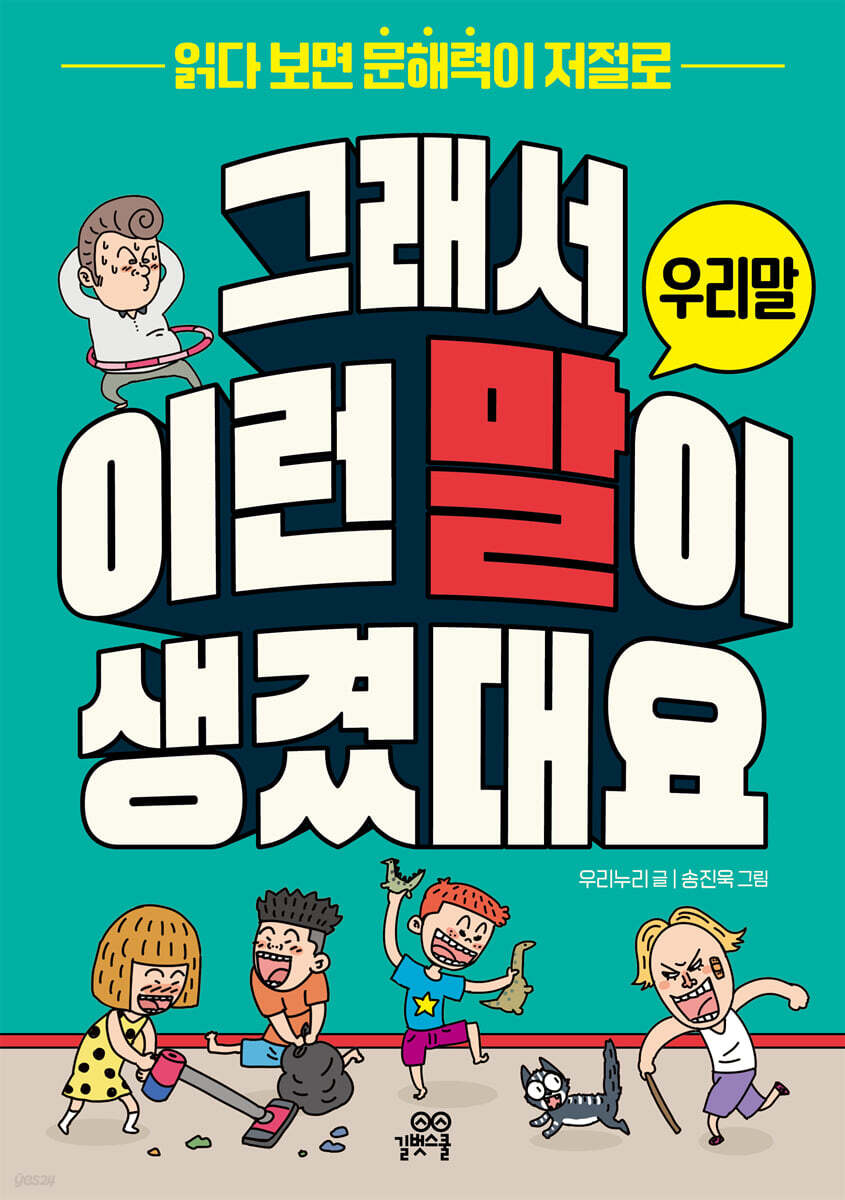 |
Description
Book Introduction
The origin story of the horse is so interesting!
A book that makes language learning fun and helps build vocabulary and literacy skills.
'Buryaburya' is a shortened form of 'Bulya, Bulya'.
The word 'Dangol' originally referred to a 'shaman' who performed a ritual.
The expression 'to take off the name tag of a falcon' is said to have originated from the fact that a falcon secretly took off its name tag.
Like this, there are interesting origin stories hidden in the words we commonly use.
"So That's How This Word Came About" is a book that tells us about the origins of our language.
Reading origin stories not only helps you accurately understand and remember the meaning of Korean words, but also naturally helps you understand the context in which those words are used.
As you do this, your vocabulary and literacy will grow and you will be able to express your thoughts and words better.
I recommend this book to parents who are concerned about their children's vocabulary being significantly lower than that of their peers, friends who want to read fun comics and origin stories without feeling pressured, and teachers who are looking for a rich learning resource related to the Korean language.
A book that makes language learning fun and helps build vocabulary and literacy skills.
'Buryaburya' is a shortened form of 'Bulya, Bulya'.
The word 'Dangol' originally referred to a 'shaman' who performed a ritual.
The expression 'to take off the name tag of a falcon' is said to have originated from the fact that a falcon secretly took off its name tag.
Like this, there are interesting origin stories hidden in the words we commonly use.
"So That's How This Word Came About" is a book that tells us about the origins of our language.
Reading origin stories not only helps you accurately understand and remember the meaning of Korean words, but also naturally helps you understand the context in which those words are used.
As you do this, your vocabulary and literacy will grow and you will be able to express your thoughts and words better.
I recommend this book to parents who are concerned about their children's vocabulary being significantly lower than that of their peers, friends who want to read fun comics and origin stories without feeling pressured, and teachers who are looking for a rich learning resource related to the Korean language.
- You can preview some of the book's contents.
Preview
index
Chapter 1: Our Language, Filled with History and Culture
Shichimi - A name tag attached to the tail of a falcon to identify its owner. 10
12 Nipples - Small cracks in objects
A shaman who is often called upon at every ritual. 14
16 Words Originating from the Ttangji-Taekkyeon Technique, "Ttangjukgeolgi"
inkwell - a vessel containing black ink used by carpenters when drawing lines 18
Silsang-20 Words from the Mischievous Pranks of Joseon Scholars
Ttedon - The money earned by a "tekun," a boatman who drives a boat. 22
24 Words Originating from the "Dongnyeong" Bell Carried by a Monk
Dangbaekjeon - Dangbaekjeon, created by Heungseon Daewongun during the Joseon Dynasty.
A rope tied around the head and neck of an ox. 28
Ayang - A head covering worn by women during the Joseon Dynasty for cold weather. 30
Complaints - 32 Shamans' Complaints on Behalf of the Dead
Henggarae - the act of throwing a human body up and down. 34
36. The act of meddling in someone else's play
Hangul—The Great Letter, the One and Only Great Letter 38
To fly a kite - to manipulate the string so that the kite rises high. 40
Useless - A piece of metal that has not been properly 'fired' 42
To be hit by the wind - originally meant to have a stroke. 44
Two people face each other and play the janggu. 46
gloomy - the atmosphere or weather is very gloomy, like the year of Eulsa. 48
Scratching a bowl - a phrase derived from the custom of chasing away plague ghosts.
Weaning from the disease - Curing the disease called 'hakjil' (52)
Awesome - A small statue adorning the eaves of a palace, "Awesome" 54
Chapter 2 Korean words related to people and personality
Neighborhood drum - 58 drums that anyone can play with ease
A miser - a person who is so stingy that he wears old shoes with iron nails 60
Dolpali - A wandering fortune teller, a shaman known as a 'dolbari' 62
Sannim - A naive scholar who doesn't know much about the ways of the world 64
Kkakjeongi - Joseon Dynasty criminal with a crime engraved on his face.
Mangnani - A person who beheaded criminals during the Joseon Dynasty. 68
70 Reckless - A person who ruins farming because he doesn't know the meaning of "iron"
Late bloomer - a person who shaved his head and became a monk at a late age. 72
A daughter as precious and distinguished as the famous food 74
Puppet - A puppet that moves as directed by a clown 76
A person who is ambiguous and doesn't belong to any side. 78
80 Words That Arose from the Intention of Respecting Children
Seollebal - The bug that moves its many legs busily, 'Seolebali' 82
To shake a key up and down to blow away the grain or straw. 84
Cheerful - A pleasant attitude without shame 86
Arrogant - a word derived from the word "arrogant" (geonbangjuk), meaning "to be arrogant" or "to be incompetent" (geonbangjuk).
The front of the outer garment is wide - 'Ojirab' means the front of an outer garment. 90
Gatalesseureopda - Mongolian word 'gatal' meaning 'quick gait' 92
Chilchilmatda - neat and tidy workmanship 94
Mae-bu-cha-da - A flying 'falcon' chases and chases a pheasant 96
Chapter 3 Korean words related to food and nature
Budae Jjigae - A stew made with sausages and ham left over from U.S. military bases.
Seolleongtang - Beef soup shared at Seonnongdan 102
Host Vegetables - Vegetables that Change Easily Like a Betrayed New Host 104
Sweat that flows like soybean water when making bean paste 106
108 Words with Changed Meanings Due to Their Similar Pronunciation to "Goltang"
Maljjang-dorumuk doesn't taste good, so call it dorumuk! 110
A millstone-like insect that moves up and down like a millstone 112
Ttungttangji - another name for 'pig potato' 114
Pod - the shell surrounding the seeds of plants such as beans or adzuki beans 116
It's perfect - there's no sign of grafting the persimmon tree. 118
To lose sap - When a tree loses its sap, it withers. 120
Eating seaweed soup - failing an exam or being demoted from a position 122
Chapter 4: Korean is more fun when you know and use it
Buryaburya - Phrase 126 from 'Fire, Fire'
Developmental Bird Feet - Letters Written with Dog Feet and Bird Feet 128
Fist counting - a rough calculation like 'fist counting' 130
One-Day Puppy - Not Born 'One Day', But 'One Year' 132
Dottegi Market - A chaotic and noisy market where all kinds of goods are bought and sold. 134
Alnari-kalnari - What Kids Say When They're Teasing Others 136
A branch hung loosely over a bowl or pit 138
Boram - Originally meaning 'mark' to distinguish from other things 140
Pincushion - An uncomfortable position to sit in, as if pricked by a needle 142
The "copying bucket" (144), which was shaken noisily to extract gold dust.
The dead end of a coal mine shaft 146
Seven-color eight-color - a face that turns red and blue when one strongly dislikes something 148
To encourage - to encourage plants to grow well 150
To be uncovered - to empty out the inside of a bucket and expose the bottom 152
Out of the blue - Values that change depending on the market price 'Out of the blue' 154
Pungaechida - a word derived from the word "panggae," which was used to chase away birds. 156
An unpleasant word or action that is offensive to the eye 158
To light a fire in one's eyes - to be so angry that both eyes are on fire 160
Nanda Ginda - Originally meaning good at Yut Nori 162
To lose money - a phrase used when losing money gambling 164
Shichimi - A name tag attached to the tail of a falcon to identify its owner. 10
12 Nipples - Small cracks in objects
A shaman who is often called upon at every ritual. 14
16 Words Originating from the Ttangji-Taekkyeon Technique, "Ttangjukgeolgi"
inkwell - a vessel containing black ink used by carpenters when drawing lines 18
Silsang-20 Words from the Mischievous Pranks of Joseon Scholars
Ttedon - The money earned by a "tekun," a boatman who drives a boat. 22
24 Words Originating from the "Dongnyeong" Bell Carried by a Monk
Dangbaekjeon - Dangbaekjeon, created by Heungseon Daewongun during the Joseon Dynasty.
A rope tied around the head and neck of an ox. 28
Ayang - A head covering worn by women during the Joseon Dynasty for cold weather. 30
Complaints - 32 Shamans' Complaints on Behalf of the Dead
Henggarae - the act of throwing a human body up and down. 34
36. The act of meddling in someone else's play
Hangul—The Great Letter, the One and Only Great Letter 38
To fly a kite - to manipulate the string so that the kite rises high. 40
Useless - A piece of metal that has not been properly 'fired' 42
To be hit by the wind - originally meant to have a stroke. 44
Two people face each other and play the janggu. 46
gloomy - the atmosphere or weather is very gloomy, like the year of Eulsa. 48
Scratching a bowl - a phrase derived from the custom of chasing away plague ghosts.
Weaning from the disease - Curing the disease called 'hakjil' (52)
Awesome - A small statue adorning the eaves of a palace, "Awesome" 54
Chapter 2 Korean words related to people and personality
Neighborhood drum - 58 drums that anyone can play with ease
A miser - a person who is so stingy that he wears old shoes with iron nails 60
Dolpali - A wandering fortune teller, a shaman known as a 'dolbari' 62
Sannim - A naive scholar who doesn't know much about the ways of the world 64
Kkakjeongi - Joseon Dynasty criminal with a crime engraved on his face.
Mangnani - A person who beheaded criminals during the Joseon Dynasty. 68
70 Reckless - A person who ruins farming because he doesn't know the meaning of "iron"
Late bloomer - a person who shaved his head and became a monk at a late age. 72
A daughter as precious and distinguished as the famous food 74
Puppet - A puppet that moves as directed by a clown 76
A person who is ambiguous and doesn't belong to any side. 78
80 Words That Arose from the Intention of Respecting Children
Seollebal - The bug that moves its many legs busily, 'Seolebali' 82
To shake a key up and down to blow away the grain or straw. 84
Cheerful - A pleasant attitude without shame 86
Arrogant - a word derived from the word "arrogant" (geonbangjuk), meaning "to be arrogant" or "to be incompetent" (geonbangjuk).
The front of the outer garment is wide - 'Ojirab' means the front of an outer garment. 90
Gatalesseureopda - Mongolian word 'gatal' meaning 'quick gait' 92
Chilchilmatda - neat and tidy workmanship 94
Mae-bu-cha-da - A flying 'falcon' chases and chases a pheasant 96
Chapter 3 Korean words related to food and nature
Budae Jjigae - A stew made with sausages and ham left over from U.S. military bases.
Seolleongtang - Beef soup shared at Seonnongdan 102
Host Vegetables - Vegetables that Change Easily Like a Betrayed New Host 104
Sweat that flows like soybean water when making bean paste 106
108 Words with Changed Meanings Due to Their Similar Pronunciation to "Goltang"
Maljjang-dorumuk doesn't taste good, so call it dorumuk! 110
A millstone-like insect that moves up and down like a millstone 112
Ttungttangji - another name for 'pig potato' 114
Pod - the shell surrounding the seeds of plants such as beans or adzuki beans 116
It's perfect - there's no sign of grafting the persimmon tree. 118
To lose sap - When a tree loses its sap, it withers. 120
Eating seaweed soup - failing an exam or being demoted from a position 122
Chapter 4: Korean is more fun when you know and use it
Buryaburya - Phrase 126 from 'Fire, Fire'
Developmental Bird Feet - Letters Written with Dog Feet and Bird Feet 128
Fist counting - a rough calculation like 'fist counting' 130
One-Day Puppy - Not Born 'One Day', But 'One Year' 132
Dottegi Market - A chaotic and noisy market where all kinds of goods are bought and sold. 134
Alnari-kalnari - What Kids Say When They're Teasing Others 136
A branch hung loosely over a bowl or pit 138
Boram - Originally meaning 'mark' to distinguish from other things 140
Pincushion - An uncomfortable position to sit in, as if pricked by a needle 142
The "copying bucket" (144), which was shaken noisily to extract gold dust.
The dead end of a coal mine shaft 146
Seven-color eight-color - a face that turns red and blue when one strongly dislikes something 148
To encourage - to encourage plants to grow well 150
To be uncovered - to empty out the inside of a bucket and expose the bottom 152
Out of the blue - Values that change depending on the market price 'Out of the blue' 154
Pungaechida - a word derived from the word "panggae," which was used to chase away birds. 156
An unpleasant word or action that is offensive to the eye 158
To light a fire in one's eyes - to be so angry that both eyes are on fire 160
Nanda Ginda - Originally meaning good at Yut Nori 162
To lose money - a phrase used when losing money gambling 164
Detailed image

Into the book
A small crack in an object is called a 'flaw'.
However, if there was a problem with the hat, the repairmen would find fault with it and charge a lot of money for the repair.
The scholars expressed their discontent, and the word 'nitpicking' came to have a negative connotation.
This is how the meaning of ‘complaining by deliberately pointing out small flaws’ came to be.
It is often used as ‘nitpicking’.
--- p.13
'Ttanjukgeolgi' refers to a technique in Taekkyeon where you grab your opponent's leg with your foot and pull it.
But why did "ttanjuk" come to mean interfering with someone else's work? It's because the act of tripping someone up and tripping them is similar to the act of interfering with someone else's work.
These days, the word 'ttanji' is used more often than the word 'ttanjuk'.
Ttanji was not originally a standard word, but it was newly designated as a standard word because many people used it.
--- p.17
The word 'ttedon', which is commonly used these days, comes from a group of people who travel in groups like this.
The large amount of money earned by thieves came to be called 'three-day money'.
Also, the term 'Tebuja' originated here.
--- p.23
When a shaman performs a gut, the deceased's grievances and pent-up resentment are expressed by the shaman on behalf of the deceased. This is called 'Pungnyeom'.
At that time, the main content of the complaint was that he felt wronged and angry, and asked for relief.
As time passed, grumbling became part of everyday language.
‘Speaking out your grievances at length’ is called complaining.
There is a similar word, 'nokduri'.
--- p.33
The term "only daughter" refers to the only daughter in a family with two or more sons.
It was created with the meaning that it stands out and is as precious as the toppings on the food.
But these days, the term "famous daughter" is becoming controversial.
Gomyung is not a main ingredient in food, but rather a side ingredient that can be left out without much of a problem.
Therefore, the term "daughter of the famous daughter" is criticized as having a sexist connotation, as it implies that daughters are not as important as sons.
However, if there was a problem with the hat, the repairmen would find fault with it and charge a lot of money for the repair.
The scholars expressed their discontent, and the word 'nitpicking' came to have a negative connotation.
This is how the meaning of ‘complaining by deliberately pointing out small flaws’ came to be.
It is often used as ‘nitpicking’.
--- p.13
'Ttanjukgeolgi' refers to a technique in Taekkyeon where you grab your opponent's leg with your foot and pull it.
But why did "ttanjuk" come to mean interfering with someone else's work? It's because the act of tripping someone up and tripping them is similar to the act of interfering with someone else's work.
These days, the word 'ttanji' is used more often than the word 'ttanjuk'.
Ttanji was not originally a standard word, but it was newly designated as a standard word because many people used it.
--- p.17
The word 'ttedon', which is commonly used these days, comes from a group of people who travel in groups like this.
The large amount of money earned by thieves came to be called 'three-day money'.
Also, the term 'Tebuja' originated here.
--- p.23
When a shaman performs a gut, the deceased's grievances and pent-up resentment are expressed by the shaman on behalf of the deceased. This is called 'Pungnyeom'.
At that time, the main content of the complaint was that he felt wronged and angry, and asked for relief.
As time passed, grumbling became part of everyday language.
‘Speaking out your grievances at length’ is called complaining.
There is a similar word, 'nokduri'.
--- p.33
The term "only daughter" refers to the only daughter in a family with two or more sons.
It was created with the meaning that it stands out and is as precious as the toppings on the food.
But these days, the term "famous daughter" is becoming controversial.
Gomyung is not a main ingredient in food, but rather a side ingredient that can be left out without much of a problem.
Therefore, the term "daughter of the famous daughter" is criticized as having a sexist connotation, as it implies that daughters are not as important as sons.
--- p.75
Publisher's Review
Children these days lack literacy skills,
Is it right to force myself to memorize the meaning of words and solve Korean language workbook problems?
There is something that school teachers often say these days.
“Students these days don’t understand the meaning of the problem.”
This is because, due to the influence of digital devices, people are only accustomed to using slang or jargon in videos, or they have difficulty reading long lines of text because they do not know the meaning of the words.
This is also a common occurrence for children who mainly read educational comics.
So, even in math problems that everyone knows, there are many cases where people make mistakes because they don't understand the meaning of the problem.
But is it really the right thing to force these children to memorize words and solve literacy workbooks?
Learning about words becomes more fun when you know their origins!
Read this book to improve your vocabulary and literacy.
"So That's How This Word Came About" is a book that explains the origins of Korean words in an easy and fun way through four-panel cartoons and short stories.
Knowing the origins will help you understand not only the exact meaning of each word, but also the context and nuance of when to use it.
Since it is not something you memorize mechanically, it is easy to remember, and it is natural that your vocabulary and literacy skills will greatly improve.
I hope that through this book, children will find learning to speak enjoyable and gain confidence in reading.
Book Features
Learn the meaning and usage of Korean words by reading interesting stories about their origins.
The origin of 'Maemulchada' is related to the 'falcon' flying in the sky.
Sharp, touch, and hang are all words related to the word "hawk."
'Noksal Johada' originated from kite flying, and 'Gakjaengi' originally referred to a criminal who had his crime tattooed on his face during the Joseon Dynasty.
There is a background to the emergence of this word.
It can arise from historical events or cultural characteristics, or it can be a combination of frequently used words to create a new word.
And as time goes by, it can change into a completely different meaning.
It's really interesting to learn about this process.
Knowing the origins allows us to understand our language more accurately and deeply.
Additionally, you can develop your knowledge of our history and culture, which allows for more in-depth learning.
It is composed mainly of key words that elementary school students must know.
I selected vocabulary that is frequently used in everyday life and elementary school Korean language textbooks.
The meaning of each word was mainly referenced from the 『Standard Korean Dictionary』 published by the National Institute of the Korean Language, and the accuracy of the content was increased by reflecting the latest language regulations.
Also, since the dictionary definitions, usage examples, and similar vocabulary for related words are organized separately at the bottom of the four-panel cartoon, it is also excellent as a learning material.
There is a 'Search' section at the end of the book, so you can look up just the vocabulary you need.
It will be the best textbook for diverse and rich reading, speaking, and writing skills.
Even children who only like educational comics can read it without any burden.
On each left page where the story begins, there is a fun four-panel comic.
Just by reading the comics, you can immediately understand how the vocabulary is used in everyday life.
The origin story is written in a short fairy tale format on the right page, making it easy to read.
This book is fun to read for children who are only familiar with educational comics or have difficulty reading long texts, so it is a book that both parents and children can enjoy.
Provide opportunities to use correct Korean
Did you know that 'Eolrerikkolreri' is incorrect? 'Alnarikkalnari' is the correct word.
We often use the word 'chilchilmatda' to describe someone who is reckless, but it should be 'chilchilchi mothada'.
The correct word would have been 'Goebbalgapbal' rather than 'Gaebalsaebal', but in the end, both became standard words.
You can understand why at once by reading the origin story in the book.
In addition, we will provide opportunities for children to naturally use our historically rich Korean language instead of the slang and colloquialisms they use indiscriminately.
Is it right to force myself to memorize the meaning of words and solve Korean language workbook problems?
There is something that school teachers often say these days.
“Students these days don’t understand the meaning of the problem.”
This is because, due to the influence of digital devices, people are only accustomed to using slang or jargon in videos, or they have difficulty reading long lines of text because they do not know the meaning of the words.
This is also a common occurrence for children who mainly read educational comics.
So, even in math problems that everyone knows, there are many cases where people make mistakes because they don't understand the meaning of the problem.
But is it really the right thing to force these children to memorize words and solve literacy workbooks?
Learning about words becomes more fun when you know their origins!
Read this book to improve your vocabulary and literacy.
"So That's How This Word Came About" is a book that explains the origins of Korean words in an easy and fun way through four-panel cartoons and short stories.
Knowing the origins will help you understand not only the exact meaning of each word, but also the context and nuance of when to use it.
Since it is not something you memorize mechanically, it is easy to remember, and it is natural that your vocabulary and literacy skills will greatly improve.
I hope that through this book, children will find learning to speak enjoyable and gain confidence in reading.
Book Features
Learn the meaning and usage of Korean words by reading interesting stories about their origins.
The origin of 'Maemulchada' is related to the 'falcon' flying in the sky.
Sharp, touch, and hang are all words related to the word "hawk."
'Noksal Johada' originated from kite flying, and 'Gakjaengi' originally referred to a criminal who had his crime tattooed on his face during the Joseon Dynasty.
There is a background to the emergence of this word.
It can arise from historical events or cultural characteristics, or it can be a combination of frequently used words to create a new word.
And as time goes by, it can change into a completely different meaning.
It's really interesting to learn about this process.
Knowing the origins allows us to understand our language more accurately and deeply.
Additionally, you can develop your knowledge of our history and culture, which allows for more in-depth learning.
It is composed mainly of key words that elementary school students must know.
I selected vocabulary that is frequently used in everyday life and elementary school Korean language textbooks.
The meaning of each word was mainly referenced from the 『Standard Korean Dictionary』 published by the National Institute of the Korean Language, and the accuracy of the content was increased by reflecting the latest language regulations.
Also, since the dictionary definitions, usage examples, and similar vocabulary for related words are organized separately at the bottom of the four-panel cartoon, it is also excellent as a learning material.
There is a 'Search' section at the end of the book, so you can look up just the vocabulary you need.
It will be the best textbook for diverse and rich reading, speaking, and writing skills.
Even children who only like educational comics can read it without any burden.
On each left page where the story begins, there is a fun four-panel comic.
Just by reading the comics, you can immediately understand how the vocabulary is used in everyday life.
The origin story is written in a short fairy tale format on the right page, making it easy to read.
This book is fun to read for children who are only familiar with educational comics or have difficulty reading long texts, so it is a book that both parents and children can enjoy.
Provide opportunities to use correct Korean
Did you know that 'Eolrerikkolreri' is incorrect? 'Alnarikkalnari' is the correct word.
We often use the word 'chilchilmatda' to describe someone who is reckless, but it should be 'chilchilchi mothada'.
The correct word would have been 'Goebbalgapbal' rather than 'Gaebalsaebal', but in the end, both became standard words.
You can understand why at once by reading the origin story in the book.
In addition, we will provide opportunities for children to naturally use our historically rich Korean language instead of the slang and colloquialisms they use indiscriminately.
GOODS SPECIFICS
- Publication date: November 27, 2023
- Page count, weight, size: 168 pages | 364g | 148*210*13mm
- ISBN13: 9791164066193
You may also like
카테고리
korean


korean

![GQ KOREA Mark (Monthly): December [2025]](http://librairie.coreenne.fr/cdn/shop/files/8ef265dbbfbf186523ed75ba7319009d.jpg?v=1765340328&width=3840)


