

So this spelling came about
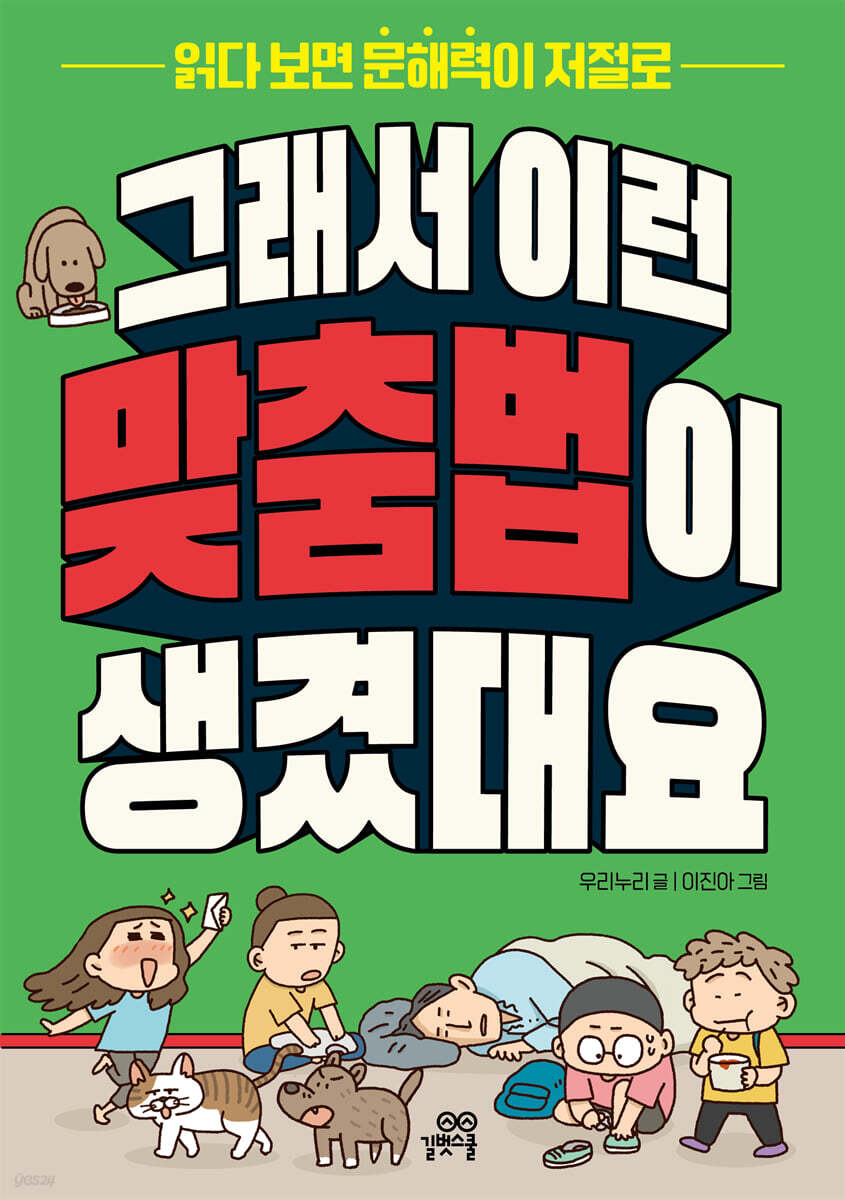 |
Description
Book Introduction
Is a friend who can't go to the bathroom alone a 'coward' or a 'wimp'?
Will the bus come 'anytime'? Or will the bus come 'anytime'?
Is it okay to write it like this? No, it can't be done!
Spelling is always difficult and confusing, now learn it easily and enjoyably.
Have you ever felt embarrassed by a spelling mistake while chatting with friends on social media? Are dictation tests always too difficult? Even if you memorize spelling diligently, you forget it the moment you turn around? In those cases, try "So That's How This Spelling Came About."
We've omitted all the difficult Korean language theories and grammar explanations, and instead used fun cartoons and examples to explain confusing spelling in elementary school textbooks and everyday life in an easy-to-understand way.
We've collected everything from the most common spelling mistakes made by elementary school students, to words that look similar but have different meanings and must be written clearly, spellings with particularly difficult final consonants, plural standard words that can be written in both, and even foreign word spellings that even adults find confusing.
I recommend this book to elementary school students who have always struggled with spelling, parents who want to help their children develop their vocabulary and literacy, and teachers looking for helpful spelling resources.
Will the bus come 'anytime'? Or will the bus come 'anytime'?
Is it okay to write it like this? No, it can't be done!
Spelling is always difficult and confusing, now learn it easily and enjoyably.
Have you ever felt embarrassed by a spelling mistake while chatting with friends on social media? Are dictation tests always too difficult? Even if you memorize spelling diligently, you forget it the moment you turn around? In those cases, try "So That's How This Spelling Came About."
We've omitted all the difficult Korean language theories and grammar explanations, and instead used fun cartoons and examples to explain confusing spelling in elementary school textbooks and everyday life in an easy-to-understand way.
We've collected everything from the most common spelling mistakes made by elementary school students, to words that look similar but have different meanings and must be written clearly, spellings with particularly difficult final consonants, plural standard words that can be written in both, and even foreign word spellings that even adults find confusing.
I recommend this book to elementary school students who have always struggled with spelling, parents who want to help their children develop their vocabulary and literacy, and teachers looking for helpful spelling resources.
- You can preview some of the book's contents.
Preview
index
Chapter 1: The Most Common Spelling Mistakes Elementary School Students Make
Coward vs. Coward 8
Quickly vs Quickly 10
Fart vs. Fart 12
Eye boogers vs. eye boogers 14
Stew vs. Stew 16
Tteokbokki vs. Tteokbokki 18
Gwaji vs. Guji 20
Somehow vs Somehow 22
Explosion vs. Blast 24
Washing Dishes vs. Washing Dishes 26
Clean vs. Clean 28
lean meat vs. lean meat 30
Spoon vs. Finger 32
Whole vs. Whole 34
How many days vs. how many days 36
Be vs Be 38
Pillow vs. Pillow 40
October vs. October 42
Upside Down vs Upside Down 44
Strange vs. Strange 46
Confusing 'i' and 'hi' 48
Chapter 2: Spellings with similar pronunciation but different meanings
Teach vs. Point Out 52
Lose vs. Forget 54
Better vs. Better 56
-as vs -as 58
-Dunji vs -Dunji 60
No vs No 62
Must vs. Must 64
Barada vs. Barada 66
Maeda vs. Maeda 68
Later vs. Later 70
Pray vs. Borrow 72
Small vs. Few 74
Chae vs. Che 76
Close vs. Reach 78
Beyond vs Beyond 80
Match vs. Match 82
Up vs Down 84
Pick up vs. Straw 86
Learn more similar-sounding words 88
Even after reading Chapter 3, the spelling is confusing and difficult to follow.
Reason vs. Reason 92
Fall asleep vs. fall asleep 94
It's okay vs. It's okay 96
Share vs. Neck 98
Disgust vs. Proof 100
Move vs. Omda 102
Cut vs. Cut 104
Rot vs. Rot 106
Flat vs. Broad 108
What should I do vs. How should I do it 110
mischievous vs. mischievous 112
114 Commonly Misunderstood Abbreviations
Chapter 4 Both spellings are correct
Jajangmyeon vs. Jjajangmyeon 118
Poor vs. pitiful 120
Tickle vs. Tickle 122
Drop vs. Drop 124
Meet vs. Everyday 126
128 pijida vs. pijida
Yes vs. Yes 130
132
Compass vs. Compass 134
Vine vs. Vines 136
Wings vs. Narae 138
Same color, different expressions 140
Chapter 5: Foreign Word Spelling That Even Adults Confuse
Cafe vs. Cafe 146
Television vs. TV 148
Message vs. Message 150
Accessories vs. Accessories 152
Super vs Super 154
Buffet vs. Buffet 156
Robot vs. Robot 158
Styrofoam vs. Styrofoam 160
Chocolate vs. Chocolate 162
Learn more about confusing loanwords 164
Coward vs. Coward 8
Quickly vs Quickly 10
Fart vs. Fart 12
Eye boogers vs. eye boogers 14
Stew vs. Stew 16
Tteokbokki vs. Tteokbokki 18
Gwaji vs. Guji 20
Somehow vs Somehow 22
Explosion vs. Blast 24
Washing Dishes vs. Washing Dishes 26
Clean vs. Clean 28
lean meat vs. lean meat 30
Spoon vs. Finger 32
Whole vs. Whole 34
How many days vs. how many days 36
Be vs Be 38
Pillow vs. Pillow 40
October vs. October 42
Upside Down vs Upside Down 44
Strange vs. Strange 46
Confusing 'i' and 'hi' 48
Chapter 2: Spellings with similar pronunciation but different meanings
Teach vs. Point Out 52
Lose vs. Forget 54
Better vs. Better 56
-as vs -as 58
-Dunji vs -Dunji 60
No vs No 62
Must vs. Must 64
Barada vs. Barada 66
Maeda vs. Maeda 68
Later vs. Later 70
Pray vs. Borrow 72
Small vs. Few 74
Chae vs. Che 76
Close vs. Reach 78
Beyond vs Beyond 80
Match vs. Match 82
Up vs Down 84
Pick up vs. Straw 86
Learn more similar-sounding words 88
Even after reading Chapter 3, the spelling is confusing and difficult to follow.
Reason vs. Reason 92
Fall asleep vs. fall asleep 94
It's okay vs. It's okay 96
Share vs. Neck 98
Disgust vs. Proof 100
Move vs. Omda 102
Cut vs. Cut 104
Rot vs. Rot 106
Flat vs. Broad 108
What should I do vs. How should I do it 110
mischievous vs. mischievous 112
114 Commonly Misunderstood Abbreviations
Chapter 4 Both spellings are correct
Jajangmyeon vs. Jjajangmyeon 118
Poor vs. pitiful 120
Tickle vs. Tickle 122
Drop vs. Drop 124
Meet vs. Everyday 126
128 pijida vs. pijida
Yes vs. Yes 130
132
Compass vs. Compass 134
Vine vs. Vines 136
Wings vs. Narae 138
Same color, different expressions 140
Chapter 5: Foreign Word Spelling That Even Adults Confuse
Cafe vs. Cafe 146
Television vs. TV 148
Message vs. Message 150
Accessories vs. Accessories 152
Super vs Super 154
Buffet vs. Buffet 156
Robot vs. Robot 158
Styrofoam vs. Styrofoam 160
Chocolate vs. Chocolate 162
Learn more about confusing loanwords 164
Detailed image
.jpg)
Into the book
'-jaeng-i' is used to refer to 'a person with a certain behavior or unique personality', such as a dandy or a mischievous person, and '-jang-i' is used to refer to 'a person with a certain skill', such as a blacksmith or a paintworker.
So, when referring to a fearful person, it is correct to use the word 'coward'.
--- p.9
'Myeochil' is a word that was transformed from the old word 'Myeochul'.
We usually write 'what month and what day', but 'what day' is not a word in Korean.
In any case, you should write 'a few days'.
--- p.37
'Pointing' means indicating a direction or object with a finger or something else, and 'teaching' means making known something that is unknown.
These two words are often mixed together and written as 'to teach', but this is an incorrect expression, so be careful.
--- p.53
When the foreign language notation system was created in 1986, only 'jajangmyeon' was designated as the standard word.
However, in 2009, a broadcasting station conducted a survey and the result was that 91% of people pronounced 'jajangmyeon' as 'jjajangmyeon'.
So in 2011, the National Institute of the Korean Language recognized both words as standard.
--- p.119
When transcribing foreign words into Korean, you must follow established rules.
It is a system that sets the consonants and vowels in Korean that correspond to each foreign language pronunciation.
When it starts with the alphabet 'f', like 'Fighting--- p.fighting', the Korean consonant is written as 'ㅍ'.
So, when referring to a fearful person, it is correct to use the word 'coward'.
--- p.9
'Myeochil' is a word that was transformed from the old word 'Myeochul'.
We usually write 'what month and what day', but 'what day' is not a word in Korean.
In any case, you should write 'a few days'.
--- p.37
'Pointing' means indicating a direction or object with a finger or something else, and 'teaching' means making known something that is unknown.
These two words are often mixed together and written as 'to teach', but this is an incorrect expression, so be careful.
--- p.53
When the foreign language notation system was created in 1986, only 'jajangmyeon' was designated as the standard word.
However, in 2009, a broadcasting station conducted a survey and the result was that 91% of people pronounced 'jajangmyeon' as 'jjajangmyeon'.
So in 2011, the National Institute of the Korean Language recognized both words as standard.
--- p.119
When transcribing foreign words into Korean, you must follow established rules.
It is a system that sets the consonants and vowels in Korean that correspond to each foreign language pronunciation.
When it starts with the alphabet 'f', like 'Fighting--- p.fighting', the Korean consonant is written as 'ㅍ'.
--- p.145
Publisher's Review
The elementary school Korean language bestseller series "So That's How This Word Came About"
Learning about words becomes more fun when you know their origins!
The "So That's How This Word Came About" series explains the origins of words in an easy and fun way through four-panel comics and short stories.
Knowing the origins of words allows you to naturally understand not only the exact meaning of each word, but also the context and nuance of when to use it.
Because it is not a mechanical memorization, it is easy to remember and allows for in-depth learning.
Vocabulary and literacy skills also grow significantly.
It consists of Volume 1 Korean, Volume 2 Idioms, Volume 3 Chinese Characters, Volume 4 Proverbs, Volume 5 Idioms, and Volume 6 Spelling.
Spelling is difficult to learn, but it's embarrassing to make mistakes. Why should we follow it?
Spelling is a set of rules that allow people to communicate accurately when speaking or writing.
If you write carelessly without following the spelling rules because it's annoying, the meaning will be different and you won't be able to communicate, which will cause great confusion.
Also, speaking correctly is the best way to show courtesy to others.
There are even survey results that show that people's favorability ratings drop significantly when they make spelling mistakes.
To express what I want to say accurately and elegantly, I need to use correct spelling.
But how should I study spelling, which always seems confusing? Is it okay to just memorize grammar and solve workbooks?
If you read fun comics and stories, spelling will naturally stick in your head!
The word fart is a modified form of the Chinese character 'banggi (放氣)', which means to expel air.
The 'gop' in eye boogers refers to pus that forms when the skin is torn or irritated.
If you know the meaning of words like this, you will no longer have to use the mistake of writing “fart” as “fart-gu” or “eye booger” as “eye booger.”
Rather than just memorizing spelling like this, if you know the exact process of how words came to be and their meaning, spelling becomes a bit easier.
Additionally, you can naturally learn spelling by reading comics and articles that explain in a fun way why spelling came into being and how to use it correctly.
By reading this book, you will slowly become familiar with spelling, which has always been difficult.
It's not boring with its diverse compositions including four-panel cartoons, daily life stories, examples, and quizzes.
On each left page where the story begins, there is a fun four-panel comic.
Correct and incorrect spellings are clearly marked, so you can tell the correct spelling at a glance just by reading the comic.
The right page contains a short story about how spelling is used in real life, so even children who are only familiar with educational comics or have difficulty reading long texts can easily read it.
You can also review what you've learned with quizzes, and at the end of the book, all the words are listed in alphabetical order, so you can look them up like a dictionary whenever you get confused.
Learning about words becomes more fun when you know their origins!
The "So That's How This Word Came About" series explains the origins of words in an easy and fun way through four-panel comics and short stories.
Knowing the origins of words allows you to naturally understand not only the exact meaning of each word, but also the context and nuance of when to use it.
Because it is not a mechanical memorization, it is easy to remember and allows for in-depth learning.
Vocabulary and literacy skills also grow significantly.
It consists of Volume 1 Korean, Volume 2 Idioms, Volume 3 Chinese Characters, Volume 4 Proverbs, Volume 5 Idioms, and Volume 6 Spelling.
Spelling is difficult to learn, but it's embarrassing to make mistakes. Why should we follow it?
Spelling is a set of rules that allow people to communicate accurately when speaking or writing.
If you write carelessly without following the spelling rules because it's annoying, the meaning will be different and you won't be able to communicate, which will cause great confusion.
Also, speaking correctly is the best way to show courtesy to others.
There are even survey results that show that people's favorability ratings drop significantly when they make spelling mistakes.
To express what I want to say accurately and elegantly, I need to use correct spelling.
But how should I study spelling, which always seems confusing? Is it okay to just memorize grammar and solve workbooks?
If you read fun comics and stories, spelling will naturally stick in your head!
The word fart is a modified form of the Chinese character 'banggi (放氣)', which means to expel air.
The 'gop' in eye boogers refers to pus that forms when the skin is torn or irritated.
If you know the meaning of words like this, you will no longer have to use the mistake of writing “fart” as “fart-gu” or “eye booger” as “eye booger.”
Rather than just memorizing spelling like this, if you know the exact process of how words came to be and their meaning, spelling becomes a bit easier.
Additionally, you can naturally learn spelling by reading comics and articles that explain in a fun way why spelling came into being and how to use it correctly.
By reading this book, you will slowly become familiar with spelling, which has always been difficult.
It's not boring with its diverse compositions including four-panel cartoons, daily life stories, examples, and quizzes.
On each left page where the story begins, there is a fun four-panel comic.
Correct and incorrect spellings are clearly marked, so you can tell the correct spelling at a glance just by reading the comic.
The right page contains a short story about how spelling is used in real life, so even children who are only familiar with educational comics or have difficulty reading long texts can easily read it.
You can also review what you've learned with quizzes, and at the end of the book, all the words are listed in alphabetical order, so you can look them up like a dictionary whenever you get confused.
GOODS SPECIFICS
- Date of issue: October 1, 2024
- Page count, weight, size: 168 pages | 372g | 148*210*13mm
- ISBN13: 9791164067909
You may also like
카테고리
korean


korean

![GQ KOREA Mark (Monthly): December [2025]](http://librairie.coreenne.fr/cdn/shop/files/8ef265dbbfbf186523ed75ba7319009d.jpg?v=1765340328&width=3840)


