

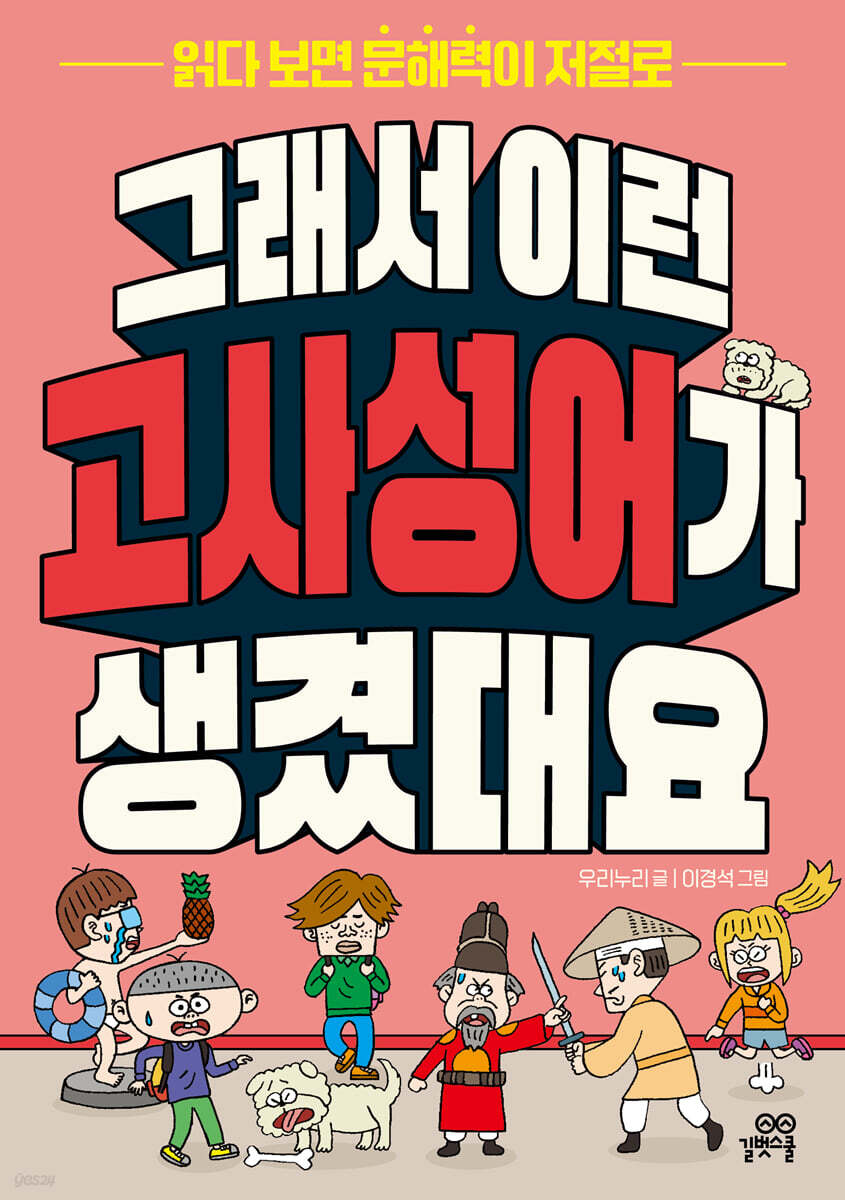
That's how this idiom came to be.
 |
Description
Book Introduction
Learn idioms in a fun and informative way through their origin stories.
'Hamheung envoy' is an idiom that originated from the Joseon Dynasty when an envoy to Hamheung failed to return.
The saying 'painting a dragon and dotting its eyes' came from the story that when pupils were drawn on a dragon painting, the dragon in the painting flew into the sky.
Like this, each idiom has an interesting origin story hidden in it.
"That's how these idioms came to be" is a book that explains the origins of idioms and their use in real life through fun cartoons and text.
It is more fun and informative than a book that simply provides the Chinese characters and meanings of idioms.
I recommend this book to everyone: elementary school students who want to learn idioms easily and enjoyably, parents who want to improve their children's vocabulary and Chinese character skills, and teachers looking for useful vocabulary-related learning materials.
'Hamheung envoy' is an idiom that originated from the Joseon Dynasty when an envoy to Hamheung failed to return.
The saying 'painting a dragon and dotting its eyes' came from the story that when pupils were drawn on a dragon painting, the dragon in the painting flew into the sky.
Like this, each idiom has an interesting origin story hidden in it.
"That's how these idioms came to be" is a book that explains the origins of idioms and their use in real life through fun cartoons and text.
It is more fun and informative than a book that simply provides the Chinese characters and meanings of idioms.
I recommend this book to everyone: elementary school students who want to learn idioms easily and enjoyably, parents who want to improve their children's vocabulary and Chinese character skills, and teachers looking for useful vocabulary-related learning materials.
- You can preview some of the book's contents.
Preview
index
Chapter 1: Idioms that Contain the Ways of the World
Contradiction 8
Chapter 10
Sisibibi 12
Small Penny, Big Loss 14
Chronic Waiting 16
The Tale of Saeongjima 18
Same Bed, Different Dreams 20
Fifty-fifty steps 22
Adding insult to injury 24
Sympathy for the Sick 26
Family Blind Date 28
30 Airborne Airborne
Chapter 2: Interesting Idioms from History
Single-minded 34
36.
Hamheung Tea Company 38
Tosaguppeng 40
42nd Gyeolchoboeun
Peach Garden Oath 44
Samgochoryo 46
Exclamation mark 48
Wind Light 50
Myeonmok 52
White rice 54
Dadaikseon 56
Chiljongchilgeum 58
Chapter 3: Idioms that Awaken Wisdom
Mencius's Mother, Chapter 62
Seeing is believing 64
Fisherman's Tale 66
Footnote 68
Seeing the things that are good for you 70
Reverse Thinking 72
Too much of something is as bad as too little 74
Useless 76
Chapter 4 Idioms Expressing Will and Determination
Hyungseoljigong 80
Ipsin Yangmyeong 82
A Change of Heart 84
Ugong's Adventures in the Mountains 86
Wasin Consultation 88
No retreat in battle 90
Jipijigi Baekjeon Baekseung 92
Bae Soo-jin 94
Impregnable 96
Noikjang 98
Dragon's Head 100
Chapter 5 Idioms that Express Character and Behavior
Sweet talk 104
Two-facedness 106
Jeokbanhajang 108
110 Unruly
Self-praise 112
Soft on the outside, strong on the inside 114
Metamorphosis 116
Juanmuchi 118
Ajeon Insu 120
Inmyeonsusim 122
May 124
Ingratitude 126
Indifferent 128
Jirokwima 130
Chapter 6: Interesting Idioms You'll Learn When You Know Them
Hwalongjeomjeong 134
Jo Sam Mo Sa 136
Duck Mujung 138
Written 140 times
Gyereuk 142
Breakup 144
Perfect 146
Killing two birds with one stone 148
Military Academy 150
152 people in the sea
Sangjeonbyeokhae 154
Peach Blossom Spring 156
Contradiction 8
Chapter 10
Sisibibi 12
Small Penny, Big Loss 14
Chronic Waiting 16
The Tale of Saeongjima 18
Same Bed, Different Dreams 20
Fifty-fifty steps 22
Adding insult to injury 24
Sympathy for the Sick 26
Family Blind Date 28
30 Airborne Airborne
Chapter 2: Interesting Idioms from History
Single-minded 34
36.
Hamheung Tea Company 38
Tosaguppeng 40
42nd Gyeolchoboeun
Peach Garden Oath 44
Samgochoryo 46
Exclamation mark 48
Wind Light 50
Myeonmok 52
White rice 54
Dadaikseon 56
Chiljongchilgeum 58
Chapter 3: Idioms that Awaken Wisdom
Mencius's Mother, Chapter 62
Seeing is believing 64
Fisherman's Tale 66
Footnote 68
Seeing the things that are good for you 70
Reverse Thinking 72
Too much of something is as bad as too little 74
Useless 76
Chapter 4 Idioms Expressing Will and Determination
Hyungseoljigong 80
Ipsin Yangmyeong 82
A Change of Heart 84
Ugong's Adventures in the Mountains 86
Wasin Consultation 88
No retreat in battle 90
Jipijigi Baekjeon Baekseung 92
Bae Soo-jin 94
Impregnable 96
Noikjang 98
Dragon's Head 100
Chapter 5 Idioms that Express Character and Behavior
Sweet talk 104
Two-facedness 106
Jeokbanhajang 108
110 Unruly
Self-praise 112
Soft on the outside, strong on the inside 114
Metamorphosis 116
Juanmuchi 118
Ajeon Insu 120
Inmyeonsusim 122
May 124
Ingratitude 126
Indifferent 128
Jirokwima 130
Chapter 6: Interesting Idioms You'll Learn When You Know Them
Hwalongjeomjeong 134
Jo Sam Mo Sa 136
Duck Mujung 138
Written 140 times
Gyereuk 142
Breakup 144
Perfect 146
Killing two birds with one stone 148
Military Academy 150
152 people in the sea
Sangjeonbyeokhae 154
Peach Blossom Spring 156
Detailed image

Into the book
“This window can pierce anything.
“It’s the best in the world.”
Everyone who was watching touched the window.
The excited merchant brought a shield this time.
“This shield is also the best in the world.
“You can block any window.”
Then someone asked the merchant loudly.
“Then what happens if you throw that spear at that shield?”
At these words, the merchant became speechless.
Because you can't have a spear that can pierce anything and a shield that can block any spear at the same time.
The embarrassed merchant quickly left the place.
After that, when the logic of the front and back of the words did not match, people used the character for shield (盾) with the character for spear (矛) to say 'contradiction'.
--- p.9 From “The Origin of ‘Contradiction’”
“In a war, an army ran a hundred paces.
At that time, the other army fled fifty paces.
“If an army that has fled fifty paces were to mock an army that has fled a hundred paces and call them cowards, what would you say?”
“How foolish! Whether you run fifty or a hundred steps, isn’t it all the same?”
When King Hui answered, Mencius nodded and said:
“Your Majesty, what you said is correct.
The people are also like this.
Whether you do a little better or a little worse, it's still a difficult life.
“There is no great difference whether one stays in one’s own country or crosses over to another country, so the people of neighboring countries do not necessarily come to Your Majesty’s country.”
King Hye realized that what he had done over the years had not been of much help to the people.
After that, 'fifty-fifty-fifty' came to be used to mean that although there are some differences, in the end it is the same.
“It’s the best in the world.”
Everyone who was watching touched the window.
The excited merchant brought a shield this time.
“This shield is also the best in the world.
“You can block any window.”
Then someone asked the merchant loudly.
“Then what happens if you throw that spear at that shield?”
At these words, the merchant became speechless.
Because you can't have a spear that can pierce anything and a shield that can block any spear at the same time.
The embarrassed merchant quickly left the place.
After that, when the logic of the front and back of the words did not match, people used the character for shield (盾) with the character for spear (矛) to say 'contradiction'.
--- p.9 From “The Origin of ‘Contradiction’”
“In a war, an army ran a hundred paces.
At that time, the other army fled fifty paces.
“If an army that has fled fifty paces were to mock an army that has fled a hundred paces and call them cowards, what would you say?”
“How foolish! Whether you run fifty or a hundred steps, isn’t it all the same?”
When King Hui answered, Mencius nodded and said:
“Your Majesty, what you said is correct.
The people are also like this.
Whether you do a little better or a little worse, it's still a difficult life.
“There is no great difference whether one stays in one’s own country or crosses over to another country, so the people of neighboring countries do not necessarily come to Your Majesty’s country.”
King Hye realized that what he had done over the years had not been of much help to the people.
After that, 'fifty-fifty-fifty' came to be used to mean that although there are some differences, in the end it is the same.
--- p.25 From “The Origin of ‘Fifty-fifty-hundred Steps’”
Publisher's Review
The elementary school Korean language bestseller series "So That's How This Word Came About"
Learning about words becomes more fun when you know their origins!
The "So That's How This Word Came About" series explains the origins of words in an easy and fun way through four-panel comics and short stories.
Knowing the origins of words allows you to naturally understand not only the exact meaning of each word, but also the context and nuance of when to use it.
Because it is not a mechanical memorization, it is easy to remember and allows for in-depth learning.
Vocabulary and literacy skills also grow significantly.
It consists of Volume 1 Korean, Volume 2 Idioms, Volume 3 Chinese Characters, Volume 4 Proverbs, and Volume 5 Idioms.
Learn the wisdom and lessons of the East by learning idioms and proverbs passed down for thousands of years.
Words also have trends, and some words are used frequently but then quickly disappear.
But there are words that are still loved and have the same meaning even after hundreds or thousands of years.
It is an 'idiom'.
Idioms are words that originate from old stories and are made up of Chinese characters, and are still used by many people today.
This book introduces essential idioms that elementary school students must know.
Read the diverse and interesting stories surrounding idioms and learn Eastern wisdom and lessons.
You will be able to instantly understand the meaning of idioms that seemed somewhat difficult, and you will find yourself with deeper thoughts before you know it.
Learn the correct usage of idioms by reading interesting stories about their origins.
Do you know the Chinese idiom "Xingxue Zhi Gong" (螢雪之功) only as the meaning of reaping the rewards of studying hard despite all the hardships? It tells the story of two Chinese boys who achieved success through studying with the help of fireflies and the bright light of snow.
'Sleeping on firewood and tasting gall' contains the story of Bucha, who slept on firewood to seek revenge, and the Nine Heavenly Kings, who licked bear bile to calm their minds.
This book tells you not only the basic meaning of idioms, but also their origin stories.
So, you can learn idioms in a more in-depth and fun way.
Even children who only like educational comics can read it without any burden.
On each left page where the story begins, there is a fun four-panel comic.
Just by reading the comics, you can immediately understand how each idiom is used in real conversation.
The origin story is written in a short fairy tale format on the right page, making it easy to read.
This book is fun to read for children who are only familiar with educational comics or have difficulty reading long texts, so it is a book that both parents and children can enjoy.
Learning about words becomes more fun when you know their origins!
The "So That's How This Word Came About" series explains the origins of words in an easy and fun way through four-panel comics and short stories.
Knowing the origins of words allows you to naturally understand not only the exact meaning of each word, but also the context and nuance of when to use it.
Because it is not a mechanical memorization, it is easy to remember and allows for in-depth learning.
Vocabulary and literacy skills also grow significantly.
It consists of Volume 1 Korean, Volume 2 Idioms, Volume 3 Chinese Characters, Volume 4 Proverbs, and Volume 5 Idioms.
Learn the wisdom and lessons of the East by learning idioms and proverbs passed down for thousands of years.
Words also have trends, and some words are used frequently but then quickly disappear.
But there are words that are still loved and have the same meaning even after hundreds or thousands of years.
It is an 'idiom'.
Idioms are words that originate from old stories and are made up of Chinese characters, and are still used by many people today.
This book introduces essential idioms that elementary school students must know.
Read the diverse and interesting stories surrounding idioms and learn Eastern wisdom and lessons.
You will be able to instantly understand the meaning of idioms that seemed somewhat difficult, and you will find yourself with deeper thoughts before you know it.
Learn the correct usage of idioms by reading interesting stories about their origins.
Do you know the Chinese idiom "Xingxue Zhi Gong" (螢雪之功) only as the meaning of reaping the rewards of studying hard despite all the hardships? It tells the story of two Chinese boys who achieved success through studying with the help of fireflies and the bright light of snow.
'Sleeping on firewood and tasting gall' contains the story of Bucha, who slept on firewood to seek revenge, and the Nine Heavenly Kings, who licked bear bile to calm their minds.
This book tells you not only the basic meaning of idioms, but also their origin stories.
So, you can learn idioms in a more in-depth and fun way.
Even children who only like educational comics can read it without any burden.
On each left page where the story begins, there is a fun four-panel comic.
Just by reading the comics, you can immediately understand how each idiom is used in real conversation.
The origin story is written in a short fairy tale format on the right page, making it easy to read.
This book is fun to read for children who are only familiar with educational comics or have difficulty reading long texts, so it is a book that both parents and children can enjoy.
GOODS SPECIFICS
- Date of issue: June 3, 2024
- Page count, weight, size: 160 pages | 352g | 148*210*12mm
- ISBN13: 9791164067589
- KC Certification: Certification Type: Conformity Confirmation
You may also like
카테고리
korean


korean

![GQ KOREA Mark (Monthly): December [2025]](http://librairie.coreenne.fr/cdn/shop/files/8ef265dbbfbf186523ed75ba7319009d.jpg?v=1765340328&width=3840)


