

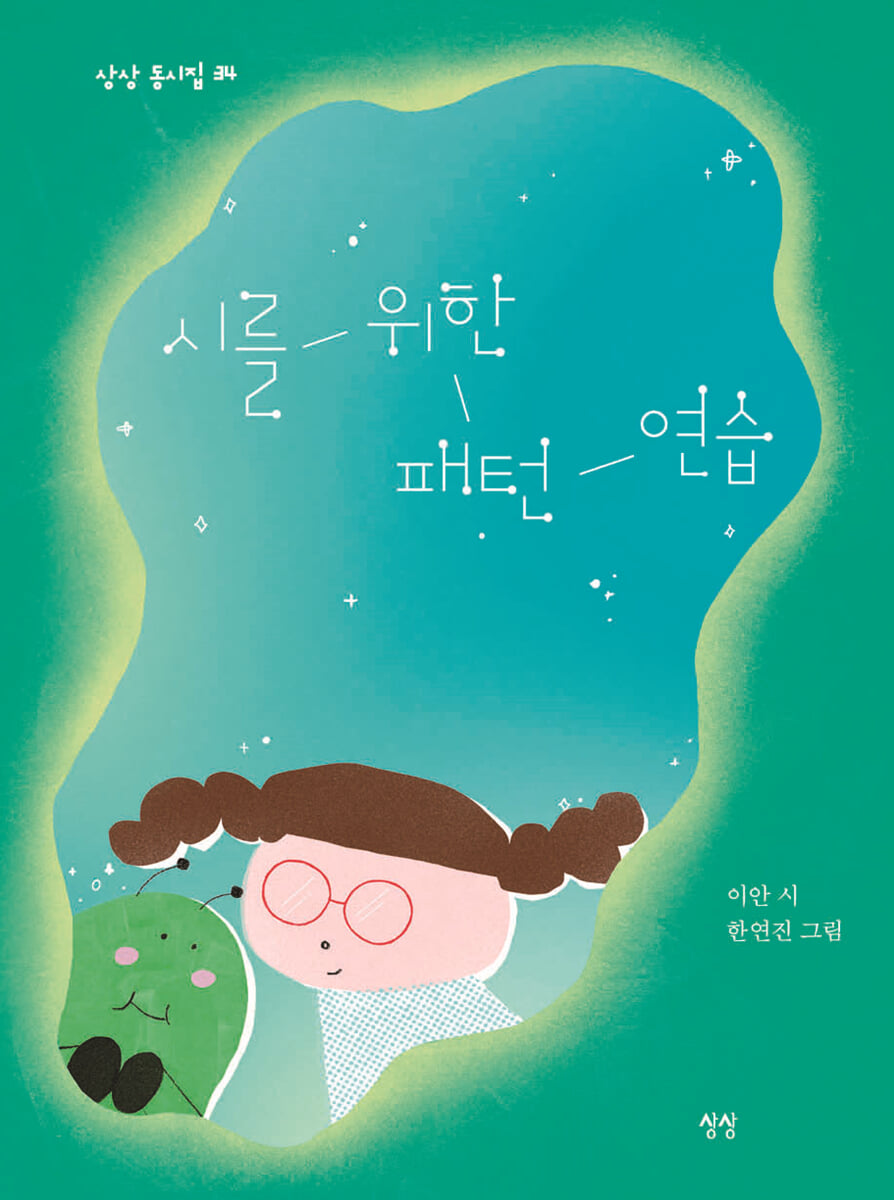
Pattern Practice for Poetry
 |
Description
Book Introduction
A child who writes poetry sends his heart to the world
Practice free-moving speech and mental patterns
Even in the midst of all the hardships of life
A happy ending created simultaneously
"Pattern Practice for Poetry" is literally a work that practices patterns for writing poetry, but it is also an exercise in creating and living our lives through poetry.
The most significant characteristic of the world of poetry that Poet Ian unfolds is the circular structure in which the poems he salvages by looking at the world with a warm gaze make our lives warmer again.
Simultaneity is not something that is far away from our lives, but is within our lives and makes our lives happy.
Poet Ian's poetry has a magical power to lead us to a happy ending despite all the hardships of life.
Practice free-moving speech and mental patterns
Even in the midst of all the hardships of life
A happy ending created simultaneously
"Pattern Practice for Poetry" is literally a work that practices patterns for writing poetry, but it is also an exercise in creating and living our lives through poetry.
The most significant characteristic of the world of poetry that Poet Ian unfolds is the circular structure in which the poems he salvages by looking at the world with a warm gaze make our lives warmer again.
Simultaneity is not something that is far away from our lives, but is within our lives and makes our lives happy.
Poet Ian's poetry has a magical power to lead us to a happy ending despite all the hardships of life.
- You can preview some of the book's contents.
Preview
index
Part 1: One yellow apple
In the rock/ Apple/ Separated like that/ No matter what happens/
Cabbage worm/ Nose spot/ Alone ramen/ Flower ID photo/ Where there is light/
Bird droppings and a chair/ A poem that becomes closer/ Like an Indian/ Starfall
Part 2 Happy Ending
In front of the house/ Good supermarket/ The wind is blowing now/
Chae Song-hwa / Jenga / Sparrow / Happy Ending
Pattern practice for part 3 of the poem
Snowman/ To my beautiful bicycle/ Deer/ Said the cat Mio/
Pebbles and Butterflies/ Butterflies and Pebbles/ Somehow I Didn't Seem Like a Genius/ Shadow Promise/
The chrysanthemum cried / Flower seeds and thieves / The geese are round / Hidden poetry / Pattern practice for poetry
Part 4: Laughter shouldn't touch the feet
When it snows in the old village/ When I was eight years old/ This child/ A glass kettle/
Friday's Simultaneous Mailbox/ Why the Gecko?/ Tangja/ Don't grit your teeth, Yen,/
The cherry tree died/ A day without my aunt/ Again in the rock
A deeper joy contained in a small vessel called a commentary poem _Woo Kyung-sook
In the rock/ Apple/ Separated like that/ No matter what happens/
Cabbage worm/ Nose spot/ Alone ramen/ Flower ID photo/ Where there is light/
Bird droppings and a chair/ A poem that becomes closer/ Like an Indian/ Starfall
Part 2 Happy Ending
In front of the house/ Good supermarket/ The wind is blowing now/
Chae Song-hwa / Jenga / Sparrow / Happy Ending
Pattern practice for part 3 of the poem
Snowman/ To my beautiful bicycle/ Deer/ Said the cat Mio/
Pebbles and Butterflies/ Butterflies and Pebbles/ Somehow I Didn't Seem Like a Genius/ Shadow Promise/
The chrysanthemum cried / Flower seeds and thieves / The geese are round / Hidden poetry / Pattern practice for poetry
Part 4: Laughter shouldn't touch the feet
When it snows in the old village/ When I was eight years old/ This child/ A glass kettle/
Friday's Simultaneous Mailbox/ Why the Gecko?/ Tangja/ Don't grit your teeth, Yen,/
The cherry tree died/ A day without my aunt/ Again in the rock
A deeper joy contained in a small vessel called a commentary poem _Woo Kyung-sook
Detailed image
Publisher's Review
The kid with the two-pronged hair, the circle, the red glasses, and all the aunts in the world
In "Pattern Practice for Poetry," the protagonist is a child with round red glasses, two pigtails, and a steady stream of poetry.
This child, for some unknown reason, shows the aspect of a guardian angel who calls out to his aunt who is in a difficult situation in her life and tries hard to maintain her relationship with her.
This point is the child's self-awareness (“Just because I'm small doesn't mean I'm weak.
“Children are names that exist not only in the past that adults have passed through, but also in the future that adults will arrive at.” This is the power that comes from the poet’s words.
At the same time, the story this child tells contains images of all of us.
The way she sulks at her friend who wants to “go back to being on good terms” with her but is jealous of her friend’s good poetry writing, saying “Please don’t write the next poem as well, Minji” (“Poems That Make Us Better”) evokes empathy from both children and adults, and the way she urges her aunt to write a poem quickly and asks her to buy her a bicycle with the prize money (“To My Beautiful Bicycle”) is just like the cuteness of our children.
Also, the aunt the child is talking about is not a specific person.
It is not a title limited to blood relationship or gender.
The child's "imagined aunt" is both "an aunt doing relief work at the site of the earthquake in Turkey" and "Mr. Mesut Hanser, the fifteen-year-old who was buried under the rubble of the earthquake in Turkey" and "holding his daughter's hand" ("Hidden Poem").
Aunt helps someone and receives help from someone, but it is not separate.
Ultimately, the life in which we are all connected is what the poet discovers in his poetry.
Affectionate practice that cherishes everyday life
The sight of the small things in the world each being given their own value gives us a small comfort.
Like a stone saying, “Please use me as a chair when you rest” (“Stone and Butterfly”), the poet’s warm heart becomes a place to lean on in our lives.
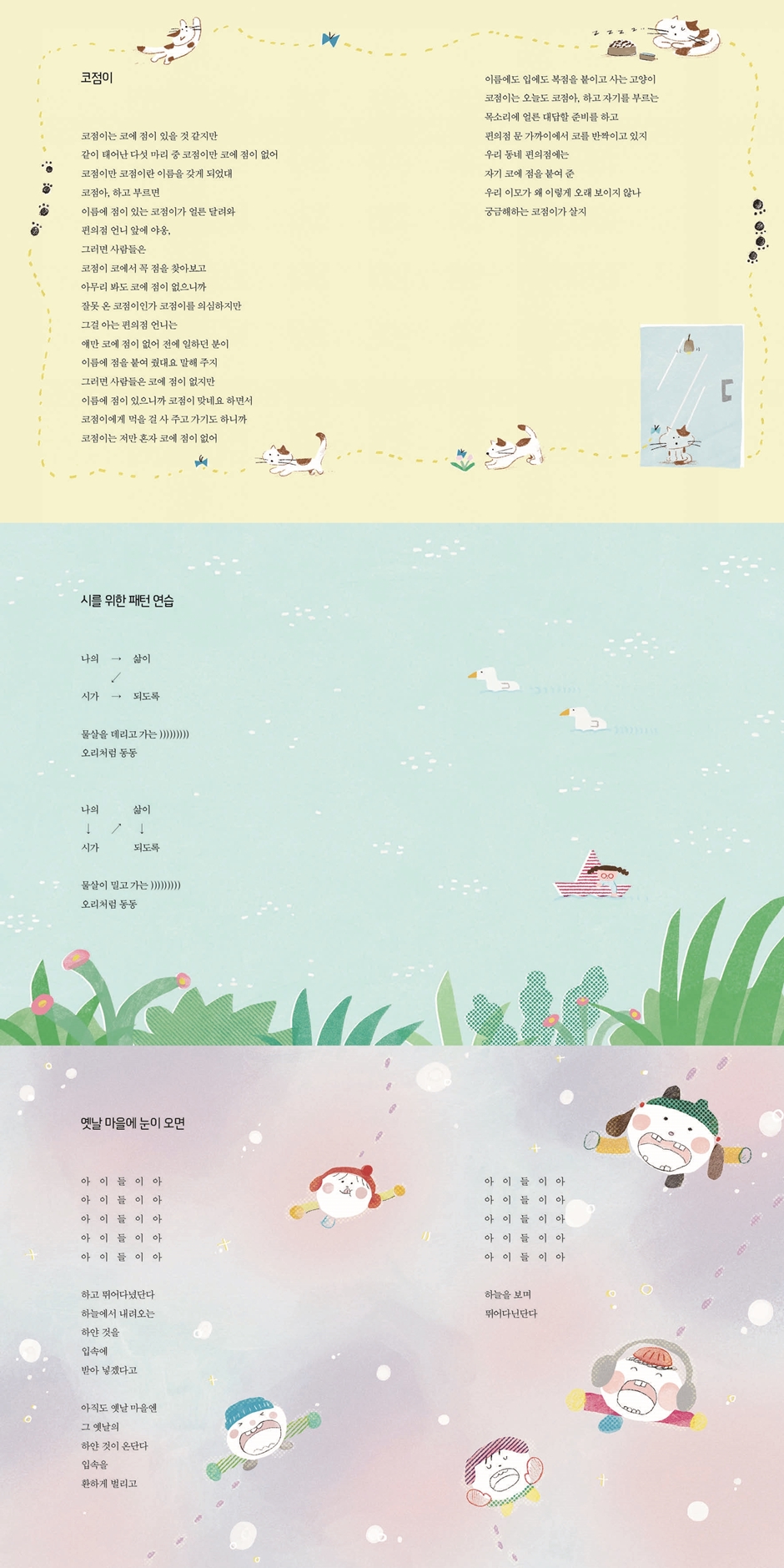
This person who worked before is the only one who doesn't have a mole on his nose.
I told you that they added a dot to the name.
Then people don't have dots on their noses
Since there is a dot in the name, it is correct that it is a dot in the nose.
Because I also buy food for the nosebleeder
─「Nose point」 part
There is a secret and warm heart that gives the name “Nose Spot” to a cat that “has no spots on its nose.”
Pay attention to even the most trivial details and give them value.
That sight brings us a little comfort.
When we encounter a solid world of poetry that we can lean on, we too can regain our sense of self and find the strength to embrace our daily lives.
Free-moving simultaneous play patterns
Poet Ian's poetry is also famous for treating letters themselves as objects of play.
The five letters arranged in a square shape show the child's time and place in an eternal cycle no matter how you read them (forward and backward, left and right, diagonally) (“When it snows in the old village”), and some sentences look the same whether you look forward or backward (“Why the crow?”).
Experimental works that are being introduced for the first time in our poetry, such as a poem written with particles that change depending on the presence or absence of a final consonant (「이아 가 야」), an acrostic in which both rhyme and diphthong are in a circular motion (「Shadow Promise」), acrostic with retrograde rhyme (「Poem on Getting Closer」), and acrostic with forward rhyme (「Jenga」), provide a new enjoyment in reading poetry.
Works that utilize Korean patterns are not only fun in themselves, but also help young readers naturally understand Korean grammar and develop an interest in the language.
I can't believe what happened
Sunmu Geeriu Myeondaet Mansu Al Yakman
Why do things happen in dreams, bad and good?
This day will not be the day of the great festival
Is something that should never happen happening?
Oh, oh, what's wrong with you? Rodier, when was that time?
I don't understand you at all
You can't keep my promise, I will die
The times I couldn't be with you, I think about them even while I'm sleeping
I'm going to tell you about the dream in the book
Why didn't I do this? Why didn't I do this?
There is a taboo about this.
Even in my dreams, I hold you tight
line
crab
-Full text of "Shadow Promise"
Furthermore, poet Ian's wordplay goes beyond simply stimulating children's interest and functions as a conduit for producing special meaning.
The wordplay of “Shadow Promise” (“No matter what happens, I’ll be with you // I’ll never leave your side”_full text), which was also the prologue to the previous work “Secret of Joy”, expresses the shadow’s speech as a reversed text.
Although it is written in the opposite direction from the previous line, it effectively expresses the shadow that stays by our side through the form of being stuck to it, and signifies a being that we can always rely on.
There are countless stories that can be told between the vertical reading of the first letter of each line (I will be with you no matter what) and the vertical reading of the last letter (I will never leave your side), and the 'ㄹ-letter arrangement method' was chosen as a way to realize them.
In other words, it is an example of an experiment in the method of hiding the same poem by opening a rock, writing a poem, and closing the rock.
Poet Ian's unique play on words, which freely manipulates language, stimulates the imagination in dealing with letters, while also fostering a broad perspective that allows one to view and interpret the entire text from a structural perspective.
In "Pattern Practice for Poetry," the protagonist is a child with round red glasses, two pigtails, and a steady stream of poetry.
This child, for some unknown reason, shows the aspect of a guardian angel who calls out to his aunt who is in a difficult situation in her life and tries hard to maintain her relationship with her.
This point is the child's self-awareness (“Just because I'm small doesn't mean I'm weak.
“Children are names that exist not only in the past that adults have passed through, but also in the future that adults will arrive at.” This is the power that comes from the poet’s words.
At the same time, the story this child tells contains images of all of us.
The way she sulks at her friend who wants to “go back to being on good terms” with her but is jealous of her friend’s good poetry writing, saying “Please don’t write the next poem as well, Minji” (“Poems That Make Us Better”) evokes empathy from both children and adults, and the way she urges her aunt to write a poem quickly and asks her to buy her a bicycle with the prize money (“To My Beautiful Bicycle”) is just like the cuteness of our children.
Also, the aunt the child is talking about is not a specific person.
It is not a title limited to blood relationship or gender.
The child's "imagined aunt" is both "an aunt doing relief work at the site of the earthquake in Turkey" and "Mr. Mesut Hanser, the fifteen-year-old who was buried under the rubble of the earthquake in Turkey" and "holding his daughter's hand" ("Hidden Poem").
Aunt helps someone and receives help from someone, but it is not separate.
Ultimately, the life in which we are all connected is what the poet discovers in his poetry.
Affectionate practice that cherishes everyday life
The sight of the small things in the world each being given their own value gives us a small comfort.
Like a stone saying, “Please use me as a chair when you rest” (“Stone and Butterfly”), the poet’s warm heart becomes a place to lean on in our lives.
This person who worked before is the only one who doesn't have a mole on his nose.
I told you that they added a dot to the name.
Then people don't have dots on their noses
Since there is a dot in the name, it is correct that it is a dot in the nose.
Because I also buy food for the nosebleeder
─「Nose point」 part
There is a secret and warm heart that gives the name “Nose Spot” to a cat that “has no spots on its nose.”
Pay attention to even the most trivial details and give them value.
That sight brings us a little comfort.
When we encounter a solid world of poetry that we can lean on, we too can regain our sense of self and find the strength to embrace our daily lives.
Free-moving simultaneous play patterns
Poet Ian's poetry is also famous for treating letters themselves as objects of play.
The five letters arranged in a square shape show the child's time and place in an eternal cycle no matter how you read them (forward and backward, left and right, diagonally) (“When it snows in the old village”), and some sentences look the same whether you look forward or backward (“Why the crow?”).
Experimental works that are being introduced for the first time in our poetry, such as a poem written with particles that change depending on the presence or absence of a final consonant (「이아 가 야」), an acrostic in which both rhyme and diphthong are in a circular motion (「Shadow Promise」), acrostic with retrograde rhyme (「Poem on Getting Closer」), and acrostic with forward rhyme (「Jenga」), provide a new enjoyment in reading poetry.
Works that utilize Korean patterns are not only fun in themselves, but also help young readers naturally understand Korean grammar and develop an interest in the language.
I can't believe what happened
Sunmu Geeriu Myeondaet Mansu Al Yakman
Why do things happen in dreams, bad and good?
This day will not be the day of the great festival
Is something that should never happen happening?
Oh, oh, what's wrong with you? Rodier, when was that time?
I don't understand you at all
You can't keep my promise, I will die
The times I couldn't be with you, I think about them even while I'm sleeping
I'm going to tell you about the dream in the book
Why didn't I do this? Why didn't I do this?
There is a taboo about this.
Even in my dreams, I hold you tight
line
crab
-Full text of "Shadow Promise"
Furthermore, poet Ian's wordplay goes beyond simply stimulating children's interest and functions as a conduit for producing special meaning.
The wordplay of “Shadow Promise” (“No matter what happens, I’ll be with you // I’ll never leave your side”_full text), which was also the prologue to the previous work “Secret of Joy”, expresses the shadow’s speech as a reversed text.
Although it is written in the opposite direction from the previous line, it effectively expresses the shadow that stays by our side through the form of being stuck to it, and signifies a being that we can always rely on.
There are countless stories that can be told between the vertical reading of the first letter of each line (I will be with you no matter what) and the vertical reading of the last letter (I will never leave your side), and the 'ㄹ-letter arrangement method' was chosen as a way to realize them.
In other words, it is an example of an experiment in the method of hiding the same poem by opening a rock, writing a poem, and closing the rock.
Poet Ian's unique play on words, which freely manipulates language, stimulates the imagination in dealing with letters, while also fostering a broad perspective that allows one to view and interpret the entire text from a structural perspective.
GOODS SPECIFICS
- Date of issue: July 15, 2025
- Format: Hardcover book binding method guide
- Page count, weight, size: 116 pages | 312g | 150*200*13mm
- ISBN13: 9791191197501
- ISBN10: 1191197506
- KC Certification: Certification Type: Conformity Confirmation
You may also like
카테고리
korean


korean

![GQ KOREA Mark (Monthly): December [2025]](http://librairie.coreenne.fr/cdn/shop/files/8ef265dbbfbf186523ed75ba7319009d.jpg?v=1765340328&width=3840)


