

Lee Jung-seob, who captured the spirit of the bull
 |
Description
Book Introduction
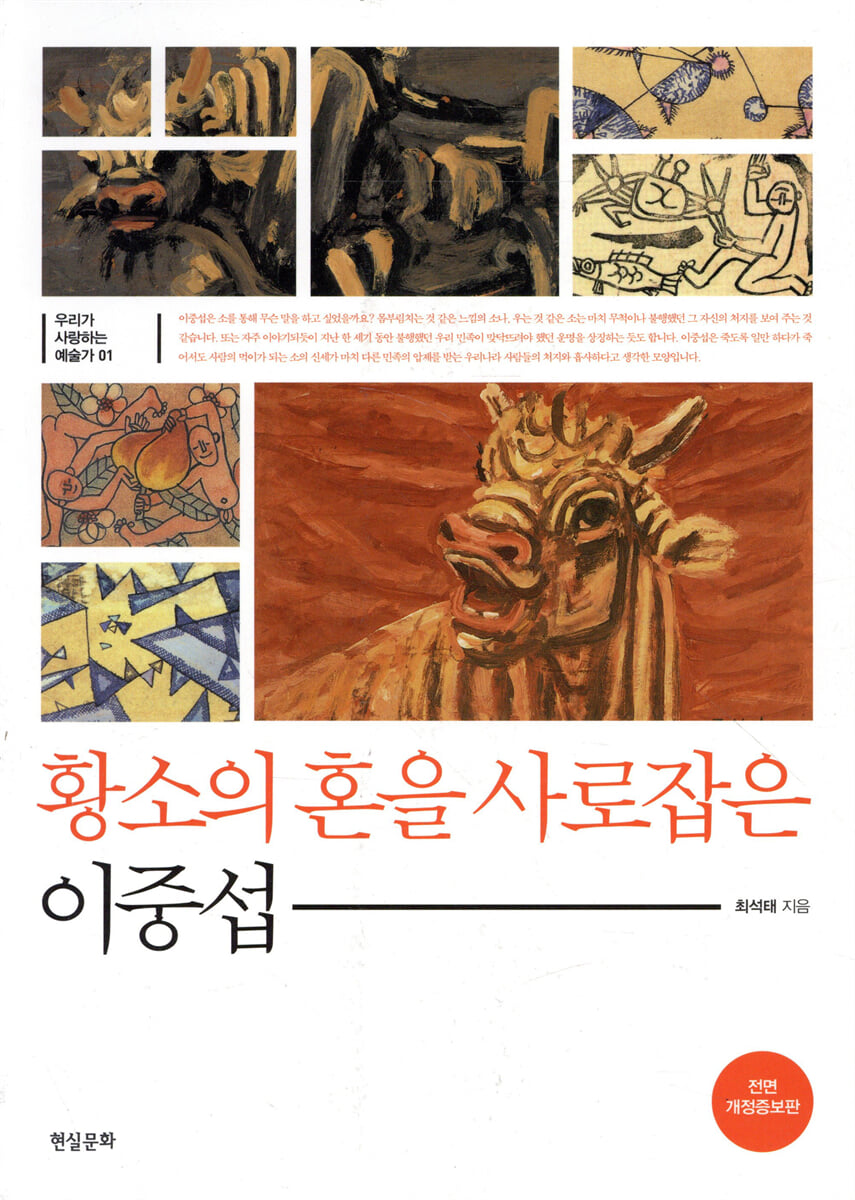
When you open 『Lee Jung-seob, who captured the spirit of the bull』, you see a painting of a 'bull howling with its back to the sunset'.
This painting, showing a cow with its mouth slightly open and howling against the backdrop of a sunset, draws attention to the artist Lee Jung-seop.
The question that follows is, what kind of person was Lee Jung-seop to have painted such a picture.
This book looks back on the life and paintings of Lee Jung-seob, who left behind many masterpieces, including the painting that captured the spirit of a bull.
Lee Jung-seop's story is so rich in exciting stories that it was included in middle school Korean language textbooks (7th curriculum, middle school 1-2), and Lee Jung-seop's paintings are honest windows that lead us into the world of art.
This book, a completely revised and expanded edition of the Iceum edition published in 2001, includes over 100 of Lee Jung-seop's paintings and 60 reference plates, enriching the text and illustrations. It also includes a structure that highlights the essence of Lee Jung-seop's paintings, including oil paintings, postcards, letters, and silver paper.
By examining Lee Jung-seop's life and the process of creating his paintings, we have also deepened our understanding of the historical environment from the Japanese colonial period to the Korean War.
This book, which has been consistently loved by children, teenagers, parents, and teachers as a recommended book for elementary school and a required reading for middle school, is also suitable for writing a book review because it allows for a variety of appreciations such as history, people, art, and artistic spirit.
This painting, showing a cow with its mouth slightly open and howling against the backdrop of a sunset, draws attention to the artist Lee Jung-seop.
The question that follows is, what kind of person was Lee Jung-seop to have painted such a picture.
This book looks back on the life and paintings of Lee Jung-seob, who left behind many masterpieces, including the painting that captured the spirit of a bull.
Lee Jung-seop's story is so rich in exciting stories that it was included in middle school Korean language textbooks (7th curriculum, middle school 1-2), and Lee Jung-seop's paintings are honest windows that lead us into the world of art.
This book, a completely revised and expanded edition of the Iceum edition published in 2001, includes over 100 of Lee Jung-seop's paintings and 60 reference plates, enriching the text and illustrations. It also includes a structure that highlights the essence of Lee Jung-seop's paintings, including oil paintings, postcards, letters, and silver paper.
By examining Lee Jung-seop's life and the process of creating his paintings, we have also deepened our understanding of the historical environment from the Japanese colonial period to the Korean War.
This book, which has been consistently loved by children, teenagers, parents, and teachers as a recommended book for elementary school and a required reading for middle school, is also suitable for writing a book review because it allows for a variety of appreciations such as history, people, art, and artistic spirit.
- You can preview some of the book's contents.
Preview
index
In the bangs
Chapter 1: A cow howling with its back to the sunset
Chapter 2: Great Success and Unusual Love
Chapter 3: A Flower Blooming in a Wandering Life
Chapter 4: A Pouring of Masterpieces
Chapter 5 The River of No Return
Lee Jung-seob's chronology
Search
Chapter 1: A cow howling with its back to the sunset
Chapter 2: Great Success and Unusual Love
Chapter 3: A Flower Blooming in a Wandering Life
Chapter 4: A Pouring of Masterpieces
Chapter 5 The River of No Return
Lee Jung-seob's chronology
Search
Into the book
What message did Lee Jung-seob want to convey through his cows? The cows, which appear to be struggling or crying, seem to reflect his own deeply unfortunate circumstances.
Or, as is often said, it seems to symbolize the fate that our unfortunate people have had to face over the past century.
Lee Jung-seop seemed to think that the plight of cows, who work themselves to death and are still food for humans after death, was very similar to the plight of Koreans who are oppressed by other nations.
--- p.12
Lee Jung-seob had already enjoyed painting cows around this time.
My friends would joke around saying things like, “Lee Jung-seob lives with a cow” or “I saw Lee Jung-seob kissing a cow.”
From this time on, his favorite paintings of cows were repeated throughout his life, displaying increasingly higher skill and different characteristics.
Around this time, there was another thing that Lee Jung-seob was absorbed in.
It was a work of applying ink to thick Korean paper and then scratching it with a pencil to reveal the background.
This was possible because of the teachings of teachers who studied in the United States and Europe.
In particular, Professor Im Yong-ryeon personally put into practice his educational philosophy that young people who will open up a new world should be taught practical knowledge that emphasizes individuality and an experimental spirit, preparing them for the changing world of the future rather than obsessing over past education, and this had a great influence on students.
--- p.27
Lee Jung-seob, who fell in love with the Japanese woman Yamamoto Masako, expressed his love by drawing pictures on government-issued postcards and sending them to Masako.
These postcards, which also have quite a few sender addresses, were published starting on December 25, 1940. Around 80 of them remain in the world from 1941, about 10 from 1942, and 2 from 1943.
There is not a single line of text on this postcard, only a picture.
The subject matter of the painting is diverse.
It includes a woman catching fish, a woman surrounded by animals, a man picking fruit or climbing a ladder, a man and a woman in love, a family with wild or flying beasts, animals such as deer, cranes, and ducks, and lotus flowers and fruit trees.
All these drawings were a secret love letter full of symbols and signs that only the two of them knew.
Or, as is often said, it seems to symbolize the fate that our unfortunate people have had to face over the past century.
Lee Jung-seop seemed to think that the plight of cows, who work themselves to death and are still food for humans after death, was very similar to the plight of Koreans who are oppressed by other nations.
--- p.12
Lee Jung-seob had already enjoyed painting cows around this time.
My friends would joke around saying things like, “Lee Jung-seob lives with a cow” or “I saw Lee Jung-seob kissing a cow.”
From this time on, his favorite paintings of cows were repeated throughout his life, displaying increasingly higher skill and different characteristics.
Around this time, there was another thing that Lee Jung-seob was absorbed in.
It was a work of applying ink to thick Korean paper and then scratching it with a pencil to reveal the background.
This was possible because of the teachings of teachers who studied in the United States and Europe.
In particular, Professor Im Yong-ryeon personally put into practice his educational philosophy that young people who will open up a new world should be taught practical knowledge that emphasizes individuality and an experimental spirit, preparing them for the changing world of the future rather than obsessing over past education, and this had a great influence on students.
--- p.27
Lee Jung-seob, who fell in love with the Japanese woman Yamamoto Masako, expressed his love by drawing pictures on government-issued postcards and sending them to Masako.
These postcards, which also have quite a few sender addresses, were published starting on December 25, 1940. Around 80 of them remain in the world from 1941, about 10 from 1942, and 2 from 1943.
There is not a single line of text on this postcard, only a picture.
The subject matter of the painting is diverse.
It includes a woman catching fish, a woman surrounded by animals, a man picking fruit or climbing a ladder, a man and a woman in love, a family with wild or flying beasts, animals such as deer, cranes, and ducks, and lotus flowers and fruit trees.
All these drawings were a secret love letter full of symbols and signs that only the two of them knew.
--- p.68
Publisher's Review
The 'Artists We Love' series
The life and achievements of our Korean yet world-class artist
This is an art book with stories and pictures.
Even though I like art, it is difficult to visit art galleries often to appreciate it.
Or, even when looking at a painting, we may not be able to appreciate it ourselves and instead think that the appreciation someone else gave us is our own.
This is because our art environment is not easy.
The 'Artists We Love' series is an art book that tells the stories and achievements of our world-renowned artists through stories and pictures.
We designed this exhibition to encourage our world-renowned artists to ask themselves and reflect on the environments in which they were able to create such wonderful works of art, how we should appreciate them, and what meaning they contain.
You can develop your artistic skills through books, just like strolling through an art gallery from your desk, and encounter the artistic world of the artists you love.
Appeared in middle school Korean language textbooks and elementary and middle school art textbooks
What's new in the must-read books by genius painter Lee Jung-seop?
Lee Jung-seob, a genius painter, a national painter, and the most beloved painter of Koreans, is a representative painter of Korea who is often found not only in elementary school textbooks but also in middle and high school art textbooks.
The story of Lee Jung-seob, who experienced Japanese colonial rule and the Korean War, was sadly separated from his family, and eventually passed away alone, has touched and inspired many people along with his paintings.
What was the reason that Lee Jung-seob was able to become a painter who has been loved by us for a long time?
When you open 『Lee Jung-seob, who captured the spirit of the bull』, you see a painting of a 'bull howling with its back to the sunset'.
This painting, showing a cow with its mouth slightly open and howling against the backdrop of a sunset, draws attention to the artist Lee Jung-seop.
The question that follows is, what kind of person was Lee Jung-seop to have painted such a picture?
This book looks back on the life and paintings of Lee Jung-seob, who left behind many masterpieces, including the painting that captured the spirit of a bull.
Lee Jung-seop's story is so rich in exciting stories that it was included in middle school Korean language textbooks (7th curriculum, middle school 1-2), and Lee Jung-seop's paintings are honest windows that lead us into the world of art.
This book, a completely revised and expanded edition of the Iceum edition published in 2001, includes over 100 of Lee Jung-seop's paintings and 60 reference plates, enriching the text and illustrations. It also includes a structure that highlights the essence of Lee Jung-seop's paintings, including oil paintings, postcards, letters, and silver paper.
By examining Lee Jung-seop's life and the process of creating his paintings, we have also deepened our understanding of the historical environment from the Japanese colonial period to the Korean War.
This book, which has been consistently loved by children, teenagers, parents, and teachers as a recommended book for elementary school and a required reading for middle school, is also suitable for writing a book review because it allows for a variety of appreciations such as history, people, art, and artistic spirit.
It is a comprehensive youth education book that combines art and humanities.
This is a must-read for any Jeju Island art and history tour.
2016 marks the 100th anniversary of Lee Jung-seob's birth and the 60th anniversary of his death.
Exhibitions and events looking back on Lee Jung-seob's life and paintings are planned across the country.
In particular, Lee Jung-seop's Seogwipo residence and the Lee Jung-seop Art Museum, where he fled during the Korean War, are essential stops on a tour of Jeju Island's art and history, and are visited by tens of thousands of visitors every year.
"Lee Jung-seob, Who Captured the Soul of the Bull" is filled with paintings that enrich this aspect of travel.
In addition, [Learn More] is designed to promote understanding of traditional arts such as Goryeo celadon, inlay techniques, Goguryeo tomb murals, and calligraphy, and to highlight the artistic world of Lee Jung-seop by explaining the characteristics of his paintings such as oil paintings, postcard paintings, letters, and silver paper paintings.
In other words, this book is not just a simple picture book, but a comprehensive youth education book that combines art, history, art, and humanities.
The life and achievements of our Korean yet world-class artist
This is an art book with stories and pictures.
Even though I like art, it is difficult to visit art galleries often to appreciate it.
Or, even when looking at a painting, we may not be able to appreciate it ourselves and instead think that the appreciation someone else gave us is our own.
This is because our art environment is not easy.
The 'Artists We Love' series is an art book that tells the stories and achievements of our world-renowned artists through stories and pictures.
We designed this exhibition to encourage our world-renowned artists to ask themselves and reflect on the environments in which they were able to create such wonderful works of art, how we should appreciate them, and what meaning they contain.
You can develop your artistic skills through books, just like strolling through an art gallery from your desk, and encounter the artistic world of the artists you love.
Appeared in middle school Korean language textbooks and elementary and middle school art textbooks
What's new in the must-read books by genius painter Lee Jung-seop?
Lee Jung-seob, a genius painter, a national painter, and the most beloved painter of Koreans, is a representative painter of Korea who is often found not only in elementary school textbooks but also in middle and high school art textbooks.
The story of Lee Jung-seob, who experienced Japanese colonial rule and the Korean War, was sadly separated from his family, and eventually passed away alone, has touched and inspired many people along with his paintings.
What was the reason that Lee Jung-seob was able to become a painter who has been loved by us for a long time?
When you open 『Lee Jung-seob, who captured the spirit of the bull』, you see a painting of a 'bull howling with its back to the sunset'.
This painting, showing a cow with its mouth slightly open and howling against the backdrop of a sunset, draws attention to the artist Lee Jung-seop.
The question that follows is, what kind of person was Lee Jung-seop to have painted such a picture?
This book looks back on the life and paintings of Lee Jung-seob, who left behind many masterpieces, including the painting that captured the spirit of a bull.
Lee Jung-seop's story is so rich in exciting stories that it was included in middle school Korean language textbooks (7th curriculum, middle school 1-2), and Lee Jung-seop's paintings are honest windows that lead us into the world of art.
This book, a completely revised and expanded edition of the Iceum edition published in 2001, includes over 100 of Lee Jung-seop's paintings and 60 reference plates, enriching the text and illustrations. It also includes a structure that highlights the essence of Lee Jung-seop's paintings, including oil paintings, postcards, letters, and silver paper.
By examining Lee Jung-seop's life and the process of creating his paintings, we have also deepened our understanding of the historical environment from the Japanese colonial period to the Korean War.
This book, which has been consistently loved by children, teenagers, parents, and teachers as a recommended book for elementary school and a required reading for middle school, is also suitable for writing a book review because it allows for a variety of appreciations such as history, people, art, and artistic spirit.
It is a comprehensive youth education book that combines art and humanities.
This is a must-read for any Jeju Island art and history tour.
2016 marks the 100th anniversary of Lee Jung-seob's birth and the 60th anniversary of his death.
Exhibitions and events looking back on Lee Jung-seob's life and paintings are planned across the country.
In particular, Lee Jung-seop's Seogwipo residence and the Lee Jung-seop Art Museum, where he fled during the Korean War, are essential stops on a tour of Jeju Island's art and history, and are visited by tens of thousands of visitors every year.
"Lee Jung-seob, Who Captured the Soul of the Bull" is filled with paintings that enrich this aspect of travel.
In addition, [Learn More] is designed to promote understanding of traditional arts such as Goryeo celadon, inlay techniques, Goguryeo tomb murals, and calligraphy, and to highlight the artistic world of Lee Jung-seop by explaining the characteristics of his paintings such as oil paintings, postcard paintings, letters, and silver paper paintings.
In other words, this book is not just a simple picture book, but a comprehensive youth education book that combines art, history, art, and humanities.
GOODS SPECIFICS
- Date of issue: May 1, 2015
- Page count, weight, size: 208 pages | 488g | 174*240*14mm
- ISBN13: 9788965641193
- ISBN10: 8965641195
You may also like
카테고리
korean


korean

![GQ KOREA Mark (Monthly): December [2025]](http://librairie.coreenne.fr/cdn/shop/files/8ef265dbbfbf186523ed75ba7319009d.jpg?v=1765340328&width=3840)


