

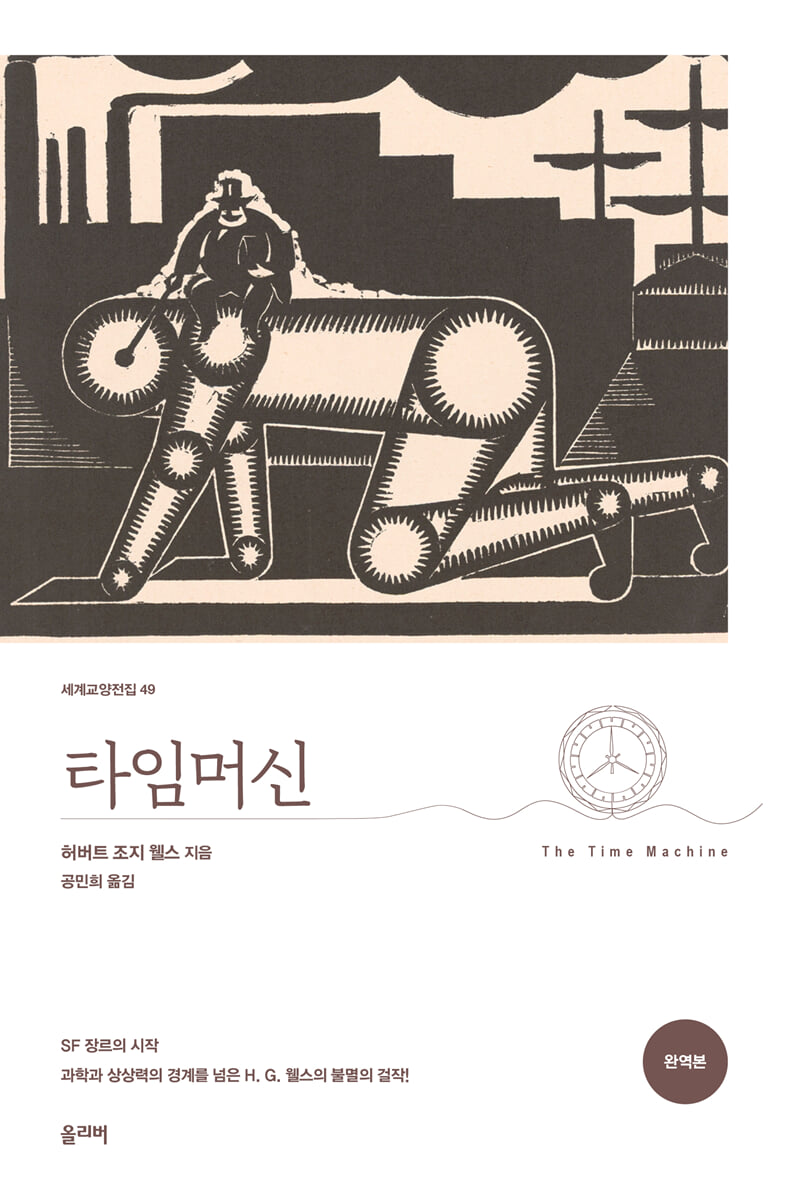
The Time Machine (Complete Translation)
 |
Description
Book Introduction
The first human to open the gate of time,
Face the fate of humanity in the future!
At the end of the 19th century, amidst the dazzling advancements in science and industry, humanity harbored endless hopes for the future.
But George Herbert Wells saw a dark shadow behind the brilliant progress.
The Time Machine is the story of a scientist who uses a machine he created to travel hundreds of thousands of years through time and witness the final era of humanity.
The future humans he met were divided into two races.
Civilization and reason are gone, and humans are no longer human.
Time travelers see in their world the degeneration of humanity, the end of civilization, and the futility of progress.
Through this work, Wells poses the question, 'Can science save humanity?'
"The Time Machine" is more than just science fiction; it is a philosophical allegory that examines the inequality of industrial society and the limitations of human nature, and it is an immortal classic that laid the foundation for science fiction literature.
Face the fate of humanity in the future!
At the end of the 19th century, amidst the dazzling advancements in science and industry, humanity harbored endless hopes for the future.
But George Herbert Wells saw a dark shadow behind the brilliant progress.
The Time Machine is the story of a scientist who uses a machine he created to travel hundreds of thousands of years through time and witness the final era of humanity.
The future humans he met were divided into two races.
Civilization and reason are gone, and humans are no longer human.
Time travelers see in their world the degeneration of humanity, the end of civilization, and the futility of progress.
Through this work, Wells poses the question, 'Can science save humanity?'
"The Time Machine" is more than just science fiction; it is a philosophical allegory that examines the inequality of industrial society and the limitations of human nature, and it is an immortal classic that laid the foundation for science fiction literature.
- You can preview some of the book's contents.
Preview
index
1.
Introduction
2.
time machine
3.
The Return of the Time Traveler I
4.
time travel
5.
Golden Age
6.
The last human being
7.
A shocking situation that suddenly arose
8.
A hypothesis established by a time traveler
9.
Moloch of the underworld
10.
When night came
11.
Green Porcelain Palace
12.
In the dark
13.
The White Sphinx's Trap
14.
Other places in the future seen by time travelers
15.
The Return of the Time Traveler II
16.
After the story is over
Epilogue
Author's chronology
Introduction
2.
time machine
3.
The Return of the Time Traveler I
4.
time travel
5.
Golden Age
6.
The last human being
7.
A shocking situation that suddenly arose
8.
A hypothesis established by a time traveler
9.
Moloch of the underworld
10.
When night came
11.
Green Porcelain Palace
12.
In the dark
13.
The White Sphinx's Trap
14.
Other places in the future seen by time travelers
15.
The Return of the Time Traveler II
16.
After the story is over
Epilogue
Author's chronology
Detailed image
Into the book
So the time traveler turned to the psychologist, took his hand, and asked him to hold out his index finger.
Now, a psychologist has sent this model time machine on an infinite journey.
We all watched the lever turn.
I was absolutely sure there was no trickery.
A gust of wind blew and the lamp lights flickered.
One candle on the fireplace mantel went out.
The small device suddenly spun around and then faded.
A faint swirl of brass and ivory, as if momentarily ghostly, rose and the device vanished.
It's gone! There's nothing left on the table where the lamp was placed.
No one said anything for a while.
Then Philby exclaimed, "That's awesome!"
--- p.18
The time traveler looked like he was in a lot of trouble.
The coat was covered in dust and dirt, and there was grass stains under the sleeves.
The messy, disheveled hair looked even more grayish to my eyes.
Either it was because of the dust or my hair actually got more gray.
His face was ghostly pale.
There was a cut on his chin, half healed and brown.
He looked gaunt and tired, as if he had suffered a lot.
He paused in front of the door for a moment, as if dazzled by the light.
And then he came into the room.
He walked with a limp, like a vagrant with sore feet seen on the street.
We watched in silence, waiting for him to open his mouth.
--- p.26
“He was a very beautiful and elegant creature, but he was indescribably weak.
Looking at her flushed face, I felt like she had the beauty of a person suffering from tuberculosis.
That sickly beauty we often hear about.
When I saw him, my confidence suddenly returned.
So I put down my hand that was fixing the time machine.”
--- p.41
“Suddenly, I had this doubt.
Are they stupid? You'll have a hard time understanding what that means to me.
You know, I always expected that people in the 80s and 2000s would be incredibly ahead of us in everything, including knowledge and art.
Then suddenly one of them asked me a question and I realized that his level of intelligence was that of a five-year-old child.
He asked me if I had emerged from the sun through the storm! From then on, I broke free from the stereotypes about their clothes, their frail, fragile limbs, and their fragile bodies.
A wave of disappointment welled up in my head.
For a moment, I felt like building a time machine was a waste of time.”
--- p.44
“You might be surprised if I tell you what I fear.
It is a dark night when the crescent moon rises.
The moon was waning.
Every night the darkness grew longer.
Now I can understand a little bit why the little people living on the ground are afraid of the dark.
I vaguely wondered what kind of heinous deeds the Molochians would commit when the new moon rose.
I was able to confirm that my second hypothesis was absolutely wrong.
The people of the earth were once the praised nobles, and the Molochians were their servants who performed their skilled labor.
But that was a long time ago.
The two species formed a new relationship as a result of humanity's gradual evolution or as a result of evolution having already been completed.
The Eloi were reduced to a beautiful but useless race.
It is thanks to the connivance of the Molochians that they still possess the Earth.
Because the Molochs, who had lived underground for countless generations, could no longer endure the sunlight on the surface.
And the Molochs, as I mentioned, can make clothing and maintain and repair the necessities of life, probably thanks to old habits from their days as servants.
Now, a psychologist has sent this model time machine on an infinite journey.
We all watched the lever turn.
I was absolutely sure there was no trickery.
A gust of wind blew and the lamp lights flickered.
One candle on the fireplace mantel went out.
The small device suddenly spun around and then faded.
A faint swirl of brass and ivory, as if momentarily ghostly, rose and the device vanished.
It's gone! There's nothing left on the table where the lamp was placed.
No one said anything for a while.
Then Philby exclaimed, "That's awesome!"
--- p.18
The time traveler looked like he was in a lot of trouble.
The coat was covered in dust and dirt, and there was grass stains under the sleeves.
The messy, disheveled hair looked even more grayish to my eyes.
Either it was because of the dust or my hair actually got more gray.
His face was ghostly pale.
There was a cut on his chin, half healed and brown.
He looked gaunt and tired, as if he had suffered a lot.
He paused in front of the door for a moment, as if dazzled by the light.
And then he came into the room.
He walked with a limp, like a vagrant with sore feet seen on the street.
We watched in silence, waiting for him to open his mouth.
--- p.26
“He was a very beautiful and elegant creature, but he was indescribably weak.
Looking at her flushed face, I felt like she had the beauty of a person suffering from tuberculosis.
That sickly beauty we often hear about.
When I saw him, my confidence suddenly returned.
So I put down my hand that was fixing the time machine.”
--- p.41
“Suddenly, I had this doubt.
Are they stupid? You'll have a hard time understanding what that means to me.
You know, I always expected that people in the 80s and 2000s would be incredibly ahead of us in everything, including knowledge and art.
Then suddenly one of them asked me a question and I realized that his level of intelligence was that of a five-year-old child.
He asked me if I had emerged from the sun through the storm! From then on, I broke free from the stereotypes about their clothes, their frail, fragile limbs, and their fragile bodies.
A wave of disappointment welled up in my head.
For a moment, I felt like building a time machine was a waste of time.”
--- p.44
“You might be surprised if I tell you what I fear.
It is a dark night when the crescent moon rises.
The moon was waning.
Every night the darkness grew longer.
Now I can understand a little bit why the little people living on the ground are afraid of the dark.
I vaguely wondered what kind of heinous deeds the Molochians would commit when the new moon rose.
I was able to confirm that my second hypothesis was absolutely wrong.
The people of the earth were once the praised nobles, and the Molochians were their servants who performed their skilled labor.
But that was a long time ago.
The two species formed a new relationship as a result of humanity's gradual evolution or as a result of evolution having already been completed.
The Eloi were reduced to a beautiful but useless race.
It is thanks to the connivance of the Molochians that they still possess the Earth.
Because the Molochs, who had lived underground for countless generations, could no longer endure the sunlight on the surface.
And the Molochs, as I mentioned, can make clothing and maintain and repair the necessities of life, probably thanks to old habits from their days as servants.
--- p.95
Publisher's Review
The immortal science fiction that created the myth of time travel
And even now, it's a story that still predicts the future.
《The Time Machine》 is the origin of modern science fiction literature, starting from the first imagination of humans trying to transcend 'time'.
In this work, George Herbert Wells persistently explores the darkness of human nature and the unstable foundations of civilization that lie behind the bright future promised by technology and science.
At the end of the 19th century, the Industrial Revolution brought about dazzling changes to the world, but the class gap and alienation of humanity deepened as the pace of progress increased.
Wells, with insight into this contemporary reality, envisioned a future where humanity would evolve into what it would be like if unequal social structures developed to the extreme.
The two races of humanity witnessed by the time traveler symbolize the end of civilization that will come when technology fails to save humanity.
《The Time Machine》 is not simply a novel that deals with the scientific imagination of time travel.
It is a fundamental question about whether scientific and industrial progress can bring true happiness to humanity, and a philosophical warning that sharply depicts the process by which civilization destroys itself.
Today, 130 years later, in a world where artificial intelligence, automation, and extreme inequality coexist, "The Time Machine" comes alive again.
The future Wells envisioned is no longer fiction.
In the shadow of progress created by human desire, this classic still asks, "Where are we going, and what awaits us at the end?"
"The Time Machine" is a work that poses the most contemporary questions of our time, through a journey of thought that crosses the boundaries between science and humanity, progress and regression.
And even now, it's a story that still predicts the future.
《The Time Machine》 is the origin of modern science fiction literature, starting from the first imagination of humans trying to transcend 'time'.
In this work, George Herbert Wells persistently explores the darkness of human nature and the unstable foundations of civilization that lie behind the bright future promised by technology and science.
At the end of the 19th century, the Industrial Revolution brought about dazzling changes to the world, but the class gap and alienation of humanity deepened as the pace of progress increased.
Wells, with insight into this contemporary reality, envisioned a future where humanity would evolve into what it would be like if unequal social structures developed to the extreme.
The two races of humanity witnessed by the time traveler symbolize the end of civilization that will come when technology fails to save humanity.
《The Time Machine》 is not simply a novel that deals with the scientific imagination of time travel.
It is a fundamental question about whether scientific and industrial progress can bring true happiness to humanity, and a philosophical warning that sharply depicts the process by which civilization destroys itself.
Today, 130 years later, in a world where artificial intelligence, automation, and extreme inequality coexist, "The Time Machine" comes alive again.
The future Wells envisioned is no longer fiction.
In the shadow of progress created by human desire, this classic still asks, "Where are we going, and what awaits us at the end?"
"The Time Machine" is a work that poses the most contemporary questions of our time, through a journey of thought that crosses the boundaries between science and humanity, progress and regression.
GOODS SPECIFICS
- Date of issue: November 17, 2025
- Page count, weight, size: 152 pages | 140*213*9mm
- ISBN13: 9791194381655
- ISBN10: 1194381650
You may also like
카테고리
korean


korean

![GQ KOREA Mark (Monthly): December [2025]](http://librairie.coreenne.fr/cdn/shop/files/8ef265dbbfbf186523ed75ba7319009d.jpg?v=1765340328&width=3840)


