

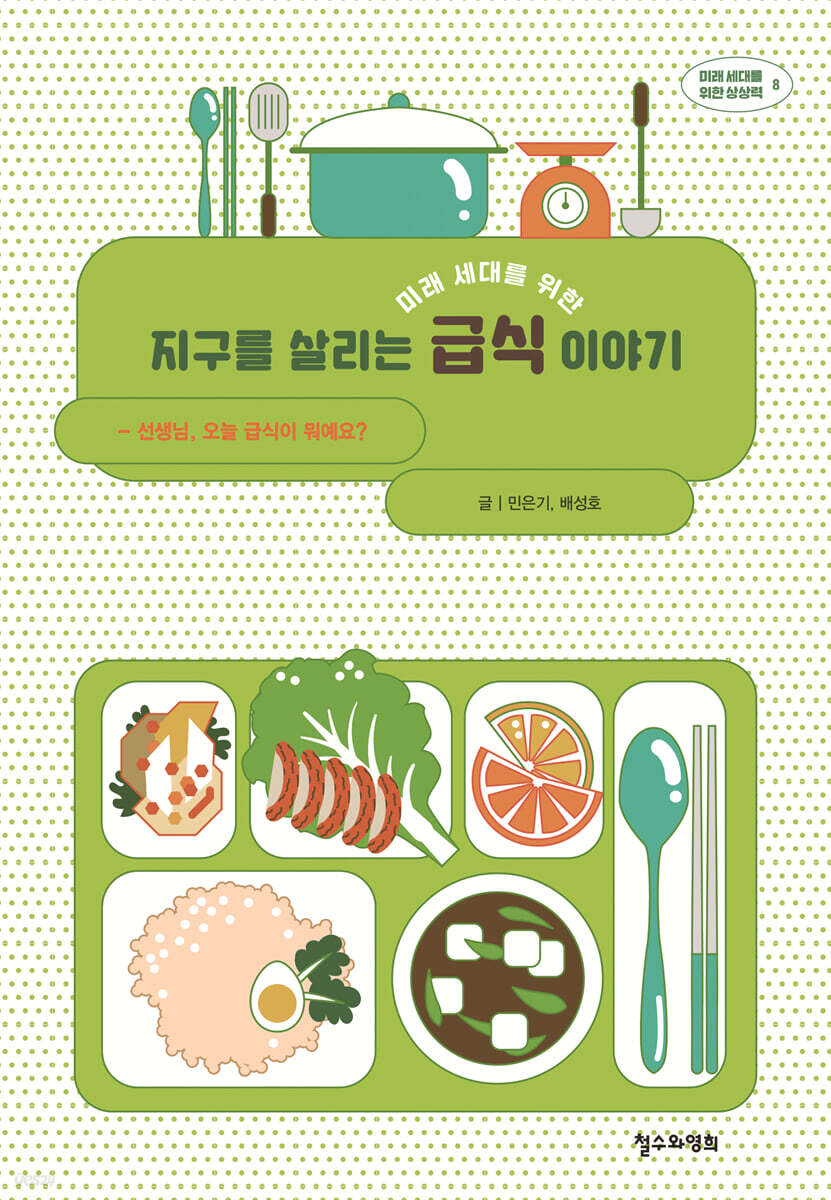
A story about school meals that save the planet for future generations
 |
Description
Book Introduction
Let's go on a delicious journey with school meals.
When did school lunches start?
What is the daily nutritional intake for children and adolescents?
Do school lunches help prevent discrimination?
Why do we need eco-friendly school meals?
Are there meals that save our bodies and the planet?
Why should we reduce food waste?
This book provides an easy-to-understand introduction to school meals that save our bodies and the planet through various topics related to school meals, including the history of school meals, the process of preparing meals, the kitchen environment, the connection between our health and school meals, and the issue of food waste disposal.
You can naturally learn about school meals through 29 questions and answers, such as when school meals began, what is the appropriate daily nutritional intake for children and adolescents, how school meals help prevent discrimination, and why eco-friendly school meals are necessary.
This book contains essential information to help you overcome food illiteracy, such as country of origin labeling, allergy labels, food composition, local food, and seasonal food, as well as stories about nutrition teachers and chefs who work hard behind the scenes to provide school lunches.
It also includes vivid examples of students voting to decide on school lunch menus, selling vegetables they grew themselves to support local food movements, and designing their own plates to reduce food waste.
It also provides detailed information on the large cooking utensils used in preparing meals, such as pots, ovens, pans, and ladles.
This book states that school lunches are designed to meet students' nutritional needs and allow them to experience a variety of ingredients, and that they prioritize the use of eco-friendly ingredients, so they should be eaten in a balanced manner.
Furthermore, as the climate crisis worsens, they emphasize that schools around the world are reducing meat consumption and focusing on plant-based school meals to address environmental and health issues such as obesity.
Through healthy and safe school meals, we can protect not only our own health but also the health of those connected to the world and the environment.
When did school lunches start?
What is the daily nutritional intake for children and adolescents?
Do school lunches help prevent discrimination?
Why do we need eco-friendly school meals?
Are there meals that save our bodies and the planet?
Why should we reduce food waste?
This book provides an easy-to-understand introduction to school meals that save our bodies and the planet through various topics related to school meals, including the history of school meals, the process of preparing meals, the kitchen environment, the connection between our health and school meals, and the issue of food waste disposal.
You can naturally learn about school meals through 29 questions and answers, such as when school meals began, what is the appropriate daily nutritional intake for children and adolescents, how school meals help prevent discrimination, and why eco-friendly school meals are necessary.
This book contains essential information to help you overcome food illiteracy, such as country of origin labeling, allergy labels, food composition, local food, and seasonal food, as well as stories about nutrition teachers and chefs who work hard behind the scenes to provide school lunches.
It also includes vivid examples of students voting to decide on school lunch menus, selling vegetables they grew themselves to support local food movements, and designing their own plates to reduce food waste.
It also provides detailed information on the large cooking utensils used in preparing meals, such as pots, ovens, pans, and ladles.
This book states that school lunches are designed to meet students' nutritional needs and allow them to experience a variety of ingredients, and that they prioritize the use of eco-friendly ingredients, so they should be eaten in a balanced manner.
Furthermore, as the climate crisis worsens, they emphasize that schools around the world are reducing meat consumption and focusing on plant-based school meals to address environmental and health issues such as obesity.
Through healthy and safe school meals, we can protect not only our own health but also the health of those connected to the world and the environment.
- You can preview some of the book's contents.
Preview
index
Preface : We invite you to a special trip with delicious 'meals'!
Chapter 1.
Why do we have school lunches?
1.
When did school lunches start?
2.
Why do we have school lunches?
3.
Is there any special cooking equipment in the cafeteria?
4.
How can I make a variety of dishes with similar ingredients?
5.
What is 'inspection'?
6.
What do you wear when preparing meals?
Chapter 2.
Why do you display the calories and country of origin on the meal information board?
7.
Why do we display calories and country of origin?
8.
Why do you disclose food allergens?
9. What are HACCP certified products?
10.
Are tang-hulu okay as a snack?
11.
What is the daily nutritional intake for children and adolescents?
Chapter 3.
Can you eat a balanced diet with a food composition bike?
12.
There's a food composition bike that helps you eat a balanced diet?
13.
Why is kimchi served in school lunches every day?
14.
Are you saying that I have to eat all the food served in the school lunch?
15.
Why do they keep the food in the cafeteria frozen every day?
16.
Are there dietary guidelines for children and adolescents?
17.
October 14th is 'Nutrition Day'?
Chapter 4.
Why do we need eco-friendly meals?
18.
Could students decide what their school lunch menu would be?
19.
Do school lunches help prevent discrimination?
20.
Why do we need eco-friendly school meals?
21.
Seasonal foods are good for your health and the environment?
22.
Olympic athletes ate fair trade food?
23.
Wouldn't high food mileage be a good thing?
Chapter 5.
What does the climate crisis have to do with food?
24.
There are more 'food illiterate' people than you think who don't know how to cook?
25.
A single dish contains the efforts of countless people?
26.
Do you need a safe cafeteria to save lives?
27.
Are there meals that save our bodies and the planet?
28.
Is what we eat the future of the planet?
29.
Why should we reduce food waste?
Chapter 1.
Why do we have school lunches?
1.
When did school lunches start?
2.
Why do we have school lunches?
3.
Is there any special cooking equipment in the cafeteria?
4.
How can I make a variety of dishes with similar ingredients?
5.
What is 'inspection'?
6.
What do you wear when preparing meals?
Chapter 2.
Why do you display the calories and country of origin on the meal information board?
7.
Why do we display calories and country of origin?
8.
Why do you disclose food allergens?
9. What are HACCP certified products?
10.
Are tang-hulu okay as a snack?
11.
What is the daily nutritional intake for children and adolescents?
Chapter 3.
Can you eat a balanced diet with a food composition bike?
12.
There's a food composition bike that helps you eat a balanced diet?
13.
Why is kimchi served in school lunches every day?
14.
Are you saying that I have to eat all the food served in the school lunch?
15.
Why do they keep the food in the cafeteria frozen every day?
16.
Are there dietary guidelines for children and adolescents?
17.
October 14th is 'Nutrition Day'?
Chapter 4.
Why do we need eco-friendly meals?
18.
Could students decide what their school lunch menu would be?
19.
Do school lunches help prevent discrimination?
20.
Why do we need eco-friendly school meals?
21.
Seasonal foods are good for your health and the environment?
22.
Olympic athletes ate fair trade food?
23.
Wouldn't high food mileage be a good thing?
Chapter 5.
What does the climate crisis have to do with food?
24.
There are more 'food illiterate' people than you think who don't know how to cook?
25.
A single dish contains the efforts of countless people?
26.
Do you need a safe cafeteria to save lives?
27.
Are there meals that save our bodies and the planet?
28.
Is what we eat the future of the planet?
29.
Why should we reduce food waste?
Detailed image
.jpg)
Into the book
The development of school meals has changed in the same direction as our country's economy, society, and culture.
As the economy, society, and culture developed, school meals expanded significantly starting in the 1990s.
School lunches have begun in elementary, middle, and high schools across the country, and the quality of the lunches has steadily improved.
Through revisions to school meal-related laws, school meals have become more nutritious as well as hygienic and safe.
--- From the text
School meals are designed to meet the nutritional needs of students who are growing every day and to provide them with a variety of food ingredients.
Additionally, school lunch ingredients are prioritized over the use of eco-friendly ingredients.
By using safe, high-quality ingredients, we provide students with meals they can trust and eat.
Let's work to ensure that everyone can enjoy healthy and safe school meals in the future.
--- From the text
In order to prevent nutritional imbalances among the public, October 14th was designated as 'Nutrition Day' to promote a balanced diet appropriate for the life cycle of all citizens, not only students who receive school meals, but also adults who must manage their own diets, and the elderly who experience rapid aging.
--- From the text
School meals improve the learning environment and reduce inequality.
Surprisingly, it also improves students' academic achievement and attendance.
It enhances learning ability and concentration by providing students with the energy and nutrients they need.
School lunches motivate students to attend school.
By providing students with delicious and plentiful meals, we increase their satisfaction and interest in school.
--- From the text
Seasonal foods reduce environmental pollution, support sustainable agriculture, and enrich our diets while improving our health.
That's why school lunches also feature seasonal food on the menu.
I hope we can create a healthy diet by eating seasonal foods that are good for our bodies and the planet.
--- From the text
Think about what kind of food you like and enjoy eating.
Are you overindulging in things like tang-hulu (sweet dumplings) and carbonated drinks? By overcoming food illiteracy, gaining a proper understanding of food, and being mindful when choosing your groceries, you can protect both your own health and the planet.
--- From the text
It's amazing that the meals we eat so often are made with so much care and effort from so many people.
A few chefs and nutrition teachers prepare meals for hundreds of students and faculty.
I hope we can all be grateful to the many people who work hard to create a single meal, including school lunches.
Thinking about the people and the environment connected to the world through food.
--- From the text
Green meals reduce greenhouse gas emissions.
Meat and processed foods have a large carbon footprint during production and transportation, while vegetables and grains have a smaller carbon footprint.
A smaller carbon footprint can help mitigate global warming.
Serving green meals in school lunches ensures students receive fresh and safe meals, while strengthening communication and cooperation with local farmers and the local community.
You can also save the planet by reducing food miles.
--- From the text
We need to look back at what has happened to factory farming, which is the result of excessive meat consumption, including the hamburgers we eat without thinking.
What if we considered together how the future of our planet could depend on the food we eat?
As the economy, society, and culture developed, school meals expanded significantly starting in the 1990s.
School lunches have begun in elementary, middle, and high schools across the country, and the quality of the lunches has steadily improved.
Through revisions to school meal-related laws, school meals have become more nutritious as well as hygienic and safe.
--- From the text
School meals are designed to meet the nutritional needs of students who are growing every day and to provide them with a variety of food ingredients.
Additionally, school lunch ingredients are prioritized over the use of eco-friendly ingredients.
By using safe, high-quality ingredients, we provide students with meals they can trust and eat.
Let's work to ensure that everyone can enjoy healthy and safe school meals in the future.
--- From the text
In order to prevent nutritional imbalances among the public, October 14th was designated as 'Nutrition Day' to promote a balanced diet appropriate for the life cycle of all citizens, not only students who receive school meals, but also adults who must manage their own diets, and the elderly who experience rapid aging.
--- From the text
School meals improve the learning environment and reduce inequality.
Surprisingly, it also improves students' academic achievement and attendance.
It enhances learning ability and concentration by providing students with the energy and nutrients they need.
School lunches motivate students to attend school.
By providing students with delicious and plentiful meals, we increase their satisfaction and interest in school.
--- From the text
Seasonal foods reduce environmental pollution, support sustainable agriculture, and enrich our diets while improving our health.
That's why school lunches also feature seasonal food on the menu.
I hope we can create a healthy diet by eating seasonal foods that are good for our bodies and the planet.
--- From the text
Think about what kind of food you like and enjoy eating.
Are you overindulging in things like tang-hulu (sweet dumplings) and carbonated drinks? By overcoming food illiteracy, gaining a proper understanding of food, and being mindful when choosing your groceries, you can protect both your own health and the planet.
--- From the text
It's amazing that the meals we eat so often are made with so much care and effort from so many people.
A few chefs and nutrition teachers prepare meals for hundreds of students and faculty.
I hope we can all be grateful to the many people who work hard to create a single meal, including school lunches.
Thinking about the people and the environment connected to the world through food.
--- From the text
Green meals reduce greenhouse gas emissions.
Meat and processed foods have a large carbon footprint during production and transportation, while vegetables and grains have a smaller carbon footprint.
A smaller carbon footprint can help mitigate global warming.
Serving green meals in school lunches ensures students receive fresh and safe meals, while strengthening communication and cooperation with local farmers and the local community.
You can also save the planet by reducing food miles.
--- From the text
We need to look back at what has happened to factory farming, which is the result of excessive meat consumption, including the hamburgers we eat without thinking.
What if we considered together how the future of our planet could depend on the food we eat?
--- From the text
GOODS SPECIFICS
- Date of issue: June 1, 2024
- Pages, weight, size: 132 pages | 234g | 142*205*9mm
- ISBN13: 9791171530113
- ISBN10: 1171530110
You may also like
카테고리
korean


korean

![GQ KOREA Mark (Monthly): December [2025]](http://librairie.coreenne.fr/cdn/shop/files/8ef265dbbfbf186523ed75ba7319009d.jpg?v=1765340328&width=3840)


