

Bad Scientists
 |
Description
Book Introduction
Is this really for the good of humanity?
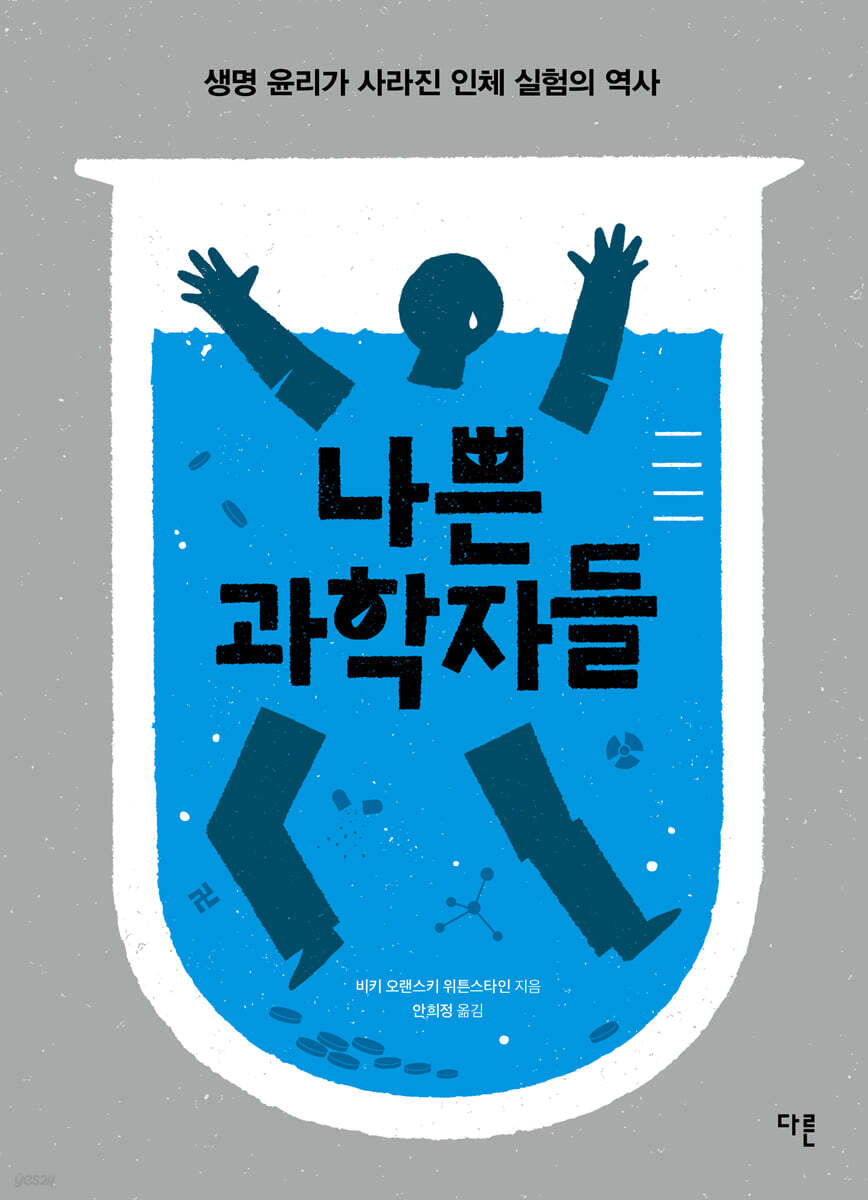
What if researchers, in the name of finding a cure for an infectious disease that's killing countless people, were secretly injecting me with a radioactive substance to study the effects of radiation on the human body while I was hospitalized for treatment after a car accident? What if I suffered various side effects from a new drug I took, even though it was supposedly more effective than the one already on the market? What if the doctors I thought were only treating my illness were harvesting my cells without my consent and selling them around the world?
All these experiments, horrifying even to imagine, have actually occurred throughout our history in the name of science and for the good of humanity.
Science and medicine have saved our lives from disease and pain.
Even diseases that were thought to be incurable have been developed into treatments and medicines thanks to scientists' persistent research and experiments.
But is science truly a Superman-like presence, saving us from peril? "Bad Scientists" answers this question by revealing the ugly and shameful truth behind science's greatest discoveries.
What if researchers, in the name of finding a cure for an infectious disease that's killing countless people, were secretly injecting me with a radioactive substance to study the effects of radiation on the human body while I was hospitalized for treatment after a car accident? What if I suffered various side effects from a new drug I took, even though it was supposedly more effective than the one already on the market? What if the doctors I thought were only treating my illness were harvesting my cells without my consent and selling them around the world?
All these experiments, horrifying even to imagine, have actually occurred throughout our history in the name of science and for the good of humanity.
Science and medicine have saved our lives from disease and pain.
Even diseases that were thought to be incurable have been developed into treatments and medicines thanks to scientists' persistent research and experiments.
But is science truly a Superman-like presence, saving us from peril? "Bad Scientists" answers this question by revealing the ugly and shameful truth behind science's greatest discoveries.
- You can preview some of the book's contents.
Preview
index
Reviewer's Note │ The Tragedy of Unethical Science_Seo Min (Professor, Dankook University College of Medicine)
preface
Chapter 1: Human Guinea Pigs: Modern Human Experimentation
The Hippocratic Oath│The Hidden Truth About the Smallpox Vaccine│Do We Always Ask Patients for Consent?│Experimenting on African Americans│Doctors Who Became Scientists│The Anti-Vivisection Movement│Yellow Fever Experiments and Informed Consent│Experiments on the Most Powerless│Heroes or Abusers?
Chapter 2: In the Death Camps: Nazi Human Experimentation
Angel of Death, Josef Mengele | Racial Hygiene | The Nuremberg Code
Chapter 3 In the Name of War: The Manhattan Project and Radiation Experiments
HP-12│War forced them?│Experiments are more important than patients│Doctors' prey│Malaria experiments│Nuclear war│Cold War-era radiation experiments│Bikini Island nuclear tests│Experiments at Ground Zero│Radioactive fallout experiments│The truth finally revealed
Chapter 4: Changing Attitudes: Experiments on the Most Marginalized and the Growing Ethical Consciousness of Bioethics
Prisoners involved in chemical weapons experiments│Universities also involved│Finally exposed│Willowbrook experiment on disabled children│Cancer cell injection experiment│Tuskegee syphilis experiment│Growing research ethics│General rules
Chapter 5: The Path of Science for Humanity: Pharmaceutical Company Clinical Trials and Hot Topics in Modern Medical Research
Research running for profit│Institutional Review Board│Show me the statistics│Was it really voluntary?│Lies in clinical trials│Why participate in dangerous research?│Can money be the answer?│My job is a human guinea pig│An uncomfortable job│Clinical trials in developing countries│Standards of care when conducting clinical trials abroad│The Trovan experiment in Nigeria│The tragedy in Guatemala│Who owns the biospecimens?│My cells are being sold all over the world?│Deceiving the Havasupai people│Biospecimens and informed consent│The stem cell research debate│The benefits of stem cell research│The desire for genetic perfection and bioethics│Finding the path of science for humanity
Reading Books Critically_What do you think?
Another Shameful History: What Happened at Japan's Unit 731?
Acknowledgements
annotation
References
Further Reading
Search
Photo source
preface
Chapter 1: Human Guinea Pigs: Modern Human Experimentation
The Hippocratic Oath│The Hidden Truth About the Smallpox Vaccine│Do We Always Ask Patients for Consent?│Experimenting on African Americans│Doctors Who Became Scientists│The Anti-Vivisection Movement│Yellow Fever Experiments and Informed Consent│Experiments on the Most Powerless│Heroes or Abusers?
Chapter 2: In the Death Camps: Nazi Human Experimentation
Angel of Death, Josef Mengele | Racial Hygiene | The Nuremberg Code
Chapter 3 In the Name of War: The Manhattan Project and Radiation Experiments
HP-12│War forced them?│Experiments are more important than patients│Doctors' prey│Malaria experiments│Nuclear war│Cold War-era radiation experiments│Bikini Island nuclear tests│Experiments at Ground Zero│Radioactive fallout experiments│The truth finally revealed
Chapter 4: Changing Attitudes: Experiments on the Most Marginalized and the Growing Ethical Consciousness of Bioethics
Prisoners involved in chemical weapons experiments│Universities also involved│Finally exposed│Willowbrook experiment on disabled children│Cancer cell injection experiment│Tuskegee syphilis experiment│Growing research ethics│General rules
Chapter 5: The Path of Science for Humanity: Pharmaceutical Company Clinical Trials and Hot Topics in Modern Medical Research
Research running for profit│Institutional Review Board│Show me the statistics│Was it really voluntary?│Lies in clinical trials│Why participate in dangerous research?│Can money be the answer?│My job is a human guinea pig│An uncomfortable job│Clinical trials in developing countries│Standards of care when conducting clinical trials abroad│The Trovan experiment in Nigeria│The tragedy in Guatemala│Who owns the biospecimens?│My cells are being sold all over the world?│Deceiving the Havasupai people│Biospecimens and informed consent│The stem cell research debate│The benefits of stem cell research│The desire for genetic perfection and bioethics│Finding the path of science for humanity
Reading Books Critically_What do you think?
Another Shameful History: What Happened at Japan's Unit 731?
Acknowledgements
annotation
References
Further Reading
Search
Photo source
Detailed image

Into the book
Experiments on humans are clearly necessary.
Someone has to try it first.
So who should be tested? Is it justifiable to conduct experiments on prison inmates, people with intellectual disabilities, or children? What about experiments on people with no other treatment options or healthy people who volunteer for money? Is there a way to advance medicine while preserving the human rights of each individual?
--- p.
17
From the late 1700s to the 1940s, American doctors consistently experimented on vulnerable populations, including orphans, African slaves, the poor, and the intellectually disabled.
People confined to institutions such as hospitals and prisons were also subjected to experimentation.
How and why did humans end up as guinea pigs in a laboratory?
--- p.
21~22
Josef Mengele was the most vicious and vicious of the 30 doctors who ordered all kinds of experiments at Auschwitz.
Mengele experimented on twins like Eva and Miriam, as well as people with disabilities.
If they were deaf, had a hunched back, or had other deformities, they would have been perfect test subjects.
Mengele was also interested in hair color, and especially in people with different eye colors.
He collected people's eyes and wanted to know if it was possible to change their eye color.
--- p.45
The US military conscripted soldiers on a large scale and rushed to develop the latest weapons.
Faced with national security at stake and time pressures, there was no time to consider the ethics of human experimentation.
A small group of scientists, soldiers, and government officials decided to conduct experiments on soldiers, prisoners, children, and even ordinary people.
There were no proper laws or guidelines, and the experiments were covered up in the face of the threat of war.
The brutal and unethical government-sponsored experiments were only uncovered and revealed to the world decades later.
The U.S. government explained that these secret human experiments were unavoidable because of the war.
It was no different from the excuses Nazi doctors used to justify their crimes in the concentration camps.
Of course, the purpose of the experiment was different from that of the German Nazis.
Human experiments were not conducted for the purpose of ethnic cleansing or racial improvement.
American doctors often abandon ethical principles to answer the following questions:
--- p.64
At the Jewish Hospital for Chronic Diseases, 22 elderly patients were injected with cancer cells without prior consent.
However, three doctors refused to give the patient an injection, citing the Nuremberg Code.
Then other doctors started giving injections instead, and three doctors left the hospital.
This fact was made known through the media.
When a reporter asked Saussum why he didn't inject himself with cancer cells, Saussum replied:
“Competent oncologists are rare.
“Why take such a small risk like an idiot?”
--- p.98
The crisis of humanism in medicine extends to the exploitation of people in developing countries.
For example, in 1996, after an outbreak of bacterial meningitis in Kano, Nigeria, the pharmaceutical company Pfizer decided to test a new drug called Trovan (trovafloxacin) on 200 children with meningitis.
So, 100 children were given the new drug Trovan, and the remaining 100 were given the antibiotic ceftriaxone, which was already used to treat meningitis.
At this time, Pfizer did not seek consent from the children or their parents.
The child's parents thought they had been prescribed general antibiotics.
Five children who took Trovan died, and many suffered side effects including blindness, paralysis, and brain damage.
However, six children who took ceftriaxone also died and showed serious side effects.
Someone has to try it first.
So who should be tested? Is it justifiable to conduct experiments on prison inmates, people with intellectual disabilities, or children? What about experiments on people with no other treatment options or healthy people who volunteer for money? Is there a way to advance medicine while preserving the human rights of each individual?
--- p.
17
From the late 1700s to the 1940s, American doctors consistently experimented on vulnerable populations, including orphans, African slaves, the poor, and the intellectually disabled.
People confined to institutions such as hospitals and prisons were also subjected to experimentation.
How and why did humans end up as guinea pigs in a laboratory?
--- p.
21~22
Josef Mengele was the most vicious and vicious of the 30 doctors who ordered all kinds of experiments at Auschwitz.
Mengele experimented on twins like Eva and Miriam, as well as people with disabilities.
If they were deaf, had a hunched back, or had other deformities, they would have been perfect test subjects.
Mengele was also interested in hair color, and especially in people with different eye colors.
He collected people's eyes and wanted to know if it was possible to change their eye color.
--- p.45
The US military conscripted soldiers on a large scale and rushed to develop the latest weapons.
Faced with national security at stake and time pressures, there was no time to consider the ethics of human experimentation.
A small group of scientists, soldiers, and government officials decided to conduct experiments on soldiers, prisoners, children, and even ordinary people.
There were no proper laws or guidelines, and the experiments were covered up in the face of the threat of war.
The brutal and unethical government-sponsored experiments were only uncovered and revealed to the world decades later.
The U.S. government explained that these secret human experiments were unavoidable because of the war.
It was no different from the excuses Nazi doctors used to justify their crimes in the concentration camps.
Of course, the purpose of the experiment was different from that of the German Nazis.
Human experiments were not conducted for the purpose of ethnic cleansing or racial improvement.
American doctors often abandon ethical principles to answer the following questions:
--- p.64
At the Jewish Hospital for Chronic Diseases, 22 elderly patients were injected with cancer cells without prior consent.
However, three doctors refused to give the patient an injection, citing the Nuremberg Code.
Then other doctors started giving injections instead, and three doctors left the hospital.
This fact was made known through the media.
When a reporter asked Saussum why he didn't inject himself with cancer cells, Saussum replied:
“Competent oncologists are rare.
“Why take such a small risk like an idiot?”
--- p.98
The crisis of humanism in medicine extends to the exploitation of people in developing countries.
For example, in 1996, after an outbreak of bacterial meningitis in Kano, Nigeria, the pharmaceutical company Pfizer decided to test a new drug called Trovan (trovafloxacin) on 200 children with meningitis.
So, 100 children were given the new drug Trovan, and the remaining 100 were given the antibiotic ceftriaxone, which was already used to treat meningitis.
At this time, Pfizer did not seek consent from the children or their parents.
The child's parents thought they had been prescribed general antibiotics.
Five children who took Trovan died, and many suffered side effects including blindness, paralysis, and brain damage.
However, six children who took ceftriaxone also died and showed serious side effects.
--- p.132
Publisher's Review
Is this really for the good of humanity?
What if researchers, in the name of finding a cure for an infectious disease that's killing countless people, were secretly injecting me with a radioactive substance to study the effects of radiation on the human body while I was hospitalized for treatment after a car accident? What if I suffered various side effects from a new drug I took, even though it was supposedly more effective than the one already on the market? What if the doctors I thought were only treating my illness were harvesting my cells without my consent and selling them around the world?
All these experiments, horrifying even to imagine, have actually occurred throughout our history in the name of science and for the good of humanity.
Science and medicine have saved our lives from disease and pain.
Even diseases that were thought to be incurable have been developed into treatments and medicines thanks to scientists' persistent research and experiments.
But is science truly a Superman-like presence, saving us from peril? "Bad Scientists" answers this question by revealing the ugly and shameful truth behind science's greatest discoveries.
From modern human experimentation to the stem cell research debate,
The shameful history of science that we must never ignore
January 1946, Dubbo, a small town in New South Wales, Australia.
Four-year-old Simeon Shaw injured his leg after falling from a hammock hanging on his front porch.
It was only after an X-ray that it was discovered that Simeon had a severe form of bone cancer.
The doctor in charge diagnosed that Simeon would not live for more than a year.
Simeon's parents were shocked and indescribably saddened.
But they didn't give up and frantically sought opinions from other doctors.
Upon hearing this news, doctors at the University of California, San Francisco Hospital offered to treat Simian.
Simeon and his mother flew over 16,000 kilometers to San Francisco for Simeon's treatment.
Simian's mother was so happy that Simian was receiving treatment and was at a loss as to how to express her gratitude to the doctors who treated Simian.
But there was something Simian's family was completely unaware of.
At the time, some doctors at the University of California Hospital were participating in a secret military experiment to study the effects of radiation on the human body, and instead of treating his cancer, they injected Simian with a very dangerous radioactive substance called plutonium.
About nine months after receiving the injection, Simian passed away.
It was only after more than 70 years that it was revealed that doctors, under the auspices of the U.S. government, had conducted radiation experiments on hundreds of people, including Simeon.
Countless incidents of medical ethics like this have been shrouded in darkness and not readily revealed to the world.
For a long time, we have only looked at the great discoveries and loudly praised science.
But, as in Simeon's case, there is clearly a shameful history of science that we must never turn away from.
As many scientific discoveries have been made, countless people have sacrificed and suffered for science.
The author of this book, Vicki Oranski Wittenstein, who worked as a prosecutor and lawyer, accidentally learned about the history of human experimentation and decided to expose the shameful history that was carried out in the name of protecting humanity.
So, I spent a year collecting all sorts of data on human experimentation and interviewing several bioethicists.
I also met Eva Moses Kord, who was experimented on by Nazi doctors at the Auschwitz concentration camp.
The book that resulted was “Bad Scientists.”
This book covers human experiments conducted in modern times when there was not even a concept of human rights or bioethics, human experiments conducted by the Nazis to prove their belief that Jews were an inferior race, and various radiation experiments conducted in the name of war and patriotism.
It also reveals the shameful history of science that we must not ignore, from pharmaceutical companies' clinical trials on the powerless, such as orphans, intellectually disabled soldiers, prisoners, and the poor, to modern stem cell research, and even the story of the biological experiments of Japan's Unit 731, which was added to the Korean edition for Korean readers.
What if I were a human guinea pig?
A Guide to Bioethics: Meeting and Thinking with the Heart
Bad Scientists, which exposes the history of human experimentation, does not criticize science in a strong tone, but rather quietly brings history hidden in the shadows into the spotlight and examines it.
The way the scene of the human experiment is objectively described as if a camera is shooting it gives the feeling of watching a documentary.
This narrative style naturally leads young readers to think, “What if I were a subject of human experimentation?”
Through this, readers are able to consider, not only with their heads but also with their hearts, the perspectives of human experimentation subjects throughout history, such as whether great scientific discoveries outweigh individual human rights and whether any action can be justified for the advancement of science.
The section “Reading Books Critically: What Do You Think?” at the end of the book offers further reflections on the relevant material in Chapters 1 through 5.
"Can we judge the doctors who practiced medicine in the 18th and early 20th centuries by today's ethical standards? Some argue that it's difficult to evaluate the past by today's standards, as ethical awareness has evolved over time and the perceptions of right and wrong differ between the past and present.
But even at that time, there were people who argued that experiments that violated human rights should be banned.
Questions like “What do you think about this problem?” are by no means simple enough that even adults have difficulty answering them.
However, rather than providing answers to these questions, this book helps readers sharpen their awareness of bioethics and human rights by developing various thoughts on pros and cons based on the content of the book.
After all, science
It must be for humanity
Professor Seo Min (Dankook University College of Medicine), who reviewed this book, recalled his own past research on parasites while reading the human experiment cases in the book.
I wrote a paper using data obtained from research participants without any specific consent process, but later, while working at an Institutional Review Board (IRB), I learned that any research using data obtained from patients cannot be used in a paper without the consent of the person involved.
This is because all the data obtained from the patient contained a lot of information about the patient's health, including the patient's DNA.
Although ordinary people might think it is trivial, Professor Seomin looked into the human experiments in "Bad Scientists" while recalling his own experiences.
And he points out that the scientists in the book did not conduct these experiments because they were evil beings, but because they believed that “the ends justify the means, and when great discoveries are right in front of us, what’s so important about trivial research ethics?”
And I urge you.
“Science can easily turn into a monster if we let our guard down even a little,” he said. “Scientists participating in research must consider their own ethics, but our society must also continuously monitor them to ensure they do not become monsters.”
Some might think, 'Shouldn't some sacrifices be made for the advancement of science?'
However, while we acknowledge the achievements of science, we have also made efforts to carefully observe and reflect on the shameful history hidden behind them.
Accordingly, awareness of bioethics is gradually increasing, and we are able to think about 'good science'.
This book will help young people develop a balanced perspective on science and realize that science should ultimately serve humanity.
Recommendation
Any research involving humans must be accompanied by ethical considerations.
Science is likely to turn into a monster if we let our guard down even a little.
Scientists who participate in research must consider ethical concerns themselves, but our society must also continuously monitor them to ensure they do not become monsters.
Science, after all, is meant to benefit humanity. Why should it put fellow humans at risk in the name of humanity? Whether you're a scientist or not, this is why you should read this book.
Seo Min (Professor, Dankook University College of Medicine)
Reading about the history of human experimentation is chilling.
This book covers issues from the 1700s, when humans began to be used as guinea pigs, to modern times.
(…) In particular, the section titled ‘Reading Books Critically - What Do You Think?’ at the end of this book will provide good topics for discussion when teaching at school.
This is a great topic for young people to study together in a variety of subjects and topics, from medicine and history to human rights and law.
This is a book that public and school libraries must have.
-School Library Journal
Readers who have finished reading this book may hesitate for a moment before going to the hospital.
The author vividly tells the story of doctors and scientists who used the marginalized and powerless as human guinea pigs for centuries.
(…) Some of these experiments led to important scientific discoveries.
But the stories of those whose rights were violated and sacrificed for the advancement of science were covered up.
The author compiles a diverse range of sources, including newspaper articles, medical journals, and interviews with former experimental subjects, and presents us with a well-organized and controversial history.
It also clearly shows the development of medical ethics and the process of establishing clinical trial regulations for new medicines.
-〈Kirkus Review〉
This book goes beyond simply treating human research as old history, and addresses hot topics of today, such as biospecimens and stem cell research.
(…) The author strives to maintain a balanced perspective on ethical questions about individual human rights, scientific advancements, and the issue of informed consent.
-〈Booklist〉
What if researchers, in the name of finding a cure for an infectious disease that's killing countless people, were secretly injecting me with a radioactive substance to study the effects of radiation on the human body while I was hospitalized for treatment after a car accident? What if I suffered various side effects from a new drug I took, even though it was supposedly more effective than the one already on the market? What if the doctors I thought were only treating my illness were harvesting my cells without my consent and selling them around the world?
All these experiments, horrifying even to imagine, have actually occurred throughout our history in the name of science and for the good of humanity.
Science and medicine have saved our lives from disease and pain.
Even diseases that were thought to be incurable have been developed into treatments and medicines thanks to scientists' persistent research and experiments.
But is science truly a Superman-like presence, saving us from peril? "Bad Scientists" answers this question by revealing the ugly and shameful truth behind science's greatest discoveries.
From modern human experimentation to the stem cell research debate,
The shameful history of science that we must never ignore
January 1946, Dubbo, a small town in New South Wales, Australia.
Four-year-old Simeon Shaw injured his leg after falling from a hammock hanging on his front porch.
It was only after an X-ray that it was discovered that Simeon had a severe form of bone cancer.
The doctor in charge diagnosed that Simeon would not live for more than a year.
Simeon's parents were shocked and indescribably saddened.
But they didn't give up and frantically sought opinions from other doctors.
Upon hearing this news, doctors at the University of California, San Francisco Hospital offered to treat Simian.
Simeon and his mother flew over 16,000 kilometers to San Francisco for Simeon's treatment.
Simian's mother was so happy that Simian was receiving treatment and was at a loss as to how to express her gratitude to the doctors who treated Simian.
But there was something Simian's family was completely unaware of.
At the time, some doctors at the University of California Hospital were participating in a secret military experiment to study the effects of radiation on the human body, and instead of treating his cancer, they injected Simian with a very dangerous radioactive substance called plutonium.
About nine months after receiving the injection, Simian passed away.
It was only after more than 70 years that it was revealed that doctors, under the auspices of the U.S. government, had conducted radiation experiments on hundreds of people, including Simeon.
Countless incidents of medical ethics like this have been shrouded in darkness and not readily revealed to the world.
For a long time, we have only looked at the great discoveries and loudly praised science.
But, as in Simeon's case, there is clearly a shameful history of science that we must never turn away from.
As many scientific discoveries have been made, countless people have sacrificed and suffered for science.
The author of this book, Vicki Oranski Wittenstein, who worked as a prosecutor and lawyer, accidentally learned about the history of human experimentation and decided to expose the shameful history that was carried out in the name of protecting humanity.
So, I spent a year collecting all sorts of data on human experimentation and interviewing several bioethicists.
I also met Eva Moses Kord, who was experimented on by Nazi doctors at the Auschwitz concentration camp.
The book that resulted was “Bad Scientists.”
This book covers human experiments conducted in modern times when there was not even a concept of human rights or bioethics, human experiments conducted by the Nazis to prove their belief that Jews were an inferior race, and various radiation experiments conducted in the name of war and patriotism.
It also reveals the shameful history of science that we must not ignore, from pharmaceutical companies' clinical trials on the powerless, such as orphans, intellectually disabled soldiers, prisoners, and the poor, to modern stem cell research, and even the story of the biological experiments of Japan's Unit 731, which was added to the Korean edition for Korean readers.
What if I were a human guinea pig?
A Guide to Bioethics: Meeting and Thinking with the Heart
Bad Scientists, which exposes the history of human experimentation, does not criticize science in a strong tone, but rather quietly brings history hidden in the shadows into the spotlight and examines it.
The way the scene of the human experiment is objectively described as if a camera is shooting it gives the feeling of watching a documentary.
This narrative style naturally leads young readers to think, “What if I were a subject of human experimentation?”
Through this, readers are able to consider, not only with their heads but also with their hearts, the perspectives of human experimentation subjects throughout history, such as whether great scientific discoveries outweigh individual human rights and whether any action can be justified for the advancement of science.
The section “Reading Books Critically: What Do You Think?” at the end of the book offers further reflections on the relevant material in Chapters 1 through 5.
"Can we judge the doctors who practiced medicine in the 18th and early 20th centuries by today's ethical standards? Some argue that it's difficult to evaluate the past by today's standards, as ethical awareness has evolved over time and the perceptions of right and wrong differ between the past and present.
But even at that time, there were people who argued that experiments that violated human rights should be banned.
Questions like “What do you think about this problem?” are by no means simple enough that even adults have difficulty answering them.
However, rather than providing answers to these questions, this book helps readers sharpen their awareness of bioethics and human rights by developing various thoughts on pros and cons based on the content of the book.
After all, science
It must be for humanity
Professor Seo Min (Dankook University College of Medicine), who reviewed this book, recalled his own past research on parasites while reading the human experiment cases in the book.
I wrote a paper using data obtained from research participants without any specific consent process, but later, while working at an Institutional Review Board (IRB), I learned that any research using data obtained from patients cannot be used in a paper without the consent of the person involved.
This is because all the data obtained from the patient contained a lot of information about the patient's health, including the patient's DNA.
Although ordinary people might think it is trivial, Professor Seomin looked into the human experiments in "Bad Scientists" while recalling his own experiences.
And he points out that the scientists in the book did not conduct these experiments because they were evil beings, but because they believed that “the ends justify the means, and when great discoveries are right in front of us, what’s so important about trivial research ethics?”
And I urge you.
“Science can easily turn into a monster if we let our guard down even a little,” he said. “Scientists participating in research must consider their own ethics, but our society must also continuously monitor them to ensure they do not become monsters.”
Some might think, 'Shouldn't some sacrifices be made for the advancement of science?'
However, while we acknowledge the achievements of science, we have also made efforts to carefully observe and reflect on the shameful history hidden behind them.
Accordingly, awareness of bioethics is gradually increasing, and we are able to think about 'good science'.
This book will help young people develop a balanced perspective on science and realize that science should ultimately serve humanity.
Recommendation
Any research involving humans must be accompanied by ethical considerations.
Science is likely to turn into a monster if we let our guard down even a little.
Scientists who participate in research must consider ethical concerns themselves, but our society must also continuously monitor them to ensure they do not become monsters.
Science, after all, is meant to benefit humanity. Why should it put fellow humans at risk in the name of humanity? Whether you're a scientist or not, this is why you should read this book.
Seo Min (Professor, Dankook University College of Medicine)
Reading about the history of human experimentation is chilling.
This book covers issues from the 1700s, when humans began to be used as guinea pigs, to modern times.
(…) In particular, the section titled ‘Reading Books Critically - What Do You Think?’ at the end of this book will provide good topics for discussion when teaching at school.
This is a great topic for young people to study together in a variety of subjects and topics, from medicine and history to human rights and law.
This is a book that public and school libraries must have.
-School Library Journal
Readers who have finished reading this book may hesitate for a moment before going to the hospital.
The author vividly tells the story of doctors and scientists who used the marginalized and powerless as human guinea pigs for centuries.
(…) Some of these experiments led to important scientific discoveries.
But the stories of those whose rights were violated and sacrificed for the advancement of science were covered up.
The author compiles a diverse range of sources, including newspaper articles, medical journals, and interviews with former experimental subjects, and presents us with a well-organized and controversial history.
It also clearly shows the development of medical ethics and the process of establishing clinical trial regulations for new medicines.
-〈Kirkus Review〉
This book goes beyond simply treating human research as old history, and addresses hot topics of today, such as biospecimens and stem cell research.
(…) The author strives to maintain a balanced perspective on ethical questions about individual human rights, scientific advancements, and the issue of informed consent.
-〈Booklist〉
GOODS SPECIFICS
- Date of publication: June 27, 2014
- Page count, weight, size: 184 pages | 276g | 152*210*10mm
- ISBN13: 9791156330233
- ISBN10: 1156330238
You may also like
카테고리
korean


korean

![GQ KOREA Mark (Monthly): December [2025]](http://librairie.coreenne.fr/cdn/shop/files/8ef265dbbfbf186523ed75ba7319009d.jpg?v=1765340328&width=3840)


