

Learning Thinking Skills through Topics: Korean History 2
 |
Description
Book Introduction
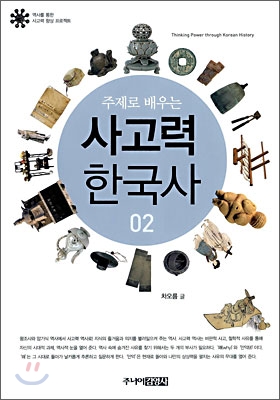
A project to expand thinking skills that goes beyond simply assessing historical facts and value judgments, fostering imagination and reasoning through history.
Each topic covered in the book is examined beyond the social conditions of the time, based on the two words 'why' and 'if', and expanded to include changes in the consciousness of the people of the time.
The author creates a space where readers can develop sharp inferences and questions about the times through the question of "why," and expand their imagination through the question of "what if."
A total of 25 historical topics are covered in Volumes 1 and 2. Volume 1 includes 13 topics, including fundamental questions about history, what changes the discovery of bipedal walking and tools brought about in human history, and what the meaning of circles was to people during the Three Kingdoms period.
Volume 2 covers history from the Goryeo Dynasty to the modern era, covering 12 topics such as why Wang Geon of Goryeo had 29 wives, how Mun Ik-jeom's cotton changed the lives of the people of the Korean Peninsula, and why Joseon had no queen.
Each topic covered in the book is examined beyond the social conditions of the time, based on the two words 'why' and 'if', and expanded to include changes in the consciousness of the people of the time.
The author creates a space where readers can develop sharp inferences and questions about the times through the question of "why," and expand their imagination through the question of "what if."
A total of 25 historical topics are covered in Volumes 1 and 2. Volume 1 includes 13 topics, including fundamental questions about history, what changes the discovery of bipedal walking and tools brought about in human history, and what the meaning of circles was to people during the Three Kingdoms period.
Volume 2 covers history from the Goryeo Dynasty to the modern era, covering 12 topics such as why Wang Geon of Goryeo had 29 wives, how Mun Ik-jeom's cotton changed the lives of the people of the Korean Peninsula, and why Joseon had no queen.
- You can preview some of the book's contents.
Preview
index
01 The founding of the Goryeo Dynasty by powerful families across the country - Wang Geon, the king who married 29 times
02 Why did Goryeo create the world's first metal type? - The role of printing in medieval Goryeo society
03 Who Made the World's Most Beautiful Pottery? - Goryeo Celadon
04 The Clothing Revolution on the Korean Peninsula - How Mun Ik-jeom's Cotton Transformed the Lives of Koreans
05 What caused the fall of the Goryeo Dynasty? - Farming methods change history.
06 Joseon, the country with the most rules in the world - Confucius, the Confucian scholar, becomes a god in Joseon.
07 What was Sejong's historical challenge? - Finding the rhythm of life for Koreans
08 Joseon, a country without a king or queen, a time when only one person monopolized everything
09 The Power of Language for the People of Joseon! - Hunminjeongeum, the Greatest Gift Given to the People of the Korean Peninsula
10 Dasan Jeong Yak-yong, Advocating Silhak - What was the Role of Intellectuals in the Joseon Dynasty?
11. Donghak, the revolutionary ideology that shook the Korean Peninsula - What did the Donghak peasants hope for?
12 The End of the Joseon Dynasty, the Danbalryeong Order - How Did the Korean Peninsula Open the Door to Modernization?
02 Why did Goryeo create the world's first metal type? - The role of printing in medieval Goryeo society
03 Who Made the World's Most Beautiful Pottery? - Goryeo Celadon
04 The Clothing Revolution on the Korean Peninsula - How Mun Ik-jeom's Cotton Transformed the Lives of Koreans
05 What caused the fall of the Goryeo Dynasty? - Farming methods change history.
06 Joseon, the country with the most rules in the world - Confucius, the Confucian scholar, becomes a god in Joseon.
07 What was Sejong's historical challenge? - Finding the rhythm of life for Koreans
08 Joseon, a country without a king or queen, a time when only one person monopolized everything
09 The Power of Language for the People of Joseon! - Hunminjeongeum, the Greatest Gift Given to the People of the Korean Peninsula
10 Dasan Jeong Yak-yong, Advocating Silhak - What was the Role of Intellectuals in the Joseon Dynasty?
11. Donghak, the revolutionary ideology that shook the Korean Peninsula - What did the Donghak peasants hope for?
12 The End of the Joseon Dynasty, the Danbalryeong Order - How Did the Korean Peninsula Open the Door to Modernization?
Into the book
History is in the 'sea of thought'.
It is filled with the thoughts of countless people.
Those thoughts create events, joys and sorrows.
To find the reason hidden in history, two words are needed.
It's 'why' and 'if'.
'Why' is a conversational technique that goes back to that era and sharply reasons and asks questions.
'If' returns to the present and opens a stage for thought where one can unfold one's own imagination.
'Thinking Korean History' sacrificed all knowledge in history to 'inference and imagination'.
Rather than 'is it true or false?' or 'is it right or wrong?', it focuses more on 'why' and 'if.'
Because reasoning and imagination are what create the will to live and hope.
--- From the author's note
“Mun Ik-jeom’s cotton made the people of Goryeo dream of the feeling and emotion of ‘beauty’ and the desire for beauty.
Even in winter, I can wear warm clothes and sleep happily in a warm blanket.
I got to experience happiness.
This happiness makes us hope and dream of new happiness.”
It is filled with the thoughts of countless people.
Those thoughts create events, joys and sorrows.
To find the reason hidden in history, two words are needed.
It's 'why' and 'if'.
'Why' is a conversational technique that goes back to that era and sharply reasons and asks questions.
'If' returns to the present and opens a stage for thought where one can unfold one's own imagination.
'Thinking Korean History' sacrificed all knowledge in history to 'inference and imagination'.
Rather than 'is it true or false?' or 'is it right or wrong?', it focuses more on 'why' and 'if.'
Because reasoning and imagination are what create the will to live and hope.
--- From the author's note
“Mun Ik-jeom’s cotton made the people of Goryeo dream of the feeling and emotion of ‘beauty’ and the desire for beauty.
Even in winter, I can wear warm clothes and sleep happily in a warm blanket.
I got to experience happiness.
This happiness makes us hope and dream of new happiness.”
--- From "The Clothing Revolution on the Korean Peninsula"
Publisher's Review
Only those who ask questions get answers!
The hidden world of thinking in history, unraveled through why and if.
We often think of history as a record of past events.
Also, in textbooks, we learn intensively about the rise and fall of dynasties over time from prehistoric times to the present.
Most of the people listed in history books are the ruling class of society, including kings, nobles, and soldiers.
But if we think about it a little, this question is also possible.
How many people had to work to sustain a king? How many nameless soldiers had to die for Eulji Mundeok to win a war? Why are the potters who created Goryeo celadon used by the aristocracy forgotten in history? "Learning Thinking Skills in Korean History through Topics" is a journey to find answers to these very questions.
The ultimate goal of this book is to foster the power of imagination and reasoning, that is, to develop integrated thinking skills, beyond whether something is true or false (factual) and right or wrong (value judgment).
Therefore, each topic covered in this book extends beyond the social conditions of the time to include changes in the consciousness of the people of the time.
This is because the history of mankind has changed greatly depending on how people's thinking ability has changed.
This book is not just a history book.
This is a project to expand thinking skills through history.
For this, the author suggests two words.
That's why and if.
The author takes us back to that era and makes us think and question things sharply through the question, “Why?”
Also, through 'what if', I return to my present self and create a space where I can use my own imagination.
As you read this book, which covers a total of 25 historical topics in two volumes, you will find your thinking power growing significantly.
Book structure
Volume 1 covers 13 topics, including the fundamental question of "What is history?", how prehistoric bipedalism changed human history, what changes occurred with the discovery of tools, and what the meaning of circles was to people during the Three Kingdoms period.
Volume 2 covers topics from the Goryeo Dynasty to modern times.
It covers 12 topics, including why Wang Geon of Goryeo had 29 wives, how Mun Ik-jeom's cotton changed the lives of the people of the Korean Peninsula, and why Joseon had no queen.
For each topic, several questions are presented in advance to help readers identify the problem and find the answer. The photos, captions, and footnotes are not just auxiliary devices, but are also richly organized to help improve thinking skills.
The hidden world of thinking in history, unraveled through why and if.
We often think of history as a record of past events.
Also, in textbooks, we learn intensively about the rise and fall of dynasties over time from prehistoric times to the present.
Most of the people listed in history books are the ruling class of society, including kings, nobles, and soldiers.
But if we think about it a little, this question is also possible.
How many people had to work to sustain a king? How many nameless soldiers had to die for Eulji Mundeok to win a war? Why are the potters who created Goryeo celadon used by the aristocracy forgotten in history? "Learning Thinking Skills in Korean History through Topics" is a journey to find answers to these very questions.
The ultimate goal of this book is to foster the power of imagination and reasoning, that is, to develop integrated thinking skills, beyond whether something is true or false (factual) and right or wrong (value judgment).
Therefore, each topic covered in this book extends beyond the social conditions of the time to include changes in the consciousness of the people of the time.
This is because the history of mankind has changed greatly depending on how people's thinking ability has changed.
This book is not just a history book.
This is a project to expand thinking skills through history.
For this, the author suggests two words.
That's why and if.
The author takes us back to that era and makes us think and question things sharply through the question, “Why?”
Also, through 'what if', I return to my present self and create a space where I can use my own imagination.
As you read this book, which covers a total of 25 historical topics in two volumes, you will find your thinking power growing significantly.
Book structure
Volume 1 covers 13 topics, including the fundamental question of "What is history?", how prehistoric bipedalism changed human history, what changes occurred with the discovery of tools, and what the meaning of circles was to people during the Three Kingdoms period.
Volume 2 covers topics from the Goryeo Dynasty to modern times.
It covers 12 topics, including why Wang Geon of Goryeo had 29 wives, how Mun Ik-jeom's cotton changed the lives of the people of the Korean Peninsula, and why Joseon had no queen.
For each topic, several questions are presented in advance to help readers identify the problem and find the answer. The photos, captions, and footnotes are not just auxiliary devices, but are also richly organized to help improve thinking skills.
GOODS SPECIFICS
- Date of issue: January 19, 2009
- Page count, weight, size: 184 pages | 431g | 185*235*20mm
- ISBN13: 9788934933243
- ISBN10: 8934933240
You may also like
카테고리
korean


korean

![GQ KOREA Mark (Monthly): December [2025]](http://librairie.coreenne.fr/cdn/shop/files/8ef265dbbfbf186523ed75ba7319009d.jpg?v=1765340328&width=3840)


