

Beyond the 2.5th floor
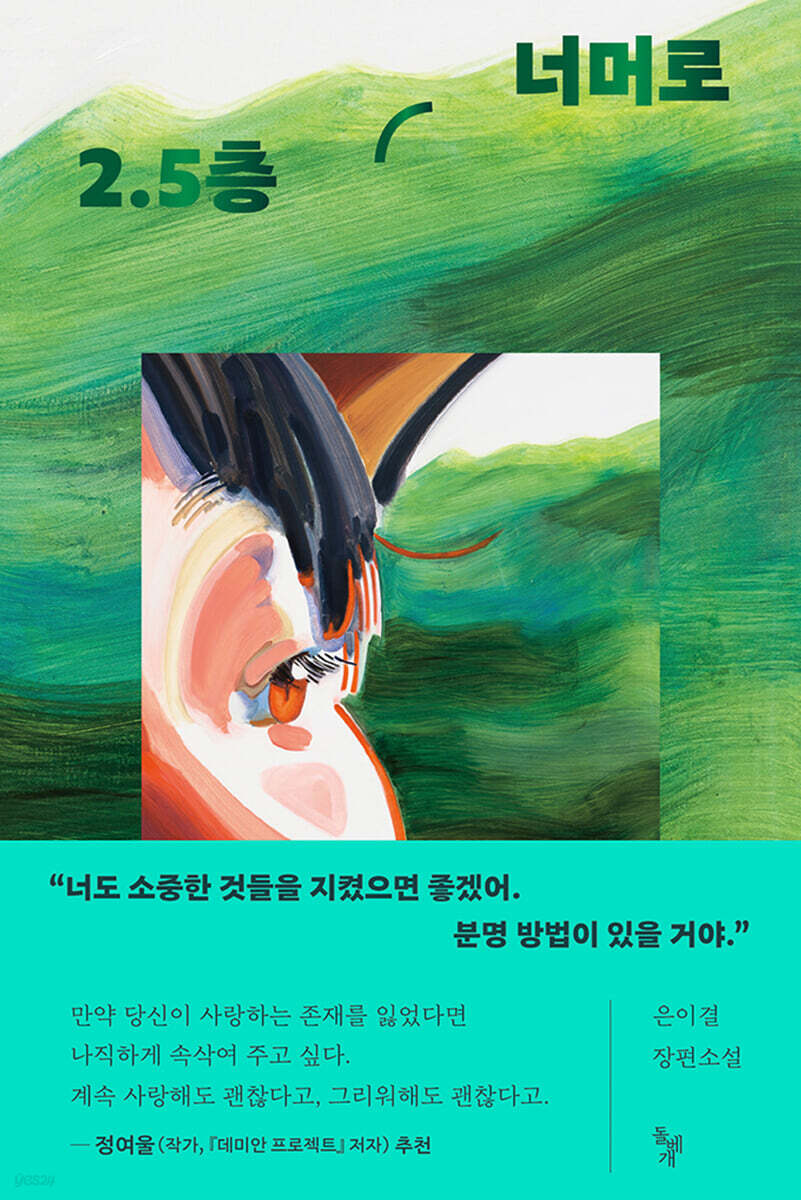 |
Description
Book Introduction
“That summer, the classroom went on vacation with one empty seat.”
Mourn sufficiently in your own way
A story of moving forward into tomorrow by rewriting sorrow and memories.
“I imagine through this novel.
A world where waiting wins, a world where affection wins.
If you have lost someone you love, I want to whisper to you softly.
It's okay to keep loving you, it's okay to keep missing you.
“It’s okay to keep holding ‘you’ in ‘my’ world.”
Recommended by Jeong Yeo-ul (author of "The Demian Project")
A glimpse of hope discovered through a season of loss
Since her debut in 2013, when she won the Blue Literature Award, author Eun-i-gyeol has been thoughtfully portraying the complex realities and struggles faced by children and adolescents. Her new full-length novel, "Beyond the 2.5th Floor," has been published.
The author, who has a deep interest in the hearts and lives of those left behind after losing a loved one, delicately portrays the time of mourning and the feelings of farewell felt by the protagonist, Ajin, upon hearing the news of her friend's disappearance and death.
In an age where the misfortune or absence of others is too easily forgotten or consumed by gossip, this story of trying to remember the departed fully and rewriting grief in one's own way resonates deeply.
It is also a story about warmly comforting children who are prone to asking themselves the cause and feeling guilty when faced with an unexplainable misfortune.
Mourn sufficiently in your own way
A story of moving forward into tomorrow by rewriting sorrow and memories.
“I imagine through this novel.
A world where waiting wins, a world where affection wins.
If you have lost someone you love, I want to whisper to you softly.
It's okay to keep loving you, it's okay to keep missing you.
“It’s okay to keep holding ‘you’ in ‘my’ world.”
Recommended by Jeong Yeo-ul (author of "The Demian Project")
A glimpse of hope discovered through a season of loss
Since her debut in 2013, when she won the Blue Literature Award, author Eun-i-gyeol has been thoughtfully portraying the complex realities and struggles faced by children and adolescents. Her new full-length novel, "Beyond the 2.5th Floor," has been published.
The author, who has a deep interest in the hearts and lives of those left behind after losing a loved one, delicately portrays the time of mourning and the feelings of farewell felt by the protagonist, Ajin, upon hearing the news of her friend's disappearance and death.
In an age where the misfortune or absence of others is too easily forgotten or consumed by gossip, this story of trying to remember the departed fully and rewriting grief in one's own way resonates deeply.
It is also a story about warmly comforting children who are prone to asking themselves the cause and feeling guilty when faced with an unexplainable misfortune.
- You can preview some of the book's contents.
Preview
index
prolog
1.
When you wait but it's not what you wanted
2.
A day when there wasn't even an empty desk
3.
Summer sleeplessness and cycling
4.
Do not trespass
5.
Voices outside the window
6.
Password 738
7.
Just adapt and that's it
8.
A diary with only dates
9.
A late arrival
10.
barnacles on turtles' backs
11.
Anyway, the presence that existed
12.
Secrets not shared
13.
Midnight commotion
14.
Fake reconciliation, real greetings
15.
To welcome the summer that has passed
16.
An unbelievable coincidence
17.
I should have seen you off
18.
Time to pretend not to know
19.
The truth that says the wrong thing
20.
The end of the vacation is a thriller
21.
A halo of light surrounds me
22.
That's probably you
Epilogue
Author's Note
1.
When you wait but it's not what you wanted
2.
A day when there wasn't even an empty desk
3.
Summer sleeplessness and cycling
4.
Do not trespass
5.
Voices outside the window
6.
Password 738
7.
Just adapt and that's it
8.
A diary with only dates
9.
A late arrival
10.
barnacles on turtles' backs
11.
Anyway, the presence that existed
12.
Secrets not shared
13.
Midnight commotion
14.
Fake reconciliation, real greetings
15.
To welcome the summer that has passed
16.
An unbelievable coincidence
17.
I should have seen you off
18.
Time to pretend not to know
19.
The truth that says the wrong thing
20.
The end of the vacation is a thriller
21.
A halo of light surrounds me
22.
That's probably you
Epilogue
Author's Note
Detailed image

Into the book
A year ago, that summer day is remembered by a bicycle parked on the side of the road.
The bicycle Jin-gyu was riding was leaning against a tree, basking in the hot sun.
I was concerned about the front wheels sticking out from the sidewalk and pointing towards the road.
Even though I was standing across from Jin-gyu, my eyes kept going to him.
Jin-gyu brought news from far away that contained the entire summer of that year.
I waited but it wasn't what I wanted.
If the delivered box contained something different from what I ordered, it couldn't possibly be mine.
Looking back, the bicycle that had been turning its head was ignoring the news of Sena that I had brought.
--- p.7
That winter, it seems that what Senna needed wasn't a bicycle.
There were as many shared bicycles on the streets as shared kickboards.
At that time, I didn't think about something so obvious.
Sena called me first, even though she had never really talked to me and didn't know me well.
Until then, I would have hesitated on my own, gauging my reaction.
Now I can see that feeling.
A desperate desire to find someone to be my friend.
--- p.93
"If I had seen Sena off that day, would this summer have been different? If I apologize now, would Sena accept it?"
The water in the plastic cup flowed down.
Jin-gyu waited for the water to settle on the floor, then lifted the cup and moved it to the side.
“Is that really necessary?”
Water marks appeared wherever the cup was moved.
The table was filling with circles of water.
Jin-gyu muttered as if talking to himself.
“It must have been hard, being alone.”
--- p.165
Each of us has time to spend alone.
Riding a bike, walking the dog, and smoking a cigarette.
Me, who meets you on the 2.5th floor, the man next door who diligently takes care of the garden and animals, my older sister Haemi who climbs up to the rooftop of the neighboring house to relieve her worries about reality—it was all the same.
If you're alone and your mind is at ease, and your eyes happen to overlap, you can just pretend not to notice.
As the time we each spent passed, morning came.
--- p.172
My sister continued, sniffling.
“I knew it couldn’t go on like this, but I just couldn’t muster up the courage.
The courage to abandon the chosen path, the courage to escape reality.
I felt like people would say I had no patience and that I was a failure.
That's when you gave me your diary.
Strangely, I had a determination to do something.
So, as you said, I decided to protect what is precious to me.”
She said that the most important thing to her sister right now is herself.
She said that it was not her Hong Kong aunt who was like a mother and an older sister to protect her, nor was it her grandmother from Geumseong-gak who treated her older sister like a daughter.
“For so long, I was ashamed of myself for being so ugly, so I turned away from myself.
Now I know.
“That if it’s not me, no one will protect me.”
--- p.193~194
I thought I would be alone this summer vacation, just like last year.
I thought that was my reality, me, alone in a corner, carrying a barnacle.
While I was looking at myself, the people around me were shining their own light on me in their own way.
I know that now.
The reason I wasn't buried in darkness was because of the countless thin rays of light that stretched out like threads from all directions.
They were willing to help me remove the barnacles from my back.
It was up to me to find my way towards the light.
Those lights were also what I had to protect.
--- p.199
Just as life and death are different, so too are the ways we accept separation.
It's okay to grieve for a long time, in different ways, and intensely.
I just hope you don't treat yourself rudely.
It is deeper and lasts longer than the wounds received from other people.
Even in the most painful and darkest moments, I hope that a thread of hope and warmth will remain with you.
The bicycle Jin-gyu was riding was leaning against a tree, basking in the hot sun.
I was concerned about the front wheels sticking out from the sidewalk and pointing towards the road.
Even though I was standing across from Jin-gyu, my eyes kept going to him.
Jin-gyu brought news from far away that contained the entire summer of that year.
I waited but it wasn't what I wanted.
If the delivered box contained something different from what I ordered, it couldn't possibly be mine.
Looking back, the bicycle that had been turning its head was ignoring the news of Sena that I had brought.
--- p.7
That winter, it seems that what Senna needed wasn't a bicycle.
There were as many shared bicycles on the streets as shared kickboards.
At that time, I didn't think about something so obvious.
Sena called me first, even though she had never really talked to me and didn't know me well.
Until then, I would have hesitated on my own, gauging my reaction.
Now I can see that feeling.
A desperate desire to find someone to be my friend.
--- p.93
"If I had seen Sena off that day, would this summer have been different? If I apologize now, would Sena accept it?"
The water in the plastic cup flowed down.
Jin-gyu waited for the water to settle on the floor, then lifted the cup and moved it to the side.
“Is that really necessary?”
Water marks appeared wherever the cup was moved.
The table was filling with circles of water.
Jin-gyu muttered as if talking to himself.
“It must have been hard, being alone.”
--- p.165
Each of us has time to spend alone.
Riding a bike, walking the dog, and smoking a cigarette.
Me, who meets you on the 2.5th floor, the man next door who diligently takes care of the garden and animals, my older sister Haemi who climbs up to the rooftop of the neighboring house to relieve her worries about reality—it was all the same.
If you're alone and your mind is at ease, and your eyes happen to overlap, you can just pretend not to notice.
As the time we each spent passed, morning came.
--- p.172
My sister continued, sniffling.
“I knew it couldn’t go on like this, but I just couldn’t muster up the courage.
The courage to abandon the chosen path, the courage to escape reality.
I felt like people would say I had no patience and that I was a failure.
That's when you gave me your diary.
Strangely, I had a determination to do something.
So, as you said, I decided to protect what is precious to me.”
She said that the most important thing to her sister right now is herself.
She said that it was not her Hong Kong aunt who was like a mother and an older sister to protect her, nor was it her grandmother from Geumseong-gak who treated her older sister like a daughter.
“For so long, I was ashamed of myself for being so ugly, so I turned away from myself.
Now I know.
“That if it’s not me, no one will protect me.”
--- p.193~194
I thought I would be alone this summer vacation, just like last year.
I thought that was my reality, me, alone in a corner, carrying a barnacle.
While I was looking at myself, the people around me were shining their own light on me in their own way.
I know that now.
The reason I wasn't buried in darkness was because of the countless thin rays of light that stretched out like threads from all directions.
They were willing to help me remove the barnacles from my back.
It was up to me to find my way towards the light.
Those lights were also what I had to protect.
--- p.199
Just as life and death are different, so too are the ways we accept separation.
It's okay to grieve for a long time, in different ways, and intensely.
I just hope you don't treat yourself rudely.
It is deeper and lasts longer than the wounds received from other people.
Even in the most painful and darkest moments, I hope that a thread of hope and warmth will remain with you.
--- From the author's note in the main text
Publisher's Review
A glimpse of hope discovered through a season of loss
Since her debut in 2013, when she won the Blue Literature Award, author Eun-i-gyeol has been thoughtfully portraying the complex realities and struggles faced by children and adolescents. Her new full-length novel, "Beyond the 2.5th Floor," has been published.
The author, who has a deep interest in the hearts and lives of those left behind after losing a loved one, delicately portrays the time of mourning and the feelings of farewell felt by the protagonist, Ajin, upon hearing the news of her friend's disappearance and death.
In an age where the misfortune or absence of others is too easily forgotten or consumed by gossip, this story of trying to remember the departed fully and rewriting grief in one's own way resonates deeply.
It is also a story about warmly comforting children who are prone to asking themselves the cause and feeling guilty when faced with an unexplainable misfortune.
“I hope you too protect the things that are precious to you.
“There must be a way.”
During the summer vacation of her third year of middle school, Ajin quits her academy and devotes herself to waiting for Sena.
I can't put my phone down for even a moment, and when it rains, I get impatient and walk around the streets carrying an extra umbrella.
But the news that Jin-gyu brought from far away was “not what I had hoped for, even though I had waited for it.”
Sena's body was found in a remote and sparsely populated area, far from the village.
Ajin pretends to be fine for the rest of the semester, but in reality, her heart is fragile and in a precarious state.
I feel isolated because I can't talk to anyone about Sena, and I get an uncontrollable rage when I see children who don't know anything carelessly spreading rumors about Sena.
But Ajin blames herself more than anyone else.
I feel guilty for not taking seriously the small signals I felt from Sena the last time I saw her, for not taking her desperate hand in my hand.
At the same time, I keep asking myself if I have the right to be sad and miss someone.
After hearing the news about Sena, Ajin's time is stuck in the middle of a hot summer day with the blazing sun beating down on her.
Suddenly, it occurred to me that the words 'friend' and 'death' really don't go together.
(Page 25)
After a full year, summer came again, and the wounds that had not been properly cared for were aggravated.
Ajin, who suffers from insomnia, roams the neighborhood every morning riding her bicycle, and sits on the landing of the 2.5-story stairs leading to the rooftop of her house, pouring out her heart to 'you' and looking deep into her inner self.
Memories of Sena that were buried in the back of my mind keep surfacing like gnarls, revealing their presence.
Ajin tries to remember Sena clearly by gathering the fragments of her memories that were scattered in pieces.
A world of possibilities that Sena had put off until later, like the things she liked, the things she wanted to do, the things she wanted to have, and the future scenery she dreamed of, but which had now been completely closed off.
Because I decided that “cherishing them is how I apologize to Sena.”
As Ajin crouched alone on the 2.5th floor, her friends Jin-gyu and Eun-je, as well as her family and neighbors, constantly came to visit her and knocked on the door of her heart.
Ajin spends time with Jin-gyu to remember Sena, gets involved in a commotion with her neighbors in a commercial-residential complex that's like a real-life SNS, and gradually recovers while sharing her emotional burdens with her best friend Eun-je.
After spending enough time to mourn and remember, Ajin discovered that people were reaching out to her with rays of love and concern.
Will Ajin be able to look forward to tomorrow, to next summer, to a genuine connection with others beyond the 2.5th floor?
Sharing the burden of the heart that is difficult to bear
A healing journey of giving light and warmth to one another
『Beyond the 2.5th Floor』 unfolds with two central narratives intersecting.
One is a story about everyday life that unfolds as one observes and unintentionally becomes entangled with peculiar neighbors while living with one's aunt in a commercial building.
In particular, the encounter with Haemi, the girl next door, becomes a crucial turning point for Ajin, who was feeling helpless, to develop a healthy attitude toward life, relying on others and giving and receiving help.
Another story depicts the guilt, division, and struggles that Ajin feels as Sena's death overlaps with her mother's death.
The two narratives influence each other, adding depth to the story and leading to serious reflections on life, death, and relationships.
Grief has a time lag, and the timing and intensity of the experience of a tragic event varies from person to person.
Even as we navigate unexpected misfortunes and the pain that comes unexpectedly, the continuation of daily life and connections with others can provide the strength to live.
All sorrow and pain are individual, so no one can force a certain way or attitude on another person, etc…
As if reflecting Ajin's state of being in a daze and suffering from insomnia, the story frequently crosses between the past and present, blurring the boundaries of time.
And the person Ajin confides in is also ambiguous, sometimes being Sena, sometimes being her mother, and sometimes being no one else.
This is the point where we can feel that the events and emotions we experience in life are intricately intertwined, influence each other across time, and are reconstructed into forms that are meaningful to each individual.
The 2.5th floor, where time seems to have stopped, is a space like a diary where Ajin can only pour out her heart, a refuge or a safe zone.
It also symbolizes a time of recovery and respite.
Ajin, who had been lost in her own inner self and pain, comes to realize that everyone has their own circumstances and pain through the unfamiliar landscapes of the world she encounters and the connections she makes with the people around her while suffering from insomnia.
It's difficult to fully understand the typist, but I also realize that "if you don't understand, just accept it as it is."
And after staying on the 2.5th floor for a long time, holding all the fragile and insignificant pieces of himself, he discovers a sign of hope shining through the window.
Readers who have accompanied Ajin on her journey will also be able to think about their own 2.5-story and ponder what awaits them beyond it.
The 2.5th floor, which does not belong to either the ground or the sky, is my diary.
Maybe it's because I've come too far to act like a child, but I'm still far from being an adult.
I poured out my heart there without worrying about what anyone thought.
Above all, I'm glad I met you.
Sometimes you were Sena, sometimes you were a mother, and sometimes you were nobody.
It was okay though.
(Page 181)
Since her debut in 2013, when she won the Blue Literature Award, author Eun-i-gyeol has been thoughtfully portraying the complex realities and struggles faced by children and adolescents. Her new full-length novel, "Beyond the 2.5th Floor," has been published.
The author, who has a deep interest in the hearts and lives of those left behind after losing a loved one, delicately portrays the time of mourning and the feelings of farewell felt by the protagonist, Ajin, upon hearing the news of her friend's disappearance and death.
In an age where the misfortune or absence of others is too easily forgotten or consumed by gossip, this story of trying to remember the departed fully and rewriting grief in one's own way resonates deeply.
It is also a story about warmly comforting children who are prone to asking themselves the cause and feeling guilty when faced with an unexplainable misfortune.
“I hope you too protect the things that are precious to you.
“There must be a way.”
During the summer vacation of her third year of middle school, Ajin quits her academy and devotes herself to waiting for Sena.
I can't put my phone down for even a moment, and when it rains, I get impatient and walk around the streets carrying an extra umbrella.
But the news that Jin-gyu brought from far away was “not what I had hoped for, even though I had waited for it.”
Sena's body was found in a remote and sparsely populated area, far from the village.
Ajin pretends to be fine for the rest of the semester, but in reality, her heart is fragile and in a precarious state.
I feel isolated because I can't talk to anyone about Sena, and I get an uncontrollable rage when I see children who don't know anything carelessly spreading rumors about Sena.
But Ajin blames herself more than anyone else.
I feel guilty for not taking seriously the small signals I felt from Sena the last time I saw her, for not taking her desperate hand in my hand.
At the same time, I keep asking myself if I have the right to be sad and miss someone.
After hearing the news about Sena, Ajin's time is stuck in the middle of a hot summer day with the blazing sun beating down on her.
Suddenly, it occurred to me that the words 'friend' and 'death' really don't go together.
(Page 25)
After a full year, summer came again, and the wounds that had not been properly cared for were aggravated.
Ajin, who suffers from insomnia, roams the neighborhood every morning riding her bicycle, and sits on the landing of the 2.5-story stairs leading to the rooftop of her house, pouring out her heart to 'you' and looking deep into her inner self.
Memories of Sena that were buried in the back of my mind keep surfacing like gnarls, revealing their presence.
Ajin tries to remember Sena clearly by gathering the fragments of her memories that were scattered in pieces.
A world of possibilities that Sena had put off until later, like the things she liked, the things she wanted to do, the things she wanted to have, and the future scenery she dreamed of, but which had now been completely closed off.
Because I decided that “cherishing them is how I apologize to Sena.”
As Ajin crouched alone on the 2.5th floor, her friends Jin-gyu and Eun-je, as well as her family and neighbors, constantly came to visit her and knocked on the door of her heart.
Ajin spends time with Jin-gyu to remember Sena, gets involved in a commotion with her neighbors in a commercial-residential complex that's like a real-life SNS, and gradually recovers while sharing her emotional burdens with her best friend Eun-je.
After spending enough time to mourn and remember, Ajin discovered that people were reaching out to her with rays of love and concern.
Will Ajin be able to look forward to tomorrow, to next summer, to a genuine connection with others beyond the 2.5th floor?
Sharing the burden of the heart that is difficult to bear
A healing journey of giving light and warmth to one another
『Beyond the 2.5th Floor』 unfolds with two central narratives intersecting.
One is a story about everyday life that unfolds as one observes and unintentionally becomes entangled with peculiar neighbors while living with one's aunt in a commercial building.
In particular, the encounter with Haemi, the girl next door, becomes a crucial turning point for Ajin, who was feeling helpless, to develop a healthy attitude toward life, relying on others and giving and receiving help.
Another story depicts the guilt, division, and struggles that Ajin feels as Sena's death overlaps with her mother's death.
The two narratives influence each other, adding depth to the story and leading to serious reflections on life, death, and relationships.
Grief has a time lag, and the timing and intensity of the experience of a tragic event varies from person to person.
Even as we navigate unexpected misfortunes and the pain that comes unexpectedly, the continuation of daily life and connections with others can provide the strength to live.
All sorrow and pain are individual, so no one can force a certain way or attitude on another person, etc…
As if reflecting Ajin's state of being in a daze and suffering from insomnia, the story frequently crosses between the past and present, blurring the boundaries of time.
And the person Ajin confides in is also ambiguous, sometimes being Sena, sometimes being her mother, and sometimes being no one else.
This is the point where we can feel that the events and emotions we experience in life are intricately intertwined, influence each other across time, and are reconstructed into forms that are meaningful to each individual.
The 2.5th floor, where time seems to have stopped, is a space like a diary where Ajin can only pour out her heart, a refuge or a safe zone.
It also symbolizes a time of recovery and respite.
Ajin, who had been lost in her own inner self and pain, comes to realize that everyone has their own circumstances and pain through the unfamiliar landscapes of the world she encounters and the connections she makes with the people around her while suffering from insomnia.
It's difficult to fully understand the typist, but I also realize that "if you don't understand, just accept it as it is."
And after staying on the 2.5th floor for a long time, holding all the fragile and insignificant pieces of himself, he discovers a sign of hope shining through the window.
Readers who have accompanied Ajin on her journey will also be able to think about their own 2.5-story and ponder what awaits them beyond it.
The 2.5th floor, which does not belong to either the ground or the sky, is my diary.
Maybe it's because I've come too far to act like a child, but I'm still far from being an adult.
I poured out my heart there without worrying about what anyone thought.
Above all, I'm glad I met you.
Sometimes you were Sena, sometimes you were a mother, and sometimes you were nobody.
It was okay though.
(Page 181)
GOODS SPECIFICS
- Date of issue: November 20, 2025
- Page count, weight, size: 224 pages | 370g | 140*210*14mm
- ISBN13: 9791194442547
- ISBN10: 1194442544
You may also like
카테고리
korean


korean

![GQ KOREA Mark (Monthly): December [2025]](http://librairie.coreenne.fr/cdn/shop/files/8ef265dbbfbf186523ed75ba7319009d.jpg?v=1765340328&width=3840)


