

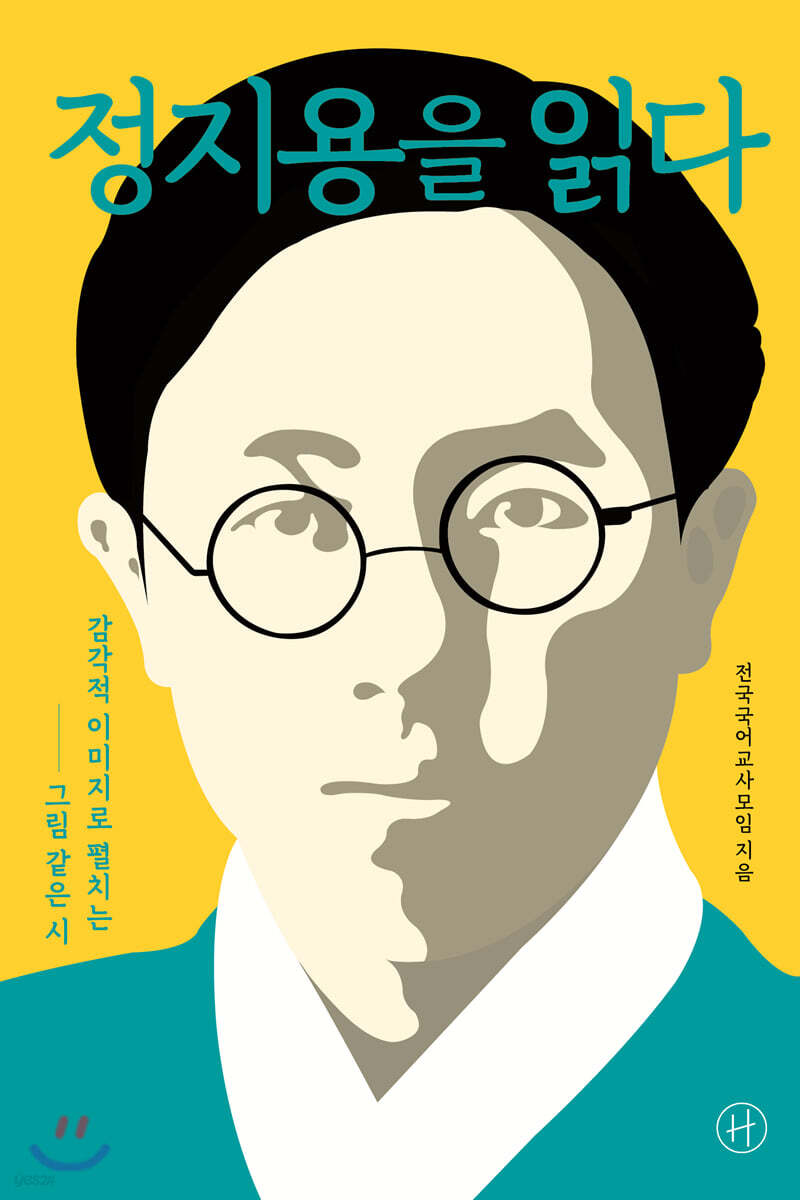
Reading Jeong Ji-yong
 |
Description
Book Introduction
A look into the life and works of Jeong Ji-yong,
A book introducing 21 of his representative poems
Jeong Ji-yong's poem "Nostalgia" begins with the lines, "A stream, the support of old stories, winds its way to the eastern end of the wide plain."
This poem was sung as a song and became a representative song of 'longing for one's hometown.'
Jeong Ji-yong's poem "Glass Window 1" stands out for its restrained emotions and visual imagery.
The poem's "lonely ecstatic feeling" became a representative line of paradox.
A poet with round horn-rimmed glasses, a neatly parted hair, and a durumagi (traditional Korean overcoat), a poet who expresses both local and exotic atmospheres, a poet who shows a diverse and wide world of works including folk songs, children's songs, modernist poetry, religious poetry, and landscape poetry, Jeong Ji-yong.
Jeong Ji-yong was a representative poet of the 1930s, and he left behind many beautiful poems that are like paintings, using sensuous poetic language and novel metaphors.
He also led many younger poets, such as Jo Ji-hoon, Park Mok-wol, and Park Du-jin, into the literary world.
“Reading Jeong Ji-yong” is a book that guides you to encounter Jeong Ji-yong’s poetry more easily.
After examining the spaces and people that influenced Jeong Ji-yong's life and his works, which are necessary for a full understanding of his poetry, we introduce 21 of his poems that are still beautiful to read today, and add explanations and appreciation of the poems.
If you read the description and appreciation accompanying the work and then read the poem again, you will be able to discover the value and charm of the poem.
A book introducing 21 of his representative poems
Jeong Ji-yong's poem "Nostalgia" begins with the lines, "A stream, the support of old stories, winds its way to the eastern end of the wide plain."
This poem was sung as a song and became a representative song of 'longing for one's hometown.'
Jeong Ji-yong's poem "Glass Window 1" stands out for its restrained emotions and visual imagery.
The poem's "lonely ecstatic feeling" became a representative line of paradox.
A poet with round horn-rimmed glasses, a neatly parted hair, and a durumagi (traditional Korean overcoat), a poet who expresses both local and exotic atmospheres, a poet who shows a diverse and wide world of works including folk songs, children's songs, modernist poetry, religious poetry, and landscape poetry, Jeong Ji-yong.
Jeong Ji-yong was a representative poet of the 1930s, and he left behind many beautiful poems that are like paintings, using sensuous poetic language and novel metaphors.
He also led many younger poets, such as Jo Ji-hoon, Park Mok-wol, and Park Du-jin, into the literary world.
“Reading Jeong Ji-yong” is a book that guides you to encounter Jeong Ji-yong’s poetry more easily.
After examining the spaces and people that influenced Jeong Ji-yong's life and his works, which are necessary for a full understanding of his poetry, we introduce 21 of his poems that are still beautiful to read today, and add explanations and appreciation of the poems.
If you read the description and appreciation accompanying the work and then read the poem again, you will be able to discover the value and charm of the poem.
- You can preview some of the book's contents.
Preview
index
preface
1.
Jeong Ji-yong's life and works
Jeong Ji-yong's life
Jeong Ji-yong's world of works
2.
Reading Jeong Ji-yong's poems with keywords
Dream of the Wind and Waves 1
perfume
Apcheon
Phrase from an old story
Cafe France
having fever
Glass window 1
Lake 2 / Lake surface / Winter / Sea 3
Grandfather / Horse / Wind / Shooting Star
hometown
1 star
Kill the clock
Sea 2
Guseong-dong
Jangsu Mountain 1
Baekrokdam
breakfast
rain
Indongcha
butterfly
tan
Jeong Ji-yong's chronology
1.
Jeong Ji-yong's life and works
Jeong Ji-yong's life
Jeong Ji-yong's world of works
2.
Reading Jeong Ji-yong's poems with keywords
Dream of the Wind and Waves 1
perfume
Apcheon
Phrase from an old story
Cafe France
having fever
Glass window 1
Lake 2 / Lake surface / Winter / Sea 3
Grandfather / Horse / Wind / Shooting Star
hometown
1 star
Kill the clock
Sea 2
Guseong-dong
Jangsu Mountain 1
Baekrokdam
breakfast
rain
Indongcha
butterfly
tan
Jeong Ji-yong's chronology
Publisher's Review
Meet the lives and works of Korea's leading modern poets.
"Reading Baek Seok" and "Reading Jeong Ji-yong" are books that unravel the lives, works, and major works of Korea's leading modern poets from the perspective of a field teacher.
Following these two books, the lives and works of renowned poets in modern Korean poetry, including Yun Dong-ju, Kim So-wol, and Kim Su-yeong, will be showcased.
Although interest in poetry has been gradually increasing recently, there is still a tendency to find the works of poets who are major figures in modern poetry or the poems included in textbooks difficult.
This is partly due to a lack of understanding of the times and the lives of poets, and partly because it is difficult to decipher the meaning contained in symbolic and implicit poetic expressions or techniques.
This book was created 'to share a method of reading poetry with those who find poetry difficult, to help them touch their own lives by reading poetry that allows them to feel the philosophy of life, and to recommend reading poetry to everyone in this land who is reflecting on their lives.'
To fully understand poetry, one must first understand the poets' lives, the circumstances of the times, and the world of their works.
So, in this book, we first explain the poet's life and world of works, which serve as the basis for reading and understanding poetry, in an easy-to-understand manner using specific examples of his works.
Next, we selected about 20 representative poems from among the poet's poems and added explanations about the poems in two ways.
First, by providing the core content based on a few keywords essential for reading the work, we helped readers discover the context and appeal of the poem's expression.
Then, I included a review of the poem to give a broader understanding of the overall feeling and meaning.
If you read the keyword analysis and appreciation notes and then appreciate the poem again, you will be able to discover the poem's deep and broad meaning and charm.
Learn how to read poetry and fall in love with its charm.
Anything becomes easier when you know how to do it, and when it becomes easy, you become accustomed to it.
The same goes for reading poetry.
If you learned how to appreciate poetry on your own while learning it in school, you will be able to approach poetry and read it from time to time without difficulty as an adult.
However, in schools, poetry has usually been an object of study and memorization rather than something to be appreciated and enjoyed.
As a result, I became distant from poetry without having the opportunity to meet the poet, to converse with and empathize with the speaker in the work, to discover the value and beauty of poetry, or to reflect on myself.
This book is a guide for those who have first encountered Jeong Ji-yong's poetry to help their juniors more easily encounter Jeong Ji-yong's poetry.
Current Korean language teachers who love poetry talk about their feelings and appreciation for poetry based on its context, expressions, and poetic language.
It is easy to read and relatable, not stiff or difficult, so it not only helps you understand the poem but also makes you want to add your own thoughts.
As you read each one, you will discover the beauty and charm of Jeong Ji-yong's poetry.
"Reading Baek Seok" and "Reading Jeong Ji-yong" are books that unravel the lives, works, and major works of Korea's leading modern poets from the perspective of a field teacher.
Following these two books, the lives and works of renowned poets in modern Korean poetry, including Yun Dong-ju, Kim So-wol, and Kim Su-yeong, will be showcased.
Although interest in poetry has been gradually increasing recently, there is still a tendency to find the works of poets who are major figures in modern poetry or the poems included in textbooks difficult.
This is partly due to a lack of understanding of the times and the lives of poets, and partly because it is difficult to decipher the meaning contained in symbolic and implicit poetic expressions or techniques.
This book was created 'to share a method of reading poetry with those who find poetry difficult, to help them touch their own lives by reading poetry that allows them to feel the philosophy of life, and to recommend reading poetry to everyone in this land who is reflecting on their lives.'
To fully understand poetry, one must first understand the poets' lives, the circumstances of the times, and the world of their works.
So, in this book, we first explain the poet's life and world of works, which serve as the basis for reading and understanding poetry, in an easy-to-understand manner using specific examples of his works.
Next, we selected about 20 representative poems from among the poet's poems and added explanations about the poems in two ways.
First, by providing the core content based on a few keywords essential for reading the work, we helped readers discover the context and appeal of the poem's expression.
Then, I included a review of the poem to give a broader understanding of the overall feeling and meaning.
If you read the keyword analysis and appreciation notes and then appreciate the poem again, you will be able to discover the poem's deep and broad meaning and charm.
Learn how to read poetry and fall in love with its charm.
Anything becomes easier when you know how to do it, and when it becomes easy, you become accustomed to it.
The same goes for reading poetry.
If you learned how to appreciate poetry on your own while learning it in school, you will be able to approach poetry and read it from time to time without difficulty as an adult.
However, in schools, poetry has usually been an object of study and memorization rather than something to be appreciated and enjoyed.
As a result, I became distant from poetry without having the opportunity to meet the poet, to converse with and empathize with the speaker in the work, to discover the value and beauty of poetry, or to reflect on myself.
This book is a guide for those who have first encountered Jeong Ji-yong's poetry to help their juniors more easily encounter Jeong Ji-yong's poetry.
Current Korean language teachers who love poetry talk about their feelings and appreciation for poetry based on its context, expressions, and poetic language.
It is easy to read and relatable, not stiff or difficult, so it not only helps you understand the poem but also makes you want to add your own thoughts.
As you read each one, you will discover the beauty and charm of Jeong Ji-yong's poetry.
GOODS SPECIFICS
- Publication date: November 11, 2019
- Page count, weight, size: 176 pages | 262g | 140*210*10mm
- ISBN13: 9791160803082
- ISBN10: 1160803080
You may also like
카테고리
korean


korean

![GQ KOREA Mark (Monthly): December [2025]](http://librairie.coreenne.fr/cdn/shop/files/8ef265dbbfbf186523ed75ba7319009d.jpg?v=1765340328&width=3840)


