

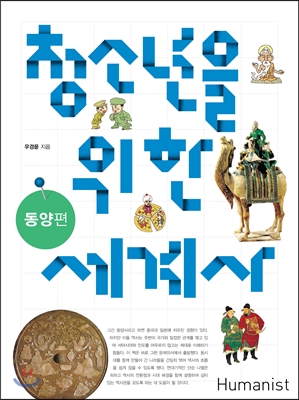
World History for Youth: Oriental Edition
 |
Description
Book Introduction
Historical bestsellers chosen by youth,
Reborn after 10 years
The Asian edition of the "World History for Youth" series, which has been much loved as a historical guide for young people for the past 10 years, has returned with new editing and design, as well as more accurate and informative content.
This book, which has quenched a thirst that could not be quenched in regular school classes for the past ten years, has been revised to ensure that it remains with new readers for a longer period of time. This revised edition uses new illustrations, reference photos, and more understandable maps. The author has also reviewed and supplemented the content, and has attempted to reflect new research in the academic world.
Based on the responses of students and the awareness of problems faced by teachers over the past 10 years in the educational field, we have put on a new look and are ready to meet young readers.
Reborn after 10 years
The Asian edition of the "World History for Youth" series, which has been much loved as a historical guide for young people for the past 10 years, has returned with new editing and design, as well as more accurate and informative content.
This book, which has quenched a thirst that could not be quenched in regular school classes for the past ten years, has been revised to ensure that it remains with new readers for a longer period of time. This revised edition uses new illustrations, reference photos, and more understandable maps. The author has also reviewed and supplemented the content, and has attempted to reflect new research in the academic world.
Based on the responses of students and the awareness of problems faced by teachers over the past 10 years in the educational field, we have put on a new look and are ready to meet young readers.
index
preface
Part 1: The Birth of Civilization and the Rise of the Nation
01 Civilization and Nations / 02 Mesopotamian Civilization / 03 Indus Valley Civilization / 04 Yellow River Civilization
Part 2: The Formation of Regional Cultures in the Asian World
01 China, the emergence of a unified empire and the formation of ancient culture / 02 Japan's national formation / 03 West Asia, the emergence of empires and the formation of Persian culture / 04 India, the emergence of a unified dynasty and the formation of Buddhist culture
Part 3: The Reorganization and Growth of the Asian World
01 China, Wei, Jin, and Southern and Northern Dynasties / 02 China, Sui and Tang Unified Empire / 03 Japan, Establishment and Development of Ancient Society / 04 West Asia, Establishment and Development of Islam / 05 Formation and Spread of the Hindu Cultural Sphere
Part 4: Asia: Regional Economic Growth and Expanding Exchange
01 The Founding and Development of the Song Dynasty / 02 The Domination of China by Northern Nomadic Peoples and the Changes in Chinese Society / 03 The Establishment and Development of the Shogunate in Japan / 04 Changes and Growth in the West Asian World / 05 The Islamization of India
Part 5: The Expansion of the Asian World and the Formation of Global Trade Networks
01 The Establishment and Development of the Qing Dynasty / 02 The Establishment and Development of the Qing Dynasty / 03 Japan: Changes in the Shogunate System and the Growth of Common People / 04 The Expansion of the West Asian World / 05 Changes in India
Part 6: Asian National Movements Against Imperialist Invasion and Modern Development
01 China's anti-imperialist and modernization movements / 02 Japan's establishment of a modern nation and its imperialization / 03 Modernization movements in West Asia / 04 India's modernization and nationalist movements
Part 7: Challenges of Modern Asia
01 China's modernization movement and the establishment of the People's Republic of China / 02 Changes in 20th-century Japan / 03 Problems of the 20th-century West Asian world / 04 India's independence and the establishment of the Indian Republic
References / Index
Part 1: The Birth of Civilization and the Rise of the Nation
01 Civilization and Nations / 02 Mesopotamian Civilization / 03 Indus Valley Civilization / 04 Yellow River Civilization
Part 2: The Formation of Regional Cultures in the Asian World
01 China, the emergence of a unified empire and the formation of ancient culture / 02 Japan's national formation / 03 West Asia, the emergence of empires and the formation of Persian culture / 04 India, the emergence of a unified dynasty and the formation of Buddhist culture
Part 3: The Reorganization and Growth of the Asian World
01 China, Wei, Jin, and Southern and Northern Dynasties / 02 China, Sui and Tang Unified Empire / 03 Japan, Establishment and Development of Ancient Society / 04 West Asia, Establishment and Development of Islam / 05 Formation and Spread of the Hindu Cultural Sphere
Part 4: Asia: Regional Economic Growth and Expanding Exchange
01 The Founding and Development of the Song Dynasty / 02 The Domination of China by Northern Nomadic Peoples and the Changes in Chinese Society / 03 The Establishment and Development of the Shogunate in Japan / 04 Changes and Growth in the West Asian World / 05 The Islamization of India
Part 5: The Expansion of the Asian World and the Formation of Global Trade Networks
01 The Establishment and Development of the Qing Dynasty / 02 The Establishment and Development of the Qing Dynasty / 03 Japan: Changes in the Shogunate System and the Growth of Common People / 04 The Expansion of the West Asian World / 05 Changes in India
Part 6: Asian National Movements Against Imperialist Invasion and Modern Development
01 China's anti-imperialist and modernization movements / 02 Japan's establishment of a modern nation and its imperialization / 03 Modernization movements in West Asia / 04 India's modernization and nationalist movements
Part 7: Challenges of Modern Asia
01 China's modernization movement and the establishment of the People's Republic of China / 02 Changes in 20th-century Japan / 03 Problems of the 20th-century West Asian world / 04 India's independence and the establishment of the Indian Republic
References / Index
Publisher's Review
1.
Break free from the mythologized East and encounter the history of each Eastern country as it is.
- A subjective view of Eastern history focusing on the relationship between the West and the East
The author, who teaches history to students at the alternative school, Iwoo School, planned this book to read Eastern history from our own perspective, breaking away from the Western-centric view of Eastern history.
While maintaining the subjectivity of the three Northeast Asian countries of Korea, China, and Japan, it also examines the history of Arabia and India as a medium connecting East Asia and Europe, as well as their own history.
Through this, we were able to gradually learn how the countries of East Asia, Arabia, and India influenced each other and further how they encountered European civilization.
2.
Containing the flow of history not found in textbooks
- Go beyond the rigid descriptions of textbooks and provide a friendly explanation of historical reasons.
Textbooks have to contain a vast amount of content, and because the space is limited compared to the vast amount of content, the content must be condensed.
So, to understand the historical facts in textbooks, a lot of inference and imagination is required.
But it is very difficult for young people who are beginners in the field of history to do so.
This book is the result of an attempt to overcome such difficulties, even if only a little.
《World History for Youth: East Asia》 avoids a simple chronological listing of historical facts to stimulate students' interest in history. Instead, it explains the "reasons why" major changes or turning points in history occurred.
We structured history so that it can be understood as a flow rather than a simple collection of events, and we tried to provide sufficient explanations of the various related facts surrounding the events so that the facts can be understood in a three-dimensional way.
And it also allowed us to see how that fact influenced and connected subsequent history.
Above all, I tried to write this book so that young people who read it can infer historical facts and find the answers for themselves.
3.
Complete revised edition of the History for Youth series
- The 'History for Youth' series encompassing Korean, Western, and Eastern history.
A history book that current teachers can read directly to young people was planned, and 10 years after the first book was published, all three revised editions have been published.
As history teachers themselves, the authors have painstakingly written this series to present an alternative history book, taking into account the concerns they have experienced in their careers and the perspectives of their students.
Based on various inquiries from readers and changes in the educational field over the past 10 years, we began work on a revised edition to meet new youth, and completed publishing all three volumes in just over a year.
The core issue that runs through Korean, Western, and Eastern history is to write world history that can be written through the eyes of a history teacher.
By gathering experiences that students can easily understand and see which historical events catch their eye, we focused on ensuring that students do not miss the overall flow of history rather than dwelling on individual events in an easy-to-understand style.
Break free from the mythologized East and encounter the history of each Eastern country as it is.
- A subjective view of Eastern history focusing on the relationship between the West and the East
The author, who teaches history to students at the alternative school, Iwoo School, planned this book to read Eastern history from our own perspective, breaking away from the Western-centric view of Eastern history.
While maintaining the subjectivity of the three Northeast Asian countries of Korea, China, and Japan, it also examines the history of Arabia and India as a medium connecting East Asia and Europe, as well as their own history.
Through this, we were able to gradually learn how the countries of East Asia, Arabia, and India influenced each other and further how they encountered European civilization.
2.
Containing the flow of history not found in textbooks
- Go beyond the rigid descriptions of textbooks and provide a friendly explanation of historical reasons.
Textbooks have to contain a vast amount of content, and because the space is limited compared to the vast amount of content, the content must be condensed.
So, to understand the historical facts in textbooks, a lot of inference and imagination is required.
But it is very difficult for young people who are beginners in the field of history to do so.
This book is the result of an attempt to overcome such difficulties, even if only a little.
《World History for Youth: East Asia》 avoids a simple chronological listing of historical facts to stimulate students' interest in history. Instead, it explains the "reasons why" major changes or turning points in history occurred.
We structured history so that it can be understood as a flow rather than a simple collection of events, and we tried to provide sufficient explanations of the various related facts surrounding the events so that the facts can be understood in a three-dimensional way.
And it also allowed us to see how that fact influenced and connected subsequent history.
Above all, I tried to write this book so that young people who read it can infer historical facts and find the answers for themselves.
3.
Complete revised edition of the History for Youth series
- The 'History for Youth' series encompassing Korean, Western, and Eastern history.
A history book that current teachers can read directly to young people was planned, and 10 years after the first book was published, all three revised editions have been published.
As history teachers themselves, the authors have painstakingly written this series to present an alternative history book, taking into account the concerns they have experienced in their careers and the perspectives of their students.
Based on various inquiries from readers and changes in the educational field over the past 10 years, we began work on a revised edition to meet new youth, and completed publishing all three volumes in just over a year.
The core issue that runs through Korean, Western, and Eastern history is to write world history that can be written through the eyes of a history teacher.
By gathering experiences that students can easily understand and see which historical events catch their eye, we focused on ensuring that students do not miss the overall flow of history rather than dwelling on individual events in an easy-to-understand style.
GOODS SPECIFICS
- Date of issue: September 1, 2014
- Page count, weight, size: 412 pages | 890g | 175*235*25mm
- ISBN13: 9788958627203
- ISBN10: 8958627204
You may also like
카테고리
korean


korean

![GQ KOREA Mark (Monthly): December [2025]](http://librairie.coreenne.fr/cdn/shop/files/8ef265dbbfbf186523ed75ba7319009d.jpg?v=1765340328&width=3840)


