

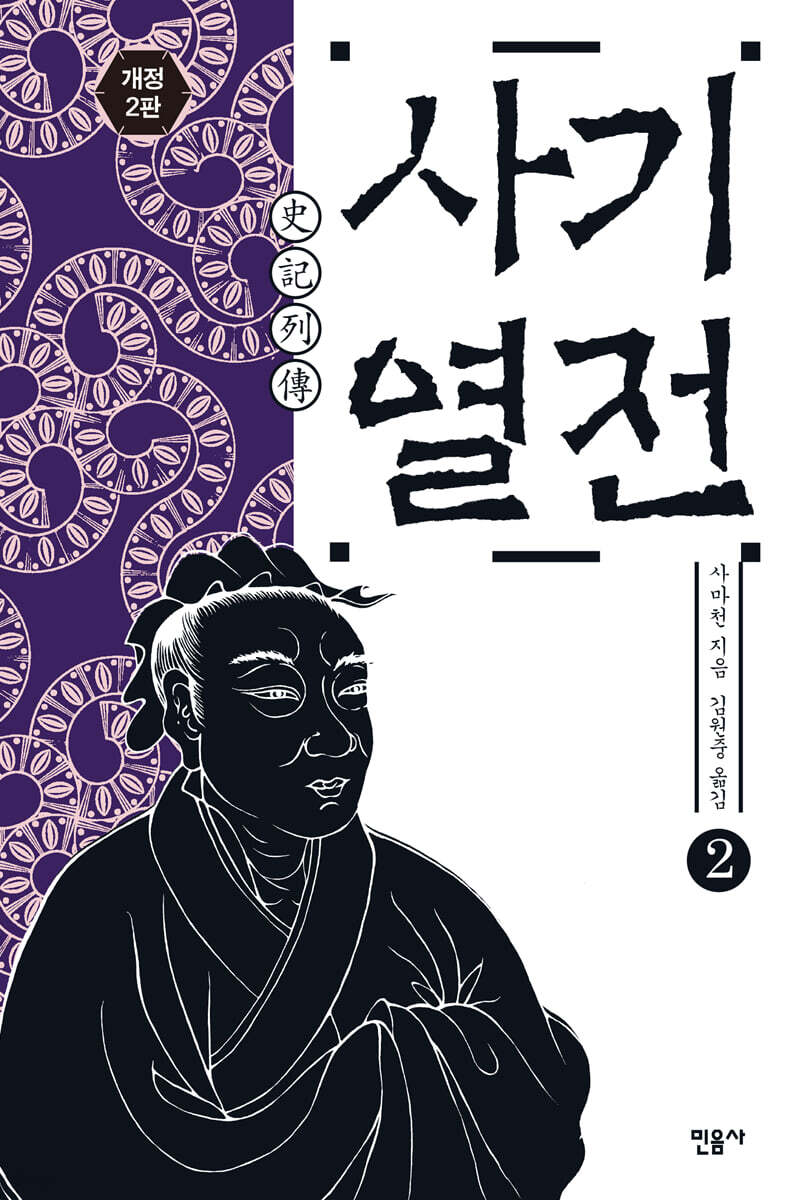
Fraud Chronicles 2
 |
Description
Book Introduction
Restored even more vividly through revision work
The best translation of 『Biographies of the Fraud』
The beginning of Chinese history
A model of Eastern historiography
A living, breathing scripture about humanity and power
Professor Kim Won-joong's 『Records of the Grand Historian』, a representative humanities bestseller that has been loved by many readers through repeated editions, has been republished in a revised second edition by Minumsa.
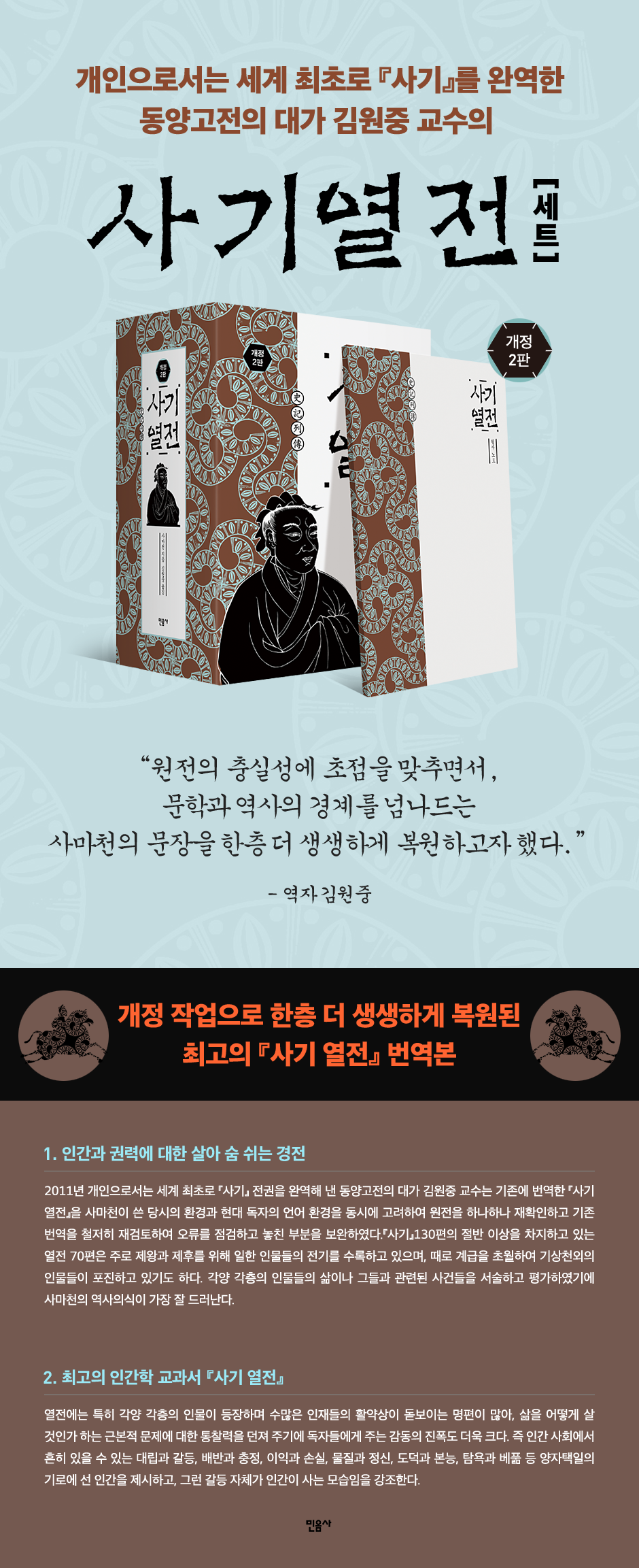
Professor Kim Won-joong, a master of Oriental classics who became the first individual to translate the entirety of the Records of the Grand Historian in 2011, reconfirmed the original text one by one, taking into account both the environment in which Sima Qian wrote and the linguistic environment of modern readers, and thoroughly reviewed the existing translation to check for errors and supplement any missing parts.
The 70 biographies, which account for more than half of the 130 chapters in the Records of the Grand Historian, mainly contain biographies of people who worked for emperors and feudal lords, and sometimes feature extraordinary figures who transcend class.
Sima Qian's historical consciousness is best revealed in his descriptions and evaluations of the lives of people from all walks of life and the events related to them.
There are many masterpieces that highlight the achievements of countless talented individuals, and they offer insight into the fundamental question of how to live life, thus giving readers a greater sense of impact.
The best translation of 『Biographies of the Fraud』
The beginning of Chinese history
A model of Eastern historiography
A living, breathing scripture about humanity and power
Professor Kim Won-joong's 『Records of the Grand Historian』, a representative humanities bestseller that has been loved by many readers through repeated editions, has been republished in a revised second edition by Minumsa.
Professor Kim Won-joong, a master of Oriental classics who became the first individual to translate the entirety of the Records of the Grand Historian in 2011, reconfirmed the original text one by one, taking into account both the environment in which Sima Qian wrote and the linguistic environment of modern readers, and thoroughly reviewed the existing translation to check for errors and supplement any missing parts.
The 70 biographies, which account for more than half of the 130 chapters in the Records of the Grand Historian, mainly contain biographies of people who worked for emperors and feudal lords, and sometimes feature extraordinary figures who transcend class.
Sima Qian's historical consciousness is best revealed in his descriptions and evaluations of the lives of people from all walks of life and the events related to them.
There are many masterpieces that highlight the achievements of countless talented individuals, and they offer insight into the fundamental question of how to live life, thus giving readers a greater sense of impact.
- You can preview some of the book's contents.
Preview
index
Note
36.
The Biography of Prime Minister Jang
37.
The Chronicles of the Six Lives of the Reverse
38.
Nearby monster heatwave
39.
The Biography of Yu Gyeong-suk-sun-tong
40.
The Chronicles of Gyepo and Nanpo
41.
The Biography of Mandarin Ducks and Cao Cao
42.
Jang Seok-ji's Biography of Pungdang
43.
The Biography of Manseok Jang-suk
44.
Jeon Sook's biography
45.
The Chronicles of the Sky
46.
The Biography of the Five Kings and Queens
47.
Crisis Muanhu Battle
48.
Han Jang-yu's biography
49.
General Lee's biography
50.
Biographies of the Huns
51.
Biography of the above generals
52.
The Biography of Pyeongjinhu Jubo
53.
Nanyue Chronicles
54.
Dongwol Chronicles
55.
Joseon Dynasty Chronicles
56.
Southwest's Chronicles
57.
Biography of Sima Xiangru
58.
The Biography of Hyeongsan, Hoenam
59.
Sunli Chronicles
60.
Geum Jeong-yeoljeon
61.
Biography of Confucian scholars
62.
The Battle of Hogri
63.
Daewon Chronicles
64.
Biography of Yuhyeop
65.
Yeonghaeng Yeoljeon
66.
Golgye Yeoljeon
67.
Daily Chronicles
68.
The Chronicles of Gui Chaek
69.
The Chronicles of Fire Food
70.
The autobiography of Taesagong
List of 『Fraud』
References
Search
36.
The Biography of Prime Minister Jang
37.
The Chronicles of the Six Lives of the Reverse
38.
Nearby monster heatwave
39.
The Biography of Yu Gyeong-suk-sun-tong
40.
The Chronicles of Gyepo and Nanpo
41.
The Biography of Mandarin Ducks and Cao Cao
42.
Jang Seok-ji's Biography of Pungdang
43.
The Biography of Manseok Jang-suk
44.
Jeon Sook's biography
45.
The Chronicles of the Sky
46.
The Biography of the Five Kings and Queens
47.
Crisis Muanhu Battle
48.
Han Jang-yu's biography
49.
General Lee's biography
50.
Biographies of the Huns
51.
Biography of the above generals
52.
The Biography of Pyeongjinhu Jubo
53.
Nanyue Chronicles
54.
Dongwol Chronicles
55.
Joseon Dynasty Chronicles
56.
Southwest's Chronicles
57.
Biography of Sima Xiangru
58.
The Biography of Hyeongsan, Hoenam
59.
Sunli Chronicles
60.
Geum Jeong-yeoljeon
61.
Biography of Confucian scholars
62.
The Battle of Hogri
63.
Daewon Chronicles
64.
Biography of Yuhyeop
65.
Yeonghaeng Yeoljeon
66.
Golgye Yeoljeon
67.
Daily Chronicles
68.
The Chronicles of Gui Chaek
69.
The Chronicles of Fire Food
70.
The autobiography of Taesagong
List of 『Fraud』
References
Search
Detailed image
Publisher's Review
The best anthropology textbook, 『The Records of the Grand Historian』
The first historical record, 『Records of the Grand Historian』, consists of 130 chapters, including 12 chapters of Annals, 10 chapters of Tables, 8 chapters of Books, 30 chapters of Genealogy, and 70 chapters of Biographies, with approximately 526,500 characters.
These five parts—the main text, the table, the introduction, the saga, and the biography—are closely linked to each other, and because of the intricate relationships between the characters, there are many cases where similar content is included in multiple parts.
Sometimes the same event is depicted from different points of view.
The biographies, which mainly contain biographies of people who worked for emperors and feudal lords, offer various answers to the question, “How should we live?”
Sima Qian tells us through historical facts that almost all people have experienced the same hardships we experience in life and in our quest for a better life.
If we look more specifically, most of the stories are about those who stood against the times, those who went against the times, and those who avoided the times.
Therefore, there are many lessons it teaches us.
Sima Qian gave priority to selecting people with high moral contributions and added evaluations to them.
The purpose is to help readers realize the simple truth that those who do good will be blessed, and those who do not will suffer misfortune.
The revised second edition of 『Records of the Grand Historian』, restored even more vividly
Professor Kim Won-joong has been continuously working on revising the Records of the Grand Historian since completing the translation of the entire book in 2011.
The work on the 2015 revised edition began when, in the process of confirming the relationships between the first translated biography, the main text, and the Sega, it was discovered that there were translation gaps between the two.
Because the translation work took a long time, it was necessary to review the translation terms and other aspects in the overall context to ensure both synchronicity and diachrony between them.
If the revised edition revised the paraphrases of the previous translations to make them as close to the original text as possible for the convenience of readers, this second revised edition is significant in restoring Sima Qian's writings, which cross the boundaries between literature and history, to a more vivid level.
The direction and significance of this revised second edition are as follows.
This work fully embodies the meticulous reading of the original texts from the translator's "Shiji Reading" class, and includes correcting errors and omissions discovered during a thorough review of existing translations while working on ten papers on Shiji published in professional academic journals.
Additionally, the sentences in the biographies, which are particularly dynamic, have a distinct style that Sima Qian pursues for each chapter, and there are many instances where the style of the sentences differs depending on the character. I tried to revise them so that they can be read along a consistent flow, making good use of these aspects.
In general, the direction was set so that the subtle nuances between sentences in conversations, letters, discussions, etc. could be felt.
The basic principle of the revision was to simultaneously consider the environment in which Sima Qian wrote and the linguistic environment of modern readers, and through this, to secure the closest possible bridge between Sima Qian and readers, transcending the space and time of 2,000 years.
The first historical record, 『Records of the Grand Historian』, consists of 130 chapters, including 12 chapters of Annals, 10 chapters of Tables, 8 chapters of Books, 30 chapters of Genealogy, and 70 chapters of Biographies, with approximately 526,500 characters.
These five parts—the main text, the table, the introduction, the saga, and the biography—are closely linked to each other, and because of the intricate relationships between the characters, there are many cases where similar content is included in multiple parts.
Sometimes the same event is depicted from different points of view.
The biographies, which mainly contain biographies of people who worked for emperors and feudal lords, offer various answers to the question, “How should we live?”
Sima Qian tells us through historical facts that almost all people have experienced the same hardships we experience in life and in our quest for a better life.
If we look more specifically, most of the stories are about those who stood against the times, those who went against the times, and those who avoided the times.
Therefore, there are many lessons it teaches us.
Sima Qian gave priority to selecting people with high moral contributions and added evaluations to them.
The purpose is to help readers realize the simple truth that those who do good will be blessed, and those who do not will suffer misfortune.
The revised second edition of 『Records of the Grand Historian』, restored even more vividly
Professor Kim Won-joong has been continuously working on revising the Records of the Grand Historian since completing the translation of the entire book in 2011.
The work on the 2015 revised edition began when, in the process of confirming the relationships between the first translated biography, the main text, and the Sega, it was discovered that there were translation gaps between the two.
Because the translation work took a long time, it was necessary to review the translation terms and other aspects in the overall context to ensure both synchronicity and diachrony between them.
If the revised edition revised the paraphrases of the previous translations to make them as close to the original text as possible for the convenience of readers, this second revised edition is significant in restoring Sima Qian's writings, which cross the boundaries between literature and history, to a more vivid level.
The direction and significance of this revised second edition are as follows.
This work fully embodies the meticulous reading of the original texts from the translator's "Shiji Reading" class, and includes correcting errors and omissions discovered during a thorough review of existing translations while working on ten papers on Shiji published in professional academic journals.
Additionally, the sentences in the biographies, which are particularly dynamic, have a distinct style that Sima Qian pursues for each chapter, and there are many instances where the style of the sentences differs depending on the character. I tried to revise them so that they can be read along a consistent flow, making good use of these aspects.
In general, the direction was set so that the subtle nuances between sentences in conversations, letters, discussions, etc. could be felt.
The basic principle of the revision was to simultaneously consider the environment in which Sima Qian wrote and the linguistic environment of modern readers, and through this, to secure the closest possible bridge between Sima Qian and readers, transcending the space and time of 2,000 years.
GOODS SPECIFICS
- Date of issue: August 10, 2020
- Format: Hardcover book binding method guide
- Page count, weight, size: 900 pages | 136*201*40mm
- ISBN13: 9788937425974
- ISBN10: 8937425971
You may also like
카테고리
korean


korean

![GQ KOREA Mark (Monthly): December [2025]](http://librairie.coreenne.fr/cdn/shop/files/8ef265dbbfbf186523ed75ba7319009d.jpg?v=1765340328&width=3840)


