

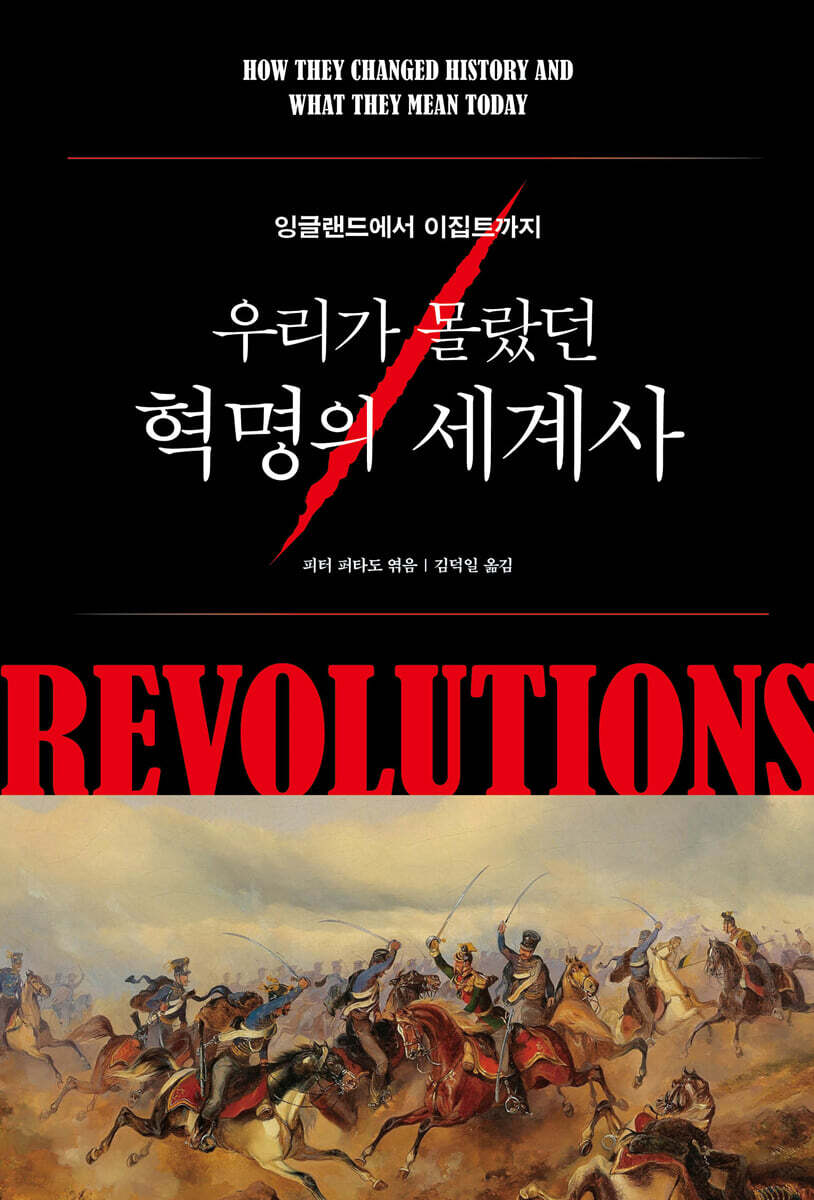
The World History of Revolution We Didn't Know
 |
Description
Book Introduction
Everything You Need to Know About the Global Revolutions That Changed Human History
Why do revolutions occur? Do they truly bring about utopia? How will they be remembered today? From 17th-century England to 21st-century Egypt, experts from each country unravel the stories of 24 revolutions that shaped human history.
Why do revolutions occur? Do they truly bring about utopia? How will they be remembered today? From 17th-century England to 21st-century Egypt, experts from each country unravel the stories of 24 revolutions that shaped human history.
- You can preview some of the book's contents.
Preview
index
Entering · 005
The English Revolution (1642–1689) - Simon Jenkins · 016
The American Revolution (1776–1788) - Ray Raphael · 030
The French Revolution (1789–1799) - Sophie Vanish · 045
The Haitian Revolution (1791–1804) - Vaina Bello · 058
The Year of Revolution (1848) - Axel Körner · 074
Japan: Meiji Restoration (1868) - Shin Kawashima · 088
Young Turk Revolution (1908) - Mehmed Şukrü Hanioğlu · 098
Mexican Revolution (1910–1917) - Javier García-Diego · 112
Irish Revolution (1913–1923) - Diarmaid Ferriter · 126
The Russian Revolution (1917) - Dina Khapaeva · 140
Indian Revolution (1947) - Mihir Bose · 156
Vietnam: The August Revolution (1945) - Stein Thönesson · 172
China: The Communist Revolution (1949–1976) - Gao Mobo · 184
The Cuban Revolution (1959–2006) - Luis Martinez-Fernández · 199
Student Revolution (1968) - Stephen Barnes · 219
Portugal: The Carnation Revolution (1974) - Filipe Ribeiro de Menezes · 235
Cambodia: The Khmer Rouge Revolution (1975–1979) - Sorpong Peow · 247
The Iranian Revolution (1979) - Homa Khatouzian · 260
Nicaragua: The Sandinista Revolution (1979) - Mateo Cayetano Harquin · 272
Poland: Solidarity (1980) - Anita Prasmowska · 289
Eastern Europe (1989) - Vladimir Tismaneanu and Andrés García · 301
South Africa: The End of Apartheid (1990–1994) - Thula Simpson · 315
Ukraine: The Orange Revolution (2004–2014) - Yaroslav Hrychak · 330
Arab Spring: Egypt (2011) - Yasser Thabet · 345
References · 356
Writers · 361
The English Revolution (1642–1689) - Simon Jenkins · 016
The American Revolution (1776–1788) - Ray Raphael · 030
The French Revolution (1789–1799) - Sophie Vanish · 045
The Haitian Revolution (1791–1804) - Vaina Bello · 058
The Year of Revolution (1848) - Axel Körner · 074
Japan: Meiji Restoration (1868) - Shin Kawashima · 088
Young Turk Revolution (1908) - Mehmed Şukrü Hanioğlu · 098
Mexican Revolution (1910–1917) - Javier García-Diego · 112
Irish Revolution (1913–1923) - Diarmaid Ferriter · 126
The Russian Revolution (1917) - Dina Khapaeva · 140
Indian Revolution (1947) - Mihir Bose · 156
Vietnam: The August Revolution (1945) - Stein Thönesson · 172
China: The Communist Revolution (1949–1976) - Gao Mobo · 184
The Cuban Revolution (1959–2006) - Luis Martinez-Fernández · 199
Student Revolution (1968) - Stephen Barnes · 219
Portugal: The Carnation Revolution (1974) - Filipe Ribeiro de Menezes · 235
Cambodia: The Khmer Rouge Revolution (1975–1979) - Sorpong Peow · 247
The Iranian Revolution (1979) - Homa Khatouzian · 260
Nicaragua: The Sandinista Revolution (1979) - Mateo Cayetano Harquin · 272
Poland: Solidarity (1980) - Anita Prasmowska · 289
Eastern Europe (1989) - Vladimir Tismaneanu and Andrés García · 301
South Africa: The End of Apartheid (1990–1994) - Thula Simpson · 315
Ukraine: The Orange Revolution (2004–2014) - Yaroslav Hrychak · 330
Arab Spring: Egypt (2011) - Yasser Thabet · 345
References · 356
Writers · 361
Publisher's Review
The force that moves history forward
It started with an old revolution that you may or may not know about.
'I don't know if it would have happened then, but such a 'revolution' can't happen now.'
How many people living in this era believe the revolution described in the book could happen today? Many more likely have never even considered it, or are convinced it can't happen.
But revolution is never a distant concept to us, and revolution exists even in the present age.
Syria, which has been suffering from civil war for over a decade, and the civil war escalating in Myanmar.
If this ongoing conflict subsides, it is unclear what kind of 'revolution' some historian will define it as.
'There have been revolutions that inflicted violence on millions of people and revolutions that shed no blood at all, revolutions led by men and women who dedicated their lives to revolution, and revolutions led by nominal leaders who came about by accident or reluctantly.'
―From “Entering”
The concept is too broad to say, 'This is the revolution' or 'This is why the revolution happened.'
Since revolution is triggered by the accumulation and convergence of ideological, political, economic, and even interpersonal conflicts that can commonly arise in any society at any time, we can say that we are always living in a time when revolution is likely to occur.
From this perspective, we should not dismiss the revolution as a “past historical event” and dismiss it as such.
It is necessary to closely examine the historical background and events that led to such a revolution, and to consider what its decisive moments and outcomes can teach us living in this era.
"The World History of Revolutions We Never Knew" is an interesting book that appropriately blends various historical perspectives and historians' analyses of revolutions that have occurred around the world.
Another attractive aspect is that it focuses solely on the 'revolution' rather than discussing the various historical trends at length, making its intentions clear.
By reflecting on how revolution is currently interpreted, evaluated, and debated with this book, we will be able to clearly learn what sharp insights we, living in this era, must have and continue to have in order to move forward.
It started with an old revolution that you may or may not know about.
'I don't know if it would have happened then, but such a 'revolution' can't happen now.'
How many people living in this era believe the revolution described in the book could happen today? Many more likely have never even considered it, or are convinced it can't happen.
But revolution is never a distant concept to us, and revolution exists even in the present age.
Syria, which has been suffering from civil war for over a decade, and the civil war escalating in Myanmar.
If this ongoing conflict subsides, it is unclear what kind of 'revolution' some historian will define it as.
'There have been revolutions that inflicted violence on millions of people and revolutions that shed no blood at all, revolutions led by men and women who dedicated their lives to revolution, and revolutions led by nominal leaders who came about by accident or reluctantly.'
―From “Entering”
The concept is too broad to say, 'This is the revolution' or 'This is why the revolution happened.'
Since revolution is triggered by the accumulation and convergence of ideological, political, economic, and even interpersonal conflicts that can commonly arise in any society at any time, we can say that we are always living in a time when revolution is likely to occur.
From this perspective, we should not dismiss the revolution as a “past historical event” and dismiss it as such.
It is necessary to closely examine the historical background and events that led to such a revolution, and to consider what its decisive moments and outcomes can teach us living in this era.
"The World History of Revolutions We Never Knew" is an interesting book that appropriately blends various historical perspectives and historians' analyses of revolutions that have occurred around the world.
Another attractive aspect is that it focuses solely on the 'revolution' rather than discussing the various historical trends at length, making its intentions clear.
By reflecting on how revolution is currently interpreted, evaluated, and debated with this book, we will be able to clearly learn what sharp insights we, living in this era, must have and continue to have in order to move forward.
GOODS SPECIFICS
- Date of issue: March 15, 2024
- Page count, weight, size: 364 pages | 152*224*30mm
- ISBN13: 9791160546880
- ISBN10: 1160546886
You may also like
카테고리
korean


korean

![GQ KOREA Mark (Monthly): December [2025]](http://librairie.coreenne.fr/cdn/shop/files/8ef265dbbfbf186523ed75ba7319009d.jpg?v=1765340328&width=3840)


