

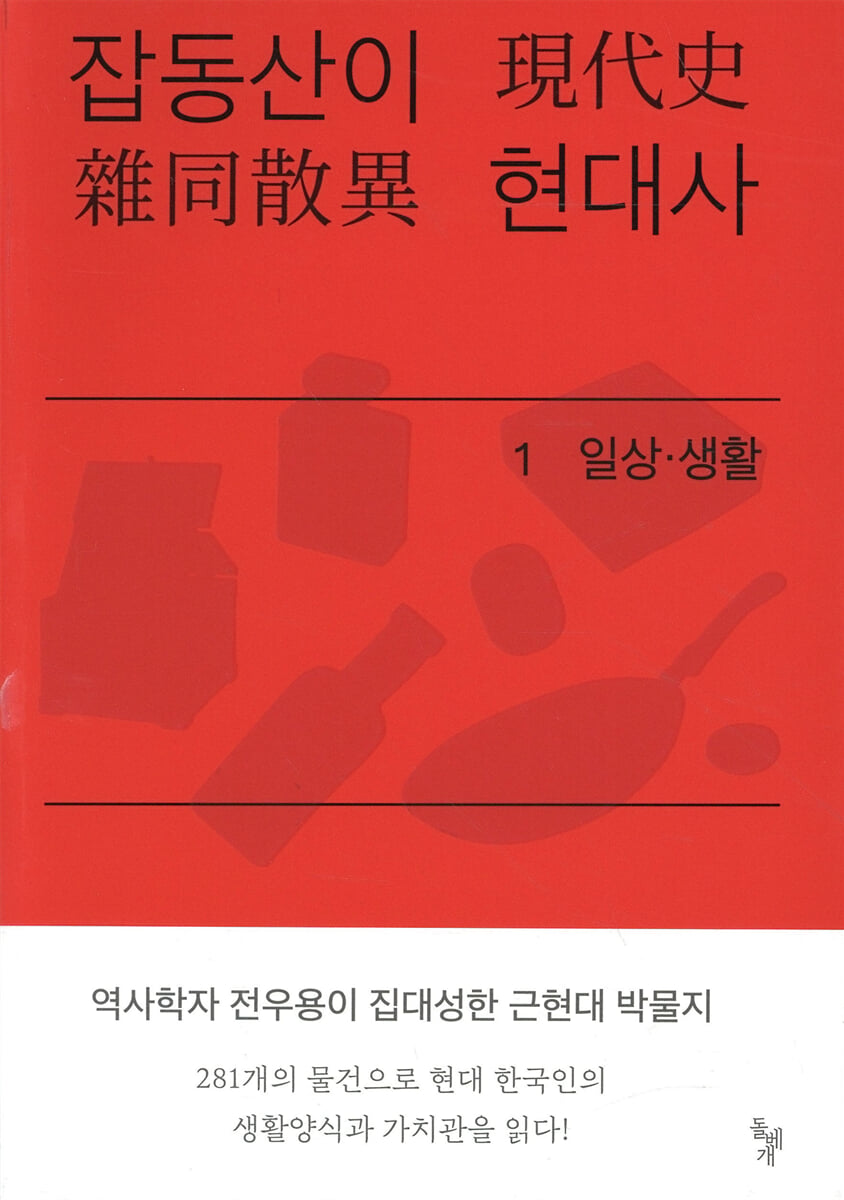
Miscellaneous Real Estate: Modern History 1 Daily Life
 |
Description
Book Introduction
"The Miscellaneous: Modern History": A look into the lifestyles and values of modern Koreans through 281 objects!
Jeon Woo-yong's "The Modern History of Miscellaneous Objects" tells the story of how familiar and trivial objects entered this land and changed our lives.
Read about modern and contemporary Korean history through 281 items, ranging from trivial things like everyday food and ordinary objects to buildings, facilities, and documents.
This book explains the history and origins of the goods and depicts the changes in Korean life as a result.
Not only can we look at Korean history from a new perspective through various objects, but by following the history and stories of these objects, we can gain insight into the behavior, habits, and spirit of Koreans, as well as their lifestyles and the history of their evolution.
Jeon Woo-yong's "The Modern History of Miscellaneous Objects" tells the story of how familiar and trivial objects entered this land and changed our lives.
Read about modern and contemporary Korean history through 281 items, ranging from trivial things like everyday food and ordinary objects to buildings, facilities, and documents.
This book explains the history and origins of the goods and depicts the changes in Korean life as a result.
Not only can we look at Korean history from a new perspective through various objects, but by following the history and stories of these objects, we can gain insight into the behavior, habits, and spirit of Koreans, as well as their lifestyles and the history of their evolution.
- You can preview some of the book's contents.
Preview
index
At the beginning of the book
Chapter 1.
Clean and maintain
1.
Pay attention to your body│Glass Mirror
2.
Curing Modern Endemic Diseases│Glasses
3.
Slowing Down the Aging Process Hair│Dye
4.
Habits Created by Knowledge│Toothbrush and Toothpaste
5.
From a top-notch fighter to a short-haired gentleman│Barbershop
6.
Washing your face while standing│Sink
7.
A body free from dirt and odor│Soap
8.
Stripping off the time│Italian towel
9.
Sensory Air Pollution Meter│Shampoo
10.
Materials that cover modern people's skin│Cosmetics
11.
From the scent of the nobility to the scent of the masses│Perfume
12.
Hands that don't rub against nature│Nail clippers
13.
Korea's representative health food│Red ginseng
14.
Body Revealed and Flaunted│Swimsuit
15.
Winter is no longer a season for barely surviving│Skating
16.
Desire for strength and health│Exercise equipment
Chapter 2.
Eat and taste
17.
Modern people's first food│Formula milk
18.
From 'Ttukbaegi spirit' to 'Pot spirit'│Pot
19.
The most frequently used item in modern life│Cup
20.
Cold Food, Cold Mind│Refrigerator
21.
Cooking Tools in an Age of Common Oils│Frying Pans
22.
From cooked rice to cooked rice│Electric rice cooker
23.
Sweetness becomes common│Sugar
24.
Changing the Korean Constitution│Milk
25.
Carbonated Drinking Human│Soft Drink
26.
Modern Taste, Savory Flavor│MSG
27.
Chemical components absorbed into food│Chemical fertilizers
28.
Korean Spicy Flavor│Red Pepper Powder
29.
Vegetables that have led the change in the modern Korean diet│Onions
30.
Surasang (table of food allowed to common people)│Royal cuisine
31.
Coffee: A Drink That Mediates Modern Conversations
32.
Enlightened drink│Beer
33.
A Friend of Modern Koreans│Heeseoksik Soju
34.
Modern Summer Snacks│Ice Cream
35.
Another staple food│Flour
36.
Food that replaces rice│Bread
37.
Helping You Cross the River of Poverty│Sujebi
38.
A culture that traces the traditions and origins of food│Budaejjigae
39.
Opening the Instant Era│Ramen
40.
Leading the Dining Out Culture│Jjajangmyeon
41.
Representative local cuisine│Pyongyang Naengmyeon
42.
A taste that can't be thrown away, so we changed the name│Danmuji
43.
Exotic Taste│Banana
44.
Between Tradition and Barbarism│Bosintang
45.
Factory-produced livestock products│Whole chicken
46.
Dangerous water is living water│Living water
47.
A book that integrates the tastes of modern people│Cookbook
48.
A Symbol of the Delivery Food Era│Iron Bag
Chapter 3.
Wear and carry
49.
First greetings│Business cards
50.
Embracing the identity of modern people│Wallet
51.
A person's personality melted into a combination of numbers│Resident Registration Card
52.
Providence on the wrist│Wristwatch
53.
Appearance is more important than the inside│Bag
54.
Gentlemen's and Ladies' Shoes│Shoes
55.
The God of the Common People, the God of Memories│Rubber Shoes
56.
The new shoes that came indoors│Slippers
57.
The fantasy of conquering nature│Hiking boots
58.
Clothing that comes into direct contact with the skin of modern people│Knitwear
59.
Modern Women's Combat Uniform│Mompe
60.
Clothes to choose from│Ready-to-wear
61.
Clothes that embody both pride and humiliation│School uniforms
62.
It's okay to be embarrassed│Zipper
63.
The symbol of the modern gentleman│Tie
64.
The freedom to reveal my body│Miniskirt
65.
Perfect Clothes│Jeans
66.
The Stone of Divinity│Diamond
67.
Luxury goods that eliminate guilt│Luxury goods
68.
The desire to look rich│Fake
69.
The Dignity of Handwriting│Fountain Pen
Chapter 4.
live and reside
70.
Learning to Love│Love Letter
71.
The union of the prince and princess│Wedding hall
72.
State Intervention in Marital Relationships│Marriage Registration
73.
The Book That Eliminated Class Consciousness│Genealogy
74.
Personal seal│Seal
75.
Managing a household│Household account book
76.
Sovereignty of Consumption│Shopping Cart
77.
Natural Disinfectant│Window
78.
Cheap lighting, poor eyesight│Fluorescent lights
79.
The warmth gained by risking one's life│Coal briquettes
80.
The lower part disappears│Hot water boiler
81.
The Age of Drinking River Water│Faucet
82.
Kitchen for all family members│Sink
83.
The original disposable product│Sodokjeo
84.
Artificial Intelligence Usurps Nature's Name│Artificial Sesame
85.
Freeing Women from Laundry│Electric Washing Machines
86.
Eliminate Odors in Your Home│Toilet
87.
Disposable items│Toilet paper
88.
Eliminate the need to keep the fire burning│Matches
89.
A machine that judges and warns on its own│Fire alarm
90.
Increase time consumption│Light
91.
Pavlov's Man│Doorbell
92.
The thing that took the top spot│TV
93.
From chin-up to finger-wagging│Remote control
94.
Automatic fan│electric fan
95.
From avoiding the heat to driving it away│Air conditioner
96.
A necessity in times of poverty│Military blankets
97.
Colonial Legacy│Tatami
98.
The object that remains attached to the body of modern people the longest│Chair
99.
A symbol of modern privacy│The bed
100.
A place that mediates fortune and virtue│Bokdeokbang
101.
A home that creates a modern lifestyle and values│Apartment
References
Items covered in the book
Chapter 1.
Clean and maintain
1.
Pay attention to your body│Glass Mirror
2.
Curing Modern Endemic Diseases│Glasses
3.
Slowing Down the Aging Process Hair│Dye
4.
Habits Created by Knowledge│Toothbrush and Toothpaste
5.
From a top-notch fighter to a short-haired gentleman│Barbershop
6.
Washing your face while standing│Sink
7.
A body free from dirt and odor│Soap
8.
Stripping off the time│Italian towel
9.
Sensory Air Pollution Meter│Shampoo
10.
Materials that cover modern people's skin│Cosmetics
11.
From the scent of the nobility to the scent of the masses│Perfume
12.
Hands that don't rub against nature│Nail clippers
13.
Korea's representative health food│Red ginseng
14.
Body Revealed and Flaunted│Swimsuit
15.
Winter is no longer a season for barely surviving│Skating
16.
Desire for strength and health│Exercise equipment
Chapter 2.
Eat and taste
17.
Modern people's first food│Formula milk
18.
From 'Ttukbaegi spirit' to 'Pot spirit'│Pot
19.
The most frequently used item in modern life│Cup
20.
Cold Food, Cold Mind│Refrigerator
21.
Cooking Tools in an Age of Common Oils│Frying Pans
22.
From cooked rice to cooked rice│Electric rice cooker
23.
Sweetness becomes common│Sugar
24.
Changing the Korean Constitution│Milk
25.
Carbonated Drinking Human│Soft Drink
26.
Modern Taste, Savory Flavor│MSG
27.
Chemical components absorbed into food│Chemical fertilizers
28.
Korean Spicy Flavor│Red Pepper Powder
29.
Vegetables that have led the change in the modern Korean diet│Onions
30.
Surasang (table of food allowed to common people)│Royal cuisine
31.
Coffee: A Drink That Mediates Modern Conversations
32.
Enlightened drink│Beer
33.
A Friend of Modern Koreans│Heeseoksik Soju
34.
Modern Summer Snacks│Ice Cream
35.
Another staple food│Flour
36.
Food that replaces rice│Bread
37.
Helping You Cross the River of Poverty│Sujebi
38.
A culture that traces the traditions and origins of food│Budaejjigae
39.
Opening the Instant Era│Ramen
40.
Leading the Dining Out Culture│Jjajangmyeon
41.
Representative local cuisine│Pyongyang Naengmyeon
42.
A taste that can't be thrown away, so we changed the name│Danmuji
43.
Exotic Taste│Banana
44.
Between Tradition and Barbarism│Bosintang
45.
Factory-produced livestock products│Whole chicken
46.
Dangerous water is living water│Living water
47.
A book that integrates the tastes of modern people│Cookbook
48.
A Symbol of the Delivery Food Era│Iron Bag
Chapter 3.
Wear and carry
49.
First greetings│Business cards
50.
Embracing the identity of modern people│Wallet
51.
A person's personality melted into a combination of numbers│Resident Registration Card
52.
Providence on the wrist│Wristwatch
53.
Appearance is more important than the inside│Bag
54.
Gentlemen's and Ladies' Shoes│Shoes
55.
The God of the Common People, the God of Memories│Rubber Shoes
56.
The new shoes that came indoors│Slippers
57.
The fantasy of conquering nature│Hiking boots
58.
Clothing that comes into direct contact with the skin of modern people│Knitwear
59.
Modern Women's Combat Uniform│Mompe
60.
Clothes to choose from│Ready-to-wear
61.
Clothes that embody both pride and humiliation│School uniforms
62.
It's okay to be embarrassed│Zipper
63.
The symbol of the modern gentleman│Tie
64.
The freedom to reveal my body│Miniskirt
65.
Perfect Clothes│Jeans
66.
The Stone of Divinity│Diamond
67.
Luxury goods that eliminate guilt│Luxury goods
68.
The desire to look rich│Fake
69.
The Dignity of Handwriting│Fountain Pen
Chapter 4.
live and reside
70.
Learning to Love│Love Letter
71.
The union of the prince and princess│Wedding hall
72.
State Intervention in Marital Relationships│Marriage Registration
73.
The Book That Eliminated Class Consciousness│Genealogy
74.
Personal seal│Seal
75.
Managing a household│Household account book
76.
Sovereignty of Consumption│Shopping Cart
77.
Natural Disinfectant│Window
78.
Cheap lighting, poor eyesight│Fluorescent lights
79.
The warmth gained by risking one's life│Coal briquettes
80.
The lower part disappears│Hot water boiler
81.
The Age of Drinking River Water│Faucet
82.
Kitchen for all family members│Sink
83.
The original disposable product│Sodokjeo
84.
Artificial Intelligence Usurps Nature's Name│Artificial Sesame
85.
Freeing Women from Laundry│Electric Washing Machines
86.
Eliminate Odors in Your Home│Toilet
87.
Disposable items│Toilet paper
88.
Eliminate the need to keep the fire burning│Matches
89.
A machine that judges and warns on its own│Fire alarm
90.
Increase time consumption│Light
91.
Pavlov's Man│Doorbell
92.
The thing that took the top spot│TV
93.
From chin-up to finger-wagging│Remote control
94.
Automatic fan│electric fan
95.
From avoiding the heat to driving it away│Air conditioner
96.
A necessity in times of poverty│Military blankets
97.
Colonial Legacy│Tatami
98.
The object that remains attached to the body of modern people the longest│Chair
99.
A symbol of modern privacy│The bed
100.
A place that mediates fortune and virtue│Bokdeokbang
101.
A home that creates a modern lifestyle and values│Apartment
References
Items covered in the book
Detailed image

Publisher's Review
■ The lives of Koreans and modern and contemporary Korean history, captured in a single small object
『The Miscellaneous Realm of Modern History』 deals with the history of 'objects' that have shaped the lives and consciousness of modern Koreans, but its content and narrative do not fall into micro-historical materialism.
We seek to understand how the objects introduced into our society over the course of modern and contemporary Korean history interacted with Koreans to shape their lifestyles and values.
The objects that entered our lives under the conditions of mass production, mass consumption, and technological innovation driven by Westernization, colonialism, and the Industrial Revolution fundamentally changed the lives of Koreans.
As the author says, the transition from an era without electric lights to an era with them, and from an era without refrigerators to an era with them, is as significant as any other historical turning point.
‘Modern and Contemporary History of Objects’ is the author’s unique method and perspective for reading ‘Modern and Contemporary History of Korea.’
The author unfolds the modern and contemporary history of Korea by revealing the lives of Koreans, which are immersed in a small object.
■ 『The Miscellaneous Realm of Modern History』 Volume 1 (Daily Life) - Covers the basic elements of human life: food, clothing, and shelter.
Volume 1 (Daily Life) focuses on more microscopic material than Volumes 2 (Society and Culture) and 3 (Politics and Economy).
Since this book deals with the material conditions that constitute the lives of modern Koreans, it seems natural that the topic of “body” (Chapter 1, “Purifying and Cultivating”) is placed at the very beginning of the book.
This is followed by material on clothing (Chapter 3, “Wearing and Carrying”), food (Chapter 2, “Eating and Tasting”), and housing (Chapter 4, “Living and Residing”).
In that food, clothing, and shelter are the most basic elements of human life, they decorate the introduction of the entire book, 『Odds and Ends of Modern History』.
■ Italian towels that are not available in Italy
'Italian towel' is a bath product that is only available in Korea and not in Italy.
The exotic and luxurious name actually hints at the poverty of the times and the people's wishes.
In 1968, Busan's Kim Pil-gon created towels and gloves with friction using Italian viscose rayon and received a utility model patent for them, which soon sold like hotcakes in public bathhouses and homes across the country.
The author says that Italian towels are a reflection of the Korean people's longing for European products at the time, as well as the burden of going to public bathhouses frequently and the difficulty of bathing.
■ 'Things' that came in during the invasion of foreign powers─ Beer…
It is a characteristic of modern and contemporary Korean history that the invasions of Western powers and Japan are often directly related to the origin of ‘things.’
In 1871, the Joseon civil affairs officer sent to the American fleet anchored off Ganghwa Island returned with only a handful of beer as a gift, without understanding their intentions.
The scene where beer first arrived in this land is recorded in a photograph (page 158).
During the Japanese colonial period, the Japanese Government-General of Korea encouraged the cultivation of barley in order to supply cheap raw materials to Japanese beer companies.
Again, Japanese beer companies made a profit by selling the beer in Korea.
It was a double exploitation structure.
Nevertheless, beer was recognized as the 'drink of the enlightened' and is now consumed as the most popular alcoholic beverage.
■ Changing the structure and way of life of Koreans, creating 'modernity' - hot water boilers, sinks, electric washing machines, lights, glasses...
The author diagnoses that changes in residential life may have affected the division of roles and family relationships within the household.
One interpretation is that the 'hot water boiler' not only provided access to warm water, but also helped create horizontal relationships among members by allowing them to share 'equality of warmth.'
The sink, which debuted in 1969, helped bring men into the kitchen, and the commercialization of electric washing machines in the same year allowed women to dramatically reduce the amount of time they spent on housework.
When the first electric lights were installed in Gyeongbokgung Palace on February 10, 1887, they were called "gangster lights" because of the constant noise from the generator. However, they soon drove away the night and created a city that never sleeps, greatly increasing the amount of time (work, leisure time, etc.) that modern people could use.
Before Dr. Oliver Avison of Jejungwon introduced glasses to Korea in 1893, they were extremely expensive and it was considered rude to show adults wearing glasses.
Because glasses symbolized aging and old age.
Glasses, which were so expensive that they were worth nearly the price of a house until about 100 years ago, have now become so common that it is rare to find someone who doesn't wear them.
“It is entirely thanks to glasses that modern people have been able to overcome myopia, the ‘disease of the times.’”
『The Miscellaneous Realm of Modern History』 deals with the history of 'objects' that have shaped the lives and consciousness of modern Koreans, but its content and narrative do not fall into micro-historical materialism.
We seek to understand how the objects introduced into our society over the course of modern and contemporary Korean history interacted with Koreans to shape their lifestyles and values.
The objects that entered our lives under the conditions of mass production, mass consumption, and technological innovation driven by Westernization, colonialism, and the Industrial Revolution fundamentally changed the lives of Koreans.
As the author says, the transition from an era without electric lights to an era with them, and from an era without refrigerators to an era with them, is as significant as any other historical turning point.
‘Modern and Contemporary History of Objects’ is the author’s unique method and perspective for reading ‘Modern and Contemporary History of Korea.’
The author unfolds the modern and contemporary history of Korea by revealing the lives of Koreans, which are immersed in a small object.
■ 『The Miscellaneous Realm of Modern History』 Volume 1 (Daily Life) - Covers the basic elements of human life: food, clothing, and shelter.
Volume 1 (Daily Life) focuses on more microscopic material than Volumes 2 (Society and Culture) and 3 (Politics and Economy).
Since this book deals with the material conditions that constitute the lives of modern Koreans, it seems natural that the topic of “body” (Chapter 1, “Purifying and Cultivating”) is placed at the very beginning of the book.
This is followed by material on clothing (Chapter 3, “Wearing and Carrying”), food (Chapter 2, “Eating and Tasting”), and housing (Chapter 4, “Living and Residing”).
In that food, clothing, and shelter are the most basic elements of human life, they decorate the introduction of the entire book, 『Odds and Ends of Modern History』.
■ Italian towels that are not available in Italy
'Italian towel' is a bath product that is only available in Korea and not in Italy.
The exotic and luxurious name actually hints at the poverty of the times and the people's wishes.
In 1968, Busan's Kim Pil-gon created towels and gloves with friction using Italian viscose rayon and received a utility model patent for them, which soon sold like hotcakes in public bathhouses and homes across the country.
The author says that Italian towels are a reflection of the Korean people's longing for European products at the time, as well as the burden of going to public bathhouses frequently and the difficulty of bathing.
■ 'Things' that came in during the invasion of foreign powers─ Beer…
It is a characteristic of modern and contemporary Korean history that the invasions of Western powers and Japan are often directly related to the origin of ‘things.’
In 1871, the Joseon civil affairs officer sent to the American fleet anchored off Ganghwa Island returned with only a handful of beer as a gift, without understanding their intentions.
The scene where beer first arrived in this land is recorded in a photograph (page 158).
During the Japanese colonial period, the Japanese Government-General of Korea encouraged the cultivation of barley in order to supply cheap raw materials to Japanese beer companies.
Again, Japanese beer companies made a profit by selling the beer in Korea.
It was a double exploitation structure.
Nevertheless, beer was recognized as the 'drink of the enlightened' and is now consumed as the most popular alcoholic beverage.
■ Changing the structure and way of life of Koreans, creating 'modernity' - hot water boilers, sinks, electric washing machines, lights, glasses...
The author diagnoses that changes in residential life may have affected the division of roles and family relationships within the household.
One interpretation is that the 'hot water boiler' not only provided access to warm water, but also helped create horizontal relationships among members by allowing them to share 'equality of warmth.'
The sink, which debuted in 1969, helped bring men into the kitchen, and the commercialization of electric washing machines in the same year allowed women to dramatically reduce the amount of time they spent on housework.
When the first electric lights were installed in Gyeongbokgung Palace on February 10, 1887, they were called "gangster lights" because of the constant noise from the generator. However, they soon drove away the night and created a city that never sleeps, greatly increasing the amount of time (work, leisure time, etc.) that modern people could use.
Before Dr. Oliver Avison of Jejungwon introduced glasses to Korea in 1893, they were extremely expensive and it was considered rude to show adults wearing glasses.
Because glasses symbolized aging and old age.
Glasses, which were so expensive that they were worth nearly the price of a house until about 100 years ago, have now become so common that it is rare to find someone who doesn't wear them.
“It is entirely thanks to glasses that modern people have been able to overcome myopia, the ‘disease of the times.’”
GOODS SPECIFICS
- Date of issue: December 8, 2023
- Page count, weight, size: 516 pages | 150*215*35mm
- ISBN13: 9791192836423
- ISBN10: 1192836421
You may also like
카테고리
korean


korean

![GQ KOREA Mark (Monthly): December [2025]](http://librairie.coreenne.fr/cdn/shop/files/8ef265dbbfbf186523ed75ba7319009d.jpg?v=1765340328&width=3840)


