

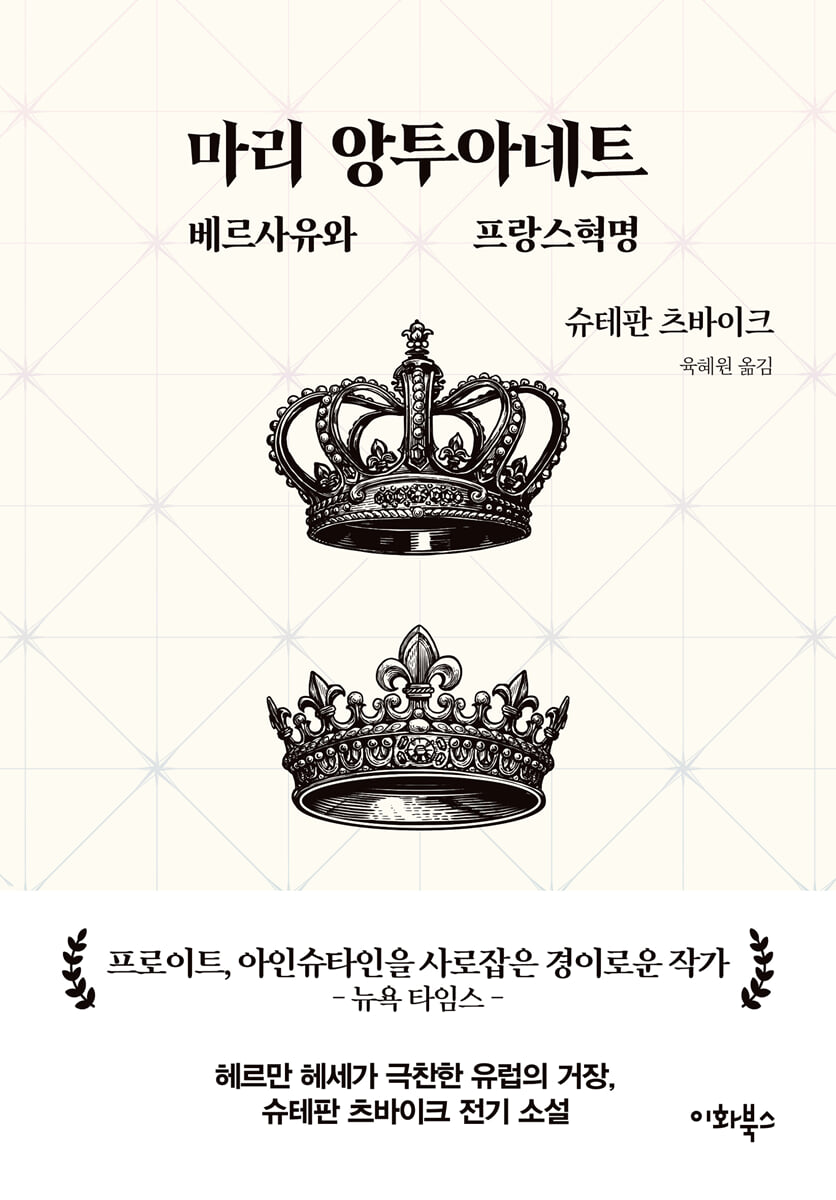
Marie Antoinette: Versailles and the French Revolution
 |
Description
Book Introduction
Marie Antoinette, a woman in turbulent European history
From Habsburg Princess to Queen of France
Marie Antoinette's "Unparalleled Consolation in Life" Born in a Time of Tragedy
In this inevitable historical destiny, which side will you stand on?
Her history has been manipulated.
The truth and lies about her that never end.
“If they have no bread, let them eat cake.” Marie Antoinette never actually said such a thing.
Marie Antoinette was born as the Austrian princess and became the queen of France.
They could have whatever they wanted, they were trendsetters, and they were loved by the people.
But fate, which so easily brought her to the top, now places her on a cruel scale.
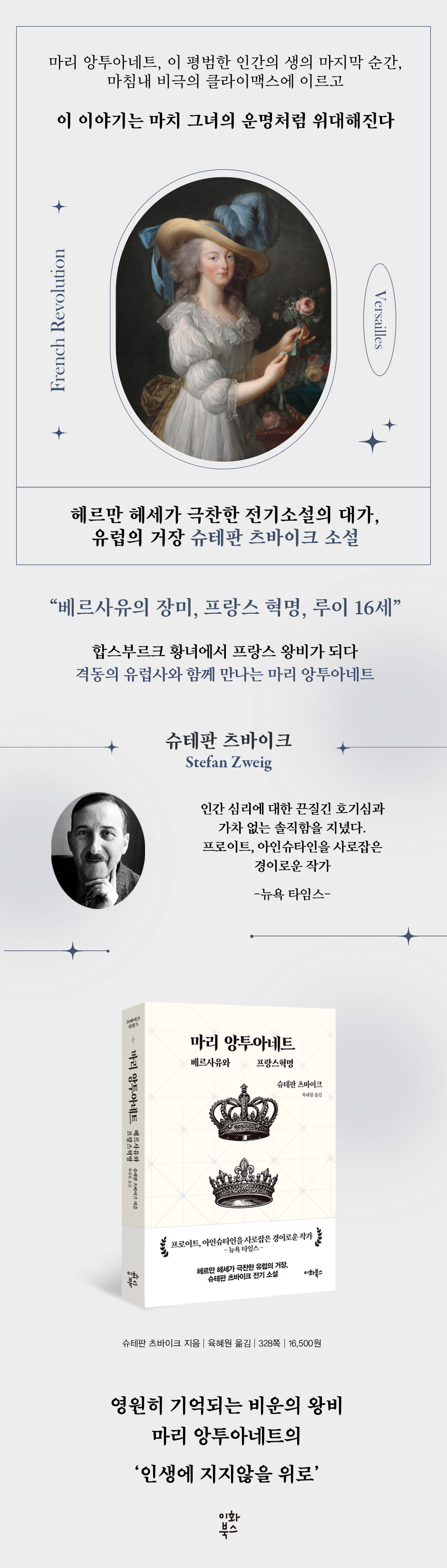
Stefan Zweig, the European intellectual who inspired the movie [The Grand Budapest Hotel] and Germany's greatest biographer.
The author unearthed letters that had been hidden in Austrian archives for half a century, forbidden from publication.
The finally completed biographical novel, Marie Antoinette: Versailles and the French Revolution, unfolds the most honest story and history of the French royal family.
Marie Antoinette, the perpetrator or victim of the French Revolution, was forced to be sacrificed in the flow of time.
Or she who deserved to be sacrificed.
The historian says:
It's so easy to judge something after it's all over, when you know the ending.
A woman who fell into the swamp of history without even knowing its depth.
Stefan Zweig recreates her life with sharp psychological description and analysis.
The great creator of history chose this ordinary person instead of a hero to create a more dramatic story.
In this inevitable fate, which side will you take?
From Habsburg Princess to Queen of France
Marie Antoinette's "Unparalleled Consolation in Life" Born in a Time of Tragedy
In this inevitable historical destiny, which side will you stand on?
Her history has been manipulated.
The truth and lies about her that never end.
“If they have no bread, let them eat cake.” Marie Antoinette never actually said such a thing.
Marie Antoinette was born as the Austrian princess and became the queen of France.
They could have whatever they wanted, they were trendsetters, and they were loved by the people.
But fate, which so easily brought her to the top, now places her on a cruel scale.
Stefan Zweig, the European intellectual who inspired the movie [The Grand Budapest Hotel] and Germany's greatest biographer.
The author unearthed letters that had been hidden in Austrian archives for half a century, forbidden from publication.
The finally completed biographical novel, Marie Antoinette: Versailles and the French Revolution, unfolds the most honest story and history of the French royal family.
Marie Antoinette, the perpetrator or victim of the French Revolution, was forced to be sacrificed in the flow of time.
Or she who deserved to be sacrificed.
The historian says:
It's so easy to judge something after it's all over, when you know the ending.
A woman who fell into the swamp of history without even knowing its depth.
Stefan Zweig recreates her life with sharp psychological description and analysis.
The great creator of history chose this ordinary person instead of a hero to create a more dramatic story.
In this inevitable fate, which side will you take?
- You can preview some of the book's contents.
Preview
index
Prologue: A Story of Fate
The Young Princess's Wedding
There are a lot of people at Versailles today.
Paris at night
Louis XVI
Rococo style queen
Trianon Castle
Joseph II's visit
Shadow of the Conspiracy
Necklace incident
Prelude to Revolution
Secret meeting
French Revolution
escape from prison
The Baren Escape Incident
Last meeting
The Fate of France
August 10th, Tower of Ruins
The Last Adventurer
Conciergerie
judgment
Requiem
Chronology
Epilogue
The Young Princess's Wedding
There are a lot of people at Versailles today.
Paris at night
Louis XVI
Rococo style queen
Trianon Castle
Joseph II's visit
Shadow of the Conspiracy
Necklace incident
Prelude to Revolution
Secret meeting
French Revolution
escape from prison
The Baren Escape Incident
Last meeting
The Fate of France
August 10th, Tower of Ruins
The Last Adventurer
Conciergerie
judgment
Requiem
Chronology
Epilogue
Detailed image
Into the book
But the great creator of history chose this ordinary person instead of a hero to create a more dramatic story.
Tragedy also occurs when a very ordinary person is caught up in a fate that overwhelms him.
I believe this type of tragedy is more humane and poignant.
… … “Only in misfortune do people discover who they are, their true selves.” Marie Antoinette, the last moments of this ordinary human life, finally reach the climax of tragedy, and this story becomes great, just like her fate.
--- p.9~10
History is like a spider's web, weaving an inescapable web of fate.
In the intricately orchestrated machinery of history, even the smallest cog can exert tremendous power.
--- p.28
Everyone stood blankly before the powerful waves of the times.
Some dipped their curious hands into the waves and tried to grasp a few sparkling pebbles.
And like children, they would laugh and play on the scary shore.
But no one felt the waves growing stronger by the minute.
--- p.73
Maurice Maeterlinck says this in Wisdom and Destiny:
“It is all too easy to judge something after it is all over, when we know the ending.” The French Revolution gave the word “revolution” the broad and intense historical meaning we use today.
For the first time, the concept of revolution was engraved in blood and spirit.
--- p.159
Ironically, Louis XVI made a tearful effort to understand the revolution.
He was deeply impressed by David Hume, the author of A History of England, whom he met and talked with during his childhood.
During his time as crown prince, he felt a special sense of tension after seeing the scene in 『History of England』 where Charles I of England was executed.
… But the attitude of trying to understand the French Revolution by looking to other revolutions was precisely what brought about disaster.
It is useless to rely on useless precedents to make decisions at a historical moment.
We needed insight to see into the future.
The storm doesn't stop just because you've furled your sails.
Louis XVI searched history to try to understand the incomprehensible.
--- p.160
Marie Antoinette had to deal not with the lawyers or judges who had come forward as accusers.
There was only one true judge: history.
“When are you going to become who you really are?” Maria Theresa, a desperate mother, wrote this letter to her daughter 20 years ago.
Now, facing death, Marie Antoinette began to regain her dignity.
Tragedy also occurs when a very ordinary person is caught up in a fate that overwhelms him.
I believe this type of tragedy is more humane and poignant.
… … “Only in misfortune do people discover who they are, their true selves.” Marie Antoinette, the last moments of this ordinary human life, finally reach the climax of tragedy, and this story becomes great, just like her fate.
--- p.9~10
History is like a spider's web, weaving an inescapable web of fate.
In the intricately orchestrated machinery of history, even the smallest cog can exert tremendous power.
--- p.28
Everyone stood blankly before the powerful waves of the times.
Some dipped their curious hands into the waves and tried to grasp a few sparkling pebbles.
And like children, they would laugh and play on the scary shore.
But no one felt the waves growing stronger by the minute.
--- p.73
Maurice Maeterlinck says this in Wisdom and Destiny:
“It is all too easy to judge something after it is all over, when we know the ending.” The French Revolution gave the word “revolution” the broad and intense historical meaning we use today.
For the first time, the concept of revolution was engraved in blood and spirit.
--- p.159
Ironically, Louis XVI made a tearful effort to understand the revolution.
He was deeply impressed by David Hume, the author of A History of England, whom he met and talked with during his childhood.
During his time as crown prince, he felt a special sense of tension after seeing the scene in 『History of England』 where Charles I of England was executed.
… But the attitude of trying to understand the French Revolution by looking to other revolutions was precisely what brought about disaster.
It is useless to rely on useless precedents to make decisions at a historical moment.
We needed insight to see into the future.
The storm doesn't stop just because you've furled your sails.
Louis XVI searched history to try to understand the incomprehensible.
--- p.160
Marie Antoinette had to deal not with the lawyers or judges who had come forward as accusers.
There was only one true judge: history.
“When are you going to become who you really are?” Maria Theresa, a desperate mother, wrote this letter to her daughter 20 years ago.
Now, facing death, Marie Antoinette began to regain her dignity.
--- p.294
Publisher's Review
The ill-fated queen who will be remembered forever
From the splendid palace to the dark prison, from the throne to the guillotine.
However, it was only after her death that she was recognized as Queen of France more than ever before.
“If they don’t have bread, let them eat cake” is a famous saying attributed to Marie Antoinette.
But she never actually said anything like that.
In this way, Marie Antoinette became a cruel and foolish queen who had no interest in the suffering of the people through incitement and plotting.
But even in the midst of misfortune, she did not give up and fought with all her might to protect her royal power.
Even though it was a belated effort, her challenge shone beautifully.
This is probably why Marie Antoinette is still remembered today.
Stefan Zweig, a European intellectual and Germany's greatest biographer
Influenced by his interactions with Freud, Zweig published numerous biographies with his vast knowledge and deep insight into history and culture.
Zweig's novels, which sharply penetrate the inner psychology of human beings, delve into the essence of humanity and history.
The numerous novels and biographies written by Zweig are still loved by readers today.
Wes Anderson, director of [The Grand Budapest Hotel], said that he was inspired by Zweig's work when making the film.
The film solidifies this fact by inserting the phrase “inspired by the writings of Stefan Zweig” in the ending credits.
Bestseller Marie Antoinette Reinterpreted in Modern Language
Marie Antoinette has been featured in numerous works, including plays, films, and comics.
This work consults various documents and interprets a vast amount of original text to reconstruct the history of Europe along with the history of the French Revolution as well as Marie Antoinette.
This is the third in the Ewha Books Stefan Zweig series, presenting a completely new text that is more faithful to the original text than any other translation.
A Fateful Encounter Between Historical Figures: "The Moment of Stardom"
From the meeting between young Goethe and Marie Antoinette to the fate of Napoleon changed by the French Revolution.
The novel depicts the fateful meeting of historical figures.
The most turbulent queen in history, born as a princess of the Habsburg Empire and becoming the queen of France.
As the revolutionary army approaches, he tries to escape...
Her story unfolds, showing unwavering fortitude even in the face of tragedy.
From the splendid palace to the dark prison, from the throne to the guillotine.
However, it was only after her death that she was recognized as Queen of France more than ever before.
“If they don’t have bread, let them eat cake” is a famous saying attributed to Marie Antoinette.
But she never actually said anything like that.
In this way, Marie Antoinette became a cruel and foolish queen who had no interest in the suffering of the people through incitement and plotting.
But even in the midst of misfortune, she did not give up and fought with all her might to protect her royal power.
Even though it was a belated effort, her challenge shone beautifully.
This is probably why Marie Antoinette is still remembered today.
Stefan Zweig, a European intellectual and Germany's greatest biographer
Influenced by his interactions with Freud, Zweig published numerous biographies with his vast knowledge and deep insight into history and culture.
Zweig's novels, which sharply penetrate the inner psychology of human beings, delve into the essence of humanity and history.
The numerous novels and biographies written by Zweig are still loved by readers today.
Wes Anderson, director of [The Grand Budapest Hotel], said that he was inspired by Zweig's work when making the film.
The film solidifies this fact by inserting the phrase “inspired by the writings of Stefan Zweig” in the ending credits.
Bestseller Marie Antoinette Reinterpreted in Modern Language
Marie Antoinette has been featured in numerous works, including plays, films, and comics.
This work consults various documents and interprets a vast amount of original text to reconstruct the history of Europe along with the history of the French Revolution as well as Marie Antoinette.
This is the third in the Ewha Books Stefan Zweig series, presenting a completely new text that is more faithful to the original text than any other translation.
A Fateful Encounter Between Historical Figures: "The Moment of Stardom"
From the meeting between young Goethe and Marie Antoinette to the fate of Napoleon changed by the French Revolution.
The novel depicts the fateful meeting of historical figures.
The most turbulent queen in history, born as a princess of the Habsburg Empire and becoming the queen of France.
As the revolutionary army approaches, he tries to escape...
Her story unfolds, showing unwavering fortitude even in the face of tragedy.
GOODS SPECIFICS
- Date of issue: October 23, 2023
- Page count, weight, size: 328 pages | 438g | 140*201*30mm
- ISBN13: 9791190626262
- ISBN10: 1190626268
You may also like
카테고리
korean


korean

![GQ KOREA Mark (Monthly): December [2025]](http://librairie.coreenne.fr/cdn/shop/files/8ef265dbbfbf186523ed75ba7319009d.jpg?v=1765340328&width=3840)


