

Jeju as seen in old paintings
 |
Description
Book Introduction
- A word from MD
-
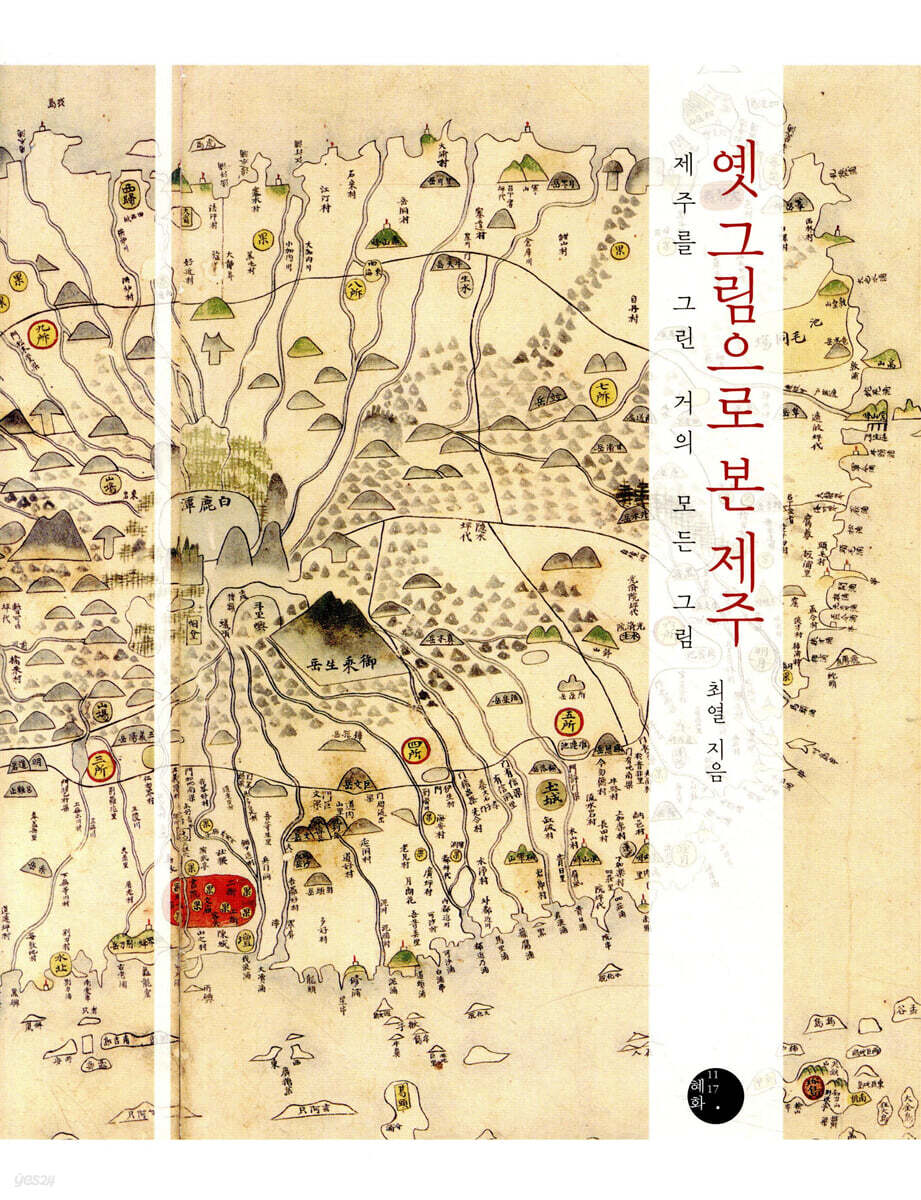
Jeju's nature and history in old paintingsChoi Yeol, author of 『Seoul Seen through Old Paintings』, returns with a Jeju edition.
A collection of Jeju scenery drawn during the Joseon Dynasty.
Jeju's history and nature are contained in various paintings.
A book that allows you to freely encounter the scenery of Jeju Island, which no longer exists and has already disappeared.
May 7, 2021. History PD Son Min-gyu
A place where you can't fully enjoy yourself due to COVID-19,
A book containing almost all the paintings of Jeju Island is presented.
The joy of lying down and reconnecting with the lost landscapes of Jeju
Since overseas travel was completely halted due to COVID-19, the average number of tourists visiting Jeju Island has reached approximately 40,000 per day, and news of Jeju Island being crowded with people everywhere has been making the rounds every day.
However, not everyone can visit Jeju Island as freely and leisurely as before COVID-19.
Even if you do set out on a trip, there are many things to be careful about and be aware of, so you can't enjoy your trip with peace of mind.
Art historian Choi Yeol's new book, "Jeju Seen Through Old Paintings," offers the joy of leisurely reading through books to those stranded due to COVID-19.
Even if you don't have to take a plane to Jeju, you can open the book and find that each page is filled with various pictures and stories that capture the scenery of Jeju during the Joseon Dynasty.
By sitting in a room, one can freely encounter the scenery of Jeju Island, which does not exist in reality and has already disappeared. Therefore, discerning readers can enjoy this book without having to go to Jeju Island.
A book containing almost all the paintings of Jeju Island is presented.
The joy of lying down and reconnecting with the lost landscapes of Jeju
Since overseas travel was completely halted due to COVID-19, the average number of tourists visiting Jeju Island has reached approximately 40,000 per day, and news of Jeju Island being crowded with people everywhere has been making the rounds every day.
However, not everyone can visit Jeju Island as freely and leisurely as before COVID-19.
Even if you do set out on a trip, there are many things to be careful about and be aware of, so you can't enjoy your trip with peace of mind.
Art historian Choi Yeol's new book, "Jeju Seen Through Old Paintings," offers the joy of leisurely reading through books to those stranded due to COVID-19.
Even if you don't have to take a plane to Jeju, you can open the book and find that each page is filled with various pictures and stories that capture the scenery of Jeju during the Joseon Dynasty.
By sitting in a room, one can freely encounter the scenery of Jeju Island, which does not exist in reality and has already disappeared. Therefore, discerning readers can enjoy this book without having to go to Jeju Island.
- You can preview some of the book's contents.
Preview
index
ㆍ Publishing a book_Dreaming of the future of this land while looking at Tamna's present and Jeju's yesterday
The preface states, "Jeju, a land of gods and nature, a world of mountains and winds that embraces its people."
01 Tour Jeju and follow the wind to Udo
Dobong, the territory of those who founded the nation and dreamed of reform
King Taejo Yi Seong-gye dreams of a millennial kingdom | Dobong Seowon, the land beloved by the young Jo Gwang-jo
Jeju is an island, surrounded by the sea.
Between the island and the mainland, there lies the sea | Cross that sea and you'll find Ryukyu.
The first place to go when arriving in Jeju, the capital of the Millennium Kingdom
Tamna Fortress: The Dream of a Vanished Millennial Kingdom | Elements of Civilization Filling the Old Capital | Tamna's Palace Revealed Before Your Eyes
Jeju, the land of the gods who preside over the creation of heaven and earth and the evolution of civilization.
The Joseon government's leader destroys Jeju's Shinto shrine | A shining masterpiece from a land of myths, "Naewatdang Musindo" | Black smoke in a painting depicting the burning of a Shinto shrine | The Joseon Dynasty hoped the king's rule would permeate the entire nation | "If a tangerine tree grows inside a house, it's like pouring boiling water over it to kill it."
The legend of Yongduam Rock, heard in a story about a drunken man, and the old image of a vanished port come to mind.
The Story of Yongduam Rock in the Sea of Jeju | Hwabuk Port, Memories of the Sambyeolcho, and Jochon Port, Jeju's Old Gateway
Jeju's Land's End: A Historical Moment to Remember
Lava Cave: A Dizzying, Ecstatic Hell That Will Take Your Soul Away | Byeolbangjin: Beautiful, But the Pain That Can't Be Overpowered by the Scenery | The Struggle of the Jamnyeo: The Unremembered History of the Women's Independence Movement
Udo, a cow lying in the sea across the land's edge
Ten Must-See Scenes on Udo Island | Kim Jeong of Chungam Sings "Udo Island" Upon Arriving at Udo Island
ㆍ 《Tamna Sunryeokdo》, a record of the entire Jeju Island tour
02 From the sea of Seongsan to the mountain of Sanbang
The sorrow of a girl wandering in Seongsan and Susan, the paradise of the immortals
"Seongsan has ten thousand and a thousand faces, making it difficult to record them all." | The sorrow of Susangoseong, the joy of marriage.
Jeju's East: What the Land and Its Energy Tell Us
Jeongui, the land that governed the eastern part of Jeju | Jeju's artists recalled in Seongeup
Seogwipo, a romantic coast where waterfalls and islands compete with each other
Entering here, a gentle energy envelops your whole being | Four islands floating off the coast of Seogwipo | Seogwipo as seen through the paintings of Kim Nam-gil in the 18th century and Lee Jung-seop in the 20th.
“It is a shame that the world cannot see this magnificent scenery.”
The Attitude You Should Have When Visiting Jeongbang Falls | "Cheonjiyeon Falls: A Strange, Powerful, Deep, and Strange Place" | Cheonjiyeon Falls, Where the Seven Daughters of the Jade Emperor Played
Tears shed in Gurumbi, the beginning of a new world
Jeil Gangjeong, the most powerful land in the world, where the spirit of the monarch flows | "Gangjeong, you are the smallest in this land, but peace begins with you."
"Sanbangsan Mountain, a sight so different from anything seen on land."
A lone mountain house stands tall, surrounded by Songak, Gapado, and Marado. A gigantic mountain house cave, like the mouth of Sanbangsan Mountain.
ㆍ Jeju's Ten Scenic Views, the core strands of Jeju's art history: Tamna Ten Scenic Views, Yeongju Ten Scenic Views, and Jeju Ten Scenic Views
03 From the pretty Moseulpo, we arrived at Aewol.
Tears keep flowing in Mosulpo
Altteureu Airport: A Traces of Japanese Imperialism's Atrocities | Jeju's Tragedy, the Man-Made Cave, and Baek Hal-geun's Tomb
Daejeong, a land with distinct traces of exiles
Daejeong, a village west of Sanbangsan Mountain | Daejeong's exile, Chusa Kim Jeong-hui | The fate of King Gwanghae and his subject Jeong On | General Lee Jae-su from Inseong-ri, Daejeong, Jeju
Where can there be no wind? The west wind is particularly fierce.
A Land Defended Against Japanese Pirates, Now a Japanese Fortress | What to See on Chagyido Island
The stories of gods, humans, and nature flowing in layers throughout Myeongwolpo
The site of a fierce battle against the Yuan Dynasty's Mokho forces | A land renowned as a village of scholars | Manjaenggul Cave to the east, Hyeopjaegul Cave to the west | Another cave, Billemotgul | Isidol Ranch and Father McGlinchey | Yeongdeunggut, Jeju's largest shamanistic ritual
After going around Jeju Island, we arrived at Aewol.
A beautiful gateway to the world | A stronghold of the Sambyeolcho's resistance against the Mongols
ㆍ 《Jeju Twelve Landscapes》, twelve paintings of perfect beauty
04 Hallasan Mountain, a peak so tall it can reach the Milky Way
“Even when a whale runs, you don’t know it’s small, and even when a magpie rises, you don’t know it’s narrow.”
"How can this place be compared to the mountains that offer tourism?" | Baekrokdam, the cradle of the vast universe
Yeonggok 430, the name of the southwestern waist of Hallasan Mountain
See Yeonggok in the Ten Scenic Views of Jeju | The Relationship Between Horse Breeder Kim Man-il and Exile Gwanghae
Jeju Island is soon to be one of Oreum 446
Jeju, the Kingdom of Oreums | Climb the Oreums and Meet Seolmundae Halmang
ㆍ 《Yeongju Ten Scenic Views》, Jeju's interior and exterior meet in harmony.
Appendix: Characters with a Connection to Jeju in Old Paintings
Key References and Biographical Index
The preface states, "Jeju, a land of gods and nature, a world of mountains and winds that embraces its people."
01 Tour Jeju and follow the wind to Udo
Dobong, the territory of those who founded the nation and dreamed of reform
King Taejo Yi Seong-gye dreams of a millennial kingdom | Dobong Seowon, the land beloved by the young Jo Gwang-jo
Jeju is an island, surrounded by the sea.
Between the island and the mainland, there lies the sea | Cross that sea and you'll find Ryukyu.
The first place to go when arriving in Jeju, the capital of the Millennium Kingdom
Tamna Fortress: The Dream of a Vanished Millennial Kingdom | Elements of Civilization Filling the Old Capital | Tamna's Palace Revealed Before Your Eyes
Jeju, the land of the gods who preside over the creation of heaven and earth and the evolution of civilization.
The Joseon government's leader destroys Jeju's Shinto shrine | A shining masterpiece from a land of myths, "Naewatdang Musindo" | Black smoke in a painting depicting the burning of a Shinto shrine | The Joseon Dynasty hoped the king's rule would permeate the entire nation | "If a tangerine tree grows inside a house, it's like pouring boiling water over it to kill it."
The legend of Yongduam Rock, heard in a story about a drunken man, and the old image of a vanished port come to mind.
The Story of Yongduam Rock in the Sea of Jeju | Hwabuk Port, Memories of the Sambyeolcho, and Jochon Port, Jeju's Old Gateway
Jeju's Land's End: A Historical Moment to Remember
Lava Cave: A Dizzying, Ecstatic Hell That Will Take Your Soul Away | Byeolbangjin: Beautiful, But the Pain That Can't Be Overpowered by the Scenery | The Struggle of the Jamnyeo: The Unremembered History of the Women's Independence Movement
Udo, a cow lying in the sea across the land's edge
Ten Must-See Scenes on Udo Island | Kim Jeong of Chungam Sings "Udo Island" Upon Arriving at Udo Island
ㆍ 《Tamna Sunryeokdo》, a record of the entire Jeju Island tour
02 From the sea of Seongsan to the mountain of Sanbang
The sorrow of a girl wandering in Seongsan and Susan, the paradise of the immortals
"Seongsan has ten thousand and a thousand faces, making it difficult to record them all." | The sorrow of Susangoseong, the joy of marriage.
Jeju's East: What the Land and Its Energy Tell Us
Jeongui, the land that governed the eastern part of Jeju | Jeju's artists recalled in Seongeup
Seogwipo, a romantic coast where waterfalls and islands compete with each other
Entering here, a gentle energy envelops your whole being | Four islands floating off the coast of Seogwipo | Seogwipo as seen through the paintings of Kim Nam-gil in the 18th century and Lee Jung-seop in the 20th.
“It is a shame that the world cannot see this magnificent scenery.”
The Attitude You Should Have When Visiting Jeongbang Falls | "Cheonjiyeon Falls: A Strange, Powerful, Deep, and Strange Place" | Cheonjiyeon Falls, Where the Seven Daughters of the Jade Emperor Played
Tears shed in Gurumbi, the beginning of a new world
Jeil Gangjeong, the most powerful land in the world, where the spirit of the monarch flows | "Gangjeong, you are the smallest in this land, but peace begins with you."
"Sanbangsan Mountain, a sight so different from anything seen on land."
A lone mountain house stands tall, surrounded by Songak, Gapado, and Marado. A gigantic mountain house cave, like the mouth of Sanbangsan Mountain.
ㆍ Jeju's Ten Scenic Views, the core strands of Jeju's art history: Tamna Ten Scenic Views, Yeongju Ten Scenic Views, and Jeju Ten Scenic Views
03 From the pretty Moseulpo, we arrived at Aewol.
Tears keep flowing in Mosulpo
Altteureu Airport: A Traces of Japanese Imperialism's Atrocities | Jeju's Tragedy, the Man-Made Cave, and Baek Hal-geun's Tomb
Daejeong, a land with distinct traces of exiles
Daejeong, a village west of Sanbangsan Mountain | Daejeong's exile, Chusa Kim Jeong-hui | The fate of King Gwanghae and his subject Jeong On | General Lee Jae-su from Inseong-ri, Daejeong, Jeju
Where can there be no wind? The west wind is particularly fierce.
A Land Defended Against Japanese Pirates, Now a Japanese Fortress | What to See on Chagyido Island
The stories of gods, humans, and nature flowing in layers throughout Myeongwolpo
The site of a fierce battle against the Yuan Dynasty's Mokho forces | A land renowned as a village of scholars | Manjaenggul Cave to the east, Hyeopjaegul Cave to the west | Another cave, Billemotgul | Isidol Ranch and Father McGlinchey | Yeongdeunggut, Jeju's largest shamanistic ritual
After going around Jeju Island, we arrived at Aewol.
A beautiful gateway to the world | A stronghold of the Sambyeolcho's resistance against the Mongols
ㆍ 《Jeju Twelve Landscapes》, twelve paintings of perfect beauty
04 Hallasan Mountain, a peak so tall it can reach the Milky Way
“Even when a whale runs, you don’t know it’s small, and even when a magpie rises, you don’t know it’s narrow.”
"How can this place be compared to the mountains that offer tourism?" | Baekrokdam, the cradle of the vast universe
Yeonggok 430, the name of the southwestern waist of Hallasan Mountain
See Yeonggok in the Ten Scenic Views of Jeju | The Relationship Between Horse Breeder Kim Man-il and Exile Gwanghae
Jeju Island is soon to be one of Oreum 446
Jeju, the Kingdom of Oreums | Climb the Oreums and Meet Seolmundae Halmang
ㆍ 《Yeongju Ten Scenic Views》, Jeju's interior and exterior meet in harmony.
Appendix: Characters with a Connection to Jeju in Old Paintings
Key References and Biographical Index
Detailed image
Publisher's Review
The first domestic work that truly compiles paintings depicting Jeju Island.
It was considered a marginal art form that never entered the mainstream.
The birth of an unprecedented book featuring only illustrations of Jeju Island!
Through approximately 135 works, including paintings depicting Jeju Island,
A radical shift in thinking that completely overturns existing prejudices!
Regardless of COVID-19, Jeju Island has always been a destination for many people from the mainland, thanks to its beautiful and exotic scenery.
It was a place that was famous not only domestically but also internationally, and was crowded with countless travelers.
But is Jeju really only a travel destination for enjoying the scenery?
That can't be true.
History flows here too, and people live there.
And there have been people who have painted there since long ago, and there are pictures they left behind.
However, until now, there has been no painting depicting Jeju that has been properly treated within the category of Joseon Dynasty real-life scenery, let alone art history.
Compared to the works of literati and mainland painters that dominated the history of Joseon art, Jeju art was considered to be limited to secular or folk paintings, and was fundamentally relegated to the periphery.
The most famous painting related to Jeju is not the work of Jeju artists, but rather the “Sehando” by Kim Jeong-hui, who stayed in Jeju as an exile.
If you could think of another painting other than that one, what would it be?
It is no exaggeration to say that our interest in paintings depicting Jeju Island stops there.
So, is the way we have viewed paintings depicting Jeju Island up to now really appropriate?
Art historian Choi Yeol's new book, "Jeju Seen through Old Paintings," brings to the forefront the artistic achievements and value of paintings depicting Jeju, encompassing approximately 135 paintings and illustrated maps, including paintings of Jeju by artists from Jeju during the Joseon Dynasty.
By presenting an overwhelming number of works and a completely new form of painting never seen before on the entire page, it provides an opportunity for a paradigm shift that completely overturns existing narrow perceptions and mainstream thinking.
With this, we have finally had the opportunity to encounter the unique artistic world of Jeju paintings, which we had not been given the opportunity to properly examine until now.
A collection of almost all paintings depicting Jeju,
Its beginning was the “Tamna Sunryukdo” that appeared before the eyes of art historian Choi Yeol about 20 years ago.
Countless paintings depicting Jeju that led him thereafter,
A new experience of traveling around the entire Jeju Island through pictures
Where did this book begin?
It goes back to the moment when the author first encountered the Tamna Sunryukdo about 20 years ago.
The 41 paintings of the Jeju painter Kim Nam-gil, who accompanied Lee Hyeong-sang, who was appointed as the governor of Jeju in the 18th century, on his pilgrimage, were enough to catch the attention of Choi Yeol, an art historian familiar with Joseon Dynasty landscapes and literati paintings.
He also initially considered these paintings to be folk paintings or secular paintings, but gradually became fascinated by their unique artistic world and decided to write about them someday.
As if waiting for that promise, countless paintings depicting Jeju Island appeared before his eyes one after another, and each time, he deeply explored the artistic world that these paintings of Jeju Island presented, different from that of the mainland.
Jeju artists enjoyed painting Jeju's famous spots, calling them "Ten Scenic Views" or "Twelve Scenic Views," and as a result, various paintings by artists depicting the same places have been handed down.
However, until Choi Yeol, these paintings received little attention.
He began to intensively collect and examine the paintings left behind by these Jeju artists, and during the past 20 years, during which he focused on Joseon Dynasty real-life studies, he never neglected to study Jeju region paintings.
The book that brought together the results of such accumulated study over such a long period of time is 『Jeju Seen through Old Paintings』.
This book begins with a brief introduction to the various illustrated maps of Jeju Island, as well as to almost all the illustrations that will be examined in the book.
This will help you understand at a glance the differences between the familiar Joseon landscape paintings and the paintings depicting Jeju Island, and help you grasp the overall flow of the paintings and stories related to them that you will encounter later.
The full-fledged journey that follows begins at the heart of Jeju City today, the center of Jeju-mok during the Joseon Dynasty, and the former royal palace of the Tamna Kingdom.
Afterwards, we pass through Jochon and Hwabuk, inspect Yongduam and Chwibyeongdam, and head to Udo via the lava cave, a topographical feature of Jeju.
After that, we pass through Seongsan, Sanbangsan, Moseulpo, Daejeong, Biyangdo, Myeongwol, and Aewol before returning to Jeju and concluding the long journey by exploring Hallasan and its oreum.
If you follow the author's guidance, you will soon find yourself traveling around Jeju Island through pictures.
It goes without saying that the countless paintings from the Joseon Dynasty, as well as the many pictures full of stories scattered throughout, are intricately arranged as warp and weft on the basis of this journey.
This not only gives readers a new experience of encountering the original Jeju Island that unfolds before our eyes through paintings drawn hundreds of years ago, but also provides an opportunity to perceive Jeju Island as a whole, a place that had previously been imprinted in fragmentary images.
Let's look at a painting depicting Jeju during the Joseon Dynasty.
The author Choi Yeol's comprehensive academic realm, which expands the scope beyond the barrier of conversation,
Traces of approximately 200 characters and the stories they leave behind are embedded in each painting.
For Choi Yeol, who has studied art history his entire life, paintings are never confined within the walls of painting.
To him, paintings are history and people.
It not only tells a story through a painting, but also conveys to the reader all kinds of stories that can be learned through the painting and the era surrounding the painting.
And that's not all.
He also has a special interest in the historical background and story of the Jeju region.
The journey he unfolds begins by unfolding a painting of Jeju Mok from the Joseon Dynasty and suggesting that travelers who have arrived at Jeju International Airport first tour the area through the eyes of the traveler.
However, the starting point of the story he tells is not Jeju during the Joseon Dynasty, but the history of the Tamna Kingdom, which was an independent nation long ago, and it even encompasses the world of myths before that.
Jeju was a land of myths and the territory of gods.
Furthermore, the Tamna Kingdom, which established and maintained an independent government, is the prototype of this land.
Although it may be a very familiar story to Jeju residents, it is bound to be an unfamiliar world to outsiders visiting Jeju. The myths of Jeju and the history of the Tamna Kingdom, through the stories in the pictures he unfolds, naturally acquire the meaning of being the prototype of Jeju that we see before our eyes now, rather than just something that happened in the past.
The story that began in Tamna continues endlessly as the journey continues, passing through the Goryeo Dynasty, the Joseon Dynasty, the Japanese colonial period, the post-liberation period, the April 3rd Uprising, and even today's development, providing a glimpse into Jeju's history without overlooking anything.
In the story of such history, the story of Chungam Kim Jeong, who was exiled to Jeju in the 16th century, and the paintings he left behind, the Jeju exile of Kim Jeong-hui, famous for the “Sehando,” Heo Ryeon and Choui Seonsa who traveled a long way to Jeju to meet him, Haksan Yun Je-hong, Kim Sang-heon, and Jeong On who held government posts or traveled in Jeju and left behind writings and paintings, and around 200 other figures who transcend time appear at the right places to deeply and vividly unfold the stories of those who lived or stayed here.
In addition, the book's indispensable strength is that it allows us to glimpse the desires, frustrations, limitations, and will to overcome of the Jeju people through the legends told on every rock and along every coastline.
Memories engraved on this land, contained within the grand picture of history,
Countless moments engraved on Jeju Island, recreated by freely moving between the macro and micro.
A very specific reality of this place that we didn't know about when we first saw it!
However, the beautiful land of Jeju suffered endlessly from invasion by outsiders due to its beauty.
Powerful outsiders from outside Jeju Island constantly coveted this place and made it a target for invasion.
The Japanese pirates used all sorts of methods to invade the coastline and plunder the civilians without hesitation. The emperors of Jin, Tang, Song, and Yuan sent their subjects to obtain the elixir of life, sent sorcerers to cut off the bloodline of Jeju, and even acted as the de facto rulers through the Mokho forces.
They weren't the only ones who coveted Jeju.
Every time a new dynasty came to power on the mainland, they tried to subjugate Jeju, and finally, after the Goryeo Dynasty, Jeju was incorporated as part of the mainland.
In this process, Jeju people remember the myth of mobilizing the gods to thwart the sorcerer's schemes and defeating them, and they have created a history of setting up forts and building castles along the coastline to defend against the invasion of Japanese pirates.
They also did not hesitate to rise up against the exploitative forces of the central government, and during the Japanese colonial period, civilians and female divers played a leading role in the independence movement.
After liberation, it became a painful scene of tragic modern history through the 'April 3rd Incident'.
The author says that this was a moment we must remember in this land, as it was the site of a fierce battle between General Choi Young and the Yuan Dynasty's Mokho forces, as well as the final battleground of the Sambyeolcho.
Also, this is the country of various gods, including Seolmundae Halmang and Naewatdang Musindo, and their stories still flow together with the scenery throughout Jeju.
By using pictures as a medium to explore the history and mythology of Jeju, as well as the countless memories to be remembered here, this book allows us to relive countless moments engraved on Jeju's land. Through this book, we are forced to confront the very specific reality of Jeju, which we had previously viewed only as an object of appreciation.
A picture of Jeju Island, unfamiliar, yet unique and beautiful.
I'm worried about how to properly show it to the readers,
Through the translation and inclusion of the original Chinese texts used in the paintings,
Contains valuable material worthy of being the first book to compile Jeju's paintings.
The painting depicting Jeju has a unique characteristic that is different from any painting I have ever seen.
Because it differs significantly from the general painting style of the Joseon Dynasty, it is a new experience for most readers just to look at these paintings.
The editing of this book took these characteristics into account and focused on presenting the illustrations as well as possible.
By gathering and arranging the illustrations in the book in small sizes through the introduction, readers can first understand the overall form and characteristics, and by enlarging the illustrations in each chapter as much as possible to reveal the details of the illustrations relatively well.
In addition, the original Chinese text and Korean explanations of the main contents of the tour guide at the bottom of the 41st page of the Tamna Tour Guide are included, and word definitions of the original text are added separately to help readers understand.
In addition, the 'Ten Classics' and 'Twelve Classics', which have never been properly organized in any book before, are arranged by type at the end of each chapter, and the individual characteristics of the various types of paintings are explained separately. Here, the original Chinese text placed at the top of the painting is translated and included along with its meaning.
This book will serve as a valuable resource for readers who wish to appreciate paintings depicting Jeju, while also serving as a resource for researchers in various fields related to the Jeju region.
This is not all the consideration in this book.
At the back of the book, there is an appendix titled 'People with a Connection to Jeju in Old Paintings', which gathers together detailed biographies of the major figures featured in the book and their works.
Through these glimpses, readers can learn at a glance about authors and works they already knew, as well as the characteristics and tendencies of authors they encountered for the first time through books.
In other words, we have attempted to provide a useful navigation for today's readers who encounter books containing old paintings, using methods that can be utilized to explore this book.
Furthermore, the fact that this book indirectly reveals its focus on art, history, and even human stories by providing a separate index for almost all the characters mentioned in the text can be seen as an extension of that navigation.
It was considered a marginal art form that never entered the mainstream.
The birth of an unprecedented book featuring only illustrations of Jeju Island!
Through approximately 135 works, including paintings depicting Jeju Island,
A radical shift in thinking that completely overturns existing prejudices!
Regardless of COVID-19, Jeju Island has always been a destination for many people from the mainland, thanks to its beautiful and exotic scenery.
It was a place that was famous not only domestically but also internationally, and was crowded with countless travelers.
But is Jeju really only a travel destination for enjoying the scenery?
That can't be true.
History flows here too, and people live there.
And there have been people who have painted there since long ago, and there are pictures they left behind.
However, until now, there has been no painting depicting Jeju that has been properly treated within the category of Joseon Dynasty real-life scenery, let alone art history.
Compared to the works of literati and mainland painters that dominated the history of Joseon art, Jeju art was considered to be limited to secular or folk paintings, and was fundamentally relegated to the periphery.
The most famous painting related to Jeju is not the work of Jeju artists, but rather the “Sehando” by Kim Jeong-hui, who stayed in Jeju as an exile.
If you could think of another painting other than that one, what would it be?
It is no exaggeration to say that our interest in paintings depicting Jeju Island stops there.
So, is the way we have viewed paintings depicting Jeju Island up to now really appropriate?
Art historian Choi Yeol's new book, "Jeju Seen through Old Paintings," brings to the forefront the artistic achievements and value of paintings depicting Jeju, encompassing approximately 135 paintings and illustrated maps, including paintings of Jeju by artists from Jeju during the Joseon Dynasty.
By presenting an overwhelming number of works and a completely new form of painting never seen before on the entire page, it provides an opportunity for a paradigm shift that completely overturns existing narrow perceptions and mainstream thinking.
With this, we have finally had the opportunity to encounter the unique artistic world of Jeju paintings, which we had not been given the opportunity to properly examine until now.
A collection of almost all paintings depicting Jeju,
Its beginning was the “Tamna Sunryukdo” that appeared before the eyes of art historian Choi Yeol about 20 years ago.
Countless paintings depicting Jeju that led him thereafter,
A new experience of traveling around the entire Jeju Island through pictures
Where did this book begin?
It goes back to the moment when the author first encountered the Tamna Sunryukdo about 20 years ago.
The 41 paintings of the Jeju painter Kim Nam-gil, who accompanied Lee Hyeong-sang, who was appointed as the governor of Jeju in the 18th century, on his pilgrimage, were enough to catch the attention of Choi Yeol, an art historian familiar with Joseon Dynasty landscapes and literati paintings.
He also initially considered these paintings to be folk paintings or secular paintings, but gradually became fascinated by their unique artistic world and decided to write about them someday.
As if waiting for that promise, countless paintings depicting Jeju Island appeared before his eyes one after another, and each time, he deeply explored the artistic world that these paintings of Jeju Island presented, different from that of the mainland.
Jeju artists enjoyed painting Jeju's famous spots, calling them "Ten Scenic Views" or "Twelve Scenic Views," and as a result, various paintings by artists depicting the same places have been handed down.
However, until Choi Yeol, these paintings received little attention.
He began to intensively collect and examine the paintings left behind by these Jeju artists, and during the past 20 years, during which he focused on Joseon Dynasty real-life studies, he never neglected to study Jeju region paintings.
The book that brought together the results of such accumulated study over such a long period of time is 『Jeju Seen through Old Paintings』.
This book begins with a brief introduction to the various illustrated maps of Jeju Island, as well as to almost all the illustrations that will be examined in the book.
This will help you understand at a glance the differences between the familiar Joseon landscape paintings and the paintings depicting Jeju Island, and help you grasp the overall flow of the paintings and stories related to them that you will encounter later.
The full-fledged journey that follows begins at the heart of Jeju City today, the center of Jeju-mok during the Joseon Dynasty, and the former royal palace of the Tamna Kingdom.
Afterwards, we pass through Jochon and Hwabuk, inspect Yongduam and Chwibyeongdam, and head to Udo via the lava cave, a topographical feature of Jeju.
After that, we pass through Seongsan, Sanbangsan, Moseulpo, Daejeong, Biyangdo, Myeongwol, and Aewol before returning to Jeju and concluding the long journey by exploring Hallasan and its oreum.
If you follow the author's guidance, you will soon find yourself traveling around Jeju Island through pictures.
It goes without saying that the countless paintings from the Joseon Dynasty, as well as the many pictures full of stories scattered throughout, are intricately arranged as warp and weft on the basis of this journey.
This not only gives readers a new experience of encountering the original Jeju Island that unfolds before our eyes through paintings drawn hundreds of years ago, but also provides an opportunity to perceive Jeju Island as a whole, a place that had previously been imprinted in fragmentary images.
Let's look at a painting depicting Jeju during the Joseon Dynasty.
The author Choi Yeol's comprehensive academic realm, which expands the scope beyond the barrier of conversation,
Traces of approximately 200 characters and the stories they leave behind are embedded in each painting.
For Choi Yeol, who has studied art history his entire life, paintings are never confined within the walls of painting.
To him, paintings are history and people.
It not only tells a story through a painting, but also conveys to the reader all kinds of stories that can be learned through the painting and the era surrounding the painting.
And that's not all.
He also has a special interest in the historical background and story of the Jeju region.
The journey he unfolds begins by unfolding a painting of Jeju Mok from the Joseon Dynasty and suggesting that travelers who have arrived at Jeju International Airport first tour the area through the eyes of the traveler.
However, the starting point of the story he tells is not Jeju during the Joseon Dynasty, but the history of the Tamna Kingdom, which was an independent nation long ago, and it even encompasses the world of myths before that.
Jeju was a land of myths and the territory of gods.
Furthermore, the Tamna Kingdom, which established and maintained an independent government, is the prototype of this land.
Although it may be a very familiar story to Jeju residents, it is bound to be an unfamiliar world to outsiders visiting Jeju. The myths of Jeju and the history of the Tamna Kingdom, through the stories in the pictures he unfolds, naturally acquire the meaning of being the prototype of Jeju that we see before our eyes now, rather than just something that happened in the past.
The story that began in Tamna continues endlessly as the journey continues, passing through the Goryeo Dynasty, the Joseon Dynasty, the Japanese colonial period, the post-liberation period, the April 3rd Uprising, and even today's development, providing a glimpse into Jeju's history without overlooking anything.
In the story of such history, the story of Chungam Kim Jeong, who was exiled to Jeju in the 16th century, and the paintings he left behind, the Jeju exile of Kim Jeong-hui, famous for the “Sehando,” Heo Ryeon and Choui Seonsa who traveled a long way to Jeju to meet him, Haksan Yun Je-hong, Kim Sang-heon, and Jeong On who held government posts or traveled in Jeju and left behind writings and paintings, and around 200 other figures who transcend time appear at the right places to deeply and vividly unfold the stories of those who lived or stayed here.
In addition, the book's indispensable strength is that it allows us to glimpse the desires, frustrations, limitations, and will to overcome of the Jeju people through the legends told on every rock and along every coastline.
Memories engraved on this land, contained within the grand picture of history,
Countless moments engraved on Jeju Island, recreated by freely moving between the macro and micro.
A very specific reality of this place that we didn't know about when we first saw it!
However, the beautiful land of Jeju suffered endlessly from invasion by outsiders due to its beauty.
Powerful outsiders from outside Jeju Island constantly coveted this place and made it a target for invasion.
The Japanese pirates used all sorts of methods to invade the coastline and plunder the civilians without hesitation. The emperors of Jin, Tang, Song, and Yuan sent their subjects to obtain the elixir of life, sent sorcerers to cut off the bloodline of Jeju, and even acted as the de facto rulers through the Mokho forces.
They weren't the only ones who coveted Jeju.
Every time a new dynasty came to power on the mainland, they tried to subjugate Jeju, and finally, after the Goryeo Dynasty, Jeju was incorporated as part of the mainland.
In this process, Jeju people remember the myth of mobilizing the gods to thwart the sorcerer's schemes and defeating them, and they have created a history of setting up forts and building castles along the coastline to defend against the invasion of Japanese pirates.
They also did not hesitate to rise up against the exploitative forces of the central government, and during the Japanese colonial period, civilians and female divers played a leading role in the independence movement.
After liberation, it became a painful scene of tragic modern history through the 'April 3rd Incident'.
The author says that this was a moment we must remember in this land, as it was the site of a fierce battle between General Choi Young and the Yuan Dynasty's Mokho forces, as well as the final battleground of the Sambyeolcho.
Also, this is the country of various gods, including Seolmundae Halmang and Naewatdang Musindo, and their stories still flow together with the scenery throughout Jeju.
By using pictures as a medium to explore the history and mythology of Jeju, as well as the countless memories to be remembered here, this book allows us to relive countless moments engraved on Jeju's land. Through this book, we are forced to confront the very specific reality of Jeju, which we had previously viewed only as an object of appreciation.
A picture of Jeju Island, unfamiliar, yet unique and beautiful.
I'm worried about how to properly show it to the readers,
Through the translation and inclusion of the original Chinese texts used in the paintings,
Contains valuable material worthy of being the first book to compile Jeju's paintings.
The painting depicting Jeju has a unique characteristic that is different from any painting I have ever seen.
Because it differs significantly from the general painting style of the Joseon Dynasty, it is a new experience for most readers just to look at these paintings.
The editing of this book took these characteristics into account and focused on presenting the illustrations as well as possible.
By gathering and arranging the illustrations in the book in small sizes through the introduction, readers can first understand the overall form and characteristics, and by enlarging the illustrations in each chapter as much as possible to reveal the details of the illustrations relatively well.
In addition, the original Chinese text and Korean explanations of the main contents of the tour guide at the bottom of the 41st page of the Tamna Tour Guide are included, and word definitions of the original text are added separately to help readers understand.
In addition, the 'Ten Classics' and 'Twelve Classics', which have never been properly organized in any book before, are arranged by type at the end of each chapter, and the individual characteristics of the various types of paintings are explained separately. Here, the original Chinese text placed at the top of the painting is translated and included along with its meaning.
This book will serve as a valuable resource for readers who wish to appreciate paintings depicting Jeju, while also serving as a resource for researchers in various fields related to the Jeju region.
This is not all the consideration in this book.
At the back of the book, there is an appendix titled 'People with a Connection to Jeju in Old Paintings', which gathers together detailed biographies of the major figures featured in the book and their works.
Through these glimpses, readers can learn at a glance about authors and works they already knew, as well as the characteristics and tendencies of authors they encountered for the first time through books.
In other words, we have attempted to provide a useful navigation for today's readers who encounter books containing old paintings, using methods that can be utilized to explore this book.
Furthermore, the fact that this book indirectly reveals its focus on art, history, and even human stories by providing a separate index for almost all the characters mentioned in the text can be seen as an extension of that navigation.
GOODS SPECIFICS
- Publication date: April 26, 2021
- Page count, weight, size: 480 pages | 1,074g | 180*235*25mm
- ISBN13: 9791191133028
- ISBN10: 1191133028
You may also like
카테고리
korean


korean

![GQ KOREA Mark (Monthly): December [2025]](http://librairie.coreenne.fr/cdn/shop/files/8ef265dbbfbf186523ed75ba7319009d.jpg?v=1765340328&width=3840)


