

The Annals of the Joseon Rebellion
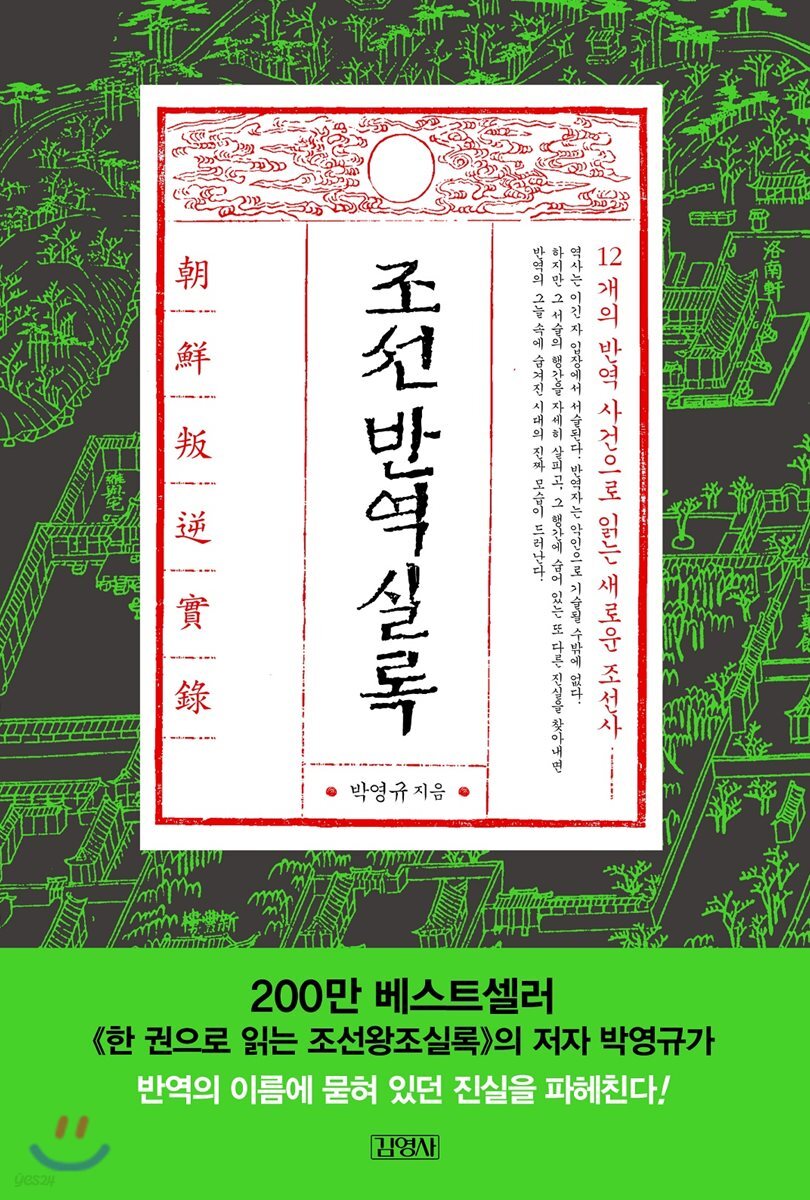 |
Description
Book Introduction
A chronicle of Joseon traitors who denied the times and dreamed of a different era!
The truth about the treason uncovered by Park Young-gyu, author of 『The Annals of the Joseon Dynasty in One Volume』!
How was the war of restoration, in which Yi Seong-gye turned his sword against Yi Bang-won, erased from history? What is the truth behind the Heo Gyun treason, which Yi I-cheom and the Daebuk faction executed without even a proper interrogation? How did Yi In-jwa and the hardliners of the Soron faction, who rebelled to avenge King Gyeongjong, raise a nationwide army? The truth hidden behind the history written by the victors unfolds with a thrilling intensity that surpasses any film! A chronicle of Joseon traitors who rejected the status quo, yearned for innovation, and dreamed of a different era!
The truth about the treason uncovered by Park Young-gyu, author of 『The Annals of the Joseon Dynasty in One Volume』!
How was the war of restoration, in which Yi Seong-gye turned his sword against Yi Bang-won, erased from history? What is the truth behind the Heo Gyun treason, which Yi I-cheom and the Daebuk faction executed without even a proper interrogation? How did Yi In-jwa and the hardliners of the Soron faction, who rebelled to avenge King Gyeongjong, raise a nationwide army? The truth hidden behind the history written by the victors unfolds with a thrilling intensity that surpasses any film! A chronicle of Joseon traitors who rejected the status quo, yearned for innovation, and dreamed of a different era!
- You can preview some of the book's contents.
Preview
index
Introduction: Joseon history seen through the eyes of treason
1.
Yi Seong-gye, Goryeo's last traitor
Traitor or Revolutionary? / Ming Taizu Zhu Yuanzhang demands the land north of the Cheoryeong Pass / Choi Yeong and King Wu undertake the conquest of Liaodong / Yi Seong-gye embarks on the path of treason by withdrawing his army / Jo Min-su conspires with Yi Saek to establish King Chang / Jo Min-su is ousted after Jo Jun's impeachment / Nine revivalist ministers depose King Chang and establish King Gongyang / Yi Seong-gye seizes control of the court and military / Conflict between the anti-Seong revolutionaries and the Goryeo reformists / Jeong Mong-ju succeeds in expelling Yi Seong-gye's faction / Yi Bang-won assassinates Jeong Mong-ju / Yi Seong-gye becomes the king of Goryeo
2.
Lee Bang-won, who became a traitor to his father and took over the throne
Why did Yi Bang-won have to become his father's traitor? / Did Yi Bang-won really have to kill Jeong Mong-ju? / Queen Sindeok, Yi Bang-won's greatest enemy / Jeong Do-jeon threatens Yi Bang-won by disbanding his private army / Jeong Do-jeon and Nam-eun lose their lives after being caught off guard / Bang-seok and Bang-beon become guests who will never return / Bang-gwa becomes a puppet king / Bul-no is appointed the crown prince, and Bang-won is flustered / Finally, he puts an end to the rebellion and takes the title of Yongsan.
3.
The investigation into the war to restore Yi Seong-gye to the throne
Yi Seong-gye dreams of restoration based on the northeastern region / Jo Sa-ui's rebellion begins after 20 months of preparation / Hamgyeong and Pyeongan provinces fall into Jo Sa-ui's hands / Jo Sa-ui's rebels self-destruct, and Yi Seong-gye gives up
4.
Taejong's brothers-in-law who were accused of treason and killed
Taejong, who creates a wave of discord / Min Mu-gu's brothers are driven out as traitors / Taejong kills all four of his brothers-in-law
5.
Shim On, who was accused of treason and died without even knowing English
Kang Sang-in's Jade Rises / Kang Sang-in's Forced Confession, Unable to Withstand the Beating / Taejong Accusing Shim On of Treason and Killing Him
6.
Prince Suyang, who deposed King Danjong and usurped the throne
The plan for the uprising in the Sarangbang at dawn / A clumsy plot, a plan that does not go as planned / Kim Jong-seo hastily struck down by a hammer / Danjong's senior officials brutally murdered / Lee Jing-ok opposes Suyang's treason / An uncle threatens his young nephew to usurp the throne / Kim Jil and Jeong Chang-son reporting the treason / The bloody storm blows again / The boy king is driven away to Yeongwol / Danjong dies a miserable death
7.
Yi Si-ae, who tried to take over Joseon based on the Six Jins
Han Myeong-hoe and Shin Suk-ju are suddenly imprisoned / The court is thrown into chaos by Yi Si-ae's elaborate scheme / The punitive force is swayed by Yi Si-ae's scheme / King Sejo is enraged by the news of successive defeats / The fiercely fought Battle of Bukcheong / King Sejo declares that he will personally launch the conquest / Government troops occupy Bukcheong / Yi Si-ae collapses / Yi Si-ae's head is cut off
8.
A man who died with the stigma of being a traitor
Yu Ja-gwang accuses Nam-i of treason / Nam-i is brought in for treason / King Yeongjong arrests everyone around Nam-i / Moon Hyo-ryang, unable to withstand the beating, admits to Nam-i's treason / Nam-i admits to the treason plot and names Kang-sun as the ringleader / Nam-i and Kang-sun are torn apart / After 350 years, the stigma of being a traitor is cleared
9.
Jeong Yeo-rip, a talented man born in the wrong era
Jeong Yeo-rip accused of treason / Jeong Yeo-rip possessed outstanding eloquence, scholarship, and exceptional leadership / Jeong Yeo-rip possessed a frenzied and arbitrary temperament / Rumors of Jeong Yeo-rip's treason spread / Planning and accusation of the uprising / Jeong Yeo-rip's death and the disintegration of the Daedong faction / The Seoin faction gains momentum, while the Dongin faction is driven out.
10.
Heo Gyun, who died as a traitor after falling for his own schemes
Heo Gyun, accused of treason and killed without even being questioned / A suspicious death in the Uigeumbu prison / The black letter incident that spreads like wildfire / Heo Gyun exiles Gi Ja-heon / Gi-jun-gyeok points out Heo Gyun as the leader of the traitors / Yi I-cheom and Heo Gyun in conflict / The black letter hung again at Namdaemun / Heo Gyun is driven to death / Heo Gyun's crimes burst out under pressure / The pro-North faction is eager to silence Heo Gyun / Heo Gyun dies as a scapegoat for the pro-North forces
11.
Lee Gwal, who commanded the world for three days
King Injo abandons the capital and flees / Lee Gwal plots a rebellion after being accused of treason / The rebels advance like wildfire / The court is in a panic, and King Injo is desperate to escape / King Injo's painful journey of refuge / Lee Gwal lowers the flag of rebellion for three days
12.
Lee In-jwa and the hardliners of the Soron faction who rebelled to avenge King Gyeongjong
Urgent reports of a series of uprisings / Yi In-jwa captures Cheongju Castle / Oh Myeong-hang captures Yi In-jwa / Yi In-jwa's public statement / Lee Sa-seong, a soldier from Pyeongan Province, is dragged away / Park Pil-hyeon and Jeong Hee-ryang rise up in Jeolla and Gyeongsang provinces
1.
Yi Seong-gye, Goryeo's last traitor
Traitor or Revolutionary? / Ming Taizu Zhu Yuanzhang demands the land north of the Cheoryeong Pass / Choi Yeong and King Wu undertake the conquest of Liaodong / Yi Seong-gye embarks on the path of treason by withdrawing his army / Jo Min-su conspires with Yi Saek to establish King Chang / Jo Min-su is ousted after Jo Jun's impeachment / Nine revivalist ministers depose King Chang and establish King Gongyang / Yi Seong-gye seizes control of the court and military / Conflict between the anti-Seong revolutionaries and the Goryeo reformists / Jeong Mong-ju succeeds in expelling Yi Seong-gye's faction / Yi Bang-won assassinates Jeong Mong-ju / Yi Seong-gye becomes the king of Goryeo
2.
Lee Bang-won, who became a traitor to his father and took over the throne
Why did Yi Bang-won have to become his father's traitor? / Did Yi Bang-won really have to kill Jeong Mong-ju? / Queen Sindeok, Yi Bang-won's greatest enemy / Jeong Do-jeon threatens Yi Bang-won by disbanding his private army / Jeong Do-jeon and Nam-eun lose their lives after being caught off guard / Bang-seok and Bang-beon become guests who will never return / Bang-gwa becomes a puppet king / Bul-no is appointed the crown prince, and Bang-won is flustered / Finally, he puts an end to the rebellion and takes the title of Yongsan.
3.
The investigation into the war to restore Yi Seong-gye to the throne
Yi Seong-gye dreams of restoration based on the northeastern region / Jo Sa-ui's rebellion begins after 20 months of preparation / Hamgyeong and Pyeongan provinces fall into Jo Sa-ui's hands / Jo Sa-ui's rebels self-destruct, and Yi Seong-gye gives up
4.
Taejong's brothers-in-law who were accused of treason and killed
Taejong, who creates a wave of discord / Min Mu-gu's brothers are driven out as traitors / Taejong kills all four of his brothers-in-law
5.
Shim On, who was accused of treason and died without even knowing English
Kang Sang-in's Jade Rises / Kang Sang-in's Forced Confession, Unable to Withstand the Beating / Taejong Accusing Shim On of Treason and Killing Him
6.
Prince Suyang, who deposed King Danjong and usurped the throne
The plan for the uprising in the Sarangbang at dawn / A clumsy plot, a plan that does not go as planned / Kim Jong-seo hastily struck down by a hammer / Danjong's senior officials brutally murdered / Lee Jing-ok opposes Suyang's treason / An uncle threatens his young nephew to usurp the throne / Kim Jil and Jeong Chang-son reporting the treason / The bloody storm blows again / The boy king is driven away to Yeongwol / Danjong dies a miserable death
7.
Yi Si-ae, who tried to take over Joseon based on the Six Jins
Han Myeong-hoe and Shin Suk-ju are suddenly imprisoned / The court is thrown into chaos by Yi Si-ae's elaborate scheme / The punitive force is swayed by Yi Si-ae's scheme / King Sejo is enraged by the news of successive defeats / The fiercely fought Battle of Bukcheong / King Sejo declares that he will personally launch the conquest / Government troops occupy Bukcheong / Yi Si-ae collapses / Yi Si-ae's head is cut off
8.
A man who died with the stigma of being a traitor
Yu Ja-gwang accuses Nam-i of treason / Nam-i is brought in for treason / King Yeongjong arrests everyone around Nam-i / Moon Hyo-ryang, unable to withstand the beating, admits to Nam-i's treason / Nam-i admits to the treason plot and names Kang-sun as the ringleader / Nam-i and Kang-sun are torn apart / After 350 years, the stigma of being a traitor is cleared
9.
Jeong Yeo-rip, a talented man born in the wrong era
Jeong Yeo-rip accused of treason / Jeong Yeo-rip possessed outstanding eloquence, scholarship, and exceptional leadership / Jeong Yeo-rip possessed a frenzied and arbitrary temperament / Rumors of Jeong Yeo-rip's treason spread / Planning and accusation of the uprising / Jeong Yeo-rip's death and the disintegration of the Daedong faction / The Seoin faction gains momentum, while the Dongin faction is driven out.
10.
Heo Gyun, who died as a traitor after falling for his own schemes
Heo Gyun, accused of treason and killed without even being questioned / A suspicious death in the Uigeumbu prison / The black letter incident that spreads like wildfire / Heo Gyun exiles Gi Ja-heon / Gi-jun-gyeok points out Heo Gyun as the leader of the traitors / Yi I-cheom and Heo Gyun in conflict / The black letter hung again at Namdaemun / Heo Gyun is driven to death / Heo Gyun's crimes burst out under pressure / The pro-North faction is eager to silence Heo Gyun / Heo Gyun dies as a scapegoat for the pro-North forces
11.
Lee Gwal, who commanded the world for three days
King Injo abandons the capital and flees / Lee Gwal plots a rebellion after being accused of treason / The rebels advance like wildfire / The court is in a panic, and King Injo is desperate to escape / King Injo's painful journey of refuge / Lee Gwal lowers the flag of rebellion for three days
12.
Lee In-jwa and the hardliners of the Soron faction who rebelled to avenge King Gyeongjong
Urgent reports of a series of uprisings / Yi In-jwa captures Cheongju Castle / Oh Myeong-hang captures Yi In-jwa / Yi In-jwa's public statement / Lee Sa-seong, a soldier from Pyeongan Province, is dragged away / Park Pil-hyeon and Jeong Hee-ryang rise up in Jeolla and Gyeongsang provinces
Publisher's Review
A chronicle of Joseon traitors who denied the times and dreamed of a different era!
The truth about the treason uncovered by Park Young-gyu, author of 『Reading the Annals of the Joseon Dynasty in One Volume』!
Pointing a sword at Yi Bang-won
Yi Seong-gye's war to restore the throne
Who was the first person in Joseon history to raise the flag of rebellion and start a war? Surprisingly, it was King Taejo, founder of Joseon, Yi Seong-gye.
It is a well-known fact that King Taejong Lee Bang-won killed Lee Bang-seok and Lee Bang-beon, sons of Lee Seong-gye, and seized the throne.
Although Jeongjong was present in the middle, he was merely a puppet king set up by Yi Bang-won for a short time.
On November 5, 1402, Jo Sa-ui, the magistrate of Anbyeon, raised an army and declared that he would restore Yi Seong-gye to the throne and avenge the deaths of Yi Bang-seok and his mother, Queen Sindeok of the Kang clan.
Anbyeon, along with Hamheung, was a strategic point in Hamgyeong Province and was the base of Yi Seong-gye, and Jo Sa-ui was a descendant of Queen Sindeok of the Kang clan.
On the surface, it seemed like Jo Sa-ui was the one leading the rebellion, but it was Lee Seong-gye who was moving Jo Sa-ui.
When the investigators raised the army, Yi Seong-gye stayed in Hamheung.
Before staying in Hamheung, he stayed in Anbyeon, and appointing Jo Sa-ui as the magistrate of Anbyeon was a stepping stone for his own war of restoration.
Although Yi Seong-gye and Yi Bang-won were father and son, Yi Seong-gye could not forgive Yi Bang-won for killing his sons, Yi Bang-seok and Yi Bang-beon, and usurping his throne.
When the rebels of the Joseon Dynasty took control of Hamgyeong Province and spread their influence in the northeast, Yi Seong-gye headed from Hamheung to the leader of the northwest.
It was judged that they had won the hearts of the people in the northeast and that the rebels were to take control of the northwest as well.
By November 27, the rebels had advanced as far as Anju, South Pyongan Province.
But a rift arose within the rebels.
The rebels were stationed near the Cheongcheon River, and among their troops was a prisoner of war named Kim Cheon-u.
When the rebel soldiers asked him how many soldiers were suppressing the rebellion, Kim Cheon-woo replied that there must be about 40,000, and how could they possibly handle it, defectors began to appear in large numbers within the rebel army.
When Jo Hwa set fire to the tent in an attempt to escape from the camp, the rebels were startled and scattered in all directions.
The investigator returned to Anbyeon with his men, but at that time, only about 50 cavalrymen remained under his command.
Then, the military officer Kim Yeong-ryeol led the army, surrounded Jo Sa-ui, and captured him.
Yi Seong-gye, who had vowed to ascend to the throne once again with Jo Sa-ui at the forefront, moved from Mengju to Pyongyang upon hearing the news of defeat, and returned to the capital the day after Jo Sa-ui was taken to the capital.
After the Jo Sa-ui Rebellion, Yi Seong-gye no longer confronted Yi Bang-won.
In the end, they decided to accept Taejong's succession to the throne and forgive him.
Lee Gwal, who was accused of treason and rebelled,
Lee In-jwa, who dreamed of revenge for King Gyeongjong
Among the traitors who started the war, Lee Gwal is a well-known figure.
However, he was accused of being a traitor and had no choice but to rebel.
At that time, Lee Gwal was in Yeongbyeon as a Pyeongan military officer and deputy marshal.
In the Annals of King Injo, it is said that Lee Gwal started a rebellion because of the rewards for the Injo Restoration, but this is only a result-oriented view.
At that time, the situation between the Later Jin and Joseon was semi-war.
Because of this, King Injo was very worried about who to choose as the Pyeongan soldier.
Injo wanted to choose between Yi Seo and Yi Gwal, but General Jang Man recommended Yi Gwal and appointed him as Vice-Marshal.
At that time, the Pyeongan soldier was the person in charge of the front line of Joseon, and the reason King Injo appointed Lee Gwal as the Pyeongan soldier was because he trusted him that much.
Knowing the king's feelings, Yi Gwal also arrived in Yeongbyeon and made thorough preparations to guard against the invasion of the Later Jin.
On January 17, 1624, Munhoe and others reported that Yi Gwal, his son Lee Jeon, Han Myeong-ryeon, and Gi Ja-heon were plotting treason.
The people mentioned were people who opposed the dethronement of Queen Inmok or helped the Injo Restoration, even though they were Northerners.
The Westerners reported treason in order to eliminate the Northerners.
The Westerners said that Lee Gwal should be dismissed from his position as deputy commander and summoned to the central government.
However, King Injo refused to summon Yi Gwal, and instead ordered that Yi Gwal's sons, Lee Jeon and Han Myeong-ryeon, be summoned and questioned.
It was judged that if we rashly touched Yi Gwal, he might harbor rebellious feelings and come down to the capital.
When Lee Gwal heard this news, he realized that it was ultimately a measure aimed at him.
I thought that Kim Ryu and others, who had been in conflict since the rebellion, had planned the incident.
In this situation, he decided that it would be better to lead the army down and change the king rather than be branded a traitor and killed.
Lee Gwal immediately sent troops to rescue Han Myeong-ryeon, who was being taken away, and killed the officials who came to capture his son Jeon.
This was January 21st, and this is how the Yi Gwal Rebellion began.
There were also those who rebelled to avenge the former king.
When Yeongjo ascended to the throne, rumors spread that he had poisoned King Gyeongjong and seized the throne.
In particular, the hardliners of the Soron faction, who were loyal to King Gyeongjong, believed it to be true, and it is said that the army of Lee In-jwa, who rebelled and took control of Cheongju Castle, enshrined King Gyeongjong's memorial tablet in the crowd and wept day and night.
Although the Yi In-jwa Rebellion is historically recorded as a small-scale uprising, it was actually a nationwide uprising.
The reason was that the hardliners of the Soron faction across the country, who believed the theory of King Gyeongjong's poisoning to be true, attempted to simultaneously raise an army by uniting forces from Chungcheong Province, Gyeongsang Province, Jeolla Province, Gyeonggi Province, Seoul, and Pyeongan Province.
During the Yi In-jwa Rebellion, Park Pil-hyeon, the magistrate of Taein in Jeolla Province, raised an army, and in Gyeongsang Province, Jeong Hee-ryang raised an army and took control of Geochang.
At the time, King Yeongjo had promoted the moderate Soron faction through the Jeongmi Hwan-guk, and if he had not done so, it is possible that the entire Soron faction would have joined the rebellion.
However, thanks to the incident occurring in a situation where the Soron faction controlled the government, a smaller-scale rebellion occurred, and Yeongjo was able to protect his throne.
The Truth Behind the Heo Gyun Case: Executed Without a Korean Document
Heo Gyun, the author of the first Korean novel, “The Story of Hong Gildong,” and a progressive thinker who advocated for revolution and equality through works such as “Theory of Homin” and “Theory of Yujae.”
However, on the other hand, Heo Gyun was a sinister politician who flattered the powerful Lee I-cheom and took the lead in dethroning Queen Inmok.
In January 1617, a scar was discovered in the east courtyard of the palace's Nae-Yak-Bang.
Among the contents of the letter was the statement that Gwanghaegun 'presumptuously ascended to the throne as an illegitimate child, killed his father, and killed his older brother.'
A proclamation with the same content was also hung on an arrow and flown into Gyeongungung Palace, where Queen Inmok was imprisoned.
Among the contents of the proclamation was a statement that it would drag in Gwanghaegun's brother-in-law Yu Hui-bun, Prime Minister Gi Ja-heon, and Chief State Councillor Park Seung-jong as collaborators in the treason.
The forces that planned the Heungseo Incident were Yi I-cheom and the Daebuk faction, and the person who proposed this strategy was likely Heo Gyun.
It was a strategy to depose Queen Inmok, who was confined to the West Palace, and at the same time completely eliminate the remaining Seoin.
However, when Heo Gyun was identified as the person responsible for writing the malicious letter by Gijaheon's son, Gijun Gyeok, a member of the Northern faction, the Northern faction began to worry that the calamity would spread to the entire Northern Party.
And unexpectedly, a situation arose where Lee I-cheom and Heo Gyun came into conflict.
At first, Yi I-cheom led the argument for deposing Queen Dowager Gwanghaegun in order to please him, but when the situation actually arose, he took a step back out of fear of being criticized later.
So, after reporting to the Ming Dynasty, they insisted on deposing Queen Inmok. This was intended to delay or prevent the dethronement of Queen Inmok from becoming a reality.
But Heo Gyun was different.
Heo Gyun insisted that the people should be deposed immediately without notifying the Ming Dynasty and that the Westerners should be created.
As a result, the theory of deposing the queen was divided into the arguments of Yi I-cheom and Heo Gyun, and King Gwanghae was struggling between the two arguments.
This was considered to be similar to accepting Heo Gyun's claim, and was a factor that made Lee I-cheom's position very unstable.
In the end, Yi I-cheom decided to cut off the root of trouble for the Northern Party by accusing Heo Gyun of treason and killing him.
He tried all sorts of tricks and persuaded Heo Gyun, who was imprisoned, by assuring him that he would have no worries since his daughter was about to become the crown prince's concubine.
And on the other hand, since Heo Gyun's crimes were clearly revealed, he threatened King Gwanghaegun by saying that he should be executed immediately rather than being questioned.
In the end, King Gwanghae was unable to overcome the pressure from the Daebukdang and had Heo Gyun dragged out of prison.
Only then did Heo Gyun shout, “I have something to say!” but he was torn to pieces and died in the western market.
In the end, Heo Gyun was accused of treason and killed because of his own scheme, and Yi I-cheom and the Daebukdang were able to use Heo Gyun as a scapegoat to avoid suspicion of being behind the black letter incident.
The True Face of Joseon: A Look at 12 Cases of Treason
Rebellion stems from a desire for newness.
This is because rebellion is the act of denying the times, dreaming of another era, and producing another power.
Therefore, looking at Joseon's history from the perspective of rebellion is also an act of revealing the hidden truth about Joseon.
History is always written from the perspective of the victors.
That is why traitors can only always be described as villains.
But if we look closely between the lines of the narrative and discover another truth hidden between them, the true face of that era hidden in the shadow of rebellion is revealed.
This book explores the truth about Joseon history that we did not know about through 12 incidents that were previously covered up under the name of treason.
And in the process, names that had been taboo for 500 years of Joseon history, such as Lee Jing-ok, Lee Si-ae, Jeong Yeo-rip, Lee Gwal, and Lee In-jwa, rose to the surface of history.
I sincerely hope that 『The Annals of Joseon Rebellion』 will serve as an opportunity to look at Joseon history from a completely new perspective.
The truth about the treason uncovered by Park Young-gyu, author of 『Reading the Annals of the Joseon Dynasty in One Volume』!
Pointing a sword at Yi Bang-won
Yi Seong-gye's war to restore the throne
Who was the first person in Joseon history to raise the flag of rebellion and start a war? Surprisingly, it was King Taejo, founder of Joseon, Yi Seong-gye.
It is a well-known fact that King Taejong Lee Bang-won killed Lee Bang-seok and Lee Bang-beon, sons of Lee Seong-gye, and seized the throne.
Although Jeongjong was present in the middle, he was merely a puppet king set up by Yi Bang-won for a short time.
On November 5, 1402, Jo Sa-ui, the magistrate of Anbyeon, raised an army and declared that he would restore Yi Seong-gye to the throne and avenge the deaths of Yi Bang-seok and his mother, Queen Sindeok of the Kang clan.
Anbyeon, along with Hamheung, was a strategic point in Hamgyeong Province and was the base of Yi Seong-gye, and Jo Sa-ui was a descendant of Queen Sindeok of the Kang clan.
On the surface, it seemed like Jo Sa-ui was the one leading the rebellion, but it was Lee Seong-gye who was moving Jo Sa-ui.
When the investigators raised the army, Yi Seong-gye stayed in Hamheung.
Before staying in Hamheung, he stayed in Anbyeon, and appointing Jo Sa-ui as the magistrate of Anbyeon was a stepping stone for his own war of restoration.
Although Yi Seong-gye and Yi Bang-won were father and son, Yi Seong-gye could not forgive Yi Bang-won for killing his sons, Yi Bang-seok and Yi Bang-beon, and usurping his throne.
When the rebels of the Joseon Dynasty took control of Hamgyeong Province and spread their influence in the northeast, Yi Seong-gye headed from Hamheung to the leader of the northwest.
It was judged that they had won the hearts of the people in the northeast and that the rebels were to take control of the northwest as well.
By November 27, the rebels had advanced as far as Anju, South Pyongan Province.
But a rift arose within the rebels.
The rebels were stationed near the Cheongcheon River, and among their troops was a prisoner of war named Kim Cheon-u.
When the rebel soldiers asked him how many soldiers were suppressing the rebellion, Kim Cheon-woo replied that there must be about 40,000, and how could they possibly handle it, defectors began to appear in large numbers within the rebel army.
When Jo Hwa set fire to the tent in an attempt to escape from the camp, the rebels were startled and scattered in all directions.
The investigator returned to Anbyeon with his men, but at that time, only about 50 cavalrymen remained under his command.
Then, the military officer Kim Yeong-ryeol led the army, surrounded Jo Sa-ui, and captured him.
Yi Seong-gye, who had vowed to ascend to the throne once again with Jo Sa-ui at the forefront, moved from Mengju to Pyongyang upon hearing the news of defeat, and returned to the capital the day after Jo Sa-ui was taken to the capital.
After the Jo Sa-ui Rebellion, Yi Seong-gye no longer confronted Yi Bang-won.
In the end, they decided to accept Taejong's succession to the throne and forgive him.
Lee Gwal, who was accused of treason and rebelled,
Lee In-jwa, who dreamed of revenge for King Gyeongjong
Among the traitors who started the war, Lee Gwal is a well-known figure.
However, he was accused of being a traitor and had no choice but to rebel.
At that time, Lee Gwal was in Yeongbyeon as a Pyeongan military officer and deputy marshal.
In the Annals of King Injo, it is said that Lee Gwal started a rebellion because of the rewards for the Injo Restoration, but this is only a result-oriented view.
At that time, the situation between the Later Jin and Joseon was semi-war.
Because of this, King Injo was very worried about who to choose as the Pyeongan soldier.
Injo wanted to choose between Yi Seo and Yi Gwal, but General Jang Man recommended Yi Gwal and appointed him as Vice-Marshal.
At that time, the Pyeongan soldier was the person in charge of the front line of Joseon, and the reason King Injo appointed Lee Gwal as the Pyeongan soldier was because he trusted him that much.
Knowing the king's feelings, Yi Gwal also arrived in Yeongbyeon and made thorough preparations to guard against the invasion of the Later Jin.
On January 17, 1624, Munhoe and others reported that Yi Gwal, his son Lee Jeon, Han Myeong-ryeon, and Gi Ja-heon were plotting treason.
The people mentioned were people who opposed the dethronement of Queen Inmok or helped the Injo Restoration, even though they were Northerners.
The Westerners reported treason in order to eliminate the Northerners.
The Westerners said that Lee Gwal should be dismissed from his position as deputy commander and summoned to the central government.
However, King Injo refused to summon Yi Gwal, and instead ordered that Yi Gwal's sons, Lee Jeon and Han Myeong-ryeon, be summoned and questioned.
It was judged that if we rashly touched Yi Gwal, he might harbor rebellious feelings and come down to the capital.
When Lee Gwal heard this news, he realized that it was ultimately a measure aimed at him.
I thought that Kim Ryu and others, who had been in conflict since the rebellion, had planned the incident.
In this situation, he decided that it would be better to lead the army down and change the king rather than be branded a traitor and killed.
Lee Gwal immediately sent troops to rescue Han Myeong-ryeon, who was being taken away, and killed the officials who came to capture his son Jeon.
This was January 21st, and this is how the Yi Gwal Rebellion began.
There were also those who rebelled to avenge the former king.
When Yeongjo ascended to the throne, rumors spread that he had poisoned King Gyeongjong and seized the throne.
In particular, the hardliners of the Soron faction, who were loyal to King Gyeongjong, believed it to be true, and it is said that the army of Lee In-jwa, who rebelled and took control of Cheongju Castle, enshrined King Gyeongjong's memorial tablet in the crowd and wept day and night.
Although the Yi In-jwa Rebellion is historically recorded as a small-scale uprising, it was actually a nationwide uprising.
The reason was that the hardliners of the Soron faction across the country, who believed the theory of King Gyeongjong's poisoning to be true, attempted to simultaneously raise an army by uniting forces from Chungcheong Province, Gyeongsang Province, Jeolla Province, Gyeonggi Province, Seoul, and Pyeongan Province.
During the Yi In-jwa Rebellion, Park Pil-hyeon, the magistrate of Taein in Jeolla Province, raised an army, and in Gyeongsang Province, Jeong Hee-ryang raised an army and took control of Geochang.
At the time, King Yeongjo had promoted the moderate Soron faction through the Jeongmi Hwan-guk, and if he had not done so, it is possible that the entire Soron faction would have joined the rebellion.
However, thanks to the incident occurring in a situation where the Soron faction controlled the government, a smaller-scale rebellion occurred, and Yeongjo was able to protect his throne.
The Truth Behind the Heo Gyun Case: Executed Without a Korean Document
Heo Gyun, the author of the first Korean novel, “The Story of Hong Gildong,” and a progressive thinker who advocated for revolution and equality through works such as “Theory of Homin” and “Theory of Yujae.”
However, on the other hand, Heo Gyun was a sinister politician who flattered the powerful Lee I-cheom and took the lead in dethroning Queen Inmok.
In January 1617, a scar was discovered in the east courtyard of the palace's Nae-Yak-Bang.
Among the contents of the letter was the statement that Gwanghaegun 'presumptuously ascended to the throne as an illegitimate child, killed his father, and killed his older brother.'
A proclamation with the same content was also hung on an arrow and flown into Gyeongungung Palace, where Queen Inmok was imprisoned.
Among the contents of the proclamation was a statement that it would drag in Gwanghaegun's brother-in-law Yu Hui-bun, Prime Minister Gi Ja-heon, and Chief State Councillor Park Seung-jong as collaborators in the treason.
The forces that planned the Heungseo Incident were Yi I-cheom and the Daebuk faction, and the person who proposed this strategy was likely Heo Gyun.
It was a strategy to depose Queen Inmok, who was confined to the West Palace, and at the same time completely eliminate the remaining Seoin.
However, when Heo Gyun was identified as the person responsible for writing the malicious letter by Gijaheon's son, Gijun Gyeok, a member of the Northern faction, the Northern faction began to worry that the calamity would spread to the entire Northern Party.
And unexpectedly, a situation arose where Lee I-cheom and Heo Gyun came into conflict.
At first, Yi I-cheom led the argument for deposing Queen Dowager Gwanghaegun in order to please him, but when the situation actually arose, he took a step back out of fear of being criticized later.
So, after reporting to the Ming Dynasty, they insisted on deposing Queen Inmok. This was intended to delay or prevent the dethronement of Queen Inmok from becoming a reality.
But Heo Gyun was different.
Heo Gyun insisted that the people should be deposed immediately without notifying the Ming Dynasty and that the Westerners should be created.
As a result, the theory of deposing the queen was divided into the arguments of Yi I-cheom and Heo Gyun, and King Gwanghae was struggling between the two arguments.
This was considered to be similar to accepting Heo Gyun's claim, and was a factor that made Lee I-cheom's position very unstable.
In the end, Yi I-cheom decided to cut off the root of trouble for the Northern Party by accusing Heo Gyun of treason and killing him.
He tried all sorts of tricks and persuaded Heo Gyun, who was imprisoned, by assuring him that he would have no worries since his daughter was about to become the crown prince's concubine.
And on the other hand, since Heo Gyun's crimes were clearly revealed, he threatened King Gwanghaegun by saying that he should be executed immediately rather than being questioned.
In the end, King Gwanghae was unable to overcome the pressure from the Daebukdang and had Heo Gyun dragged out of prison.
Only then did Heo Gyun shout, “I have something to say!” but he was torn to pieces and died in the western market.
In the end, Heo Gyun was accused of treason and killed because of his own scheme, and Yi I-cheom and the Daebukdang were able to use Heo Gyun as a scapegoat to avoid suspicion of being behind the black letter incident.
The True Face of Joseon: A Look at 12 Cases of Treason
Rebellion stems from a desire for newness.
This is because rebellion is the act of denying the times, dreaming of another era, and producing another power.
Therefore, looking at Joseon's history from the perspective of rebellion is also an act of revealing the hidden truth about Joseon.
History is always written from the perspective of the victors.
That is why traitors can only always be described as villains.
But if we look closely between the lines of the narrative and discover another truth hidden between them, the true face of that era hidden in the shadow of rebellion is revealed.
This book explores the truth about Joseon history that we did not know about through 12 incidents that were previously covered up under the name of treason.
And in the process, names that had been taboo for 500 years of Joseon history, such as Lee Jing-ok, Lee Si-ae, Jeong Yeo-rip, Lee Gwal, and Lee In-jwa, rose to the surface of history.
I sincerely hope that 『The Annals of Joseon Rebellion』 will serve as an opportunity to look at Joseon history from a completely new perspective.
GOODS SPECIFICS
- Date of issue: August 4, 2017
- Page count, weight, size: 332 pages | 514g | 152*225*22mm
- ISBN13: 9788934978510
- ISBN10: 8934978511
You may also like
카테고리
korean


korean

![GQ KOREA Mark (Monthly): December [2025]](http://librairie.coreenne.fr/cdn/shop/files/8ef265dbbfbf186523ed75ba7319009d.jpg?v=1765340328&width=3840)


