

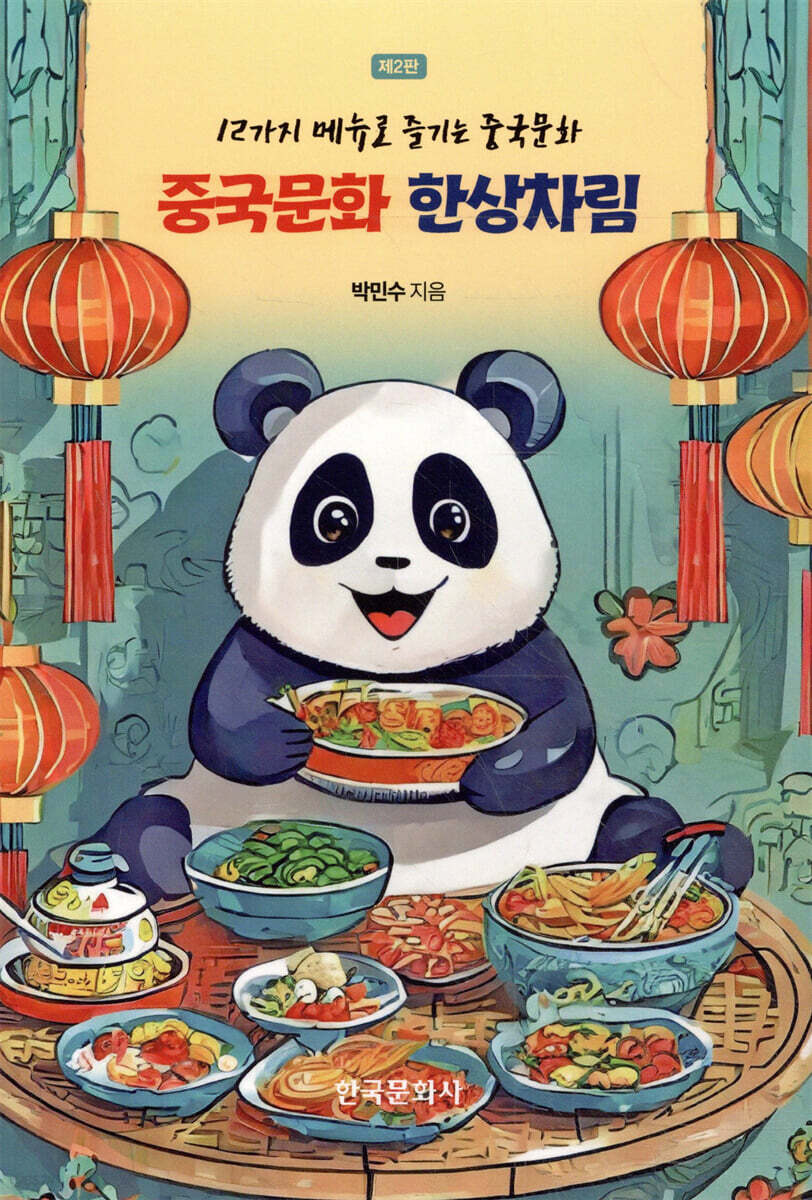
Chinese cultural table setting
 |
Description
Book Introduction
Enjoy Chinese culture with 12 menus that make you say "Oh?" and then "Oh!"
For over 10 years, I have been teaching Chinese language and culture to students at universities, trying to convey China in a vivid and vivid way that allows them to experience it firsthand.
This book is organized around keywords that represent the country of China and the way of thinking and behavior of its people.
It is composed so that everyone can enjoy and understand it deliciously, and vegetables are added here and there to add flavor.
For over 10 years, I have been teaching Chinese language and culture to students at universities, trying to convey China in a vivid and vivid way that allows them to experience it firsthand.
This book is organized around keywords that represent the country of China and the way of thinking and behavior of its people.
It is composed so that everyone can enjoy and understand it deliciously, and vegetables are added here and there to add flavor.
index
time
Chapter 1.
Basic Understanding of China (1)
1 The center of the world?
2 Just meat
3 Koreans from China
4 Vast land, abundant resources
Chapter 2.
Basic Understanding of Chinese Culture (2)
5 Everyone except us is barbarian
6 Is it true that ethnicity is written on the ID card?
7 Catching a virus is a virus
8. If you go straight, it's over
9 China's Innovation Code Shanzhai
Chapter 3.
Letters and Culture
10 People Who Created Chinese Characters
11 letters on a turtle shell?
12. Creation and use of Chinese characters
13 Alphabet and Chinese Characters
14 letters also diet?
Chapter 4.
Language and Culture
15 Chinese
16 What is Mandarin?
17 Dialects
18 Are you happy?
19 Coca-Cola
Chapter 5.
Color and Culture
20 Tomato and Egg Stir-fry
21 Is yellow rated 19+ in China?
22 The Last Emperor
23 Even the color of the river water is yellow?
Chapter 6.
Tea, Drinking, and Culture
24 Tea Time
25 Daily Reflections
26 I feel sad when I run out of alcohol
27 Cheers
Chapter 7.
food culture
28. Even the Diamond Mountains are beautiful after a meal.
29 Let's eat everything
30 The east is said to eat spicy food?
31 Lamb Skewers and Tsingtao
32 Jjajangmyeon
Chapter 8.
Numbers and Culture
Lucky number 33 is 689
34 Forty is the age of no return
Chapter 9.
Titles, names, and culture
35 Is Jjang-Kae the boss?
36 I am Wang
37 What is your name?
Miss 38
39 Roads and Streets
40 bathrooms
Chapter 10.
Life and Culture
41 The Aesthetics of Slowness
42 China's Achilles' heel
43 Golden stock is better than gold
44 Do whatever you want
45 Crying and Eating Mustard
46 Gifts come in pairs
47 Everything is OK with WeChat
Chapter 11.
Human Relationships and Culture
48 or not?
49 Seesaw Game
50 question marks
51 Key words for entering the Chinese market
52 Things More Important Than Life
Chapter 12.
Attractions and Culture
53 Top 9 Chinese Attractions Popular with Koreans
References__205
Chapter 1.
Basic Understanding of China (1)
1 The center of the world?
2 Just meat
3 Koreans from China
4 Vast land, abundant resources
Chapter 2.
Basic Understanding of Chinese Culture (2)
5 Everyone except us is barbarian
6 Is it true that ethnicity is written on the ID card?
7 Catching a virus is a virus
8. If you go straight, it's over
9 China's Innovation Code Shanzhai
Chapter 3.
Letters and Culture
10 People Who Created Chinese Characters
11 letters on a turtle shell?
12. Creation and use of Chinese characters
13 Alphabet and Chinese Characters
14 letters also diet?
Chapter 4.
Language and Culture
15 Chinese
16 What is Mandarin?
17 Dialects
18 Are you happy?
19 Coca-Cola
Chapter 5.
Color and Culture
20 Tomato and Egg Stir-fry
21 Is yellow rated 19+ in China?
22 The Last Emperor
23 Even the color of the river water is yellow?
Chapter 6.
Tea, Drinking, and Culture
24 Tea Time
25 Daily Reflections
26 I feel sad when I run out of alcohol
27 Cheers
Chapter 7.
food culture
28. Even the Diamond Mountains are beautiful after a meal.
29 Let's eat everything
30 The east is said to eat spicy food?
31 Lamb Skewers and Tsingtao
32 Jjajangmyeon
Chapter 8.
Numbers and Culture
Lucky number 33 is 689
34 Forty is the age of no return
Chapter 9.
Titles, names, and culture
35 Is Jjang-Kae the boss?
36 I am Wang
37 What is your name?
Miss 38
39 Roads and Streets
40 bathrooms
Chapter 10.
Life and Culture
41 The Aesthetics of Slowness
42 China's Achilles' heel
43 Golden stock is better than gold
44 Do whatever you want
45 Crying and Eating Mustard
46 Gifts come in pairs
47 Everything is OK with WeChat
Chapter 11.
Human Relationships and Culture
48 or not?
49 Seesaw Game
50 question marks
51 Key words for entering the Chinese market
52 Things More Important Than Life
Chapter 12.
Attractions and Culture
53 Top 9 Chinese Attractions Popular with Koreans
References__205
Into the book
1.
The center of the world?
The People's Republic of China (PRC), abbreviated as China, has a capital of Beijing and a largest city, Shanghai. Other major cities include Guangzhou, Nanjing, Xi'an, Qingdao, and Chongqing.
In modern China, the Qing Dynasty collapsed in 1911 with the Xinhai Revolution and the Kuomintang government took power, but political chaos continued, ushering in an era of warlords in which warlord governments wielded power in various regions.
The Chinese Communist Party, founded with Soviet support and centered on the anti-imperialist platform of the May Fourth Movement, rapidly grew in power after 1920 and continued to wage civil war with the Kuomintang.
After the Second Sino-Japanese War, the Second Civil War broke out in 1946 for control of mainland China, and as a result, most of the territory, except for some areas such as Taiwan, went over to the Communist side, and in 1949, the People's Republic of China was proclaimed in Beijing with Mao Zedong as the first president.
The Communist government centered around Mao Zedong launched the Great Leap Forward and the Cultural Revolution to solidify the framework of a socialist state.
However, the Great Leap Forward failed to lead to economic growth, and the Cultural Revolution left behind numerous national, cultural, and civilian casualties.
In this process, the Communist Party realized the limitations of socialism, and under the leadership of Deng Xiaoping, it implemented reforms and opening up, introducing a market economy system and accepting the capitalist economic system.
Deng Xiaoping achieved rapid economic growth based on his vast territory and massive population by advocating the theory of black cat and white cat? A good cat is one that catches mice well. In other words, whether it's capitalism or communism, as long as the Chinese people live well, he should do it. He also advocated the theory of "whoever can become rich should become rich first." He also pursued a policy of peaceful coexistence and expansion, using the diplomatic principle of "peaceful rise" (growth without military threats) as a policy of subjugating other countries politically and economically to expand their territory, influence, or product markets.
Since Xi Jinping, the 7th President of the People's Republic of China, came to power in 2013, the People's Republic of China has adopted the Belt and Road Initiative as a large-scale project strategy to rebuild the modern-day Silk Road, an ancient East-West transportation route, over a period of 35 years (2014-2049), and open the way for economic and trade cooperation between China and neighboring countries. This project has achieved rapid economic development and made China the world's second largest economy after the United States, emerging as the world's second-largest power after the United States.
If you look at the map of China, you can see that the Korean Peninsula and China combined resemble a chicken.
Among the heads, the part corresponding to the beak is the Korean Peninsula, and the body is China.
You have to eat your food with your beak, right? Despite the absurd size difference, isn't it true that China and the Korean Peninsula are on equal footing? Now, the question is: Is there only one party in China? The Communist Party? No, it isn't.
There are other parties, and of course they also have a political voice.
However, it is said that the Communist Party decides whether to accept or reject that opinion.
So, you can think of other parties besides the Communist Party as clubs or hobby groups.
The center of the world?
The People's Republic of China (PRC), abbreviated as China, has a capital of Beijing and a largest city, Shanghai. Other major cities include Guangzhou, Nanjing, Xi'an, Qingdao, and Chongqing.
In modern China, the Qing Dynasty collapsed in 1911 with the Xinhai Revolution and the Kuomintang government took power, but political chaos continued, ushering in an era of warlords in which warlord governments wielded power in various regions.
The Chinese Communist Party, founded with Soviet support and centered on the anti-imperialist platform of the May Fourth Movement, rapidly grew in power after 1920 and continued to wage civil war with the Kuomintang.
After the Second Sino-Japanese War, the Second Civil War broke out in 1946 for control of mainland China, and as a result, most of the territory, except for some areas such as Taiwan, went over to the Communist side, and in 1949, the People's Republic of China was proclaimed in Beijing with Mao Zedong as the first president.
The Communist government centered around Mao Zedong launched the Great Leap Forward and the Cultural Revolution to solidify the framework of a socialist state.
However, the Great Leap Forward failed to lead to economic growth, and the Cultural Revolution left behind numerous national, cultural, and civilian casualties.
In this process, the Communist Party realized the limitations of socialism, and under the leadership of Deng Xiaoping, it implemented reforms and opening up, introducing a market economy system and accepting the capitalist economic system.
Deng Xiaoping achieved rapid economic growth based on his vast territory and massive population by advocating the theory of black cat and white cat? A good cat is one that catches mice well. In other words, whether it's capitalism or communism, as long as the Chinese people live well, he should do it. He also advocated the theory of "whoever can become rich should become rich first." He also pursued a policy of peaceful coexistence and expansion, using the diplomatic principle of "peaceful rise" (growth without military threats) as a policy of subjugating other countries politically and economically to expand their territory, influence, or product markets.
Since Xi Jinping, the 7th President of the People's Republic of China, came to power in 2013, the People's Republic of China has adopted the Belt and Road Initiative as a large-scale project strategy to rebuild the modern-day Silk Road, an ancient East-West transportation route, over a period of 35 years (2014-2049), and open the way for economic and trade cooperation between China and neighboring countries. This project has achieved rapid economic development and made China the world's second largest economy after the United States, emerging as the world's second-largest power after the United States.
If you look at the map of China, you can see that the Korean Peninsula and China combined resemble a chicken.
Among the heads, the part corresponding to the beak is the Korean Peninsula, and the body is China.
You have to eat your food with your beak, right? Despite the absurd size difference, isn't it true that China and the Korean Peninsula are on equal footing? Now, the question is: Is there only one party in China? The Communist Party? No, it isn't.
There are other parties, and of course they also have a political voice.
However, it is said that the Communist Party decides whether to accept or reject that opinion.
So, you can think of other parties besides the Communist Party as clubs or hobby groups.
---「Chapter 1.
From “Basic Understanding of China (1)”
From “Basic Understanding of China (1)”
Publisher's Review
One day, as I was leaving the classroom after class.
Student: Professor, I'm planning to travel to China. How much money will I need?
Professor Park: Um… How much budget do you have?
Student: Yes?
Professor Park: So, where in China are you planning to go? How many days are you planning to go? Which airline are you considering? Will you fly direct or with a layover? Are you considering a cruise? Will you be staying at a hotel or a sauna? How many times a day, where, and what will you eat? As a trivial example, let's say you're eating egg fried rice, which is a common Korean dish in China. You can get it for 5 yuan from a street vendor near the school.
However, if you go into a restaurant and order, it costs RMB 20, and if you order at a restaurant or hotel in the city, it costs RMB 50.
I told the student that we would talk again after he had thought about it a little more concretely and made a plan.
I always start my Chinese culture and language classes with a question for my students.
“Maybe I’m Chinese.
Hand!”, “I have lived in China.
Hand!”, “Okay.
Anyone who has been to China.
hand!"
As you can imagine, Koreans are very passive and are somewhat reluctant to freely express their opinions.
Still, some classmates thankfully responded.
I ask again.
“How was China?” Everyone says something.
“China is dirty”, “Chinese people don’t know order”, “China is noisy”, etc…
Well, traveling to China is completely different from simply taking the Gyeongchun Line from Seoul to Chuncheon.
And I'm saying that it's not right to generalize China and the Chinese people as if I've traveled all over China, when I've only been to three or four places in the vast landmass that is China.
Someone did.
They say that after living in China for six months, you think you know everything about China. After living in China for a year, you say you only know a little about things that are related to you. And after living in China for ten years, it is difficult to say anything specific about China.
This book is a compilation of content written by the author, who has studied and taught Chinese for over 30 years, in the hope that it will be of some help to those who are curious about and seek to understand China, the Chinese people, and their language and culture.
Student: Professor, I'm planning to travel to China. How much money will I need?
Professor Park: Um… How much budget do you have?
Student: Yes?
Professor Park: So, where in China are you planning to go? How many days are you planning to go? Which airline are you considering? Will you fly direct or with a layover? Are you considering a cruise? Will you be staying at a hotel or a sauna? How many times a day, where, and what will you eat? As a trivial example, let's say you're eating egg fried rice, which is a common Korean dish in China. You can get it for 5 yuan from a street vendor near the school.
However, if you go into a restaurant and order, it costs RMB 20, and if you order at a restaurant or hotel in the city, it costs RMB 50.
I told the student that we would talk again after he had thought about it a little more concretely and made a plan.
I always start my Chinese culture and language classes with a question for my students.
“Maybe I’m Chinese.
Hand!”, “I have lived in China.
Hand!”, “Okay.
Anyone who has been to China.
hand!"
As you can imagine, Koreans are very passive and are somewhat reluctant to freely express their opinions.
Still, some classmates thankfully responded.
I ask again.
“How was China?” Everyone says something.
“China is dirty”, “Chinese people don’t know order”, “China is noisy”, etc…
Well, traveling to China is completely different from simply taking the Gyeongchun Line from Seoul to Chuncheon.
And I'm saying that it's not right to generalize China and the Chinese people as if I've traveled all over China, when I've only been to three or four places in the vast landmass that is China.
Someone did.
They say that after living in China for six months, you think you know everything about China. After living in China for a year, you say you only know a little about things that are related to you. And after living in China for ten years, it is difficult to say anything specific about China.
This book is a compilation of content written by the author, who has studied and taught Chinese for over 30 years, in the hope that it will be of some help to those who are curious about and seek to understand China, the Chinese people, and their language and culture.
GOODS SPECIFICS
- Date of issue: March 1, 2024
- Page count, weight, size: 206 pages | 315g | 138*200*12mm
- ISBN13: 9791169191944
You may also like
카테고리
korean


korean

![GQ KOREA Mark (Monthly): December [2025]](http://librairie.coreenne.fr/cdn/shop/files/8ef265dbbfbf186523ed75ba7319009d.jpg?v=1765340328&width=3840)


