

3 Japanese Cultures That Look Different When You Know Them
 |
Description
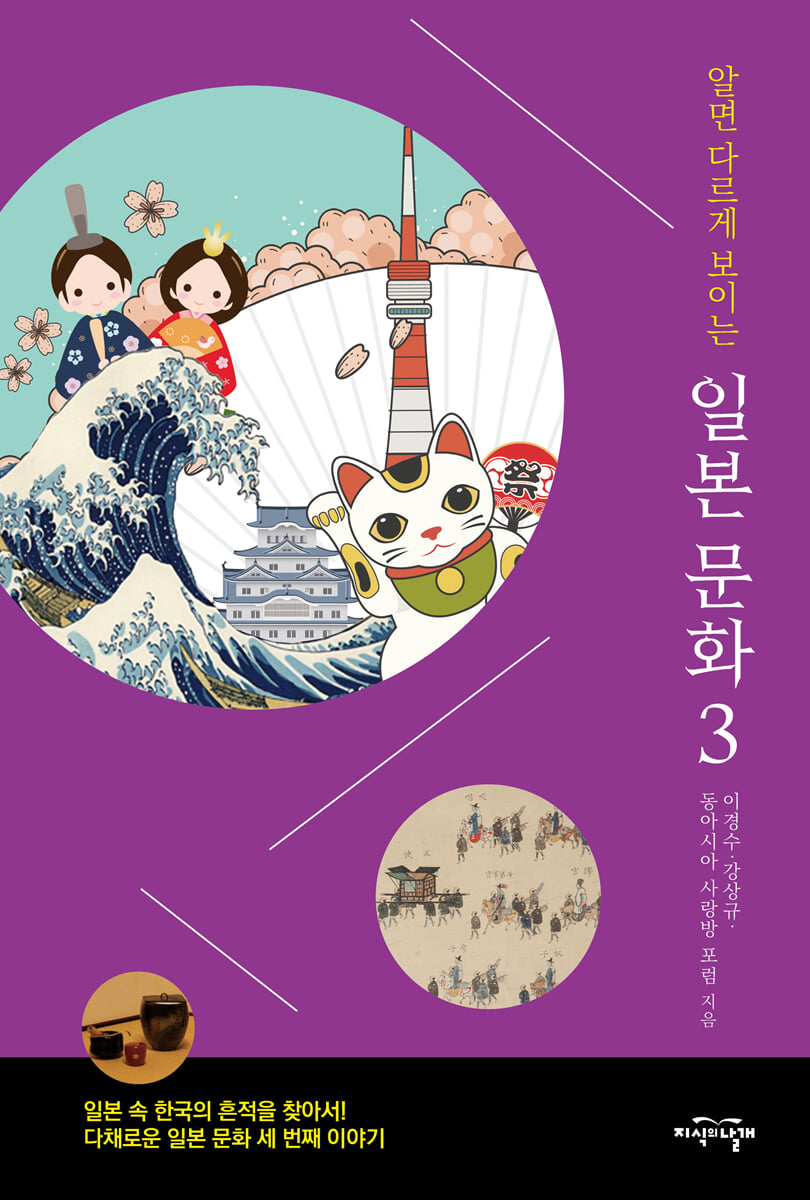
Book Introduction
Choi Seung-hee, the modern Korean wave, the breath of Koreanness in Japanese enka…
Traces of Korea discovered in Japanese culture!
The Japanese nerds of the 'East Asia Love Room Forum' who dream of a 21st century version of the Joseon Tongsinsa have gathered once again.
In "Japanese Culture: A Different Perspective When You Know It 3," new and relatable stories of Japanese culture unfold, including the Edo period yokai Amabie, which has become a symbol of the COVID-19 era, the kimono, a work of art completed by people wearing it, and Japan's real estate and cutting-edge robotics industries.
A particularly noteworthy part is ‘Korea coexisting within Japan.’
We examine the traces of Koreans' long history of exchange between Korea and Japan through such works as Choi Seung-hee, a modern Korean dancer; a female college student who was captured during the Imjin War and went to Japan to become the third chief priest of Honmyoji Temple; and three singers representing Japanese enka.
It also delves deeper into the existing series, including the architectural world of Tadao Ando, the Japanese people's love of running as revealed through the experience of the Nagoya Women's Marathon, the story of directly participating in the Ise Shrine's relocation every 20 years, and Natsume Soseki's "Botchan" from the perspective of the conflict between tradition and modernity.
Traces of Korea discovered in Japanese culture!
The Japanese nerds of the 'East Asia Love Room Forum' who dream of a 21st century version of the Joseon Tongsinsa have gathered once again.
In "Japanese Culture: A Different Perspective When You Know It 3," new and relatable stories of Japanese culture unfold, including the Edo period yokai Amabie, which has become a symbol of the COVID-19 era, the kimono, a work of art completed by people wearing it, and Japan's real estate and cutting-edge robotics industries.
A particularly noteworthy part is ‘Korea coexisting within Japan.’
We examine the traces of Koreans' long history of exchange between Korea and Japan through such works as Choi Seung-hee, a modern Korean dancer; a female college student who was captured during the Imjin War and went to Japan to become the third chief priest of Honmyoji Temple; and three singers representing Japanese enka.
It also delves deeper into the existing series, including the architectural world of Tadao Ando, the Japanese people's love of running as revealed through the experience of the Nagoya Women's Marathon, the story of directly participating in the Ise Shrine's relocation every 20 years, and Natsume Soseki's "Botchan" from the perspective of the conflict between tradition and modernity.
- You can preview some of the book's contents.
Preview
index
· Enter 9
· 14 major Japanese place names from "Japanese Culture: A Different Perspective When You Know It 1, 2, 3"
Chapter 1: Japanese Society in Education and Everyday Life _15
Is Katakana an Impregnable Fortress in Japanese Language Learning? (Lee Kyung-soo, Professor, Department of Japanese Studies, Korea National Open University)
Japan as Seen and Experienced by a 20-Year-Old College Student (Jihye Choi, English Literature Student, Rikkyo University / Mijung Jeong, World Theme Traveler)
The Culture of "Gan" (Yoshiaki Hamada, Professor Emeritus, Nippon Open University)
A Walk Through a Japanese National University (Jo Seon-yeong, Professor of Japanese Language Education at Incheon National University)
Misunderstandings and Conflicts Through Language: Courtesy and Consideration (Kaoru Otsuka, Professor, Kochi University, Japan)
English Education for Children in Japan (Noriko Sekino, English Education Expert)
Exploring Japanese Libraries: Finding Peace and Peace of Mind (Akiko Yamagishi, Professor of Liberal Arts Japanese at Pohang University)
Japanese People Who Enjoy Running in Their Daily Lives (Lee Jeong, Adjunct Professor, Aichi Gakuin University)
Japanese Culture Through the Eyes of Physical Education (Kim Jae-moon, CEO of Pycom E&C)
Essentials for Japanese People (Du Young-im, Japanese expert based in Canada)
Chapter 2: A Different Look at Japanese History and Politics _117
Reflections on the 70th Anniversary of the San Francisco Peace Treaty (Kang Sang-gyu, Professor of Japanese Studies, Korea National Open University) 118
The Crossroads of Korea, China, and Japan: Nagasaki (Seo Hyeon-seop, Professor Emeritus, Nagasaki Prefectural University) 127
Tokyo Place Name Story (Kim Hyung-gi, CEO of Maxtel Inc.) 135
A Different Perspective on Japanese Politics (Yoo Min-young, Ph.D. in Political Science, Graduate School of Law, Kyoto University) 147
The Nomonhan War: A Microcosm of the Pacific War (Jeong Cheong-ju, Professor Emeritus, Department of History Education, Chonnam National University) 153
The Opening of Japan and the Fall of the Edo Shogunate (Im Myeong-mi, Japanese interpreter) 163
Japanese Children's Refugee Life in the Final Years of the Pacific War (Kim Kyung-ok, Professor, HK Research Institute, Hallym University) 174
Chapter 3: The Culture and Emotions That Make Japan Japanese _183
Going with the Flow: Manners and Japanese Train Culture (Naoko Okamura, Edilabo, LLC) 184
Japanese Minimalism: Its Background, Significance, and Practice (Toru Seraku, Professor of Japanese Interpretation and Translation, Hankuk University of Foreign Studies) 190
Edo Period Yokai Becomes a Symbol of the COVID-19 Era (Doi Miho, Professor, Hansung University) 197
Precious Objects for Me: Japanese Traditions: Ikebana and Tea Ceremony (Kwon Myung-ok, Ikebana Researcher) 206
Growing Character (Park Kyung-ae, Visiting Professor, Konkuk University) 214
Japanese Tea Ceremony and the Establishment of Ich'a (Park Sun-hee, Comparative Researcher of Tea Culture) 226
Japan: A Journey with Shinto - The World of Shinto as Seen in the Film "Your Name" (Han Jeong-mi, Visiting Professor, University of Tokyo) 235
"Chrysanthemums and the Sword," a Starting Point for Japanese Cultural Studies Seen Through the Eyes of an Outsider (Lee Ju-young, Translator/Japonism Researcher) 243
The Heart of Tea as Seen Through Rikyu's Hundred Poems (Jo Yong-ran, Tea Ceremony Expert) 256
Kimono, an Art Made Perfect by Wearing It (Yoshimi Inose, Former Kimono Tailor) 267
Soot, the interest and affection in Japanese pop culture for this trivial thing (Hong Nam-hee, Attorney at Law, Hong Clover Law Firm) 278
Chapter 4: Japan's Strengths to Learn from _285
Will Korea's Real Estate Problem Follow Japan's Path? (Kang Chang-hee, CEO of Truston Asset Management's Pension Forum) 286
The Reality and Prospects of the Japanese Economy (Kook Joong-ho, Professor, Yokohama City University) 297
Japan, Japanese Salaryman, My Japanese Business (Park Oh-young, CEO of Asung Trading) 305
Japan's Aging Strategy: The World's Longest-Living Country (Choi Hyun-rim, Professor Emeritus, Kyung Hee University College of Medicine/Former President, Korean Geriatrics Society) 319
Lessons from Japan's Super-Aging Society (Ryu Jae-kwang, Associate Professor, Kanda University of Foreign Studies) 327
For a Care Welfare Service That Makes Everyone Happy (Min Eun-sook, Soonyu International Medical Business College) 341
Japan's Strength in Advanced Robotics (Yang Seung-yoon, Analyst, Eugene Investment & Securities) 353
Are grocery shopping benefits saving the world? Shopping benefits for ordinary Japanese people (Sumiyo Ogura, lecturer at Korea National Open University) 360
"Aging with Dignity" and "Cultivating a Community-Based Comprehensive Care Village" (Noh Mi-ae, Amateur Translator/Photographer) 368
Chapter 5: The Charm That Made Japan a Tourism Powerhouse _377
Why Kyoto and Not Tokyo? (Lee Seung-shin, Director of the Son Ho-yeon Institute of Korean Traditional Music) 378
Experience Japanese Traditions, Culture, and the Spirit of Omotenashi at a Traditional Japanese Inn (Kim Kyung-ran, Hot Springs Travel Expert / Lee Ki-seong, Oriental Medicine Doctor) 386
The Source of Japan's Tourism Infrastructure (Yang Ju-yeol, CEO of Golf Doctor Co., Ltd.) 398
Tadao Ando and His Architectural World (Woo Chang-yoon, President, Korea Universal Design Association) 408
A 20-Year Outing and Oshiraishimochi (Lee Kyung-ah, Tutor, Department of Japanese Language, Korea National Open University) 426
Takeo Arishima, whom I met on my trip to Karuizawa (Lee Hye-young, former lecturer at Seoul City University) 435
Hokkaido, Embracing Four Charms (Ko Seon-gyeong, Ph.D. Candidate, Hokkaido University) 444
Matsumoto (Kim Jeong-ok, former Japanese high school teacher) 454: A Relaxation for Your Body and Mind
Natsume Soseki, the still-beloved author, and "Master" (Hwang Seong-ja, Ph.D. candidate in Chinese-Japanese Literature, Korea University) 464
Chapter 6: Korea Coexisting with Japan _473
Choi Seung-hee in 1930s Japanese Culture: The Modern Korean Wave Was Here (Lee Hyun-jun, Associate Professor, Musashino University) 474
Our Traces Remaining in Japan (Choi Gap-su, Korea Financial Investment Association) 483
Japanese Wave, Korean Wave, and Language Education (Akemi Saito, Professor Emeritus, Department of Japanese Studies, Hallym University) 492
Female college student who was a victim of the Imjin War (Jeong Hee-soon, lecturer in Japanese language education at Gyeongsang National University) 500
The Korean spirit and artistic soul contained in Japanese enka (Lee Jeong-man, researcher of modern and contemporary Korea-Japan relations) 510
Similar but Different Aspects of Japan (Hong Yu-seon, translator) 521
Himeji Castle and Korea (Jeong Hye-won, Adjunct Professor, Kobe Gakuin University) 537
· Reference 553
· Search 562
· 14 major Japanese place names from "Japanese Culture: A Different Perspective When You Know It 1, 2, 3"
Chapter 1: Japanese Society in Education and Everyday Life _15
Is Katakana an Impregnable Fortress in Japanese Language Learning? (Lee Kyung-soo, Professor, Department of Japanese Studies, Korea National Open University)
Japan as Seen and Experienced by a 20-Year-Old College Student (Jihye Choi, English Literature Student, Rikkyo University / Mijung Jeong, World Theme Traveler)
The Culture of "Gan" (Yoshiaki Hamada, Professor Emeritus, Nippon Open University)
A Walk Through a Japanese National University (Jo Seon-yeong, Professor of Japanese Language Education at Incheon National University)
Misunderstandings and Conflicts Through Language: Courtesy and Consideration (Kaoru Otsuka, Professor, Kochi University, Japan)
English Education for Children in Japan (Noriko Sekino, English Education Expert)
Exploring Japanese Libraries: Finding Peace and Peace of Mind (Akiko Yamagishi, Professor of Liberal Arts Japanese at Pohang University)
Japanese People Who Enjoy Running in Their Daily Lives (Lee Jeong, Adjunct Professor, Aichi Gakuin University)
Japanese Culture Through the Eyes of Physical Education (Kim Jae-moon, CEO of Pycom E&C)
Essentials for Japanese People (Du Young-im, Japanese expert based in Canada)
Chapter 2: A Different Look at Japanese History and Politics _117
Reflections on the 70th Anniversary of the San Francisco Peace Treaty (Kang Sang-gyu, Professor of Japanese Studies, Korea National Open University) 118
The Crossroads of Korea, China, and Japan: Nagasaki (Seo Hyeon-seop, Professor Emeritus, Nagasaki Prefectural University) 127
Tokyo Place Name Story (Kim Hyung-gi, CEO of Maxtel Inc.) 135
A Different Perspective on Japanese Politics (Yoo Min-young, Ph.D. in Political Science, Graduate School of Law, Kyoto University) 147
The Nomonhan War: A Microcosm of the Pacific War (Jeong Cheong-ju, Professor Emeritus, Department of History Education, Chonnam National University) 153
The Opening of Japan and the Fall of the Edo Shogunate (Im Myeong-mi, Japanese interpreter) 163
Japanese Children's Refugee Life in the Final Years of the Pacific War (Kim Kyung-ok, Professor, HK Research Institute, Hallym University) 174
Chapter 3: The Culture and Emotions That Make Japan Japanese _183
Going with the Flow: Manners and Japanese Train Culture (Naoko Okamura, Edilabo, LLC) 184
Japanese Minimalism: Its Background, Significance, and Practice (Toru Seraku, Professor of Japanese Interpretation and Translation, Hankuk University of Foreign Studies) 190
Edo Period Yokai Becomes a Symbol of the COVID-19 Era (Doi Miho, Professor, Hansung University) 197
Precious Objects for Me: Japanese Traditions: Ikebana and Tea Ceremony (Kwon Myung-ok, Ikebana Researcher) 206
Growing Character (Park Kyung-ae, Visiting Professor, Konkuk University) 214
Japanese Tea Ceremony and the Establishment of Ich'a (Park Sun-hee, Comparative Researcher of Tea Culture) 226
Japan: A Journey with Shinto - The World of Shinto as Seen in the Film "Your Name" (Han Jeong-mi, Visiting Professor, University of Tokyo) 235
"Chrysanthemums and the Sword," a Starting Point for Japanese Cultural Studies Seen Through the Eyes of an Outsider (Lee Ju-young, Translator/Japonism Researcher) 243
The Heart of Tea as Seen Through Rikyu's Hundred Poems (Jo Yong-ran, Tea Ceremony Expert) 256
Kimono, an Art Made Perfect by Wearing It (Yoshimi Inose, Former Kimono Tailor) 267
Soot, the interest and affection in Japanese pop culture for this trivial thing (Hong Nam-hee, Attorney at Law, Hong Clover Law Firm) 278
Chapter 4: Japan's Strengths to Learn from _285
Will Korea's Real Estate Problem Follow Japan's Path? (Kang Chang-hee, CEO of Truston Asset Management's Pension Forum) 286
The Reality and Prospects of the Japanese Economy (Kook Joong-ho, Professor, Yokohama City University) 297
Japan, Japanese Salaryman, My Japanese Business (Park Oh-young, CEO of Asung Trading) 305
Japan's Aging Strategy: The World's Longest-Living Country (Choi Hyun-rim, Professor Emeritus, Kyung Hee University College of Medicine/Former President, Korean Geriatrics Society) 319
Lessons from Japan's Super-Aging Society (Ryu Jae-kwang, Associate Professor, Kanda University of Foreign Studies) 327
For a Care Welfare Service That Makes Everyone Happy (Min Eun-sook, Soonyu International Medical Business College) 341
Japan's Strength in Advanced Robotics (Yang Seung-yoon, Analyst, Eugene Investment & Securities) 353
Are grocery shopping benefits saving the world? Shopping benefits for ordinary Japanese people (Sumiyo Ogura, lecturer at Korea National Open University) 360
"Aging with Dignity" and "Cultivating a Community-Based Comprehensive Care Village" (Noh Mi-ae, Amateur Translator/Photographer) 368
Chapter 5: The Charm That Made Japan a Tourism Powerhouse _377
Why Kyoto and Not Tokyo? (Lee Seung-shin, Director of the Son Ho-yeon Institute of Korean Traditional Music) 378
Experience Japanese Traditions, Culture, and the Spirit of Omotenashi at a Traditional Japanese Inn (Kim Kyung-ran, Hot Springs Travel Expert / Lee Ki-seong, Oriental Medicine Doctor) 386
The Source of Japan's Tourism Infrastructure (Yang Ju-yeol, CEO of Golf Doctor Co., Ltd.) 398
Tadao Ando and His Architectural World (Woo Chang-yoon, President, Korea Universal Design Association) 408
A 20-Year Outing and Oshiraishimochi (Lee Kyung-ah, Tutor, Department of Japanese Language, Korea National Open University) 426
Takeo Arishima, whom I met on my trip to Karuizawa (Lee Hye-young, former lecturer at Seoul City University) 435
Hokkaido, Embracing Four Charms (Ko Seon-gyeong, Ph.D. Candidate, Hokkaido University) 444
Matsumoto (Kim Jeong-ok, former Japanese high school teacher) 454: A Relaxation for Your Body and Mind
Natsume Soseki, the still-beloved author, and "Master" (Hwang Seong-ja, Ph.D. candidate in Chinese-Japanese Literature, Korea University) 464
Chapter 6: Korea Coexisting with Japan _473
Choi Seung-hee in 1930s Japanese Culture: The Modern Korean Wave Was Here (Lee Hyun-jun, Associate Professor, Musashino University) 474
Our Traces Remaining in Japan (Choi Gap-su, Korea Financial Investment Association) 483
Japanese Wave, Korean Wave, and Language Education (Akemi Saito, Professor Emeritus, Department of Japanese Studies, Hallym University) 492
Female college student who was a victim of the Imjin War (Jeong Hee-soon, lecturer in Japanese language education at Gyeongsang National University) 500
The Korean spirit and artistic soul contained in Japanese enka (Lee Jeong-man, researcher of modern and contemporary Korea-Japan relations) 510
Similar but Different Aspects of Japan (Hong Yu-seon, translator) 521
Himeji Castle and Korea (Jeong Hye-won, Adjunct Professor, Kobe Gakuin University) 537
· Reference 553
· Search 562
Detailed image

Into the book
Geographically close, Korea and Japan have maintained a close, future-oriented relationship, competing and cooperating with each other even through difficult times.
It is not unrelated that the first volume of "Japanese Culture Seen Differently When You Know It," which is billed as a 21st-century version of the Joseon Tongsinsa and was written by 45 Korean and Japanese writers, was published in 2021, followed by the second volume in 2022 with 56 writers and the third volume in 2023 with 53 writers.
"Japanese Culture: A Different Perspective When You Know It" is a series on Japanese culture that collects the diverse stories of "otaku" who have experienced Japanese language, society, culture, literature, history, politics, and economy.
Thanks to our efforts, Volumes 1 and 2 were introduced in various media outlets in Korea and Japan.
Thanks to this, Japanese expert authors are invited to various organizations to give lectures, hold symposiums, and are also used as textbooks at universities.
I heard that Japanese readers learning Korean also find it interesting.
If there's a small change this book has brought about, it's that the idea that Korea and Japan are largely similar, the prejudice that Japan is a country that's completely incomprehensible, and the attitude of vaguely ignoring Japan without properly understanding it are gradually changing.
--- p.9 From "Introduction"
In Japan, an interesting word emerged in relation to this 'Itoin'.
It is none other than 'Itoin Tax Evasion (イ?トイン??)' and 'Justice Man (正義マン)'.
In Japan, the consumption tax was raised from 8% to 10% in 2019, but the existing 8% rate on food was maintained for the time being, with the exception of 'eating out'.
The problem is that if you eat food purchased at a convenience store inside the store, it is classified as eating out and is subject to a 10% tax rate.
When a customer buys food at a convenience store, the employee asks whether the customer will eat in or take out, and applies different tax rates.
Then, people started appearing who said they would take it out and pay only 8% consumption tax and eat it inside the store.
This is called 'Itoin tax evasion'.
This means that 2% of consumption tax was evaded.
But this time, a so-called 'justice man' appeared who reported to his employees the person who evaded 2% of taxes.
The convenience store employee was left in an awkward position between the 'Itoin tax evasion man' and the 'justice man'.
--- p.24 From “Is Katakana an impregnable fortress in Japanese learning?”
In this way, Japan restored peace and regained sovereignty, but it did not try or hope to create opportunities for reconciliation with the East Asian countries.
He didn't hesitate to look into the truth of his unfortunate past or to think about 'remembering' or 'taking responsibility' for it.
This is reminiscent of Yukichi Fukuzawa (1835-1901), a representative Japanese thinker who declared a break with Asia early on in the face of Western shock.
This is because the logic that positioned Japan as a member of the Western world and despised and oppressed neighboring countries was repeated in the same way even after Japan's defeat.
--- p.123 From “Thoughts on the 70th Anniversary of the San Francisco Peace Treaty”
Amabie, along with the keyword "epidemic eradication" (疫病退散) spread widely throughout Japan amidst the COVID-19 pandemic, became a national character and an "icon of the times" wishing for an end to COVID-19.
At the shrine, Amabie charms were made, and it was adopted as the official character for the Ministry of Health, Labour and Welfare's COVID-19 response measures, and various Amabie goods, ranging from dolls to daily necessities, were produced.
Amabie confectionery also appeared, and trains and airplanes with Amabie as their headmarks were even put into operation, so Amabie was even selected as the buzzword of 2020.
--- p.200 "Edo Period Yokai Becomes a Symbol of the COVID-19 Era"
The kimono that Japanese people know has no sensual image at all.
So why expose the nape of your neck when wearing a kimono? In fact, the standard way to wear a kimono is to pull the collar down so that you can fit a fist under your neck.
The reason is said to be due to the old hairstyle.
During the Edo period (1603-1868), when styling hair, people used oil made by mixing rapeseed oil and sarashimokuro (a wax made from the bark of the lacquer tree) with fragrance, or a hair styling agent made by mixing pine resin with melted vinegar.
At that time, women's hairstyles were styled with the hair puffed up at the bottom like a topknot, so the collars got dirty easily.
Also, the nape of the neck is exposed when wearing a kimono because the rough collar of the kimono can ruin the style if it keeps touching the hair.
--- p.268 From “Kimono, an art completed by a person wearing it”
Even if it is a robot that incorporates cutting-edge technology, it has no choice but to use Japanese parts as long as it uses electric power.
This is because motors and reducers are used inside robots, and Japan is a country that is good at making these parts.
I mentioned earlier that Japan is lagging behind in advanced digital technologies, but I believe that advanced technologies are simply adding new elements to a foundation that has been built over a long period of time.
Japan has established a strong foundation in the robotics field, which is considered one of the most advanced fields among advanced countries, and is expected to continue to exert a significant influence in the future.
--- p.357~358 From "Japan's Strong Cutting-Edge Field, the Robot Industry"
The Shiknyeon Cheongung Ceremony, which has a long history, is a ceremony in which the Ise Shrine is rebuilt and relocated every 20 years.
Ise Grand Shrine, which consists of the Inner Shrine and the Outer Shrine, relocates both the main shrine and the separate shrine by building new ones. This ceremony, which is held every 20 years, is held a total of 33 times over a long period of 9 years, and the priests (who act as mediators between gods and humans) conduct the ceremony.
If there were an event that was open to the general public, not just priests, would readers attend?
The Oshirashimochi ceremony, where the main event is held by the offering group, is open to the general public.
Normally, the main shrine of Ise Grand Shrine is closed to the public, but on this day, I was able to enter as a dedicated member of the dedicatory group. I would like to share with readers my valuable experience as a dedicated member of the dedicatory group at the 62nd Shingu Shiknyeon Cheongung Ceremony held in July 2013.
It is not unrelated that the first volume of "Japanese Culture Seen Differently When You Know It," which is billed as a 21st-century version of the Joseon Tongsinsa and was written by 45 Korean and Japanese writers, was published in 2021, followed by the second volume in 2022 with 56 writers and the third volume in 2023 with 53 writers.
"Japanese Culture: A Different Perspective When You Know It" is a series on Japanese culture that collects the diverse stories of "otaku" who have experienced Japanese language, society, culture, literature, history, politics, and economy.
Thanks to our efforts, Volumes 1 and 2 were introduced in various media outlets in Korea and Japan.
Thanks to this, Japanese expert authors are invited to various organizations to give lectures, hold symposiums, and are also used as textbooks at universities.
I heard that Japanese readers learning Korean also find it interesting.
If there's a small change this book has brought about, it's that the idea that Korea and Japan are largely similar, the prejudice that Japan is a country that's completely incomprehensible, and the attitude of vaguely ignoring Japan without properly understanding it are gradually changing.
--- p.9 From "Introduction"
In Japan, an interesting word emerged in relation to this 'Itoin'.
It is none other than 'Itoin Tax Evasion (イ?トイン??)' and 'Justice Man (正義マン)'.
In Japan, the consumption tax was raised from 8% to 10% in 2019, but the existing 8% rate on food was maintained for the time being, with the exception of 'eating out'.
The problem is that if you eat food purchased at a convenience store inside the store, it is classified as eating out and is subject to a 10% tax rate.
When a customer buys food at a convenience store, the employee asks whether the customer will eat in or take out, and applies different tax rates.
Then, people started appearing who said they would take it out and pay only 8% consumption tax and eat it inside the store.
This is called 'Itoin tax evasion'.
This means that 2% of consumption tax was evaded.
But this time, a so-called 'justice man' appeared who reported to his employees the person who evaded 2% of taxes.
The convenience store employee was left in an awkward position between the 'Itoin tax evasion man' and the 'justice man'.
--- p.24 From “Is Katakana an impregnable fortress in Japanese learning?”
In this way, Japan restored peace and regained sovereignty, but it did not try or hope to create opportunities for reconciliation with the East Asian countries.
He didn't hesitate to look into the truth of his unfortunate past or to think about 'remembering' or 'taking responsibility' for it.
This is reminiscent of Yukichi Fukuzawa (1835-1901), a representative Japanese thinker who declared a break with Asia early on in the face of Western shock.
This is because the logic that positioned Japan as a member of the Western world and despised and oppressed neighboring countries was repeated in the same way even after Japan's defeat.
--- p.123 From “Thoughts on the 70th Anniversary of the San Francisco Peace Treaty”
Amabie, along with the keyword "epidemic eradication" (疫病退散) spread widely throughout Japan amidst the COVID-19 pandemic, became a national character and an "icon of the times" wishing for an end to COVID-19.
At the shrine, Amabie charms were made, and it was adopted as the official character for the Ministry of Health, Labour and Welfare's COVID-19 response measures, and various Amabie goods, ranging from dolls to daily necessities, were produced.
Amabie confectionery also appeared, and trains and airplanes with Amabie as their headmarks were even put into operation, so Amabie was even selected as the buzzword of 2020.
--- p.200 "Edo Period Yokai Becomes a Symbol of the COVID-19 Era"
The kimono that Japanese people know has no sensual image at all.
So why expose the nape of your neck when wearing a kimono? In fact, the standard way to wear a kimono is to pull the collar down so that you can fit a fist under your neck.
The reason is said to be due to the old hairstyle.
During the Edo period (1603-1868), when styling hair, people used oil made by mixing rapeseed oil and sarashimokuro (a wax made from the bark of the lacquer tree) with fragrance, or a hair styling agent made by mixing pine resin with melted vinegar.
At that time, women's hairstyles were styled with the hair puffed up at the bottom like a topknot, so the collars got dirty easily.
Also, the nape of the neck is exposed when wearing a kimono because the rough collar of the kimono can ruin the style if it keeps touching the hair.
--- p.268 From “Kimono, an art completed by a person wearing it”
Even if it is a robot that incorporates cutting-edge technology, it has no choice but to use Japanese parts as long as it uses electric power.
This is because motors and reducers are used inside robots, and Japan is a country that is good at making these parts.
I mentioned earlier that Japan is lagging behind in advanced digital technologies, but I believe that advanced technologies are simply adding new elements to a foundation that has been built over a long period of time.
Japan has established a strong foundation in the robotics field, which is considered one of the most advanced fields among advanced countries, and is expected to continue to exert a significant influence in the future.
--- p.357~358 From "Japan's Strong Cutting-Edge Field, the Robot Industry"
The Shiknyeon Cheongung Ceremony, which has a long history, is a ceremony in which the Ise Shrine is rebuilt and relocated every 20 years.
Ise Grand Shrine, which consists of the Inner Shrine and the Outer Shrine, relocates both the main shrine and the separate shrine by building new ones. This ceremony, which is held every 20 years, is held a total of 33 times over a long period of 9 years, and the priests (who act as mediators between gods and humans) conduct the ceremony.
If there were an event that was open to the general public, not just priests, would readers attend?
The Oshirashimochi ceremony, where the main event is held by the offering group, is open to the general public.
Normally, the main shrine of Ise Grand Shrine is closed to the public, but on this day, I was able to enter as a dedicated member of the dedicatory group. I would like to share with readers my valuable experience as a dedicated member of the dedicatory group at the 62nd Shingu Shiknyeon Cheongung Ceremony held in July 2013.
--- p.426~427 From "Going Out After 20 Years, and Oshiraishimochi"
GOODS SPECIFICS
- Date of issue: May 10, 2023
- Page count, weight, size: 568 pages | 818g | 152*225*23mm
- ISBN13: 9788920046735
- ISBN10: 8920046735
You may also like
카테고리
korean


korean

![GQ KOREA Mark (Monthly): December [2025]](http://librairie.coreenne.fr/cdn/shop/files/8ef265dbbfbf186523ed75ba7319009d.jpg?v=1765340328&width=3840)


