

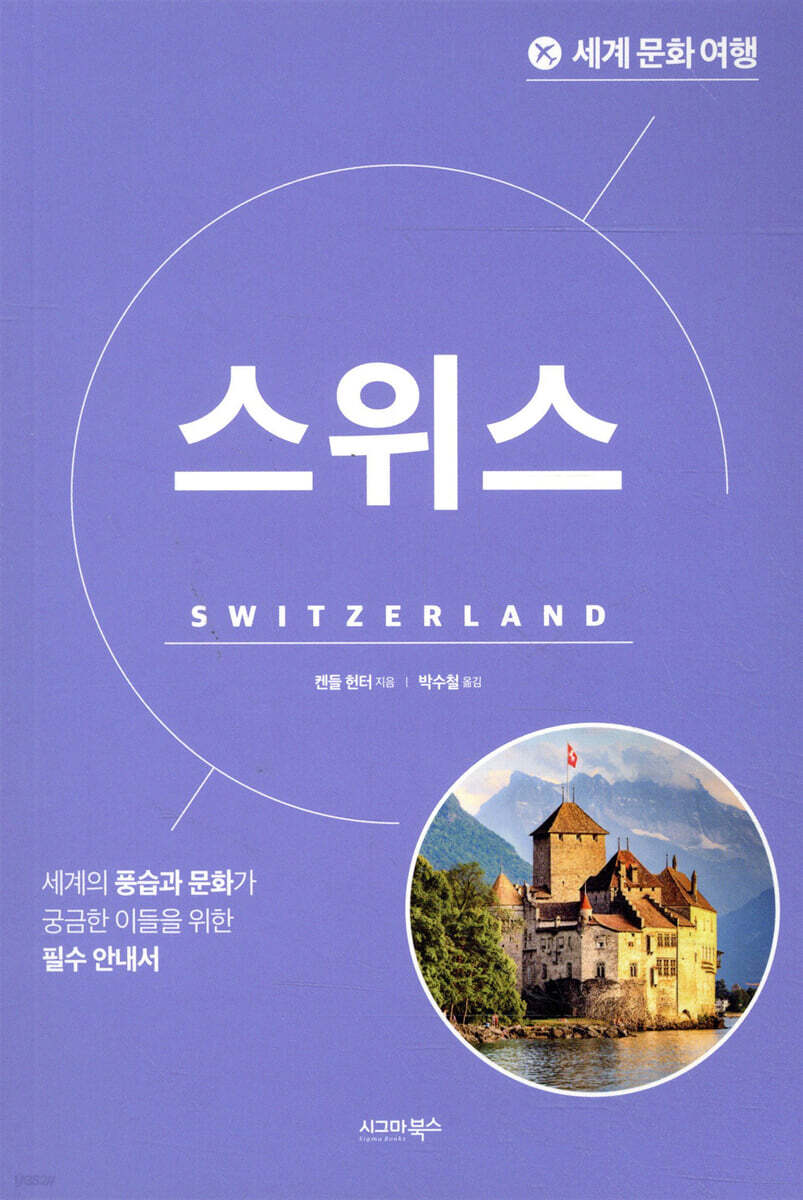
World Cultural Tour - Switzerland
 |
Description
Book Introduction
Swiss customs, history, culture, lifestyle, and living
This book is part of the Swiss edition of the World Cultural Travel series and covers the overall aspects of Swiss customs, history, culture, lifestyle, and life.
Whether you're visiting Switzerland for business or simply for pleasure, we'll help you make your time there even more enriching and memorable.
This book contains information on Swiss local customs and traditions, history, religion, and politics, as well as Swiss families, work, leisure, food, clothing, and shelter, and communication.
This book is part of the Swiss edition of the World Cultural Travel series and covers the overall aspects of Swiss customs, history, culture, lifestyle, and life.
Whether you're visiting Switzerland for business or simply for pleasure, we'll help you make your time there even more enriching and memorable.
This book contains information on Swiss local customs and traditions, history, religion, and politics, as well as Swiss families, work, leisure, food, clothing, and shelter, and communication.
- You can preview some of the book's contents.
Preview
index
·Swiss missionary work
· Entering
·Basic information
01 Territory and People
survey
climate
Geographic features
language
A brief history
government
foreign policy
Swiss today
city
02 Values and mindset
One but different
Citizens with a strong sense of responsibility
social control
autonomous policing society
Clartext
Transparency and confidentiality
Language and Identity
Professional ethics
03 Customs and Traditions
Festivals and Celebrations
historical memory
public holidays
religious terrain
04 Making Friends with the Swiss
Spacing and Chat
greeting
Douches
foreign community
Attitude toward foreigners
invite
Apero
coffee culture
kind behavior
Seizing the opportunity
05 Family Life
Heimatort
living space
laundry room
Living conditions
Daily life
education
Military service
06 Leisure Life
Leisure time
Clubs and organizations
restaurant
Coffee and socializing
For a change of mood
Bank business hours
Art, Music, Popular Culture
outdoor activities
07 Travel, Health and Safety
Visa
drive
train
Other means of transportation
lodgment
ski resort
Health and Safety
08 Business Status
economy
labor-management relations
Presentation and listening style
Etiquette and Customs
Negotiation method
teamwork
Decision making
Promise and fulfillment
Management style
Differences between Swiss and German people
working women
09 Communication
interview
television, radio, and electronic media
Newspapers and magazines
Telecommunications services
conclusion
·Appendix 1_Ski Resort
·Appendix 2_Famous Swiss People
Useful apps
·References
· Entering
·Basic information
01 Territory and People
survey
climate
Geographic features
language
A brief history
government
foreign policy
Swiss today
city
02 Values and mindset
One but different
Citizens with a strong sense of responsibility
social control
autonomous policing society
Clartext
Transparency and confidentiality
Language and Identity
Professional ethics
03 Customs and Traditions
Festivals and Celebrations
historical memory
public holidays
religious terrain
04 Making Friends with the Swiss
Spacing and Chat
greeting
Douches
foreign community
Attitude toward foreigners
invite
Apero
coffee culture
kind behavior
Seizing the opportunity
05 Family Life
Heimatort
living space
laundry room
Living conditions
Daily life
education
Military service
06 Leisure Life
Leisure time
Clubs and organizations
restaurant
Coffee and socializing
For a change of mood
Bank business hours
Art, Music, Popular Culture
outdoor activities
07 Travel, Health and Safety
Visa
drive
train
Other means of transportation
lodgment
ski resort
Health and Safety
08 Business Status
economy
labor-management relations
Presentation and listening style
Etiquette and Customs
Negotiation method
teamwork
Decision making
Promise and fulfillment
Management style
Differences between Swiss and German people
working women
09 Communication
interview
television, radio, and electronic media
Newspapers and magazines
Telecommunications services
conclusion
·Appendix 1_Ski Resort
·Appendix 2_Famous Swiss People
Useful apps
·References
Into the book
From a geographical point of view, Switzerland can be divided into three regions: the Jura Mountains, the Central Highlands, and the Alps.
The Jura Mountains (Celtic for "forest") are a limestone mountain range that stretches from Lake Geneva to the Rhine River, reaching eastern France and southern Germany.
This subalpine region covers about 10% of Switzerland's total land area.
The average elevation above sea level in this area is 700 m.
The Jura Mountains are a picturesque highland with valleys of several rivers.
---From "Chapter 1 Territory and People"
A sense of duty, even seen among our German neighbors, is a value deeply ingrained in Swiss culture.
In Switzerland, you should try to behave properly.
Even if there don't seem to be many police officers, it's difficult to act recklessly.
Swiss people will be quick to point out where you, as a foreigner, have done something wrong.
Whether you're cramming your van into a tight parking space or evading taxes, the Swiss who witness it won't let it go unnoticed.
---From "Chapter 2: Values and Way of Thinking"
Christmas in Switzerland is becoming increasingly commercialized.
Store shelves begin to take on a Christmas atmosphere before the end of October.
Come December, holiday markets burst into tradition, and visitors stroll leisurely through the narrow, beautifully decorated streets of rural villages and the "historic districts" of city centers, browsing the wares.
You can drink Glühwein, a warm wine, eat chestnuts, and buy special Christmas cakes.
Children eagerly await the moment when they are old enough to make kerche (candles) with sweet-smelling beeswax.
---From "Chapter 3 Customs and Traditions"
The point at which a handshake transitions into a kiss isn't always clear, but the Swiss see it as the beginning of a genuine friendship.
A Swiss person you know might feel uncomfortable if you kiss them too early.
Likewise, Swiss people will opt for a handshake if they think a foreigner would find kissing uncomfortable.
If you are married to a Swiss person or are in a serious relationship, his or her friends will kiss you as soon as they meet you.
---From "Chapter 4: Becoming Friends with the Swiss"
It is not easy to enter university in Switzerland.
Although it varies by state, to enter a preparatory class, students must demonstrate academic ability by the age of 12 or 13.
Students in the preparatory course take the university entrance exam (called “Matura” in German) when they turn 18 or 19.
Students who pass the exam receive a diploma, which is a qualification that allows them to choose the university of their choice.
Switzerland's university enrollment rate is less than 30%, which is lower than that of neighboring countries.
This is because students must demonstrate academic achievement at a young age, and also because students in technical fields receive higher education at specialized institutions comparable to universities in other countries.
---From "Chapter 5 Family Life"
The cuisine served in restaurants in each language region is influenced by neighboring countries.
German Swiss enjoy pork and veal dishes with cabbage and potatoes, and thin soups.
Rösti is a dish made with finely chopped potatoes and can be eaten any time of the day.
The uniquely flavored, rich seasonings and desserts are also attractive.
---From "Chapter 6 Leisure Life"
Shopping Zurich is home to the world-famous Bahnhofstrasse.
This street is lined with large department stores, small clothing stores, and various specialty shops, where you can purchase a variety of products, including Swiss Army knives, at reasonable prices.
Less famous, but comparable to Bahnhofstrasse, is Geneva's shopping street, the Rhone.
Tourists who are wealthy enough to afford exorbitant hotel stays usually flock to this street to stock up on luxury items like high-end Swiss watches and designer clothing.
---From Chapter 7: Travel, Health, and Safety
The Swiss, who are very accustomed to doing business and dealing with foreigners, are very friendly to them and tend to overlook foreigners' mistakes related to formality (for example, addressing someone by their first name during a business meeting).
However, foreigners working in Switzerland need to understand the unique Swiss way of doing things to avoid obstacles in productive business relationships.
---From "Chapter 8 Business Status"
Swiss people value respect more than likeability.
This tendency is reflected in their communication style.
For example, unlike Americans, who may seem too personal, Swiss people can come across as cold and aloof when talking to people.
This difference stems from differences in perspectives on politeness.
As we have seen, the level of private involvement among the Swiss increases over time.
It's not just a question of trust, it's also a question of appropriateness.
When communicating in public settings, they tend not to invade each other's space to obtain additional private information.
The Jura Mountains (Celtic for "forest") are a limestone mountain range that stretches from Lake Geneva to the Rhine River, reaching eastern France and southern Germany.
This subalpine region covers about 10% of Switzerland's total land area.
The average elevation above sea level in this area is 700 m.
The Jura Mountains are a picturesque highland with valleys of several rivers.
---From "Chapter 1 Territory and People"
A sense of duty, even seen among our German neighbors, is a value deeply ingrained in Swiss culture.
In Switzerland, you should try to behave properly.
Even if there don't seem to be many police officers, it's difficult to act recklessly.
Swiss people will be quick to point out where you, as a foreigner, have done something wrong.
Whether you're cramming your van into a tight parking space or evading taxes, the Swiss who witness it won't let it go unnoticed.
---From "Chapter 2: Values and Way of Thinking"
Christmas in Switzerland is becoming increasingly commercialized.
Store shelves begin to take on a Christmas atmosphere before the end of October.
Come December, holiday markets burst into tradition, and visitors stroll leisurely through the narrow, beautifully decorated streets of rural villages and the "historic districts" of city centers, browsing the wares.
You can drink Glühwein, a warm wine, eat chestnuts, and buy special Christmas cakes.
Children eagerly await the moment when they are old enough to make kerche (candles) with sweet-smelling beeswax.
---From "Chapter 3 Customs and Traditions"
The point at which a handshake transitions into a kiss isn't always clear, but the Swiss see it as the beginning of a genuine friendship.
A Swiss person you know might feel uncomfortable if you kiss them too early.
Likewise, Swiss people will opt for a handshake if they think a foreigner would find kissing uncomfortable.
If you are married to a Swiss person or are in a serious relationship, his or her friends will kiss you as soon as they meet you.
---From "Chapter 4: Becoming Friends with the Swiss"
It is not easy to enter university in Switzerland.
Although it varies by state, to enter a preparatory class, students must demonstrate academic ability by the age of 12 or 13.
Students in the preparatory course take the university entrance exam (called “Matura” in German) when they turn 18 or 19.
Students who pass the exam receive a diploma, which is a qualification that allows them to choose the university of their choice.
Switzerland's university enrollment rate is less than 30%, which is lower than that of neighboring countries.
This is because students must demonstrate academic achievement at a young age, and also because students in technical fields receive higher education at specialized institutions comparable to universities in other countries.
---From "Chapter 5 Family Life"
The cuisine served in restaurants in each language region is influenced by neighboring countries.
German Swiss enjoy pork and veal dishes with cabbage and potatoes, and thin soups.
Rösti is a dish made with finely chopped potatoes and can be eaten any time of the day.
The uniquely flavored, rich seasonings and desserts are also attractive.
---From "Chapter 6 Leisure Life"
Shopping Zurich is home to the world-famous Bahnhofstrasse.
This street is lined with large department stores, small clothing stores, and various specialty shops, where you can purchase a variety of products, including Swiss Army knives, at reasonable prices.
Less famous, but comparable to Bahnhofstrasse, is Geneva's shopping street, the Rhone.
Tourists who are wealthy enough to afford exorbitant hotel stays usually flock to this street to stock up on luxury items like high-end Swiss watches and designer clothing.
---From Chapter 7: Travel, Health, and Safety
The Swiss, who are very accustomed to doing business and dealing with foreigners, are very friendly to them and tend to overlook foreigners' mistakes related to formality (for example, addressing someone by their first name during a business meeting).
However, foreigners working in Switzerland need to understand the unique Swiss way of doing things to avoid obstacles in productive business relationships.
---From "Chapter 8 Business Status"
Swiss people value respect more than likeability.
This tendency is reflected in their communication style.
For example, unlike Americans, who may seem too personal, Swiss people can come across as cold and aloof when talking to people.
This difference stems from differences in perspectives on politeness.
As we have seen, the level of private involvement among the Swiss increases over time.
It's not just a question of trust, it's also a question of appropriateness.
When communicating in public settings, they tend not to invade each other's space to obtain additional private information.
---From Chapter 9: Communication
Publisher's Review
Switzerland, a colorful country of romance and leisure
The vast meadows and herds of grazing cattle seen outside the train window, and the snow-capped Alps seen in the distance, are a healing sight just to imagine.
But this idyllic landscape is not all there is to Switzerland.
A tax haven where dirty money gathers, a neutral nation staunchly guarded by armed soldiers, a successful model of direct democracy, and a paradise for extreme sports—Switzerland presents a multifaceted landscape if you look closely.
What is the true nature of this small, unique, and enigmatic country?
The author of this book, a journalist who has lived in many countries, looks at Switzerland with an objective perspective.
Looking at the structure of the book, it begins with a brief overview of Switzerland's geographical features and history.
It tells how Switzerland, a country composed of multiple linguistic regions reflecting the cultures of surrounding powers, emerged as a single nation and was able to operate cooperatively.
Next, we will discuss the values and mindset of the Swiss.
While they value clear thinking and honest speech, the Swiss avoid confrontation and never invade others' territory. At first glance, they appear to be a people who are reluctant to welcome strangers.
But when you realize that their indifference is a consideration for others, and that they are willing to lend a helping hand when asked, you will be able to feel the warmth, dignity, wit, and intelligence of the Swiss.
The book also deals with customs and traditions, highlighting the cultural continuity of Swiss festivals and traditions.
It also covers tips on meeting Swiss people, how to behave in various situations, how to avoid being rude, and includes everyday information you'll need if you plan to stay in Switzerland for a long time.
It also explains Swiss family life, the values they hold dear, how they work and relax, and how they view foreigners.
It will also provide valuable insights into Swiss business culture and, more broadly, differences in communication styles, helping you explore the diverse facets of Swiss life and society.
This book does not contain everything about Switzerland.
However, since only the essential elements are selected to make reading easy, you will be able to get a general picture of Switzerland and the Swiss just by skimming through this book.
If you read this book before traveling to Switzerland, going on a business trip, or studying abroad, you will discover the hidden gems of this fascinating society.
The vast meadows and herds of grazing cattle seen outside the train window, and the snow-capped Alps seen in the distance, are a healing sight just to imagine.
But this idyllic landscape is not all there is to Switzerland.
A tax haven where dirty money gathers, a neutral nation staunchly guarded by armed soldiers, a successful model of direct democracy, and a paradise for extreme sports—Switzerland presents a multifaceted landscape if you look closely.
What is the true nature of this small, unique, and enigmatic country?
The author of this book, a journalist who has lived in many countries, looks at Switzerland with an objective perspective.
Looking at the structure of the book, it begins with a brief overview of Switzerland's geographical features and history.
It tells how Switzerland, a country composed of multiple linguistic regions reflecting the cultures of surrounding powers, emerged as a single nation and was able to operate cooperatively.
Next, we will discuss the values and mindset of the Swiss.
While they value clear thinking and honest speech, the Swiss avoid confrontation and never invade others' territory. At first glance, they appear to be a people who are reluctant to welcome strangers.
But when you realize that their indifference is a consideration for others, and that they are willing to lend a helping hand when asked, you will be able to feel the warmth, dignity, wit, and intelligence of the Swiss.
The book also deals with customs and traditions, highlighting the cultural continuity of Swiss festivals and traditions.
It also covers tips on meeting Swiss people, how to behave in various situations, how to avoid being rude, and includes everyday information you'll need if you plan to stay in Switzerland for a long time.
It also explains Swiss family life, the values they hold dear, how they work and relax, and how they view foreigners.
It will also provide valuable insights into Swiss business culture and, more broadly, differences in communication styles, helping you explore the diverse facets of Swiss life and society.
This book does not contain everything about Switzerland.
However, since only the essential elements are selected to make reading easy, you will be able to get a general picture of Switzerland and the Swiss just by skimming through this book.
If you read this book before traveling to Switzerland, going on a business trip, or studying abroad, you will discover the hidden gems of this fascinating society.
GOODS SPECIFICS
- Date of issue: February 20, 2023
- Page count, weight, size: 238 pages | 314g | 130*190*14mm
- ISBN13: 9791168621046
- ISBN10: 1168621046
You may also like
카테고리
korean


korean

![GQ KOREA Mark (Monthly): December [2025]](http://librairie.coreenne.fr/cdn/shop/files/8ef265dbbfbf186523ed75ba7319009d.jpg?v=1765340328&width=3840)


