

East Asian City Stories
 |
Description
Book Introduction
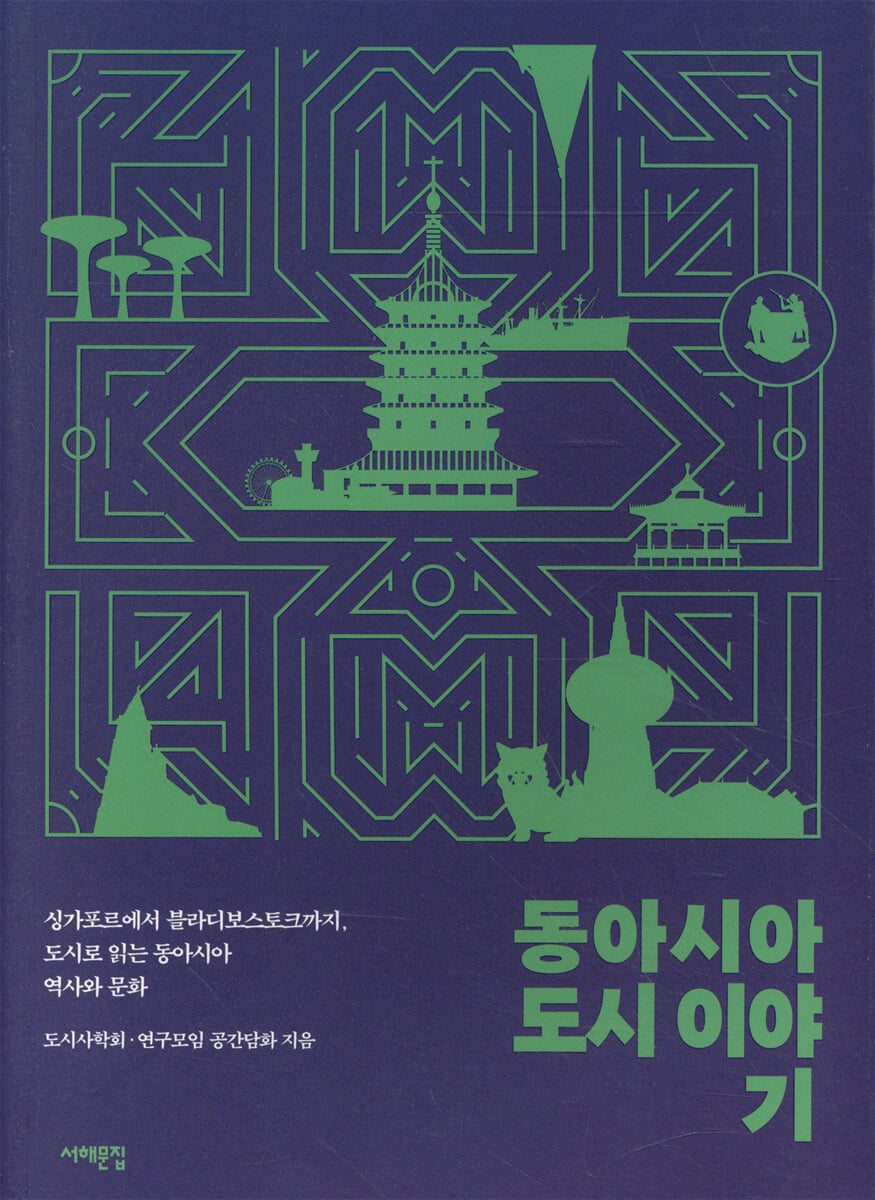
Reading East Asian history, culture, and memory through cities
The city is a place of diverse, multi-layered and multi-layered memories.
From ancient times to the present, the political, religious, and economic elites and the citizens have created various media of memories throughout the city that they wish to inherit or pass on.
This book examines how cities in modern and contemporary East Asia, including not only Korea, China, and Japan, but also Southeast Asia such as Vietnam and the Malay Peninsula, and some cities in the Russian Far East, have formed places of memory, how they have developed multi-layered urban identities, and how these identities have been maintained, changed, and transformed over time.
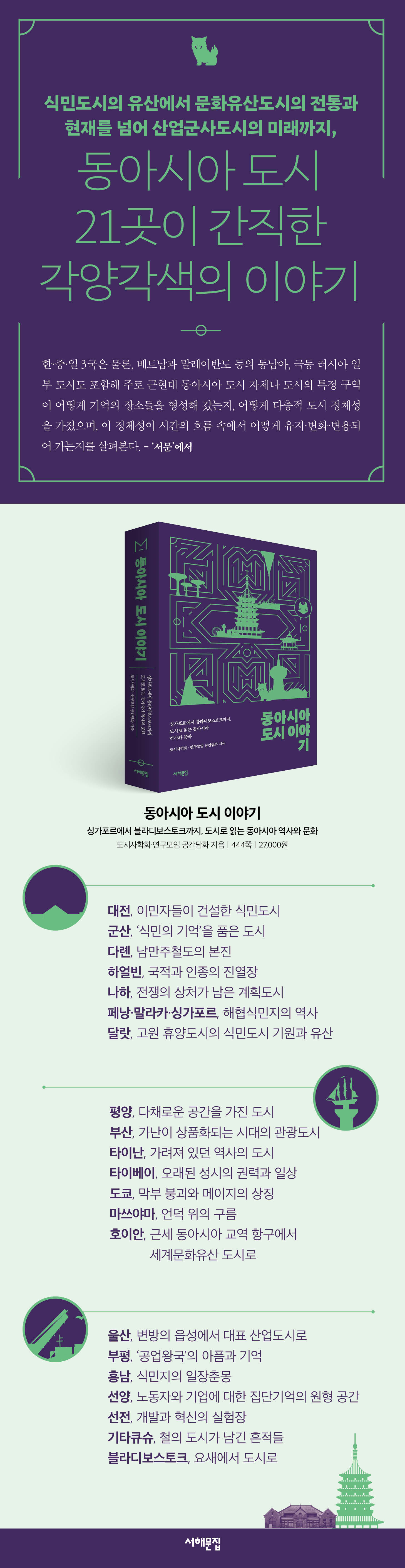
To this end, the book broadly categorizes urban identity into three parts: Part 1: 'Colonial Cities', Part 2: 'Cultural Heritage Cities', and Part 3: 'Industrial Military Cities', using the history, culture, and memories preserved by East Asian cities as a medium.
The city is a place of diverse, multi-layered and multi-layered memories.
From ancient times to the present, the political, religious, and economic elites and the citizens have created various media of memories throughout the city that they wish to inherit or pass on.
This book examines how cities in modern and contemporary East Asia, including not only Korea, China, and Japan, but also Southeast Asia such as Vietnam and the Malay Peninsula, and some cities in the Russian Far East, have formed places of memory, how they have developed multi-layered urban identities, and how these identities have been maintained, changed, and transformed over time.
To this end, the book broadly categorizes urban identity into three parts: Part 1: 'Colonial Cities', Part 2: 'Cultural Heritage Cities', and Part 3: 'Industrial Military Cities', using the history, culture, and memories preserved by East Asian cities as a medium.
- You can preview some of the book's contents.
Preview
index
introduction
1 Colonial city
Daejeon, a colonial city built by immigrants
Railroads and Migration | The Birth of Daejeon-myeon | Colonial State vs. Japanese Community in Korea | The Relocation of the South Chungcheong Provincial Office and the Beginning of the Daejeon-bu Era | Colonial Daejeon, a City of Immigrants
Gunsan, a city steeped in colonial memories
Gunsan, dreaming of becoming an international trade port, ended up as a colonial city | Liberation, the collapse of the colonial system, and Gunsan's resurgence | Gunsan's downtown, preserving its "colonial memories."
Dalian, the headquarters of the South Manchuria Railway
The Beginning of the International City of Dalian | Daarini's European Russian Street | Zhongshan Square, the Heart of Dalian | South Manchuria Railway Company Headquarters and Dalian Port | Japanese Residential Areas at the Foot of Nanshan | Railway Annex and Workers' Housing
Harbin, a showcase of nationalities and races
Harbin Symphony Resonates in Gyeongseong | A Second-Class Citizen's Second-Class Train Ride | Daoli District | Nangang District | Daowai District | Wall Street Infinite, Anti-Communist Limited
Naha, a planned city scarred by war
From the Ryukyu Kingdom to Okinawa Prefecture | Delays in Local Autonomy and Urban Planning | Construction of Greater Okinawa and the Merger of Shuri and Naha | The Appearance of Naha City and Its Surrounding Areas after World War II | The Birth of Greater Naha City
Penang, Malacca, and Singapore: The History of the Straits Settlements
The Land of the Morning Calm and the Golden Peninsula|The History of the Straits Settlements|Straits Settlements ①: Penang|Straits Settlements ②: Malacca|Straits Settlements ③: Singapore|The 'Golden Peninsula' to the 'Land of the Morning Calm'
Dalat, the colonial origins and heritage of the highland resort city
Dalat's Colonial Origins | Development into a European-Style Resort | Exploiting Dalat's Colonial Legacy After Liberation
2 Cultural Heritage Cities
Pyongyang, a city with diverse spaces
The Logic of Pyongyang's Opening and the Setting of the Open Market | Japanese Residents in Pyongyang and the Old and New Towns | Old and New Towns and Beyond | Chinese in Pyongyang
Busan, a tourist city in an era where poverty is commercialized.
The Center of Busan Moved from Downtown to Haeundae | Traces of Poverty That Became History and Attractions: Gamcheon Village and Sanbok Road | Overtourism Eroding Busan | The Problems Left by the Combination of Touristification and Poorism
Tainan, a city with a hidden history
Geography and Population | Tainan and its Indigenous Peoples before the Modern Era | Taiwan's Development, Tainan, and the Netherlands | Tainan and Koxinga | History and Culture of Modern and Contemporary Tainan
Taipei: Power and Daily Life in the Old City
The Beginning of Taipei City | Taipei's City Walls Become Boulevards | Boulevards and Roundabouts, Urban Architecture Surrounding the Roundabouts | Citizens and Spaces Crossing a City Created by Power
Tokyo, a symbol of the collapse of the shogunate and the Meiji era
The Shogunate Sets in a Rural Village | Kyoto Captured in Mt. Ueno | Kaneiji, the Shogunate's Temple | People Gather in a Plaza to Prevent Fires | Kaneiji Burns Along with the Shogunate | Becoming a New Space | Exhibitions and Museums | Modern Culture Transplanted | Masonry Statues Erected | Workers Gather
Matsuyama, Clouds on the Hill
A small town that preserves the storytelling of "Japan" | Memories of the Russo-Japanese War summoned by Ryotaro Shiba | "Clouds over the Hill" summoned by a liberal historian | Another memory of the Russo-Japanese War: Russian POW camps
Hoi An, From a Early Modern East Asian Trading Port to a World Heritage Site
International Trade Ports in Early Modern East Asia | Colonial Urban Expansion and Preservation of Historic Buildings | Changes Before and After UNESCO World Heritage Site Registration
3 Industrial Military Cities
Ulsan, from a remote town to a leading industrial city
Ulsan Eupseong, Ulsan's Old City Center | Changes in Ulsan's Old City Center | Japan's Continental Logistics Base Policy and the Relocation of the Wonsan Oil Refinery | The Park Chung-hee Administration's Construction of a National Industrial Complex and Its Transformation into an Industrial City | Ulsan's Old and New City Centers
Bupyeong: The Pain and Memories of an "Industrial Kingdom"
The Image of Incheon's "Bupyeong" | The "Manchester of the East"? The Formation of an "Industrial Empire"? | The Entry of Hironaka Trading, One of Korea's Top Three Machinery Manufacturers | The Beginning of a Bad Relationship: Mitsubishi Heavy Industries | A Domestically Produced Automobile, Not a Domestic Product | Space: Memories of Dongwon, Encountering the "Lion" | Space: The Erasure of Memory
Heungnam, a fleeting dream of colonial times
Winter 1980, in a tavern | Towards Heungnam, the “kingdom of Japanese nitrogen” | “Never show affection to Koreans” | Wearing a suit, holding a Leica camera | The tragedy of 1945 | Back to the bottom: The fleeting dream of colonialism
Shenyang, a prototype space of collective memory for workers and businesses
The Shining Past of Gonginchon | The Decline of Shenyang and the Fall of Gonginchon | The Production of Model Workers | Gonginchon Dormitory and Gonginchon New Village
Propaganda, a testing ground for development and innovation
Shenzhen's Great 'Successes' and Memories: 'Instant City' and Society | Luofang Village: The Beginning of Reform and Opening-up and a Proof of 'Success' | Shenzhen Speed: An 'Exceptional Space' of Rapid Modernization | 'City of Peasant Workers': A Problematic Space with a Majority of Unregistered Migrants | Shenzhen's Dream: A City of Citizens and Citizens(Gender) in a Global City
Kitakyushu, Traces of the Iron City
We invite you to a walk in the Kitakyushu region | The Higashida No. 1 Blast Furnace Remains in Yahata: Traces of Modernization | Transformed into an Engine of War, and Then to the Abyss | Restarting from Ruins, Overcoming Environmental Pollution | Daily Life Created by the Industrial City of Kitakyushu | Memories Fading and Memories Remaining?
Vladivostok, from fortress to city
Exploring Siberia | Becoming a Naval Fortress | A City of Immigrants | The Trans-Siberian Railway | War and Urban Change
References
About the Author
Search
1 Colonial city
Daejeon, a colonial city built by immigrants
Railroads and Migration | The Birth of Daejeon-myeon | Colonial State vs. Japanese Community in Korea | The Relocation of the South Chungcheong Provincial Office and the Beginning of the Daejeon-bu Era | Colonial Daejeon, a City of Immigrants
Gunsan, a city steeped in colonial memories
Gunsan, dreaming of becoming an international trade port, ended up as a colonial city | Liberation, the collapse of the colonial system, and Gunsan's resurgence | Gunsan's downtown, preserving its "colonial memories."
Dalian, the headquarters of the South Manchuria Railway
The Beginning of the International City of Dalian | Daarini's European Russian Street | Zhongshan Square, the Heart of Dalian | South Manchuria Railway Company Headquarters and Dalian Port | Japanese Residential Areas at the Foot of Nanshan | Railway Annex and Workers' Housing
Harbin, a showcase of nationalities and races
Harbin Symphony Resonates in Gyeongseong | A Second-Class Citizen's Second-Class Train Ride | Daoli District | Nangang District | Daowai District | Wall Street Infinite, Anti-Communist Limited
Naha, a planned city scarred by war
From the Ryukyu Kingdom to Okinawa Prefecture | Delays in Local Autonomy and Urban Planning | Construction of Greater Okinawa and the Merger of Shuri and Naha | The Appearance of Naha City and Its Surrounding Areas after World War II | The Birth of Greater Naha City
Penang, Malacca, and Singapore: The History of the Straits Settlements
The Land of the Morning Calm and the Golden Peninsula|The History of the Straits Settlements|Straits Settlements ①: Penang|Straits Settlements ②: Malacca|Straits Settlements ③: Singapore|The 'Golden Peninsula' to the 'Land of the Morning Calm'
Dalat, the colonial origins and heritage of the highland resort city
Dalat's Colonial Origins | Development into a European-Style Resort | Exploiting Dalat's Colonial Legacy After Liberation
2 Cultural Heritage Cities
Pyongyang, a city with diverse spaces
The Logic of Pyongyang's Opening and the Setting of the Open Market | Japanese Residents in Pyongyang and the Old and New Towns | Old and New Towns and Beyond | Chinese in Pyongyang
Busan, a tourist city in an era where poverty is commercialized.
The Center of Busan Moved from Downtown to Haeundae | Traces of Poverty That Became History and Attractions: Gamcheon Village and Sanbok Road | Overtourism Eroding Busan | The Problems Left by the Combination of Touristification and Poorism
Tainan, a city with a hidden history
Geography and Population | Tainan and its Indigenous Peoples before the Modern Era | Taiwan's Development, Tainan, and the Netherlands | Tainan and Koxinga | History and Culture of Modern and Contemporary Tainan
Taipei: Power and Daily Life in the Old City
The Beginning of Taipei City | Taipei's City Walls Become Boulevards | Boulevards and Roundabouts, Urban Architecture Surrounding the Roundabouts | Citizens and Spaces Crossing a City Created by Power
Tokyo, a symbol of the collapse of the shogunate and the Meiji era
The Shogunate Sets in a Rural Village | Kyoto Captured in Mt. Ueno | Kaneiji, the Shogunate's Temple | People Gather in a Plaza to Prevent Fires | Kaneiji Burns Along with the Shogunate | Becoming a New Space | Exhibitions and Museums | Modern Culture Transplanted | Masonry Statues Erected | Workers Gather
Matsuyama, Clouds on the Hill
A small town that preserves the storytelling of "Japan" | Memories of the Russo-Japanese War summoned by Ryotaro Shiba | "Clouds over the Hill" summoned by a liberal historian | Another memory of the Russo-Japanese War: Russian POW camps
Hoi An, From a Early Modern East Asian Trading Port to a World Heritage Site
International Trade Ports in Early Modern East Asia | Colonial Urban Expansion and Preservation of Historic Buildings | Changes Before and After UNESCO World Heritage Site Registration
3 Industrial Military Cities
Ulsan, from a remote town to a leading industrial city
Ulsan Eupseong, Ulsan's Old City Center | Changes in Ulsan's Old City Center | Japan's Continental Logistics Base Policy and the Relocation of the Wonsan Oil Refinery | The Park Chung-hee Administration's Construction of a National Industrial Complex and Its Transformation into an Industrial City | Ulsan's Old and New City Centers
Bupyeong: The Pain and Memories of an "Industrial Kingdom"
The Image of Incheon's "Bupyeong" | The "Manchester of the East"? The Formation of an "Industrial Empire"? | The Entry of Hironaka Trading, One of Korea's Top Three Machinery Manufacturers | The Beginning of a Bad Relationship: Mitsubishi Heavy Industries | A Domestically Produced Automobile, Not a Domestic Product | Space: Memories of Dongwon, Encountering the "Lion" | Space: The Erasure of Memory
Heungnam, a fleeting dream of colonial times
Winter 1980, in a tavern | Towards Heungnam, the “kingdom of Japanese nitrogen” | “Never show affection to Koreans” | Wearing a suit, holding a Leica camera | The tragedy of 1945 | Back to the bottom: The fleeting dream of colonialism
Shenyang, a prototype space of collective memory for workers and businesses
The Shining Past of Gonginchon | The Decline of Shenyang and the Fall of Gonginchon | The Production of Model Workers | Gonginchon Dormitory and Gonginchon New Village
Propaganda, a testing ground for development and innovation
Shenzhen's Great 'Successes' and Memories: 'Instant City' and Society | Luofang Village: The Beginning of Reform and Opening-up and a Proof of 'Success' | Shenzhen Speed: An 'Exceptional Space' of Rapid Modernization | 'City of Peasant Workers': A Problematic Space with a Majority of Unregistered Migrants | Shenzhen's Dream: A City of Citizens and Citizens(Gender) in a Global City
Kitakyushu, Traces of the Iron City
We invite you to a walk in the Kitakyushu region | The Higashida No. 1 Blast Furnace Remains in Yahata: Traces of Modernization | Transformed into an Engine of War, and Then to the Abyss | Restarting from Ruins, Overcoming Environmental Pollution | Daily Life Created by the Industrial City of Kitakyushu | Memories Fading and Memories Remaining?
Vladivostok, from fortress to city
Exploring Siberia | Becoming a Naval Fortress | A City of Immigrants | The Trans-Siberian Railway | War and Urban Change
References
About the Author
Search
Detailed image
Publisher's Review
Implementation of Western-style modern city infrastructure and modern urban planning
Daejeon, explored in Chapter 1 of Part 1, 'Colonial City', is, as is widely known, a new city created in 1904 with the opening of the Gyeongbu Line, and grew significantly when the provincial government was moved from Gongju to Daejeon.
In particular, as the Japanese immigrant community became a major driver of urban development, ethnicity, class, coloniality, and modernity became complexly intertwined.
Gunsan, examined in Chapter 2, is a strategically important location on the west coast that dreamed of becoming an international trade port during the Korean Empire, but grew into a colonial city during the Japanese colonial period.
The city center expanded and differentiated according to ethnic and economic conditions during the colonial period, but the original city center retains the appearance of a colonial city.
Dalian, which is covered in Chapter 3, was founded in 1898 as a port city under Russian leasehold, and served as a node for land and sea routes, being influenced by China, Japan, and Russia/Soviet Union at different times. Today, it is developing into an economic center of Northeast China and an international financial city.
Chapter 4's 'Harbin' is also a city that was born when Russia obtained the right to build a railroad from China. After the Manchurian Incident in 1931, this city was ruled by Manchukuo, which was established by Japan. Anti-communist Russians settled in this city after the Russian Revolution, and white European culture spread to Northeast Asia through them.
Naha, Okinawa, which we will examine in Chapter 5, was originally a port that served as the gateway to Shuri, the capital of the Ryukyu Kingdom.
After World War II, Naha merged with Shuri and its surrounding areas to become the capital of Okinawa, and has grown into a tourist city since the 1970s.
Chapter 6 examines Penang, Malacca, and Singapore, which were ceded to Britain in the late 18th and early 19th centuries, following the Portuguese and Dutch occupations.
These colonial cities, administered by the British East India Company as Straits Settlements, developed multi-ethnic and multicultural societies composed of locals, Chinese, and Europeans.
Chapter 7 deals with Dalat, a highland resort city in Vietnam.
Dalat, a type of colonial city that began to form in 1893 as a resort town for Europeans who could not adapt to tropical and subtropical climates, developed greatly during the French colonial period.
Traditions of history and cultural heritage, as well as development and innovation
Part 2 covers ‘cultural heritage cities’.
Some of the cities featured here have some colonial characteristics, but they are included in the category of cultural heritage cities because they have pre-colonial history and cultural heritage.
The city covered in Chapter 8 is Pyongyang during the Japanese colonial period.
During this period, as the Japanese town of "Shinshiga" was developed between the inner and outer walls of Pyongyang, the area around the inner wall, which had been the existing town, became the "Old Town" centered around Koreans, and the phenomenon of the "dual city" of colonial cities was more evident in Pyongyang than in Gyeongseong.
Chapter 9 critically examines Gamcheon Village and Sanbok Road, which have recently attracted attention in the old historical city of Busan, as examples of the "commodification of poverty."
Chapter 10 examines the history and culture of Tainan.
During the Age of Exploration, the Dutch built a fort here for the Dutch East India Company. However, during the transition from the Ming to the Qing dynasties, Zheng Chenggong, who led the anti-Qing movement in southern China, expelled the Dutch and laid the foundation for the city.
However, due to Japanese influence, the center of Taiwan moved from Tainan to Taipei.
In this way, the 20th-century power and daily life issues of Taipei, which became the political and economic center of Taiwan in the late 19th century, are examined in the following 11 chapters.
Taipei's urban structure is an example of urban planning implemented by the Qing and Japanese powers, and various cultural movements and spatial monopolizations were evident in daily life.
Chapter 12 focuses on Ueno Park in Tokyo.
The Ueno area, which was developed into a large temple district with the establishment of the Edo shogunate in the early 17th century, was transformed into a modern park during the Meiji Restoration, becoming a place to host exhibitions and house modern facilities, including museums.
Chapter 13 covers Matsuyama, Japan, and brings to mind traces of the Russo-Japanese War that are not readily apparent outside of major tourist attractions, through the Literature Museum and the Russian military cemetery.
Chapter 14 examines the history of Hoi An, Vietnam, along with its major historical trends: its prosperity as a major trading port in East Asia in the early modern period, its stagnation during the colonial period, its development as a tourist resource during the post-colonial period, and its designation as a UNESCO World Heritage Site.
Traces of industrialization accompanied by urbanization and the future of military cities
Part 3 examines the history, culture, memory, and identity of the 'industrial military city'.
Industrialization was accompanied by urbanization, and among the various industrial cities that sprang up throughout East Asia, some had military purposes.
'Ulsan', covered in Chapter 15, grew from a pre-modern town wall into an industrial city designed to serve as a continental logistics base during the Japanese colonial period.
After liberation, it was designated as the first industrial special zone during the Park Chung-hee administration and transformed into an industrial city through the construction of a national industrial complex.
'Bupyeong', examined in Chapter 16, was also developed as a factory area during the Japanese colonial period in the process of forming the 'metropolitan area' and the 'Gyeongin industrial area', and it further expanded and developed during the industrialization period after liberation.
The situation in which the remaining Japanese colonial buildings are being demolished shows that our society has somewhat lacked discussion about the mediators of everyday memory.
Chapter 17 presents the urban culture and identity of Heungnam, an industrial city built by the Japan Nitrogen Fertilizer Company in 1926, through a unique structure in which the story is told by a fictional character based on the oral accounts of workers who worked at the Heungnam Japan Nitrogen Fertilizer Company and returned to Japan after liberation.
Chapter 18 examines Shenyang, which grew into a representative industrial city of Manchukuo in the 1930s, rose to become China's largest heavy industrial city after 1949, and then declined after the reform and opening up.
In particular, it analyzes how collective memory was formed among workers, businesses, and the state surrounding the "Gonginchon," a densely populated area of workers' housing built during the socialist period, and how the Gonginchon was transformed.
Chapter 19 examines the multilayered memories of Shenzhen, the city known as the epicenter of China's reform and opening-up, focusing on a small rural village on the border between Shenzhen and Hong Kong, an exceptional space of rapid modernization, a city of migrant workers without household registration, and the question of citizenship in a global city.
Chapter 20 examines the traces of modernization in Kitakyushu, where the Yawata Steel Works, the predecessor of Nippon Steel, was located; its transformation into a military industrial center during World War II; its rebuilding from postwar ruins; its environmental pollution issues; and its transformation into a legacy by the Japanese government.
Finally, Chapter 21 covers the construction of a naval fortress in Vladivostok, Russia's Far East, the city's growth following the construction of the Trans-Siberian Railway, its transformation into an international city following World War I and the Russian Revolution, and its subsequent transformation into a closed military city with the establishment of a Pacific Fleet base and munitions factories by the Soviet Union.
This book examines the history, culture, memory, and identity of East Asian cities, including not only well-known and familiar places, but also relatively lesser-known and unfamiliar cities.
Focusing on modern and contemporary East Asian cities, we examined colonial cities, cultural heritage cities, and industrial-military cities, which correspond to categories or identities based on their main functions and forms, because these urban types continue to directly and indirectly influence many cities in East Asia today.
Meanwhile, this book is a meaningful result of the joint efforts of the Urban History Society, a group of urban history researchers who aroused readers' interest in Western cities and history by publishing "The City is Memory" in 2017, and the Space Discourse, a research group of emerging researchers studying urban history and urban culture.
Additionally, it contains the research achievements and concerns of researchers on Asian cities that were not covered in “City is Memory.”
Daejeon, explored in Chapter 1 of Part 1, 'Colonial City', is, as is widely known, a new city created in 1904 with the opening of the Gyeongbu Line, and grew significantly when the provincial government was moved from Gongju to Daejeon.
In particular, as the Japanese immigrant community became a major driver of urban development, ethnicity, class, coloniality, and modernity became complexly intertwined.
Gunsan, examined in Chapter 2, is a strategically important location on the west coast that dreamed of becoming an international trade port during the Korean Empire, but grew into a colonial city during the Japanese colonial period.
The city center expanded and differentiated according to ethnic and economic conditions during the colonial period, but the original city center retains the appearance of a colonial city.
Dalian, which is covered in Chapter 3, was founded in 1898 as a port city under Russian leasehold, and served as a node for land and sea routes, being influenced by China, Japan, and Russia/Soviet Union at different times. Today, it is developing into an economic center of Northeast China and an international financial city.
Chapter 4's 'Harbin' is also a city that was born when Russia obtained the right to build a railroad from China. After the Manchurian Incident in 1931, this city was ruled by Manchukuo, which was established by Japan. Anti-communist Russians settled in this city after the Russian Revolution, and white European culture spread to Northeast Asia through them.
Naha, Okinawa, which we will examine in Chapter 5, was originally a port that served as the gateway to Shuri, the capital of the Ryukyu Kingdom.
After World War II, Naha merged with Shuri and its surrounding areas to become the capital of Okinawa, and has grown into a tourist city since the 1970s.
Chapter 6 examines Penang, Malacca, and Singapore, which were ceded to Britain in the late 18th and early 19th centuries, following the Portuguese and Dutch occupations.
These colonial cities, administered by the British East India Company as Straits Settlements, developed multi-ethnic and multicultural societies composed of locals, Chinese, and Europeans.
Chapter 7 deals with Dalat, a highland resort city in Vietnam.
Dalat, a type of colonial city that began to form in 1893 as a resort town for Europeans who could not adapt to tropical and subtropical climates, developed greatly during the French colonial period.
Traditions of history and cultural heritage, as well as development and innovation
Part 2 covers ‘cultural heritage cities’.
Some of the cities featured here have some colonial characteristics, but they are included in the category of cultural heritage cities because they have pre-colonial history and cultural heritage.
The city covered in Chapter 8 is Pyongyang during the Japanese colonial period.
During this period, as the Japanese town of "Shinshiga" was developed between the inner and outer walls of Pyongyang, the area around the inner wall, which had been the existing town, became the "Old Town" centered around Koreans, and the phenomenon of the "dual city" of colonial cities was more evident in Pyongyang than in Gyeongseong.
Chapter 9 critically examines Gamcheon Village and Sanbok Road, which have recently attracted attention in the old historical city of Busan, as examples of the "commodification of poverty."
Chapter 10 examines the history and culture of Tainan.
During the Age of Exploration, the Dutch built a fort here for the Dutch East India Company. However, during the transition from the Ming to the Qing dynasties, Zheng Chenggong, who led the anti-Qing movement in southern China, expelled the Dutch and laid the foundation for the city.
However, due to Japanese influence, the center of Taiwan moved from Tainan to Taipei.
In this way, the 20th-century power and daily life issues of Taipei, which became the political and economic center of Taiwan in the late 19th century, are examined in the following 11 chapters.
Taipei's urban structure is an example of urban planning implemented by the Qing and Japanese powers, and various cultural movements and spatial monopolizations were evident in daily life.
Chapter 12 focuses on Ueno Park in Tokyo.
The Ueno area, which was developed into a large temple district with the establishment of the Edo shogunate in the early 17th century, was transformed into a modern park during the Meiji Restoration, becoming a place to host exhibitions and house modern facilities, including museums.
Chapter 13 covers Matsuyama, Japan, and brings to mind traces of the Russo-Japanese War that are not readily apparent outside of major tourist attractions, through the Literature Museum and the Russian military cemetery.
Chapter 14 examines the history of Hoi An, Vietnam, along with its major historical trends: its prosperity as a major trading port in East Asia in the early modern period, its stagnation during the colonial period, its development as a tourist resource during the post-colonial period, and its designation as a UNESCO World Heritage Site.
Traces of industrialization accompanied by urbanization and the future of military cities
Part 3 examines the history, culture, memory, and identity of the 'industrial military city'.
Industrialization was accompanied by urbanization, and among the various industrial cities that sprang up throughout East Asia, some had military purposes.
'Ulsan', covered in Chapter 15, grew from a pre-modern town wall into an industrial city designed to serve as a continental logistics base during the Japanese colonial period.
After liberation, it was designated as the first industrial special zone during the Park Chung-hee administration and transformed into an industrial city through the construction of a national industrial complex.
'Bupyeong', examined in Chapter 16, was also developed as a factory area during the Japanese colonial period in the process of forming the 'metropolitan area' and the 'Gyeongin industrial area', and it further expanded and developed during the industrialization period after liberation.
The situation in which the remaining Japanese colonial buildings are being demolished shows that our society has somewhat lacked discussion about the mediators of everyday memory.
Chapter 17 presents the urban culture and identity of Heungnam, an industrial city built by the Japan Nitrogen Fertilizer Company in 1926, through a unique structure in which the story is told by a fictional character based on the oral accounts of workers who worked at the Heungnam Japan Nitrogen Fertilizer Company and returned to Japan after liberation.
Chapter 18 examines Shenyang, which grew into a representative industrial city of Manchukuo in the 1930s, rose to become China's largest heavy industrial city after 1949, and then declined after the reform and opening up.
In particular, it analyzes how collective memory was formed among workers, businesses, and the state surrounding the "Gonginchon," a densely populated area of workers' housing built during the socialist period, and how the Gonginchon was transformed.
Chapter 19 examines the multilayered memories of Shenzhen, the city known as the epicenter of China's reform and opening-up, focusing on a small rural village on the border between Shenzhen and Hong Kong, an exceptional space of rapid modernization, a city of migrant workers without household registration, and the question of citizenship in a global city.
Chapter 20 examines the traces of modernization in Kitakyushu, where the Yawata Steel Works, the predecessor of Nippon Steel, was located; its transformation into a military industrial center during World War II; its rebuilding from postwar ruins; its environmental pollution issues; and its transformation into a legacy by the Japanese government.
Finally, Chapter 21 covers the construction of a naval fortress in Vladivostok, Russia's Far East, the city's growth following the construction of the Trans-Siberian Railway, its transformation into an international city following World War I and the Russian Revolution, and its subsequent transformation into a closed military city with the establishment of a Pacific Fleet base and munitions factories by the Soviet Union.
This book examines the history, culture, memory, and identity of East Asian cities, including not only well-known and familiar places, but also relatively lesser-known and unfamiliar cities.
Focusing on modern and contemporary East Asian cities, we examined colonial cities, cultural heritage cities, and industrial-military cities, which correspond to categories or identities based on their main functions and forms, because these urban types continue to directly and indirectly influence many cities in East Asia today.
Meanwhile, this book is a meaningful result of the joint efforts of the Urban History Society, a group of urban history researchers who aroused readers' interest in Western cities and history by publishing "The City is Memory" in 2017, and the Space Discourse, a research group of emerging researchers studying urban history and urban culture.
Additionally, it contains the research achievements and concerns of researchers on Asian cities that were not covered in “City is Memory.”
GOODS SPECIFICS
- Publication date: August 20, 2022
- Page count, weight, size: 444 pages | 604g | 148*210*28mm
- ISBN13: 9791192085524
- ISBN10: 1192085523
You may also like
카테고리
korean


korean

![GQ KOREA Mark (Monthly): December [2025]](http://librairie.coreenne.fr/cdn/shop/files/8ef265dbbfbf186523ed75ba7319009d.jpg?v=1765340328&width=3840)


