

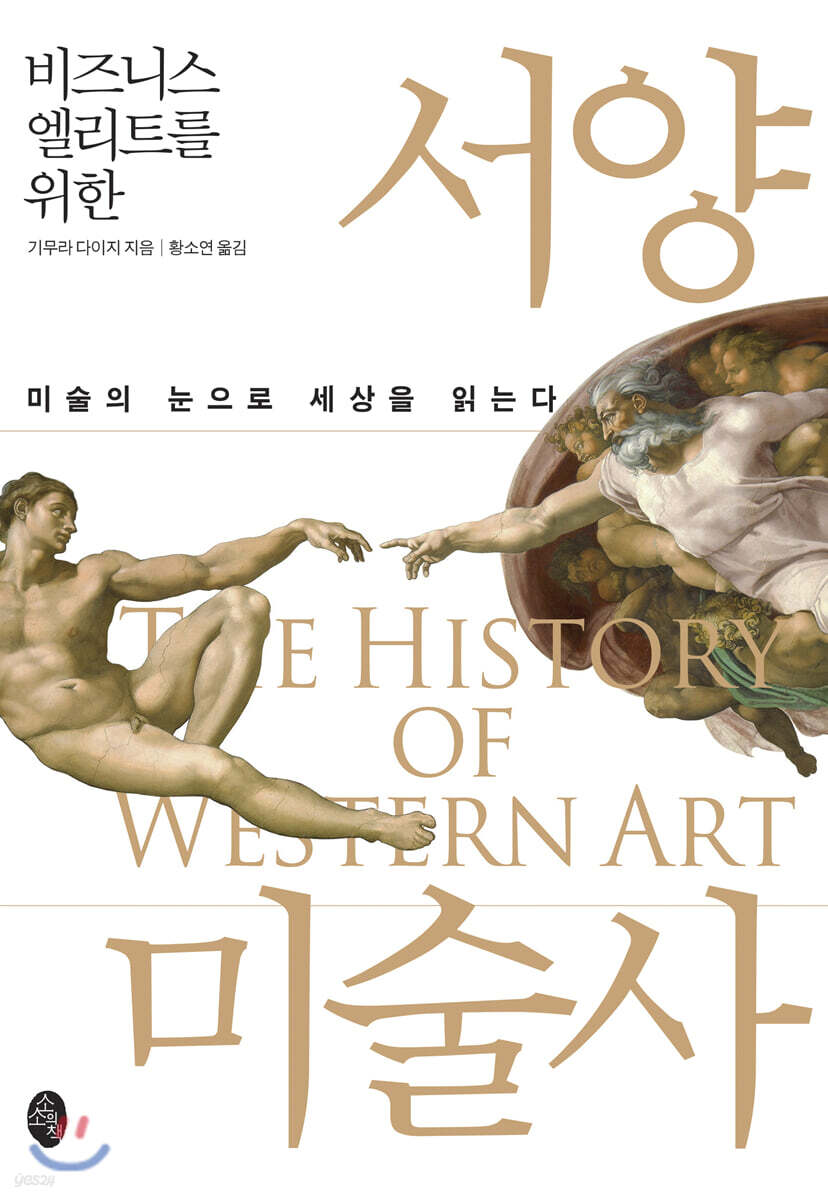
Western Art History for the Business Elite
 |
Description
Book Introduction
What kind of stories and lives are hidden in famous paintings?
A liberal arts book that provides insight into Western art history and elevates the quality of business.
Today, gaining insight into the history of Western art and properly understanding and accepting the meaning contained within its works is the starting point for developing a deep understanding of the humanities and a shortcut to understanding contemporary culture.
Especially in business settings, art history serves as a 'common language' necessary for building consensus and communication.
This book, based on the author's wish to familiarize many people with the history of art, contains essential knowledge from approximately 2,500 years of Western art history.
Rather than simply explaining the artwork, it is structured to help readers learn and master art history as a form of 'liberal arts', including the history, events, culture, and values that form the background of the artwork, so that anyone can easily understand and read it with interest.
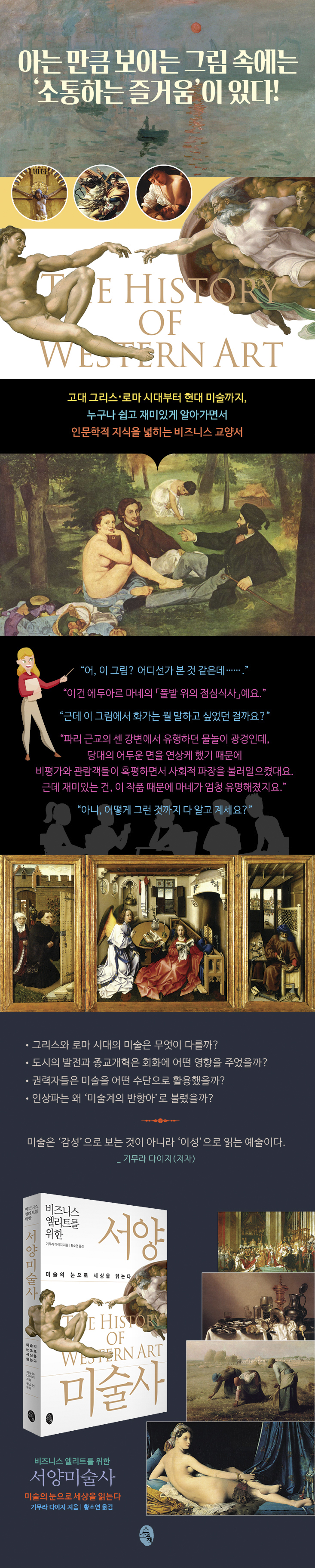
You will also be able to enjoy the pleasure of learning why art is an art to be 'read' rather than 'seen', and what messages the works you see in art galleries or books contain.
A liberal arts book that provides insight into Western art history and elevates the quality of business.
Today, gaining insight into the history of Western art and properly understanding and accepting the meaning contained within its works is the starting point for developing a deep understanding of the humanities and a shortcut to understanding contemporary culture.
Especially in business settings, art history serves as a 'common language' necessary for building consensus and communication.
This book, based on the author's wish to familiarize many people with the history of art, contains essential knowledge from approximately 2,500 years of Western art history.
Rather than simply explaining the artwork, it is structured to help readers learn and master art history as a form of 'liberal arts', including the history, events, culture, and values that form the background of the artwork, so that anyone can easily understand and read it with interest.
You will also be able to enjoy the pleasure of learning why art is an art to be 'read' rather than 'seen', and what messages the works you see in art galleries or books contain.
- You can preview some of the book's contents.
Preview
index
◎ Go from ‘View’ to ‘Read’
Art history is the 'common language' of global leaders.
Part 1: How Did a God-Centered Worldview Come About? │Greek Mythology and Christianity│
Why Are Ancient Greek Statues Naked? │Greek Art│
A 'beautiful body' pleases even God.
War, Turmoil, and Hellenism
Conquer Greece and be conquered by its culture
ㆍAnother story│Warrior, come fight me naked with olive oil on your body!
The Prosperity of the Roman Empire and the Development of Unique Imperial Art │Roman Art│
Etruria, another source of Roman art
From the pursuit of 'beauty' to the era of 'realism'
Architecture that serves to maintain the empire's dignity and power
The empire is torn apart and its art is fading away.
The Rising of Christian Society │Religious Art and Romanesque Art│
We need a 'visual Bible'
The Roman Church Joins Hands with the Crown
The center of a new culture: monasteries and Romanesque architecture
Monasteries, cities, and economies follow the pilgrimage route.
Another Story│Religious Art Before the Recognition of Christianity
The French Royal Family's Selfishness and the New 'House of God' │Gothic Art│
Political messages hidden in the Gothic style
The absolute value of 'light = God'
Cathedral construction wanes, and the "International Gothic" flourishes.
Part 2: Economic Development of European Cities in Painting │The Renaissance and the Age of Painting│
Three Masters Who Became Classics of Western Painting │Renaissance│
Why were the beauties of ancient Greece and Rome recalled?
Leonardo da Vinci's autobiography
The Reformation, Mannerism, and the End of the Renaissance
The Artistic Innovations of Urban Economic Development │The Northern European Renaissance│
Flemish painting also permeates the Mona Lisa.
A message to the emerging citizenry
Bosch and Bruegel depicting social chaos in the Netherlands
Another Story│Dürer and Cranach, the Fathers of German Art
Another Renaissance Blossoms in the Free City │Venetian Art│
The rise and decline of Venice, a trading power
A Mysterious Painting Born from a City of Freedom and Pleasure
Venetian painting shines twice
A new religious art born from the conflict between Catholicism and Protestantism │Baroque│
What brought about the Reformation?
Should we harness or deny the power of religious art?
Caravaggio's Provocation and Innovation
Bernini at the center of the Counter-Reformation
Another Story│Rubens, the King of Baroque Painting
Paintings of Dutch Independence and Everyday Citizens │Dutch Art│
The world's art and luxury goods converge in Amsterdam.
Colorful Dutch Paintings for Citizens
Rembrandt, the 'painter of light', and the elegant Vermeer
Another Story: The 17th-Century Tulip Mania That Shook the Netherlands
Part 3: France's Rise as an Art Powerhouse │ Another Look at the Birth of Great France │
Absolute Monarchy and Louis XIV │French Classicism│
Louis XIV's work, 'The Magnificent France'
The dilemma of French artists in an artistically backward country
If you don't know Poussin, don't talk about French art.
ㆍAnother Story│Pre-Classical French Art Style
The Eve of Revolution, a Moment of Play │Rococo│
From the age of kings to the age of nobility
Reason vs. Emotion Debate
The three great masters of Rococo art
The footsteps of the 'French Revolution' are approaching
Propaganda Art Actively Utilized by Emperor Napoleon │ Neoclassicism and Romanticism │
The French Revolution and the Beginning of Neoclassicism
Napoleon's image strategy surpassed that of modern politicians.
The rekindled debate between reason and emotion
Painters wavering between Neoclassicism and Romanticism
Part 4: How Did Modern Society Transform Culture? │The Industrial Revolution and the Development of Modern Art│
Portraying Social Inequality and Reality │ Realism │
Courbet's innovation in revealing reality as it is
The darkness of 19th-century French society depicted by Manet
The Industrial Revolution and the Counterattack of Culturally Underdeveloped Britain │British Art│
Why Britain's influence in the art world is minimal
British art shines in portraiture
Claude Lorrain, who inspired the English garden
London, home to Sotheby's and Christie's
A Countryside Scenery That Provides Peace and Solace to the Mind │Barbizon School│
The multilayered messages of the "rural landscape" born of modernization
Academism Dominates the Salon, Producing Rebels
Why Was Impressionism Unrecognized? │Impressionism│
Into an era of 'how to draw' rather than 'what to draw'
People gathered around Manet
The Great Depression and the joint exhibition that heralded the rise of Impressionism
The rise of Impressionism's reputation in the United States
The world of modern art, centered in the United States │ Modern Art │
European art and culture reimagined in American style
The world of modern art pioneered by women
The corporate mecenat movement, which expanded from noblesse oblige
◎ Coming out
◎ Translator's Note
From reading art to reading the world
◎ References
◎ List of works included in the text
◎ Find a person's name
Art history is the 'common language' of global leaders.
Part 1: How Did a God-Centered Worldview Come About? │Greek Mythology and Christianity│
Why Are Ancient Greek Statues Naked? │Greek Art│
A 'beautiful body' pleases even God.
War, Turmoil, and Hellenism
Conquer Greece and be conquered by its culture
ㆍAnother story│Warrior, come fight me naked with olive oil on your body!
The Prosperity of the Roman Empire and the Development of Unique Imperial Art │Roman Art│
Etruria, another source of Roman art
From the pursuit of 'beauty' to the era of 'realism'
Architecture that serves to maintain the empire's dignity and power
The empire is torn apart and its art is fading away.
The Rising of Christian Society │Religious Art and Romanesque Art│
We need a 'visual Bible'
The Roman Church Joins Hands with the Crown
The center of a new culture: monasteries and Romanesque architecture
Monasteries, cities, and economies follow the pilgrimage route.
Another Story│Religious Art Before the Recognition of Christianity
The French Royal Family's Selfishness and the New 'House of God' │Gothic Art│
Political messages hidden in the Gothic style
The absolute value of 'light = God'
Cathedral construction wanes, and the "International Gothic" flourishes.
Part 2: Economic Development of European Cities in Painting │The Renaissance and the Age of Painting│
Three Masters Who Became Classics of Western Painting │Renaissance│
Why were the beauties of ancient Greece and Rome recalled?
Leonardo da Vinci's autobiography
The Reformation, Mannerism, and the End of the Renaissance
The Artistic Innovations of Urban Economic Development │The Northern European Renaissance│
Flemish painting also permeates the Mona Lisa.
A message to the emerging citizenry
Bosch and Bruegel depicting social chaos in the Netherlands
Another Story│Dürer and Cranach, the Fathers of German Art
Another Renaissance Blossoms in the Free City │Venetian Art│
The rise and decline of Venice, a trading power
A Mysterious Painting Born from a City of Freedom and Pleasure
Venetian painting shines twice
A new religious art born from the conflict between Catholicism and Protestantism │Baroque│
What brought about the Reformation?
Should we harness or deny the power of religious art?
Caravaggio's Provocation and Innovation
Bernini at the center of the Counter-Reformation
Another Story│Rubens, the King of Baroque Painting
Paintings of Dutch Independence and Everyday Citizens │Dutch Art│
The world's art and luxury goods converge in Amsterdam.
Colorful Dutch Paintings for Citizens
Rembrandt, the 'painter of light', and the elegant Vermeer
Another Story: The 17th-Century Tulip Mania That Shook the Netherlands
Part 3: France's Rise as an Art Powerhouse │ Another Look at the Birth of Great France │
Absolute Monarchy and Louis XIV │French Classicism│
Louis XIV's work, 'The Magnificent France'
The dilemma of French artists in an artistically backward country
If you don't know Poussin, don't talk about French art.
ㆍAnother Story│Pre-Classical French Art Style
The Eve of Revolution, a Moment of Play │Rococo│
From the age of kings to the age of nobility
Reason vs. Emotion Debate
The three great masters of Rococo art
The footsteps of the 'French Revolution' are approaching
Propaganda Art Actively Utilized by Emperor Napoleon │ Neoclassicism and Romanticism │
The French Revolution and the Beginning of Neoclassicism
Napoleon's image strategy surpassed that of modern politicians.
The rekindled debate between reason and emotion
Painters wavering between Neoclassicism and Romanticism
Part 4: How Did Modern Society Transform Culture? │The Industrial Revolution and the Development of Modern Art│
Portraying Social Inequality and Reality │ Realism │
Courbet's innovation in revealing reality as it is
The darkness of 19th-century French society depicted by Manet
The Industrial Revolution and the Counterattack of Culturally Underdeveloped Britain │British Art│
Why Britain's influence in the art world is minimal
British art shines in portraiture
Claude Lorrain, who inspired the English garden
London, home to Sotheby's and Christie's
A Countryside Scenery That Provides Peace and Solace to the Mind │Barbizon School│
The multilayered messages of the "rural landscape" born of modernization
Academism Dominates the Salon, Producing Rebels
Why Was Impressionism Unrecognized? │Impressionism│
Into an era of 'how to draw' rather than 'what to draw'
People gathered around Manet
The Great Depression and the joint exhibition that heralded the rise of Impressionism
The rise of Impressionism's reputation in the United States
The world of modern art, centered in the United States │ Modern Art │
European art and culture reimagined in American style
The world of modern art pioneered by women
The corporate mecenat movement, which expanded from noblesse oblige
◎ Coming out
◎ Translator's Note
From reading art to reading the world
◎ References
◎ List of works included in the text
◎ Find a person's name
Detailed image
Into the book
Stained glass conveyed Christian teachings to those who could not read, while also effectively enhancing the beauty of the light coming through the window.
'Light' symbolizes 'God' to Christians, and in Gothic architecture, the existence of God could be visually confirmed.
The brilliance of the stained glass, which changes from moment to moment depending on the weather, approached the people gathered in the church at the time as a mystery of God.
For modern people to understand the aesthetic concept of the Gothic cathedral, it is important to recognize that the people of the Middle Ages, who lived in a God-centered world, truly accepted the proposition that "God is light."
There are exceptions, such as the Basilica of St. Peter, but basically the front of the church faces west, and the inner sanctum where the altar is located faces east, because the east is the direction of Jerusalem, the Holy Land, and also the direction where the sun (God = light) rises.
--- From "Part 1: How was the 'God'-centered worldview born?"
Amsterdam has developed into Europe's leading international trading city.
A wealthy middle class emerged, and art and luxury goods from around the world flocked to Amsterdam.
While the pope and the royal family exerted cultural influence in contemporary Italy and France, the protagonists of the golden age of 17th-century Dutch art were none other than the bourgeoisie with economic power.
Wealthy citizens who wanted to emulate the lifestyles of the aristocracy commissioned paintings from artists to decorate their mansions.
And since these paintings were works of art that decorated private residences, not palaces, the size of the works was small.
The fields were also diverse.
--- From "Economic Development of European Cities as Seen in Part 2 Paintings"
After the French Revolution, a civil revolution that took place in France in the late 18th century against the absolute monarchy, Rococo art, which pursued pleasure in accordance with the change in consciousness of civil society, was denigrated as a painting representing the decadent lifestyle of royalty and aristocracy.
The three great masters of Rococo art, Watteau, Boucher, and Fragonard, also suffered from harsh criticism starting with the French Revolution.
It was more than 50 years after the French Revolution that the French rediscovered Rococo painting.
As France, following England, rapidly transformed into a bourgeois society due to the influence of the Industrial Revolution, the bourgeoisie, which admired aristocratic culture, became interested in royal art, and as a result, the value of Rococo was re-evaluated.
Meanwhile, signs of the French Revolution can be found in the unique art that emerged during the Rococo period.
While decorative Rococo paintings were popular during the period, genre paintings appeared that distanced themselves from the ornate Rococo and contained honest stories and didactic content.
Even in these changes in art, we can detect the emergence of the French bourgeoisie.
--- From "Part 3: France's Rise as an Art Powerhouse"
Behind Americans' fascination with art was a yearning for pure art and culture.
Most Americans, who had an inferiority complex toward European, especially French, culture, were overwhelmed by and admired the high-quality and elegant French art.
As previously mentioned, Americans were attracted to Impressionism, but because they misunderstood that Impressionism was a school that inherited the traditions of French and European painting, they passionately collected not only Renaissance and Baroque, which they considered to be the roots of Impressionism, but also 18th-century European paintings and even 19th-century French art.
The art collected in this way, the Protestant spirit of investing accumulated wealth in the future, and the capitalism and patriotism that supported the pioneering spirit of Protestants greatly developed the American art museum culture.
Furthermore, with the introduction of the donation deduction system, a culture of donations, in which individuals donate or bequeath their personal collections to public art museums, has taken root, which is also cited as a factor in the fact that American art museums boast a diverse collection of artworks that is comparable to those in Europe.
'Light' symbolizes 'God' to Christians, and in Gothic architecture, the existence of God could be visually confirmed.
The brilliance of the stained glass, which changes from moment to moment depending on the weather, approached the people gathered in the church at the time as a mystery of God.
For modern people to understand the aesthetic concept of the Gothic cathedral, it is important to recognize that the people of the Middle Ages, who lived in a God-centered world, truly accepted the proposition that "God is light."
There are exceptions, such as the Basilica of St. Peter, but basically the front of the church faces west, and the inner sanctum where the altar is located faces east, because the east is the direction of Jerusalem, the Holy Land, and also the direction where the sun (God = light) rises.
--- From "Part 1: How was the 'God'-centered worldview born?"
Amsterdam has developed into Europe's leading international trading city.
A wealthy middle class emerged, and art and luxury goods from around the world flocked to Amsterdam.
While the pope and the royal family exerted cultural influence in contemporary Italy and France, the protagonists of the golden age of 17th-century Dutch art were none other than the bourgeoisie with economic power.
Wealthy citizens who wanted to emulate the lifestyles of the aristocracy commissioned paintings from artists to decorate their mansions.
And since these paintings were works of art that decorated private residences, not palaces, the size of the works was small.
The fields were also diverse.
--- From "Economic Development of European Cities as Seen in Part 2 Paintings"
After the French Revolution, a civil revolution that took place in France in the late 18th century against the absolute monarchy, Rococo art, which pursued pleasure in accordance with the change in consciousness of civil society, was denigrated as a painting representing the decadent lifestyle of royalty and aristocracy.
The three great masters of Rococo art, Watteau, Boucher, and Fragonard, also suffered from harsh criticism starting with the French Revolution.
It was more than 50 years after the French Revolution that the French rediscovered Rococo painting.
As France, following England, rapidly transformed into a bourgeois society due to the influence of the Industrial Revolution, the bourgeoisie, which admired aristocratic culture, became interested in royal art, and as a result, the value of Rococo was re-evaluated.
Meanwhile, signs of the French Revolution can be found in the unique art that emerged during the Rococo period.
While decorative Rococo paintings were popular during the period, genre paintings appeared that distanced themselves from the ornate Rococo and contained honest stories and didactic content.
Even in these changes in art, we can detect the emergence of the French bourgeoisie.
--- From "Part 3: France's Rise as an Art Powerhouse"
Behind Americans' fascination with art was a yearning for pure art and culture.
Most Americans, who had an inferiority complex toward European, especially French, culture, were overwhelmed by and admired the high-quality and elegant French art.
As previously mentioned, Americans were attracted to Impressionism, but because they misunderstood that Impressionism was a school that inherited the traditions of French and European painting, they passionately collected not only Renaissance and Baroque, which they considered to be the roots of Impressionism, but also 18th-century European paintings and even 19th-century French art.
The art collected in this way, the Protestant spirit of investing accumulated wealth in the future, and the capitalism and patriotism that supported the pioneering spirit of Protestants greatly developed the American art museum culture.
Furthermore, with the introduction of the donation deduction system, a culture of donations, in which individuals donate or bequeath their personal collections to public art museums, has taken root, which is also cited as a factor in the fact that American art museums boast a diverse collection of artworks that is comparable to those in Europe.
--- From "Part 4: How Did Modern Society Change Culture?"
Publisher's Review
Art is not something to be ‘seen’, but something to be ‘read’!
The one and only business textbook that everyone will recognize if you know just this much.
I'm usually interested in art and art history, so I look for related books, but I can't find any books that catch my eye.
I feel intimidated by the vast content that has been going on for so long, and even after reading to the last page, I can't grasp the overall context and feel confused.
Even though it's a work of art that you've likely seen at least once in famous overseas art galleries or exhibitions, or even in textbooks from your school days, there aren't many books that clearly explain why that style was popular at the time and how it has evolved since then to reach the present day.
Moreover, in recent years, art history has become a frequent topic of conversation in business settings and various public and private gatherings.
Therefore, unlike politics or religion, art history is something that anyone can understand and that must be possessed by a cultured person.
The author of this book, Western art historian Kimura Taiji, emphasizes that it is more important to understand and know the history, culture, and values associated with a work of art than the emotions and methods of expression felt from the work itself.
The argument is that art is not something to be ‘seen’ but rather something to be ‘read’.
This means that the more you read the story within or behind the work, the more the 'pleasure of viewing' is doubled.
Even if we look at the history of art, Western art has traditionally placed greater emphasis on aesthetics that appeal to intellect and reason.
Western art, which has been revered as an object of faith since ancient times, has developed into a means of conveying a certain message, not just through the act of viewing but also through reading.
Today's business elite or working professionals must possess not only specialized knowledge in their respective fields, but also a broad perspective encompassing various fields.
Among them, there is nothing in the essential humanities that we can easily relate to as much as art history.
Understanding and knowing the background of the creation of works of art or architecture that reflect the politics, religion, philosophy, customs, and values of each era in their formative forms is the most important virtue for communication in the global age.
This book is easy and light for anyone to read.
The "Timeline of Art Styles," included before the main text, can be enjoyed as an appetizer or as a dessert after reading the entire book.
By mentioning the names of major painters along with brief descriptions, you can find links connecting each era and region at a glance.
The text explains in detail how the changing times, that is, the political and economic situation, religion, and people's aesthetic consciousness, changed, and what was inherent in the works, along with representative works of each style.
In particular, this book meticulously explains the key points, from the major events that ushered in a new era within the natural flow of time to the symbolic meaning of the people and objects in the paintings, allowing for an easy approach to the vast stream of Western art history.
Why did the artist paint this picture at that time?
From ancient Greece and Rome to the world of modern art
The origin and highest point of Western art history is ancient Greek art.
At that time, the Greeks produced many statues in pursuit of the human body, especially the beautiful masculine beauty. In the 5th century BC, the sublime and majestic strict style was popular, and in the 4th century BC, the elegant and beautiful graceful style was popular.
The Roman Empire, which later conquered Greece, inherited and copied Greek civilization in many aspects, including architecture and art.
Politically, Rome conquered Greece, but culturally, Rome was conquered by Greece.
And as the cultures of Greece and Rome gradually merged, realistic portrait sculptures became popular, and large-scale public architecture such as the Colosseum, thermae (public baths), the Arch of Constantine, and the Pantheon developed.
After the fall of the Roman Empire, Christianity came to dominate people's lives, and religious art, faithful to its role as a 'visual Bible', came to occupy an important position.
The 'Romanesque style', designed to symbolically express monasteries and churches, and the 'Gothic style', designed to realize the expansion of royal power, developed.
In the 15th century, the arts flourished in the Duchy of Burgundy and Italy, where urban economies developed.
The Renaissance has finally begun.
Economic development brought wealth to local lords, and their courts emerged as places that patronized men of culture, painters, and sculptors.
In a world where gods and religion were central, the status of 'humans' was elevated and a human-centered perspective was restored, similar to that of ancient Greece and Rome.
With the emergence of Giotto di Bondone, a pioneer of Renaissance art, Western painting entered a groundbreaking turning point. Leonardo da Vinci, Michelangelo, and Raphael were active at the same time, producing masterpieces, and the mobilization of innovative painting techniques led to the 'High Renaissance.'
At that time, highly realistic still life depictions and portraits were greatly developed in the old Netherlands region, and the Flemish oil painting technique, which contributed to expressing the texture of objects, subtle light, and changes in the air in detail and accurately on the canvas, spread to various parts of Europe, including Italy, and led the painting art from the 15th century onward in a new direction.
In the 16th century, Venetian art reached its golden age, but with the economic downturn, it gradually entered the Dark Ages, and in the 17th century, Baroque art developed in Italy, influenced by the conflict between Catholicism and Protestantism.
In the 17th century, when Amsterdam emerged as Europe's leading international trading city, an economically prosperous civil society was established in the Netherlands, and many genre paintings and group portraits were painted.
In the 17th century, French classicism was established in France, emphasizing order, harmony, moderation, and reason through balanced compositions and idealized depictions of figures close to statuesque figures. Art was used as a means to solidify absolute monarchy.
Then, in the 18th century, a delicate yet splendid Rococo culture emerged, centered around the court aristocracy, and a fierce debate broke out between the Poussin and Rubens factions.
And in 1789, the French Revolution broke out and Napoleon ascended to the throne, giving birth to neoclassicism, which pursued classical beauty and valued drawing and reason, as well as romantic art, which valued color and emotion and freely expressed the essential inner self of human beings.
The French painter who opened the door to modern art was Edouard Manet.
Manet, who boldly broke with the traditions of contemporary art, captured the dark reality lurking behind the glamorous city with a sophisticated elegance, and earned the respect of avant-garde painters for his innovative themes and methods of expression.
Meanwhile, England did not have artists comparable to those of continental Europe until the 18th century, and Renaissance art was introduced to England later than in Italy or France.
However, as the Industrial Revolution occurred and the economy grew rapidly, industrialization and urbanization progressed rapidly, many portraits were painted in England and English landscape gardens were created.
London, where world-renowned art auction houses (Sotheby's and Christie's) were established, emerged as the center of the international art market.
The Barbizon School, which emerged in the 19th century with the development of civil society, and the Impressionist painters, who rejected academism and pursued new innovations, were the main players in the era of full-fledged modern art.
Impressionism, in particular, emerged as a trend in the United States, due to the American perception of being free from tradition and stereotypes.
The United States, which emerged as the greatest economic power of the 20th century, developed an art culture centered around art museums sponsored by the wealthy.
Large corporations and families with enormous wealth drove up the prices of modern and contemporary art after Impressionism, and the mass media made art a hot topic, turning the public into consumers of the art market.
The United States was also the place that commercialized art in earnest, using art-related news as entertainment.
The upper-class women who lead the art museum culture and the corporate mecenat (arts patronage) movement are driving the development of modern art.
The one and only business textbook that everyone will recognize if you know just this much.
I'm usually interested in art and art history, so I look for related books, but I can't find any books that catch my eye.
I feel intimidated by the vast content that has been going on for so long, and even after reading to the last page, I can't grasp the overall context and feel confused.
Even though it's a work of art that you've likely seen at least once in famous overseas art galleries or exhibitions, or even in textbooks from your school days, there aren't many books that clearly explain why that style was popular at the time and how it has evolved since then to reach the present day.
Moreover, in recent years, art history has become a frequent topic of conversation in business settings and various public and private gatherings.
Therefore, unlike politics or religion, art history is something that anyone can understand and that must be possessed by a cultured person.
The author of this book, Western art historian Kimura Taiji, emphasizes that it is more important to understand and know the history, culture, and values associated with a work of art than the emotions and methods of expression felt from the work itself.
The argument is that art is not something to be ‘seen’ but rather something to be ‘read’.
This means that the more you read the story within or behind the work, the more the 'pleasure of viewing' is doubled.
Even if we look at the history of art, Western art has traditionally placed greater emphasis on aesthetics that appeal to intellect and reason.
Western art, which has been revered as an object of faith since ancient times, has developed into a means of conveying a certain message, not just through the act of viewing but also through reading.
Today's business elite or working professionals must possess not only specialized knowledge in their respective fields, but also a broad perspective encompassing various fields.
Among them, there is nothing in the essential humanities that we can easily relate to as much as art history.
Understanding and knowing the background of the creation of works of art or architecture that reflect the politics, religion, philosophy, customs, and values of each era in their formative forms is the most important virtue for communication in the global age.
This book is easy and light for anyone to read.
The "Timeline of Art Styles," included before the main text, can be enjoyed as an appetizer or as a dessert after reading the entire book.
By mentioning the names of major painters along with brief descriptions, you can find links connecting each era and region at a glance.
The text explains in detail how the changing times, that is, the political and economic situation, religion, and people's aesthetic consciousness, changed, and what was inherent in the works, along with representative works of each style.
In particular, this book meticulously explains the key points, from the major events that ushered in a new era within the natural flow of time to the symbolic meaning of the people and objects in the paintings, allowing for an easy approach to the vast stream of Western art history.
Why did the artist paint this picture at that time?
From ancient Greece and Rome to the world of modern art
The origin and highest point of Western art history is ancient Greek art.
At that time, the Greeks produced many statues in pursuit of the human body, especially the beautiful masculine beauty. In the 5th century BC, the sublime and majestic strict style was popular, and in the 4th century BC, the elegant and beautiful graceful style was popular.
The Roman Empire, which later conquered Greece, inherited and copied Greek civilization in many aspects, including architecture and art.
Politically, Rome conquered Greece, but culturally, Rome was conquered by Greece.
And as the cultures of Greece and Rome gradually merged, realistic portrait sculptures became popular, and large-scale public architecture such as the Colosseum, thermae (public baths), the Arch of Constantine, and the Pantheon developed.
After the fall of the Roman Empire, Christianity came to dominate people's lives, and religious art, faithful to its role as a 'visual Bible', came to occupy an important position.
The 'Romanesque style', designed to symbolically express monasteries and churches, and the 'Gothic style', designed to realize the expansion of royal power, developed.
In the 15th century, the arts flourished in the Duchy of Burgundy and Italy, where urban economies developed.
The Renaissance has finally begun.
Economic development brought wealth to local lords, and their courts emerged as places that patronized men of culture, painters, and sculptors.
In a world where gods and religion were central, the status of 'humans' was elevated and a human-centered perspective was restored, similar to that of ancient Greece and Rome.
With the emergence of Giotto di Bondone, a pioneer of Renaissance art, Western painting entered a groundbreaking turning point. Leonardo da Vinci, Michelangelo, and Raphael were active at the same time, producing masterpieces, and the mobilization of innovative painting techniques led to the 'High Renaissance.'
At that time, highly realistic still life depictions and portraits were greatly developed in the old Netherlands region, and the Flemish oil painting technique, which contributed to expressing the texture of objects, subtle light, and changes in the air in detail and accurately on the canvas, spread to various parts of Europe, including Italy, and led the painting art from the 15th century onward in a new direction.
In the 16th century, Venetian art reached its golden age, but with the economic downturn, it gradually entered the Dark Ages, and in the 17th century, Baroque art developed in Italy, influenced by the conflict between Catholicism and Protestantism.
In the 17th century, when Amsterdam emerged as Europe's leading international trading city, an economically prosperous civil society was established in the Netherlands, and many genre paintings and group portraits were painted.
In the 17th century, French classicism was established in France, emphasizing order, harmony, moderation, and reason through balanced compositions and idealized depictions of figures close to statuesque figures. Art was used as a means to solidify absolute monarchy.
Then, in the 18th century, a delicate yet splendid Rococo culture emerged, centered around the court aristocracy, and a fierce debate broke out between the Poussin and Rubens factions.
And in 1789, the French Revolution broke out and Napoleon ascended to the throne, giving birth to neoclassicism, which pursued classical beauty and valued drawing and reason, as well as romantic art, which valued color and emotion and freely expressed the essential inner self of human beings.
The French painter who opened the door to modern art was Edouard Manet.
Manet, who boldly broke with the traditions of contemporary art, captured the dark reality lurking behind the glamorous city with a sophisticated elegance, and earned the respect of avant-garde painters for his innovative themes and methods of expression.
Meanwhile, England did not have artists comparable to those of continental Europe until the 18th century, and Renaissance art was introduced to England later than in Italy or France.
However, as the Industrial Revolution occurred and the economy grew rapidly, industrialization and urbanization progressed rapidly, many portraits were painted in England and English landscape gardens were created.
London, where world-renowned art auction houses (Sotheby's and Christie's) were established, emerged as the center of the international art market.
The Barbizon School, which emerged in the 19th century with the development of civil society, and the Impressionist painters, who rejected academism and pursued new innovations, were the main players in the era of full-fledged modern art.
Impressionism, in particular, emerged as a trend in the United States, due to the American perception of being free from tradition and stereotypes.
The United States, which emerged as the greatest economic power of the 20th century, developed an art culture centered around art museums sponsored by the wealthy.
Large corporations and families with enormous wealth drove up the prices of modern and contemporary art after Impressionism, and the mass media made art a hot topic, turning the public into consumers of the art market.
The United States was also the place that commercialized art in earnest, using art-related news as entertainment.
The upper-class women who lead the art museum culture and the corporate mecenat (arts patronage) movement are driving the development of modern art.
GOODS SPECIFICS
- Publication date: November 27, 2020
- Page count, weight, size: 288 pages | 504g | 148*210*17mm
- ISBN13: 9791188941544
- ISBN10: 1188941542
You may also like
카테고리
korean


korean

![GQ KOREA Mark (Monthly): December [2025]](http://librairie.coreenne.fr/cdn/shop/files/8ef265dbbfbf186523ed75ba7319009d.jpg?v=1765340328&width=3840)


