

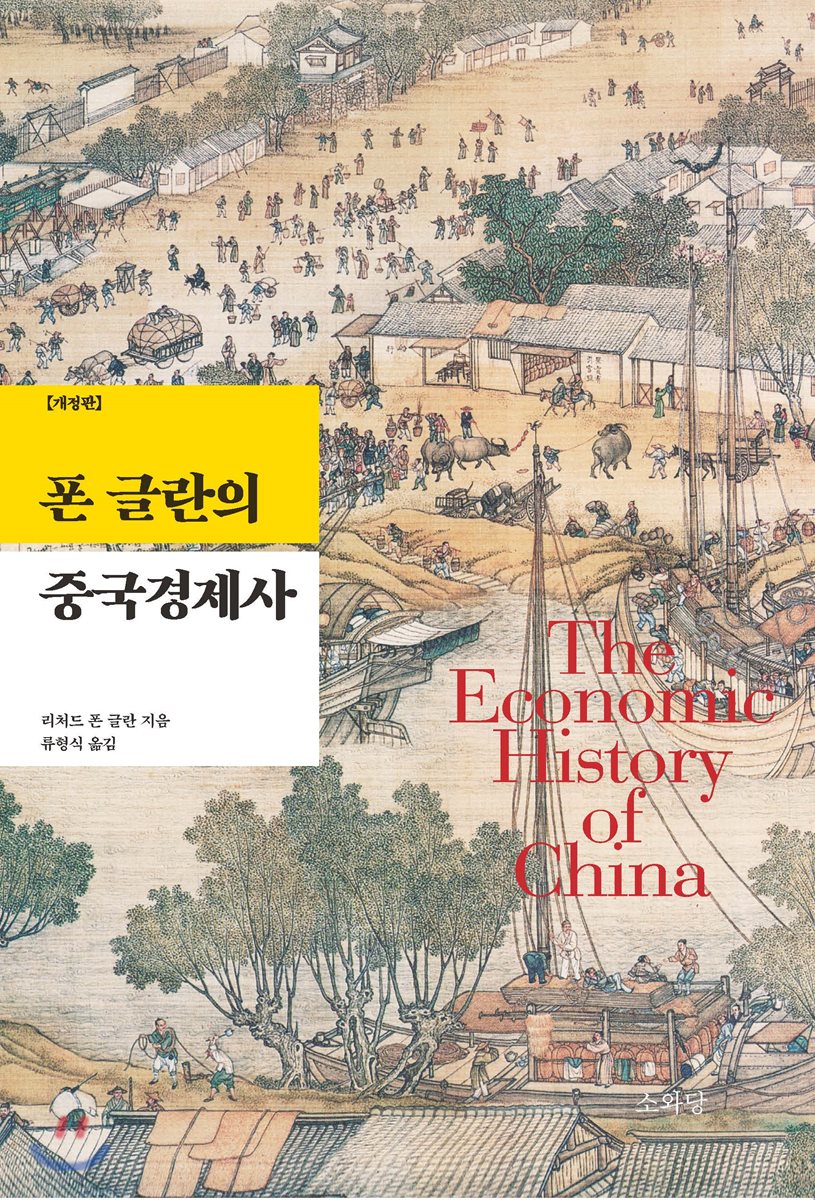
Von Glan's Economic History of China
 |
Description
Book Introduction
Representative content from the so-called California School, which leads the most modern trends in American humanities, has been translated into Korean.
The California School refers to an academic trend centered around economists at the University of California who plan a new world history.
The core of the argument is that it opposes Western supremacy and that the East's position in world history must be re-evaluated.
They assess that the period in which Western-style market-oriented economies surpassed Chinese-style state-interventionist economies was only a very short period in world history, and that its lifespan has already ended.
In short, the comparison of Western economic history and Chinese economic history is the topic that most clearly shows the position of the California School.
The Cambridge Economic History of China, recently translated into Korean, is a monumental academic work that reinterprets the history of the Chinese economy from this new world historical perspective.
The academic significance of this comprehensive history of Chinese economics, which has emerged after only half a century, is considerable, not only in the English-speaking world but also in academia around the world, including China and Japan.
The new interpretation of Chinese economic history attempted in this book will serve as a significant foundation not only for re-evaluating Chinese history but also for predicting the future of the global economy.
The California School refers to an academic trend centered around economists at the University of California who plan a new world history.
The core of the argument is that it opposes Western supremacy and that the East's position in world history must be re-evaluated.
They assess that the period in which Western-style market-oriented economies surpassed Chinese-style state-interventionist economies was only a very short period in world history, and that its lifespan has already ended.
In short, the comparison of Western economic history and Chinese economic history is the topic that most clearly shows the position of the California School.
The Cambridge Economic History of China, recently translated into Korean, is a monumental academic work that reinterprets the history of the Chinese economy from this new world historical perspective.
The academic significance of this comprehensive history of Chinese economics, which has emerged after only half a century, is considerable, not only in the English-speaking world but also in academia around the world, including China and Japan.
The new interpretation of Chinese economic history attempted in this book will serve as a significant foundation not only for re-evaluating Chinese history but also for predicting the future of the global economy.
- You can preview some of the book's contents.
Preview
index
CHAPTER 0 Introduction
CHAPTER 1: Bronze Age Economy (1045–707 BC)
CHAPTER 2 From City-State to Absolute Monarchy (707–250 BC)
CHAPTER 3: THE ECONOMIC FOUNDATION OF THE WORLD EMPIRE (250–81 BCE)
CHAPTER 4: Aristocrat Society and Manorial Economy (81 BC–AD 485)
CHAPTER 5: The Integration of Settlement and Nomadism and the Reunification of the Empire (485–755)
CHAPTER 6: Economic Innovation during the Tang-Song Transformation (755–1127)
CHAPTER 7: The Blossoming Gangnam Economy (1127–1550)
CHAPTER 8: The Maturity of the Market Economy (1550–1800)
CHAPTER 9 Domestic Crisis and External Challenges (1800–1900)
CHAPTER 1: Bronze Age Economy (1045–707 BC)
CHAPTER 2 From City-State to Absolute Monarchy (707–250 BC)
CHAPTER 3: THE ECONOMIC FOUNDATION OF THE WORLD EMPIRE (250–81 BCE)
CHAPTER 4: Aristocrat Society and Manorial Economy (81 BC–AD 485)
CHAPTER 5: The Integration of Settlement and Nomadism and the Reunification of the Empire (485–755)
CHAPTER 6: Economic Innovation during the Tang-Song Transformation (755–1127)
CHAPTER 7: The Blossoming Gangnam Economy (1127–1550)
CHAPTER 8: The Maturity of the Market Economy (1550–1800)
CHAPTER 9 Domestic Crisis and External Challenges (1800–1900)
Publisher's Review
A showdown between market-driven economies and state-interventionist economies, as told by world history.
As time passed, the economy developed, but the government and its systems also developed.
The interaction between the national fiscal management and the broader socio-economic landscape has varied depending on the circumstances of the times and the direction of ideology.
From a Schumpeterian perspective, the Chinese dynasty at the time led economic growth appropriately.
It achieved internal stability and external security, and also invested in public goods (education, welfare, transportation systems, water resource management, and market standardization).
Moreover, it laid the institutional foundations that enabled Smithian market-oriented growth in agriculture and commerce.
The role of the state in creating demand was also quite evident (including in waging war).
In contrast to neoclassical economists, the neo-Confucian scholars of the late dynasty abhorred state intervention in the private economy.
At that time, the Chinese rulers accepted the position of the Neo-Confucian school.
Although these policies of lowering taxes and minimizing the role of the state helped to stimulate the Smithian economy, as in pre-modern Europe, the reduction of the state's social infrastructure capacity ultimately hindered the potential economic growth that Schumpeter spoke of.
- From the text -
As time passed, the economy developed, but the government and its systems also developed.
The interaction between the national fiscal management and the broader socio-economic landscape has varied depending on the circumstances of the times and the direction of ideology.
From a Schumpeterian perspective, the Chinese dynasty at the time led economic growth appropriately.
It achieved internal stability and external security, and also invested in public goods (education, welfare, transportation systems, water resource management, and market standardization).
Moreover, it laid the institutional foundations that enabled Smithian market-oriented growth in agriculture and commerce.
The role of the state in creating demand was also quite evident (including in waging war).
In contrast to neoclassical economists, the neo-Confucian scholars of the late dynasty abhorred state intervention in the private economy.
At that time, the Chinese rulers accepted the position of the Neo-Confucian school.
Although these policies of lowering taxes and minimizing the role of the state helped to stimulate the Smithian economy, as in pre-modern Europe, the reduction of the state's social infrastructure capacity ultimately hindered the potential economic growth that Schumpeter spoke of.
- From the text -
GOODS SPECIFICS
- Date of issue: January 1, 2019
- Page count, weight, size: 752 pages | 153*224*40mm
- ISBN13: 9788967220273
- ISBN10: 8967220278
You may also like
카테고리
korean


korean

![GQ KOREA Mark (Monthly): December [2025]](http://librairie.coreenne.fr/cdn/shop/files/8ef265dbbfbf186523ed75ba7319009d.jpg?v=1765340328&width=3840)


