

Road Bike Evolution
 |
Description
Book Introduction
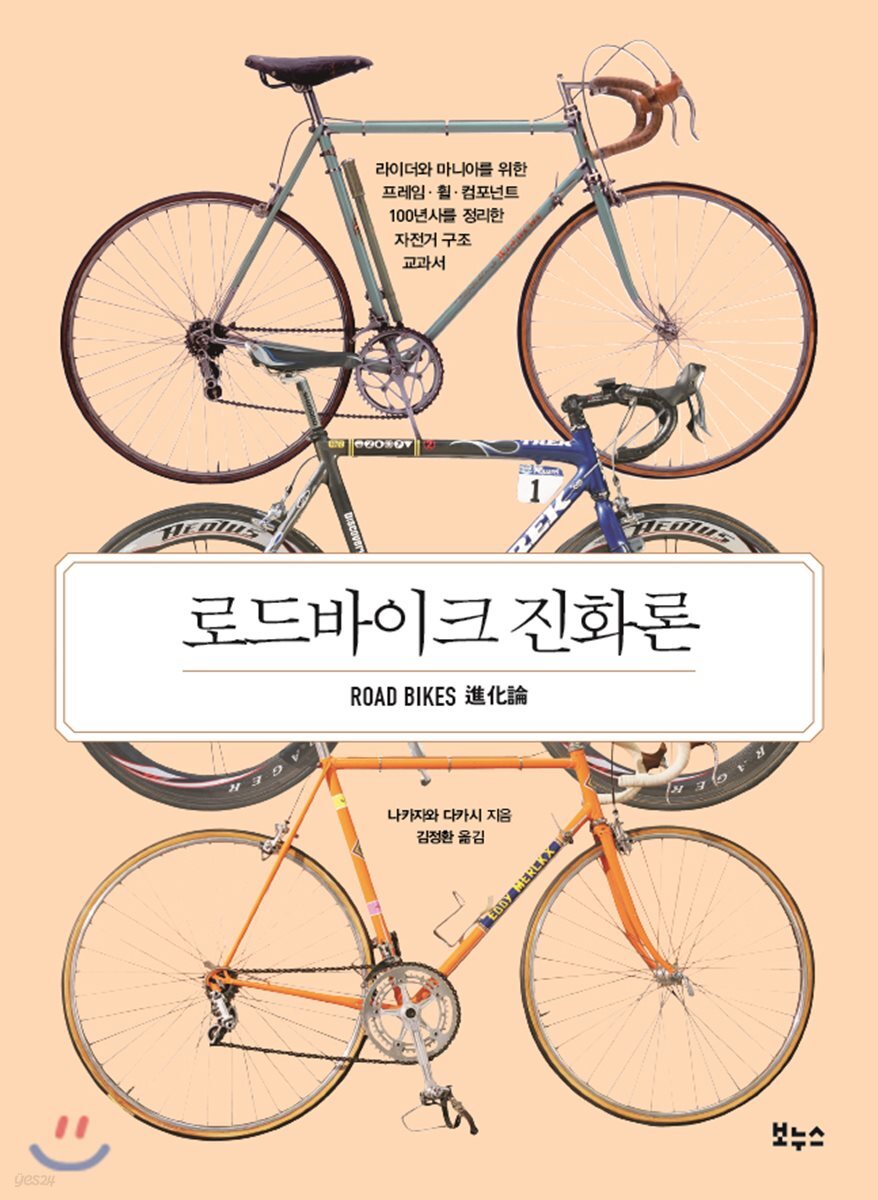
The history of road bikes, which have developed remarkably over the past 100 years, is organized by manufacturer and component.
By turning each page of bicycle history, filled with the passion and hard work of countless bicycle craftsmen and professional athletes, we gradually approach the essence of the road bike world.
By turning each page of bicycle history, filled with the passion and hard work of countless bicycle craftsmen and professional athletes, we gradually approach the essence of the road bike world.
- You can preview some of the book's contents.
Preview
index
Names of each part of a road bike
PROLOGUE 100 Years of Frame Materials
CHAPTER 1 EVOLUTION OF COMPONENTS
01 Campagnolo Components
02 Shimano components
03 Components of Suntour
04 Mavic's Components
05 SRAM Components
CHAPTER 2 EVOLUTION OF THE DRIVETRAIN
01 Complete wheel structure
02 Structure for fixing the hub
03 Spoke material
04 Structure of the front derailleur
05 Structure of the rear derailleur
06 Shimano rear derailleur
07 Shimano's rear sprocket structure
08 Changes in PCD and inner gear teeth count
09 How the crank and BB axle fit together
10 Shimano cleat pedals
11 Time Clipless Pedal
12 Look Cleat Pedals
CHAPTER 3 Evolution of Non-Driven Components
01 Shape of the drop bar
02 Handle stem
03 Head tube shape and head parts
04 Brakes for road bikes
05 Birds
06 Seat Post
07 Clincher Tire
08 Bar Tape
09 Water Bottle Cage
CHAPTER 4: THE EVOLUTION OF CLOTHING AND ACCESSORIES
01 Cycling Jersey
02 Racing Pants
03 Racing Shoes
04 Helmet
05 Aero Helmet
06 Sunglasses
07 Cycle Computer
BEYOND BIKE
01 Dryzine created by volcanic eruption
02 The Velocipede, an extremely luxurious vehicle
03 'ordinary' is not a term used in the UK
04 The modern bicycle was perfected in the early 1900s.
Reviews
Search
PROLOGUE 100 Years of Frame Materials
CHAPTER 1 EVOLUTION OF COMPONENTS
01 Campagnolo Components
02 Shimano components
03 Components of Suntour
04 Mavic's Components
05 SRAM Components
CHAPTER 2 EVOLUTION OF THE DRIVETRAIN
01 Complete wheel structure
02 Structure for fixing the hub
03 Spoke material
04 Structure of the front derailleur
05 Structure of the rear derailleur
06 Shimano rear derailleur
07 Shimano's rear sprocket structure
08 Changes in PCD and inner gear teeth count
09 How the crank and BB axle fit together
10 Shimano cleat pedals
11 Time Clipless Pedal
12 Look Cleat Pedals
CHAPTER 3 Evolution of Non-Driven Components
01 Shape of the drop bar
02 Handle stem
03 Head tube shape and head parts
04 Brakes for road bikes
05 Birds
06 Seat Post
07 Clincher Tire
08 Bar Tape
09 Water Bottle Cage
CHAPTER 4: THE EVOLUTION OF CLOTHING AND ACCESSORIES
01 Cycling Jersey
02 Racing Pants
03 Racing Shoes
04 Helmet
05 Aero Helmet
06 Sunglasses
07 Cycle Computer
BEYOND BIKE
01 Dryzine created by volcanic eruption
02 The Velocipede, an extremely luxurious vehicle
03 'ordinary' is not a term used in the UK
04 The modern bicycle was perfected in the early 1900s.
Reviews
Search
Detailed image

Publisher's Review
Campagnolo, Shimano, Look, Mavic, Giro
100 Years of Road Bike Challenges and Evolution
When and how did road bikes originate? The British BSA racing bike, produced in 1920, boasts a design that's fundamentally similar to road bikes on the market today.
This is a truly remarkable development considering that chain-driven bicycles only appeared in the 1890s.
What's even more surprising is that road bikes have continued to develop and evolve with the times, even now in the 21st century, having passed the 20th century.
How do you achieve extreme speed?
An endless thirst for speed
What is the essence of a road bike?
A road bike is literally a bicycle that runs on the road.
We have developed by pursuing only speed and eliminating everything that hinders speed.
To understand the world of road bikes, which constantly strive for speed, we must first look at how frames have evolved.
This book traces the history of frame materials, from steel, which appeared in the late 19th century, to aluminum, titanium, and carbon.
We explore the characteristics of each frame material and look back on 100 years of frame evolution through products from companies such as Italy's Alan, the UK's Speedwell, and the US's Lightspeed.
Naturally, bicycle makers and manufacturers have made tremendous progress not only in frames but also in components such as drivetrains, drop bars, handlebars, brakes, and saddles.
After examining the evolution of the frame, this book examines the changes and developments that have occurred in each component.
The organization of the book by components, drivetrains, handlebar stems, tires, etc. allows readers to find and read the section that interests them most.
If you're a bike enthusiast, you probably have your own favorite manufacturer brand.
Since we're delving into the history of famous manufacturers like Campagnolo, Shimano, SRAM, Giro, Mavic, and Time, you can find chapters that introduce your favorite brands.
This will be a good opportunity to understand the historical process through which the brakes, derailleurs, and handlebars you normally use have come to be what they are today.
By understanding the history stained with the sweat and tears of craftsmen and athletes, we can gain a deeper understanding of the structure and form of today's road bikes.
You come to realize that the types of materials and bike structures aren't changing simply because they're new, or because they lower manufacturing costs, or because they're lighter.
For example, when the aluminum craze was in full swing in the late 1990s, everyone was making frames out of aluminum, but only Italy's Colnago believed in the advent of the carbon era and continued to develop carbon bikes.
The background of each era and the needs of various people often had a greater influence than mechanical engineering factors in deciding on frame materials.
In the history of road bikes
The sweat and tears of bicycle craftsmen and athletes
Throughout the book, the author makes important references to the spirit of craftsmanship.
I applaud the hard work and passion that the bike craftsmen put into making it, and I am grateful that thanks to their hard work, I am able to ride the bike I have today.
The author doesn't just lavish praise, but also introduces many anecdotes about the craftsmen who shaped the history of bicycles.
The fun and touching story makes it easy to understand the history of cycling and why road bike components have changed so much.
There is an unexpected story behind the birth of the quick-release hub, which is essential for modern bikes.
On November 11, 1927, Tullio Campagnolo, who was participating in a bicycle race, had to look at the backs of the athletes who were ahead of him with a look of emptiness.
At that time, bicycles had double-cog gears on their rear wheels, and to climb a hill, you had to get off the bicycle and turn the wheel yourself.
But a sudden cold snap froze Tullio Campagnolo's hands and he was unable to loosen the wheel, which was secured with a wing nut.
At this time, Tullio Campagnolo is said to have decided, 'Let's create a system that detaches the wheel with one touch.'
Tullio Campagnolo, who developed the one-touch quick release in 1930, founded Campagnolo in 1933.
This is how Campagnolo, which will remain in the history of road bikes, was born.
Contains the spirit and culture of Europe
Road Bike World
Cycling racing is incredibly popular in Europe.
The Tour de France, known as the greatest competition with a long history, began in 1903.
It is no exaggeration to say that cycling is a part of European culture and is imbued with their values.
In particular, to understand the history of sunglasses, jerseys, and helmets, we must first understand the European culture behind them.
"The Evolution of Road Bikes" explains the cultural background and explores the hidden stories.
Sunglasses and helmets are mandatory in modern road bike racing.
But it wasn't a necessity from the beginning.
Before the 1980s, it was very rare to see athletes wearing sunglasses, as there were many unpaved roads at the time, so athletes preferred to use goggles instead of sunglasses.
Then, when Greg LeMond came in second in the 1985 Tour de France, he was noticed wearing Oakley's 'Eyeshade'.
After that, as everyone knows, wearing sunglasses became a given.
There is a social background to this, as many roads were improved after the end of World War II.
The story of how I came to wear a helmet has more dramatic elements than sunglasses.
Looking back now, it seems like wearing a helmet is a matter of life and death, so it seems like it was only natural, but just like sunglasses, many athletes refused to wear helmets before the 1980s.
This is because there was a widespread preconception among players that wearing a helmet would make them dizzy or look unsightly.
This situation has changed thanks to the American helmet manufacturer Giro.
Since they began manufacturing and supplying durable, lightweight, and stylish helmets to the road bike market in 1985, people's perceptions have gradually changed.
Also, after the fatal accident of Fabio Casartelli (Italy) in the 1995 Tour de France, discussions began on making helmet use mandatory.
Many bicycle parts and accessories have been influenced by the times and culture of their time, but perhaps none have been as profoundly influenced and transformed as the cycling jersey.
Until around the 1950s, most jerseys were made of wool, and players had to do their own repairs, so they sometimes had pockets on the front and back.
Then, in the 1960s, support systems developed and the front pockets and collars disappeared from the jersey.
It's interesting that collars existed before, but the reason they remained on jerseys despite their practicality was because cycling was a culture of royalty and nobility, and it was considered rude to wear a jersey without a collar.
In the 1980s, jerseys made from synthetic fibers appeared, and the jersey we see today was completed.
Over the past 100 years, road bikes have evolved endlessly.
Many people have been working hard to make bicycles that are lighter, stronger, and can run faster.
Of course, there is also a history of numerous failures and frustrations.
Through 『Road Bike Evolution』, which contains the history of all these challenges, frustrations, and glories, readers will be able to guess how road bikes have evolved and in what direction they will continue to evolve in the future.
It also gives a glimpse into how relentlessly bicycle craftsmen and athletes pursue the goal of excellence.
100 Years of Road Bike Challenges and Evolution
When and how did road bikes originate? The British BSA racing bike, produced in 1920, boasts a design that's fundamentally similar to road bikes on the market today.
This is a truly remarkable development considering that chain-driven bicycles only appeared in the 1890s.
What's even more surprising is that road bikes have continued to develop and evolve with the times, even now in the 21st century, having passed the 20th century.
How do you achieve extreme speed?
An endless thirst for speed
What is the essence of a road bike?
A road bike is literally a bicycle that runs on the road.
We have developed by pursuing only speed and eliminating everything that hinders speed.
To understand the world of road bikes, which constantly strive for speed, we must first look at how frames have evolved.
This book traces the history of frame materials, from steel, which appeared in the late 19th century, to aluminum, titanium, and carbon.
We explore the characteristics of each frame material and look back on 100 years of frame evolution through products from companies such as Italy's Alan, the UK's Speedwell, and the US's Lightspeed.
Naturally, bicycle makers and manufacturers have made tremendous progress not only in frames but also in components such as drivetrains, drop bars, handlebars, brakes, and saddles.
After examining the evolution of the frame, this book examines the changes and developments that have occurred in each component.
The organization of the book by components, drivetrains, handlebar stems, tires, etc. allows readers to find and read the section that interests them most.
If you're a bike enthusiast, you probably have your own favorite manufacturer brand.
Since we're delving into the history of famous manufacturers like Campagnolo, Shimano, SRAM, Giro, Mavic, and Time, you can find chapters that introduce your favorite brands.
This will be a good opportunity to understand the historical process through which the brakes, derailleurs, and handlebars you normally use have come to be what they are today.
By understanding the history stained with the sweat and tears of craftsmen and athletes, we can gain a deeper understanding of the structure and form of today's road bikes.
You come to realize that the types of materials and bike structures aren't changing simply because they're new, or because they lower manufacturing costs, or because they're lighter.
For example, when the aluminum craze was in full swing in the late 1990s, everyone was making frames out of aluminum, but only Italy's Colnago believed in the advent of the carbon era and continued to develop carbon bikes.
The background of each era and the needs of various people often had a greater influence than mechanical engineering factors in deciding on frame materials.
In the history of road bikes
The sweat and tears of bicycle craftsmen and athletes
Throughout the book, the author makes important references to the spirit of craftsmanship.
I applaud the hard work and passion that the bike craftsmen put into making it, and I am grateful that thanks to their hard work, I am able to ride the bike I have today.
The author doesn't just lavish praise, but also introduces many anecdotes about the craftsmen who shaped the history of bicycles.
The fun and touching story makes it easy to understand the history of cycling and why road bike components have changed so much.
There is an unexpected story behind the birth of the quick-release hub, which is essential for modern bikes.
On November 11, 1927, Tullio Campagnolo, who was participating in a bicycle race, had to look at the backs of the athletes who were ahead of him with a look of emptiness.
At that time, bicycles had double-cog gears on their rear wheels, and to climb a hill, you had to get off the bicycle and turn the wheel yourself.
But a sudden cold snap froze Tullio Campagnolo's hands and he was unable to loosen the wheel, which was secured with a wing nut.
At this time, Tullio Campagnolo is said to have decided, 'Let's create a system that detaches the wheel with one touch.'
Tullio Campagnolo, who developed the one-touch quick release in 1930, founded Campagnolo in 1933.
This is how Campagnolo, which will remain in the history of road bikes, was born.
Contains the spirit and culture of Europe
Road Bike World
Cycling racing is incredibly popular in Europe.
The Tour de France, known as the greatest competition with a long history, began in 1903.
It is no exaggeration to say that cycling is a part of European culture and is imbued with their values.
In particular, to understand the history of sunglasses, jerseys, and helmets, we must first understand the European culture behind them.
"The Evolution of Road Bikes" explains the cultural background and explores the hidden stories.
Sunglasses and helmets are mandatory in modern road bike racing.
But it wasn't a necessity from the beginning.
Before the 1980s, it was very rare to see athletes wearing sunglasses, as there were many unpaved roads at the time, so athletes preferred to use goggles instead of sunglasses.
Then, when Greg LeMond came in second in the 1985 Tour de France, he was noticed wearing Oakley's 'Eyeshade'.
After that, as everyone knows, wearing sunglasses became a given.
There is a social background to this, as many roads were improved after the end of World War II.
The story of how I came to wear a helmet has more dramatic elements than sunglasses.
Looking back now, it seems like wearing a helmet is a matter of life and death, so it seems like it was only natural, but just like sunglasses, many athletes refused to wear helmets before the 1980s.
This is because there was a widespread preconception among players that wearing a helmet would make them dizzy or look unsightly.
This situation has changed thanks to the American helmet manufacturer Giro.
Since they began manufacturing and supplying durable, lightweight, and stylish helmets to the road bike market in 1985, people's perceptions have gradually changed.
Also, after the fatal accident of Fabio Casartelli (Italy) in the 1995 Tour de France, discussions began on making helmet use mandatory.
Many bicycle parts and accessories have been influenced by the times and culture of their time, but perhaps none have been as profoundly influenced and transformed as the cycling jersey.
Until around the 1950s, most jerseys were made of wool, and players had to do their own repairs, so they sometimes had pockets on the front and back.
Then, in the 1960s, support systems developed and the front pockets and collars disappeared from the jersey.
It's interesting that collars existed before, but the reason they remained on jerseys despite their practicality was because cycling was a culture of royalty and nobility, and it was considered rude to wear a jersey without a collar.
In the 1980s, jerseys made from synthetic fibers appeared, and the jersey we see today was completed.
Over the past 100 years, road bikes have evolved endlessly.
Many people have been working hard to make bicycles that are lighter, stronger, and can run faster.
Of course, there is also a history of numerous failures and frustrations.
Through 『Road Bike Evolution』, which contains the history of all these challenges, frustrations, and glories, readers will be able to guess how road bikes have evolved and in what direction they will continue to evolve in the future.
It also gives a glimpse into how relentlessly bicycle craftsmen and athletes pursue the goal of excellence.
GOODS SPECIFICS
- Publication date: November 26, 2018
- Page count, weight, size: 232 pages | 537g | 172*235*14mm
- ISBN13: 9788964943595
- ISBN10: 8964943597
You may also like
카테고리
korean


korean

![GQ KOREA Mark (Monthly): December [2025]](http://librairie.coreenne.fr/cdn/shop/files/8ef265dbbfbf186523ed75ba7319009d.jpg?v=1765340328&width=3840)


