

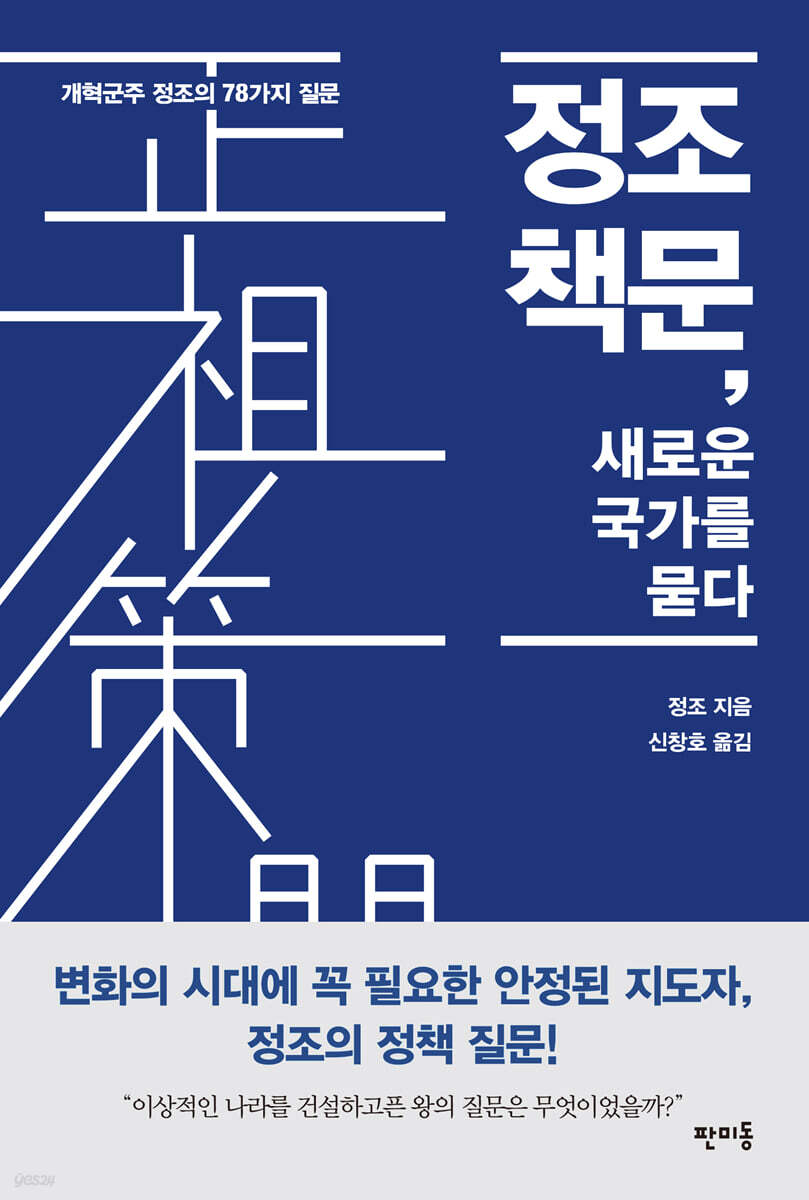
Jeongjo's Letter: Asking for a New Nation
 |
Description
Book Introduction
A true country where communication and trust are possible Finding solutions to today's confusion from history This book is a reinterpretation of the questions asked by King Jeongjo, a representative reformist monarch of Joseon, to his subjects and Confucian scholars regarding national policies, in a way that suits the current situation. The book is a historical document in which the king ordered his subjects and scholars to research and devise countermeasures regarding the country's policies and future direction. This book is a modern interpretation of all 78 books of the book, which are included in volumes 48 to 52 of Hongjaejeonseo, a collection of Jeongjo's writings. Unlike the existing Hongjaejeonseo, which was not easy to read due to the differences in the times and the wall of the royal writing style, this is the first single volume in which Professor Shin Chang-ho, who has worked hard to popularize the humanities classics that ask about the new nation, has translated King Jeongjo's book into easy Korean. This book is a record of King Jeongjo's desire to discuss all pending national issues, including the appointment of talented individuals, the Renaissance, the people's livelihood and welfare, and balanced development, with the people who would later lead politics together. It contains the ideal image of the nation that King Jeongjo dreamed of and his mindset as the supreme leader. The leader's perspective and thoughts revealed in the process of requesting countermeasures allow us to rediscover his integrity as a supreme leader who always encouraged his subordinates to actively participate in politics based on his extensive knowledge and passion regardless of the field. |
- You can preview some of the book's contents.
Preview
index
Preface 5
Part 1: Hope for Good Politics
Where Does Political Stability and Turmoil Come From? 17
Attitude is the key 23
The Key to Politics is Trust 29
Communicate with each other and implement policies 33
Set an example for governing the nation 41
Confirm the principles of politics 46
Breathe Spring into Life and Politics 50
Let the people live long and comfortably 53
Be careful in everyday life 56
Discern Reason with Wisdom 59
Guard Your Life with Proverbs 66
Beware of the Extravagant Social Atmosphere 69
What does politics aim for? Social justice or self-interest? 73
Don't be bound by formalities; present clear policy alternatives. 79
Always be both civil and military 81
How to create a formation that combines both civil and military capabilities? 85
Part 2: The Passion of a Leader and the Recruitment of Talent to Match His Leadership
Create a social atmosphere where people can develop their talents. 91
Make Appropriate Use of Meaningful Traditional Customs 95
Identify and hire people accurately 98
Love the talents of any person 102
Treat Scholars Properly 107
Remember the Day You Cherished People 114
Recruiting Smart Talent in Various Ways 117
Design a realistic talent recruitment system 122
What is the best way to study the scriptures? 127
Embrace Reality with Confidence 131
What is the true attitude of a public servant? 136
All public officials must perform their duties in accordance with their names and positions. 140
Be strict with your managers' performance evaluations 142
Bad habits must be corrected 147
Play a duet of speech and silence 154
Part 3: Building a Civilized Nation through the Renaissance
How do we lay the foundation for cultural flourishing? 161
Collect your heart with all your heart 165
How should history be written? 172
Accurately grasp the spirit of the times 178
Communicate with the people in accordance with the laws of nature 186
What are the ways to revive scholarship? 189
How do the laws of nature and human morality connect? 195
Applying Astronomical Movements to Politics 201
Restore the Orthodoxy of Confucianism, Part 208
Strive for true scholarship beyond lies 213
To understand the ways of the world, you must be well-versed in the written word. 218
Incorporate the spirit of the times into an authentic writing style. 224
Develop your policies with excellent sentences 228
Respect the Good Sentences Necessary for Politics 233
Use difficult and easy writing styles appropriate to the situation. 238
Write to make your voice heard 242
Cultivating Leadership Through Part 4 of the Political Guidelines
Govern the World with Authentic Learning 249
Study the Thirteen Classics to Explore the Roots of Learning 256
Establish a model for cultural institutions through the Book of Rites 262
Understand the Book of Rites and Discern the World 267
Understand the Evil Sutra and Harmonize the World 272
Governing the World in Harmony Through the Book of Songs 277
Restore the Great Classic, the Book of Documents 284
Understand History and Reflect on Proper Politics Through the Spring and Autumn Annals 286
Interpret the Great Learning, the Charter of Wisdom that Rules the World, Part 292
Reflect on the commentary on the "Great Learning" that contains the essence of politics, Part 297
Examine the Analects, the compendium of wisdom that governs the world. 301
Formulate policies through the Mencius 307
Explore the Doctrine of the Mean, the Foundation of Learning 311
Confirm the Continuity of Joseon Confucianism through the "Tongseo" (Compendium of Confucianism) 318
Explore the Roots of Politics by Reading "Hwanggeuknaepyeon" (323)
Part 5: Efforts to Create a Nation Where We Live Together
See the principle of even the smallest thing 331
How to Relieve the Starving and Naked People? 333
Let the people's lives be invigorated like the breath of spring 337
Think about how to live well by being faithful to your main job 341
Supplement your livelihood with other businesses alongside your main business. 348
Consider welfare policies that care for the elderly and encourage farmers. 353
We need politics that refreshes the heart. 360
Properly register national resources 365
Rebuild policies that care for the people's livelihoods 368
Understanding a nation's geography is the foundation of politics. 394
Develop a vital means of transportation on the ground 400
Develop maritime transport measures 404
Examine the public sentiment in Gangwon Province, which leans toward the east. 407
Take good care of Jeju Island, far away 412
Consider the policies needed for Jeolla Province, which is located in the south. 418
Present the necessary policies for Hamgyeong Province, located in the remote northern region. 431
Reference 437
Part 1: Hope for Good Politics
Where Does Political Stability and Turmoil Come From? 17
Attitude is the key 23
The Key to Politics is Trust 29
Communicate with each other and implement policies 33
Set an example for governing the nation 41
Confirm the principles of politics 46
Breathe Spring into Life and Politics 50
Let the people live long and comfortably 53
Be careful in everyday life 56
Discern Reason with Wisdom 59
Guard Your Life with Proverbs 66
Beware of the Extravagant Social Atmosphere 69
What does politics aim for? Social justice or self-interest? 73
Don't be bound by formalities; present clear policy alternatives. 79
Always be both civil and military 81
How to create a formation that combines both civil and military capabilities? 85
Part 2: The Passion of a Leader and the Recruitment of Talent to Match His Leadership
Create a social atmosphere where people can develop their talents. 91
Make Appropriate Use of Meaningful Traditional Customs 95
Identify and hire people accurately 98
Love the talents of any person 102
Treat Scholars Properly 107
Remember the Day You Cherished People 114
Recruiting Smart Talent in Various Ways 117
Design a realistic talent recruitment system 122
What is the best way to study the scriptures? 127
Embrace Reality with Confidence 131
What is the true attitude of a public servant? 136
All public officials must perform their duties in accordance with their names and positions. 140
Be strict with your managers' performance evaluations 142
Bad habits must be corrected 147
Play a duet of speech and silence 154
Part 3: Building a Civilized Nation through the Renaissance
How do we lay the foundation for cultural flourishing? 161
Collect your heart with all your heart 165
How should history be written? 172
Accurately grasp the spirit of the times 178
Communicate with the people in accordance with the laws of nature 186
What are the ways to revive scholarship? 189
How do the laws of nature and human morality connect? 195
Applying Astronomical Movements to Politics 201
Restore the Orthodoxy of Confucianism, Part 208
Strive for true scholarship beyond lies 213
To understand the ways of the world, you must be well-versed in the written word. 218
Incorporate the spirit of the times into an authentic writing style. 224
Develop your policies with excellent sentences 228
Respect the Good Sentences Necessary for Politics 233
Use difficult and easy writing styles appropriate to the situation. 238
Write to make your voice heard 242
Cultivating Leadership Through Part 4 of the Political Guidelines
Govern the World with Authentic Learning 249
Study the Thirteen Classics to Explore the Roots of Learning 256
Establish a model for cultural institutions through the Book of Rites 262
Understand the Book of Rites and Discern the World 267
Understand the Evil Sutra and Harmonize the World 272
Governing the World in Harmony Through the Book of Songs 277
Restore the Great Classic, the Book of Documents 284
Understand History and Reflect on Proper Politics Through the Spring and Autumn Annals 286
Interpret the Great Learning, the Charter of Wisdom that Rules the World, Part 292
Reflect on the commentary on the "Great Learning" that contains the essence of politics, Part 297
Examine the Analects, the compendium of wisdom that governs the world. 301
Formulate policies through the Mencius 307
Explore the Doctrine of the Mean, the Foundation of Learning 311
Confirm the Continuity of Joseon Confucianism through the "Tongseo" (Compendium of Confucianism) 318
Explore the Roots of Politics by Reading "Hwanggeuknaepyeon" (323)
Part 5: Efforts to Create a Nation Where We Live Together
See the principle of even the smallest thing 331
How to Relieve the Starving and Naked People? 333
Let the people's lives be invigorated like the breath of spring 337
Think about how to live well by being faithful to your main job 341
Supplement your livelihood with other businesses alongside your main business. 348
Consider welfare policies that care for the elderly and encourage farmers. 353
We need politics that refreshes the heart. 360
Properly register national resources 365
Rebuild policies that care for the people's livelihoods 368
Understanding a nation's geography is the foundation of politics. 394
Develop a vital means of transportation on the ground 400
Develop maritime transport measures 404
Examine the public sentiment in Gangwon Province, which leans toward the east. 407
Take good care of Jeju Island, far away 412
Consider the policies needed for Jeolla Province, which is located in the south. 418
Present the necessary policies for Hamgyeong Province, located in the remote northern region. 431
Reference 437
Publisher's Review
King Jeongjo, a reformist monarch ahead of his time,
How to unite a divided nation
A stable leader needed in an era of change
King Jeongjo's 78 Policy Questions
『Jeongjo's Questionnaire, Asking About a New Nation』, which interprets the questions asked by King Jeongjo, a representative reformist monarch of Joseon, to his subjects and Confucian scholars about national policies and other issues, to fit the current situation, has been published by Panmidong.
The book is a historical document in which the king ordered his subjects and scholars to research and devise countermeasures regarding the country's policies and future direction. This book is a modern interpretation of all 78 books in volumes 48 to 52 of 『Hongjaejeonseo』, a collection of Jeongjo's writings.
Unlike the existing 『Hongjaejeonseo』, which was not easy to read due to the differences in the times and the wall of the royal writing style, 『Jeongjo's Book of Documents, Asking about a New Nation』 is the first single volume that Professor Shin Chang-ho, who has worked hard to popularize humanities classics, has translated Jeongjo's book of documents into easy Korean.
This book is a record of King Jeongjo's desire to discuss all pending national issues, including the appointment of talented individuals, the Renaissance, the people's livelihood and welfare, and balanced development, with the people who would later lead politics together. It contains the ideal image of the nation that King Jeongjo dreamed of and his mindset as the supreme leader.
The leader's perspective and thoughts revealed in the process of requesting countermeasures allow us to rediscover his integrity as a supreme leader who always encouraged his subordinates to actively participate in politics based on his extensive knowledge and passion regardless of the field.
The book reveals King Jeongjo's sincere reflections, his fierce attitude toward the people, and his efforts to pursue the right path for humanity and run the country properly, all of which resonate deeply with our chaotic society today.
A Leader's Mindset for Great Peace and Social Integration
What concerns did King Jeongjo have as he had to lead a divided nation?
As the saying goes, "People are everything," selecting talented people and placing them in the right positions has been the core of national governance, regardless of time or place.
Joseon society was a time when only the yangban could advance to central government positions through the civil service examination, and there was intense partisan strife between the Noron and Soron factions.
However, King Jeongjo, longing for the talents desperately needed at the time, actively implemented a policy of tangpyeong (harmony) and promoted a policy of grand unification that focused on personnel and abilities, regardless of party affiliation, leading to an economic, social and cultural revival called the Renaissance of the late Joseon Dynasty.
King Jeongjo, who was very interested in social stability and balanced development, hoped for a country overflowing with vitality like a splendid spring, with everyone fulfilling their assigned duties.
Each book vividly shows King Jeongjo's spirit of loving the people, which sought to prevent the corruption of grain exchange and the tyranny of officials and to promote balanced development of the country, as well as the meticulous mind of the leader, who checked whether the country's resources were being wasted and whether the customs of respecting the elderly and following the seasons were correct.
The request for advice on policies tailored to the regional characteristics of distant regions like Hamgyeong Province and Jeju Island, and the fact that he does not let his guard down on military security as well as cultural issues, reveal the vision of a leader who foresees the distant future.
Furthermore, his studies of scriptures, the arts such as poetry and music, his use of literary style, and his writings on science such as astronomy reveal his aspect as a scholar-monarch with profound knowledge and insight.
『Jeongjo's Letter, Asking about a New Nation』 reminds us of the ideal humanistic leader through the figure of Jeongjo, a leader who united the people and led innovation to create a country where everyone can prosper together.
A true country where communication and trust are possible
Finding solutions to today's confusion from history
Professor Shin Chang-ho of Korea University, who strives to revitalize the humanities and popularize classics, is actively working to modernize classics to fit the spirit of the times and Korean culture.
As a manifestation of this problem awareness, he published the "Hangeul Saseo" series, and he translated King Jeongjo's writings into Korean, believing that they provide guidance that is essential to our society today, such as the right mindset for an adult in a society, a democratic citizen fit for a democratic society, and a leader.
Not only are the languages and eras different, but it is also difficult to translate into everyday Korean the texts of King Jeongjo, which reflect his erudition and knowledge in all areas, from politics and society to culture and art. This can be considered the first translation of a popular work.
The reason we must revisit Jeongjo's leadership today is not simply because of his achievements in social integration and economic development.
This is because we can empathize with Jeongjo as a leader who saw the essence of all issues with timeless insight and wisdom, and solved national issues through repeated reflection through the right questions.
Although Joseon was not a democratic society, it was a society that pursued a better country based on the principle of people-centeredness, which recognized the people as the foundation of politics.
Therefore, King Jeongjo's passionate leadership and heart for people, as seen in 『Jeongjo's Letter, Asking about a New Nation』, can be sufficiently applied to today's social reality, which must resolve much political and social turmoil.
This book will serve as a valuable guide for those who contemplate the correct political philosophy of a leader and the kind of nation we should create together, transcending the times.
“In politics, ‘jeong’, meaning ‘to govern the people,’ is recognized as ‘jeong’, meaning ‘to treat or make things right.’
Therefore, politics is not simply a form of rulers with great power ruling over powerless people, but rather a human act of trying to correct the 'injustice' of the world.
The same was true of the Joseon Dynasty, which accepted Confucianism as the core of life.
In the case of King Jeongjo, although he was in the position of an emperor as the supreme leader of the late Joseon Dynasty, he seriously considered securing leadership as a ruler who sought to lead the people's lives properly rather than putting forward the idea of ruling over the people as a ruler." - "Desire for Proper Politics" (p. 15)
How to unite a divided nation
A stable leader needed in an era of change
King Jeongjo's 78 Policy Questions
『Jeongjo's Questionnaire, Asking About a New Nation』, which interprets the questions asked by King Jeongjo, a representative reformist monarch of Joseon, to his subjects and Confucian scholars about national policies and other issues, to fit the current situation, has been published by Panmidong.
The book is a historical document in which the king ordered his subjects and scholars to research and devise countermeasures regarding the country's policies and future direction. This book is a modern interpretation of all 78 books in volumes 48 to 52 of 『Hongjaejeonseo』, a collection of Jeongjo's writings.
Unlike the existing 『Hongjaejeonseo』, which was not easy to read due to the differences in the times and the wall of the royal writing style, 『Jeongjo's Book of Documents, Asking about a New Nation』 is the first single volume that Professor Shin Chang-ho, who has worked hard to popularize humanities classics, has translated Jeongjo's book of documents into easy Korean.
This book is a record of King Jeongjo's desire to discuss all pending national issues, including the appointment of talented individuals, the Renaissance, the people's livelihood and welfare, and balanced development, with the people who would later lead politics together. It contains the ideal image of the nation that King Jeongjo dreamed of and his mindset as the supreme leader.
The leader's perspective and thoughts revealed in the process of requesting countermeasures allow us to rediscover his integrity as a supreme leader who always encouraged his subordinates to actively participate in politics based on his extensive knowledge and passion regardless of the field.
The book reveals King Jeongjo's sincere reflections, his fierce attitude toward the people, and his efforts to pursue the right path for humanity and run the country properly, all of which resonate deeply with our chaotic society today.
A Leader's Mindset for Great Peace and Social Integration
What concerns did King Jeongjo have as he had to lead a divided nation?
As the saying goes, "People are everything," selecting talented people and placing them in the right positions has been the core of national governance, regardless of time or place.
Joseon society was a time when only the yangban could advance to central government positions through the civil service examination, and there was intense partisan strife between the Noron and Soron factions.
However, King Jeongjo, longing for the talents desperately needed at the time, actively implemented a policy of tangpyeong (harmony) and promoted a policy of grand unification that focused on personnel and abilities, regardless of party affiliation, leading to an economic, social and cultural revival called the Renaissance of the late Joseon Dynasty.
King Jeongjo, who was very interested in social stability and balanced development, hoped for a country overflowing with vitality like a splendid spring, with everyone fulfilling their assigned duties.
Each book vividly shows King Jeongjo's spirit of loving the people, which sought to prevent the corruption of grain exchange and the tyranny of officials and to promote balanced development of the country, as well as the meticulous mind of the leader, who checked whether the country's resources were being wasted and whether the customs of respecting the elderly and following the seasons were correct.
The request for advice on policies tailored to the regional characteristics of distant regions like Hamgyeong Province and Jeju Island, and the fact that he does not let his guard down on military security as well as cultural issues, reveal the vision of a leader who foresees the distant future.
Furthermore, his studies of scriptures, the arts such as poetry and music, his use of literary style, and his writings on science such as astronomy reveal his aspect as a scholar-monarch with profound knowledge and insight.
『Jeongjo's Letter, Asking about a New Nation』 reminds us of the ideal humanistic leader through the figure of Jeongjo, a leader who united the people and led innovation to create a country where everyone can prosper together.
A true country where communication and trust are possible
Finding solutions to today's confusion from history
Professor Shin Chang-ho of Korea University, who strives to revitalize the humanities and popularize classics, is actively working to modernize classics to fit the spirit of the times and Korean culture.
As a manifestation of this problem awareness, he published the "Hangeul Saseo" series, and he translated King Jeongjo's writings into Korean, believing that they provide guidance that is essential to our society today, such as the right mindset for an adult in a society, a democratic citizen fit for a democratic society, and a leader.
Not only are the languages and eras different, but it is also difficult to translate into everyday Korean the texts of King Jeongjo, which reflect his erudition and knowledge in all areas, from politics and society to culture and art. This can be considered the first translation of a popular work.
The reason we must revisit Jeongjo's leadership today is not simply because of his achievements in social integration and economic development.
This is because we can empathize with Jeongjo as a leader who saw the essence of all issues with timeless insight and wisdom, and solved national issues through repeated reflection through the right questions.
Although Joseon was not a democratic society, it was a society that pursued a better country based on the principle of people-centeredness, which recognized the people as the foundation of politics.
Therefore, King Jeongjo's passionate leadership and heart for people, as seen in 『Jeongjo's Letter, Asking about a New Nation』, can be sufficiently applied to today's social reality, which must resolve much political and social turmoil.
This book will serve as a valuable guide for those who contemplate the correct political philosophy of a leader and the kind of nation we should create together, transcending the times.
“In politics, ‘jeong’, meaning ‘to govern the people,’ is recognized as ‘jeong’, meaning ‘to treat or make things right.’
Therefore, politics is not simply a form of rulers with great power ruling over powerless people, but rather a human act of trying to correct the 'injustice' of the world.
The same was true of the Joseon Dynasty, which accepted Confucianism as the core of life.
In the case of King Jeongjo, although he was in the position of an emperor as the supreme leader of the late Joseon Dynasty, he seriously considered securing leadership as a ruler who sought to lead the people's lives properly rather than putting forward the idea of ruling over the people as a ruler." - "Desire for Proper Politics" (p. 15)
GOODS SPECIFICS
- Date of publication: May 22, 2017
- Page count, weight, size: 440 pages | 572g | 145*215*30mm
- ISBN13: 9791158882709
- ISBN10: 115888270X
You may also like
카테고리
korean


korean

![GQ KOREA Mark (Monthly): December [2025]](http://librairie.coreenne.fr/cdn/shop/files/8ef265dbbfbf186523ed75ba7319009d.jpg?v=1765340328&width=3840)


