

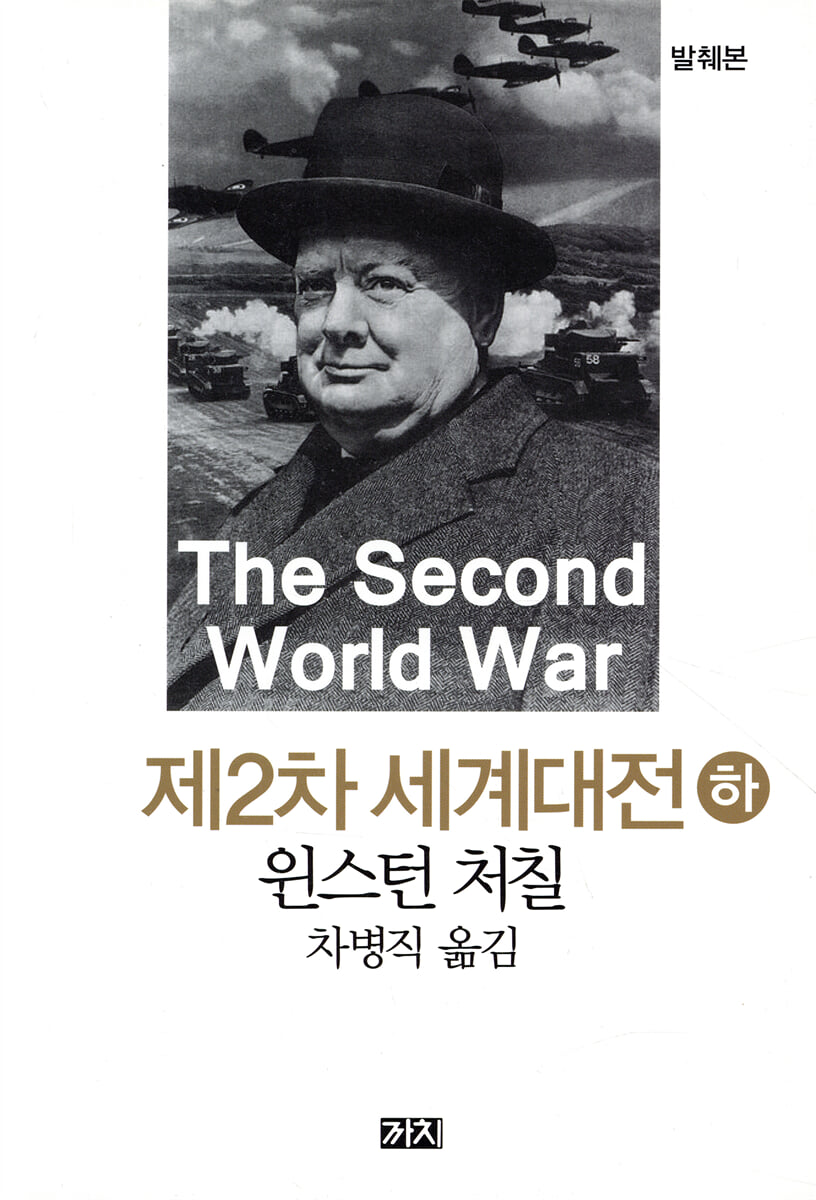
World War II (Part 2)
 |
Description
Book Introduction
To Winston Churchill, who led the Allied forces to victory in World War II
The work "World War II," which won the Nobel Prize in Literature
This book is an excerpt from the original work, which began writing in 1946 and was completed in six volumes in 1953, and all sentences are Churchill's own.
Also added is an “Epilogue” he wrote in 1957.
The book begins after the end of World War I, which served as a prequel to World War II.
The rise of Hitler and his expansionist policies are described, and the entire course of World War II unfolds dramatically.
And the author's public bond and friendship with Roosevelt, with whom he exchanged over 800 telegrams and other messages (volume 1, page 358), his interactions with Stalin, with whom he treated each other with great respect (volume 2, page 907), his affection for his beloved subordinate Anthony Eden, and especially the moment of human connection between Molotov, the epitome of cold-bloodedness, and Churchill (volume 1, page 233), all move the reader.
The work "World War II," which won the Nobel Prize in Literature
This book is an excerpt from the original work, which began writing in 1946 and was completed in six volumes in 1953, and all sentences are Churchill's own.
Also added is an “Epilogue” he wrote in 1957.
The book begins after the end of World War I, which served as a prequel to World War II.
The rise of Hitler and his expansionist policies are described, and the entire course of World War II unfolds dramatically.
And the author's public bond and friendship with Roosevelt, with whom he exchanged over 800 telegrams and other messages (volume 1, page 358), his interactions with Stalin, with whom he treated each other with great respect (volume 2, page 907), his affection for his beloved subordinate Anthony Eden, and especially the moment of human connection between Molotov, the epitome of cold-bloodedness, and Churchill (volume 1, page 233), all move the reader.
- You can preview some of the book's contents.
Preview
index
Part 3 The Grand Coalition Sunday, December 7, 1941, and Thereafter
Chapter 1: Allied Powers, Soviet Union
Chapter 2: The Meeting between Roosevelt and Me
Chapter 3 Persia and the Desert
Chapter 4 Ah, Pearl Harbor!
Chapter 5: Sea Travel During the Great War
Chapter 6: Anglo-American Cooperation and Harmony
Chapter 7: The Fall of Singapore
Chapter 8: U-Boat Paradise
Chapter 9: U.S. Naval Victories: The Battles of the Coral Sea and Midway
Chapter 10 “Now, the Second Front!”
Chapter 11: The Second Visit to Washington and Tobruk
Chapter 12 Vote of No Confidence
Chapter 13: The 8th Army in a Corner
Chapter 14: The Journey to Cairo and the Change of Command
Chapter 15: Moscow: The First Meeting
Chapter 16: Moscow: Establishing Relations
Chapter 17 Tension and Anxiety
Chapter 18: The Battle of Alamein
Chapter 19: Lighting the "Torch"
Chapter 20: Casablanca Conference
Chapter 21: Türkiye, Stalingrad, and Tunis
Chapter 22: Goals, Italy
Part 4: Victory and Tragedy 1943-1945
Chapter 1: The Occupation of Sicily and the Fall of Mussolini
Chapter 2 Artificial Harbors
Chapter 3: The Invasion of Italy
Chapter 4: Deadlock in the Mediterranean
Chapter 5: Arctic Ocean Convoys
Chapter 6: The Tehran Conference: Opening
Chapter 7: The Tehran Conference: Challenges and Conclusion
Chapter 8 Carthage and Marrakesh
Chapter 9: Marshal Tito and the Troubles of Greece
Chapter 10: The Attack on Anzio
Chapter 11: Operation "Overlord"
Chapter 12 Rome and D-Day
Chapter 13 From Normandy to Paris
Chapter 14: Landing in Italy and the Riviera
Chapter 15: Russia's Victory
Chapter 16 Burma
Chapter 17: Battle of Leyte Gulf
Chapter 18: The Liberation of Western Europe
Chapter 19: October in Moscow
Chapter 20: Paris and the Ardennes
Chapter 21: Christmas in Athens
Chapter 22: Malta and Yalta: The Plan for World Peace
Chapter 23 Russia and Poland: The Soviet Promise
Chapter 24: Crossing the Rhine
Chapter 25: The Iron Curtain
Chapter 26: The Surrender of Germany
Chapter 27: Cracks Appear
Chapter 28: The Atomic Bomb
Epilogue 1945-1957
A Chronology of Sir Winston Leonard Spencer Churchill
Translator's Note
Search
Chapter 1: Allied Powers, Soviet Union
Chapter 2: The Meeting between Roosevelt and Me
Chapter 3 Persia and the Desert
Chapter 4 Ah, Pearl Harbor!
Chapter 5: Sea Travel During the Great War
Chapter 6: Anglo-American Cooperation and Harmony
Chapter 7: The Fall of Singapore
Chapter 8: U-Boat Paradise
Chapter 9: U.S. Naval Victories: The Battles of the Coral Sea and Midway
Chapter 10 “Now, the Second Front!”
Chapter 11: The Second Visit to Washington and Tobruk
Chapter 12 Vote of No Confidence
Chapter 13: The 8th Army in a Corner
Chapter 14: The Journey to Cairo and the Change of Command
Chapter 15: Moscow: The First Meeting
Chapter 16: Moscow: Establishing Relations
Chapter 17 Tension and Anxiety
Chapter 18: The Battle of Alamein
Chapter 19: Lighting the "Torch"
Chapter 20: Casablanca Conference
Chapter 21: Türkiye, Stalingrad, and Tunis
Chapter 22: Goals, Italy
Part 4: Victory and Tragedy 1943-1945
Chapter 1: The Occupation of Sicily and the Fall of Mussolini
Chapter 2 Artificial Harbors
Chapter 3: The Invasion of Italy
Chapter 4: Deadlock in the Mediterranean
Chapter 5: Arctic Ocean Convoys
Chapter 6: The Tehran Conference: Opening
Chapter 7: The Tehran Conference: Challenges and Conclusion
Chapter 8 Carthage and Marrakesh
Chapter 9: Marshal Tito and the Troubles of Greece
Chapter 10: The Attack on Anzio
Chapter 11: Operation "Overlord"
Chapter 12 Rome and D-Day
Chapter 13 From Normandy to Paris
Chapter 14: Landing in Italy and the Riviera
Chapter 15: Russia's Victory
Chapter 16 Burma
Chapter 17: Battle of Leyte Gulf
Chapter 18: The Liberation of Western Europe
Chapter 19: October in Moscow
Chapter 20: Paris and the Ardennes
Chapter 21: Christmas in Athens
Chapter 22: Malta and Yalta: The Plan for World Peace
Chapter 23 Russia and Poland: The Soviet Promise
Chapter 24: Crossing the Rhine
Chapter 25: The Iron Curtain
Chapter 26: The Surrender of Germany
Chapter 27: Cracks Appear
Chapter 28: The Atomic Bomb
Epilogue 1945-1957
A Chronology of Sir Winston Leonard Spencer Churchill
Translator's Note
Search
Publisher's Review
To Winston Churchill, who led the Allied forces to victory in World War II
The work "World War II," which won the Nobel Prize in Literature
Winston Churchill's "World War II," written based on the four "lessons" of "determination in war," "spirit in defeat," "tolerance in victory," and "good will in peace," is the definitive overview of the entire history of World War II, the largest war in human history, which recorded 15 million deaths and 34.5 million wounded.
Although it has the limitations of being a personal memoir, this book is a work on World War II that is unparalleled in depth and breadth, both quantitatively and qualitatively in terms of content and meaning.
As the leader of a nation that led the war from the beginning, Churchill's love for his country and its people, his sense of duty and responsibility, his thoughts and actions will leave readers with an overwhelming impression.
He was not only a leader who led the empire, but also a brilliant strategist and practical reformer (the use of heavy oil as fuel for warships, the introduction of modern tanks), and he also played a role in the history of world wars.
Readers will enjoy reading and deeply participate in the story of a giant who was voted the “Greatest Briton” in British history (according to the BBC’s “Great Briton” poll, which polled over one million people in 2002) and saved a nation and the world from the brink of destruction.
In particular, this book, which directly led to Churchill receiving the Nobel Prize in Literature in 1953, is an immortal work of documentary literature.
In 2015, the original manuscript of this book, along with Churchill's letters, writings, speeches, and manuscripts, were designated as UNESCO Memory of the World.
This book is an excerpt from the original work, which began writing in 1946 and was completed in six volumes in 1953, and all sentences are Churchill's own.
Also added is an “Epilogue” he wrote in 1957.
The book begins after the end of World War I, which served as a prequel to World War II.
The rise of Hitler and his expansionist policies are described, and the entire course of World War II unfolds dramatically.
And the author's public bond and friendship with Roosevelt, with whom he exchanged over 800 telegrams and other messages (volume 1, page 358), his interactions with Stalin, with whom he treated each other with great respect (volume 2, page 907), his affection for his beloved subordinate Anthony Eden, and especially the moment of human connection between Molotov, the epitome of cold-bloodedness, and Churchill (volume 1, page 233), all move the reader.
Although it is only an excerpt, this 1,470-page masterpiece (translated into Korean) allows us to examine how Britain and France, especially Britain's appeasement policy toward Nazi Germany, became the spark that ignited the Great War. It also teaches us the lesson that security is the lifeblood of a nation and its people. France surrendered, the United States watched from across the ocean, and the Soviet Union colluded with Germany. Isolated and helpless, they were able to reminisce about the British people's fighting spirit as they brilliantly overcame the German Air Force's air raids on Britain (the Battle of Britain).
We will also be able to read the sincerity of a national leader who has nothing to offer for his isolated and helpless fatherland except “blood, toil, tears, and sweat” (vol. 1, page 359).
The insight into the future, which is the most important element of a leader's virtue, is proven by Churchill's term "Iron Curtain" (volume 2, page 1376), which predicts the Cold War in the post-war world.
He was also a painter of more than amateur level, and a man of pure love for life itself, whose hobby was bricklaying.
Churchill's grand vision of world history not only played a pivotal role in the creation of the United Nations, but also anticipated the creation of a single Europe, the United States of Europe, which would include Britain (see volume 2, pages 928 and 1142).
His expectations have recently become a hot topic in the debate surrounding Britain's withdrawal from the European Union (Brexit).
The work "World War II," which won the Nobel Prize in Literature
Winston Churchill's "World War II," written based on the four "lessons" of "determination in war," "spirit in defeat," "tolerance in victory," and "good will in peace," is the definitive overview of the entire history of World War II, the largest war in human history, which recorded 15 million deaths and 34.5 million wounded.
Although it has the limitations of being a personal memoir, this book is a work on World War II that is unparalleled in depth and breadth, both quantitatively and qualitatively in terms of content and meaning.
As the leader of a nation that led the war from the beginning, Churchill's love for his country and its people, his sense of duty and responsibility, his thoughts and actions will leave readers with an overwhelming impression.
He was not only a leader who led the empire, but also a brilliant strategist and practical reformer (the use of heavy oil as fuel for warships, the introduction of modern tanks), and he also played a role in the history of world wars.
Readers will enjoy reading and deeply participate in the story of a giant who was voted the “Greatest Briton” in British history (according to the BBC’s “Great Briton” poll, which polled over one million people in 2002) and saved a nation and the world from the brink of destruction.
In particular, this book, which directly led to Churchill receiving the Nobel Prize in Literature in 1953, is an immortal work of documentary literature.
In 2015, the original manuscript of this book, along with Churchill's letters, writings, speeches, and manuscripts, were designated as UNESCO Memory of the World.
This book is an excerpt from the original work, which began writing in 1946 and was completed in six volumes in 1953, and all sentences are Churchill's own.
Also added is an “Epilogue” he wrote in 1957.
The book begins after the end of World War I, which served as a prequel to World War II.
The rise of Hitler and his expansionist policies are described, and the entire course of World War II unfolds dramatically.
And the author's public bond and friendship with Roosevelt, with whom he exchanged over 800 telegrams and other messages (volume 1, page 358), his interactions with Stalin, with whom he treated each other with great respect (volume 2, page 907), his affection for his beloved subordinate Anthony Eden, and especially the moment of human connection between Molotov, the epitome of cold-bloodedness, and Churchill (volume 1, page 233), all move the reader.
Although it is only an excerpt, this 1,470-page masterpiece (translated into Korean) allows us to examine how Britain and France, especially Britain's appeasement policy toward Nazi Germany, became the spark that ignited the Great War. It also teaches us the lesson that security is the lifeblood of a nation and its people. France surrendered, the United States watched from across the ocean, and the Soviet Union colluded with Germany. Isolated and helpless, they were able to reminisce about the British people's fighting spirit as they brilliantly overcame the German Air Force's air raids on Britain (the Battle of Britain).
We will also be able to read the sincerity of a national leader who has nothing to offer for his isolated and helpless fatherland except “blood, toil, tears, and sweat” (vol. 1, page 359).
The insight into the future, which is the most important element of a leader's virtue, is proven by Churchill's term "Iron Curtain" (volume 2, page 1376), which predicts the Cold War in the post-war world.
He was also a painter of more than amateur level, and a man of pure love for life itself, whose hobby was bricklaying.
Churchill's grand vision of world history not only played a pivotal role in the creation of the United Nations, but also anticipated the creation of a single Europe, the United States of Europe, which would include Britain (see volume 2, pages 928 and 1142).
His expectations have recently become a hot topic in the debate surrounding Britain's withdrawal from the European Union (Brexit).
GOODS SPECIFICS
- Date of issue: June 7, 2016
- Page count, weight, size: 786 pages | 1,139g | 155*255*32mm
- ISBN13: 9788972916123
- ISBN10: 8972916129
You may also like
카테고리
korean


korean

![GQ KOREA Mark (Monthly): December [2025]](http://librairie.coreenne.fr/cdn/shop/files/8ef265dbbfbf186523ed75ba7319009d.jpg?v=1765340328&width=3840)


