

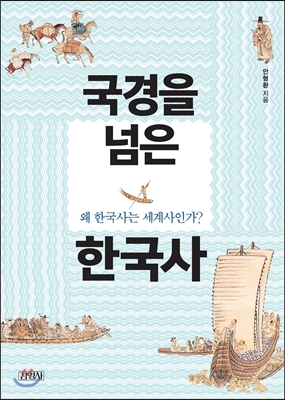
Korean history beyond borders
 |
Description
Book Introduction
Why is Korean history world history?
Meet a new Korean history filled with diversity and objectivity!
How did the Islamic cleric Doro settle in Joseon? What was the origin of the Korean Wave, which swept through the heart of the world's largest empire, the Mongol Empire, like? What was the pride of the Koryo people who rejected aid from the Song Dynasty of China? How are the descendants of Lee Yong-sang, a Vietnamese royal who fled to Goryeo, living? Who were the 27 Jurchen chieftains who protected Yi Seong-gye during his time as a barbarian? Was Jumong, the founder of Goguryeo, of Siberian Kori origin?
This is an upgraded history book that provides a three-dimensional insight into world history within Korean history and Korean history within world history, from Silla within Islam to Mongolia within Joseon.
Meet a new Korean history filled with diversity and objectivity!
How did the Islamic cleric Doro settle in Joseon? What was the origin of the Korean Wave, which swept through the heart of the world's largest empire, the Mongol Empire, like? What was the pride of the Koryo people who rejected aid from the Song Dynasty of China? How are the descendants of Lee Yong-sang, a Vietnamese royal who fled to Goryeo, living? Who were the 27 Jurchen chieftains who protected Yi Seong-gye during his time as a barbarian? Was Jumong, the founder of Goguryeo, of Siberian Kori origin?
This is an upgraded history book that provides a three-dimensional insight into world history within Korean history and Korean history within world history, from Silla within Islam to Mongolia within Joseon.
- You can preview some of the book's contents.
Preview
index
Introduction
Part 1: Silla in the 8th Century, Standing Shoulder to Shoulder with the Tang Empire
1.
The most culturally advanced country of the 8th century
2.
The East Asian merchant who deceived the Japanese emperor
3.
A maritime power that exported sails to Arabia
4.
Of the 90 students who passed the entrance exam, 80 were Silla students.
5.
Monk Yuan Cheuk, who was respected by Empress Wu Zetian
6.
The Silla Diaspora, a Diaspora on a par with Muslims
7.
The maritime iron power of King Talhae and the Silla place names scattered in Zhejiang Province
8.
The Kim royal family, which began with the Xiongnu Kim Il-je
9.
Seorabeol, a global city where Cheoyong and Muslims traveled
10.
The Sino-Tang War, which exploited the conflict between Tibet and the Tang Dynasty
11.
Lahu tribe, Baekjehyang, and Goseonji and Lee Jeonggi
Part 2: The 11th Century Goryeo, the Most Dynamic Period in Korean History
1.
Promoting Korea to the world through the sea
2.
Immigrants who naturalized in Goryeo from the Later Zhou to the Jurchen
3.
Byeokrando, a hub of East Asian trade where merchants from various countries frequented
4.
The city of twins, Gaegyeong and Songsang
5.
Goryeo women were free to divorce and remarry.
6.
Equidistant diplomacy between the Song and Khitan
7.
The red sun rising in the east, the cultural pride of the Koryo people
8.
Goryeo monks writing the Cheontae sect's textbook in China
9.
A country under an emperor with an independent worldview
10.
Was the founder of the Jin Dynasty a Goryeo person?
11.
The northeastern territory was larger than Goguryeo
12.
Six weeks in Gangdong and 14 wars over 27 years
13.
The globalization of the late Goryeo Dynasty that brought prosperity to Joseon
Part 3: Joseon in the 15th Century: Its Golden Age of Openness and Experimentation
1.
Joseon, a scientific and technological powerhouse, and Asia, a closed nation
2.
Jurchen chieftains who received official positions and salaries from Joseon
3.
Huihui Samun, Ryukyu Kingdom, Vietnam… Naturalized Foreign Surnames
4.
Shingijeon, a firearm manufacturing technology that surpassed the Ming Dynasty
5.
A combination of Yuan Dynasty's power and Arabian automatic timekeeping device
6.
An independent astronomical system outside of China and Arabia, Chiljeongsan
7.
Hunminjeongeum, the result of international character research
8.
130 days of maternity leave and the world's first public opinion poll
Part 4: Global Leaders in Korean History
1.
Kim Chun-chu, a world-renowned figure who understood the political situation in 7th-century East Asia
2.
The spirit of openness and inclusiveness of sea merchants, Wang Geon
3.
King Chungseon, the educated man closest to world power
4.
King Yi Seong-gye, who embraced foreign peoples as friends
Conclusion
References
Part 1: Silla in the 8th Century, Standing Shoulder to Shoulder with the Tang Empire
1.
The most culturally advanced country of the 8th century
2.
The East Asian merchant who deceived the Japanese emperor
3.
A maritime power that exported sails to Arabia
4.
Of the 90 students who passed the entrance exam, 80 were Silla students.
5.
Monk Yuan Cheuk, who was respected by Empress Wu Zetian
6.
The Silla Diaspora, a Diaspora on a par with Muslims
7.
The maritime iron power of King Talhae and the Silla place names scattered in Zhejiang Province
8.
The Kim royal family, which began with the Xiongnu Kim Il-je
9.
Seorabeol, a global city where Cheoyong and Muslims traveled
10.
The Sino-Tang War, which exploited the conflict between Tibet and the Tang Dynasty
11.
Lahu tribe, Baekjehyang, and Goseonji and Lee Jeonggi
Part 2: The 11th Century Goryeo, the Most Dynamic Period in Korean History
1.
Promoting Korea to the world through the sea
2.
Immigrants who naturalized in Goryeo from the Later Zhou to the Jurchen
3.
Byeokrando, a hub of East Asian trade where merchants from various countries frequented
4.
The city of twins, Gaegyeong and Songsang
5.
Goryeo women were free to divorce and remarry.
6.
Equidistant diplomacy between the Song and Khitan
7.
The red sun rising in the east, the cultural pride of the Koryo people
8.
Goryeo monks writing the Cheontae sect's textbook in China
9.
A country under an emperor with an independent worldview
10.
Was the founder of the Jin Dynasty a Goryeo person?
11.
The northeastern territory was larger than Goguryeo
12.
Six weeks in Gangdong and 14 wars over 27 years
13.
The globalization of the late Goryeo Dynasty that brought prosperity to Joseon
Part 3: Joseon in the 15th Century: Its Golden Age of Openness and Experimentation
1.
Joseon, a scientific and technological powerhouse, and Asia, a closed nation
2.
Jurchen chieftains who received official positions and salaries from Joseon
3.
Huihui Samun, Ryukyu Kingdom, Vietnam… Naturalized Foreign Surnames
4.
Shingijeon, a firearm manufacturing technology that surpassed the Ming Dynasty
5.
A combination of Yuan Dynasty's power and Arabian automatic timekeeping device
6.
An independent astronomical system outside of China and Arabia, Chiljeongsan
7.
Hunminjeongeum, the result of international character research
8.
130 days of maternity leave and the world's first public opinion poll
Part 4: Global Leaders in Korean History
1.
Kim Chun-chu, a world-renowned figure who understood the political situation in 7th-century East Asia
2.
The spirit of openness and inclusiveness of sea merchants, Wang Geon
3.
King Chungseon, the educated man closest to world power
4.
King Yi Seong-gye, who embraced foreign peoples as friends
Conclusion
References
Detailed image

Into the book
There is a small island in Lake Baikal in Siberia.
The island is known as the birthplace of the Cori people.
It is said that the bull took a swan that came down from the sky as his wife and had 11 sons, from whom the Corian tribe began.
It is said that a branch of this Koryo people moved southeast from Baikal and formed Koryo → Gori → Goryeo (Goguryeo was originally called Goryeo).
In the Book of the Later Han and the Book of Liang, Jumong was described as “a person from the Northern Barbarian (note that this is not the Eastern Barbarian) Gori State.”
And in the Kangxi Dictionary, which can be called the Qing Dynasty's Chinese character dictionary, it is written that Goryeo's 'Ryeo' is pronounced as 'Ri'.
Also, in this region, a sharpshooter is called Tumen, which also has a similar pronunciation to Jumong (it is said that in Buyeo, a person who was good at archery was called Jumong).
Currently, the Buryat people, a branch of the Mongols, live east of Lake Baikal.
Some say that this Buryat is likely to be Buyeo.
Buryat people also use Arbai to refer to Samon, but the r sound is weakened and they call him Abai.
Also, Mongolians call Korea Solongus.
Near Baikal, there is the Soklon people. What is their relationship with the Korean people? There are also Oranki peoples nearby.
---From “Lake Baikal, the Origin of the Korean People”
Of interest is the Lahu people, an ethnic minority living in southwestern Yunnan Province, China, northwestern Myanmar, northern Thailand, and northwestern Laos.
The Lahu people have retained customs similar to those of Goguryeo, such as a man living with his wife's family, holding a wedding ceremony with chickens by his side, and when an older brother dies, the younger brother takes his sister-in-law as his wife.
The clothes they wear and the ornaments they wear are similar to those of the people in Goguryeo tomb murals.
They also wear colorful clothes like us during holidays.
In the diet, food is eaten with chopsticks and a spoon, vegetables are pickled with salt and then washed with water, and rice is mashed and fermented before eating.
Lee Hyeon-bok, professor emeritus at Seoul National University, argues as follows: “The order of words in Lahu sentences is identical to that of Korean: subject + complement + predicate.”
Lahu 'Nere Kauliro Kaibeyo' means 'You are going to Korea'.
Here, the '너' in '너레' is very similar in form to the Korean word '너'.
Also, 're' can be seen as a nominative particle, like 're' in the North Korean dialect 'naere'.
'~ro' also has the same form and function as our particle indicating the direction of movement, such as 'to Seoul' and 'to Gwangju'.
'Kai' is similar in meaning and pronunciation to the Korean word 'gada'.
'Kauli' is a word that means 'Goguryeo' or 'Goryeo' in China, Thailand, and other places, and refers to our country.
It is said that the origins of the Lahu people can be found among the peoples who lived in the Gansu and Qinghai regions of ancient China.
Cheonghae Castle was a place where soldiers composed of Goguryeo refugees were stationed.
Therefore, it is highly likely that the Lahu people are descendants of Goguryeo who were captured by Tang after the fall of Goguryeo and then abandoned in a remote area.
---From "Lahu Tribe, Baekjehyang, and Goseonji and Lee Jeonggi"
The Song Dynasty, which was at war with the Khitan at the time, tried to please Goryeo in trade.
Therefore, the so-called Sayeo-pum (賜與品) that Song sent to Goryeo was much more than the tribute that Goryeo sent.
A trade imbalance has occurred.
At that time, the items that Goryeo exported to Song included gold and silver utensils, silk with flower patterns, fine ramie, raw cloth, ginseng, leopard skin, seal skin, white paper, incense, stone with flower patterns, mother-of-pearl, long swords, paper, brushes, ink, and fans.
The items imported from Song included clothing belts, saddles, silk, lacquer cases, jade, buffalo horn, gold and silver utensils, gold leaf, tea, spices, medicinal herbs, porcelain, books, musical instruments, and currency, many of which were not made in China.
Goods from Southwest Asia entered Goryeo through the Song Dynasty.
Regarding this trade, Su Dongpo said, “The tributes we receive are unnecessary items like ornaments, but the people are buying them with the money they have earned through hard work.
He expressed his dissatisfaction, saying, “The goods brought by the Goryeo delegation are causing chaos in the market.”
He also expressed strong opposition, saying, “Goryeo’s cunning merchants come in at any time under the pretext of paying tribute and cause commotion in China.”
Scholar and politician Sima Guang also called for severing diplomatic relations with Goryeo, which he considered fruitless.
Judging by the fact that Chinese intellectuals have openly expressed their discontent, it seems that the trade imbalance was more serious than expected.
---From "Byeokrando, a hub of East Asian trade frequented by merchants from the Great Food Nation"
During the 13th and 14th centuries, the Mongol Empire, living up to its name of 'Pax Mongolica (world peace under Mongol rule),' promoted human and material exchanges on an unprecedented scale in human history across the Eurasian continent, from Eastern Europe to Goryeo.
Furthermore, thanks to the Mongols' ruling style of not imposing a specific ideology or religion, various ethnic groups were able to coexist within the Mongol Empire.
… The princess system brought about changes to the traditional social order of Goryeo, such as by spreading the practice of early marriage, while also popularizing the Goryeo style (高麗樣) in Mongolian aristocratic society.
It is said that during the late Yuan Dynasty, about half of the women working in the palace were Goryeo women, and it became a trend among Mongolian nobles to take Goryeo women as wives.
Through them, Goryeo-style clothing, food, and utensils became popular.
In modern terms, the Korean Wave is blowing through the heart of the world empire, Mongolia.
Some Goryeo women went beyond the Chinese mainland to marry in India and Central Asia. In June of the 24th year of King Chungnyeol's reign (1298), Prince Paehap-ri of Mapal-Aguk sent an envoy to Goryeo and presented silver silk hats, agarwood, and hemp.
Mapalaga is a small country on the Coromandel Coast of India, famous for its cotton production.
The reason why this Mapal Kingdom sent a gift to Goryeo was because the princess was the daughter of Chae In-gyu, a Goryeo person.
---From “Globalization in the Late Goryeo Dynasty That Achieved Joseon’s Prosperity”
Let's look at the records from the early days of King Sejong's reign.
In particular, the character Do-ro, who appears in the records, is interesting.
He seems to have first entered Joseon during the reign of King Taejong.
“When the monk Samun Doro came with his wife and children and wanted to stay, the king gave him a house to live in (Taejong Sillok, Volume 13, January 17, Year 7 of King Taejong’s reign).”
Doro gained the king's trust by collecting crystals and making various items as tribute, and the king allowed him to mine crystals throughout the country.
Muslim roads are always recorded in the Annals of the Joseon Dynasty as the Huihui Samun, a term that generally refers to the clerical class.
In other words, it appears that Doro occupied the position of religious leader in the Muslim community that existed in Joseon at the time.
Muslims appear to have lived in Joseon in the early 15th century without significant conflict with the indigenous culture, with tacit consent to the preservation of their traditional rituals.
They were regularly invited to and attended court ceremonies.
“Next, when the monks and the people of the congregation enter the courtyard and sing a hymn, the judge of the rites kneels and prostrates himself to announce that the rites have been completed.
When Tongchan concludes the ceremony, His Majesty the King descends from the left and music begins to play (Volume 1 of the Annals of King Sejong, 27th day of the 9th month of the year of King Sejong's accession to the throne).” It appears that the Muslims who attended the royal banquet at the time celebrated with their own unique rituals.
That is, they would have recited the Quran and prayed for the long life of the king and the well-being of the nation.
The early Joseon Dynasty was a time when the Quran was recited in the royal court.
-
The island is known as the birthplace of the Cori people.
It is said that the bull took a swan that came down from the sky as his wife and had 11 sons, from whom the Corian tribe began.
It is said that a branch of this Koryo people moved southeast from Baikal and formed Koryo → Gori → Goryeo (Goguryeo was originally called Goryeo).
In the Book of the Later Han and the Book of Liang, Jumong was described as “a person from the Northern Barbarian (note that this is not the Eastern Barbarian) Gori State.”
And in the Kangxi Dictionary, which can be called the Qing Dynasty's Chinese character dictionary, it is written that Goryeo's 'Ryeo' is pronounced as 'Ri'.
Also, in this region, a sharpshooter is called Tumen, which also has a similar pronunciation to Jumong (it is said that in Buyeo, a person who was good at archery was called Jumong).
Currently, the Buryat people, a branch of the Mongols, live east of Lake Baikal.
Some say that this Buryat is likely to be Buyeo.
Buryat people also use Arbai to refer to Samon, but the r sound is weakened and they call him Abai.
Also, Mongolians call Korea Solongus.
Near Baikal, there is the Soklon people. What is their relationship with the Korean people? There are also Oranki peoples nearby.
---From “Lake Baikal, the Origin of the Korean People”
Of interest is the Lahu people, an ethnic minority living in southwestern Yunnan Province, China, northwestern Myanmar, northern Thailand, and northwestern Laos.
The Lahu people have retained customs similar to those of Goguryeo, such as a man living with his wife's family, holding a wedding ceremony with chickens by his side, and when an older brother dies, the younger brother takes his sister-in-law as his wife.
The clothes they wear and the ornaments they wear are similar to those of the people in Goguryeo tomb murals.
They also wear colorful clothes like us during holidays.
In the diet, food is eaten with chopsticks and a spoon, vegetables are pickled with salt and then washed with water, and rice is mashed and fermented before eating.
Lee Hyeon-bok, professor emeritus at Seoul National University, argues as follows: “The order of words in Lahu sentences is identical to that of Korean: subject + complement + predicate.”
Lahu 'Nere Kauliro Kaibeyo' means 'You are going to Korea'.
Here, the '너' in '너레' is very similar in form to the Korean word '너'.
Also, 're' can be seen as a nominative particle, like 're' in the North Korean dialect 'naere'.
'~ro' also has the same form and function as our particle indicating the direction of movement, such as 'to Seoul' and 'to Gwangju'.
'Kai' is similar in meaning and pronunciation to the Korean word 'gada'.
'Kauli' is a word that means 'Goguryeo' or 'Goryeo' in China, Thailand, and other places, and refers to our country.
It is said that the origins of the Lahu people can be found among the peoples who lived in the Gansu and Qinghai regions of ancient China.
Cheonghae Castle was a place where soldiers composed of Goguryeo refugees were stationed.
Therefore, it is highly likely that the Lahu people are descendants of Goguryeo who were captured by Tang after the fall of Goguryeo and then abandoned in a remote area.
---From "Lahu Tribe, Baekjehyang, and Goseonji and Lee Jeonggi"
The Song Dynasty, which was at war with the Khitan at the time, tried to please Goryeo in trade.
Therefore, the so-called Sayeo-pum (賜與品) that Song sent to Goryeo was much more than the tribute that Goryeo sent.
A trade imbalance has occurred.
At that time, the items that Goryeo exported to Song included gold and silver utensils, silk with flower patterns, fine ramie, raw cloth, ginseng, leopard skin, seal skin, white paper, incense, stone with flower patterns, mother-of-pearl, long swords, paper, brushes, ink, and fans.
The items imported from Song included clothing belts, saddles, silk, lacquer cases, jade, buffalo horn, gold and silver utensils, gold leaf, tea, spices, medicinal herbs, porcelain, books, musical instruments, and currency, many of which were not made in China.
Goods from Southwest Asia entered Goryeo through the Song Dynasty.
Regarding this trade, Su Dongpo said, “The tributes we receive are unnecessary items like ornaments, but the people are buying them with the money they have earned through hard work.
He expressed his dissatisfaction, saying, “The goods brought by the Goryeo delegation are causing chaos in the market.”
He also expressed strong opposition, saying, “Goryeo’s cunning merchants come in at any time under the pretext of paying tribute and cause commotion in China.”
Scholar and politician Sima Guang also called for severing diplomatic relations with Goryeo, which he considered fruitless.
Judging by the fact that Chinese intellectuals have openly expressed their discontent, it seems that the trade imbalance was more serious than expected.
---From "Byeokrando, a hub of East Asian trade frequented by merchants from the Great Food Nation"
During the 13th and 14th centuries, the Mongol Empire, living up to its name of 'Pax Mongolica (world peace under Mongol rule),' promoted human and material exchanges on an unprecedented scale in human history across the Eurasian continent, from Eastern Europe to Goryeo.
Furthermore, thanks to the Mongols' ruling style of not imposing a specific ideology or religion, various ethnic groups were able to coexist within the Mongol Empire.
… The princess system brought about changes to the traditional social order of Goryeo, such as by spreading the practice of early marriage, while also popularizing the Goryeo style (高麗樣) in Mongolian aristocratic society.
It is said that during the late Yuan Dynasty, about half of the women working in the palace were Goryeo women, and it became a trend among Mongolian nobles to take Goryeo women as wives.
Through them, Goryeo-style clothing, food, and utensils became popular.
In modern terms, the Korean Wave is blowing through the heart of the world empire, Mongolia.
Some Goryeo women went beyond the Chinese mainland to marry in India and Central Asia. In June of the 24th year of King Chungnyeol's reign (1298), Prince Paehap-ri of Mapal-Aguk sent an envoy to Goryeo and presented silver silk hats, agarwood, and hemp.
Mapalaga is a small country on the Coromandel Coast of India, famous for its cotton production.
The reason why this Mapal Kingdom sent a gift to Goryeo was because the princess was the daughter of Chae In-gyu, a Goryeo person.
---From “Globalization in the Late Goryeo Dynasty That Achieved Joseon’s Prosperity”
Let's look at the records from the early days of King Sejong's reign.
In particular, the character Do-ro, who appears in the records, is interesting.
He seems to have first entered Joseon during the reign of King Taejong.
“When the monk Samun Doro came with his wife and children and wanted to stay, the king gave him a house to live in (Taejong Sillok, Volume 13, January 17, Year 7 of King Taejong’s reign).”
Doro gained the king's trust by collecting crystals and making various items as tribute, and the king allowed him to mine crystals throughout the country.
Muslim roads are always recorded in the Annals of the Joseon Dynasty as the Huihui Samun, a term that generally refers to the clerical class.
In other words, it appears that Doro occupied the position of religious leader in the Muslim community that existed in Joseon at the time.
Muslims appear to have lived in Joseon in the early 15th century without significant conflict with the indigenous culture, with tacit consent to the preservation of their traditional rituals.
They were regularly invited to and attended court ceremonies.
“Next, when the monks and the people of the congregation enter the courtyard and sing a hymn, the judge of the rites kneels and prostrates himself to announce that the rites have been completed.
When Tongchan concludes the ceremony, His Majesty the King descends from the left and music begins to play (Volume 1 of the Annals of King Sejong, 27th day of the 9th month of the year of King Sejong's accession to the throne).” It appears that the Muslims who attended the royal banquet at the time celebrated with their own unique rituals.
That is, they would have recited the Quran and prayed for the long life of the king and the well-being of the nation.
The early Joseon Dynasty was a time when the Quran was recited in the royal court.
-
--From "Huihui Samun, Ryukyu Kingdom, Vietnam… Naturalized Foreign Surnames"
Publisher's Review
Why is Korean history world history?
The first book to record 5,000 years of Korean history that has breathed together with people around the world.
Meet a new world history of diversity and objectivity
Korean history is not simply a collection of events with the Korean Peninsula and parts of Manchuria as their geographical backdrop.
Korean history is truly world history.
The Silla dynasty, scattered across China's Shandong Peninsula, was a form of international diaspora. In the city of Gaeseong, a city of twin peaks, Goryeo women freely enjoyed love with Arabs, and the sound of reciting the Quran resonated brightly at royal banquets during the Joseon Dynasty.
Korean history includes the history of the Lahu people, descendants of the Goguryeo people who remained in China after the unification of the Three Kingdoms, the Baekje Hyang, the hometown of Baekje refugees, and the history of Goseonji, who crossed the Pamir Plateau, and the powerful ruler of the Je Kingdom, Yi Jeong-gi.
The author of this book, [Korean History Beyond Borders], Ahn Hyung-hwan, says that he wanted to awaken the pride of our people from a thoroughly objective standpoint by restoring Korean history within world history and reviving world history that breathes within Korean history.
Muslims who settled in the Korean Peninsula
When the old man Doro came with his wife and children and wanted to live there, the king gave him a house to live in.
-《Taejong Sillok》 Volume 13, January 17, Year 7 of King Taejong's reign
'Hoehui Samun Doro Doro', who appears in the Annals of the Joseon Dynasty.
Who is he? Huihui refers to a Muslim, Shamun refers to a group of clergy, and Doluo is a name.
In other words, he was an Islamic priest who settled in Joseon.
Islamic regions had a steady exchange with Korea since the Silla Dynasty, and this trend continued into the Joseon Dynasty.
The period of most active exchange with Islam was the 11th century Goryeo.
In the History of Goryeo, there is an article that says, “In September of the 15th year of King Hyeonjong’s reign, 100 merchants including Yeolraja of Daeshikguk came and offered local products.”
Also, in the 6th year of King Jeongjong’s reign (1040), “Bonagae, a merchant from Daeshikguk, came and offered various products such as mercury, dragon teeth, incense, myrrh, and large reed wood.
Then the king ordered the official to let them stay at the guest house and treat them well.
He also left behind an article that said, “When they returned, they gave them a lot of gold and silk.”
The great nation that appears here is Islam.
Islamic historians have also been leaving records about Korea since the 9th century.
In 846, Ibn Khurdadhibah's "Roads and Kingdoms" mentions Muslims who migrated to Silla.
“There is a country in China, opposite Gansu, with many mountains and many kings, called Silla.
There is a lot of gold there.
Muslims who go there often settle down there permanently because of the good environment.” There are also records showing that Silla’s ship sails were exported to foreign countries.
The most famous Westerner in Korean history is probably Cheoyong.
The character 'Cheoyong' in Cheoyong means 'to stay' or 'to live', and 'Yong' means 'to contain' or 'to accept', so the name Cheoyong itself means 'a person who is allowed to stay and live'. In Samguk Yusa, Cheoyong's appearance is recorded as 'simmokgobi', meaning that he had sunken eyes and a high nose, suggesting that he may have been of Arab descent.
The warrior statue in Gwaereung in Gyeongju also has the appearance of a Westerner with deep eyes and a high nose.
The warrior depicted on the equestrian figure pottery has a prominent nose and a long beard.
It is unlikely that the sculpture was created based on an imaginary figure, so it is likely that it was created based on common figures that were around us.
This allows us to assume that a significant number of Westerners held relatively high positions within the Silla court.
The continuous exchange with Islam influenced the development of Korean culture and science and technology.
The world's best calendar book, "Chiljeongsan (七政算)", created by Yi Sun-ji and others during the reign of King Sejong of Joseon, is based on the Arabic calendar, the Huihui calendar, and indicates the circumference as 360 degrees. The water clock Jagyeokru, created by Jang Yeong-sil, also has an automatic time signaling device based on the Islamic water clock.
The Korean Wave that swept through the world's largest empire, Goryeoyang
During the 13th and 14th centuries, the Mongol Empire, living up to its name of 'Pax Mongolica', promoted large-scale human and material exchanges across the Eurasian continent from Eastern Europe to Goryeo.
And thanks to the ruling method that did not impose a specific ideology or religion, various ethnic groups were able to coexist within the Mongol Empire.
The road that started from Dadu, the capital of Yuan, led to anywhere in the world.
This historical situation had a great influence on Goryeo culture, allowing Goryeo people to view the world with open eyes.
As is well known, Goryeo was subject to extreme interference in its internal affairs, but it was able to achieve social and cultural development through exchanges with Mongolia.
In the 14th century, the Yuan Dynasty, the world's largest empire, a Korean wave called Goryeo-style blew.
In the late Yuan Dynasty, about half of the women working in the palace were Goryeo women, and it became fashionable among Mongolian nobles to take Goryeo women as wives.
Through them, Goryeo-style clothing, food, and utensils became popular.
Some Goryeo women went beyond mainland China to India and Central Asia to marry.
In June of the 24th year of King Chungnyeol's reign (1298), Prince Paehap-ri of Mapal-a-guk sent an envoy to Goryeo and presented silver silk hats, agarwood, and hemp.
The reason why Mapal-Aguk sent a gift to Goryeo was because the princess was the daughter of Chae In-gyu, a Goryeo person.
Goryeo intellectuals also headed to Mongolia in large numbers.
Lee Gok, Lee Saek, and Bin Woo-gwang passed the Yuan Dynasty's civil service examination and worked as officials, while monks such as Bo-u, Cheon-hee, and Hye-geun were in charge of building and repairing temples and compiling Buddhist scriptures in Mongolia.
It is believed that Goryeo's metal type also flowed into Mongolia and was then spread to West Asia and Europe by Islamic merchants.
Soju, the national liquor, was introduced to Goryeo through the Yuan Dynasty.
The distillation method of making alcohol, invented in Arabia, was introduced to Mongolia, and this distilled alcohol is called araki in Mongolian.
So even now in the Kaesong region, soju is called arakju.
“Is there anything we can do to help China?”
We are the only people within a 1,000-kilometer radius of Beijing who do not speak Chinese as their national language.
Except for the past 150 years, China has always been at the forefront of human culture, accounting for more than a quarter of the world's GDP.
However, Korea has maintained its identity for half a millennium without being assimilated by China.
Looking at the history of foreign exchanges with China, we can surprisingly witness an equal relationship rather than a tributary relationship.
From the 7th to the 9th century, the Tang Dynasty was the world's most culturally advanced nation and a superpower.
However, Silla waged war against this superpower and ultimately achieved victory.
The Tang-Silla War was a product of international sensibility that accurately read the international situation in East Asia.
In September 669, the Tibetan Empire, which arose on the western border of China, attacked the Tarim Basin, the center of the Silk Road.
This was a challenge to the Tang Dynasty's control over the western and Central Asian regions, and was a significant event that could have easily led to the collapse of the Tang Dynasty.
The Silla leadership, seizing this opportunity, employed a double-edged strategy of surprise attacks and bowing their heads, ultimately ending the war with victory in the Battle of Gibeolpo in 676.
The Silla clan, which was on par with Muslims in the Shandong Peninsula and Jiangsu Province, was a form of international diaspora.
According to Ennin's "Record of a Pilgrimage to Tang China to Seek the Dharma," there were about 40 people in attendance at the Lotus Sutra lectures held daily at the Jeoksan Beophwawon in Mundeong County, Shandong Peninsula, established by Jang Bogo, and at times as many as 250 people attended, all of whom were Silla people.
On the 15th day of the 8th month, the Silla people gathered together and had a feast, eating, drinking, dancing, and singing for three days and nights.
The image of Silla people celebrating the Chuseok holiday in a faraway land comes to mind.
The number of people who passed the Bingong-gwa, a civil service examination administered to foreign students in the Tang Dynasty, was 58 until the end of the Tang Dynasty, and 32 during the Five Dynasties and Liang-Tang periods, making a total of 90 people, of whom 80 were from Silla.
This may have been because there were a lot of applicants, but it should also be seen as a result of the excellence of the Silla students.
In the trade between Goryeo and Song, the amount of goods given as gifts was much greater than the amount of tribute sent by Goryeo.
At that time, the items that Goryeo exported to Song included gold and silver utensils, silk with flower patterns, ramie, raw cloth, ginseng, leopard skin, seal skin, white paper, incense, stone with flower patterns, mother-of-pearl, long sword, paper, brush, ink, and fans. Regarding this trade imbalance, Su Dongpo said, “The tributes we receive are unnecessary items like ornaments, but the people are buying them with the money they earn through hard work.
He expressed his discontent, saying, “The goods brought by the Goryeo delegation are causing chaos in the market.”
Goryeo pursued a pragmatic, equidistant diplomacy between the Song and Khitan.
The Goryeo leadership, believing that they could not defeat the Khitan, cut off diplomatic relations with the Song Dynasty using the refusal of the request for reinforcements as an excuse.
In fact, in the 12th year of King Munjong’s reign (1058), when the king attempted to reestablish diplomatic relations with the Song Dynasty, his subjects unanimously opposed the idea, saying, “Our country has long been blessed with civilization and music.
A line of merchant ships enters our country, bringing in precious goods every day.
“Even if we communicate with China (reopen diplomatic relations), will we actually receive any help?” he argued.
In a word, he was full of self-esteem and pride.
The reformist monarch Gwangjong also actively employed naturalized Chinese people, such as Shuangji from the Later Zhou Dynasty, as officials.
This is a phenomenon that cannot be found in any dynasty before or after it, and it shows that Goryeo society was international and open to that extent.
Ssanggi was appointed to the position of Jigonggeo, which led the civil service examination, and supported Gwangjong's reforms. He even called his father, Ssangcheol, to Goryeo to serve as the Left State Councillor.
There has never been a case in our history, before or since, where naturalized citizens were appointed for political reasons like this.
Korean history from the north: Koryo, Jurchen, Malgal, and Manchu
There are a few islands in Lake Baikal in Siberia.
This island is known as the birthplace of the Cory people, where it is said that a bull married a swan that descended from the sky and had 11 sons, from whom the Cory people originated.
There is a theory that a branch of this Kori tribe moved southeast from Baikal and formed Kori → Gori → Goryeo (Goguryeo was originally called Goryeo).
In the Book of the Later Han and the Book of Liang, Jumong was described as “a person from the Northern Barbarian (note that this is not the Eastern Barbarian) Gori State.”
In the Kangxi Dictionary, a comprehensive dictionary of Chinese characters from the Qing Dynasty, it is stated that Goryeo's 'Ryeo' is pronounced as 'Ri'.
Also, in this region, a sharpshooter is called Tumen, which also has a similar pronunciation to Jumong (in Buyeo, a person who was good at archery was called Jumong).
Currently, the Buryat people, a branch of the Mongols, live east of Lake Baikal.
There is also a theory that this Buryat is likely to be Buyeo.
Buryat people refer to Samon as Arbai, but the pronunciation of r is weakened, so they call him Abai.
If so, wouldn't Jumong, a member of the Kori tribe, have escaped from Northern Buyeo, the Buryat nation located along the Selenge River, and moved south to establish Goguryeo? Furthermore, the Mongols refer to Korea as Solongus, and there are Solon tribes near Lake Baikal, as well as Orangki tribes in the surrounding area.
Could it be that the word we use to refer to barbarians still contains traces of memories of a hostile race from long ago?
During the Unified Silla period, there was a unit of Jurchen people in the 9th Seodang, a regular army, and the people of Balhae were Malgal people.
In the "History of the Jin" which summarizes the history of the Manchu people and the "Manchu Yuanliu Gao" which was compiled by the Qing Dynasty as a national project, there is a passage that says that the founder of the Jin dynasty came from Goryeo, and in the "Annals of the Joseon Dynasty" there is a passage that mentions 27 Jurchen chieftains who protected Yi Seong-gye when he was a sleeping dragon.
Yi Seong-gye expanded his power not only by actively recruiting the Jurchen people of his hometown but also the Jurchen people of the northeastern region in several battles in the northern region. The reason Yi Seong-gye was able to withdraw from Wihwado was because the main force of his troops were the Jurchen people, who were practically his private soldiers.
Lee Ji-ran, a close friend and advisor of Yi Seong-gye, was born with the name Kuran Turan Timur, but later received the surname Lee from Yi Seong-gye and changed his name to Lee Ji-ran.
When Joseon was founded, he was awarded the first rank of founding contributors, and the current Cheonghae Lee clan is his descendants.
Korean History Across the Southern Sea: Ryukyu Kingdom and Vietnam
Ryukyu Kingdom, now Okinawa, was an independent nation until it was annexed by Japan in 1879, but it had had constant exchanges with the Korean Peninsula since prehistoric times.
In Okinawa, Soba-style pottery, which appears to have been influenced by the comb-pattern pottery of the Korean Peninsula, and stone cist tombs from the Bronze Age of the Korean Peninsula have been discovered.
In addition, the discovery of inlaid celadon ware from various parts of Okinawa, bronze bells made during the reign of King Gwangjong of Goryeo, and roof tiles inscribed with the words “Gye-yu-nyeon Goryeo Wa-jang-jo (癸酉年高麗瓦匠造)”, indicates that there was a deep connection with the Korean Peninsula.
During the reign of King Sejong of Joseon, Joseon Dynasty invited Joseon technicians from Ryukyu Kingdom to build warships.
It was to learn shipbuilding techniques and compare the technologies of the two countries.
In the third year of King Taejo of Joseon (1394), an incident occurred where the king of Ryukyu Kingdom went into exile in Joseon.
King Onsado of Sannam, Ryukyu Kingdom, was defeated in a civil war and came to Joseon with 15 men.
The Ryukyu Kingdom sent an envoy to request the return of King Sannam, but King Taejo did not respond and treated Onsado generously.
He was even invited to the meeting twice.
However, Onsado lived only four years after coming to Joseon and died in the 7th year of King Taejo's reign (1398).
Onsado, who lived in Jinyang (present-day Jinju) after coming to Joseon, died without leaving any descendants, but the descendants of his 15 subordinates are probably still living somewhere in this land.
Before Onsado, there were other royal exiles from the southern country.
In the 13th year of King Gojong's reign (1226), Lee Yong-sang, the uncle of King Hyejong, the 9th king of the Ly Dynasty (1009-1226), the first independent state in Vietnam, and commander-in-chief of the military, came into exile to the Korean Peninsula.
Lee Yong-sang sailed 3,600 kilometers and arrived at Hwasan on the Ongjin Peninsula on the west coast while the royal family was being slaughtered by rebels.
When the Mongol army invaded this place, Lee Yong-sang joined forces with the residents and repelled the invaders.
When this fact became known, King Gojong of Goryeo granted Lee Yong-sang the surname Lee, whose hometown was Hwasan.
When the Hwasan Lee Clan Association visited Vietnam in 1995, they were treated with great respect by the president and other high-ranking officials, saying that they were descendants of the only royal family of the Ly Dynasty.
Of the 280 or so surnames in Korea, nearly half, or 130, are naturalized surnames.
For a diverse and objective Korean history
The controversy surrounding the national history textbook has passed like a storm.
What is it about Korean history that gives rise to such fierce confrontation and conflict? History is fundamentally about past events.
Nevertheless, national identity changes depending on how those events are interpreted.
Japan's distortion of history and China's Northeast Project are inappropriate products that arose in this context.
So what about the national history textbooks? While we'll have to wait and see the final outcome, what's clear is that the debate surrounding them is a conflict over our identity and a turning point that will determine our future.
A healthy view of history in our time fundamentally presupposes diversity and objectivity.
We do not need to be intoxicated by fantastical nationalism and imagine a world empire, Gojoseon, nor do we need to shrink under the shadow of colonial historiography and try to minimize the scope of Korean history.
All we need to do is objectively examine Korea's history, which has breathed alongside the world for half a millennium, and look to the future together with the history of our neighbors who have created world history together.
While there have been many books covering the history of foreign exchanges during specific periods, there have been few books that have introduced world history within Korean history and Korean history within world history in a way that is accessible to the general public while covering the entire five thousand years of Korean history.
I recommend this book to readers.
The first book to record 5,000 years of Korean history that has breathed together with people around the world.
Meet a new world history of diversity and objectivity
Korean history is not simply a collection of events with the Korean Peninsula and parts of Manchuria as their geographical backdrop.
Korean history is truly world history.
The Silla dynasty, scattered across China's Shandong Peninsula, was a form of international diaspora. In the city of Gaeseong, a city of twin peaks, Goryeo women freely enjoyed love with Arabs, and the sound of reciting the Quran resonated brightly at royal banquets during the Joseon Dynasty.
Korean history includes the history of the Lahu people, descendants of the Goguryeo people who remained in China after the unification of the Three Kingdoms, the Baekje Hyang, the hometown of Baekje refugees, and the history of Goseonji, who crossed the Pamir Plateau, and the powerful ruler of the Je Kingdom, Yi Jeong-gi.
The author of this book, [Korean History Beyond Borders], Ahn Hyung-hwan, says that he wanted to awaken the pride of our people from a thoroughly objective standpoint by restoring Korean history within world history and reviving world history that breathes within Korean history.
Muslims who settled in the Korean Peninsula
When the old man Doro came with his wife and children and wanted to live there, the king gave him a house to live in.
-《Taejong Sillok》 Volume 13, January 17, Year 7 of King Taejong's reign
'Hoehui Samun Doro Doro', who appears in the Annals of the Joseon Dynasty.
Who is he? Huihui refers to a Muslim, Shamun refers to a group of clergy, and Doluo is a name.
In other words, he was an Islamic priest who settled in Joseon.
Islamic regions had a steady exchange with Korea since the Silla Dynasty, and this trend continued into the Joseon Dynasty.
The period of most active exchange with Islam was the 11th century Goryeo.
In the History of Goryeo, there is an article that says, “In September of the 15th year of King Hyeonjong’s reign, 100 merchants including Yeolraja of Daeshikguk came and offered local products.”
Also, in the 6th year of King Jeongjong’s reign (1040), “Bonagae, a merchant from Daeshikguk, came and offered various products such as mercury, dragon teeth, incense, myrrh, and large reed wood.
Then the king ordered the official to let them stay at the guest house and treat them well.
He also left behind an article that said, “When they returned, they gave them a lot of gold and silk.”
The great nation that appears here is Islam.
Islamic historians have also been leaving records about Korea since the 9th century.
In 846, Ibn Khurdadhibah's "Roads and Kingdoms" mentions Muslims who migrated to Silla.
“There is a country in China, opposite Gansu, with many mountains and many kings, called Silla.
There is a lot of gold there.
Muslims who go there often settle down there permanently because of the good environment.” There are also records showing that Silla’s ship sails were exported to foreign countries.
The most famous Westerner in Korean history is probably Cheoyong.
The character 'Cheoyong' in Cheoyong means 'to stay' or 'to live', and 'Yong' means 'to contain' or 'to accept', so the name Cheoyong itself means 'a person who is allowed to stay and live'. In Samguk Yusa, Cheoyong's appearance is recorded as 'simmokgobi', meaning that he had sunken eyes and a high nose, suggesting that he may have been of Arab descent.
The warrior statue in Gwaereung in Gyeongju also has the appearance of a Westerner with deep eyes and a high nose.
The warrior depicted on the equestrian figure pottery has a prominent nose and a long beard.
It is unlikely that the sculpture was created based on an imaginary figure, so it is likely that it was created based on common figures that were around us.
This allows us to assume that a significant number of Westerners held relatively high positions within the Silla court.
The continuous exchange with Islam influenced the development of Korean culture and science and technology.
The world's best calendar book, "Chiljeongsan (七政算)", created by Yi Sun-ji and others during the reign of King Sejong of Joseon, is based on the Arabic calendar, the Huihui calendar, and indicates the circumference as 360 degrees. The water clock Jagyeokru, created by Jang Yeong-sil, also has an automatic time signaling device based on the Islamic water clock.
The Korean Wave that swept through the world's largest empire, Goryeoyang
During the 13th and 14th centuries, the Mongol Empire, living up to its name of 'Pax Mongolica', promoted large-scale human and material exchanges across the Eurasian continent from Eastern Europe to Goryeo.
And thanks to the ruling method that did not impose a specific ideology or religion, various ethnic groups were able to coexist within the Mongol Empire.
The road that started from Dadu, the capital of Yuan, led to anywhere in the world.
This historical situation had a great influence on Goryeo culture, allowing Goryeo people to view the world with open eyes.
As is well known, Goryeo was subject to extreme interference in its internal affairs, but it was able to achieve social and cultural development through exchanges with Mongolia.
In the 14th century, the Yuan Dynasty, the world's largest empire, a Korean wave called Goryeo-style blew.
In the late Yuan Dynasty, about half of the women working in the palace were Goryeo women, and it became fashionable among Mongolian nobles to take Goryeo women as wives.
Through them, Goryeo-style clothing, food, and utensils became popular.
Some Goryeo women went beyond mainland China to India and Central Asia to marry.
In June of the 24th year of King Chungnyeol's reign (1298), Prince Paehap-ri of Mapal-a-guk sent an envoy to Goryeo and presented silver silk hats, agarwood, and hemp.
The reason why Mapal-Aguk sent a gift to Goryeo was because the princess was the daughter of Chae In-gyu, a Goryeo person.
Goryeo intellectuals also headed to Mongolia in large numbers.
Lee Gok, Lee Saek, and Bin Woo-gwang passed the Yuan Dynasty's civil service examination and worked as officials, while monks such as Bo-u, Cheon-hee, and Hye-geun were in charge of building and repairing temples and compiling Buddhist scriptures in Mongolia.
It is believed that Goryeo's metal type also flowed into Mongolia and was then spread to West Asia and Europe by Islamic merchants.
Soju, the national liquor, was introduced to Goryeo through the Yuan Dynasty.
The distillation method of making alcohol, invented in Arabia, was introduced to Mongolia, and this distilled alcohol is called araki in Mongolian.
So even now in the Kaesong region, soju is called arakju.
“Is there anything we can do to help China?”
We are the only people within a 1,000-kilometer radius of Beijing who do not speak Chinese as their national language.
Except for the past 150 years, China has always been at the forefront of human culture, accounting for more than a quarter of the world's GDP.
However, Korea has maintained its identity for half a millennium without being assimilated by China.
Looking at the history of foreign exchanges with China, we can surprisingly witness an equal relationship rather than a tributary relationship.
From the 7th to the 9th century, the Tang Dynasty was the world's most culturally advanced nation and a superpower.
However, Silla waged war against this superpower and ultimately achieved victory.
The Tang-Silla War was a product of international sensibility that accurately read the international situation in East Asia.
In September 669, the Tibetan Empire, which arose on the western border of China, attacked the Tarim Basin, the center of the Silk Road.
This was a challenge to the Tang Dynasty's control over the western and Central Asian regions, and was a significant event that could have easily led to the collapse of the Tang Dynasty.
The Silla leadership, seizing this opportunity, employed a double-edged strategy of surprise attacks and bowing their heads, ultimately ending the war with victory in the Battle of Gibeolpo in 676.
The Silla clan, which was on par with Muslims in the Shandong Peninsula and Jiangsu Province, was a form of international diaspora.
According to Ennin's "Record of a Pilgrimage to Tang China to Seek the Dharma," there were about 40 people in attendance at the Lotus Sutra lectures held daily at the Jeoksan Beophwawon in Mundeong County, Shandong Peninsula, established by Jang Bogo, and at times as many as 250 people attended, all of whom were Silla people.
On the 15th day of the 8th month, the Silla people gathered together and had a feast, eating, drinking, dancing, and singing for three days and nights.
The image of Silla people celebrating the Chuseok holiday in a faraway land comes to mind.
The number of people who passed the Bingong-gwa, a civil service examination administered to foreign students in the Tang Dynasty, was 58 until the end of the Tang Dynasty, and 32 during the Five Dynasties and Liang-Tang periods, making a total of 90 people, of whom 80 were from Silla.
This may have been because there were a lot of applicants, but it should also be seen as a result of the excellence of the Silla students.
In the trade between Goryeo and Song, the amount of goods given as gifts was much greater than the amount of tribute sent by Goryeo.
At that time, the items that Goryeo exported to Song included gold and silver utensils, silk with flower patterns, ramie, raw cloth, ginseng, leopard skin, seal skin, white paper, incense, stone with flower patterns, mother-of-pearl, long sword, paper, brush, ink, and fans. Regarding this trade imbalance, Su Dongpo said, “The tributes we receive are unnecessary items like ornaments, but the people are buying them with the money they earn through hard work.
He expressed his discontent, saying, “The goods brought by the Goryeo delegation are causing chaos in the market.”
Goryeo pursued a pragmatic, equidistant diplomacy between the Song and Khitan.
The Goryeo leadership, believing that they could not defeat the Khitan, cut off diplomatic relations with the Song Dynasty using the refusal of the request for reinforcements as an excuse.
In fact, in the 12th year of King Munjong’s reign (1058), when the king attempted to reestablish diplomatic relations with the Song Dynasty, his subjects unanimously opposed the idea, saying, “Our country has long been blessed with civilization and music.
A line of merchant ships enters our country, bringing in precious goods every day.
“Even if we communicate with China (reopen diplomatic relations), will we actually receive any help?” he argued.
In a word, he was full of self-esteem and pride.
The reformist monarch Gwangjong also actively employed naturalized Chinese people, such as Shuangji from the Later Zhou Dynasty, as officials.
This is a phenomenon that cannot be found in any dynasty before or after it, and it shows that Goryeo society was international and open to that extent.
Ssanggi was appointed to the position of Jigonggeo, which led the civil service examination, and supported Gwangjong's reforms. He even called his father, Ssangcheol, to Goryeo to serve as the Left State Councillor.
There has never been a case in our history, before or since, where naturalized citizens were appointed for political reasons like this.
Korean history from the north: Koryo, Jurchen, Malgal, and Manchu
There are a few islands in Lake Baikal in Siberia.
This island is known as the birthplace of the Cory people, where it is said that a bull married a swan that descended from the sky and had 11 sons, from whom the Cory people originated.
There is a theory that a branch of this Kori tribe moved southeast from Baikal and formed Kori → Gori → Goryeo (Goguryeo was originally called Goryeo).
In the Book of the Later Han and the Book of Liang, Jumong was described as “a person from the Northern Barbarian (note that this is not the Eastern Barbarian) Gori State.”
In the Kangxi Dictionary, a comprehensive dictionary of Chinese characters from the Qing Dynasty, it is stated that Goryeo's 'Ryeo' is pronounced as 'Ri'.
Also, in this region, a sharpshooter is called Tumen, which also has a similar pronunciation to Jumong (in Buyeo, a person who was good at archery was called Jumong).
Currently, the Buryat people, a branch of the Mongols, live east of Lake Baikal.
There is also a theory that this Buryat is likely to be Buyeo.
Buryat people refer to Samon as Arbai, but the pronunciation of r is weakened, so they call him Abai.
If so, wouldn't Jumong, a member of the Kori tribe, have escaped from Northern Buyeo, the Buryat nation located along the Selenge River, and moved south to establish Goguryeo? Furthermore, the Mongols refer to Korea as Solongus, and there are Solon tribes near Lake Baikal, as well as Orangki tribes in the surrounding area.
Could it be that the word we use to refer to barbarians still contains traces of memories of a hostile race from long ago?
During the Unified Silla period, there was a unit of Jurchen people in the 9th Seodang, a regular army, and the people of Balhae were Malgal people.
In the "History of the Jin" which summarizes the history of the Manchu people and the "Manchu Yuanliu Gao" which was compiled by the Qing Dynasty as a national project, there is a passage that says that the founder of the Jin dynasty came from Goryeo, and in the "Annals of the Joseon Dynasty" there is a passage that mentions 27 Jurchen chieftains who protected Yi Seong-gye when he was a sleeping dragon.
Yi Seong-gye expanded his power not only by actively recruiting the Jurchen people of his hometown but also the Jurchen people of the northeastern region in several battles in the northern region. The reason Yi Seong-gye was able to withdraw from Wihwado was because the main force of his troops were the Jurchen people, who were practically his private soldiers.
Lee Ji-ran, a close friend and advisor of Yi Seong-gye, was born with the name Kuran Turan Timur, but later received the surname Lee from Yi Seong-gye and changed his name to Lee Ji-ran.
When Joseon was founded, he was awarded the first rank of founding contributors, and the current Cheonghae Lee clan is his descendants.
Korean History Across the Southern Sea: Ryukyu Kingdom and Vietnam
Ryukyu Kingdom, now Okinawa, was an independent nation until it was annexed by Japan in 1879, but it had had constant exchanges with the Korean Peninsula since prehistoric times.
In Okinawa, Soba-style pottery, which appears to have been influenced by the comb-pattern pottery of the Korean Peninsula, and stone cist tombs from the Bronze Age of the Korean Peninsula have been discovered.
In addition, the discovery of inlaid celadon ware from various parts of Okinawa, bronze bells made during the reign of King Gwangjong of Goryeo, and roof tiles inscribed with the words “Gye-yu-nyeon Goryeo Wa-jang-jo (癸酉年高麗瓦匠造)”, indicates that there was a deep connection with the Korean Peninsula.
During the reign of King Sejong of Joseon, Joseon Dynasty invited Joseon technicians from Ryukyu Kingdom to build warships.
It was to learn shipbuilding techniques and compare the technologies of the two countries.
In the third year of King Taejo of Joseon (1394), an incident occurred where the king of Ryukyu Kingdom went into exile in Joseon.
King Onsado of Sannam, Ryukyu Kingdom, was defeated in a civil war and came to Joseon with 15 men.
The Ryukyu Kingdom sent an envoy to request the return of King Sannam, but King Taejo did not respond and treated Onsado generously.
He was even invited to the meeting twice.
However, Onsado lived only four years after coming to Joseon and died in the 7th year of King Taejo's reign (1398).
Onsado, who lived in Jinyang (present-day Jinju) after coming to Joseon, died without leaving any descendants, but the descendants of his 15 subordinates are probably still living somewhere in this land.
Before Onsado, there were other royal exiles from the southern country.
In the 13th year of King Gojong's reign (1226), Lee Yong-sang, the uncle of King Hyejong, the 9th king of the Ly Dynasty (1009-1226), the first independent state in Vietnam, and commander-in-chief of the military, came into exile to the Korean Peninsula.
Lee Yong-sang sailed 3,600 kilometers and arrived at Hwasan on the Ongjin Peninsula on the west coast while the royal family was being slaughtered by rebels.
When the Mongol army invaded this place, Lee Yong-sang joined forces with the residents and repelled the invaders.
When this fact became known, King Gojong of Goryeo granted Lee Yong-sang the surname Lee, whose hometown was Hwasan.
When the Hwasan Lee Clan Association visited Vietnam in 1995, they were treated with great respect by the president and other high-ranking officials, saying that they were descendants of the only royal family of the Ly Dynasty.
Of the 280 or so surnames in Korea, nearly half, or 130, are naturalized surnames.
For a diverse and objective Korean history
The controversy surrounding the national history textbook has passed like a storm.
What is it about Korean history that gives rise to such fierce confrontation and conflict? History is fundamentally about past events.
Nevertheless, national identity changes depending on how those events are interpreted.
Japan's distortion of history and China's Northeast Project are inappropriate products that arose in this context.
So what about the national history textbooks? While we'll have to wait and see the final outcome, what's clear is that the debate surrounding them is a conflict over our identity and a turning point that will determine our future.
A healthy view of history in our time fundamentally presupposes diversity and objectivity.
We do not need to be intoxicated by fantastical nationalism and imagine a world empire, Gojoseon, nor do we need to shrink under the shadow of colonial historiography and try to minimize the scope of Korean history.
All we need to do is objectively examine Korea's history, which has breathed alongside the world for half a millennium, and look to the future together with the history of our neighbors who have created world history together.
While there have been many books covering the history of foreign exchanges during specific periods, there have been few books that have introduced world history within Korean history and Korean history within world history in a way that is accessible to the general public while covering the entire five thousand years of Korean history.
I recommend this book to readers.
GOODS SPECIFICS
- Date of issue: December 7, 2015
- Page count, weight, size: 292 pages | 436g | 142*200*17mm
- ISBN13: 9788934972617
- ISBN10: 8934972610
You may also like
카테고리
korean


korean

![GQ KOREA Mark (Monthly): December [2025]](http://librairie.coreenne.fr/cdn/shop/files/8ef265dbbfbf186523ed75ba7319009d.jpg?v=1765340328&width=3840)


