

Kim Bong-ryeol's Story of Korean Architecture 1
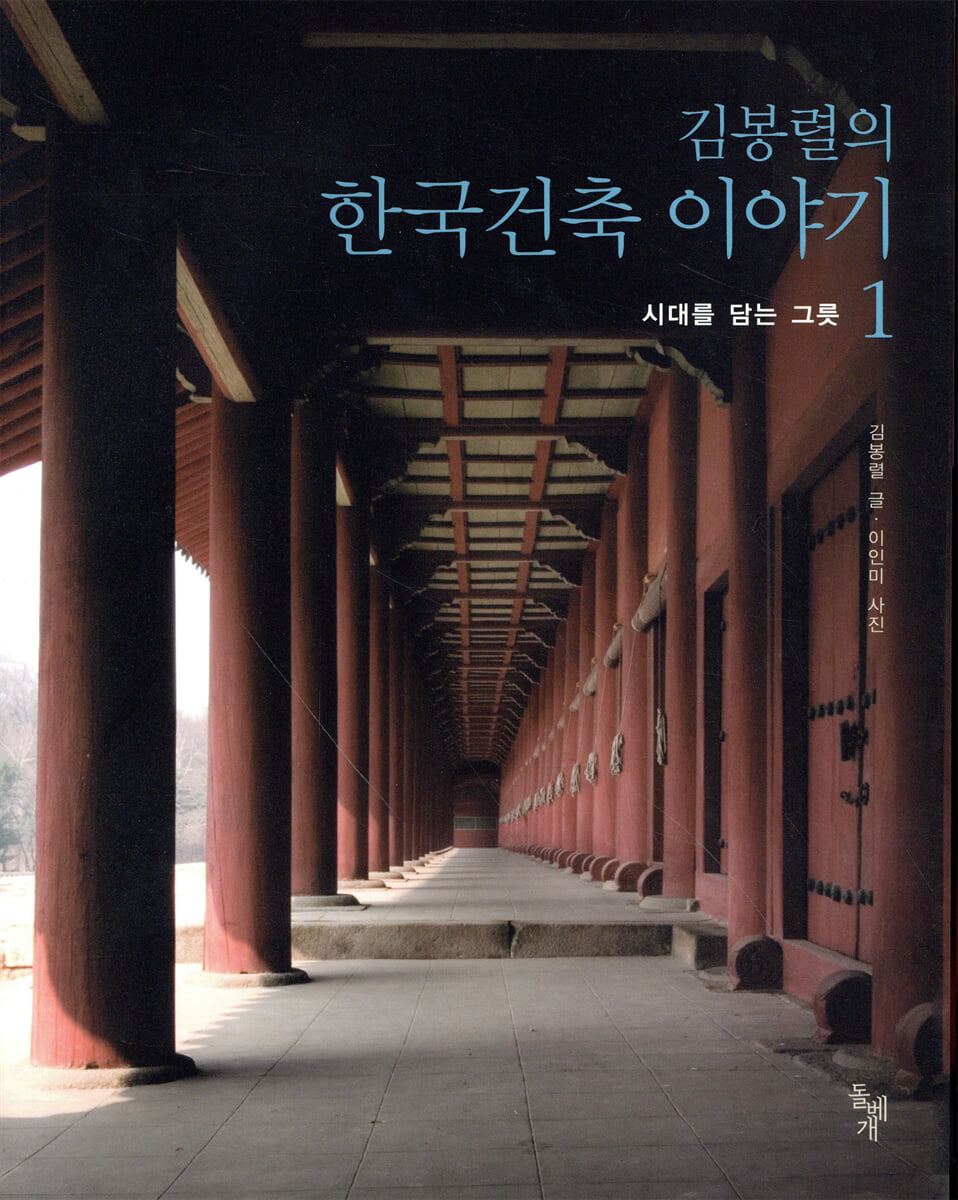 |
Description
Book Introduction
『Kim Bong-ryeol's Story of Korean Architecture』 is a revised and expanded edition of the three-volume 『Rediscovery of Korean Architecture』, which was first published in the architectural magazine 『Ideal Architecture』 in 1999.
Since its publication, this series has received attention and acclaim from academia, the media, and the reading community, establishing itself as a classic as the first and only introductory book to faithfully and novelly cover the entirety of traditional Korean architecture.
Two years after it went out of print due to circumstances at the publisher, including the magazine's discontinuation, the book was republished in 2006, thanks to the earnest requests of readers and researchers who regretted its loss, and the desire of the author and publisher to republish this masterpiece.
While maintaining its reputation and value, it has been edited and revised to fit today's needs, and has been designed to be easy to read and intuitive, and the photos have been replaced with full color.
In addition, it has been presented to a new generation of readers, 10 years after the first article was written (serialized in the monthly magazine 『Ideal Architecture』 for three years from 1995 to 1997), with useful help articles and terminology explanations to make it easier for both new architects and the general public to understand.
Volume 1, 'A Vessel Containing the Times', mainly deals with historical perspectives, that is, content that highlights the times and regional characteristics.
However, it is not a chronological account of the changes over time that can be found in general architecture books, covering all eras.
Rather, most of it is public content about how a specific architecture of a specific era is created.
It contains stories of architecture that are very familiar to us and stand at historically important points.
Since its publication, this series has received attention and acclaim from academia, the media, and the reading community, establishing itself as a classic as the first and only introductory book to faithfully and novelly cover the entirety of traditional Korean architecture.
Two years after it went out of print due to circumstances at the publisher, including the magazine's discontinuation, the book was republished in 2006, thanks to the earnest requests of readers and researchers who regretted its loss, and the desire of the author and publisher to republish this masterpiece.
While maintaining its reputation and value, it has been edited and revised to fit today's needs, and has been designed to be easy to read and intuitive, and the photos have been replaced with full color.
In addition, it has been presented to a new generation of readers, 10 years after the first article was written (serialized in the monthly magazine 『Ideal Architecture』 for three years from 1995 to 1997), with useful help articles and terminology explanations to make it easier for both new architects and the general public to understand.
Volume 1, 'A Vessel Containing the Times', mainly deals with historical perspectives, that is, content that highlights the times and regional characteristics.
However, it is not a chronological account of the changes over time that can be found in general architecture books, covering all eras.
Rather, most of it is public content about how a specific architecture of a specific era is created.
It contains stories of architecture that are very familiar to us and stand at historically important points.
index
1.
Another Story of World Heritage: Bulguksa Temple and Seokguram Grotto
Issues in the Bulguksa Temple and Seokguram Grotto Theory|The Ultimate High-Tech Architecture|Seokguram Grotto, the Fulfillment of International Desire|Bulguksa Temple as Architecture as a Scripture|Dabotap or Seokgatap?
2.
Architecture of a Cultural Transition: Anapji Pond and Magoksa Temple
Moments of Change and Crisis | Anapji Pond, the Memorial Garden of Unification | Anapji Pond, the Spirit of Unification of Extremes | The Dominance of Yuan and the Importation of Culture, the Ten-Story Stone Pagoda of Gyeongcheonsa Temple | The Pagoda of Magoksa Temple, the Upgyeongdae of This Era | Magoksa Temple, the Combination of Two Temples
3.
The flatlands of Baekje architecture: Mireuksa Temple and Geumsansa Temple
Baekje Architecture and Topography | Baekje's Maitreya Belief and Temple Architecture | Geumsansa Temple, the Center of Maitreya Belief | Geumsansa Temple's Halls
4.
Jongmyo Shrine, a monument of silence
For the Legitimacy of the Dynasty | Architecture of Roads and Lines | Elongated Buildings and a Sense of Scale | Other Buildings of Jongmyo | The Path to Preserving World Cultural Heritage
5.
Craftsmanship and Craft Tradition: Small Temples in Jeollabuk-do
Artisans and the Spirit of Craftsmanship | Hwaamsa Temple in Wanju | Naesosa Temple in Buan | Gaeamsa Temple in Buan | Chamdangam Temple in Seonunsa Temple in Gochang
6.
From play to practice: Buyong-dong Garden and Haenam Nokwoo-dang
Fisherman's Tale and the Legend of the Four Heavenly Kings: Ideas and Facts | Bogildo's Play Structures | Seyeonjeong, a Theater in Nature | Nokwoo-dang, a Medieval Manor | Nokwoo-dang, the Spirit of Practicality | The Yun Family's Architecture
7.
Rationalism and Romanticism, the Government House and Hyangdan in Yangdong Village
The Story of Yangdong Village | Architecture in Conflict | Diversity in Moderation and Norms, Gwan-gajeong | Distinct Individuality and Intention, Hyang-dan | The Rationality of Gwan-gajeong and the Romanticism of Hyang-dan
8.
Houses in Pyeongchang-dong and Yangdong Village from the Joseon Dynasty
The individuality of the houses in Yangdong Village | The classical prototype, Seobaekdang | Houses of the clan level | Houses of the mid-period | Pavilions and seodang
9.
Imitation or Creation: Suwon Hwaseong Fortress
The Eternal City of the Enlightened Monarch | The Flower of the 18th-Century Renaissance | A New Spirit, a New City | A Solid and Beautiful Fortress | Other Suwon Hwaseong Fortresses
[supplement]
Glossary of architectural terms to help you read | List of drawings | Search
[Preface] Architecture as a Classic - Jeong Gi-yong (Professor, Korea National University of Arts)
Another Story of World Heritage: Bulguksa Temple and Seokguram Grotto
Issues in the Bulguksa Temple and Seokguram Grotto Theory|The Ultimate High-Tech Architecture|Seokguram Grotto, the Fulfillment of International Desire|Bulguksa Temple as Architecture as a Scripture|Dabotap or Seokgatap?
2.
Architecture of a Cultural Transition: Anapji Pond and Magoksa Temple
Moments of Change and Crisis | Anapji Pond, the Memorial Garden of Unification | Anapji Pond, the Spirit of Unification of Extremes | The Dominance of Yuan and the Importation of Culture, the Ten-Story Stone Pagoda of Gyeongcheonsa Temple | The Pagoda of Magoksa Temple, the Upgyeongdae of This Era | Magoksa Temple, the Combination of Two Temples
3.
The flatlands of Baekje architecture: Mireuksa Temple and Geumsansa Temple
Baekje Architecture and Topography | Baekje's Maitreya Belief and Temple Architecture | Geumsansa Temple, the Center of Maitreya Belief | Geumsansa Temple's Halls
4.
Jongmyo Shrine, a monument of silence
For the Legitimacy of the Dynasty | Architecture of Roads and Lines | Elongated Buildings and a Sense of Scale | Other Buildings of Jongmyo | The Path to Preserving World Cultural Heritage
5.
Craftsmanship and Craft Tradition: Small Temples in Jeollabuk-do
Artisans and the Spirit of Craftsmanship | Hwaamsa Temple in Wanju | Naesosa Temple in Buan | Gaeamsa Temple in Buan | Chamdangam Temple in Seonunsa Temple in Gochang
6.
From play to practice: Buyong-dong Garden and Haenam Nokwoo-dang
Fisherman's Tale and the Legend of the Four Heavenly Kings: Ideas and Facts | Bogildo's Play Structures | Seyeonjeong, a Theater in Nature | Nokwoo-dang, a Medieval Manor | Nokwoo-dang, the Spirit of Practicality | The Yun Family's Architecture
7.
Rationalism and Romanticism, the Government House and Hyangdan in Yangdong Village
The Story of Yangdong Village | Architecture in Conflict | Diversity in Moderation and Norms, Gwan-gajeong | Distinct Individuality and Intention, Hyang-dan | The Rationality of Gwan-gajeong and the Romanticism of Hyang-dan
8.
Houses in Pyeongchang-dong and Yangdong Village from the Joseon Dynasty
The individuality of the houses in Yangdong Village | The classical prototype, Seobaekdang | Houses of the clan level | Houses of the mid-period | Pavilions and seodang
9.
Imitation or Creation: Suwon Hwaseong Fortress
The Eternal City of the Enlightened Monarch | The Flower of the 18th-Century Renaissance | A New Spirit, a New City | A Solid and Beautiful Fortress | Other Suwon Hwaseong Fortresses
[supplement]
Glossary of architectural terms to help you read | List of drawings | Search
[Preface] Architecture as a Classic - Jeong Gi-yong (Professor, Korea National University of Arts)
Publisher's Review
I wanted to read history and humanity through architecture.
I wanted to understand the essence of architecture through history and the thoughts of the people who created it.
These are the goals I earnestly desired while writing the articles included in this book.
…the sites of historical architecture have always been ruins.
Now, forms and uses have disappeared, technologies and materials have disappeared, and architectural ideas have been severed, and buildings are disappearing, transformed, and destroyed year after year.
But the ruins are the starting point where all the shells are removed and the essence is revealed.
If you have a sophisticated imagination, it is an excellent place to explore the essence of architecture.
…Through this book, I hope to help architects achieve professional enlightenment, and to inform the general public of the importance of spiritual activity, which is embedded throughout Korean culture.
■ A classic of Korean architectural history, newly rewritten
This book is a friendly 'reading of our architecture' and a rich 'discourse on Korean architecture' by Professor Kim Bong-ryeol, an 'architect' and 'architectural historian.'
This book can be called a "compendium of Korean traditional architecture," covering 25 representative works and key themes of Korean traditional architecture, each with its own meaning and argument, from basic to advanced theory, from current issues to alternatives.
Author Kim Bong-ryeol, with his wealth of knowledge, deep thinking, and boundless passion and love for people and the land, constantly explores the traces of our architecture left behind on this land.
His work and its results, which seek to find contemporary value through analysis and reflection on classical architecture, will provide clear and profound questions and answers to those seeking to design new architecture, new lives, and new ideas.
■ The joy of reading humanistic architecture, reading history and humanity through architecture
Kim Bong-ryeol says that ‘architecture’ is ‘a vessel that contains the image of the times,’ ‘an environment created by enlightenment and life,’ and ‘a structure carved by the human spirit on the earth.’
In this book, the contemporary achievements and unique values of these ancient buildings are explored through various axes, ranging from historical, environmental, ideological, academic, and personal aspects.
By incorporating comprehensive humanistic and engineering knowledge ranging from history and Korean literature, Neo-Confucianism and Buddhist theory, topology, and architectural engineering into the understanding of architecture's invisible internal principles and external phenomena, it clearly shows us the cubic meaning of 'historical architecture.'
He interprets architecture in an original way.
In other words, the building is not treated as an inanimate object, but as an organism born from various situations.
Treating the buildings as if they were alive, he approaches them from various angles, examining their structure, the historical conditions of who built them, when, with what intentions, and for what purpose, as well as their harmonious relationship with the surrounding nature. He reconstructs them in the present with an imagination that transcends the past and present in terms of time.
■ Rediscovering contemporary values through the exploration of ancient architecture
The author says that Korea's traditional architecture is the cradle of the knowledge and life of the ancient people, and because it was built faithfully to its time, it is a classic that cannot help but be eternal.
Knowledge is enlightenment, life is change, and great architecture contains the content and process of that enlightenment and change.
Furthermore, eternal architecture is architecture that conveys that enlightenment, makes possible another knowledge, and gives us another life by always changing.
What significance does this discernment of the spirits of the past hidden within architecture hold for our lives and architecture today? Architecture, both present and future, remains a culmination of intellectual activity, and architects are intellectuals who express their understanding of the world through space and form.
Even the most cinematic structures will decay and crumble over time, turning into ruins. However, the spirit and thoughts contained within them persist, posing questions to the present and sometimes even providing answers.
The universal and simple values of Kogeon's architecture, as I call them, such as the sincerity that faithfully fulfills given conditions, the health that finds satisfaction and joy in even small accomplishments, the practicality created according to everyday needs, and the beautiful enlightenment found in the ordinary, come to us as important answers and meanings for our lives today.
I wanted to understand the essence of architecture through history and the thoughts of the people who created it.
These are the goals I earnestly desired while writing the articles included in this book.
…the sites of historical architecture have always been ruins.
Now, forms and uses have disappeared, technologies and materials have disappeared, and architectural ideas have been severed, and buildings are disappearing, transformed, and destroyed year after year.
But the ruins are the starting point where all the shells are removed and the essence is revealed.
If you have a sophisticated imagination, it is an excellent place to explore the essence of architecture.
…Through this book, I hope to help architects achieve professional enlightenment, and to inform the general public of the importance of spiritual activity, which is embedded throughout Korean culture.
■ A classic of Korean architectural history, newly rewritten
This book is a friendly 'reading of our architecture' and a rich 'discourse on Korean architecture' by Professor Kim Bong-ryeol, an 'architect' and 'architectural historian.'
This book can be called a "compendium of Korean traditional architecture," covering 25 representative works and key themes of Korean traditional architecture, each with its own meaning and argument, from basic to advanced theory, from current issues to alternatives.
Author Kim Bong-ryeol, with his wealth of knowledge, deep thinking, and boundless passion and love for people and the land, constantly explores the traces of our architecture left behind on this land.
His work and its results, which seek to find contemporary value through analysis and reflection on classical architecture, will provide clear and profound questions and answers to those seeking to design new architecture, new lives, and new ideas.
■ The joy of reading humanistic architecture, reading history and humanity through architecture
Kim Bong-ryeol says that ‘architecture’ is ‘a vessel that contains the image of the times,’ ‘an environment created by enlightenment and life,’ and ‘a structure carved by the human spirit on the earth.’
In this book, the contemporary achievements and unique values of these ancient buildings are explored through various axes, ranging from historical, environmental, ideological, academic, and personal aspects.
By incorporating comprehensive humanistic and engineering knowledge ranging from history and Korean literature, Neo-Confucianism and Buddhist theory, topology, and architectural engineering into the understanding of architecture's invisible internal principles and external phenomena, it clearly shows us the cubic meaning of 'historical architecture.'
He interprets architecture in an original way.
In other words, the building is not treated as an inanimate object, but as an organism born from various situations.
Treating the buildings as if they were alive, he approaches them from various angles, examining their structure, the historical conditions of who built them, when, with what intentions, and for what purpose, as well as their harmonious relationship with the surrounding nature. He reconstructs them in the present with an imagination that transcends the past and present in terms of time.
■ Rediscovering contemporary values through the exploration of ancient architecture
The author says that Korea's traditional architecture is the cradle of the knowledge and life of the ancient people, and because it was built faithfully to its time, it is a classic that cannot help but be eternal.
Knowledge is enlightenment, life is change, and great architecture contains the content and process of that enlightenment and change.
Furthermore, eternal architecture is architecture that conveys that enlightenment, makes possible another knowledge, and gives us another life by always changing.
What significance does this discernment of the spirits of the past hidden within architecture hold for our lives and architecture today? Architecture, both present and future, remains a culmination of intellectual activity, and architects are intellectuals who express their understanding of the world through space and form.
Even the most cinematic structures will decay and crumble over time, turning into ruins. However, the spirit and thoughts contained within them persist, posing questions to the present and sometimes even providing answers.
The universal and simple values of Kogeon's architecture, as I call them, such as the sincerity that faithfully fulfills given conditions, the health that finds satisfaction and joy in even small accomplishments, the practicality created according to everyday needs, and the beautiful enlightenment found in the ordinary, come to us as important answers and meanings for our lives today.
GOODS SPECIFICS
- Date of issue: March 31, 2006
- Page count, weight, size: 403 pages | 889g | 192*240*30mm
- ISBN13: 9788971992333
- ISBN10: 8971992336
You may also like
카테고리
korean


korean

![GQ KOREA Mark (Monthly): December [2025]](http://librairie.coreenne.fr/cdn/shop/files/8ef265dbbfbf186523ed75ba7319009d.jpg?v=1765340328&width=3840)


