

Historical Introduction
 |
Description
Book Introduction
As war clouds gather between the US and Iraq, voices are growing louder claiming that this is an unjust war.
At this point, it may be natural that a movement to learn more about Arabic civilization is emerging.
To accurately perceive the causal relationships underlying historical events, a fundamental understanding of human society and civilization is necessary.
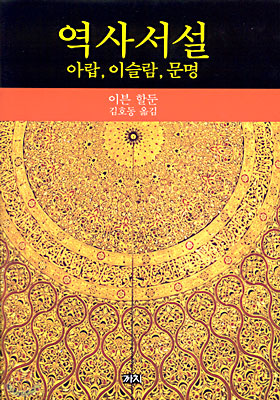
『Introduction to History』 is a comprehensive examination of the Arab world and their religion, Islam, which we were largely unaware of.
It is a grand theory of civilization that broadly deals with the Arab people, their lives, their country, their culture, and especially their religion, Islam.
However, it has great implications that transcend its time and are still relevant today.
It goes beyond the scope of history and encompasses various fields of study that have been established today, such as political science, sociology, economics, philosophy, theology, education, and anthropology.
Since the 19th century, many scholars have been amazed by the fact that important concepts and theories, discovered one by one by modern Western scholarship, were already being systematically discussed by a scholar in the Islamic world hundreds of years ago.
At this point, it may be natural that a movement to learn more about Arabic civilization is emerging.
To accurately perceive the causal relationships underlying historical events, a fundamental understanding of human society and civilization is necessary.
『Introduction to History』 is a comprehensive examination of the Arab world and their religion, Islam, which we were largely unaware of.
It is a grand theory of civilization that broadly deals with the Arab people, their lives, their country, their culture, and especially their religion, Islam.
However, it has great implications that transcend its time and are still relevant today.
It goes beyond the scope of history and encompasses various fields of study that have been established today, such as political science, sociology, economics, philosophy, theology, education, and anthropology.
Since the 19th century, many scholars have been amazed by the fact that important concepts and theories, discovered one by one by modern Western scholarship, were already being systematically discussed by a scholar in the Islamic world hundreds of years ago.
index
1.
Human civilization in general
2.
Description of prehistoric civilizations, barbarian peoples, barbarian tribes, and tribes
3.
Description of the dynasty, kingship, caliphate, and government offices
4.
Urban civilization and the conditions that arise from it
5.
Description of various means of livelihood, including profit and skill
6.
Various academic fields and teaching methods
Human civilization in general
2.
Description of prehistoric civilizations, barbarian peoples, barbarian tribes, and tribes
3.
Description of the dynasty, kingship, caliphate, and government offices
4.
Urban civilization and the conditions that arise from it
5.
Description of various means of livelihood, including profit and skill
6.
Various academic fields and teaching methods
Into the book
Teaching the Quran to children is a symbol of Islam.
Muslims are carrying out that education in every city.
Because it instills in the heart a firm faith and creed derived from the verses of the Qur'an and the traditions of the Prophet.
The Quran is the foundation of education and the basis for all subsequent habits.
The reason we can say this is because what we learn as children takes root more deeply than anything else.
It becomes the basis for all subsequent knowledge.
The first impressions which the mind receives are in some way the basis of all learning habits, and the character of those foundations determines the condition of the building.
The method of teaching the Quran to children varies depending on one's view of the habits that are formed through such education.
The Maghrib method confines the education of children to teaching the Qur'an, and in the process teaches the differences and problems of Qur'anic scribal methods and Qur'anic experts regarding them.
The Maghrib do not teach other subjects in the classroom, such as lore, history, poetry, and Arabic, until their children are well versed in the Qur'an.
But some children drop out before they even master it, so they end up learning nothing.
This is how the city dwellers of the Maghrib and their Berber followers teach their children the Qur'an, and how they continue to teach their children until they grow up and become adults.
This also applies to those who wish to learn the Quran after they become adults.
Therefore, the Maghrib people have learned and memorized the Quran better than any other people.
Muslims are carrying out that education in every city.
Because it instills in the heart a firm faith and creed derived from the verses of the Qur'an and the traditions of the Prophet.
The Quran is the foundation of education and the basis for all subsequent habits.
The reason we can say this is because what we learn as children takes root more deeply than anything else.
It becomes the basis for all subsequent knowledge.
The first impressions which the mind receives are in some way the basis of all learning habits, and the character of those foundations determines the condition of the building.
The method of teaching the Quran to children varies depending on one's view of the habits that are formed through such education.
The Maghrib method confines the education of children to teaching the Qur'an, and in the process teaches the differences and problems of Qur'anic scribal methods and Qur'anic experts regarding them.
The Maghrib do not teach other subjects in the classroom, such as lore, history, poetry, and Arabic, until their children are well versed in the Qur'an.
But some children drop out before they even master it, so they end up learning nothing.
This is how the city dwellers of the Maghrib and their Berber followers teach their children the Qur'an, and how they continue to teach their children until they grow up and become adults.
This also applies to those who wish to learn the Quran after they become adults.
Therefore, the Maghrib people have learned and memorized the Quran better than any other people.
---pp.
500~501
500~501
GOODS SPECIFICS
- Date of issue: March 10, 2003
- Format: Hardcover book binding method guide
- Page count, weight, size: 576 pages | 1,039g | 153*224*35mm
- ISBN13: 9788972913511
- ISBN10: 8972913510
You may also like
카테고리
korean


korean

![GQ KOREA Mark (Monthly): December [2025]](http://librairie.coreenne.fr/cdn/shop/files/8ef265dbbfbf186523ed75ba7319009d.jpg?v=1765340328&width=3840)


