

Conscription and Modern Japan
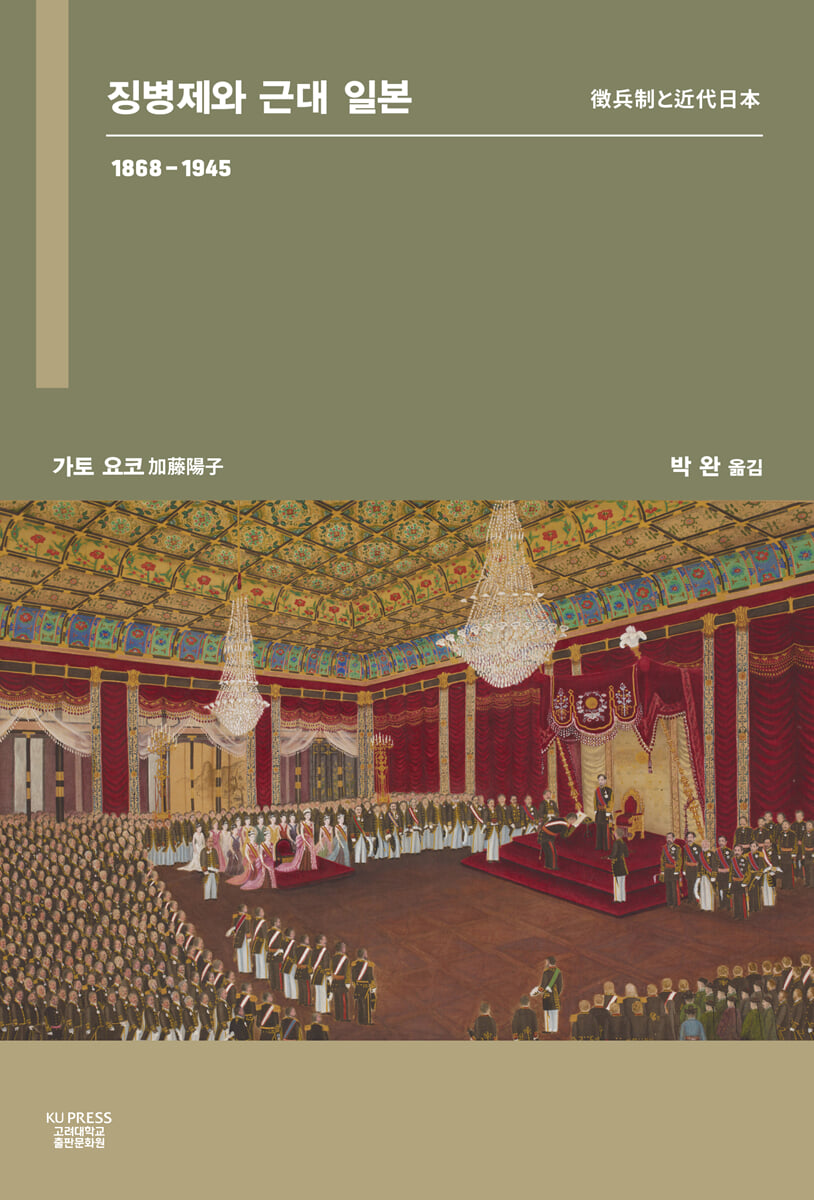 |
Description
Book Introduction
If we note that “the biggest difference when comparing pre-war and post-war Japan, which lost the war and rewrote its constitution, is the presence or absence of a conscription system,” then the conscription system can be “an appropriate indicator for examining modern Japan.”
The perspective on and interpretation of the conscription system is not limited to simply describing the history of laws and systems, but serves as a starting point for examining the nature of Japan as a modern nation.
Professor Yoko Kato of the University of Tokyo, a well-known historian and authority on modern Japanese political, military, and diplomatic history, presents a new perspective on modern Japan through her early work, “Conscription and Modern Japan—1868-1945,” which provides a detailed analysis of the phenomenon of the “conscription system.”
To gain a clearer perspective on the conscription system, we need to examine the revisions to the law and the discussions surrounding it in detail to develop a comprehensive picture.
To this end, the author “describes how the government, army authorities, parliament, and public opinion discussed the ‘desirable conscription system’ from the early Meiji period to the mid-Showa period, along the chronological axis of the revision of the Conscription Ordinance and Military Service Act,” and tenaciously traces the laws and debates from the early days of the conscription system to its abolition.
The book cites a variety of sources, including unpublished historical materials and literature, as well as the voices of well-known figures such as Yamagata Aritomo, who played a key role in the introduction of the modern military system and the establishment of the conscription system.
The translator's faithful annotations, which take into account the understanding of Korean readers, also add meaning to the reading.
For Korean readers, the topic of “social tensions caused by conscription” is by no means “a theme that cannot be ignored.”
Living in “one of the few countries in the world that still imposes mandatory military service on adult males,” we are not unfamiliar with the sight of “ordinary citizens” suddenly being conscripted and forced to serve in the military.
The state repeatedly revises the mandatory military service obligation by mobilizing its own logic of justification, and the political entity called the army gets the opportunity to meet and interact with all adult males who have reached a certain age through the process of conscription examination.
It is not an unfamiliar sight to us to appeal to the ideology of 'fairness and equality' and gain support from the people, including the young men who were conscripted in this way.
The governing logic of a modern state, as seen through the conscription system, is naturally not limited to pre-war Japan.
Also, the “subtle human emotions” mentioned several times in the book, that is, if most people don’t go to the military, it’s better for my chances of being drafted to decrease, but if most people go to the military, it’s better to reduce the number of “free riders” so that everyone can suffer together, the feeling of satisfaction when benefits for the highly educated or the rich are abolished, and the feeling that the military is a society where everyone is “equal” – these subtle emotions are truly universal psychology.
The significance of examining Japan's conscription system, which was abolished after the war, can still be said to be valid for us today.
Pre-war Japan chose the path of “alleviating suffering by suffering equally.”
Through this book, we need to think about the 'consequences' of the conscription system and its 'alternatives'.
The perspective on and interpretation of the conscription system is not limited to simply describing the history of laws and systems, but serves as a starting point for examining the nature of Japan as a modern nation.
Professor Yoko Kato of the University of Tokyo, a well-known historian and authority on modern Japanese political, military, and diplomatic history, presents a new perspective on modern Japan through her early work, “Conscription and Modern Japan—1868-1945,” which provides a detailed analysis of the phenomenon of the “conscription system.”
To gain a clearer perspective on the conscription system, we need to examine the revisions to the law and the discussions surrounding it in detail to develop a comprehensive picture.
To this end, the author “describes how the government, army authorities, parliament, and public opinion discussed the ‘desirable conscription system’ from the early Meiji period to the mid-Showa period, along the chronological axis of the revision of the Conscription Ordinance and Military Service Act,” and tenaciously traces the laws and debates from the early days of the conscription system to its abolition.
The book cites a variety of sources, including unpublished historical materials and literature, as well as the voices of well-known figures such as Yamagata Aritomo, who played a key role in the introduction of the modern military system and the establishment of the conscription system.
The translator's faithful annotations, which take into account the understanding of Korean readers, also add meaning to the reading.
For Korean readers, the topic of “social tensions caused by conscription” is by no means “a theme that cannot be ignored.”
Living in “one of the few countries in the world that still imposes mandatory military service on adult males,” we are not unfamiliar with the sight of “ordinary citizens” suddenly being conscripted and forced to serve in the military.
The state repeatedly revises the mandatory military service obligation by mobilizing its own logic of justification, and the political entity called the army gets the opportunity to meet and interact with all adult males who have reached a certain age through the process of conscription examination.
It is not an unfamiliar sight to us to appeal to the ideology of 'fairness and equality' and gain support from the people, including the young men who were conscripted in this way.
The governing logic of a modern state, as seen through the conscription system, is naturally not limited to pre-war Japan.
Also, the “subtle human emotions” mentioned several times in the book, that is, if most people don’t go to the military, it’s better for my chances of being drafted to decrease, but if most people go to the military, it’s better to reduce the number of “free riders” so that everyone can suffer together, the feeling of satisfaction when benefits for the highly educated or the rich are abolished, and the feeling that the military is a society where everyone is “equal” – these subtle emotions are truly universal psychology.
The significance of examining Japan's conscription system, which was abolished after the war, can still be said to be valid for us today.
Pre-war Japan chose the path of “alleviating suffering by suffering equally.”
Through this book, we need to think about the 'consequences' of the conscription system and its 'alternatives'.
index
Entering
The Conscription Army and the State's Responsibilities / Conscription and Volunteer Soldiers / The People Themselves / Questions About Previous Research /
The Relationship Between the Army and the People / The Evolution of the Conscription System and Ideology Representing the Era / Terminology
I What was the problem with Musa?
Criticism of the Warriors / Warriors and the Meiji Restoration / Number of Soldiers and Guards / Comparison with Germany / Aoki Shuzo's Letter
II Military service before the establishment of the conscription system
1.
Military system during the Mujin War
Soldiers Equivalent to Plaster / The Example of the Hiroshima Domain / The Appearance of Omura / The Conquest of Tohoku
2.
Military system of reformation by each time
Soldier Count Report / 'Invited Foreigners' / Military Tuition / Standing Forces Rules / Masaharu Ijichi's Rebuttal / House of Representatives /
Sasaki Takayuki's Perspective / Guard Regulations and Standing Staff / Ministry of War Officers / Conscription Rules / The Parent Soldiers
III. The logic behind the introduction of the conscription system and the number of soldiers
Reasons for the small number of soldiers / Methods for determining the initial number of conscripts / Theories on conscription reform / Ministry of War in the late Edo period /
Masujiro Omura's Theory of Conscription / Theory of Conscription in Japan / The Correlation Between Service Period and Number of Conscriptions /
New Exchange / The Educational Effect of New Exchange / Training of New Soldiers / National Attitude / Pass Rate /
Competition to become an officer / Raised as a servant and written horizontally
IV French and German influence
Western military systems / German and French military service exemption and deferral systems / Number of soldiers per year / Prussian military systems
V Until the establishment of the Constitution of the Empire of Japan
Revision Direction / Review Process for the Draft Conscription Ordinance Amendment
1.
The draft law amendment of November 5, 1875
The Army Ministry's original plan / The Legislative Bureau's response / The target of Yamagata's wrath
2.
Revision of the Conscription Act of October 27, 1879
New avoidance patterns / War Department draft / Amendments to the Legislative Council / Characteristics of the Senate / The concept of desirable military service /
Revision of the Tajokan / The Emperor's Order / Nishi Amane's Theory of War
3.
Revision of the Conscription Act of December 28, 1883
How to register a family / Response from the Council / Election of a head of a household / Penalties for those who evade the election /
Amendments in the Council / Answer of the Boissonade / Amendments in the Senate / Re-amendments in the Council /
The situation in the provinces / Fukuzawa's conscription theory
VI Constitution and Conscription
1.
Constitution and military system
The Relationship Between the Constitution and the Conscription Ordinance / Sone Arasuke / Military Service Obligation / Conscripts and the Army and Navy Budgets /
Rösler's Answer / Draft of May 1887 / Preparations within the Army / What the Army Means by 'Law' /
Moses's Answer / Inoue's "Army Military Government Opinion"
2.
Revision of the Conscription Act of January 22, 1889
Army draft / Legislative Bureau's counterargument / Inoue Kowashi's opinion / Cabinet draft /
Additional revisions by Mori Arinori / Opposition by the Senate / Comments by Kato Hiroyuki /
The subtle emotions of a person / Fukuzawa again / The army supported by the poor majority /
The Army's Rebuttal to the "Four Generals'" Reform Theory and Short-Term Military Service Theory
VII Battle in the Imperial Diet
1.
Revision of the conscription law on March 13, 1895
Establishment of supplementary military service / Extension of service period / Extension of deferment period for those living abroad / Abolition of punishment for those in the military /
Other Amendments / Focus / Deliberations of the 8th Parliament / Local Situation / Policies after the Sino-Japanese War
2.
Revision of the conscription law on September 28, 1904
Insufficient number of soldiers / Tanaka's "Prison Record" / Psychology in the Privy Council / Emphasis on burden /
Approval by the 21st Diet / The One-Year War Theory of the "Yorozuchoho" / The Situation in the Regions / Policies after the Russo-Japanese War
3.
Revision of the conscription law on April 12, 1906
"Foreign" / Army's mindset / Opposition from China expert Ogawa Heikichi /
Voluntary conscription examinations in Taiwan, Karafuto, Korea, and Qing / The impact of the Russo-Japanese War / Local situations
VIII The Impact of World War I
1.
Revision of the conscription law on March 30, 1918
Major revisions / Exchange of documents with the Ministry of Education / Submission to the Educational Survey Committee / Differences from the conscription order /
Ministry of Foreign Affairs Response / U.S. Conscription / Six-Week Active Duty Revision / Army Research on World War I /
Amendment of the Imperial Legislature / Discussion in the Imperial Diet / Mass Mobilization / Resolution of Hope / Supplementation of Sailors /
One-year volunteer conscription and one-year active-duty conscription / The concept of total war / The true meaning of equal military service obligations /
Revision of related rules / Petition for military service tax / Enactment of the military service tax / Army's response / Reminiscences of Muto Sanji /
History of the Military Service Tax Proposal / The Emergence of Ugaki / The Significance of the 1918 Revision / The Need for Military Education
2.
Military Service Act of April 1, 1927
The Abolition of Conscription at the Versailles Conference / New Names / Shortening the Period of Service / The Case of Training Centers /
The local situation / The conflict between the Army's central mindset and the field / The beginning of revision / Council members /
Reduction of burden / Abolition of one-year active-duty military service, etc. / Deferral for overseas residents / Social policy considerations / National mobilization /
Article 69 / Two Directions of Revision / Various Reform Theories / Sato Kojiro's Opinion / Tanaka Kunishige's Opinion /
Inukai Tsuyoshi's disarmament ideology / Muto Sanji's preferential treatment of soldiers / Army mindset /
Yoshino Sakuzō's arms reduction theory / Dissemination of military thought
IX Military Service Law during the Second Sino-Japanese War
1.
Military Service Act Amendment of March 9, 1939
Strengthening the Air Defense Agreement / Two Ways of Thinking About Operations / Prolonged War of Attrition / Strengthening Armaments in Manchuria /
Reorganization / Draft by the Army Ministry's Recruitment Division / Deliberation in the 74th Congress / Special privileges of short-term active-duty service /
The Young Age of Cadet Officers / Commentary by the Law Society
2.
Military Service Act Amendment of February 14, 1941
1940 Conscription Numbers / Purpose of the Revision / Explanation by Army Vice Minister Anami Korechika /
Are North China and Mengjiang included? / Tsurukichi Maruyama's question / The significance of abolishing the name "Houbi Station" /
Current Status of Conscription in Residence / Should the Military Service Act Apply to Korea, Taiwan, and Other Countries? / Commentary by the Law Society / Local Situations
3.
Military Service Act Amendment of October 16, 1941
Deletion of Article 4 of the Supplementary Provisions / Review by the Privy Council / Approval by the 77th Diet / Argument in favor by Junya Koizumi /
Citizens of China, Hong Kong, and Macau / Reserve Officers / Temporary Conscription Examination / Various Discussions on the Military Service Act /
The Navy's Temporary Investigation Division's Military Service Theory
Military service law during the Pacific War
1.
Military Service Act Amendment of February 18, 1942
Reasons for the need for revision / Purpose of revision / Deliberation in the 79th National Assembly /
Changes in the evaluation of national conscription / Changes in the age of conscription / Naval supplementary soldiers
2.
Military Service Act Amendment of March 2, 1943
Expansion of the Imperial Defense Sphere / Concrete Examples of Revisions / Kimura Heitaro's Explanation / "Overview of the Korean Military" /
The Right to Vote Is Not a Price / Conscription in Joseon
3.
Military Service Act Amendment of November 1, 1943
Temporary special provision for deferral of military service for students / Purpose of amendment / Discussion in committee / Conscription system in Taiwan / Special support system
4.
Military Service Act Amendment of February 10, 1945
Purpose of the amendment / Article 67 / Supplementation of officers
5.
Promulgation of the Volunteer Service Act on June 23, 1945
What is a volunteer conscription system? / Relationship with the Military Service Act / Response materials from the Military Service Department / Conscription and military service
The Conscription Army and the State's Responsibilities / Conscription and Volunteer Soldiers / The People Themselves / Questions About Previous Research /
The Relationship Between the Army and the People / The Evolution of the Conscription System and Ideology Representing the Era / Terminology
I What was the problem with Musa?
Criticism of the Warriors / Warriors and the Meiji Restoration / Number of Soldiers and Guards / Comparison with Germany / Aoki Shuzo's Letter
II Military service before the establishment of the conscription system
1.
Military system during the Mujin War
Soldiers Equivalent to Plaster / The Example of the Hiroshima Domain / The Appearance of Omura / The Conquest of Tohoku
2.
Military system of reformation by each time
Soldier Count Report / 'Invited Foreigners' / Military Tuition / Standing Forces Rules / Masaharu Ijichi's Rebuttal / House of Representatives /
Sasaki Takayuki's Perspective / Guard Regulations and Standing Staff / Ministry of War Officers / Conscription Rules / The Parent Soldiers
III. The logic behind the introduction of the conscription system and the number of soldiers
Reasons for the small number of soldiers / Methods for determining the initial number of conscripts / Theories on conscription reform / Ministry of War in the late Edo period /
Masujiro Omura's Theory of Conscription / Theory of Conscription in Japan / The Correlation Between Service Period and Number of Conscriptions /
New Exchange / The Educational Effect of New Exchange / Training of New Soldiers / National Attitude / Pass Rate /
Competition to become an officer / Raised as a servant and written horizontally
IV French and German influence
Western military systems / German and French military service exemption and deferral systems / Number of soldiers per year / Prussian military systems
V Until the establishment of the Constitution of the Empire of Japan
Revision Direction / Review Process for the Draft Conscription Ordinance Amendment
1.
The draft law amendment of November 5, 1875
The Army Ministry's original plan / The Legislative Bureau's response / The target of Yamagata's wrath
2.
Revision of the Conscription Act of October 27, 1879
New avoidance patterns / War Department draft / Amendments to the Legislative Council / Characteristics of the Senate / The concept of desirable military service /
Revision of the Tajokan / The Emperor's Order / Nishi Amane's Theory of War
3.
Revision of the Conscription Act of December 28, 1883
How to register a family / Response from the Council / Election of a head of a household / Penalties for those who evade the election /
Amendments in the Council / Answer of the Boissonade / Amendments in the Senate / Re-amendments in the Council /
The situation in the provinces / Fukuzawa's conscription theory
VI Constitution and Conscription
1.
Constitution and military system
The Relationship Between the Constitution and the Conscription Ordinance / Sone Arasuke / Military Service Obligation / Conscripts and the Army and Navy Budgets /
Rösler's Answer / Draft of May 1887 / Preparations within the Army / What the Army Means by 'Law' /
Moses's Answer / Inoue's "Army Military Government Opinion"
2.
Revision of the Conscription Act of January 22, 1889
Army draft / Legislative Bureau's counterargument / Inoue Kowashi's opinion / Cabinet draft /
Additional revisions by Mori Arinori / Opposition by the Senate / Comments by Kato Hiroyuki /
The subtle emotions of a person / Fukuzawa again / The army supported by the poor majority /
The Army's Rebuttal to the "Four Generals'" Reform Theory and Short-Term Military Service Theory
VII Battle in the Imperial Diet
1.
Revision of the conscription law on March 13, 1895
Establishment of supplementary military service / Extension of service period / Extension of deferment period for those living abroad / Abolition of punishment for those in the military /
Other Amendments / Focus / Deliberations of the 8th Parliament / Local Situation / Policies after the Sino-Japanese War
2.
Revision of the conscription law on September 28, 1904
Insufficient number of soldiers / Tanaka's "Prison Record" / Psychology in the Privy Council / Emphasis on burden /
Approval by the 21st Diet / The One-Year War Theory of the "Yorozuchoho" / The Situation in the Regions / Policies after the Russo-Japanese War
3.
Revision of the conscription law on April 12, 1906
"Foreign" / Army's mindset / Opposition from China expert Ogawa Heikichi /
Voluntary conscription examinations in Taiwan, Karafuto, Korea, and Qing / The impact of the Russo-Japanese War / Local situations
VIII The Impact of World War I
1.
Revision of the conscription law on March 30, 1918
Major revisions / Exchange of documents with the Ministry of Education / Submission to the Educational Survey Committee / Differences from the conscription order /
Ministry of Foreign Affairs Response / U.S. Conscription / Six-Week Active Duty Revision / Army Research on World War I /
Amendment of the Imperial Legislature / Discussion in the Imperial Diet / Mass Mobilization / Resolution of Hope / Supplementation of Sailors /
One-year volunteer conscription and one-year active-duty conscription / The concept of total war / The true meaning of equal military service obligations /
Revision of related rules / Petition for military service tax / Enactment of the military service tax / Army's response / Reminiscences of Muto Sanji /
History of the Military Service Tax Proposal / The Emergence of Ugaki / The Significance of the 1918 Revision / The Need for Military Education
2.
Military Service Act of April 1, 1927
The Abolition of Conscription at the Versailles Conference / New Names / Shortening the Period of Service / The Case of Training Centers /
The local situation / The conflict between the Army's central mindset and the field / The beginning of revision / Council members /
Reduction of burden / Abolition of one-year active-duty military service, etc. / Deferral for overseas residents / Social policy considerations / National mobilization /
Article 69 / Two Directions of Revision / Various Reform Theories / Sato Kojiro's Opinion / Tanaka Kunishige's Opinion /
Inukai Tsuyoshi's disarmament ideology / Muto Sanji's preferential treatment of soldiers / Army mindset /
Yoshino Sakuzō's arms reduction theory / Dissemination of military thought
IX Military Service Law during the Second Sino-Japanese War
1.
Military Service Act Amendment of March 9, 1939
Strengthening the Air Defense Agreement / Two Ways of Thinking About Operations / Prolonged War of Attrition / Strengthening Armaments in Manchuria /
Reorganization / Draft by the Army Ministry's Recruitment Division / Deliberation in the 74th Congress / Special privileges of short-term active-duty service /
The Young Age of Cadet Officers / Commentary by the Law Society
2.
Military Service Act Amendment of February 14, 1941
1940 Conscription Numbers / Purpose of the Revision / Explanation by Army Vice Minister Anami Korechika /
Are North China and Mengjiang included? / Tsurukichi Maruyama's question / The significance of abolishing the name "Houbi Station" /
Current Status of Conscription in Residence / Should the Military Service Act Apply to Korea, Taiwan, and Other Countries? / Commentary by the Law Society / Local Situations
3.
Military Service Act Amendment of October 16, 1941
Deletion of Article 4 of the Supplementary Provisions / Review by the Privy Council / Approval by the 77th Diet / Argument in favor by Junya Koizumi /
Citizens of China, Hong Kong, and Macau / Reserve Officers / Temporary Conscription Examination / Various Discussions on the Military Service Act /
The Navy's Temporary Investigation Division's Military Service Theory
Military service law during the Pacific War
1.
Military Service Act Amendment of February 18, 1942
Reasons for the need for revision / Purpose of revision / Deliberation in the 79th National Assembly /
Changes in the evaluation of national conscription / Changes in the age of conscription / Naval supplementary soldiers
2.
Military Service Act Amendment of March 2, 1943
Expansion of the Imperial Defense Sphere / Concrete Examples of Revisions / Kimura Heitaro's Explanation / "Overview of the Korean Military" /
The Right to Vote Is Not a Price / Conscription in Joseon
3.
Military Service Act Amendment of November 1, 1943
Temporary special provision for deferral of military service for students / Purpose of amendment / Discussion in committee / Conscription system in Taiwan / Special support system
4.
Military Service Act Amendment of February 10, 1945
Purpose of the amendment / Article 67 / Supplementation of officers
5.
Promulgation of the Volunteer Service Act on June 23, 1945
What is a volunteer conscription system? / Relationship with the Military Service Act / Response materials from the Military Service Department / Conscription and military service
GOODS SPECIFICS
- Date of issue: July 21, 2025
- Page count, weight, size: 324 pages | 154*225*20mm
- ISBN13: 9791169561143
- ISBN10: 1169561144
You may also like
카테고리
korean


korean

![GQ KOREA Mark (Monthly): December [2025]](http://librairie.coreenne.fr/cdn/shop/files/8ef265dbbfbf186523ed75ba7319009d.jpg?v=1765340328&width=3840)


