

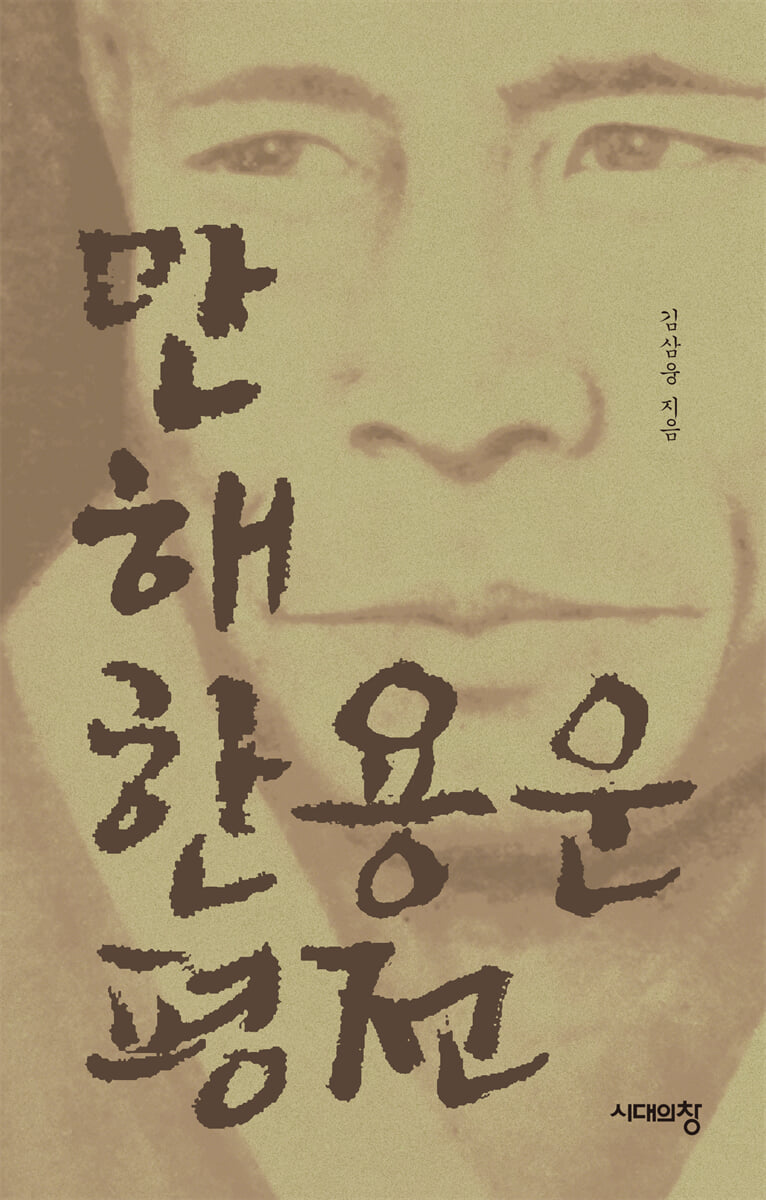
Biography of Manhae Han Yong-un
 |
Description
Book Introduction
Manhae Han Yong-un, who was posthumously awarded the title of Gongyak Samjang, lived a colorful life as an independence fighter, a practical religious leader, a poet, and a novelist.
This book carefully examines the life and records of Manhae.
In particular, although various biographies published so far have depicted Manhae's father as having been active in the Righteous Army, this book argues that he was actually in a position to suppress the Righteous Army activities, and that a latent 'father complex' was always latent in Manhae's consciousness, which led him to pursue national causes and walk the path with dignity.
Manhae Han Yong-un is a unique independence fighter who openly resisted the Japanese in various fields.
Therefore, later generations evaluated Manhae as the 'Cheonseokdeul-i Bell', the bell of history and the bell of the nation that rings louder the more it is struck.
This book carefully examines the life and records of Manhae.
In particular, although various biographies published so far have depicted Manhae's father as having been active in the Righteous Army, this book argues that he was actually in a position to suppress the Righteous Army activities, and that a latent 'father complex' was always latent in Manhae's consciousness, which led him to pursue national causes and walk the path with dignity.
Manhae Han Yong-un is a unique independence fighter who openly resisted the Japanese in various fields.
Therefore, later generations evaluated Manhae as the 'Cheonseokdeul-i Bell', the bell of history and the bell of the nation that rings louder the more it is struck.
index
At the beginning of the book
Chapter 1: Manhae's Vessel and its Connection with Buddhism
Cheonseok's significance in Buddhist history as a Buddhist monk / Born in Hongseong / Background of his running away from home and becoming a monk / Devoted to Buddhism, reading various sutras / Traveling to Russia and Japan / Experiencing national humiliation and being shot in Manchuria
Chapter 2: Holding High the Torch of the Buddhist Reform Movement
The Dharma and Tradition of Buddhist Thought on National Defense / The Story of the Lifting of the Ban on Japanese Monk Sano's Entry into the Capital / Leading the Crushing of Japanese Buddhism / The Mistake of Sending a "Petition" to the Residency-General
Chapter 3: The Immortal Essay on the Reformation of Korean Buddhism
Writing "The Theory of Reforming Korean Buddhism" while feeling national shame / The meaning of "Mangmaejigal" / The essence of "The Theory of Reforming Korean Buddhism" / The social repercussions of the theory of Daecheop / The Buddhist community's fight against the theory of Daecheop-eating meat during the Japanese colonial period / Baek Yong-seong's "Geonbaekseo" opposing the theory of Daecheop-eating meat
Chapter 4: Publication of Buddhist Scriptures and Misrepresentation, the Movement to Popularize Buddhism
Contributed to popularization by compiling 『Buddhist Encyclopedia』 / Compiled 『Chaegeundam』 to help the general public cultivate themselves / Achieved enlightenment at Oseam / Published Buddhist educational magazine 『Yusim』
Chapter 5: Leading the March 1st Movement as a Representative of the Buddhist Nation
Leading the preparations for the March 1st Movement / Responsible for negotiations between Buddhist and Confucian national representatives / Imprisoned in Seodaemun Prison and tortured / Presented and implemented the three principles / Basis for the claim that Manhae wrote the three pledges / A sharp confrontation between the two claims
Chapter 6: The Mountain-Like Leader of Seodaemun Prison
The Will for Independence Inside and Outside Prison / The Reality of Seodaemun Prison During the March 1st Movement / "The Statement of the Reason for Korean Independence" Published in the Shanghai Independent Newspaper / The Essence of "Iron Bar Literature": Poetry and Sijo
Chapter 7: "The Statement of the Reasons for Korean Independence": What Does It Contain?
Declaration of Freedom and Peace / Regarding the Governor-General's Policy / Expressing Confidence in Joseon's Independence / The Limitations of the "Reason for Joseon's Independence" / Pour Your Passion into the "Siphyun Damjoohae" / Lectures on the "Yuma Hill Novel"
Chapter 8: The Golden Tower of Korean Poetry: Your Silence
The process of beginning / What is the background of the beginning / The claim that Choi Nam-seon 'overcame' / Who (what) is 'you' / Various evaluations of the poetry collection / The value of Manhae's poetry / 20 poems from 'Your Silence' / Pioneering poetry in pure Korean language
Chapter 9: Participation in the New Publication Society and Interest in Women's and Labor Issues
The domestic situation in the 1920s / The rise of the Quantitativeists and their passionate struggle / Participation as a founding member of the New People's Association and appointment as head of the Gyeongseong branch / Marked as a person under surveillance for his role in the Gwangju Student Movement / A gifted writer, he wrote and published numerous works / Particular interest in the women's liberation movement / Proactive interest in peasant and labor issues
Chapter 10: Writing in Various Genres and Novels
Unpublished novels "Death" and "Black Wind" / The story of "Black Wind" / The full-length novel "Dawn" / Critical views on the literary quality of Manhae's novels
Chapter 11: Publishing a Buddhist Magazine and Embarking on Journalistic Activities
Acquired the magazine "Buddhism" to have his own media / Selected the magazine to reform Buddhism and enlighten the public / Participated as writers by prominent figures / Played the role of "on the back" like Socrates
Chapter 12: Remarriage, Building a House in Seongbuk-dong and Settling in It
Refusing to worship at a Shinto shrine / The growing madness of Japanese rule / The latent atmosphere of women's tastes / Suffering from a father complex / Remarrying thirty-six-year-old nurse Yu Suk-won / The story of Sim Woo-jang, built facing north / Holding a five-day funeral for Mr. Kim Dong-sam
Chapter 13: The candle in the heart is extinguished
Under the wartime mobilization system, government-sponsored organizations emerge one after another / The national spirit is trampled under the cruel military boots / Daughter Yeong-suk is born / “Choi Nam-seon is already dead and buried” / A life without a family register / Becoming a Buddhist socialist / Passing away with a sorrow that will last a lifetime / “I don’t know” / Manhae, who is he and what did he leave behind / Anecdotes left behind by Manhae / Posthumous poems and sijo / 15 posthumous sijo pieces
supplement
"Memories of Father Manhae" / "The Story of Coming Back from the Dead" / "Why Did I Become a Monk" / "The Path of Discovery of the National Treasure Hangeul Woodblocks" / "One Night in the North Continent" / Ten Unpublished Poems Recently Discovered / Like the Lotus Flower of Cheoyeomsangjeong / "At the Tomb of Master Han Yong-un"
annual report
pictorial
Chapter 1: Manhae's Vessel and its Connection with Buddhism
Cheonseok's significance in Buddhist history as a Buddhist monk / Born in Hongseong / Background of his running away from home and becoming a monk / Devoted to Buddhism, reading various sutras / Traveling to Russia and Japan / Experiencing national humiliation and being shot in Manchuria
Chapter 2: Holding High the Torch of the Buddhist Reform Movement
The Dharma and Tradition of Buddhist Thought on National Defense / The Story of the Lifting of the Ban on Japanese Monk Sano's Entry into the Capital / Leading the Crushing of Japanese Buddhism / The Mistake of Sending a "Petition" to the Residency-General
Chapter 3: The Immortal Essay on the Reformation of Korean Buddhism
Writing "The Theory of Reforming Korean Buddhism" while feeling national shame / The meaning of "Mangmaejigal" / The essence of "The Theory of Reforming Korean Buddhism" / The social repercussions of the theory of Daecheop / The Buddhist community's fight against the theory of Daecheop-eating meat during the Japanese colonial period / Baek Yong-seong's "Geonbaekseo" opposing the theory of Daecheop-eating meat
Chapter 4: Publication of Buddhist Scriptures and Misrepresentation, the Movement to Popularize Buddhism
Contributed to popularization by compiling 『Buddhist Encyclopedia』 / Compiled 『Chaegeundam』 to help the general public cultivate themselves / Achieved enlightenment at Oseam / Published Buddhist educational magazine 『Yusim』
Chapter 5: Leading the March 1st Movement as a Representative of the Buddhist Nation
Leading the preparations for the March 1st Movement / Responsible for negotiations between Buddhist and Confucian national representatives / Imprisoned in Seodaemun Prison and tortured / Presented and implemented the three principles / Basis for the claim that Manhae wrote the three pledges / A sharp confrontation between the two claims
Chapter 6: The Mountain-Like Leader of Seodaemun Prison
The Will for Independence Inside and Outside Prison / The Reality of Seodaemun Prison During the March 1st Movement / "The Statement of the Reason for Korean Independence" Published in the Shanghai Independent Newspaper / The Essence of "Iron Bar Literature": Poetry and Sijo
Chapter 7: "The Statement of the Reasons for Korean Independence": What Does It Contain?
Declaration of Freedom and Peace / Regarding the Governor-General's Policy / Expressing Confidence in Joseon's Independence / The Limitations of the "Reason for Joseon's Independence" / Pour Your Passion into the "Siphyun Damjoohae" / Lectures on the "Yuma Hill Novel"
Chapter 8: The Golden Tower of Korean Poetry: Your Silence
The process of beginning / What is the background of the beginning / The claim that Choi Nam-seon 'overcame' / Who (what) is 'you' / Various evaluations of the poetry collection / The value of Manhae's poetry / 20 poems from 'Your Silence' / Pioneering poetry in pure Korean language
Chapter 9: Participation in the New Publication Society and Interest in Women's and Labor Issues
The domestic situation in the 1920s / The rise of the Quantitativeists and their passionate struggle / Participation as a founding member of the New People's Association and appointment as head of the Gyeongseong branch / Marked as a person under surveillance for his role in the Gwangju Student Movement / A gifted writer, he wrote and published numerous works / Particular interest in the women's liberation movement / Proactive interest in peasant and labor issues
Chapter 10: Writing in Various Genres and Novels
Unpublished novels "Death" and "Black Wind" / The story of "Black Wind" / The full-length novel "Dawn" / Critical views on the literary quality of Manhae's novels
Chapter 11: Publishing a Buddhist Magazine and Embarking on Journalistic Activities
Acquired the magazine "Buddhism" to have his own media / Selected the magazine to reform Buddhism and enlighten the public / Participated as writers by prominent figures / Played the role of "on the back" like Socrates
Chapter 12: Remarriage, Building a House in Seongbuk-dong and Settling in It
Refusing to worship at a Shinto shrine / The growing madness of Japanese rule / The latent atmosphere of women's tastes / Suffering from a father complex / Remarrying thirty-six-year-old nurse Yu Suk-won / The story of Sim Woo-jang, built facing north / Holding a five-day funeral for Mr. Kim Dong-sam
Chapter 13: The candle in the heart is extinguished
Under the wartime mobilization system, government-sponsored organizations emerge one after another / The national spirit is trampled under the cruel military boots / Daughter Yeong-suk is born / “Choi Nam-seon is already dead and buried” / A life without a family register / Becoming a Buddhist socialist / Passing away with a sorrow that will last a lifetime / “I don’t know” / Manhae, who is he and what did he leave behind / Anecdotes left behind by Manhae / Posthumous poems and sijo / 15 posthumous sijo pieces
supplement
"Memories of Father Manhae" / "The Story of Coming Back from the Dead" / "Why Did I Become a Monk" / "The Path of Discovery of the National Treasure Hangeul Woodblocks" / "One Night in the North Continent" / Ten Unpublished Poems Recently Discovered / Like the Lotus Flower of Cheoyeomsangjeong / "At the Tomb of Master Han Yong-un"
annual report
pictorial
Publisher's Review
Cheon Seok, a poet and fighter,
"Today's protests are a national demand for justice, humanity, survival, and respect. Therefore, we must exercise only a free spirit and never allow ourselves to be influenced by exclusive sentiments."
“Until the last person, until the last moment, cheerfully express the legitimate will of the people.”
“All actions should be conducted with the utmost respect for order, so that the opinions and attitudes of others may be as upright and just as possible.”
―The Three Promises of the Declaration of Independence
『Biography of Manhae Han Yong-un』 claims that Manhae was the one who awarded Gongyak Samjang posthumously, and carefully examines his eventful life as an independence fighter, a practical religious leader, a poet, and a novelist.
In particular, although various biographies published so far have depicted Manhae's father as having participated in the Righteous Army, this book argues that he was actually in a position to suppress the Righteous Army activities, and that a latent 'father complex' was always latent in Manhae's consciousness, which led him to pursue national causes more and walk the path with dignity.
As a practical religious figure, Manhae fully reveals his true nature through his famous essay, “The Theory of Renewal of Korean Buddhism.”
This editorial was a practical guide that criticized the current state of Joseon Buddhism at the time, pointed out pressing issues, and proposed reform proposals based on the ideas of freedom and equality.
Here, all of Manhae's education, thoughts, and insights are condensed in a comprehensive and critical form on the state of Joseon Buddhism in decline, and Manhae's future thoughts and actions are comprehensively highlighted.
However, this editorial was met with considerable criticism.
In particular, Chapter 14, which states that marriages between monks should be permitted, was already harshly criticized for including the argument in Manhae's petition sent to the Residency-General.
As mentioned earlier, Manhae, as an independence fighter, can be seen in the fact that he was the only representative of the nation who did not change his ways, such as leading the March 1st Movement and posthumously being awarded the title of Gongyak Samjang.
Additionally, during the interrogation process by Japanese prosecutors and police, he wrote the "Reason for Korean Independence" to present his arguments and declare the legitimacy of independence to both domestic and international audiences.
This essay goes one step further than the Declaration of Independence, and is not only clear in its logic and grand in its momentum, but also a famous piece that makes several predictions about political issues, which George Hoon evaluated as a masterpiece.
As a poet and novelist, Manhae left behind “Your Silence,” which can be considered a golden tower of Korean poetry.
Here, the word “nim” is interpreted as nation, fatherland, people, Buddha, sentient beings, Buddhist truth, etc., and overall, it contains the desire for national independence and patriotism.
In addition, he pioneered 'Seonsi', which can be said to be the essence of Manhae's literature, and continued the lineage of Master Jinul.
On the one hand, there is criticism that the literary standard is low, but he has serialized long novels such as 『Black Wind』 and 『Dark Myeong』, showing his writing skills in various genres.
In addition, Manhae published Buddhism to reform Buddhism and enlighten the people, and participated as a founding member of Singanhoe, the largest anti-Japanese movement organization in Korea.
In this way, Manhae Han Yong-un is a unique independence fighter who openly resisted the Japanese in various fields.
Therefore, later generations evaluated Manhae as the 'Cheonseokdeul-i Bell', the bell of history and the bell of the nation that rings louder the more it is struck.
"Today's protests are a national demand for justice, humanity, survival, and respect. Therefore, we must exercise only a free spirit and never allow ourselves to be influenced by exclusive sentiments."
“Until the last person, until the last moment, cheerfully express the legitimate will of the people.”
“All actions should be conducted with the utmost respect for order, so that the opinions and attitudes of others may be as upright and just as possible.”
―The Three Promises of the Declaration of Independence
『Biography of Manhae Han Yong-un』 claims that Manhae was the one who awarded Gongyak Samjang posthumously, and carefully examines his eventful life as an independence fighter, a practical religious leader, a poet, and a novelist.
In particular, although various biographies published so far have depicted Manhae's father as having participated in the Righteous Army, this book argues that he was actually in a position to suppress the Righteous Army activities, and that a latent 'father complex' was always latent in Manhae's consciousness, which led him to pursue national causes more and walk the path with dignity.
As a practical religious figure, Manhae fully reveals his true nature through his famous essay, “The Theory of Renewal of Korean Buddhism.”
This editorial was a practical guide that criticized the current state of Joseon Buddhism at the time, pointed out pressing issues, and proposed reform proposals based on the ideas of freedom and equality.
Here, all of Manhae's education, thoughts, and insights are condensed in a comprehensive and critical form on the state of Joseon Buddhism in decline, and Manhae's future thoughts and actions are comprehensively highlighted.
However, this editorial was met with considerable criticism.
In particular, Chapter 14, which states that marriages between monks should be permitted, was already harshly criticized for including the argument in Manhae's petition sent to the Residency-General.
As mentioned earlier, Manhae, as an independence fighter, can be seen in the fact that he was the only representative of the nation who did not change his ways, such as leading the March 1st Movement and posthumously being awarded the title of Gongyak Samjang.
Additionally, during the interrogation process by Japanese prosecutors and police, he wrote the "Reason for Korean Independence" to present his arguments and declare the legitimacy of independence to both domestic and international audiences.
This essay goes one step further than the Declaration of Independence, and is not only clear in its logic and grand in its momentum, but also a famous piece that makes several predictions about political issues, which George Hoon evaluated as a masterpiece.
As a poet and novelist, Manhae left behind “Your Silence,” which can be considered a golden tower of Korean poetry.
Here, the word “nim” is interpreted as nation, fatherland, people, Buddha, sentient beings, Buddhist truth, etc., and overall, it contains the desire for national independence and patriotism.
In addition, he pioneered 'Seonsi', which can be said to be the essence of Manhae's literature, and continued the lineage of Master Jinul.
On the one hand, there is criticism that the literary standard is low, but he has serialized long novels such as 『Black Wind』 and 『Dark Myeong』, showing his writing skills in various genres.
In addition, Manhae published Buddhism to reform Buddhism and enlighten the people, and participated as a founding member of Singanhoe, the largest anti-Japanese movement organization in Korea.
In this way, Manhae Han Yong-un is a unique independence fighter who openly resisted the Japanese in various fields.
Therefore, later generations evaluated Manhae as the 'Cheonseokdeul-i Bell', the bell of history and the bell of the nation that rings louder the more it is struck.
GOODS SPECIFICS
- Date of issue: November 24, 2025
- Page count, weight, size: 660 pages | 120*188*31mm
- ISBN13: 9788959408764
You may also like
카테고리
korean


korean

![GQ KOREA Mark (Monthly): December [2025]](http://librairie.coreenne.fr/cdn/shop/files/8ef265dbbfbf186523ed75ba7319009d.jpg?v=1765340328&width=3840)


