

Translator's note: Yangjikgongdo
 |
Description
Book Introduction
The "Yangjikgongdo": A Window into 6th-Century Asian International Relations
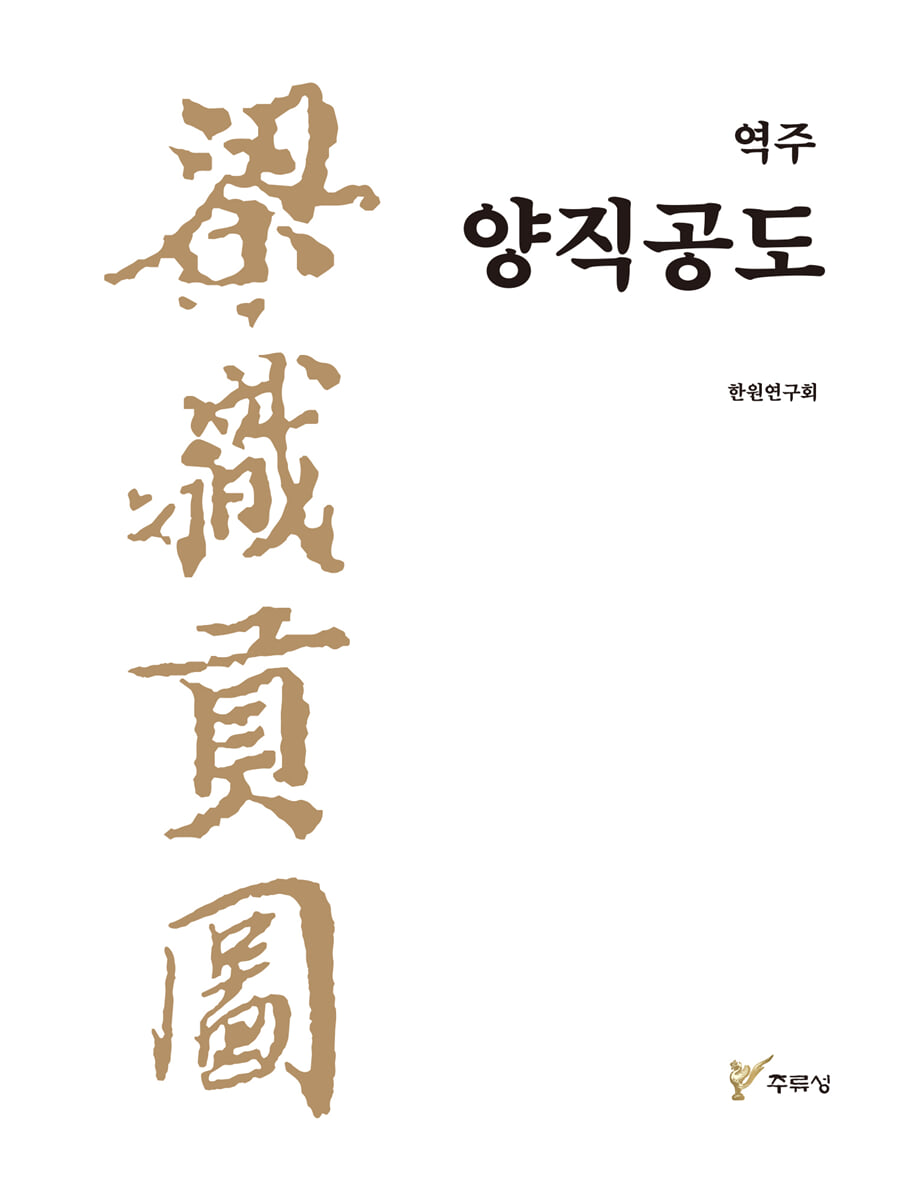
The "Yangjikgongdo (梁職貢圖)" is based on data depicting the appearance of envoys from various countries during the time when Xiao Yi (蕭繹), who later became Emperor Yuan of Liang (梁 元帝), was the governor of Jingzhou (荊州刺史).
To commemorate the 40th anniversary of the reign of his father, Emperor Wu of Liang, Soyeok presented a long scroll of existing pictorial materials, which became the “Yangjikgongdo.”
Currently, the original is no longer extant, and only four copies of the painting and artifacts (Go Deok-gyeom copy, Buksong copy, Yeom Lip copy, and Janggyeong copy) remain.
In addition, there are many differences between the copies in terms of the number of envoys, detailed expressions, and order of description, and only one copy, the Northern Song copy, includes the envoys and the corresponding country's explanations, just like the original.
This work, which depicts in detail the appearance and clothing of the envoys from each country who visited the Liang Dynasty around the 6th century, provides valuable visual information that was previously difficult to obtain, and the artifact contains many records that do not match existing literature, allowing us to look into ancient history in a new way.
In particular, in the field of Korean history, its proposition, along with the envoys of Goguryeo, Baekje, and Silla, received attention, and was evaluated as an important clue that could illuminate the diplomatic activities of the three countries in the context of international relations in ancient East Asia.
The "Yangjikgongdo (梁職貢圖)" is based on data depicting the appearance of envoys from various countries during the time when Xiao Yi (蕭繹), who later became Emperor Yuan of Liang (梁 元帝), was the governor of Jingzhou (荊州刺史).
To commemorate the 40th anniversary of the reign of his father, Emperor Wu of Liang, Soyeok presented a long scroll of existing pictorial materials, which became the “Yangjikgongdo.”
Currently, the original is no longer extant, and only four copies of the painting and artifacts (Go Deok-gyeom copy, Buksong copy, Yeom Lip copy, and Janggyeong copy) remain.
In addition, there are many differences between the copies in terms of the number of envoys, detailed expressions, and order of description, and only one copy, the Northern Song copy, includes the envoys and the corresponding country's explanations, just like the original.
This work, which depicts in detail the appearance and clothing of the envoys from each country who visited the Liang Dynasty around the 6th century, provides valuable visual information that was previously difficult to obtain, and the artifact contains many records that do not match existing literature, allowing us to look into ancient history in a new way.
In particular, in the field of Korean history, its proposition, along with the envoys of Goguryeo, Baekje, and Silla, received attention, and was evaluated as an important clue that could illuminate the diplomatic activities of the three countries in the context of international relations in ancient East Asia.
- You can preview some of the book's contents.
Preview
index
At the beginning of the book
Text and research trends of the "Yangjikgongdo (梁職貢圖)"
Note
Legend
"Yangjikgongdo" Map of the World
Preface to the "Yangjikgongdo"
Luguo
Yeye Country
Kingdom of Hanam
Central India and Northern India
Sajakuk (Teacher's Country)
The Kingdom of Galvanta
The Kingdom of Wu Xing
Gochang-guk (高昌國)
Cheonmun Bay (天門蠻)
Geonpyeongman (建平蠻)
Im Gang-man (臨江蠻)
Sliding country
Kingdom of Pasa
Baekje
Turtle?
Japan
Goguryeo
What country?
Silla
Zhou Dynasty (周古柯國)
Gabaldan Kingdom
Rye Dan-guk (胡蜜丹國)
Baekje Kingdom
End of the country/For the sake of the country
Imeup-guk (林邑國)
Paris Country
Tang Changguk
Nanga Hydrangea
Deng Zhiguo
Wei country
Gantari Kingdom
Bunam country (扶南國)
Brigade Country (female?country)
White Wood Country
About the author
References
index
Text and research trends of the "Yangjikgongdo (梁職貢圖)"
Note
Legend
"Yangjikgongdo" Map of the World
Preface to the "Yangjikgongdo"
Luguo
Yeye Country
Kingdom of Hanam
Central India and Northern India
Sajakuk (Teacher's Country)
The Kingdom of Galvanta
The Kingdom of Wu Xing
Gochang-guk (高昌國)
Cheonmun Bay (天門蠻)
Geonpyeongman (建平蠻)
Im Gang-man (臨江蠻)
Sliding country
Kingdom of Pasa
Baekje
Turtle?
Japan
Goguryeo
What country?
Silla
Zhou Dynasty (周古柯國)
Gabaldan Kingdom
Rye Dan-guk (胡蜜丹國)
Baekje Kingdom
End of the country/For the sake of the country
Imeup-guk (林邑國)
Paris Country
Tang Changguk
Nanga Hydrangea
Deng Zhiguo
Wei country
Gantari Kingdom
Bunam country (扶南國)
Brigade Country (female?country)
White Wood Country
About the author
References
index
Publisher's Review
23 researchers participated in translating and annotating the “Yangjikgongdo (梁職貢圖)”
The "Yangzhi Gongtu (梁職貢圖)" is a hand-drawn scroll painting ('hwa-kwon (畵卷)' or 'kwon-chuk-hwa (卷軸畵)') depicting the appearances of foreign envoys from surrounding countries, created by Xiao Yi (蕭繹, later Emperor Yuan, 508-554), the seventh son of Emperor Wu of Liang of the Southern Dynasties, while serving as the Governor of Jingzhou (526-539).
The fact that the "Yangjikgongdo," which had only been known through literature, remained in the Nanjing Museum was first discovered in 1960 by Chinese art historian Jin Weinuo (金維諾, 1924-2018).
It was soon estimated to be the remnants of a colored silk book bound by Su Song (1020-1101), copied from the “Yangjikgongdo” in the possession of Zhang Zilu in the 10th year of the reign of Emperor Xining of the Northern Song Dynasty (1077).
The copy of the Northern Song Dynasty in the Nanjing Museum (hereinafter abbreviated as the “Northern Song copy”) includes maps of envoys from 12 countries and inscriptions of 13 countries that describe the origins, geography, and customs of the countries and articles on negotiations during the Liang Dynasty.
In particular, there are many articles in the relevant country's petition that are missing from the Biography of the Barbarians in the Book of Liang.
Therefore, the "Yangjikgongdo" has attracted great interest and research in various academic fields, including the history of foreign relations during the Southern Liang Dynasty, as well as the history of painting and clothing.
In 1987, about 20 years after the existence of the Northern Song copy of the "Yangjikgongdo" became known, Kazuo Enoki (1913-1989) introduced the fact that there were two other copies in the Palace Museum in Taipei.
Following this, in 2011, the "Yangjikgongdo" of unknown date was copied by the painter Zhang Geng (1685-1760) in 1739, and the "Qingzhang Jingjing Fanzigongdo Vol. 1 (?Zhang Geng Various Offices Tribute Map)" (hereinafter referred to as "Jang Gyeong Mobon"), which was only copied by Ji Yishitong (?, 186-?1935) in the late 19th century, was discovered by Zhao Chanpeng (1970-present).
For this reason, research on the "Yangjikgongdo" has progressed with each new discovery since the discovery of the "North Song copy" in 1960.
Accordingly, the research trends and issues were organized by the time when the four original texts of the “Yangjikgongdo” were made public.
In particular, in China and Japan, there has been some progress in understanding the overall interpretation and translation of the texts of each country's rituals in the copies that serve as the basis for the study of the "Yangjikgongdo," as well as the current status of the rituals that are partially cited in other historical documents. However, domestic research still has many shortcomings.
Because of this, it is true that researchers have had certain difficulties in actively utilizing the historical material called “Yangjikgongdo” in their research.
Accordingly, the Hanwon Research Association held seminars almost every month starting May 18, 2019, with a total of 23 researchers participating, where they analyzed the four guardian deities of the “Yangjikgongdo” and worked on interpretation and translation of the text.
Because the amount of feed was so large, it required a lot of time and effort. On the other hand, there were also many difficulties, such as having to meet remotely for a while to discuss the matter due to the COVID-19 pandemic.
However, with the active participation of many people, we have continued to hold lectures, and in the fall of 2021, we held an academic conference with the National Maritime Museum (「Yangjikgongdo」 and East Asian Maritime Networks, National Maritime Museum, October 22, 2021), and conducted research on the materials themselves.
In addition, in July 2023, when the translation was nearing completion, he also visited Uzbekistan, Turkmenistan, and Tajikistan in Central Asia, where the map of the four messengers appears in the "Yangjikgongdo".
Through a long process and with the continued participation and interest of many researchers, the translated text was finally completed.
The "Yangzhi Gongtu (梁職貢圖)" is a hand-drawn scroll painting ('hwa-kwon (畵卷)' or 'kwon-chuk-hwa (卷軸畵)') depicting the appearances of foreign envoys from surrounding countries, created by Xiao Yi (蕭繹, later Emperor Yuan, 508-554), the seventh son of Emperor Wu of Liang of the Southern Dynasties, while serving as the Governor of Jingzhou (526-539).
The fact that the "Yangjikgongdo," which had only been known through literature, remained in the Nanjing Museum was first discovered in 1960 by Chinese art historian Jin Weinuo (金維諾, 1924-2018).
It was soon estimated to be the remnants of a colored silk book bound by Su Song (1020-1101), copied from the “Yangjikgongdo” in the possession of Zhang Zilu in the 10th year of the reign of Emperor Xining of the Northern Song Dynasty (1077).
The copy of the Northern Song Dynasty in the Nanjing Museum (hereinafter abbreviated as the “Northern Song copy”) includes maps of envoys from 12 countries and inscriptions of 13 countries that describe the origins, geography, and customs of the countries and articles on negotiations during the Liang Dynasty.
In particular, there are many articles in the relevant country's petition that are missing from the Biography of the Barbarians in the Book of Liang.
Therefore, the "Yangjikgongdo" has attracted great interest and research in various academic fields, including the history of foreign relations during the Southern Liang Dynasty, as well as the history of painting and clothing.
In 1987, about 20 years after the existence of the Northern Song copy of the "Yangjikgongdo" became known, Kazuo Enoki (1913-1989) introduced the fact that there were two other copies in the Palace Museum in Taipei.
Following this, in 2011, the "Yangjikgongdo" of unknown date was copied by the painter Zhang Geng (1685-1760) in 1739, and the "Qingzhang Jingjing Fanzigongdo Vol. 1 (?Zhang Geng Various Offices Tribute Map)" (hereinafter referred to as "Jang Gyeong Mobon"), which was only copied by Ji Yishitong (?, 186-?1935) in the late 19th century, was discovered by Zhao Chanpeng (1970-present).
For this reason, research on the "Yangjikgongdo" has progressed with each new discovery since the discovery of the "North Song copy" in 1960.
Accordingly, the research trends and issues were organized by the time when the four original texts of the “Yangjikgongdo” were made public.
In particular, in China and Japan, there has been some progress in understanding the overall interpretation and translation of the texts of each country's rituals in the copies that serve as the basis for the study of the "Yangjikgongdo," as well as the current status of the rituals that are partially cited in other historical documents. However, domestic research still has many shortcomings.
Because of this, it is true that researchers have had certain difficulties in actively utilizing the historical material called “Yangjikgongdo” in their research.
Accordingly, the Hanwon Research Association held seminars almost every month starting May 18, 2019, with a total of 23 researchers participating, where they analyzed the four guardian deities of the “Yangjikgongdo” and worked on interpretation and translation of the text.
Because the amount of feed was so large, it required a lot of time and effort. On the other hand, there were also many difficulties, such as having to meet remotely for a while to discuss the matter due to the COVID-19 pandemic.
However, with the active participation of many people, we have continued to hold lectures, and in the fall of 2021, we held an academic conference with the National Maritime Museum (「Yangjikgongdo」 and East Asian Maritime Networks, National Maritime Museum, October 22, 2021), and conducted research on the materials themselves.
In addition, in July 2023, when the translation was nearing completion, he also visited Uzbekistan, Turkmenistan, and Tajikistan in Central Asia, where the map of the four messengers appears in the "Yangjikgongdo".
Through a long process and with the continued participation and interest of many researchers, the translated text was finally completed.
GOODS SPECIFICS
- Date of issue: September 30, 2025
- Page count, weight, size: 372 pages | 1,142g | 195*267*26mm
- ISBN13: 9788962465631
- ISBN10: 8962465639
You may also like
카테고리
korean


korean

![GQ KOREA Mark (Monthly): December [2025]](http://librairie.coreenne.fr/cdn/shop/files/8ef265dbbfbf186523ed75ba7319009d.jpg?v=1765340328&width=3840)


