

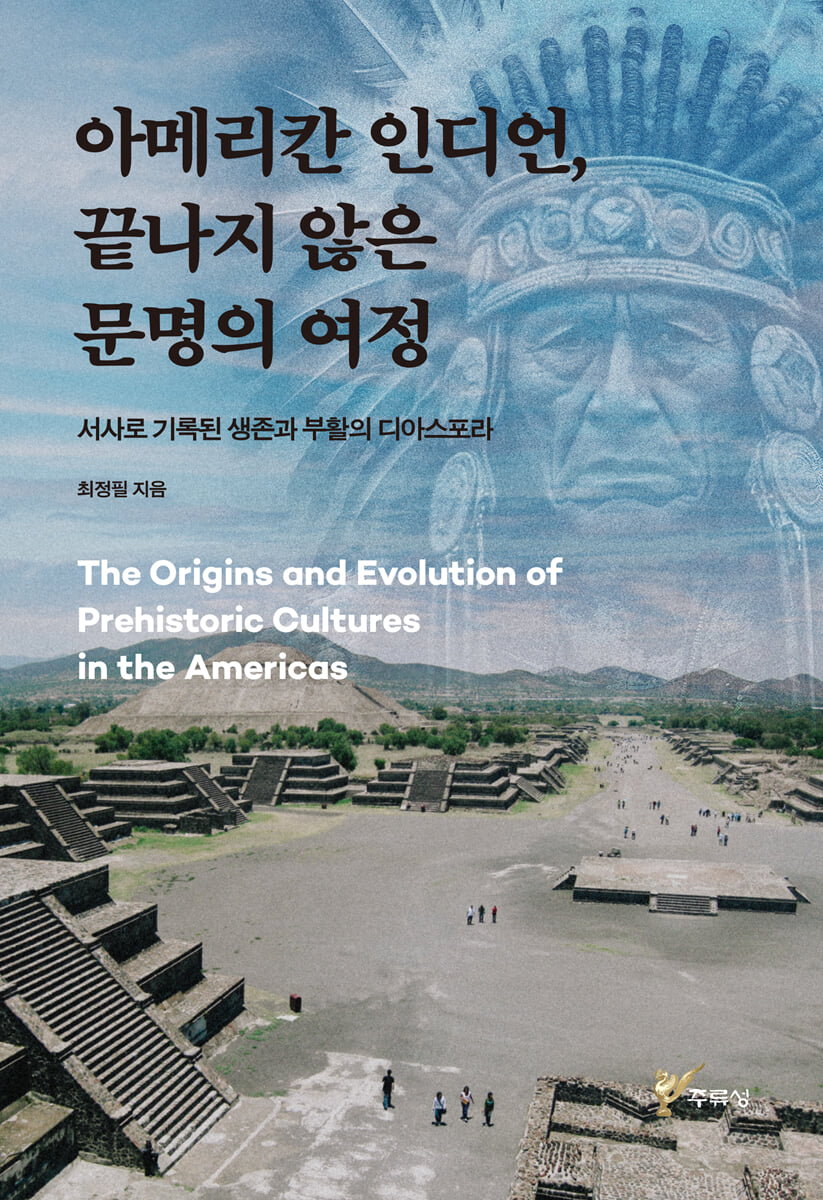
American Indians: The Unfinished Journey of Civilization
 |
Description
Book Introduction
Tracing the long journey of Native Americans from Northeast Asia, it draws on decades of research in archaeology, anthropology, geology, and genetics.
'American Indian' is a concept that is both unfamiliar and familiar.
However, this familiarity mostly stems from distorted images formed through movies and books, which have long held the history and culture of the indigenous peoples of the New World in a wrong perspective.
But behind this old image lies another narrative we never knew existed.
The book begins with the scientific insight that Native American origins have deep ties to Northeast Asia.
Drawing on decades of research in archaeology, anthropology, geology, and genetics, it traces the longest journey in human history.
The record of migration and survival from the eastern tip of the Asian continent across the Bering Strait to North America raises fundamental questions about our cultural identity and roots.
It is an attempt to break down the long-standing prejudice against those who were once called 'savages' and look at them again.
Their community, which lived in harmony with nature and valued sharing and harmony, shows us another possibility of humanity that we have forgotten today.
This book is not a specialized archaeology book, but is written in a plain language so that anyone can easily read it.
It is organized by topic, so you can read freely from the part that interests you.
I hope that this record, which connects the past and present, will serve as a small starting point to stimulate readers' curiosity.
'American Indian' is a concept that is both unfamiliar and familiar.
However, this familiarity mostly stems from distorted images formed through movies and books, which have long held the history and culture of the indigenous peoples of the New World in a wrong perspective.
But behind this old image lies another narrative we never knew existed.
The book begins with the scientific insight that Native American origins have deep ties to Northeast Asia.
Drawing on decades of research in archaeology, anthropology, geology, and genetics, it traces the longest journey in human history.
The record of migration and survival from the eastern tip of the Asian continent across the Bering Strait to North America raises fundamental questions about our cultural identity and roots.
It is an attempt to break down the long-standing prejudice against those who were once called 'savages' and look at them again.
Their community, which lived in harmony with nature and valued sharing and harmony, shows us another possibility of humanity that we have forgotten today.
This book is not a specialized archaeology book, but is written in a plain language so that anyone can easily read it.
It is organized by topic, so you can read freely from the part that interests you.
I hope that this record, which connects the past and present, will serve as a small starting point to stimulate readers' curiosity.
- You can preview some of the book's contents.
Preview
index
Starting the book
Ⅰ.
When Europeans arrived in the New World
Ⅱ.
The Great Journey of Mankind and Beringia: A Path Across the Frozen Sea
1.
Traces of Similar Genes: A Trait-Anthropological Perspective
Ⅲ.
Traces of early indigenous people (archaeological sites)
1.
Alaska and Yukon Territory
2.
Oldest Rock Shelter Site: Meadowcroft Rock Shelter
3.
Footprints on the Lakeshore: Ancient Traces in White Sands National Park
4.
The first settled village, Monteverde
Ⅳ.
Early Native Americans and Hunter-Gatherer Societies: People Who Lived in Harmony with Nature
1.
Early Native American and Archaic Indian Cultural Traditions
2.
The Advent of the Bow and Arrow: An Ancient Innovation in Human Technology
V.
The Birth of Agricultural Culture: The Story of Corn, Potatoes, Sweet Potatoes, and Pumpkins
1.
Corn, a Gift from God: The Great Agricultural Revolution That Began in Mexico
2.
The Birth of Native Americans and Pottery
Ⅵ.
The birth of a new continental civilization
1.
Norte Chico and Caral-Supe: The First Steps to a New World Civilization
2.
World City: Teotihuacan
1) Pyramid of the Sun
2) Pyramid of the Moon
3) The Mysterious Citadel: A Space Holding the Secrets of Teotihuacan
3.
The development of Central American civilization and the emergence of the Mayan civilization
1) Tikal, the new center of the Maya (90 AD?~800 AD)
2) Palenque Mayan Kingdom (431–800 AD)
3) The place where gods and humans meet, the splendid essence of art and intellect of the Mayan civilization.
4) The Decline of the Mayan Civilization: Shadows of a Mysterious Civilization
5) Late Classic and Late Classic Maya: Chichen Itza (600–1200 AD)
6) The Fall of Chichen Itza and the Emergence of Mayapan: The Dark Ages of the Maya
4.
The emergence of the Aztec Empire (1428–1521 AD)
1) Tenochtitlan: The order and symbolism of a city resembling the universe
2) Universe and Religion
3) The Rise of the Spanish Conquistadors: Legend Meets History
5.
The development of ancient Andean civilization and the emergence of the Inca civilization
6.
Inca Empire (1438–1533)
1) Cuzco, the capital of the empire
2) Machu Picchu: The Lost City
7.
The Mississippi Gift: The Birth of a Complex Society in North America
1) The Promise of Corn: The Slow Revolution in Mississippian Culture
2) Cahokia, the City of the Sun (1050-1350 AD)
3) Life and Death of Mississippian Culture
Ⅶ.
The Pueblo People, the Wind, the Earth, and the Story of an Old Village
1.
Mesa Verde: Ancient Townhouses Built into the Cliffs
2.
Chaco Canyon: A Miracle of Civilization Built on the Desert
3.
Pueblo: A Way of Life Following the Anasazi
Concluding the book
Reference and Recommended Reading
List of photos and pictures
Ⅰ.
When Europeans arrived in the New World
Ⅱ.
The Great Journey of Mankind and Beringia: A Path Across the Frozen Sea
1.
Traces of Similar Genes: A Trait-Anthropological Perspective
Ⅲ.
Traces of early indigenous people (archaeological sites)
1.
Alaska and Yukon Territory
2.
Oldest Rock Shelter Site: Meadowcroft Rock Shelter
3.
Footprints on the Lakeshore: Ancient Traces in White Sands National Park
4.
The first settled village, Monteverde
Ⅳ.
Early Native Americans and Hunter-Gatherer Societies: People Who Lived in Harmony with Nature
1.
Early Native American and Archaic Indian Cultural Traditions
2.
The Advent of the Bow and Arrow: An Ancient Innovation in Human Technology
V.
The Birth of Agricultural Culture: The Story of Corn, Potatoes, Sweet Potatoes, and Pumpkins
1.
Corn, a Gift from God: The Great Agricultural Revolution That Began in Mexico
2.
The Birth of Native Americans and Pottery
Ⅵ.
The birth of a new continental civilization
1.
Norte Chico and Caral-Supe: The First Steps to a New World Civilization
2.
World City: Teotihuacan
1) Pyramid of the Sun
2) Pyramid of the Moon
3) The Mysterious Citadel: A Space Holding the Secrets of Teotihuacan
3.
The development of Central American civilization and the emergence of the Mayan civilization
1) Tikal, the new center of the Maya (90 AD?~800 AD)
2) Palenque Mayan Kingdom (431–800 AD)
3) The place where gods and humans meet, the splendid essence of art and intellect of the Mayan civilization.
4) The Decline of the Mayan Civilization: Shadows of a Mysterious Civilization
5) Late Classic and Late Classic Maya: Chichen Itza (600–1200 AD)
6) The Fall of Chichen Itza and the Emergence of Mayapan: The Dark Ages of the Maya
4.
The emergence of the Aztec Empire (1428–1521 AD)
1) Tenochtitlan: The order and symbolism of a city resembling the universe
2) Universe and Religion
3) The Rise of the Spanish Conquistadors: Legend Meets History
5.
The development of ancient Andean civilization and the emergence of the Inca civilization
6.
Inca Empire (1438–1533)
1) Cuzco, the capital of the empire
2) Machu Picchu: The Lost City
7.
The Mississippi Gift: The Birth of a Complex Society in North America
1) The Promise of Corn: The Slow Revolution in Mississippian Culture
2) Cahokia, the City of the Sun (1050-1350 AD)
3) Life and Death of Mississippian Culture
Ⅶ.
The Pueblo People, the Wind, the Earth, and the Story of an Old Village
1.
Mesa Verde: Ancient Townhouses Built into the Cliffs
2.
Chaco Canyon: A Miracle of Civilization Built on the Desert
3.
Pueblo: A Way of Life Following the Anasazi
Concluding the book
Reference and Recommended Reading
List of photos and pictures
Publisher's Review
For what reason did humans begin to live in the New World?
How did the diverse cultures of Native Americans form and develop?
When European explorers, including Columbus, first set foot on the American continent, which they called the New World, in the late 15th century, it was by no means an empty land.
Already, this continent has been home to an indigenous people numbering between 50 million and 80 million for approximately 20,000 years.
They were comprised of approximately 1,000 different ethnic groups and were culturally very rich, with over 1,500 languages spoken.
Living arrangements and social organization also showed significant differences depending on the region.
The Andes Mountains of South America and parts of Central America had highly developed urban civilizations and centralized political structures, such as the Inca and Aztec empires.
In contrast, on the North American continent, smaller, more dispersed tribes lived in communities, each living in their own way.
Although they had different languages, myths, and cultures, they generally shared a philosophy of living in harmony with nature.
However, the arrival of Europeans soon marked the beginning of conflict and clashes.
In North America, British and French settlers gradually expanded their territory despite the stubborn resistance of the natives, and in the process, the natives were driven from their homes and completely separated from white society.
In Central and South America, the Spanish and Portuguese invasions took a more direct and destructive form.
Native people were forced into slavery and forced to work, and sometimes even subjected to massacres.
At the same time, conversion to Christianity and assimilation into European culture were forced upon the people, and in the process, mixed-race children born between Europeans and indigenous people were classified as mestizos and placed within the complex hierarchical structure of colonial society.
Along with this violent colonial rule, Europeans unilaterally gave the indigenous people names based on their own perspective.
Early Europeans called the indigenous people of North America American Indians and the indigenous people of Central and South America Indios.
However, today these terms are criticized for containing colonialist biases and misunderstandings, and the more respectful term "Native Americans" is used instead.
So how did the term "Indian" originate? It wasn't a simple slip of the tongue; it stemmed from a flaw in Europeans' understanding of world geography at the time.
In late 15th-century Europe, India and Southeast Asia were regarded as mystical lands brimming with spices, gold, and treasures, and many believed that they could reach India directly by sailing across the western seas.
In 1492, Christopher Columbus set sail west with this belief and arrived near the present-day Bahamas in Central America.
He mistook this land for an island near India and called the people living there Indians.
In this way, the indigenous people of the New World came to be called Indians due to geographical misunderstanding and Eurocentric perception.
Santa Fe, the capital of New Mexico, is a historical battleground where European conquerors and indigenous peoples clashed fiercely. Today, it is a cultural center with numerous museums and art galleries.
In the middle of that central square stands a war memorial.
At one time, the monument bore the inscription "In honor of the heroes who gave their lives in the Civil War and in battles against the savage Indians."
Ironically, in one corner of the square, indigenous people were facing tourists, displaying traditional crafts and souvenirs.
The author said he could not get the image of the savage in the inscription out of his mind.
Rather, the thought lingered in my mind that perhaps those who erected the monument were the true barbarians of history.
But when I recently returned here, the word "savage" had finally been removed from the sentence.
Only then can we look at them again with human faces, not with savage names.
I started seeing it.
American Indians are by no means savages.
They too are people who have walked through the stages of universal cultural evolution of humanity, and are dignified human beings no different from us.
In fact, in some cases, they developed a more sophisticated and richer culture than the European conquerors.
This book begins with this question:
"Why did humans begin to inhabit the New World, and how did diverse cultures form and develop?" Another question that follows is, "What was it like to live as an indigenous person in the New World?" The author has been pursuing this topic for a long time.
The long journey from the eastern tip of Asia across the Bering Strait to the North American continent was a footstep that showed another possibility for human existence.
As we follow their lives, we encounter a way of life we have forgotten.
How did the diverse cultures of Native Americans form and develop?
When European explorers, including Columbus, first set foot on the American continent, which they called the New World, in the late 15th century, it was by no means an empty land.
Already, this continent has been home to an indigenous people numbering between 50 million and 80 million for approximately 20,000 years.
They were comprised of approximately 1,000 different ethnic groups and were culturally very rich, with over 1,500 languages spoken.
Living arrangements and social organization also showed significant differences depending on the region.
The Andes Mountains of South America and parts of Central America had highly developed urban civilizations and centralized political structures, such as the Inca and Aztec empires.
In contrast, on the North American continent, smaller, more dispersed tribes lived in communities, each living in their own way.
Although they had different languages, myths, and cultures, they generally shared a philosophy of living in harmony with nature.
However, the arrival of Europeans soon marked the beginning of conflict and clashes.
In North America, British and French settlers gradually expanded their territory despite the stubborn resistance of the natives, and in the process, the natives were driven from their homes and completely separated from white society.
In Central and South America, the Spanish and Portuguese invasions took a more direct and destructive form.
Native people were forced into slavery and forced to work, and sometimes even subjected to massacres.
At the same time, conversion to Christianity and assimilation into European culture were forced upon the people, and in the process, mixed-race children born between Europeans and indigenous people were classified as mestizos and placed within the complex hierarchical structure of colonial society.
Along with this violent colonial rule, Europeans unilaterally gave the indigenous people names based on their own perspective.
Early Europeans called the indigenous people of North America American Indians and the indigenous people of Central and South America Indios.
However, today these terms are criticized for containing colonialist biases and misunderstandings, and the more respectful term "Native Americans" is used instead.
So how did the term "Indian" originate? It wasn't a simple slip of the tongue; it stemmed from a flaw in Europeans' understanding of world geography at the time.
In late 15th-century Europe, India and Southeast Asia were regarded as mystical lands brimming with spices, gold, and treasures, and many believed that they could reach India directly by sailing across the western seas.
In 1492, Christopher Columbus set sail west with this belief and arrived near the present-day Bahamas in Central America.
He mistook this land for an island near India and called the people living there Indians.
In this way, the indigenous people of the New World came to be called Indians due to geographical misunderstanding and Eurocentric perception.
Santa Fe, the capital of New Mexico, is a historical battleground where European conquerors and indigenous peoples clashed fiercely. Today, it is a cultural center with numerous museums and art galleries.
In the middle of that central square stands a war memorial.
At one time, the monument bore the inscription "In honor of the heroes who gave their lives in the Civil War and in battles against the savage Indians."
Ironically, in one corner of the square, indigenous people were facing tourists, displaying traditional crafts and souvenirs.
The author said he could not get the image of the savage in the inscription out of his mind.
Rather, the thought lingered in my mind that perhaps those who erected the monument were the true barbarians of history.
But when I recently returned here, the word "savage" had finally been removed from the sentence.
Only then can we look at them again with human faces, not with savage names.
I started seeing it.
American Indians are by no means savages.
They too are people who have walked through the stages of universal cultural evolution of humanity, and are dignified human beings no different from us.
In fact, in some cases, they developed a more sophisticated and richer culture than the European conquerors.
This book begins with this question:
"Why did humans begin to inhabit the New World, and how did diverse cultures form and develop?" Another question that follows is, "What was it like to live as an indigenous person in the New World?" The author has been pursuing this topic for a long time.
The long journey from the eastern tip of Asia across the Bering Strait to the North American continent was a footstep that showed another possibility for human existence.
As we follow their lives, we encounter a way of life we have forgotten.
GOODS SPECIFICS
- Date of issue: September 11, 2025
- Page count, weight, size: 432 pages | 638g | 152*255*21mm
- ISBN13: 9788962465617
- ISBN10: 8962465612
You may also like
카테고리
korean


korean

![GQ KOREA Mark (Monthly): December [2025]](http://librairie.coreenne.fr/cdn/shop/files/8ef265dbbfbf186523ed75ba7319009d.jpg?v=1765340328&width=3840)


