

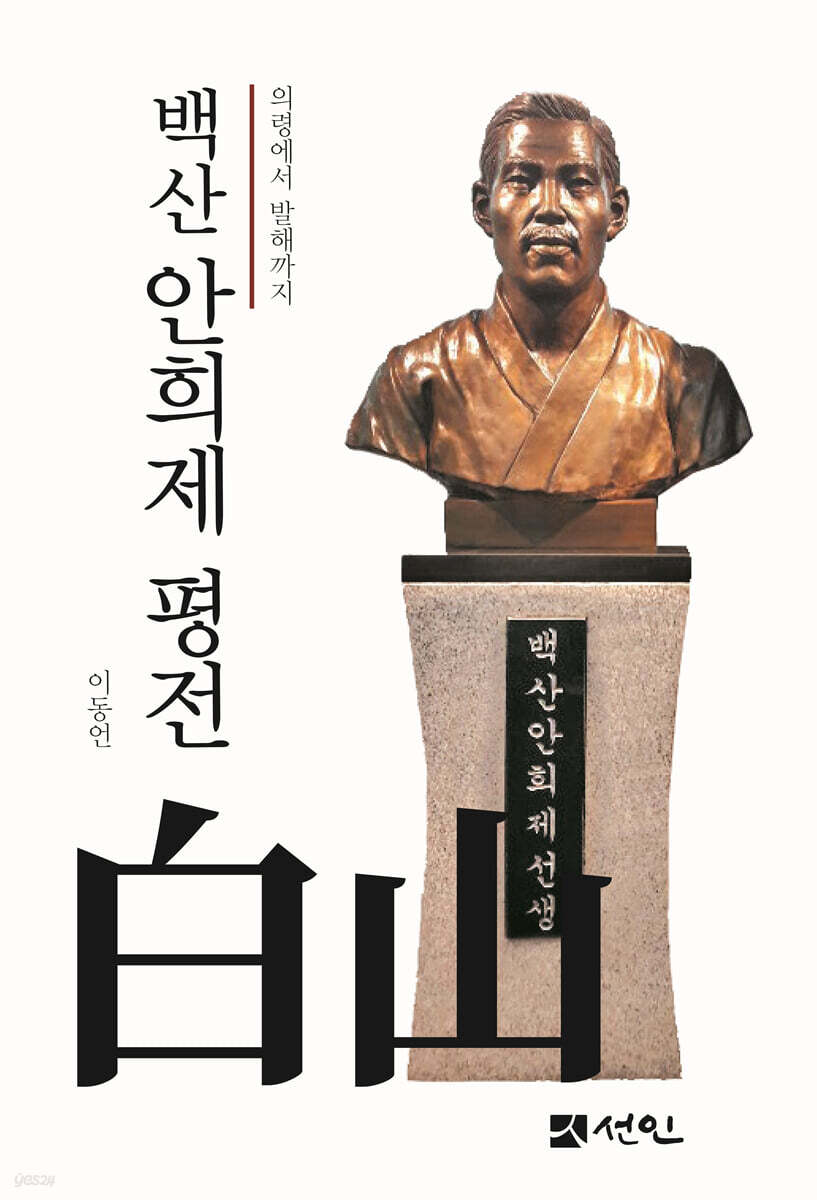
Biography of Baeksan Ahn Hee-je
 |
Description
index
In publishing a book
Chapter 1: Seolmoe Village in Uiryeong: A Place That Fostered the Spirit of Independence Activists
Chapter 2: Devoting Yourself to the Enlightenment and Cultural Movements
Chapter 3: Forming a Secret Society
Chapter 4: Establishing Baeksan Trading Company, a Base for the Domestic Independence Movement
Chapter 5: Training Independence Movement Leaders
Chapter 6: Leading the Cooperative Movement
Chapter 7: Developing a Sharp Anti-Japanese Press Struggle
Chapter 8: Building Balhae Farm as a Base for the Overseas Independence Movement
Chapter 9: Becoming a Buddhist?
Chapter 10: Martyred in the Im-o Incident
Chapter 11: The Wailing of Gyeonggyojang
Chapter 12: Baeksan An Hee-je's Status in the History of the National Movement
Condition at the time of death
An Hee-je's Chronology (1885-1943)
References
Chapter 1: Seolmoe Village in Uiryeong: A Place That Fostered the Spirit of Independence Activists
Chapter 2: Devoting Yourself to the Enlightenment and Cultural Movements
Chapter 3: Forming a Secret Society
Chapter 4: Establishing Baeksan Trading Company, a Base for the Domestic Independence Movement
Chapter 5: Training Independence Movement Leaders
Chapter 6: Leading the Cooperative Movement
Chapter 7: Developing a Sharp Anti-Japanese Press Struggle
Chapter 8: Building Balhae Farm as a Base for the Overseas Independence Movement
Chapter 9: Becoming a Buddhist?
Chapter 10: Martyred in the Im-o Incident
Chapter 11: The Wailing of Gyeonggyojang
Chapter 12: Baeksan An Hee-je's Status in the History of the National Movement
Condition at the time of death
An Hee-je's Chronology (1885-1943)
References
Publisher's Review
My relationship with Baeksan Ahn Hee-je as a researcher began in 1994 when I published a paper titled “A Study of Baeksan Ahn Hee-je.”
Under the guidance of my mentor, the late Professor Park Young-seok, I became interested in the Daejonggyo independence movement and attempted to write a thesis on Ahn Hee-je, but in reality, I was at a standstill due to lack of materials and laziness.
Fortunately, I came across the contents related to Baeksan Trading Company in the trial records of the Joseon National Restoration Corps in the National Institute of Korean History, and I gathered the courage to research and organize the materials related to An Hee-je and write a thesis.
Afterwards, he continued to supplement the shortcomings and published several papers in each field of activity and continued his research.
An Hee-je's domestic activities included the education and national salvation movement, the formation of secret societies, the establishment of Baeksan Sanghoe, a base for the domestic independence movement, cultural and social movements, the establishment of the Gimi Yookyeonghoe scholarship foundation for training independence activists, the cooperative movement, and the anti-Japanese press struggle.
An Hee-je, who felt the limitations of the independence movement in Korea, went into exile in China and managed Balhae Farm as a base for the independence movement overseas. In his later years, he converted to Daejonggyo and achieved many great things.
Every time I encountered Ahn Hee-je's diverse activities, I felt as if he was teaching me to broaden my research on the history of the independence movement.
Among An Hee-je's activities, the most highly regarded aspect is his work in raising funds for the independence movement.
It would not be an exaggeration to say that An Hee-je's various activities were a means of raising funds for the independence movement.
Due to the nature of the funds for the independence movement, it is difficult to find any remaining evidence.
Because of that, there are bound to be many parts of his whereabouts that remain unknown.
No one can deny the efforts An Hee-je made to raise funds for the domestic independence movement.
While publishing a paper on cases of financing the independence movement, including Ahn Hee-je, he wrote that Ahn Hee-je was the ‘CEO of the independence movement.’
An Hee-je would have raised funds with the intention of becoming a lifeline for the independence movement, despite Japanese surveillance and oppression.
In 1995, to commemorate the 50th anniversary of liberation, the Busan Ilbo serialized “Comrades of Baeksan,” and in 1998, the Busan Ilbo published “Comrades of Baeksan,” a history of the independence movement by excavated figures (Busan Ilbo Special Investigation Team).
This book contains the lives and activities of 20 people, including Ahn Hee-je, Yoon Sang-eun, Lee Woo-sik, Jeong Jae-wan, Kwon Oh-bong, Moon Yeong-bin, Kim Dong-sam, Yoon Byeong-ho, Choi Jun, Kim Hong-jo, Choi Byeong-chan, Son Byeong-sun, Nam Hyeong-woo, Shin Pil-su, Jang Geon-sang, Park Sang-jin, Seo Sang-il, Seo Sang-ho, Byeon Sang-tae, and Lee Su-yeong.
The Independence Hall of Korea selected 100 independence activists and launched a project to publish biographies of Korean independence activists.
As part of that project, 『An Hee-je, the Lifeline of Funds for the Independence Movement』 was published in 2010.
This book is written in an easy-to-understand manner for the general public.
Afterwards, I felt that there was a lack of research on Ahn Hee-je, so I tracked down data and continued my research.
In 2013, the 70th Anniversary of the Death of Baeksan Ahn Hee-je Memorial Committee published a commemorative collection of essays titled “Baeksan Ahn Hee-je’s Life and National Movement.”
Academic experts divided An Hee-je's independence movement into different fields and wrote about it.
These include “The Tradition and Cultural Heritage of the Ipsan-ri Ahn Clan of Uiryeong” (Cho Dong-geol/Professor Emeritus, Kookmin University), “The Formation and Activities of the Daedong Youth Party” (Kim Seong-min/Researcher, Ministry of Patriots and Veterans Affairs), “Ahn Hee-je’s Enlightenment Movement and Cultural Movement” (Jang Seok-heung/Professor, Kookmin University), “The Establishment and Management of Baeksan Trading Co., Ltd.” (Kwon Dae-woong/Professor, Daekyung University), “Baeksan Ahn Hee-je’s Anti-Japanese Journalism Activities” (Jeong Jin-seok/Professor, Hankuk University of Foreign Studies), “Baeksan Ahn Hee-je’s Daejonggyo Independence Movement and Patriotic Martyrs” (Lee Dong-eon/Senior Research Fellow, Independence Hall of Korea), “Baeksan Ahn Hee-je’s Place in the History of the National Movement” (Lee Man-yeol/Professor, Sookmyung Women’s University), and “The Hidden Story of Baeksan House” (Ahn Gyeong-ha/Ahn Hee-je’s Descendant).
By referring to the research results of this memorial essay and through data investigation, we aimed to clarify and supplement the controversial issues such as the graduation year of Yangjeong High School, the issue of the name of the Daedong Youth Corps, exile in St. Petersburg, Russia, the relationship with Choi Gwang (Choi Byeong-chan) in Vladivostok, the year of establishment of Baeksan Trading Company, the site of Baeksan Trading Company, branches and sub-branches of Baeksan Trading Company, the issue of provisional government support for independence movement funds, the relationship between the construction of Balhae Farm and Kim Tae-won, and the whole story of the Im-o Incident.
I will leave the areas that have not yet been clarified as research topics and fulfill my responsibility as a researcher.
In 1995, the 50th anniversary of liberation, the Baeksan Memorial Hall opened in Busan, and in 2024, Busan KNN produced the film 'Baeksan from Uiryeong to Balhae', which was screened in theaters nationwide.
The audience's comments were, "I didn't know about Ahn Hee-je, it's so touching."
On May 21, 2025, the 'Baeksan Love for Our Country Wide Yard' exhibition hall opened in Uiryeong, the hometown of Ahn Hee-jae.
In research on independence activists, how much of the lives and activities of the individuals involved can be restored through fact-checking? While it's difficult to completely restore and fully reveal the truth, perhaps we can re-evaluate An Hee-je as an independence activist, recognizing his significance as "the lifeline of the independence movement" and "the CEO of the independence movement."
- August 2025, at the Seonin History and Culture Center, Lee Dong-eon
Under the guidance of my mentor, the late Professor Park Young-seok, I became interested in the Daejonggyo independence movement and attempted to write a thesis on Ahn Hee-je, but in reality, I was at a standstill due to lack of materials and laziness.
Fortunately, I came across the contents related to Baeksan Trading Company in the trial records of the Joseon National Restoration Corps in the National Institute of Korean History, and I gathered the courage to research and organize the materials related to An Hee-je and write a thesis.
Afterwards, he continued to supplement the shortcomings and published several papers in each field of activity and continued his research.
An Hee-je's domestic activities included the education and national salvation movement, the formation of secret societies, the establishment of Baeksan Sanghoe, a base for the domestic independence movement, cultural and social movements, the establishment of the Gimi Yookyeonghoe scholarship foundation for training independence activists, the cooperative movement, and the anti-Japanese press struggle.
An Hee-je, who felt the limitations of the independence movement in Korea, went into exile in China and managed Balhae Farm as a base for the independence movement overseas. In his later years, he converted to Daejonggyo and achieved many great things.
Every time I encountered Ahn Hee-je's diverse activities, I felt as if he was teaching me to broaden my research on the history of the independence movement.
Among An Hee-je's activities, the most highly regarded aspect is his work in raising funds for the independence movement.
It would not be an exaggeration to say that An Hee-je's various activities were a means of raising funds for the independence movement.
Due to the nature of the funds for the independence movement, it is difficult to find any remaining evidence.
Because of that, there are bound to be many parts of his whereabouts that remain unknown.
No one can deny the efforts An Hee-je made to raise funds for the domestic independence movement.
While publishing a paper on cases of financing the independence movement, including Ahn Hee-je, he wrote that Ahn Hee-je was the ‘CEO of the independence movement.’
An Hee-je would have raised funds with the intention of becoming a lifeline for the independence movement, despite Japanese surveillance and oppression.
In 1995, to commemorate the 50th anniversary of liberation, the Busan Ilbo serialized “Comrades of Baeksan,” and in 1998, the Busan Ilbo published “Comrades of Baeksan,” a history of the independence movement by excavated figures (Busan Ilbo Special Investigation Team).
This book contains the lives and activities of 20 people, including Ahn Hee-je, Yoon Sang-eun, Lee Woo-sik, Jeong Jae-wan, Kwon Oh-bong, Moon Yeong-bin, Kim Dong-sam, Yoon Byeong-ho, Choi Jun, Kim Hong-jo, Choi Byeong-chan, Son Byeong-sun, Nam Hyeong-woo, Shin Pil-su, Jang Geon-sang, Park Sang-jin, Seo Sang-il, Seo Sang-ho, Byeon Sang-tae, and Lee Su-yeong.
The Independence Hall of Korea selected 100 independence activists and launched a project to publish biographies of Korean independence activists.
As part of that project, 『An Hee-je, the Lifeline of Funds for the Independence Movement』 was published in 2010.
This book is written in an easy-to-understand manner for the general public.
Afterwards, I felt that there was a lack of research on Ahn Hee-je, so I tracked down data and continued my research.
In 2013, the 70th Anniversary of the Death of Baeksan Ahn Hee-je Memorial Committee published a commemorative collection of essays titled “Baeksan Ahn Hee-je’s Life and National Movement.”
Academic experts divided An Hee-je's independence movement into different fields and wrote about it.
These include “The Tradition and Cultural Heritage of the Ipsan-ri Ahn Clan of Uiryeong” (Cho Dong-geol/Professor Emeritus, Kookmin University), “The Formation and Activities of the Daedong Youth Party” (Kim Seong-min/Researcher, Ministry of Patriots and Veterans Affairs), “Ahn Hee-je’s Enlightenment Movement and Cultural Movement” (Jang Seok-heung/Professor, Kookmin University), “The Establishment and Management of Baeksan Trading Co., Ltd.” (Kwon Dae-woong/Professor, Daekyung University), “Baeksan Ahn Hee-je’s Anti-Japanese Journalism Activities” (Jeong Jin-seok/Professor, Hankuk University of Foreign Studies), “Baeksan Ahn Hee-je’s Daejonggyo Independence Movement and Patriotic Martyrs” (Lee Dong-eon/Senior Research Fellow, Independence Hall of Korea), “Baeksan Ahn Hee-je’s Place in the History of the National Movement” (Lee Man-yeol/Professor, Sookmyung Women’s University), and “The Hidden Story of Baeksan House” (Ahn Gyeong-ha/Ahn Hee-je’s Descendant).
By referring to the research results of this memorial essay and through data investigation, we aimed to clarify and supplement the controversial issues such as the graduation year of Yangjeong High School, the issue of the name of the Daedong Youth Corps, exile in St. Petersburg, Russia, the relationship with Choi Gwang (Choi Byeong-chan) in Vladivostok, the year of establishment of Baeksan Trading Company, the site of Baeksan Trading Company, branches and sub-branches of Baeksan Trading Company, the issue of provisional government support for independence movement funds, the relationship between the construction of Balhae Farm and Kim Tae-won, and the whole story of the Im-o Incident.
I will leave the areas that have not yet been clarified as research topics and fulfill my responsibility as a researcher.
In 1995, the 50th anniversary of liberation, the Baeksan Memorial Hall opened in Busan, and in 2024, Busan KNN produced the film 'Baeksan from Uiryeong to Balhae', which was screened in theaters nationwide.
The audience's comments were, "I didn't know about Ahn Hee-je, it's so touching."
On May 21, 2025, the 'Baeksan Love for Our Country Wide Yard' exhibition hall opened in Uiryeong, the hometown of Ahn Hee-jae.
In research on independence activists, how much of the lives and activities of the individuals involved can be restored through fact-checking? While it's difficult to completely restore and fully reveal the truth, perhaps we can re-evaluate An Hee-je as an independence activist, recognizing his significance as "the lifeline of the independence movement" and "the CEO of the independence movement."
- August 2025, at the Seonin History and Culture Center, Lee Dong-eon
GOODS SPECIFICS
- Date of issue: August 15, 2025
- Page count, weight, size: 188 pages | 310g | 128*188*12mm
- ISBN13: 9791160689884
- ISBN10: 1160689881
You may also like
카테고리
korean


korean

![GQ KOREA Mark (Monthly): December [2025]](http://librairie.coreenne.fr/cdn/shop/files/8ef265dbbfbf186523ed75ba7319009d.jpg?v=1765340328&width=3840)


