

Interesting historical stories of Korean place names
 |
Description
Book Introduction
Why did Joseon's largest port, Samgae, lose its name?
In the past, when writing Korean place names, we used the meaning of Chinese characters.
But at some point, as we began to get used to reading Chinese characters, Korean place names began to disappear one by one.
It expanded further during the Japanese colonial period, when modern education increased the number of people who could read and write Chinese place names, and rapid economic growth and urbanization starting in the 1960s completely drove out Korean place names from administrative place names.
However, with the implementation of the road name address system in 2014, a 'miracle' occurred in which some Korean place names were revived.
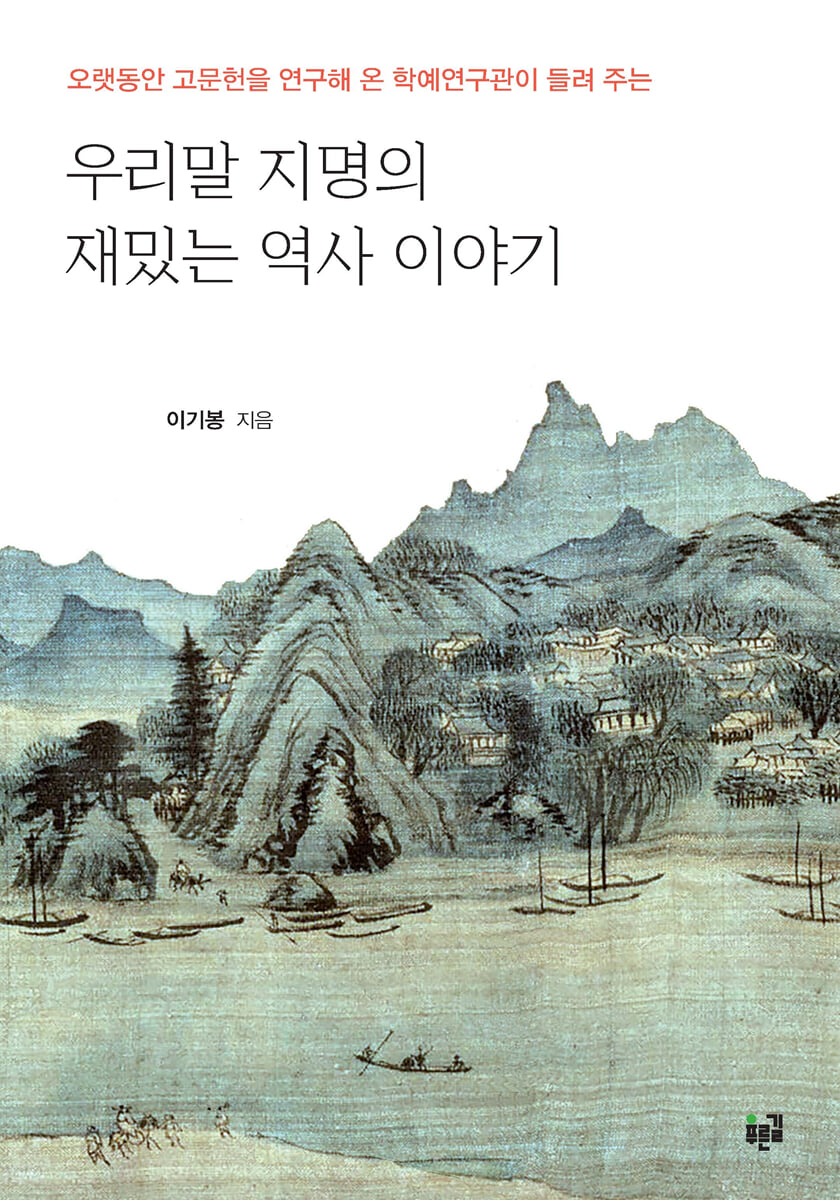
『The Interesting History of Korean Place Names』 contains 50 place names told directly by Lee Ki-bong, a researcher who has studied ancient documents for a long time.
These are the origins of the name 'Hanyang' that we have habitually called, the status of Seoul as a proper noun referring to the capital of our country and meaning capital, and the beautiful and interesting stories of place names that have been miraculously revived as road names.
If you think about it, the names ‘Akkeummal (village at the front end)’ and ‘Dwikkeummal (village at the back end)’ are so intuitive that they are appealing even to hear.
The 'Jat' in 'Jatgogae', which seems to have many pine trees, is the Korean word for castle, so it is fun to find a mountain castle nearby.
If we were to write Dongsan in Korean, it would be Ddongmoe, but it is not the original meaning of a small mountain or hill near a village or a mountain in the east, but rather a 'mountain the size of a person's eye', so it should be much smaller than the vague idea that comes to mind.
Nowadays, most place names have disappeared because people are reluctant to include the word 'poop' in their names.
Not many people know where Samgaenaru is now.
Samgae, which was written as 麻 (hemp) and 浦 (dog) by borrowing the meaning of the Chinese characters, was later read with the sounds of the Chinese characters and became known as the current Mapo.
This is why Samgaenaru, Joseon's largest port, became Mapo.
For various reasons, the stories of place names that have settled on our land become stories of our ancestors and a dictionary of our language.
It's always fun to learn something new as well as confirm what you already know.
And the twist of realizing that what I knew was wrong is even more enjoyable.
I hope you will experience the exhilaration of reconfirming what you already knew in this book, and the joy of surprises where the meanings of names often deviate from what you expected.
In the past, when writing Korean place names, we used the meaning of Chinese characters.
But at some point, as we began to get used to reading Chinese characters, Korean place names began to disappear one by one.
It expanded further during the Japanese colonial period, when modern education increased the number of people who could read and write Chinese place names, and rapid economic growth and urbanization starting in the 1960s completely drove out Korean place names from administrative place names.
However, with the implementation of the road name address system in 2014, a 'miracle' occurred in which some Korean place names were revived.
『The Interesting History of Korean Place Names』 contains 50 place names told directly by Lee Ki-bong, a researcher who has studied ancient documents for a long time.
These are the origins of the name 'Hanyang' that we have habitually called, the status of Seoul as a proper noun referring to the capital of our country and meaning capital, and the beautiful and interesting stories of place names that have been miraculously revived as road names.
If you think about it, the names ‘Akkeummal (village at the front end)’ and ‘Dwikkeummal (village at the back end)’ are so intuitive that they are appealing even to hear.
The 'Jat' in 'Jatgogae', which seems to have many pine trees, is the Korean word for castle, so it is fun to find a mountain castle nearby.
If we were to write Dongsan in Korean, it would be Ddongmoe, but it is not the original meaning of a small mountain or hill near a village or a mountain in the east, but rather a 'mountain the size of a person's eye', so it should be much smaller than the vague idea that comes to mind.
Nowadays, most place names have disappeared because people are reluctant to include the word 'poop' in their names.
Not many people know where Samgaenaru is now.
Samgae, which was written as 麻 (hemp) and 浦 (dog) by borrowing the meaning of the Chinese characters, was later read with the sounds of the Chinese characters and became known as the current Mapo.
This is why Samgaenaru, Joseon's largest port, became Mapo.
For various reasons, the stories of place names that have settled on our land become stories of our ancestors and a dictionary of our language.
It's always fun to learn something new as well as confirm what you already know.
And the twist of realizing that what I knew was wrong is even more enjoyable.
I hope you will experience the exhilaration of reconfirming what you already knew in this book, and the joy of surprises where the meanings of names often deviate from what you expected.
- You can preview some of the book's contents.
Preview
index
preface
1.
The birth of the name Hanyang
2.
Seoul Regains Its Proper Noun Status
3.
The Han River and the Geum River, the "Rivers of Kings"
4.
From dullard, troublemaker to fortune
5.
Yuldo and Bamseom
6.
Samgae, the largest port in Joseon
7.
Donggyo-dong and Utjandari
8.
Sogong-dong and Sogeukgonggol
9.
Stir-fried octopus and octopus from Mugyo-dong
10.
The most beautiful village in Seoul, Gondamgol
11.
Myeongdong Cathedral and Jongmyo Cathedral
12.
Geoncheon-dong and Marunnaetgol
13.
Pil-dong, the neighborhood with the most interesting origin in Seoul
14.
First and second legs
15.
Donam-dong and Doeneomi Pass
16.
Samgaksan Mountain, three horns and two cow ears
17.
Suyu-dong and Munemi Pass
18.
Dumutgae, the ferry from which the Tsushima Island conquest force departed
19.
Dongjaegi Ferry, the busiest ferry in Joseon
20.
201 Seoritgae-daero, Seoripul-gu, Seoul
21.
Mothers in Cheongdam-dong and Pangyo
22.
Mongchon and Woongjin, Gommal and Gomnaru
23.
Saetgang in Yeouido and Saenae in Jamsil
24.
Welcome to Dongmakgol
25.
Sondolmok and Sondolhang, Sonseokhang, and Sonryanghang
26.
Saejae Pass in Joan-myeon, Namyangju
27.
Gojian in Ansan and Kkotmae in Jangseong
28.
Ipobo and pillow
29.
Gorangae Ferry, a lonely and sad history
30.
Hantangang River, Daetan, Hanyeoul
31.
Jatgogae and Sogae Pass
32.
Saesulmak, a source of interesting stories
33.
Akkeummal and Ssanghakri
34.
Hanbat, Omi, Nolmi
35.
Ddongmae and Dongsan
36.
Saemal IC, Achimdol IC, Saemi Junction, Jilmajae Junction
37.
Daecheon Beach and Hannae
38.
Sapgyocheon breakwater and Sapdari
39.
Jukryeong and Daejae
40.
The last one, a familiar yet unfamiliar name
41.
The original name of the land, Makheurigiyeoul
42.
Chungju Goguryeo Stele and Jangmi Mountain Fortress
43.
Seven and nine
44.
Uldolmok and Myeongnyang
45.
Dalseong in Daegu and Chuhwasanseong in Miryang
46.
Mungyeong Saejae, the busiest pass in the Baekdudaegan Mountains
47.
Jeodong Port and Mosigae
48.
POSCO and Gaemegi
49.
Wihwado and Ulheum
50.
Equator and Black Sea
1.
The birth of the name Hanyang
2.
Seoul Regains Its Proper Noun Status
3.
The Han River and the Geum River, the "Rivers of Kings"
4.
From dullard, troublemaker to fortune
5.
Yuldo and Bamseom
6.
Samgae, the largest port in Joseon
7.
Donggyo-dong and Utjandari
8.
Sogong-dong and Sogeukgonggol
9.
Stir-fried octopus and octopus from Mugyo-dong
10.
The most beautiful village in Seoul, Gondamgol
11.
Myeongdong Cathedral and Jongmyo Cathedral
12.
Geoncheon-dong and Marunnaetgol
13.
Pil-dong, the neighborhood with the most interesting origin in Seoul
14.
First and second legs
15.
Donam-dong and Doeneomi Pass
16.
Samgaksan Mountain, three horns and two cow ears
17.
Suyu-dong and Munemi Pass
18.
Dumutgae, the ferry from which the Tsushima Island conquest force departed
19.
Dongjaegi Ferry, the busiest ferry in Joseon
20.
201 Seoritgae-daero, Seoripul-gu, Seoul
21.
Mothers in Cheongdam-dong and Pangyo
22.
Mongchon and Woongjin, Gommal and Gomnaru
23.
Saetgang in Yeouido and Saenae in Jamsil
24.
Welcome to Dongmakgol
25.
Sondolmok and Sondolhang, Sonseokhang, and Sonryanghang
26.
Saejae Pass in Joan-myeon, Namyangju
27.
Gojian in Ansan and Kkotmae in Jangseong
28.
Ipobo and pillow
29.
Gorangae Ferry, a lonely and sad history
30.
Hantangang River, Daetan, Hanyeoul
31.
Jatgogae and Sogae Pass
32.
Saesulmak, a source of interesting stories
33.
Akkeummal and Ssanghakri
34.
Hanbat, Omi, Nolmi
35.
Ddongmae and Dongsan
36.
Saemal IC, Achimdol IC, Saemi Junction, Jilmajae Junction
37.
Daecheon Beach and Hannae
38.
Sapgyocheon breakwater and Sapdari
39.
Jukryeong and Daejae
40.
The last one, a familiar yet unfamiliar name
41.
The original name of the land, Makheurigiyeoul
42.
Chungju Goguryeo Stele and Jangmi Mountain Fortress
43.
Seven and nine
44.
Uldolmok and Myeongnyang
45.
Dalseong in Daegu and Chuhwasanseong in Miryang
46.
Mungyeong Saejae, the busiest pass in the Baekdudaegan Mountains
47.
Jeodong Port and Mosigae
48.
POSCO and Gaemegi
49.
Wihwado and Ulheum
50.
Equator and Black Sea
GOODS SPECIFICS
- Date of issue: August 6, 2025
- Page count, weight, size: 164 pages | 266g | 141*200*11mm
- ISBN13: 9791172670559
- ISBN10: 1172670552
You may also like
카테고리
korean


korean

![GQ KOREA Mark (Monthly): December [2025]](http://librairie.coreenne.fr/cdn/shop/files/8ef265dbbfbf186523ed75ba7319009d.jpg?v=1765340328&width=3840)


