

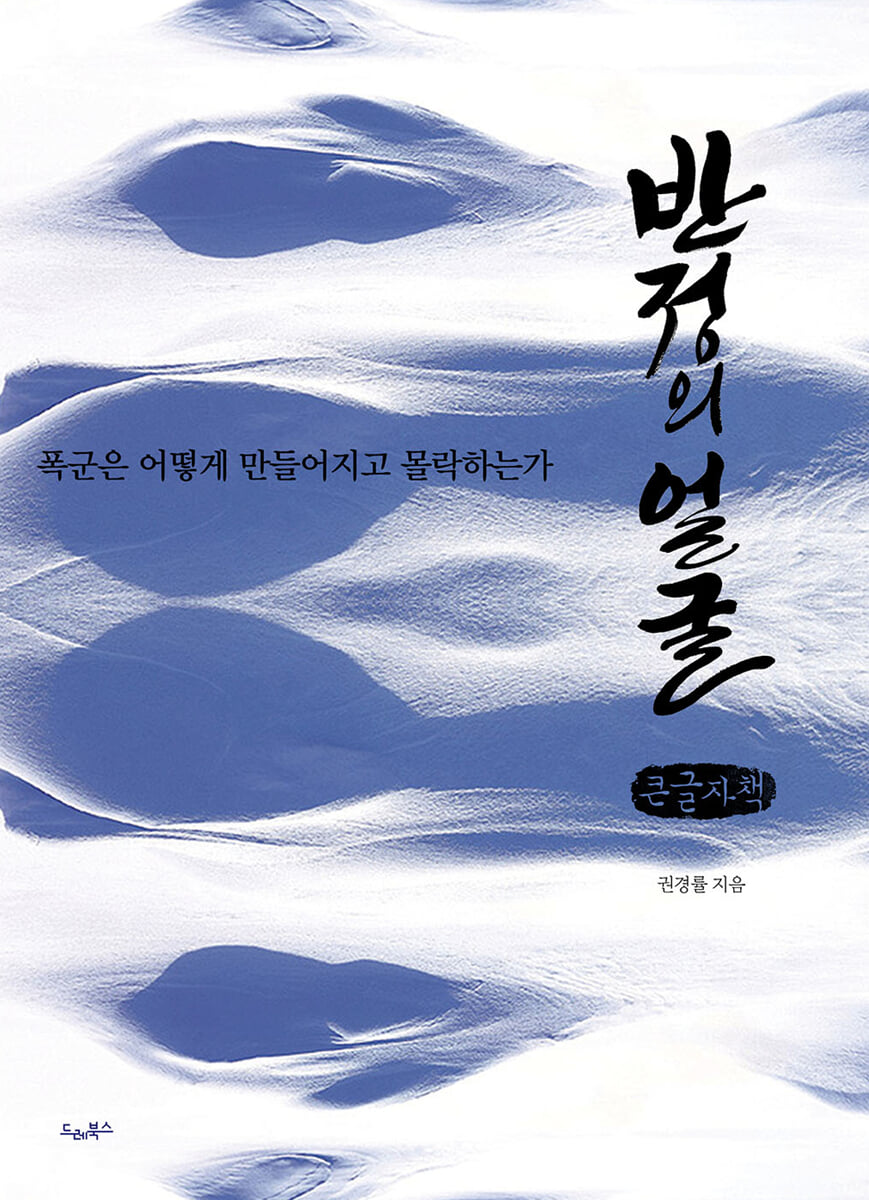
The Face of Rebellion (Large Print Book)
 |
Description
Book Introduction
Historical events are a complex of light and shadow.
You can only fully understand it if you look at both light and dark.
This book examines the dramatic moment that overthrew a tyrant and ushered in a new era from different perspectives.
The Jungjong Rebellion from September 1 to 3, 1506 was reconstructed from the perspectives of many people.
You can only fully understand it if you look at both light and dark.
This book examines the dramatic moment that overthrew a tyrant and ushered in a new era from different perspectives.
The Jungjong Rebellion from September 1 to 3, 1506 was reconstructed from the perspectives of many people.
index
Introduction
1_Lucky day
The storm is coming again
For some, it's a dream of the past
If only I could delay it even for a day
The road to Saejae
The wind is coming closer
But if there are days that we must live
The old sky is falling
2_Three Generals
The moment of the uprising
Who will step forward and how?
Need to turn it over and correct it
Whose side is time on?
September 1, 1506
3_The way home
Where the horse's head is headed
How can one kick out a wife who has been married for a long time?
A night when no one is looking
How can you leave a young child behind?
Survive and survive
The sword dance never stops
4_The Two Faces of Tyranny
The country he dreams of
father and son
The boat ride stopped in the wind
Why did you kill my mother?
Why do you still endure it?
Such a heavy royal seal
A ship leaving for Gyodong
5_The Thief and the Scholar
Clown leader
When a king loses his way of being a king
Where the road ends, the road
An answer that cannot be answered
If a country is not a country
Hoist the sails again
1_Lucky day
The storm is coming again
For some, it's a dream of the past
If only I could delay it even for a day
The road to Saejae
The wind is coming closer
But if there are days that we must live
The old sky is falling
2_Three Generals
The moment of the uprising
Who will step forward and how?
Need to turn it over and correct it
Whose side is time on?
September 1, 1506
3_The way home
Where the horse's head is headed
How can one kick out a wife who has been married for a long time?
A night when no one is looking
How can you leave a young child behind?
Survive and survive
The sword dance never stops
4_The Two Faces of Tyranny
The country he dreams of
father and son
The boat ride stopped in the wind
Why did you kill my mother?
Why do you still endure it?
Such a heavy royal seal
A ship leaving for Gyodong
5_The Thief and the Scholar
Clown leader
When a king loses his way of being a king
Where the road ends, the road
An answer that cannot be answered
If a country is not a country
Hoist the sails again
Into the book
King Yeonsangun was possessed by madness and threatened all his officials and the people.
The phrase he always used was 'Lingsangjipung (凌上之風)', which was a custom of looking down on those above.
I believed that the most important task was to ‘reform’ it and get rid of it.
It is said that the wicked custom of a subject daring to disrespect the king will be strictly punished and eradicated.
This was a declaration of war.
It was to obey the king unconditionally.
He said that if I spit on him, he would kill me.
As an example, he thoroughly searched through the records of the remonstrances of his subjects and selected those who had spoken truthfully or harshly to the king in the past.
Day after day, the miserable national crisis continued.
They questioned the circumstances of the incident by twisting the rope, applying pressure, and pressing the iron.
--- p.21
To prevent trouble in advance, the king preemptively rooted out discontented forces.
I remembered the ministers who were executed in 1504 under the pretext of killing his mother, the deposed Queen Yun.
The criminal and his immediate family were all killed, but his relatives were uneasy.
They indiscriminately arrested their blood relatives and in-laws and tortured them until they died.
Officials who were exiled far away for telling the truth were harassed by inspectors, and if they were suspicious, they were executed.
Human nature is a strange thing.
The more brutal and ruthless the tyrant became, the more the atmosphere of rebellion ripened.
I thought he was a fearsome king who wielded absolute power, but upon closer inspection, I found out that he was a weak monarch driven to madness by the fear of a coup.
--- p.66
Park Won-jong returned home and soothed his empty heart by shooting arrows in the yard.
At this moment, the janitor came running and delivered the urgent news.
It was sent by Park Won-jong's former subordinate, who was a sergeant at the Jeonra Military Camp.
Surprisingly, there was news that Lee Gwa, Yu Bin, Kim Jun-son, and others who had been exiled to Honam were rising up in arms together with the local leaders and generals.
Before advancing to Seoul, they wrote a proclamation and distributed it to the eight provinces.
“Your Majesty’s sin is worse than that of King Jie and King Zhou of the Yin Dynasty. Not only will the people suffer greatly, but I fear that the dynasty will change.
Accordingly, they are planning to support Prince Jinseong and raise an army of volunteers. Those who share the same goal should gather in Seoul by the 15th day of September to save the endangered Jongmyo Shrine and the country.” The situation was becoming increasingly urgent.
Park Won-jong intuitively felt that the time had come to make a decision.
--- p.82
Yeonsangun finally took out the deposed queen Yun.
'If you think about it, aren't they the ones who kicked out and killed my mother?
The grandmother had ensnared her daughter-in-law in speculation and corruption, and the ministers had conspired to depose the queen and commit suicide. The young king decided to remove the last obstacles in his mother's name.
Who would stop a child from relieving his mother's sorrow?
On March 20, 1504, the year of Gapja, the flames of the purge raged fiercely.
--- p.153
King Yeonsangun came down from the throne with the royal seal and staggered out of Injeongjeon Hall.
In the wide yard, fallen leaves were scattered in a lonely manner, and a heavy silence fell.
With every step I take, it feels like the ground is going to cave in.
Looking down, I see bloody hands screaming.
The tyrant bowed his head and shed tears.
It's all self-inflicted.
They killed countless people indiscriminately and brutally mutilated them.
What good is regretting it now?
It's time to pay your karma.
The phrase he always used was 'Lingsangjipung (凌上之風)', which was a custom of looking down on those above.
I believed that the most important task was to ‘reform’ it and get rid of it.
It is said that the wicked custom of a subject daring to disrespect the king will be strictly punished and eradicated.
This was a declaration of war.
It was to obey the king unconditionally.
He said that if I spit on him, he would kill me.
As an example, he thoroughly searched through the records of the remonstrances of his subjects and selected those who had spoken truthfully or harshly to the king in the past.
Day after day, the miserable national crisis continued.
They questioned the circumstances of the incident by twisting the rope, applying pressure, and pressing the iron.
--- p.21
To prevent trouble in advance, the king preemptively rooted out discontented forces.
I remembered the ministers who were executed in 1504 under the pretext of killing his mother, the deposed Queen Yun.
The criminal and his immediate family were all killed, but his relatives were uneasy.
They indiscriminately arrested their blood relatives and in-laws and tortured them until they died.
Officials who were exiled far away for telling the truth were harassed by inspectors, and if they were suspicious, they were executed.
Human nature is a strange thing.
The more brutal and ruthless the tyrant became, the more the atmosphere of rebellion ripened.
I thought he was a fearsome king who wielded absolute power, but upon closer inspection, I found out that he was a weak monarch driven to madness by the fear of a coup.
--- p.66
Park Won-jong returned home and soothed his empty heart by shooting arrows in the yard.
At this moment, the janitor came running and delivered the urgent news.
It was sent by Park Won-jong's former subordinate, who was a sergeant at the Jeonra Military Camp.
Surprisingly, there was news that Lee Gwa, Yu Bin, Kim Jun-son, and others who had been exiled to Honam were rising up in arms together with the local leaders and generals.
Before advancing to Seoul, they wrote a proclamation and distributed it to the eight provinces.
“Your Majesty’s sin is worse than that of King Jie and King Zhou of the Yin Dynasty. Not only will the people suffer greatly, but I fear that the dynasty will change.
Accordingly, they are planning to support Prince Jinseong and raise an army of volunteers. Those who share the same goal should gather in Seoul by the 15th day of September to save the endangered Jongmyo Shrine and the country.” The situation was becoming increasingly urgent.
Park Won-jong intuitively felt that the time had come to make a decision.
--- p.82
Yeonsangun finally took out the deposed queen Yun.
'If you think about it, aren't they the ones who kicked out and killed my mother?
The grandmother had ensnared her daughter-in-law in speculation and corruption, and the ministers had conspired to depose the queen and commit suicide. The young king decided to remove the last obstacles in his mother's name.
Who would stop a child from relieving his mother's sorrow?
On March 20, 1504, the year of Gapja, the flames of the purge raged fiercely.
--- p.153
King Yeonsangun came down from the throne with the royal seal and staggered out of Injeongjeon Hall.
In the wide yard, fallen leaves were scattered in a lonely manner, and a heavy silence fell.
With every step I take, it feels like the ground is going to cave in.
Looking down, I see bloody hands screaming.
The tyrant bowed his head and shed tears.
It's all self-inflicted.
They killed countless people indiscriminately and brutally mutilated them.
What good is regretting it now?
It's time to pay your karma.
--- p.167
Publisher's Review
How Tyrants Are Made and Fallen
Restoration means returning to the original, right state.
In September 1506, the uprising to oust the tyrant Yeonsangun from the throne and enthrone his half-brother, Prince Jinseong, was successful.
Although the main players in the Jungjong Rebellion were the aristocrats, its driving force was the explosion of public sentiment that wanted to end the insane tyranny and establish proper politics.
Public sentiment is a strange thing.
As the tyrant ran wild, the spirit of rebellion blossomed.
As public sentiment exploded, public opinion among the aristocrats also became heated.
Even the court officials and the king's close associates who had sworn allegiance to the tyrant began to waver.
That's how the flames of rebellion were kindled.
September 1st to 3rd, 1506.
That day, history was turned upside down and set right.
An operation was carried out to oust the tyrant Yeonsangun from the throne, and his half-brother, Prince Jinseong, was installed as the new king.
Although the main players in the rebellion were the aristocrats, the driving force behind it was the public sentiment that wanted to end the crazy tyranny and establish proper politics.
Faced with the rebellion, what choices did they make and how did they act? This book, drawing on historical facts, illuminates the Jungjong Rebellion, which overthrew a tyrant and ushered in a new era, from different perspectives.
From the exiled literati to the key figures of the Jungjong Rebellion, the women whose fates changed amidst the turmoil of the rebellion, King Yeonsangun who overthrew the Neo-Confucian ruling system established by his father, and the face of the rebellion as seen by the people, it is restored in a new way.
Yeonsangun extremely hated advice from his subordinates.
He considered it a crime worthy of death for a subject to speak harshly to the king, saying that he was speaking the truth.
To keep his mouth shut, he created a disaster beyond imagination.
In particular, the Gapja Massacre of 1504 was a tragedy in which the death of his biological mother, deposed Queen Yun, was used as an excuse to indiscriminately slaughter his subjects.
He caused a stir by putting his mother forward, but his real intention was different.
The tyrant declared that he would reform and abolish the custom of disrespecting the superiors.
The crime of disrespecting the king will be severely punished.
He searched through the records of the past and arrested all the ministers who had spoken harshly to the king and all the officials who had spoken truthfully.
About 240 high and low ranking officials and scholars were affected by this incident.
Although hell was spread across Joseon, the tyrant sang of an era of peace.
Now, why are we looking back at the Jungjong Rebellion?
During his 12-year reign, Yeonsangun staged two coups, including the Muosahwa and Gapjasahwa.
He did not tolerate his subjects who spoke out, and he suppressed and blocked those who did not obey his will.
This strengthened the royal authority and suppressed the divine power, but the era of tyranny and tyranny ended with a rebellion.
Nobel Prize-winning author Han Kang said, “The past takes care of the present, and the dead give life to the living.”
We look back on the present and look forward to the future through the past.
The past, present, and future shine upon each other and become light.
Tragic history must never be repeated, and to do so, we must face the past and never forget it.
『The Face of the Rebellion』, which looks at the Jungjong Rebellion from different perspectives.
This book restores past history in a new way, while also asking what good politics is and for whom it should be served.
Restoration means returning to the original, right state.
In September 1506, the uprising to oust the tyrant Yeonsangun from the throne and enthrone his half-brother, Prince Jinseong, was successful.
Although the main players in the Jungjong Rebellion were the aristocrats, its driving force was the explosion of public sentiment that wanted to end the insane tyranny and establish proper politics.
Public sentiment is a strange thing.
As the tyrant ran wild, the spirit of rebellion blossomed.
As public sentiment exploded, public opinion among the aristocrats also became heated.
Even the court officials and the king's close associates who had sworn allegiance to the tyrant began to waver.
That's how the flames of rebellion were kindled.
September 1st to 3rd, 1506.
That day, history was turned upside down and set right.
An operation was carried out to oust the tyrant Yeonsangun from the throne, and his half-brother, Prince Jinseong, was installed as the new king.
Although the main players in the rebellion were the aristocrats, the driving force behind it was the public sentiment that wanted to end the crazy tyranny and establish proper politics.
Faced with the rebellion, what choices did they make and how did they act? This book, drawing on historical facts, illuminates the Jungjong Rebellion, which overthrew a tyrant and ushered in a new era, from different perspectives.
From the exiled literati to the key figures of the Jungjong Rebellion, the women whose fates changed amidst the turmoil of the rebellion, King Yeonsangun who overthrew the Neo-Confucian ruling system established by his father, and the face of the rebellion as seen by the people, it is restored in a new way.
Yeonsangun extremely hated advice from his subordinates.
He considered it a crime worthy of death for a subject to speak harshly to the king, saying that he was speaking the truth.
To keep his mouth shut, he created a disaster beyond imagination.
In particular, the Gapja Massacre of 1504 was a tragedy in which the death of his biological mother, deposed Queen Yun, was used as an excuse to indiscriminately slaughter his subjects.
He caused a stir by putting his mother forward, but his real intention was different.
The tyrant declared that he would reform and abolish the custom of disrespecting the superiors.
The crime of disrespecting the king will be severely punished.
He searched through the records of the past and arrested all the ministers who had spoken harshly to the king and all the officials who had spoken truthfully.
About 240 high and low ranking officials and scholars were affected by this incident.
Although hell was spread across Joseon, the tyrant sang of an era of peace.
Now, why are we looking back at the Jungjong Rebellion?
During his 12-year reign, Yeonsangun staged two coups, including the Muosahwa and Gapjasahwa.
He did not tolerate his subjects who spoke out, and he suppressed and blocked those who did not obey his will.
This strengthened the royal authority and suppressed the divine power, but the era of tyranny and tyranny ended with a rebellion.
Nobel Prize-winning author Han Kang said, “The past takes care of the present, and the dead give life to the living.”
We look back on the present and look forward to the future through the past.
The past, present, and future shine upon each other and become light.
Tragic history must never be repeated, and to do so, we must face the past and never forget it.
『The Face of the Rebellion』, which looks at the Jungjong Rebellion from different perspectives.
This book restores past history in a new way, while also asking what good politics is and for whom it should be served.
GOODS SPECIFICS
- Date of issue: June 17, 2025
- Page count, weight, size: 216 pages | 210*290*20mm
- ISBN13: 9791193946411
- ISBN10: 1193946417
You may also like
카테고리
korean


korean

![GQ KOREA Mark (Monthly): December [2025]](http://librairie.coreenne.fr/cdn/shop/files/8ef265dbbfbf186523ed75ba7319009d.jpg?v=1765340328&width=3840)


