

Moments in Baekje History as Seen by Historyteller Lee Ki-hwan
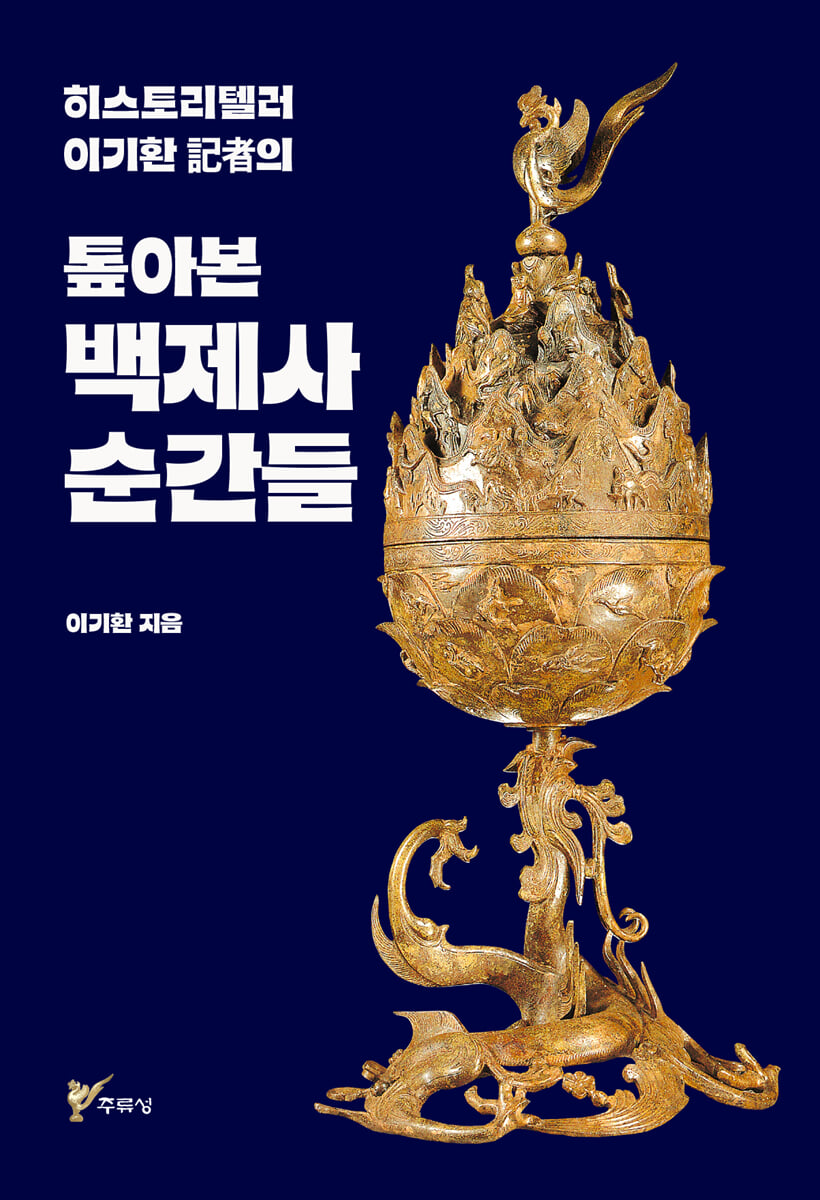 |
Description
Book Introduction
Reporter Lee Ki-hwan's Baekje story, told from the reader's perspective
"Moments in Baekje History as Seen Through the Eyes of Historyteller Lee Ki-hwan" Published
Reporter Lee Ki-hwan, who has been at the forefront of popularizing history, has published “Moments in Baekje History as Seen by Historyteller Lee Ki-hwan,” a compilation of Baekje’s 690-year turbulent history that readers can easily understand.
This book meticulously explores the hidden stories of Baekje, buried underground, from its founder, King Onjo, to the fierce struggle for independence that lasted over ten years after the fall of Baekje.
The author selected the essence of the academic achievements of Baekje researchers and explained them in an easy and interesting way that suited the readers' level.
In particular, this book goes beyond simply listing existing research and boldly addresses new, sometimes controversial, research findings, providing readers with food for thought.
Reporter Lee Ki-hwan revealed that during the writing process, he went through a thorough verification process, including reading numerous related papers and materials overnight and seeking advice from various researchers.
『Moments in Baekje History as Seen Through the Eyes of Historyteller Lee Ki-hwan』 is not a difficult research or specialized book, but was written so that anyone can read it comfortably and immerse themselves in Baekje history.
This is a part that shows the author's efforts to ensure that readers can comfortably encounter the life and history of the Baekje people without straining their eyes.
It is expected to be a good guide for readers who want to increase their interest in history or who want to easily and enjoyably learn in-depth stories about Baekje history.
"Moments in Baekje History as Seen Through the Eyes of Historyteller Lee Ki-hwan" Published
Reporter Lee Ki-hwan, who has been at the forefront of popularizing history, has published “Moments in Baekje History as Seen by Historyteller Lee Ki-hwan,” a compilation of Baekje’s 690-year turbulent history that readers can easily understand.
This book meticulously explores the hidden stories of Baekje, buried underground, from its founder, King Onjo, to the fierce struggle for independence that lasted over ten years after the fall of Baekje.
The author selected the essence of the academic achievements of Baekje researchers and explained them in an easy and interesting way that suited the readers' level.
In particular, this book goes beyond simply listing existing research and boldly addresses new, sometimes controversial, research findings, providing readers with food for thought.
Reporter Lee Ki-hwan revealed that during the writing process, he went through a thorough verification process, including reading numerous related papers and materials overnight and seeking advice from various researchers.
『Moments in Baekje History as Seen Through the Eyes of Historyteller Lee Ki-hwan』 is not a difficult research or specialized book, but was written so that anyone can read it comfortably and immerse themselves in Baekje history.
This is a part that shows the author's efforts to ensure that readers can comfortably encounter the life and history of the Baekje people without straining their eyes.
It is expected to be a good guide for readers who want to increase their interest in history or who want to easily and enjoyably learn in-depth stories about Baekje history.
- You can preview some of the book's contents.
Preview
index
prolog
Baekje's Leez period, Hanseong Baekje
The discovery of Pungnap Earthen Fortress, the lost 500 years of Baekje.
The Footsteps of Baekje People, the Message They Delivered
When was the 'Little Pungnap Earthen Fortress' on the banks of the Imjin River built?
When I put the broken jade together, it turned out to be a Baekje version of "Love and Soul."
Baekje Royal Tombs in Seokchon-dong hit by a backhoe blade
Seokchon-dong bears witness to the Baekje era... The identity of the connected tomb of the Hanseong Baekje version of Daereungwon.
Mongchon Toseong's "Bear Paw" Revealed After 40 Years... Evidence of Baekje's "Gangnam Development"?
“The Seven-character Map, a Japanese national treasure, was bestowed by King Jeonji of Baekje to the King of Wa in 408.”
The discovery of King Muryeong's tomb, the greatest event in ancient Korean history.
Excavation of King Muryeong's tomb opens a black box of ancient history...
The sudden appearance of King Muryeong, the revivalist monarch who proclaimed the establishment of a strong nation
The three-year mourning period for King Muryeong and his wife was completely restored...
Why were three silver fish placed on the ancestral rite table?
King Muryeong of Baekje and his wife, clad only in 24K gold… Silla kings preferred gold and silver alloys.
The inscription "Sama" (King Muryong) on Japan's National Treasure No. 2... For whom was the mirror made?
A terrible thought… What if the grave robber Karube found King Muryeong’s tomb?
Baekje people's blood type is 'artistic'
Judging by their hairstyles, the five musicians in the Baekje Gilt-Bronze Incense Burner were a female orchestra.
Gilt-bronze incense burner, roughly drilled... Oops, a mistake? A flaw in a national treasure.
What to do with the 'Treasure Buddha Who Has Lost His Face'?
'99818972'… Eight patterns on Baekje's "Gugudan" wooden tablets
A 260cm Baekje masterpiece was discarded in its entirety. Why did the craftsman fail 1,400 years ago?
Among the eight Baekje stone patterns, there is the first and best landscape and portrait painting.
Baekje's finest shoes engraved with dragon patterns... worn by Silla nobles as they traveled the skies.
Baekje's Last Days, Independence Struggle, and Destruction
The human smell in the Baekje bathroom in Wanggung-ri, Iksan
Princess Seonhwa, forever lost in a labyrinth… Who is the wife buried next to Prince Seodong?
Baekje's final days in 660... The '8' scenes of destruction revealed after 1,300 years
Reading Baekje's struggle for independence through the lens of "Garimseong Love Tree" and "Jeongryuseong, the capital of a revivalist nation."
Baekje's Leez period, Hanseong Baekje
The discovery of Pungnap Earthen Fortress, the lost 500 years of Baekje.
The Footsteps of Baekje People, the Message They Delivered
When was the 'Little Pungnap Earthen Fortress' on the banks of the Imjin River built?
When I put the broken jade together, it turned out to be a Baekje version of "Love and Soul."
Baekje Royal Tombs in Seokchon-dong hit by a backhoe blade
Seokchon-dong bears witness to the Baekje era... The identity of the connected tomb of the Hanseong Baekje version of Daereungwon.
Mongchon Toseong's "Bear Paw" Revealed After 40 Years... Evidence of Baekje's "Gangnam Development"?
“The Seven-character Map, a Japanese national treasure, was bestowed by King Jeonji of Baekje to the King of Wa in 408.”
The discovery of King Muryeong's tomb, the greatest event in ancient Korean history.
Excavation of King Muryeong's tomb opens a black box of ancient history...
The sudden appearance of King Muryeong, the revivalist monarch who proclaimed the establishment of a strong nation
The three-year mourning period for King Muryeong and his wife was completely restored...
Why were three silver fish placed on the ancestral rite table?
King Muryeong of Baekje and his wife, clad only in 24K gold… Silla kings preferred gold and silver alloys.
The inscription "Sama" (King Muryong) on Japan's National Treasure No. 2... For whom was the mirror made?
A terrible thought… What if the grave robber Karube found King Muryeong’s tomb?
Baekje people's blood type is 'artistic'
Judging by their hairstyles, the five musicians in the Baekje Gilt-Bronze Incense Burner were a female orchestra.
Gilt-bronze incense burner, roughly drilled... Oops, a mistake? A flaw in a national treasure.
What to do with the 'Treasure Buddha Who Has Lost His Face'?
'99818972'… Eight patterns on Baekje's "Gugudan" wooden tablets
A 260cm Baekje masterpiece was discarded in its entirety. Why did the craftsman fail 1,400 years ago?
Among the eight Baekje stone patterns, there is the first and best landscape and portrait painting.
Baekje's finest shoes engraved with dragon patterns... worn by Silla nobles as they traveled the skies.
Baekje's Last Days, Independence Struggle, and Destruction
The human smell in the Baekje bathroom in Wanggung-ri, Iksan
Princess Seonhwa, forever lost in a labyrinth… Who is the wife buried next to Prince Seodong?
Baekje's final days in 660... The '8' scenes of destruction revealed after 1,300 years
Reading Baekje's struggle for independence through the lens of "Garimseong Love Tree" and "Jeongryuseong, the capital of a revivalist nation."
Detailed image

Publisher's Review
Baekje's 690-year turbulent history, by reporter Lee Ki-hwan
"Moments in Baekje History as Seen Through the Eyes of Historyteller Lee Ki-hwan" Published
Reporter Lee Ki-hwan's new book, "Moments in Baekje History as Seen Through the Eyes of Historyteller Lee Ki-hwan," which vividly portrays the rise and fall of Baekje, the most turbulent of the Three Kingdoms, from a public perspective, has been published.
This book meticulously examines key moments in Baekje's 690-year history, from its founder, King Onjo, to the independence struggle that lasted more than ten years after its fall.
The author presents the dramatic history of Baekje, which was the first of the Three Kingdoms to reach its peak but suffered setbacks and hardships, including the fall of Hanseong and the relocation of the capital twice, in an engaging way, using archaeological excavations and historical materials.
Baekje's 'Lee's period' and final days revived through archaeological excavations
What particularly catches the eye is the story of the early Baekje capital city, represented by Pungnap Toseong and Mongchon Toseong.
The miraculously excavated Pungnap earthen fortress played a crucial role in restoring the lost 493 years of Baekje's golden age.
Additionally, during the reign of King Geunchogo, the ‘Baekje version of Gangnam development’ was carried out on the outskirts of the capital city, vividly showing the life of the Baekje people.
At the Seokchon-dong Ancient Tombs, more than 16 stone mound tombs and completely burned human bones were discovered, providing a glimpse into the royal family's unique funeral culture.
Discovered by chance in 1971, King Muryeong's tomb is the only royal tomb from the Three Kingdoms period whose owner is known. It shows the majesty of King Muryeong, who restored the nation's weakened power and declared that the country had become a "strong nation again."
Recently, the three-year mourning period for King Muryeong and his wife, as well as the three silver fish that were served on the ancestral rites table, have been restored, allowing for a more detailed understanding of the Baekje royal rites.
The end of Baekje is also vividly revealed through excavation.
The ruins of buildings that collapsed in the fire testify to the moment of destruction by the Tang-Silla allied forces in 660.
However, the author emphasizes that 660 is not the end.
The defeat in the Battle of Baekgang in 663, which determined the hegemony of Northeast Asia, and the evidence of the fierce struggle for independence that continued until 672 are recorded in historical records, and it is said that the 'Garimseong Sarangnamu' stands tall over those traces.
Traces of Baekje, full of mystery, artistry, and humanity
This book goes beyond simply listing historical facts and delves into various mysteries related to Baekje.
The couple's tomb, containing a half-cut jade pendant discovered in Suchon-ri, Gongju, is reminiscent of the Baekje version of the story of 'love and soul,' and the Baekje communal toilet discovered in Wanggung-ri, Iksan, presents a unique perspective on toilet archaeology.
It is also full of interesting stories that stimulate readers' curiosity, such as the mystery surrounding Princess Seonhwa's tomb, the debate over whether King Geunchogo or King Jeonji bestowed the Chiljido to Japan, and a new view on whether King Muryeong or King Dongseong created Japan's National Treasure No. 2 Portrait Mirror.
The essence of Baekje art is also an indispensable part.
Unlike Silla, the ornaments of King Muryeong and his wife, who preferred 24K pure gold, the oldest stone inlaid with landscape and human figures in Korea, and the gilt-bronze incense burner, which has been the subject of numerous academic papers in the 30 years since its excavation, demonstrate the outstanding aesthetic sense and technical prowess of the Baekje people.
In particular, recent research findings that the five musicians depicted in the Gilt-bronze Incense Burner were female musicians provide a new perspective on Baekje art.
In addition, there are interesting relics such as the gilt-bronze shoes, a famous Baekje shoe with a dragon pattern engraved on it, Baekje shoes discovered in the tombs of Silla nobles, and the Baekje multiplication table wooden tablet starting from the ninth dan, which provide a glimpse into the life and culture of the Baekje people.
The artifacts that were discovered during the production process, such as the roughly drilled holes in the gilt-bronze incense burner or the large, twisted and discarded Buddha statue pedestal, rather show the human side of the Baekje people and provide a sense of familiarity to readers.
The story of the restored treasured Buddha statue in Yeondong-ri, Iksan, which was restored without a face, raises questions while also revealing the diverse aspects of Baekje's cultural heritage.
Reporter Lee Ki-hwan said, "This book is the result of staying up all night reading related papers and materials and pestering many researchers," and "I wanted to select the essence of the research results that were made up of the blood, sweat, and tears of the researchers and convey them in an easy-to-understand manner for readers."
He also said, "It's not a bad thing to spark debate by publishing extremely new research results," and he looks forward to active discussion among readers.
『Moments of Baekje History as Seen Through the Eyes of Historyteller Lee Ki-hwan』 is not a specialized book that you read with your head held high, but rather a book written so that you can comfortably enjoy Baekje history while lying down.
Any reader interested in history will be able to easily and enjoyably immerse themselves in the charm of Baekje.
"Moments in Baekje History as Seen Through the Eyes of Historyteller Lee Ki-hwan" Published
Reporter Lee Ki-hwan's new book, "Moments in Baekje History as Seen Through the Eyes of Historyteller Lee Ki-hwan," which vividly portrays the rise and fall of Baekje, the most turbulent of the Three Kingdoms, from a public perspective, has been published.
This book meticulously examines key moments in Baekje's 690-year history, from its founder, King Onjo, to the independence struggle that lasted more than ten years after its fall.
The author presents the dramatic history of Baekje, which was the first of the Three Kingdoms to reach its peak but suffered setbacks and hardships, including the fall of Hanseong and the relocation of the capital twice, in an engaging way, using archaeological excavations and historical materials.
Baekje's 'Lee's period' and final days revived through archaeological excavations
What particularly catches the eye is the story of the early Baekje capital city, represented by Pungnap Toseong and Mongchon Toseong.
The miraculously excavated Pungnap earthen fortress played a crucial role in restoring the lost 493 years of Baekje's golden age.
Additionally, during the reign of King Geunchogo, the ‘Baekje version of Gangnam development’ was carried out on the outskirts of the capital city, vividly showing the life of the Baekje people.
At the Seokchon-dong Ancient Tombs, more than 16 stone mound tombs and completely burned human bones were discovered, providing a glimpse into the royal family's unique funeral culture.
Discovered by chance in 1971, King Muryeong's tomb is the only royal tomb from the Three Kingdoms period whose owner is known. It shows the majesty of King Muryeong, who restored the nation's weakened power and declared that the country had become a "strong nation again."
Recently, the three-year mourning period for King Muryeong and his wife, as well as the three silver fish that were served on the ancestral rites table, have been restored, allowing for a more detailed understanding of the Baekje royal rites.
The end of Baekje is also vividly revealed through excavation.
The ruins of buildings that collapsed in the fire testify to the moment of destruction by the Tang-Silla allied forces in 660.
However, the author emphasizes that 660 is not the end.
The defeat in the Battle of Baekgang in 663, which determined the hegemony of Northeast Asia, and the evidence of the fierce struggle for independence that continued until 672 are recorded in historical records, and it is said that the 'Garimseong Sarangnamu' stands tall over those traces.
Traces of Baekje, full of mystery, artistry, and humanity
This book goes beyond simply listing historical facts and delves into various mysteries related to Baekje.
The couple's tomb, containing a half-cut jade pendant discovered in Suchon-ri, Gongju, is reminiscent of the Baekje version of the story of 'love and soul,' and the Baekje communal toilet discovered in Wanggung-ri, Iksan, presents a unique perspective on toilet archaeology.
It is also full of interesting stories that stimulate readers' curiosity, such as the mystery surrounding Princess Seonhwa's tomb, the debate over whether King Geunchogo or King Jeonji bestowed the Chiljido to Japan, and a new view on whether King Muryeong or King Dongseong created Japan's National Treasure No. 2 Portrait Mirror.
The essence of Baekje art is also an indispensable part.
Unlike Silla, the ornaments of King Muryeong and his wife, who preferred 24K pure gold, the oldest stone inlaid with landscape and human figures in Korea, and the gilt-bronze incense burner, which has been the subject of numerous academic papers in the 30 years since its excavation, demonstrate the outstanding aesthetic sense and technical prowess of the Baekje people.
In particular, recent research findings that the five musicians depicted in the Gilt-bronze Incense Burner were female musicians provide a new perspective on Baekje art.
In addition, there are interesting relics such as the gilt-bronze shoes, a famous Baekje shoe with a dragon pattern engraved on it, Baekje shoes discovered in the tombs of Silla nobles, and the Baekje multiplication table wooden tablet starting from the ninth dan, which provide a glimpse into the life and culture of the Baekje people.
The artifacts that were discovered during the production process, such as the roughly drilled holes in the gilt-bronze incense burner or the large, twisted and discarded Buddha statue pedestal, rather show the human side of the Baekje people and provide a sense of familiarity to readers.
The story of the restored treasured Buddha statue in Yeondong-ri, Iksan, which was restored without a face, raises questions while also revealing the diverse aspects of Baekje's cultural heritage.
Reporter Lee Ki-hwan said, "This book is the result of staying up all night reading related papers and materials and pestering many researchers," and "I wanted to select the essence of the research results that were made up of the blood, sweat, and tears of the researchers and convey them in an easy-to-understand manner for readers."
He also said, "It's not a bad thing to spark debate by publishing extremely new research results," and he looks forward to active discussion among readers.
『Moments of Baekje History as Seen Through the Eyes of Historyteller Lee Ki-hwan』 is not a specialized book that you read with your head held high, but rather a book written so that you can comfortably enjoy Baekje history while lying down.
Any reader interested in history will be able to easily and enjoyably immerse themselves in the charm of Baekje.
GOODS SPECIFICS
- Date of issue: June 3, 2025
- Page count, weight, size: 408 pages | 692g | 153*225*19mm
- ISBN13: 9788962465563
- ISBN10: 8962465566
You may also like
카테고리
korean


korean

![GQ KOREA Mark (Monthly): December [2025]](http://librairie.coreenne.fr/cdn/shop/files/8ef265dbbfbf186523ed75ba7319009d.jpg?v=1765340328&width=3840)


