

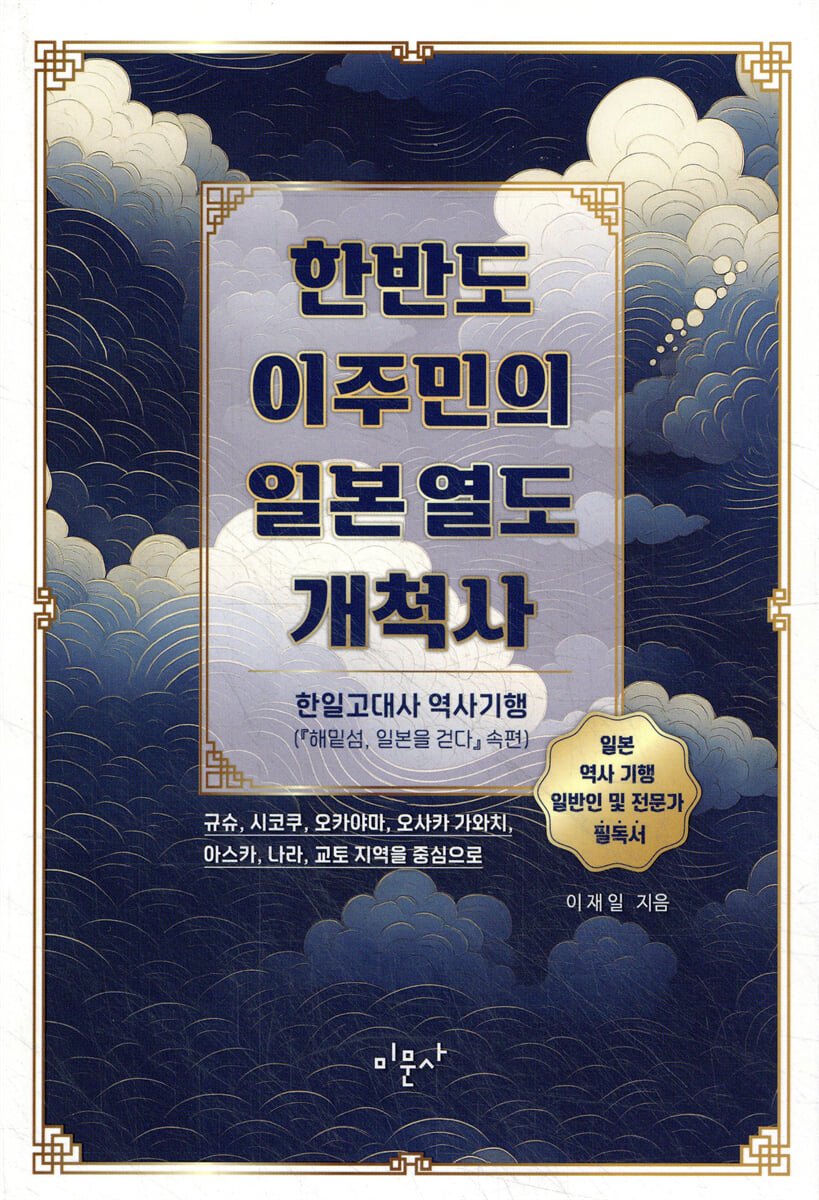
The History of Korean Immigrants' Exploration of the Japanese Archipelago
 |
Description
Book Introduction
A must-read for both the general public and experts on a journey through Japanese history.
A compilation of ancient Korean and Japanese history and the stories of Korean immigrants in the ancient Japanese archipelago.
The History of Korean Immigrants' Exploration of the Japanese Archipelago
―Where did the roots of the country called Japan begin?
A shocking truth revealed through the shadows of ancient history.
The moment you open this book, you may have to completely rewrite what you knew about the origins of Japan.
Author Lee Jae-il has been traveling throughout the Japanese archipelago for over ten years, personally examining relics such as ancient tombs, shrines, ancient ruins, and mountain fortresses.
Those steps were more than just a survey; they were a journey of exploration toward the truth.
And finally, he uncovers the hidden truth, the reality of history that has been ignored.
“The origin of the country called Japan is the immigrants who crossed over from the Korean Peninsula.” This is not a conspiracy theory.
This is a historical fact that was reached by combining numerous ancient relics, place names that have not disappeared, and records that were intentionally hidden in Japanese history books.
The Great Migration of a Thousand Years: The Hidden Journey
This book traces the lives of people who migrated from the Korean Peninsula to the Japanese archipelago over a period of approximately 1,000 years, from the 3rd century BC to the 7th century AD.
The early immigrants settled in places easily accessible by sea, such as the northern coast of Kyushu and the Izumo region.
At first, they were small and insignificant, but gradually the number of immigrants increased, and they expanded their power further east and into wider areas.
By the 4th century, political groups that had actually exerted influence on the Korean Peninsula, such as Gaya, Silla, and Goguryeo, had migrated to the Japanese archipelago in an organized manner.
They settled in the Kawachi, Asuka, and Nara regions, which are now Osaka and Nara, and established their own political base in the Japanese archipelago.
It was not a simple immigration, but rather a migration closer to ‘conquest.’
A nation with a hidden identity and a manipulated history
What is interesting is that over time these immigrants managed to completely conceal their origins.
In the 7th century, when a decisive power shift occurred on the Korean Peninsula, the immigrants who had settled in Japan could no longer maintain ties with their homeland.
They created a completely new identity within the Japanese archipelago and rewrote its history.
Because of this, Japan's ancient history is cut off and distorted.
Author Lee Jae-il asserts that “Japan’s origins did not begin within the Japanese archipelago, but began with the hands of people who crossed the sea.”
This book, based on empirical data and field research, reveals in detail who they were and why they took over Japan's indigenous society and established a new nation.
Korean immigrants found Japan
The most shocking fact is that the very foundation of the system that today is called the "Japanese nation" was established by these immigrants.
It was not the indigenous Japanese, but Korean immigrants who crossed the seas that formed Japan's first power structure, and the origins of the imperial family are also deeply related to this.
The fundamental elements of ancient Japan's national structure, culture, technology, writing, and even architectural style all came from the Korean Peninsula.
This fact, which had been intentionally ignored or distorted in Japanese history books, is revived through the author's persistent field research, research materials from Japanese scholars, and the unchanging historical sites and place names.
A historical exploration that uncovers hidden truths
This book is not simply a history book.
It is a journey of a historical archaeologist who uncovers the hidden side of distorted history and restores lost truths, as well as a fierce question about national identity.
And that journey excites, angers, and ultimately leads readers to profound insights.
· What are the true nature of the ancient Korean Peninsula relics scattered throughout the Japanese archipelago?
· Why did Japan try so hard to hide the traces of immigrants in ancient history?
· Why did those who crossed over from the Korean Peninsula become the ruling power in Japan?
This book will be a must-read for anyone interested in ancient East Asian history, as well as for anyone seeking insight into the historical relationship between Korea and Japan.
A story that no one has ever told before,
But it's a story you absolutely must know.
『History of the Japanese Archipelago Development by Korean Peninsula Immigrants』
That is the starting point of the truth.
A compilation of ancient Korean and Japanese history and the stories of Korean immigrants in the ancient Japanese archipelago.
The History of Korean Immigrants' Exploration of the Japanese Archipelago
―Where did the roots of the country called Japan begin?
A shocking truth revealed through the shadows of ancient history.
The moment you open this book, you may have to completely rewrite what you knew about the origins of Japan.
Author Lee Jae-il has been traveling throughout the Japanese archipelago for over ten years, personally examining relics such as ancient tombs, shrines, ancient ruins, and mountain fortresses.
Those steps were more than just a survey; they were a journey of exploration toward the truth.
And finally, he uncovers the hidden truth, the reality of history that has been ignored.
“The origin of the country called Japan is the immigrants who crossed over from the Korean Peninsula.” This is not a conspiracy theory.
This is a historical fact that was reached by combining numerous ancient relics, place names that have not disappeared, and records that were intentionally hidden in Japanese history books.
The Great Migration of a Thousand Years: The Hidden Journey
This book traces the lives of people who migrated from the Korean Peninsula to the Japanese archipelago over a period of approximately 1,000 years, from the 3rd century BC to the 7th century AD.
The early immigrants settled in places easily accessible by sea, such as the northern coast of Kyushu and the Izumo region.
At first, they were small and insignificant, but gradually the number of immigrants increased, and they expanded their power further east and into wider areas.
By the 4th century, political groups that had actually exerted influence on the Korean Peninsula, such as Gaya, Silla, and Goguryeo, had migrated to the Japanese archipelago in an organized manner.
They settled in the Kawachi, Asuka, and Nara regions, which are now Osaka and Nara, and established their own political base in the Japanese archipelago.
It was not a simple immigration, but rather a migration closer to ‘conquest.’
A nation with a hidden identity and a manipulated history
What is interesting is that over time these immigrants managed to completely conceal their origins.
In the 7th century, when a decisive power shift occurred on the Korean Peninsula, the immigrants who had settled in Japan could no longer maintain ties with their homeland.
They created a completely new identity within the Japanese archipelago and rewrote its history.
Because of this, Japan's ancient history is cut off and distorted.
Author Lee Jae-il asserts that “Japan’s origins did not begin within the Japanese archipelago, but began with the hands of people who crossed the sea.”
This book, based on empirical data and field research, reveals in detail who they were and why they took over Japan's indigenous society and established a new nation.
Korean immigrants found Japan
The most shocking fact is that the very foundation of the system that today is called the "Japanese nation" was established by these immigrants.
It was not the indigenous Japanese, but Korean immigrants who crossed the seas that formed Japan's first power structure, and the origins of the imperial family are also deeply related to this.
The fundamental elements of ancient Japan's national structure, culture, technology, writing, and even architectural style all came from the Korean Peninsula.
This fact, which had been intentionally ignored or distorted in Japanese history books, is revived through the author's persistent field research, research materials from Japanese scholars, and the unchanging historical sites and place names.
A historical exploration that uncovers hidden truths
This book is not simply a history book.
It is a journey of a historical archaeologist who uncovers the hidden side of distorted history and restores lost truths, as well as a fierce question about national identity.
And that journey excites, angers, and ultimately leads readers to profound insights.
· What are the true nature of the ancient Korean Peninsula relics scattered throughout the Japanese archipelago?
· Why did Japan try so hard to hide the traces of immigrants in ancient history?
· Why did those who crossed over from the Korean Peninsula become the ruling power in Japan?
This book will be a must-read for anyone interested in ancient East Asian history, as well as for anyone seeking insight into the historical relationship between Korea and Japan.
A story that no one has ever told before,
But it's a story you absolutely must know.
『History of the Japanese Archipelago Development by Korean Peninsula Immigrants』
That is the starting point of the truth.
- You can preview some of the book's contents.
Preview
index
[Essential Knowledge Before a Historical Journey] Evidence of Koreans Migrating to the Japanese Archipelago
1 tomb
2 Genetics
3 documentary evidence
Part 1: The History of Korean Immigrants Remaining in the Shikoku and Okayama-Kibi Regions
· Korean Peninsula immigrants to Shikoku
· The name of Shikoku
· Traces of Korean Peninsula immigrants
· Korean Peninsula immigrant clans in Shikoku
· Shikoku tour
Okayama Kibi
Place names related to immigrants in the Okayama area
· Gaya Kingdom
· The Tale of Momotaro
Okayama field trip
Ⅰ Shikoku
1 Sanuki region
· Tamura Shrine, enshrined by Mr. Hata
· Iwase-Oyama Tumuli Cluster
· Takamatsu Stone Tomb
· Yashima Castle Ruins
· Ayakita Plain and Aya
· Megalithic tombs of the Ayakita Plain
· Daigo Tomb
· Aya Aya
· The Aya clan, who came from Sanuki Province in Kagawa Prefecture, Shikoku
· Construction of the megalithic tomb and temple left behind by Aya
· Arioka Tumuli Group
· Hatashi Saeki and Kukai
· Shilla Shrines in Shikoku
· Konpira Shrine
· Takamatsu and Seto Inland, Seto Inland Sea
· Naoshima
· Benesse House Museum
· Sanuki udon
2 Seto Inland Sea Tonaikai
· Pirates
· Oyamazumi Shrine
· A god who crossed the sea from Baekje
· Kureshi
Himeji Castle
· Footsteps of the Silla people near Himeji City
Ⅲ Nara, Asuka
· Awaji Island, Iwaji Island
· Origin of Awaji Island
· Izanagi Shrine
Naruto Strait ▶
3 Tokushima
· Awa country ▶ Japan's original form
· Inbe or Imube clan
· Tokushima's topography
· History of Tokushima
· Central structural line
· Oboke
· Kazura Bridge
4 Other areas
· Shrines in southern Shikoku
· Relics of the Korean Peninsula from the former Iyo Kingdom in Ehime Prefecture
Ⅱ Kibi, Jiyeon
1 Okayama
· Kurashiki
· Gibi Province
· The ancient history of Gibi
2. Gabi's Gayasi
· Testimonial by Toshio Shino
[Reference]: About Jaegi
· Records in Japanese historical books about the Kibi clan
· Mr. Kibi and Mr. Gaya Hyangya
· Research on the Gibi clan
· Gibbiana national bird
· Usa and Kibi of Toyokuni
· The ancestral home of the Gaya clan
· Mr. Gayas
· Tsukuriyama Kofun
· Tsukuriyama Kofun
· Gaya-style tombs from the first half of the Tumulus period
3 Kinojo Castle
· Kinojo's construction solidarity
· The Age of Legends of Ura
Baekje-style tombs from the late Tumulus period
4 Ura
· The Story of Momotaro
· The legend of Kibitsuhiko's defeat of Ura
· Yamatai's conquest of Guno and the Ura legend
· Toyokoku, Usa, and Kibi
· Other records of the Ura War
· Start of war
· End of war
5 Kibitsu Shrine
8. The History of Korean Immigrants' Exploration of the Japanese Archipelago
· Kibitsu Shrine
· Ura is alive
· Snow removal about Ura
Nakayama, where Kibitsu Shrine is located
· Korakuen
6 Yoshii River
· Silla in the Gibi region
· Hata, a Korean immigrant from Okayama
· Hatahara Village, one of the birthplaces of the ancient Kibi Kingdom
7 Goguryeo in the Gibi region
Part 2: History of the Yamato Region's Immigrants
Ⅲ Nara, Asuka
1 Ancient History of the Yamato Region
· Situation on the Korean Peninsula
· First record of migration
· Three branches of Yamato history
· Hypotheses about ancient Japanese history
· Historical exploration route
· Topography of the country's regions
· Nara Plain
· Kawachi Plain
· Field trips around the country
· Emperor Jinmu, Emperor Jinmu and Kashihara
2. The pioneer settlers of the Nara Plains
· Northwestern part of the Nara Plain
· Eastern part of the Nara Plain
· Central part of the Nara Plain
· Northern part of the Nara Plain
3. History of mass migration in the Asuka region
1) Hinokuma and Asuka
· Hinokuma
· Hinokuma area ruins
· Baekje Aya Han clan
· Characteristics of the Baekje Aya clan
· Niizawa Sentsuka Tumulus
· Tomb and grave goods
· Tomb of Emperor Seonhwa
Takamatsu Kofun
· Kitora Ancient Tombs キトラ古墳
2) History of mass migration in the Wakayama region
· Iwase Ten Thousand Tombs 岩橋千塚
· Ichizen Shrine, Hinokuma Shrine
· Itakiso Shrine
IV Kawachi area
1 Kawachi
Ⅲ Nara, Asuka
· Ancient ruins of Kawachi
Kawachi in ancient Japanese history
· Empress Dowager
· Emperor Oshin
· Kawachi
· Sakai
· Mozu Ancient Tomb Group
Daisen Kofun
· Construction period and buried person
2 Baekje royal family who moved to Kawachi
· Migration and prosperity of the Baekje royal family
· The presence of the Baekje royal family in the Kawachi region
· Tomb of King Jinsun of the royal family
· Queen Seon's Tomb
· Later tombs
· Temples and shrines of the descendants of King Jinson
· Galjeongsa Temple
· Yajungsa Temple
3. Mr. Furui Fujii
· Kondagobyōyama Tumulus, Emperor Onshin's Mausoleum
· Kawachi no Kaya
· Baekje of Kawachi
· Summary of Kawachi's tombs
· Habikino City
· Takeru Yamato
4 North of Kawachi
· Kawachi Three Major Group Grave Cemeteries
· Horizontal stone chamber
· Takaida Tumuli Cluster (part of the Hiraoyama Tumuli Cluster)
· Takayasu Thousand Tomb Tombs Group
· Hiraoyama Tumuli Group
· Yamahata Kofun Group
5 Valley of the Royal Tombs
· Yeboksa
· Sogaumako's tomb
· Prince Seongdeok and Lady Soga
· Takeuchi family
· Ichisuka Ancient Tomb Group
· Other clustered seedlings
6 Sennan and Izumi
· Seolleung Tomb and Udomyo Tomb
· Kumedagaibukiyama Ancient Tomb
· Shinoda Tencho Ancient Tombs Group
· Suemura Kiln Sites
· Sueki
· Kiln site
7 Asukabe Shrine, Konjiwang Shrine
· King Gonji
10 The History of Korean Immigrants' Exploration of the Japanese Archipelago
· Description from the 『Nihon Shoki』
· Descriptions in 『Samguk Sagi』 and 『Samguk Yusa』
· King Gonji
· Emperor Ungyeok and King Gonji
· Asukabe-gun, Asuka-gun
· Estimated tomb of King Gonji
· Asukachi-tsuka Tumuli Cluster
Baekje residents in the Asukabe area
· Baekje Lee Ju-gye's ancient tombs
· Summary of the author's opinions on King Gonji
8. Dates of the Daisen Tumulus, Kondayama Tumulus, and Cluster Tombs
· Kawachi's cluster of graves
· The relationship between the Kawachi tumuli and the Korean Peninsula
9. Tombs east of Kawachi and Asuka Katsuragi Mountains
· Hiraoka Kofun Group
· Mt. Sekko Ancient Tombs Group
· The birth of Yamato
· Miwayama and Otomo's forces
· Changes in power in the Yamato Basin
· The emergence of Yamato Province
· The lineage of the Soga clan
· Aya's characteristics
· Ancient Japanese dynasties
· The theory of the replacement of the three dynasties
· The birth of the central government, the Yamato government
V Asuka Period
· Asuka period
· The beginning of the Asuka 3rd Dynasty
· Soga
Fujinoki Tomb
· Sacheonwangsa Temple
· The circumstances of its founding as seen in the Nihon Shoki
· Theories about the founding
· Beophryungsa Temple
[Reference]: Prince Shotoku, Prince Shotoku
· Baekje Temple Site
· Baekje Daesa
· The origin of Asuka (飛鳥)
· Eulsa's Incident
Battle of Baekchon River
· The Japanese Emperor before and after the Battle of Baekchon River
· The difficulty of pregnancy
· Around 700 years after the birth of Japan
· 『Nihon Shoki』, 『Kojiki』
· The absolute principle of compiling the history of the Nihon Shoki
Fujiwara no Fuhito
· Field trip
· Danzan Shrine
· Ishibutai Tomb
· Asuka-dera Temple
Ⅲ Nara, Asuka
VI The Birth of Japan
· Emperor Cheonmu
· Nara period
· Political history
· Relations with Silla
· Prince Kim Tae-ryeom of Silla
Emperor Kanmu, who began the Heian period
· Emperor Kanmu's representative reign
· Todaiji Temple, Todaiji Temple
· Founding and assembly of the Great Buddha
· Iwoldang, Nigatsudo
· Karakuni Shrine, the god of Todaiji
· Haenggidang, Gyogido
· Ambassador Kasuka
· Haenggi (行基)
· Gawonsa Temple
· Baekje's god
· The Japanese Imperial Family's Recognition of Baekje
· Japanese minority scholars' perceptions of Korean immigrants
· Subsequent Japanese history
Part 3: The History of Korean Immigrants in Kyoto and Surrounding Areas
· Hata
· Kyoto Yamashiro, the land of the Hata clan ▶
· Omi merchant
· Japanese Buddhism
· Areas around Kyoto
VII Kyoto
1. Kyoto and Korean Peninsula immigrants
· Kamo Shrine
· Ship owners and immigrants
· Gentlemen of the immigrant clan
· Togetsukyo Bridge
· Tenryuji Temple, Tenryuji Temple
· Going down the Hotsu River by boat
Uji and southern Kyoto
· Equality Center
· Uji River
· Heungseongsa Temple
· Daigoji
· Ganimanji
· Seated statue of Dongjo Sakyamuni Buddha
2 Temples in Kyoto
· Kokedera, Moss Temple
· Kenninji Temple
· Onin War
3 Kyoto Stories
12 The History of Korean Immigrants' Exploration of the Japanese Archipelago
· Mount Takao and Shinho-ji Temple, located north of Kyoto
· Empress, who was the de facto emperor of the Nara period
· Kiyotaki River and Kawadoko Cuisine
· Geisha, Geiko, Geisha
· Modern history of Kyoto
4 Japanese Buddhism in Kyoto
· Ohara Ohara Sanzen-in Temple
· Mt. Hiei
· Enryakuji Temple
· Saicho, Tendai sect, Tendai sect
· Development of Hieizan
· Armament of Enryakuji Temple
VIII Areas around Kyoto
1 Nagoya, Mie, Shiga
· Nagoya
Ise Jingu Shrine, Ise Shrine
· Ise Shrine's tumuli
· Hanshinsan Mountain
· History of Ise Grand Shrine
· Haein tribe Watarai clan and Isomiya Outer Palace
· Great Sea People's Prince
· Yamato people originating from the Korean Peninsula
· The Haein tribe and the myth of the birth of a nation
· Genealogy of the Iseman Haein Tribe
· Toba Observatory
· Nuotoiwa Husband and Wife Rock
· Matsuzaka beef 松坂牛
· Iga country, formerly called Gaya
· Ninja
· Mr. Hattori's clothing department
2 Omi River
· Seoksan Temple, Ishiyamadera
· Setagaya Bridge
· Miisa-ji Temple, or Onjo-ji Temple
· Anoshu
· Omi Jingu Shrine
Shirahige Shrine
· Kamo Inariyama Kofun
· History of Omi
3 Climate
· Gifu, Mino
· Oribe textiles, Oribe ceramics
· Takayama
· Hida ▶
· Prosecution
· Mt. Ontake
· Ontake Examination
· Nakasendo
· Tsumagojuku
Ⅲ Nara, Asuka
· Magome-juku
Part 4: The History of Korean Immigrants Who Crossed Over to Kyushu
Ⅸ Northern Kyushu
1 Early arrival site
Haranotsuji's ▶ ruins
· Nadatake Vegetable Field Ruins
· Magarida-Kori-da Ruins
· Yoshitake Yoshitake Ruins
· Itazuke Board-stamped Ruins
· Sukuokamoto Ruins
· Nishijin Ruins
· Shitoji Dolmen Group
· Imagawa Ruins
· Jar-coffin tomb
2 Immigrant groups
· Himiko
· Thousand-day spear, Amenohiboko
· Munakata statue, group
· Mahan-Baekje group
3 Joseon-style mountain fortresses, Korean Peninsula place names and shrines
· Itosanseong Fortress
· Raisan Mountain Fortress
· Gaya place names on the Itoshima Peninsula
· Gaya place names in the Fukuoka Plain
· Chikuzen Arahito Shrine Current Human Shrine
4 History of Baekje's Expansion
5 History of the Middle Ages
· Yobuko
· Nagoya Castle
· The Imjin War as seen from Kyushu
· Matsuura-dō (松浦) ▶ Japanese pirates
6 Munakata statue
· Munakata Taisha Shrine University
· Place name
· Shimbaru-Nuyama Tumuli Group
· Munakata Shin
· Munakata's Silla
X Northeast Kyushu-Bizen
1 Toyokoku
· Gosiryuwon old story
· Sui Shu Wa Guk Jeon
2 Tagawa Shrine
Kawara Shrine
14 The History of Korean Immigrants' Exploration of the Japanese Archipelago
· Komiya Hachimangu Shrine
· Approaching Arahito Shrine
· Buzen's tombs
3. Tombs in the Buzen area
· Goshoyama Kofun
Ishizukayama Kofun
· Shoyazuka Kofun
· Inado Tombs
· Kurobe Tumuli Group
· Kuromineo Tumuli Group
· Hirahara Horizontal Tomb Group
· Anagahayama Kofun
· Usa Jingu Shrine
· Usa Shrine and Silla Gods
· History of Usa Shrine
· Usajingu Shrine's buildings
· Hayato and Kyōshūtsuka Kofun Tomb
4. Joseon-style mountain fortress in the Buzen region
· Kage no Ma Shinron Stone Deer Hair Horse God Cage
· Goshogadani Mountain Castle
· Traces of Tonoharu Castle
5 Residents' Surnames
6 Hime Island, Himeshima
ⅩⅠ Southern Kyushu - Miyazaki, Kumamoto
1 Miyazaki Prefecture
· Saitobaru Tumuli Group
Representative tombs
· Excavated national treasures and cultural assets
· Research on the deceased
· Academic research
2. Himuka, southeastern Kyushu, Hyuga region
· Review of the Saitobaru Tumuli Visit
· Beppu branch
· History of Beppu
3 Saga, Kumamoto
· Yame Ancient Tombs Group of Eight Women
· Iwai's Nan磐井の▶
· Tsukushi no Kimi Iwai
· Iwai's grave and shrine
· Donanzan Tomb
· Edafunayama Kofun
· Iwabaru Tumuli Group
· Decorative tomb, Shoshoku, 古墳
· Chusan Ancient Tombs チブサン古墳
Kumamoto Castle
Funatsuka Kofun
Ⅲ Nara, Asuka
4 Arita and Imari
· Arita and Imari
· Lee Sam-pyeong
5 Baekje Koma in western central Kyushu
· Tomb
· Structure of the tomb
· Accessories
· Iksan Ipjeom-ri Tomb
· Relations with the Korean Peninsula
· Goma's Joseon-style mountain fortress
· Iseongsanseong Fortress in Hanam and Kikuji Castle in Kumamoto
6 Yatsushiro area
7 Myth of the Advent of Heavenly Son
· Characteristics of Japanese mythology
· Contents of Japanese mythology
ⅩⅡ Okinawa and Tsushima Island
1 Okinawa
· History of the Ryukyu Kingdom
· The theory of migration of Ulleungdo residents
· The theory that Sambyeolcho moved to Okinawa
Ishigaki Island
· Hong Gildong and Hateruma Island
· Ancient ruins of the Ryukyu Kingdom
· Okinawa's sacred forest, Onmyo
2. Daemado
· Eboshi-dake Observatory
Watatsumi Shrine
· Kamizaka Park
· The story hidden in Tsushima Island
· The tombs of Tsushima Island
· Tsushima Island and Japanese mythology
· Genealogy of the Haein tribe
[Epilogue] A Thousand Years of Migration and Pioneership in the Japanese Archipelago
· Evidence of mass migration: Sueki
· Indigenous people
· Goguryeo lineage
· Ancient history of Japan
· Japanese
1 tomb
2 Genetics
3 documentary evidence
Part 1: The History of Korean Immigrants Remaining in the Shikoku and Okayama-Kibi Regions
· Korean Peninsula immigrants to Shikoku
· The name of Shikoku
· Traces of Korean Peninsula immigrants
· Korean Peninsula immigrant clans in Shikoku
· Shikoku tour
Okayama Kibi
Place names related to immigrants in the Okayama area
· Gaya Kingdom
· The Tale of Momotaro
Okayama field trip
Ⅰ Shikoku
1 Sanuki region
· Tamura Shrine, enshrined by Mr. Hata
· Iwase-Oyama Tumuli Cluster
· Takamatsu Stone Tomb
· Yashima Castle Ruins
· Ayakita Plain and Aya
· Megalithic tombs of the Ayakita Plain
· Daigo Tomb
· Aya Aya
· The Aya clan, who came from Sanuki Province in Kagawa Prefecture, Shikoku
· Construction of the megalithic tomb and temple left behind by Aya
· Arioka Tumuli Group
· Hatashi Saeki and Kukai
· Shilla Shrines in Shikoku
· Konpira Shrine
· Takamatsu and Seto Inland, Seto Inland Sea
· Naoshima
· Benesse House Museum
· Sanuki udon
2 Seto Inland Sea Tonaikai
· Pirates
· Oyamazumi Shrine
· A god who crossed the sea from Baekje
· Kureshi
Himeji Castle
· Footsteps of the Silla people near Himeji City
Ⅲ Nara, Asuka
· Awaji Island, Iwaji Island
· Origin of Awaji Island
· Izanagi Shrine
Naruto Strait ▶
3 Tokushima
· Awa country ▶ Japan's original form
· Inbe or Imube clan
· Tokushima's topography
· History of Tokushima
· Central structural line
· Oboke
· Kazura Bridge
4 Other areas
· Shrines in southern Shikoku
· Relics of the Korean Peninsula from the former Iyo Kingdom in Ehime Prefecture
Ⅱ Kibi, Jiyeon
1 Okayama
· Kurashiki
· Gibi Province
· The ancient history of Gibi
2. Gabi's Gayasi
· Testimonial by Toshio Shino
[Reference]: About Jaegi
· Records in Japanese historical books about the Kibi clan
· Mr. Kibi and Mr. Gaya Hyangya
· Research on the Gibi clan
· Gibbiana national bird
· Usa and Kibi of Toyokuni
· The ancestral home of the Gaya clan
· Mr. Gayas
· Tsukuriyama Kofun
· Tsukuriyama Kofun
· Gaya-style tombs from the first half of the Tumulus period
3 Kinojo Castle
· Kinojo's construction solidarity
· The Age of Legends of Ura
Baekje-style tombs from the late Tumulus period
4 Ura
· The Story of Momotaro
· The legend of Kibitsuhiko's defeat of Ura
· Yamatai's conquest of Guno and the Ura legend
· Toyokoku, Usa, and Kibi
· Other records of the Ura War
· Start of war
· End of war
5 Kibitsu Shrine
8. The History of Korean Immigrants' Exploration of the Japanese Archipelago
· Kibitsu Shrine
· Ura is alive
· Snow removal about Ura
Nakayama, where Kibitsu Shrine is located
· Korakuen
6 Yoshii River
· Silla in the Gibi region
· Hata, a Korean immigrant from Okayama
· Hatahara Village, one of the birthplaces of the ancient Kibi Kingdom
7 Goguryeo in the Gibi region
Part 2: History of the Yamato Region's Immigrants
Ⅲ Nara, Asuka
1 Ancient History of the Yamato Region
· Situation on the Korean Peninsula
· First record of migration
· Three branches of Yamato history
· Hypotheses about ancient Japanese history
· Historical exploration route
· Topography of the country's regions
· Nara Plain
· Kawachi Plain
· Field trips around the country
· Emperor Jinmu, Emperor Jinmu and Kashihara
2. The pioneer settlers of the Nara Plains
· Northwestern part of the Nara Plain
· Eastern part of the Nara Plain
· Central part of the Nara Plain
· Northern part of the Nara Plain
3. History of mass migration in the Asuka region
1) Hinokuma and Asuka
· Hinokuma
· Hinokuma area ruins
· Baekje Aya Han clan
· Characteristics of the Baekje Aya clan
· Niizawa Sentsuka Tumulus
· Tomb and grave goods
· Tomb of Emperor Seonhwa
Takamatsu Kofun
· Kitora Ancient Tombs キトラ古墳
2) History of mass migration in the Wakayama region
· Iwase Ten Thousand Tombs 岩橋千塚
· Ichizen Shrine, Hinokuma Shrine
· Itakiso Shrine
IV Kawachi area
1 Kawachi
Ⅲ Nara, Asuka
· Ancient ruins of Kawachi
Kawachi in ancient Japanese history
· Empress Dowager
· Emperor Oshin
· Kawachi
· Sakai
· Mozu Ancient Tomb Group
Daisen Kofun
· Construction period and buried person
2 Baekje royal family who moved to Kawachi
· Migration and prosperity of the Baekje royal family
· The presence of the Baekje royal family in the Kawachi region
· Tomb of King Jinsun of the royal family
· Queen Seon's Tomb
· Later tombs
· Temples and shrines of the descendants of King Jinson
· Galjeongsa Temple
· Yajungsa Temple
3. Mr. Furui Fujii
· Kondagobyōyama Tumulus, Emperor Onshin's Mausoleum
· Kawachi no Kaya
· Baekje of Kawachi
· Summary of Kawachi's tombs
· Habikino City
· Takeru Yamato
4 North of Kawachi
· Kawachi Three Major Group Grave Cemeteries
· Horizontal stone chamber
· Takaida Tumuli Cluster (part of the Hiraoyama Tumuli Cluster)
· Takayasu Thousand Tomb Tombs Group
· Hiraoyama Tumuli Group
· Yamahata Kofun Group
5 Valley of the Royal Tombs
· Yeboksa
· Sogaumako's tomb
· Prince Seongdeok and Lady Soga
· Takeuchi family
· Ichisuka Ancient Tomb Group
· Other clustered seedlings
6 Sennan and Izumi
· Seolleung Tomb and Udomyo Tomb
· Kumedagaibukiyama Ancient Tomb
· Shinoda Tencho Ancient Tombs Group
· Suemura Kiln Sites
· Sueki
· Kiln site
7 Asukabe Shrine, Konjiwang Shrine
· King Gonji
10 The History of Korean Immigrants' Exploration of the Japanese Archipelago
· Description from the 『Nihon Shoki』
· Descriptions in 『Samguk Sagi』 and 『Samguk Yusa』
· King Gonji
· Emperor Ungyeok and King Gonji
· Asukabe-gun, Asuka-gun
· Estimated tomb of King Gonji
· Asukachi-tsuka Tumuli Cluster
Baekje residents in the Asukabe area
· Baekje Lee Ju-gye's ancient tombs
· Summary of the author's opinions on King Gonji
8. Dates of the Daisen Tumulus, Kondayama Tumulus, and Cluster Tombs
· Kawachi's cluster of graves
· The relationship between the Kawachi tumuli and the Korean Peninsula
9. Tombs east of Kawachi and Asuka Katsuragi Mountains
· Hiraoka Kofun Group
· Mt. Sekko Ancient Tombs Group
· The birth of Yamato
· Miwayama and Otomo's forces
· Changes in power in the Yamato Basin
· The emergence of Yamato Province
· The lineage of the Soga clan
· Aya's characteristics
· Ancient Japanese dynasties
· The theory of the replacement of the three dynasties
· The birth of the central government, the Yamato government
V Asuka Period
· Asuka period
· The beginning of the Asuka 3rd Dynasty
· Soga
Fujinoki Tomb
· Sacheonwangsa Temple
· The circumstances of its founding as seen in the Nihon Shoki
· Theories about the founding
· Beophryungsa Temple
[Reference]: Prince Shotoku, Prince Shotoku
· Baekje Temple Site
· Baekje Daesa
· The origin of Asuka (飛鳥)
· Eulsa's Incident
Battle of Baekchon River
· The Japanese Emperor before and after the Battle of Baekchon River
· The difficulty of pregnancy
· Around 700 years after the birth of Japan
· 『Nihon Shoki』, 『Kojiki』
· The absolute principle of compiling the history of the Nihon Shoki
Fujiwara no Fuhito
· Field trip
· Danzan Shrine
· Ishibutai Tomb
· Asuka-dera Temple
Ⅲ Nara, Asuka
VI The Birth of Japan
· Emperor Cheonmu
· Nara period
· Political history
· Relations with Silla
· Prince Kim Tae-ryeom of Silla
Emperor Kanmu, who began the Heian period
· Emperor Kanmu's representative reign
· Todaiji Temple, Todaiji Temple
· Founding and assembly of the Great Buddha
· Iwoldang, Nigatsudo
· Karakuni Shrine, the god of Todaiji
· Haenggidang, Gyogido
· Ambassador Kasuka
· Haenggi (行基)
· Gawonsa Temple
· Baekje's god
· The Japanese Imperial Family's Recognition of Baekje
· Japanese minority scholars' perceptions of Korean immigrants
· Subsequent Japanese history
Part 3: The History of Korean Immigrants in Kyoto and Surrounding Areas
· Hata
· Kyoto Yamashiro, the land of the Hata clan ▶
· Omi merchant
· Japanese Buddhism
· Areas around Kyoto
VII Kyoto
1. Kyoto and Korean Peninsula immigrants
· Kamo Shrine
· Ship owners and immigrants
· Gentlemen of the immigrant clan
· Togetsukyo Bridge
· Tenryuji Temple, Tenryuji Temple
· Going down the Hotsu River by boat
Uji and southern Kyoto
· Equality Center
· Uji River
· Heungseongsa Temple
· Daigoji
· Ganimanji
· Seated statue of Dongjo Sakyamuni Buddha
2 Temples in Kyoto
· Kokedera, Moss Temple
· Kenninji Temple
· Onin War
3 Kyoto Stories
12 The History of Korean Immigrants' Exploration of the Japanese Archipelago
· Mount Takao and Shinho-ji Temple, located north of Kyoto
· Empress, who was the de facto emperor of the Nara period
· Kiyotaki River and Kawadoko Cuisine
· Geisha, Geiko, Geisha
· Modern history of Kyoto
4 Japanese Buddhism in Kyoto
· Ohara Ohara Sanzen-in Temple
· Mt. Hiei
· Enryakuji Temple
· Saicho, Tendai sect, Tendai sect
· Development of Hieizan
· Armament of Enryakuji Temple
VIII Areas around Kyoto
1 Nagoya, Mie, Shiga
· Nagoya
Ise Jingu Shrine, Ise Shrine
· Ise Shrine's tumuli
· Hanshinsan Mountain
· History of Ise Grand Shrine
· Haein tribe Watarai clan and Isomiya Outer Palace
· Great Sea People's Prince
· Yamato people originating from the Korean Peninsula
· The Haein tribe and the myth of the birth of a nation
· Genealogy of the Iseman Haein Tribe
· Toba Observatory
· Nuotoiwa Husband and Wife Rock
· Matsuzaka beef 松坂牛
· Iga country, formerly called Gaya
· Ninja
· Mr. Hattori's clothing department
2 Omi River
· Seoksan Temple, Ishiyamadera
· Setagaya Bridge
· Miisa-ji Temple, or Onjo-ji Temple
· Anoshu
· Omi Jingu Shrine
Shirahige Shrine
· Kamo Inariyama Kofun
· History of Omi
3 Climate
· Gifu, Mino
· Oribe textiles, Oribe ceramics
· Takayama
· Hida ▶
· Prosecution
· Mt. Ontake
· Ontake Examination
· Nakasendo
· Tsumagojuku
Ⅲ Nara, Asuka
· Magome-juku
Part 4: The History of Korean Immigrants Who Crossed Over to Kyushu
Ⅸ Northern Kyushu
1 Early arrival site
Haranotsuji's ▶ ruins
· Nadatake Vegetable Field Ruins
· Magarida-Kori-da Ruins
· Yoshitake Yoshitake Ruins
· Itazuke Board-stamped Ruins
· Sukuokamoto Ruins
· Nishijin Ruins
· Shitoji Dolmen Group
· Imagawa Ruins
· Jar-coffin tomb
2 Immigrant groups
· Himiko
· Thousand-day spear, Amenohiboko
· Munakata statue, group
· Mahan-Baekje group
3 Joseon-style mountain fortresses, Korean Peninsula place names and shrines
· Itosanseong Fortress
· Raisan Mountain Fortress
· Gaya place names on the Itoshima Peninsula
· Gaya place names in the Fukuoka Plain
· Chikuzen Arahito Shrine Current Human Shrine
4 History of Baekje's Expansion
5 History of the Middle Ages
· Yobuko
· Nagoya Castle
· The Imjin War as seen from Kyushu
· Matsuura-dō (松浦) ▶ Japanese pirates
6 Munakata statue
· Munakata Taisha Shrine University
· Place name
· Shimbaru-Nuyama Tumuli Group
· Munakata Shin
· Munakata's Silla
X Northeast Kyushu-Bizen
1 Toyokoku
· Gosiryuwon old story
· Sui Shu Wa Guk Jeon
2 Tagawa Shrine
Kawara Shrine
14 The History of Korean Immigrants' Exploration of the Japanese Archipelago
· Komiya Hachimangu Shrine
· Approaching Arahito Shrine
· Buzen's tombs
3. Tombs in the Buzen area
· Goshoyama Kofun
Ishizukayama Kofun
· Shoyazuka Kofun
· Inado Tombs
· Kurobe Tumuli Group
· Kuromineo Tumuli Group
· Hirahara Horizontal Tomb Group
· Anagahayama Kofun
· Usa Jingu Shrine
· Usa Shrine and Silla Gods
· History of Usa Shrine
· Usajingu Shrine's buildings
· Hayato and Kyōshūtsuka Kofun Tomb
4. Joseon-style mountain fortress in the Buzen region
· Kage no Ma Shinron Stone Deer Hair Horse God Cage
· Goshogadani Mountain Castle
· Traces of Tonoharu Castle
5 Residents' Surnames
6 Hime Island, Himeshima
ⅩⅠ Southern Kyushu - Miyazaki, Kumamoto
1 Miyazaki Prefecture
· Saitobaru Tumuli Group
Representative tombs
· Excavated national treasures and cultural assets
· Research on the deceased
· Academic research
2. Himuka, southeastern Kyushu, Hyuga region
· Review of the Saitobaru Tumuli Visit
· Beppu branch
· History of Beppu
3 Saga, Kumamoto
· Yame Ancient Tombs Group of Eight Women
· Iwai's Nan磐井の▶
· Tsukushi no Kimi Iwai
· Iwai's grave and shrine
· Donanzan Tomb
· Edafunayama Kofun
· Iwabaru Tumuli Group
· Decorative tomb, Shoshoku, 古墳
· Chusan Ancient Tombs チブサン古墳
Kumamoto Castle
Funatsuka Kofun
Ⅲ Nara, Asuka
4 Arita and Imari
· Arita and Imari
· Lee Sam-pyeong
5 Baekje Koma in western central Kyushu
· Tomb
· Structure of the tomb
· Accessories
· Iksan Ipjeom-ri Tomb
· Relations with the Korean Peninsula
· Goma's Joseon-style mountain fortress
· Iseongsanseong Fortress in Hanam and Kikuji Castle in Kumamoto
6 Yatsushiro area
7 Myth of the Advent of Heavenly Son
· Characteristics of Japanese mythology
· Contents of Japanese mythology
ⅩⅡ Okinawa and Tsushima Island
1 Okinawa
· History of the Ryukyu Kingdom
· The theory of migration of Ulleungdo residents
· The theory that Sambyeolcho moved to Okinawa
Ishigaki Island
· Hong Gildong and Hateruma Island
· Ancient ruins of the Ryukyu Kingdom
· Okinawa's sacred forest, Onmyo
2. Daemado
· Eboshi-dake Observatory
Watatsumi Shrine
· Kamizaka Park
· The story hidden in Tsushima Island
· The tombs of Tsushima Island
· Tsushima Island and Japanese mythology
· Genealogy of the Haein tribe
[Epilogue] A Thousand Years of Migration and Pioneership in the Japanese Archipelago
· Evidence of mass migration: Sueki
· Indigenous people
· Goguryeo lineage
· Ancient history of Japan
· Japanese
Into the book
[Tomb]
I explain why I focus particularly on ancient tombs among the traces left by immigrants.
The people who built the tombs were not the Jomon people, the indigenous people of the Japanese archipelago, but immigrants from the Korean Peninsula.
Comparing the ancient tombs of the Korean Peninsula and the Japanese archipelago.
First of all, the level of burial goods from Baekje, Silla, and Gaya tombs is so high that it cannot be compared to those from Japan.
Hirayama Ikuo says, “The Takamatsu tomb is nothing more than a miniature version of the Goguryeo tombs, and its murals, compared to those of the Goguryeo murals, are likely replicas of those from the Korean Peninsula.”
The relationship between the region and the immigrant population.
For example, the stone chamber of the Sekimudai Tomb in Asuka is the largest in Japan.
This tomb is known as the tomb of Soga no Umako, an ancestor of the Soga clan who appears to have come from the Korean Peninsula.
According to the Shoku Nihongi, 80-90% of the residents of the Asuka region, where the Seokmu-dai Tomb is located, were immigrants, so we can see the relationship between the tomb and the immigrants.
The construction of tombs in Japan began in the late 3rd century by immigrants from the Korean Peninsula and continued until around the 7th century, during the Yamato period, which was formed by the Baekje people.
Since most of the inhabitants of the Japanese archipelago during the Kofun period were immigrants from the Korean Peninsula, it is only natural that the people who built the tombs were also immigrants from the Korean Peninsula.
The tombs were not built by the indigenous people of the Japanese archipelago by imitating the tombs of the Korean Peninsula or learning their construction methods, but by the immigrants themselves.
I explain why I focus particularly on ancient tombs among the traces left by immigrants.
The people who built the tombs were not the Jomon people, the indigenous people of the Japanese archipelago, but immigrants from the Korean Peninsula.
Comparing the ancient tombs of the Korean Peninsula and the Japanese archipelago.
First of all, the level of burial goods from Baekje, Silla, and Gaya tombs is so high that it cannot be compared to those from Japan.
Hirayama Ikuo says, “The Takamatsu tomb is nothing more than a miniature version of the Goguryeo tombs, and its murals, compared to those of the Goguryeo murals, are likely replicas of those from the Korean Peninsula.”
The relationship between the region and the immigrant population.
For example, the stone chamber of the Sekimudai Tomb in Asuka is the largest in Japan.
This tomb is known as the tomb of Soga no Umako, an ancestor of the Soga clan who appears to have come from the Korean Peninsula.
According to the Shoku Nihongi, 80-90% of the residents of the Asuka region, where the Seokmu-dai Tomb is located, were immigrants, so we can see the relationship between the tomb and the immigrants.
The construction of tombs in Japan began in the late 3rd century by immigrants from the Korean Peninsula and continued until around the 7th century, during the Yamato period, which was formed by the Baekje people.
Since most of the inhabitants of the Japanese archipelago during the Kofun period were immigrants from the Korean Peninsula, it is only natural that the people who built the tombs were also immigrants from the Korean Peninsula.
The tombs were not built by the indigenous people of the Japanese archipelago by imitating the tombs of the Korean Peninsula or learning their construction methods, but by the immigrants themselves.
--- p.24~25
Publisher's Review
Tracing the 1,000-year Hidden Footsteps of the People Who Crossed the Sea from the Korean Peninsula and Cultivated the Japanese Archipelago
『The History of Korean Immigrants' Exploration of the Japanese Archipelago』 is not a simple historical travelogue.
This book is the author's long journey, doggedly tracing how the immigrants who crossed from the Korean Peninsula to the Japanese archipelago over a period of a thousand years, from the 3rd century BC to the 7th century AD, lived and breathed in ancient Japanese history.
In his previous book, “Islands Under the Sun, Walking Japan,” author Lee Jae-il examined the traces of immigrants in eastern and northern Honshu, Japan, and in this book, he expands his perspective to all of Japan.
From Shikoku, Kyushu, Okayama (Kibi), Nara, Kyoto, Omi, and eastern Kyushu? The process of unearthing the traces of the Aya clan of Gaya, the Hata clan of Silla, and later Baekje immigrants who permeated every corner of the country, through tombs, shrines, place names, and legends, is like the hands of a detective piecing together a puzzle of ancient history.
What the author noticed was not simply the similarity of relics or place names.
He concretizes the migration routes and settlement patterns of immigrants through the distribution and rituals of Japanese shrines that reflect ancestor worship culture, the migration routes of shrines worshipping the same god, and the preservation rate of place names.
In particular, the history of the Shikoku and Kibi regions, which were the arena of activity for the Aya and Hata clans, and the Nara and Kawachi regions, where the Baekje-affiliated Soga clan led the Asuka period, comes to life in a more three-dimensional way in this book.
The emergence of the Soga clan from Kawachi was a decisive event that brought the Baekje culture to bloom in Japanese political and cultural history, and this led to the formation of a new Japanese nation through an alliance with the Silla clan after the fall of Baekje.
Through this, the author persuasively presents the crucial contribution of 'Korean immigrants' in ancient Japanese history.
The highlight of this book is undoubtedly the exploration of the Kyushu region.
From the Northern Kyushu archaeological site that explains the origins of Yayoi culture, to the birth of Toyo Kingdom and the eastward expansion of Gaya forces, to Joseon-style mountain fortresses and tumuli, and even the history of Usa Shrine and Ise Shrine, the footsteps of Korean immigrants hidden within Japanese history are reborn through a vast array of relics and materials.
Author Lee Jae-il meticulously constructs a "history of immigrants" by encompassing literature, artifacts, myths, and folktales.
Those we called 'immigrants' were not mere immigrants.
They were 'co-founders' who were deeply rooted in the politics, religion, technology, and culture of the Japanese archipelago.
"The History of Korean Immigrants' Exploration of the Japanese Archipelago" is a weighty answer to readers who question their current identity through ancient history.
This book, which allows us to revisit another face of Japanese history we were unaware of, and the presence of the Korean people embedded within it, will leave a lasting impression on those interested in history, people, and roots.
Author's Note
While I was writing this historical travelogue about ancient Japanese history, a thought kept running through my mind.
I felt like I was having a fierce personal battle of wits with geniuses like Ohno Yasumaro, who organized Japanese mythology, Fujiwara no Fuhito, who led the compilation of the Nihon Shoki, and others who erased the recorded history of immigrants.
They had created an unsolvable riddle, and I felt like I was racking my brain trying to figure it out.
History, especially ancient history, is a clever mix of facts and fabricated or distorted facts.
After a considerable amount of time has passed, I once again realized that finding out the truth is by no means an easy task.
To prove my hypothesis that Japan's ancient history was created by immigrants from the Korean Peninsula, I visited numerous ancient tombs, shrines, and mountain fortresses left behind by these immigrants in the Japanese archipelago and tried to find evidence that differs from what is recorded.
The long journey, where waves after waves reveal new things, is finally coming to an end.
『The History of Korean Immigrants' Exploration of the Japanese Archipelago』 is not a simple historical travelogue.
This book is the author's long journey, doggedly tracing how the immigrants who crossed from the Korean Peninsula to the Japanese archipelago over a period of a thousand years, from the 3rd century BC to the 7th century AD, lived and breathed in ancient Japanese history.
In his previous book, “Islands Under the Sun, Walking Japan,” author Lee Jae-il examined the traces of immigrants in eastern and northern Honshu, Japan, and in this book, he expands his perspective to all of Japan.
From Shikoku, Kyushu, Okayama (Kibi), Nara, Kyoto, Omi, and eastern Kyushu? The process of unearthing the traces of the Aya clan of Gaya, the Hata clan of Silla, and later Baekje immigrants who permeated every corner of the country, through tombs, shrines, place names, and legends, is like the hands of a detective piecing together a puzzle of ancient history.
What the author noticed was not simply the similarity of relics or place names.
He concretizes the migration routes and settlement patterns of immigrants through the distribution and rituals of Japanese shrines that reflect ancestor worship culture, the migration routes of shrines worshipping the same god, and the preservation rate of place names.
In particular, the history of the Shikoku and Kibi regions, which were the arena of activity for the Aya and Hata clans, and the Nara and Kawachi regions, where the Baekje-affiliated Soga clan led the Asuka period, comes to life in a more three-dimensional way in this book.
The emergence of the Soga clan from Kawachi was a decisive event that brought the Baekje culture to bloom in Japanese political and cultural history, and this led to the formation of a new Japanese nation through an alliance with the Silla clan after the fall of Baekje.
Through this, the author persuasively presents the crucial contribution of 'Korean immigrants' in ancient Japanese history.
The highlight of this book is undoubtedly the exploration of the Kyushu region.
From the Northern Kyushu archaeological site that explains the origins of Yayoi culture, to the birth of Toyo Kingdom and the eastward expansion of Gaya forces, to Joseon-style mountain fortresses and tumuli, and even the history of Usa Shrine and Ise Shrine, the footsteps of Korean immigrants hidden within Japanese history are reborn through a vast array of relics and materials.
Author Lee Jae-il meticulously constructs a "history of immigrants" by encompassing literature, artifacts, myths, and folktales.
Those we called 'immigrants' were not mere immigrants.
They were 'co-founders' who were deeply rooted in the politics, religion, technology, and culture of the Japanese archipelago.
"The History of Korean Immigrants' Exploration of the Japanese Archipelago" is a weighty answer to readers who question their current identity through ancient history.
This book, which allows us to revisit another face of Japanese history we were unaware of, and the presence of the Korean people embedded within it, will leave a lasting impression on those interested in history, people, and roots.
Author's Note
While I was writing this historical travelogue about ancient Japanese history, a thought kept running through my mind.
I felt like I was having a fierce personal battle of wits with geniuses like Ohno Yasumaro, who organized Japanese mythology, Fujiwara no Fuhito, who led the compilation of the Nihon Shoki, and others who erased the recorded history of immigrants.
They had created an unsolvable riddle, and I felt like I was racking my brain trying to figure it out.
History, especially ancient history, is a clever mix of facts and fabricated or distorted facts.
After a considerable amount of time has passed, I once again realized that finding out the truth is by no means an easy task.
To prove my hypothesis that Japan's ancient history was created by immigrants from the Korean Peninsula, I visited numerous ancient tombs, shrines, and mountain fortresses left behind by these immigrants in the Japanese archipelago and tried to find evidence that differs from what is recorded.
The long journey, where waves after waves reveal new things, is finally coming to an end.
GOODS SPECIFICS
- Date of issue: May 15, 2025
- Page count, weight, size: 592 pages | 152*225*35mm
- ISBN13: 9791187812401
- ISBN10: 1187812404
You may also like
카테고리
korean


korean

![GQ KOREA Mark (Monthly): December [2025]](http://librairie.coreenne.fr/cdn/shop/files/8ef265dbbfbf186523ed75ba7319009d.jpg?v=1765340328&width=3840)


