

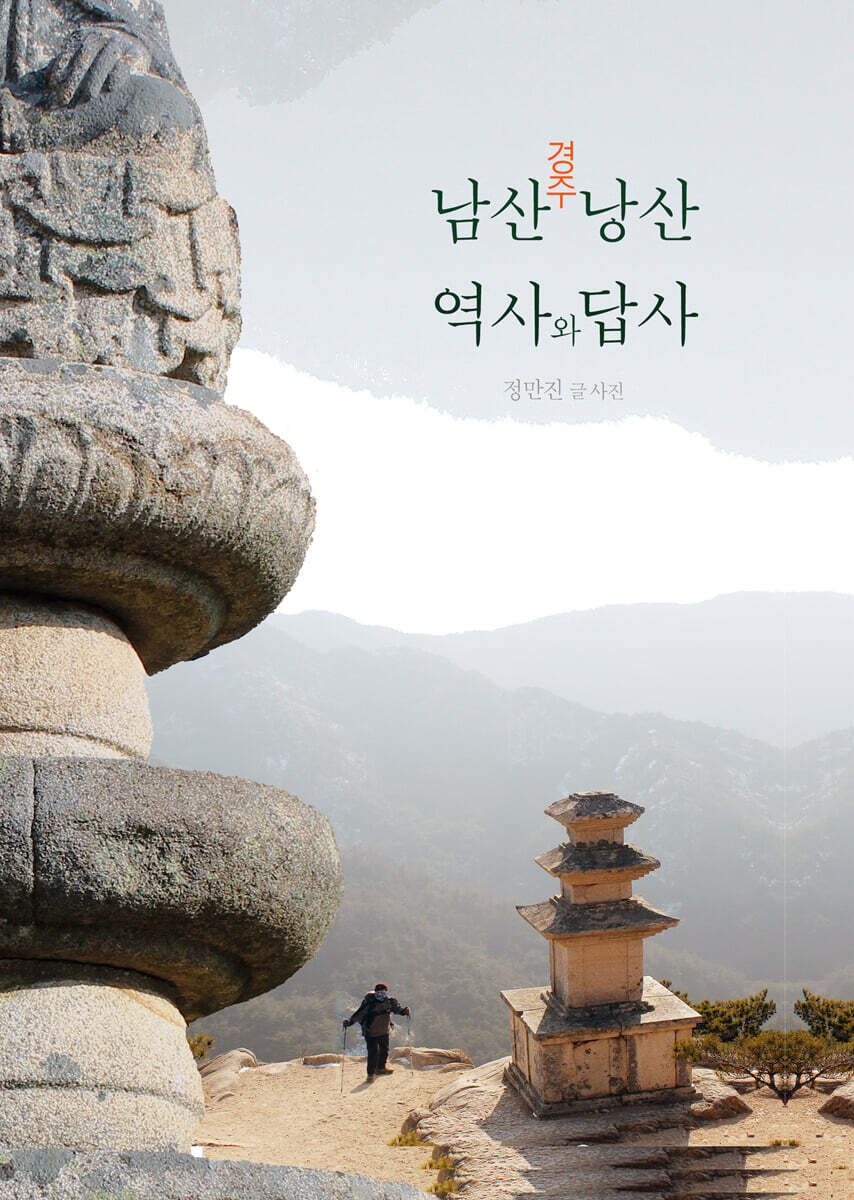
Gyeongju Namsan Nangsangsan History and Tour
 |
Description
Book Introduction
When categorized by content, it is divided into four parts.
Part 1 introduces Gyeongju Namsan by valley, and also provides guidance on the most efficient and educational way to tour Gyeongju Namsan.
Detailed explanations and photos were added to each major cultural heritage site.
Part 2 introduces Namsan Mountain in Gyeongju by era.
Citing the records of Samguk Sagi, we will investigate and explain in chronological order from the birthplace of King Hyeokgeose, Najeong, to the tomb of King Gyeongae.
Part 3 introduces Nangsan in Gyeongju.
The main contents include the remains of the stuffed animals at the crossroads from Namsan to Nangsang, the tomb of Queen Seondeok and the cremation site of King Munmu in the center of Nangsang, and the sites of Sacheonwangsa Temple and Jungsaengsa Temple.
Part 4 introduced background knowledge about Buddhism.
Because Silla was a Buddhist country and the field trip site was Namsan and Nangsang in Gyeongju, you need to have basic knowledge about Buddhism to conduct a proper field trip.
Part 1 introduces Gyeongju Namsan by valley, and also provides guidance on the most efficient and educational way to tour Gyeongju Namsan.
Detailed explanations and photos were added to each major cultural heritage site.
Part 2 introduces Namsan Mountain in Gyeongju by era.
Citing the records of Samguk Sagi, we will investigate and explain in chronological order from the birthplace of King Hyeokgeose, Najeong, to the tomb of King Gyeongae.
Part 3 introduces Nangsan in Gyeongju.
The main contents include the remains of the stuffed animals at the crossroads from Namsan to Nangsang, the tomb of Queen Seondeok and the cremation site of King Munmu in the center of Nangsang, and the sites of Sacheonwangsa Temple and Jungsaengsa Temple.
Part 4 introduced background knowledge about Buddhism.
Because Silla was a Buddhist country and the field trip site was Namsan and Nangsang in Gyeongju, you need to have basic knowledge about Buddhism to conduct a proper field trip.
- You can preview some of the book's contents.
Preview
index
Namsan Full Map 10
· The eternal resting place of the Park kings, west of Namsan (Map 25)
―Gyeongae Royal Tomb 12 / Samneung Tomb 14 / Baeri Triad Stone Buddha Statue 21
Jimawangneung Tomb 23 / Poseokjeong Pavilion 24 / Samneung Valley 43 (Map 26)
· Northwest of Namsan, where Silla history began (Map 63)
―Changnimsa Temple Site 51 / Namgansa Temple Site Stone Monument 54
Ilseong Royal Tomb 56 / Najeong and Yangsanjae 58
· Northeast of Namsan, where Seokguram Grotto and the original Hwangnyongsa Pagoda are located (map 65)
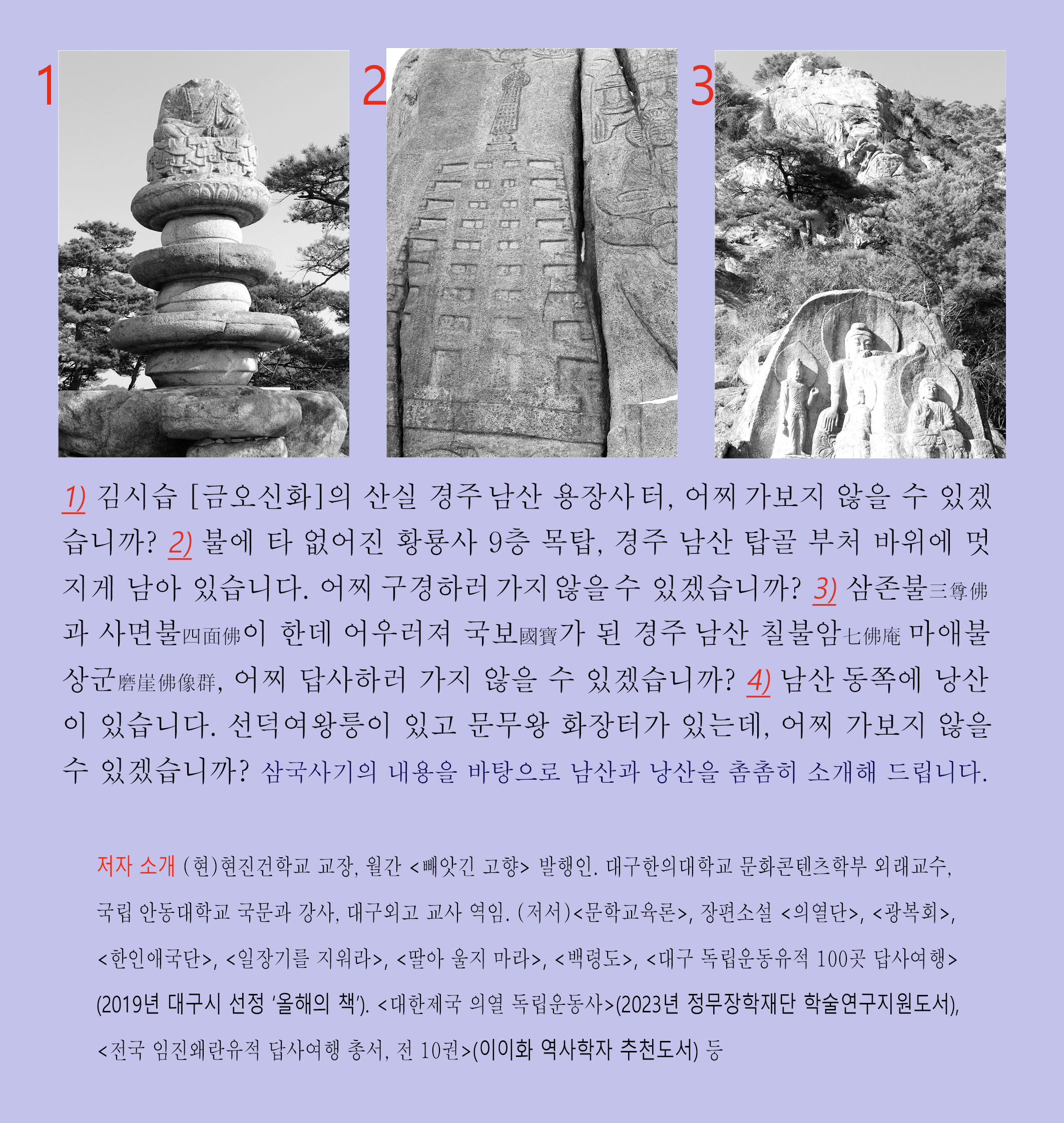
―Sangseojang 66 / Bulgol Halmae Buddha 68 / Tapgol Buddha Rock 71
Borisa Temple Seated Stone Buddha 75 / Borisa Temple Rock-carved Buddha 77
· East of Namsan, where legends and history intertwine (Map 100)
―Heongangwangneung 80 / Jeonggangwangneung 83 / Seochulji 84
Namsan-dong Twin Pagoda 86 / Former Yeombulsa Temple Site Twin Pagoda 87
Chilbulam Rock-carved Buddha Statues 90 / Shinseonam Bodhisattva Pensive Statue 96
· South of Namsan Mountain, where Kim Si-seup wrote “Geumosinhwa” (Map 115)
―Jigok Three-story Stone Pagoda 103 / Seoljamgyo Bridge 105 / Yongjangsa Temple Site 107
Samhwaryeong Lotus Pedestal 116 / Gyeongju Namsan Circular Journey 120
· Gyeongju Namsan Chronological History 121
―Park Hyeokgeose 125 / Najeong 131 / Yangsanjae 132 /
Pyoam 133 / Uhyeonseoru 135
King Jima, King Ilseong, and King Adalla 141 / King Soji 146
―Tapgol Buddha Rock 147 / Choi Young│Queen Seondeok and Hyeon Jin-geon 150
―Bulgol Halmae Buddha 152 / King Heon-gang 155 / King Jeong-gang 157
―Queen Jinseong 157 / King Gyeongmyeong and King Gyeongae 158 / Kim Si-seup 159
· Gyeongju Nangsangsan Tour 164
―Jangsa Beoljiji 164 / Mangdeoksa Temple Site 167
Mangdeoksa Temple site stone pillar 168 / Queen Seondeok's tomb 170
―Sachonwangsa Temple Site 183 / Neungji Pagoda 186 / Jungsaengsa Temple 190
· Basic Buddhist Knowledge 28
The Birth of Buddhism 29 / Buddhist Thought 30 / Buddhist Statues 33
Suin 38 / Dharma Hall / Pagoda 41
· The eternal resting place of the Park kings, west of Namsan (Map 25)
―Gyeongae Royal Tomb 12 / Samneung Tomb 14 / Baeri Triad Stone Buddha Statue 21
Jimawangneung Tomb 23 / Poseokjeong Pavilion 24 / Samneung Valley 43 (Map 26)
· Northwest of Namsan, where Silla history began (Map 63)
―Changnimsa Temple Site 51 / Namgansa Temple Site Stone Monument 54
Ilseong Royal Tomb 56 / Najeong and Yangsanjae 58
· Northeast of Namsan, where Seokguram Grotto and the original Hwangnyongsa Pagoda are located (map 65)
―Sangseojang 66 / Bulgol Halmae Buddha 68 / Tapgol Buddha Rock 71
Borisa Temple Seated Stone Buddha 75 / Borisa Temple Rock-carved Buddha 77
· East of Namsan, where legends and history intertwine (Map 100)
―Heongangwangneung 80 / Jeonggangwangneung 83 / Seochulji 84
Namsan-dong Twin Pagoda 86 / Former Yeombulsa Temple Site Twin Pagoda 87
Chilbulam Rock-carved Buddha Statues 90 / Shinseonam Bodhisattva Pensive Statue 96
· South of Namsan Mountain, where Kim Si-seup wrote “Geumosinhwa” (Map 115)
―Jigok Three-story Stone Pagoda 103 / Seoljamgyo Bridge 105 / Yongjangsa Temple Site 107
Samhwaryeong Lotus Pedestal 116 / Gyeongju Namsan Circular Journey 120
· Gyeongju Namsan Chronological History 121
―Park Hyeokgeose 125 / Najeong 131 / Yangsanjae 132 /
Pyoam 133 / Uhyeonseoru 135
King Jima, King Ilseong, and King Adalla 141 / King Soji 146
―Tapgol Buddha Rock 147 / Choi Young│Queen Seondeok and Hyeon Jin-geon 150
―Bulgol Halmae Buddha 152 / King Heon-gang 155 / King Jeong-gang 157
―Queen Jinseong 157 / King Gyeongmyeong and King Gyeongae 158 / Kim Si-seup 159
· Gyeongju Nangsangsan Tour 164
―Jangsa Beoljiji 164 / Mangdeoksa Temple Site 167
Mangdeoksa Temple site stone pillar 168 / Queen Seondeok's tomb 170
―Sachonwangsa Temple Site 183 / Neungji Pagoda 186 / Jungsaengsa Temple 190
· Basic Buddhist Knowledge 28
The Birth of Buddhism 29 / Buddhist Thought 30 / Buddhist Statues 33
Suin 38 / Dharma Hall / Pagoda 41
Detailed image
Into the book
In 927, King Gyeongae became a 'sad' king, just as his name suggests.
Gyeon Hwon attacked the Silla army at Goulbu (Yeongcheon, Gyeongsangbuk-do).
King Gyeongae asked Wang Geon for help, and Wang Geon dispatched 10,000 regular troops.
However, because of the distance, Wang Geon's army was late.
Gyeon Hwon quickly attacked Gyeongju before Wang Geon's reinforcements arrived.
The Samguk Sagi (History of the Three Kingdoms) states, 'King Gyeongae was enjoying a banquet with his queen and concubines at Poseokjeong.
He testified, 'I didn't even know the enemy was coming.'
It was a technique that left King Gyeongae in the history books as a disappointing king.
The information board in front of the royal tomb, other than the size and location of the tomb, mainly states, "He was holding a banquet at Poseokjeong when he was attacked by Gyeon Hwon and ended his life."
The 'banquet' further amplifies the negative perception of King Gyeongae.
King Gyeongae wonders if historical evaluations of him are unfair. We'll learn more during our visit to Poseokjeong (see page 24).
--- p.13
Sitting on the Samhwaryeong Lotus Pedestal, I think about and organize the order in which I can efficiently explore the major cultural heritages of Namsan, Gyeongju, without wasting time and energy going back and forth or going up and down.
As I suggested before, considering the importance of the Samhwaryeong Lotus Pedestal, I will conclude again as follows.
Gyeongju Namsan Mountain Tour: Sangseojang - *Gyeongju (omitted below) Namsan Bulgok Seated Stone Buddha (commonly known as Bucheogol Gamsil Stone Buddha, Halmae Buddha) - *Namsan Tapgok Seated Stone Buddha Group (Tapgol Buddha Rock) - *Namsan Mireukgok Seated Stone Buddha (Borisa Stone Buddha Group) - Borisa Stone Buddha Group - King Heongang's Tomb - King Jeonggang's Tomb - *Seochulji Pond - Namsan-dong East-West Three-story Stone Pagoda (Namsan-dong Twin Pagodas) - Former Yeombulsa Temple Site East-West Three-story Stone Pagoda (Yeombulsa Twin Pagodas) - **Namsan Chilbulam Seated Stone Buddha Group (Chilbulam) - *Namsan Sinseonam Seated Stone Bodhisattva (Sinseonam) - Namsan Yongjanggye Jigok 3rd Temple Site Three-story Stone Pagoda - Seoljamgyo (steep climb from there) - **Yongjangsa Temple Site Namsan Yongjangsagok Three-story Stone Pagoda, Namsan Yongjangsagok Stone Seated Buddha (Three Wheeled Seated Buddha), Seated Rock-carved Buddha at Yongjangsa Temple Site in Namsan - Lotus Pedestal at Samhwaryeong (Going there and returning) - Samneung Valley - Samneung, King Gyeongae's Tomb - Stone Seated Buddha Triad at Baedong (Baeri Stone Buddha Triad) - King Jima's Tomb - **Poseokjeong - Three-story Stone Pagoda at Changnimsa Temple Site - Flagpole Support at Namgansa Temple Site - Tomb of King Ilseong - Yangsanjae - **Najeong (**Most Important, *Important)
Gyeon Hwon attacked the Silla army at Goulbu (Yeongcheon, Gyeongsangbuk-do).
King Gyeongae asked Wang Geon for help, and Wang Geon dispatched 10,000 regular troops.
However, because of the distance, Wang Geon's army was late.
Gyeon Hwon quickly attacked Gyeongju before Wang Geon's reinforcements arrived.
The Samguk Sagi (History of the Three Kingdoms) states, 'King Gyeongae was enjoying a banquet with his queen and concubines at Poseokjeong.
He testified, 'I didn't even know the enemy was coming.'
It was a technique that left King Gyeongae in the history books as a disappointing king.
The information board in front of the royal tomb, other than the size and location of the tomb, mainly states, "He was holding a banquet at Poseokjeong when he was attacked by Gyeon Hwon and ended his life."
The 'banquet' further amplifies the negative perception of King Gyeongae.
King Gyeongae wonders if historical evaluations of him are unfair. We'll learn more during our visit to Poseokjeong (see page 24).
--- p.13
Sitting on the Samhwaryeong Lotus Pedestal, I think about and organize the order in which I can efficiently explore the major cultural heritages of Namsan, Gyeongju, without wasting time and energy going back and forth or going up and down.
As I suggested before, considering the importance of the Samhwaryeong Lotus Pedestal, I will conclude again as follows.
Gyeongju Namsan Mountain Tour: Sangseojang - *Gyeongju (omitted below) Namsan Bulgok Seated Stone Buddha (commonly known as Bucheogol Gamsil Stone Buddha, Halmae Buddha) - *Namsan Tapgok Seated Stone Buddha Group (Tapgol Buddha Rock) - *Namsan Mireukgok Seated Stone Buddha (Borisa Stone Buddha Group) - Borisa Stone Buddha Group - King Heongang's Tomb - King Jeonggang's Tomb - *Seochulji Pond - Namsan-dong East-West Three-story Stone Pagoda (Namsan-dong Twin Pagodas) - Former Yeombulsa Temple Site East-West Three-story Stone Pagoda (Yeombulsa Twin Pagodas) - **Namsan Chilbulam Seated Stone Buddha Group (Chilbulam) - *Namsan Sinseonam Seated Stone Bodhisattva (Sinseonam) - Namsan Yongjanggye Jigok 3rd Temple Site Three-story Stone Pagoda - Seoljamgyo (steep climb from there) - **Yongjangsa Temple Site Namsan Yongjangsagok Three-story Stone Pagoda, Namsan Yongjangsagok Stone Seated Buddha (Three Wheeled Seated Buddha), Seated Rock-carved Buddha at Yongjangsa Temple Site in Namsan - Lotus Pedestal at Samhwaryeong (Going there and returning) - Samneung Valley - Samneung, King Gyeongae's Tomb - Stone Seated Buddha Triad at Baedong (Baeri Stone Buddha Triad) - King Jima's Tomb - **Poseokjeong - Three-story Stone Pagoda at Changnimsa Temple Site - Flagpole Support at Namgansa Temple Site - Tomb of King Ilseong - Yangsanjae - **Najeong (**Most Important, *Important)
--- p.120
GOODS SPECIFICS
- Date of issue: January 1, 2025
- Page count, weight, size: 200 pages | 590g | 148*210*20mm
- ISBN13: 9791188701636
- ISBN10: 1188701630
You may also like
카테고리
korean


korean

![GQ KOREA Mark (Monthly): December [2025]](http://librairie.coreenne.fr/cdn/shop/files/8ef265dbbfbf186523ed75ba7319009d.jpg?v=1765340328&width=3840)


