

World Cultural Journey - India
 |
Description
Book Introduction
Indian customs, history, culture, lifestyle, and life
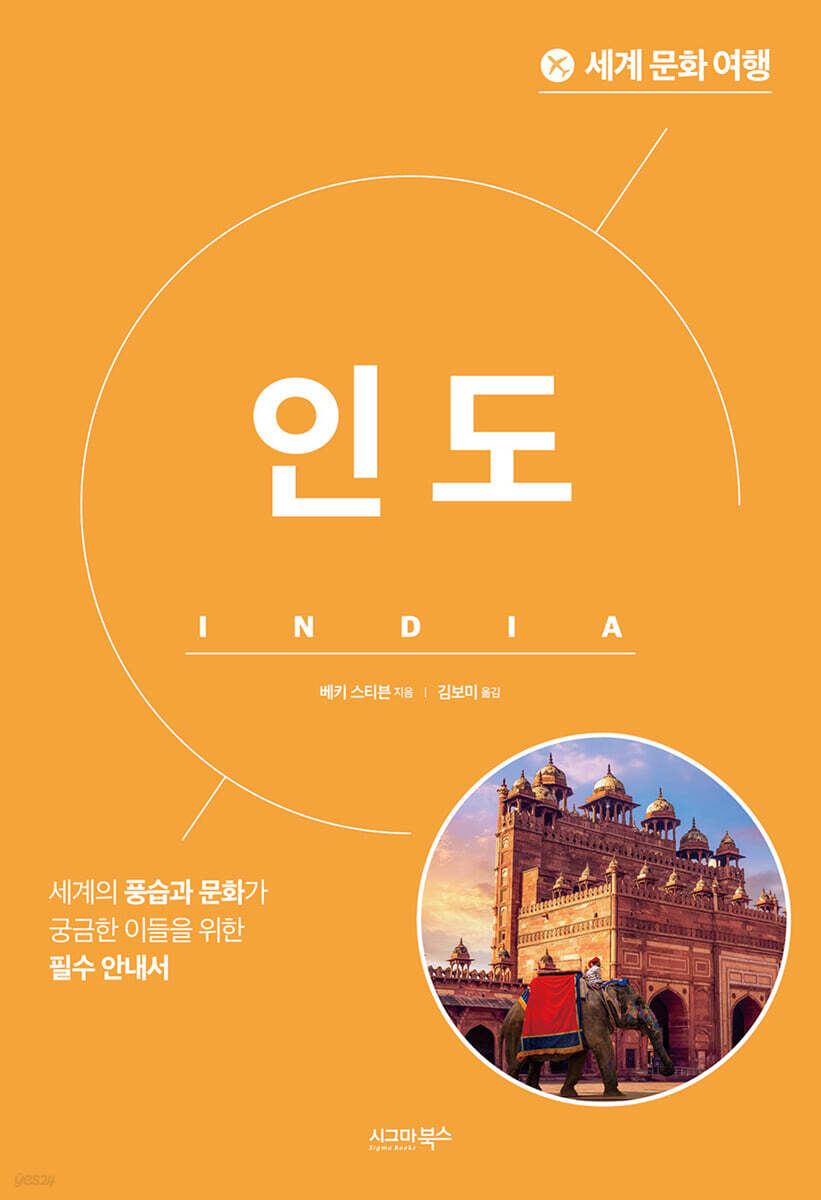
This book is the India edition of the World Cultural Journey series and covers the overall content of Indian customs, history, culture, lifestyle, and life.
Whether you are visiting India for business or simply for pleasure, we will help you make your time in India richer and more memorable.
This book contains information on local Indian customs and traditions, history, religion, politics, Indian families, work, leisure, food, clothing, shelter, and communication.
This book is the India edition of the World Cultural Journey series and covers the overall content of Indian customs, history, culture, lifestyle, and life.
Whether you are visiting India for business or simply for pleasure, we will help you make your time in India richer and more memorable.
This book contains information on local Indian customs and traditions, history, religion, politics, Indian families, work, leisure, food, clothing, shelter, and communication.
- You can preview some of the book's contents.
Preview
index
India missionary work
Entering
Basic information
01 Territory and People
Borders and 'Bandan'
Geography and Climate
people
history
Government and Politics
economy
02 Values and mindset
identity
hierarchy
religion
Karma and Destiny
family
shame and honor
Purity and tolerance
Hospitality, generosity and reciprocity
Extendable time in India
03 Customs and Traditions
public holidays
family events
Superstitions and Omens
Clothes maketh the man
04 Making Friends
friendship
Have a conversation
Giving
Visiting an Indian home
05 Daily Life
Indians who are not personal
family home
children
Sacredness and Impurity
06 Leisure Life
Eating out
Classification of food
Sports and Outdoor Activities
Must-see attractions
Cultural Experience
Happy shopping
07 Travel, Health, and Safety
Visa
Entry
Aviation
road name
railway
health
safety
08 Business Status
Business culture
meeting
negotiation
contract
corruption
colleague
Conflict Management
Women in Business
09 Communication
language
greeting
body language
humor
Media and Technology
conclusion
References
Entering
Basic information
01 Territory and People
Borders and 'Bandan'
Geography and Climate
people
history
Government and Politics
economy
02 Values and mindset
identity
hierarchy
religion
Karma and Destiny
family
shame and honor
Purity and tolerance
Hospitality, generosity and reciprocity
Extendable time in India
03 Customs and Traditions
public holidays
family events
Superstitions and Omens
Clothes maketh the man
04 Making Friends
friendship
Have a conversation
Giving
Visiting an Indian home
05 Daily Life
Indians who are not personal
family home
children
Sacredness and Impurity
06 Leisure Life
Eating out
Classification of food
Sports and Outdoor Activities
Must-see attractions
Cultural Experience
Happy shopping
07 Travel, Health, and Safety
Visa
Entry
Aviation
road name
railway
health
safety
08 Business Status
Business culture
meeting
negotiation
contract
corruption
colleague
Conflict Management
Women in Business
09 Communication
language
greeting
body language
humor
Media and Technology
conclusion
References
Into the book
The vast Indian peninsula is bordered by the Himalayas to the north, the Arabian Sea to the west, and the Bay of Bengal to the east, and, along with its neighbors Pakistan and Bangladesh, sits on a separate tectonic plate from the Asian mainland.
It also borders China, Nepal, Bhutan, and Myanmar (formerly Burma).
---From "Chapter 1 Territory and People"
But caste consciousness still persists.
Indians seem to have an innate radar, born from their personal and cultural history, that scans the puzzle of the caste system for clues that tell them where they fit.
Even for those who are less likely to adhere to caste norms in their daily lives, the importance of caste becomes very clear when they have to make important life decisions, such as marriage.
---From "Chapter 2: Values and Way of Thinking"
During the month of Ramadan, Muslims aged 12 and older (except pregnant women and the elderly) are required to abstain from food and drink during daylight hours and from sinful or selfish acts.
After the sun sets, families and friends gather for a feast, often lasting until the early hours of the morning.
Eid al-Fitr marks the end of a month-long festival commemorating the revelation of the Quran to Muhammad.
---From "Chapter 3 Customs and Traditions"
Indians tend to be affectionate and expressive, with a deep sense of loyalty and belonging.
People do their best to meet their friends' needs and actively help them through hard times.
There are even many people who do not hesitate to risk their lives and livelihoods for each other.
If an Indian considers you a friend, you have entered into a network of relationships that will bring both joy and responsibility.
Because Indian friendship holds expectations that Westerners never anticipate.
---From "Chapter 4 Making Friends"
You can find the word 'privacy' in any Indian dictionary.
But in India, you'll struggle to find privacy, at least not in the way you perceive it.
Westerners define privacy in terms of personal space, confidential information, and freedom from intrusion.
But in India, privacy is generally not about being 'hidden' but about 'being ignored'.
---From "Chapter 5 Daily Life"
It is said that there are two religions in India: cricket and cinema.
Although the official national sport is hockey, Indians are passionate about cricket and the Board of Control for Cricket in India is the wealthiest cricket board in the world.
When a cricket match is in progress, you can see people all over the country gathered in front of their TVs and radios or connected to their mobile phones to cheer on their team.
---From "Chapter 6 Leisure Life"
While there is some degree of public transportation throughout India, if you want to travel at your own pace or go to distant destinations without the inevitable crowds and delays of bus travel or the geographical restrictions of taxis, renting a car with a driver is a good option.
Hiring a driver with your car is relatively inexpensive and will still provide enough thrills for any adrenaline junkie.
Or, you can use BlaBlaCar, a ride-sharing service that lets you log in with Facebook, to find someone going in the same direction who can give you a ride.
---From Chapter 7: Travel, Health, and Safety
Once considered a study of Third World poverty or an exotic destination for adventurous tourists, India has now established itself as a global one-stop technology hub.
Reforms over the past three decades have attracted foreign investment, lowered tariffs, opened the financial sector, and deregulated industry.
India has grown into a global powerhouse, creating wealth and jobs, opening new markets, and providing crucial technologies to the global economy.
---From "Chapter 8 Business Status"
English and its Indian variants are used not only in the workplace and clubs, but also on TV, in movies, and in modern literature.
While some purists argue for a return to pre-colonial languages, the English tsunami hit India long ago, and a wave of Indian English, or "Hinglish," and American expressions and accents from IT-educated people continue to pour into the country.
It also borders China, Nepal, Bhutan, and Myanmar (formerly Burma).
---From "Chapter 1 Territory and People"
But caste consciousness still persists.
Indians seem to have an innate radar, born from their personal and cultural history, that scans the puzzle of the caste system for clues that tell them where they fit.
Even for those who are less likely to adhere to caste norms in their daily lives, the importance of caste becomes very clear when they have to make important life decisions, such as marriage.
---From "Chapter 2: Values and Way of Thinking"
During the month of Ramadan, Muslims aged 12 and older (except pregnant women and the elderly) are required to abstain from food and drink during daylight hours and from sinful or selfish acts.
After the sun sets, families and friends gather for a feast, often lasting until the early hours of the morning.
Eid al-Fitr marks the end of a month-long festival commemorating the revelation of the Quran to Muhammad.
---From "Chapter 3 Customs and Traditions"
Indians tend to be affectionate and expressive, with a deep sense of loyalty and belonging.
People do their best to meet their friends' needs and actively help them through hard times.
There are even many people who do not hesitate to risk their lives and livelihoods for each other.
If an Indian considers you a friend, you have entered into a network of relationships that will bring both joy and responsibility.
Because Indian friendship holds expectations that Westerners never anticipate.
---From "Chapter 4 Making Friends"
You can find the word 'privacy' in any Indian dictionary.
But in India, you'll struggle to find privacy, at least not in the way you perceive it.
Westerners define privacy in terms of personal space, confidential information, and freedom from intrusion.
But in India, privacy is generally not about being 'hidden' but about 'being ignored'.
---From "Chapter 5 Daily Life"
It is said that there are two religions in India: cricket and cinema.
Although the official national sport is hockey, Indians are passionate about cricket and the Board of Control for Cricket in India is the wealthiest cricket board in the world.
When a cricket match is in progress, you can see people all over the country gathered in front of their TVs and radios or connected to their mobile phones to cheer on their team.
---From "Chapter 6 Leisure Life"
While there is some degree of public transportation throughout India, if you want to travel at your own pace or go to distant destinations without the inevitable crowds and delays of bus travel or the geographical restrictions of taxis, renting a car with a driver is a good option.
Hiring a driver with your car is relatively inexpensive and will still provide enough thrills for any adrenaline junkie.
Or, you can use BlaBlaCar, a ride-sharing service that lets you log in with Facebook, to find someone going in the same direction who can give you a ride.
---From Chapter 7: Travel, Health, and Safety
Once considered a study of Third World poverty or an exotic destination for adventurous tourists, India has now established itself as a global one-stop technology hub.
Reforms over the past three decades have attracted foreign investment, lowered tariffs, opened the financial sector, and deregulated industry.
India has grown into a global powerhouse, creating wealth and jobs, opening new markets, and providing crucial technologies to the global economy.
---From "Chapter 8 Business Status"
English and its Indian variants are used not only in the workplace and clubs, but also on TV, in movies, and in modern literature.
While some purists argue for a return to pre-colonial languages, the English tsunami hit India long ago, and a wave of Indian English, or "Hinglish," and American expressions and accents from IT-educated people continue to pour into the country.
---From Chapter 9: Communication
Publisher's Review
Beauty in chaos
India, a country of irresistible charm
When you think of "India," what images come to mind? Our perceptions of India may be based on overwhelming demographics, a fragmented picture of poverty, technological competition in the global market, exotic art forms, and ancient history.
This is all true.
But at the center of it all are the 'Indian people'.
The people of India are as diverse and colourful as the spice markets of old Delhi.
Each region, caste, and community has its own culture, reflecting its own history shaped by conquest, creativity, and religion.
This is expressed through each of their unique languages, social customs, art forms, and expectations of life.
India will be the world's most populous country as of 2024.
India's population has doubled over the past 40 years.
It currently accounts for 14.5% of the world's population, and with a population growth rate of one person born every second, it is estimated that it recently overtook China.
With 5,000 years of historical tradition and a new title as the world's most populous country, India is now changing.
But despite the tremendous changes, in many ways India remains the same.
The colors and sounds of chaos and beauty, the language that changes every ten miles, the spices and spiciness of every home, the constant smells of public spaces where we spend so much of our daily lives, the disregard for personal space… these are experiences that can only be found in India.
This experience can be a daunting challenge even for seasoned travelers.
But the moment you let go of your prejudices and aversions and surrender to your senses, you will finally be able to embrace the essence of India.
Delivering intense shock and awe
Let's go to the land of diversity!
Deeply rooted in tradition, deeply fatalistic, and passionate about their culture, Indians are among the most original, adventurous, and creative people on the planet.
Most warm and friendly Indians will respond with generosity and genuine friendship to a stranger curious about India.
But they also have an indelible bond to family and community, which often leads them to make decisions that may seem incomprehensible to outsiders.
So the reactions of Indian visitors can be as extreme as the people and places they encounter.
However, all descriptions of 'India' or 'Indians' are merely simplified expressions to aid understanding and are not complete descriptions.
This is the beauty and challenge of visiting India.
Although the caste system has been abolished, awareness of it still exists and exerts great and small influence on the lives of Indians.
But in ways unimaginable just a decade ago, these barriers are crumbling.
Law, economic reforms, globalization, technological advancements, media, and cultural shifts that are already shaking India's long-standing foundations are slowly opening the door to a better education and future.
India's intensity and diversity simultaneously shock and awe visitors, and these feelings are unlikely to subside easily.
India is an experience best understood by those who have an open mind to learn, a capacity for ambiguity, and a willingness to redefine generosity and friendship.
Falling in love with India is a lot like developing a taste for spicy food.
When you first see a pepper, you may not know what to do, but its alluring aroma draws you in and you taste it.
And if you don't give up, one day you will find yourself craving that taste.
India, a country of irresistible charm
When you think of "India," what images come to mind? Our perceptions of India may be based on overwhelming demographics, a fragmented picture of poverty, technological competition in the global market, exotic art forms, and ancient history.
This is all true.
But at the center of it all are the 'Indian people'.
The people of India are as diverse and colourful as the spice markets of old Delhi.
Each region, caste, and community has its own culture, reflecting its own history shaped by conquest, creativity, and religion.
This is expressed through each of their unique languages, social customs, art forms, and expectations of life.
India will be the world's most populous country as of 2024.
India's population has doubled over the past 40 years.
It currently accounts for 14.5% of the world's population, and with a population growth rate of one person born every second, it is estimated that it recently overtook China.
With 5,000 years of historical tradition and a new title as the world's most populous country, India is now changing.
But despite the tremendous changes, in many ways India remains the same.
The colors and sounds of chaos and beauty, the language that changes every ten miles, the spices and spiciness of every home, the constant smells of public spaces where we spend so much of our daily lives, the disregard for personal space… these are experiences that can only be found in India.
This experience can be a daunting challenge even for seasoned travelers.
But the moment you let go of your prejudices and aversions and surrender to your senses, you will finally be able to embrace the essence of India.
Delivering intense shock and awe
Let's go to the land of diversity!
Deeply rooted in tradition, deeply fatalistic, and passionate about their culture, Indians are among the most original, adventurous, and creative people on the planet.
Most warm and friendly Indians will respond with generosity and genuine friendship to a stranger curious about India.
But they also have an indelible bond to family and community, which often leads them to make decisions that may seem incomprehensible to outsiders.
So the reactions of Indian visitors can be as extreme as the people and places they encounter.
However, all descriptions of 'India' or 'Indians' are merely simplified expressions to aid understanding and are not complete descriptions.
This is the beauty and challenge of visiting India.
Although the caste system has been abolished, awareness of it still exists and exerts great and small influence on the lives of Indians.
But in ways unimaginable just a decade ago, these barriers are crumbling.
Law, economic reforms, globalization, technological advancements, media, and cultural shifts that are already shaking India's long-standing foundations are slowly opening the door to a better education and future.
India's intensity and diversity simultaneously shock and awe visitors, and these feelings are unlikely to subside easily.
India is an experience best understood by those who have an open mind to learn, a capacity for ambiguity, and a willingness to redefine generosity and friendship.
Falling in love with India is a lot like developing a taste for spicy food.
When you first see a pepper, you may not know what to do, but its alluring aroma draws you in and you taste it.
And if you don't give up, one day you will find yourself craving that taste.
GOODS SPECIFICS
- Date of issue: November 15, 2024
- Page count, weight, size: 278 pages | 130*190*20mm
- ISBN13: 9791168622982
- ISBN10: 1168622980
You may also like
카테고리
korean


korean

![GQ KOREA Mark (Monthly): December [2025]](http://librairie.coreenne.fr/cdn/shop/files/8ef265dbbfbf186523ed75ba7319009d.jpg?v=1765340328&width=3840)


