

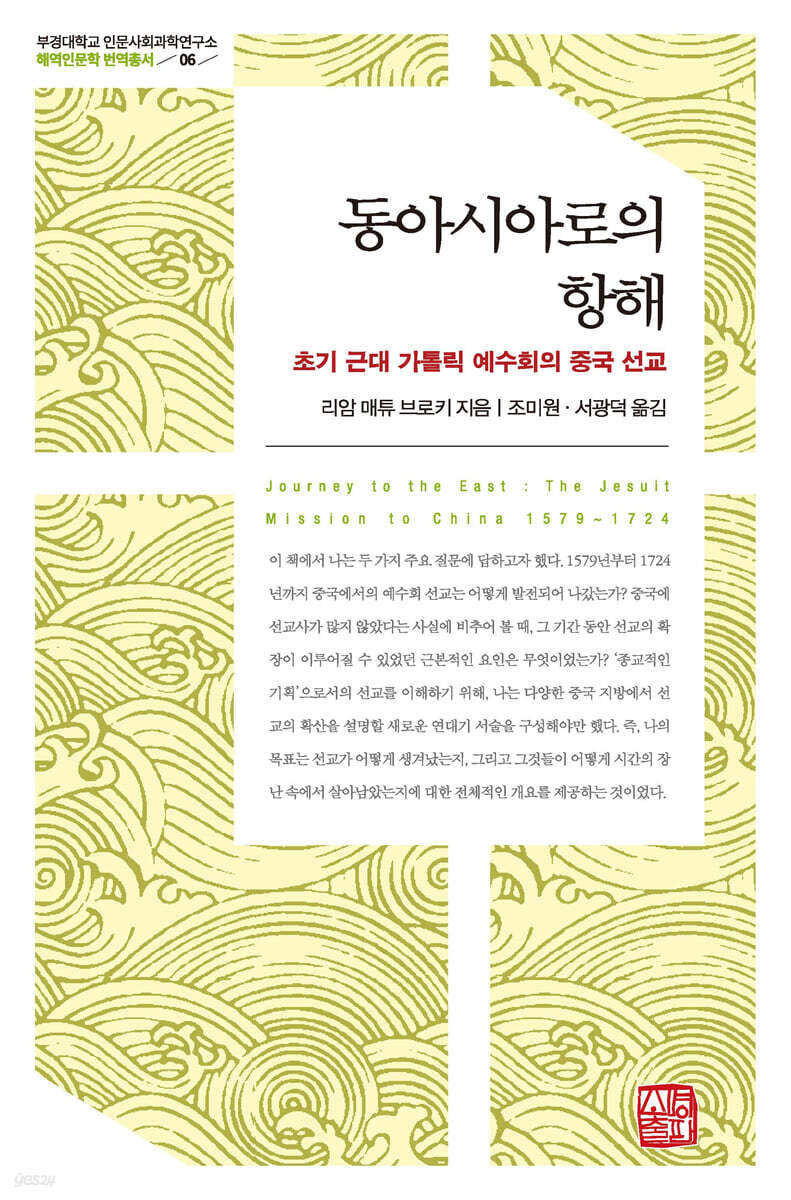
Voyage to East Asia
 |
Description
Book Introduction
This book covers the missionary work of Jesuit missionaries in China from the late 16th to the early 18th century.
The author reconstructs a chronology of the Jesuit mission to China, drawing on numerous newly unearthed Jesuit annual letters, administrative decrees, missionary reports, and personal letters from missionaries in Portuguese and Italian archives.
Through this, we can understand the direct and active conversion strategies and techniques used by Jesuit missionaries to convert the upper and lower classes of Chinese society, as well as the nature and characteristics of the Chinese missionary church that was created as a result.
This study examines the activities of Chinese Jesuits from a religious perspective, analyzes the impact their missionary work had on Chinese society, and presents a new perspective on missionary work in modern East Asia.
The author reconstructs a chronology of the Jesuit mission to China, drawing on numerous newly unearthed Jesuit annual letters, administrative decrees, missionary reports, and personal letters from missionaries in Portuguese and Italian archives.
Through this, we can understand the direct and active conversion strategies and techniques used by Jesuit missionaries to convert the upper and lower classes of Chinese society, as well as the nature and characteristics of the Chinese missionary church that was created as a result.
This study examines the activities of Chinese Jesuits from a religious perspective, analyzes the impact their missionary work had on Chinese society, and presents a new perspective on missionary work in modern East Asia.
- You can preview some of the book's contents.
Preview
index
Preface
Author's Preface to the Korean Edition
Recommendation
Author's Preface
introduction
Part 1/ Recording the Route
Chapter 1: An Uneasy Base
1.
The Door Opens (1579-1594)
2.
Taking the name of a man of letters (1595-1600)
3.
In the Classroom of Heaven (1601-1607)
Chapter 2 In the Great Shadow
1.
The Power of Patronage (1608–1612)
2.
Encounter with the "Servants of Satan" (1612–1618)
3.
New Signs (1619–1623)
4.
Differences from the past (1623–1633)
Chapter 3: Witnesses of Armageddon
1.
Composition of the missionary dioceses (1633–1640)
2.
The Challenge at Hand (1637–1640)
3.
Premonition of Judgment Day (1641–1650)
4.
Reconstruction of the ruins (1651–1663)
Chapter 4: Problems Accompanying Success
1.
“Time of Trouble” (1664–1670)
2.
Struggles in the Cracks (1671–1687)
3.
Priests and Believers (1672–1690)
4.
The arrival of the competitors (1680–1692)
Chapter 5 Between Tolerance and Intolerance
1.
Japanese ghosts in China (1691–1693)
2.
The End of the Vine (1693–1704)
3.
“Horrible, shameful, and devilish” (1700–1704)
4.
“A Tragic Tragedy” (1704–1709)
5.
Collision, Echo, and Silence (1710–1724)
6.
Into the Darkness, After 1724
Part 2 / Building a Church
Chapter 6: The Apostles' Classroom
1.
Boarding the Trojan Horse
2.
“Tell them how”
3.
The desire to become Chinese
4.
The pain of sailing
Chapter 7: Learning the Language of Birds
1.
The Secret of Language
2.
Amazing diligence
3.
Study Abroad Regulations for China
4.
Confucian scriptures textbook
5.
Chinese wisdom
6.
“The only law of attribution”
Chapter 8: Conversion Work
1.
Adults from the West
2.
Merchants in the Spiritual Market
3.
What Happened in Mission
4.
“See how they fall for lies”
5.
The Identity of Chinese Christians
6.
“Unlike the dark temple”
Chapter 9: Excellent Methods and Organizations
1.
Sacred use of the congregation
2.
Brothers and Sisters of the Society of Mary
3.
Teaching Angels
4.
Apostles for Heaven
5.
Delegation of authority to convert
6.
Whole assembly
Chapter 10: The Faithful of the Passion and the Society of Mercy
1.
Setting rules
2.
Holy jealousy
3.
“With dignity and composure”
4.
The blossoming of common devotion
5.
Waiting for the Virgin's blessing
6.
Ministries of Mercy
7.
The discipline of asceticism
8.
Spreading piety
conclusion
List of abbreviations
Translator's Note
Search
Author's Preface to the Korean Edition
Recommendation
Author's Preface
introduction
Part 1/ Recording the Route
Chapter 1: An Uneasy Base
1.
The Door Opens (1579-1594)
2.
Taking the name of a man of letters (1595-1600)
3.
In the Classroom of Heaven (1601-1607)
Chapter 2 In the Great Shadow
1.
The Power of Patronage (1608–1612)
2.
Encounter with the "Servants of Satan" (1612–1618)
3.
New Signs (1619–1623)
4.
Differences from the past (1623–1633)
Chapter 3: Witnesses of Armageddon
1.
Composition of the missionary dioceses (1633–1640)
2.
The Challenge at Hand (1637–1640)
3.
Premonition of Judgment Day (1641–1650)
4.
Reconstruction of the ruins (1651–1663)
Chapter 4: Problems Accompanying Success
1.
“Time of Trouble” (1664–1670)
2.
Struggles in the Cracks (1671–1687)
3.
Priests and Believers (1672–1690)
4.
The arrival of the competitors (1680–1692)
Chapter 5 Between Tolerance and Intolerance
1.
Japanese ghosts in China (1691–1693)
2.
The End of the Vine (1693–1704)
3.
“Horrible, shameful, and devilish” (1700–1704)
4.
“A Tragic Tragedy” (1704–1709)
5.
Collision, Echo, and Silence (1710–1724)
6.
Into the Darkness, After 1724
Part 2 / Building a Church
Chapter 6: The Apostles' Classroom
1.
Boarding the Trojan Horse
2.
“Tell them how”
3.
The desire to become Chinese
4.
The pain of sailing
Chapter 7: Learning the Language of Birds
1.
The Secret of Language
2.
Amazing diligence
3.
Study Abroad Regulations for China
4.
Confucian scriptures textbook
5.
Chinese wisdom
6.
“The only law of attribution”
Chapter 8: Conversion Work
1.
Adults from the West
2.
Merchants in the Spiritual Market
3.
What Happened in Mission
4.
“See how they fall for lies”
5.
The Identity of Chinese Christians
6.
“Unlike the dark temple”
Chapter 9: Excellent Methods and Organizations
1.
Sacred use of the congregation
2.
Brothers and Sisters of the Society of Mary
3.
Teaching Angels
4.
Apostles for Heaven
5.
Delegation of authority to convert
6.
Whole assembly
Chapter 10: The Faithful of the Passion and the Society of Mercy
1.
Setting rules
2.
Holy jealousy
3.
“With dignity and composure”
4.
The blossoming of common devotion
5.
Waiting for the Virgin's blessing
6.
Ministries of Mercy
7.
The discipline of asceticism
8.
Spreading piety
conclusion
List of abbreviations
Translator's Note
Search
Publisher's Review
The Jesuit mission in China from 1579 to 1724
How did it develop?
Given that there weren't many missionaries in China,
During that period, the expansion of missionary work was possible.
What was the underlying factor?
The Catholic Jesuit missions to China from the late 16th to early 18th centuries
Existing domestic studies mainly focus on the academic and artistic exchanges between the East and the West by a small number of well-known Jesuits, such as Matteo Ricci, Adam Schall von Bell, and Ferdinand Verbiest, and examine missionary work in modern East Asia.
However, the so-called 'heroic' actions of famous missionaries and scholars are not all there is to the Jesuit mission in China.
According to the book's author, Liam Matthew Brockey, this stems from the fact that Chinese Jesuits were judged by later historians for their role as "bridge builders between civilizations" or "the extent to which they succeeded in spreading modernity," and that the Jesuit mission to China was seen as a failure in religious terms.
However, the Jesuits came to China solely with the goal of converting the Chinese to Catholicism, and the exchange of knowledge and culture was a byproduct of this.
How can we describe the direct and active proselytization strategies and techniques employed by the Jesuits as "missionaries" carrying a religious message, aimed at converting the upper and lower classes of Chinese society, and the nature and characteristics of the Chinese missionary church they created? In other words, how did the Jesuit mission to China in the late Ming and early Qing periods actually unfold as a "religious project"?
With these concerns in mind, this book focuses on the missionary efforts of Jesuit missionaries in China over a period of approximately 150 years, from Michele Ruggieri's arrival in Macau in 1579 to the Yongzheng Emperor's ban on Christianity in 1724.
In particular, the author reconstructs a chronology of the Jesuit mission to China, drawing on numerous newly unearthed Jesuit annual letters, administrative decrees, missionary reports, and personal letters from missionaries in Portuguese and Italian archives.
How did it develop?
Given that there weren't many missionaries in China,
During that period, the expansion of missionary work was possible.
What was the underlying factor?
The Catholic Jesuit missions to China from the late 16th to early 18th centuries
Existing domestic studies mainly focus on the academic and artistic exchanges between the East and the West by a small number of well-known Jesuits, such as Matteo Ricci, Adam Schall von Bell, and Ferdinand Verbiest, and examine missionary work in modern East Asia.
However, the so-called 'heroic' actions of famous missionaries and scholars are not all there is to the Jesuit mission in China.
According to the book's author, Liam Matthew Brockey, this stems from the fact that Chinese Jesuits were judged by later historians for their role as "bridge builders between civilizations" or "the extent to which they succeeded in spreading modernity," and that the Jesuit mission to China was seen as a failure in religious terms.
However, the Jesuits came to China solely with the goal of converting the Chinese to Catholicism, and the exchange of knowledge and culture was a byproduct of this.
How can we describe the direct and active proselytization strategies and techniques employed by the Jesuits as "missionaries" carrying a religious message, aimed at converting the upper and lower classes of Chinese society, and the nature and characteristics of the Chinese missionary church they created? In other words, how did the Jesuit mission to China in the late Ming and early Qing periods actually unfold as a "religious project"?
With these concerns in mind, this book focuses on the missionary efforts of Jesuit missionaries in China over a period of approximately 150 years, from Michele Ruggieri's arrival in Macau in 1579 to the Yongzheng Emperor's ban on Christianity in 1724.
In particular, the author reconstructs a chronology of the Jesuit mission to China, drawing on numerous newly unearthed Jesuit annual letters, administrative decrees, missionary reports, and personal letters from missionaries in Portuguese and Italian archives.
GOODS SPECIFICS
- Date of issue: July 10, 2024
- Format: Hardcover book binding method guide
- Page count, weight, size: 739 pages | 152*223*37mm
- ISBN13: 9791159055317
You may also like
카테고리
korean


korean

![GQ KOREA Mark (Monthly): December [2025]](http://librairie.coreenne.fr/cdn/shop/files/8ef265dbbfbf186523ed75ba7319009d.jpg?v=1765340328&width=3840)


