

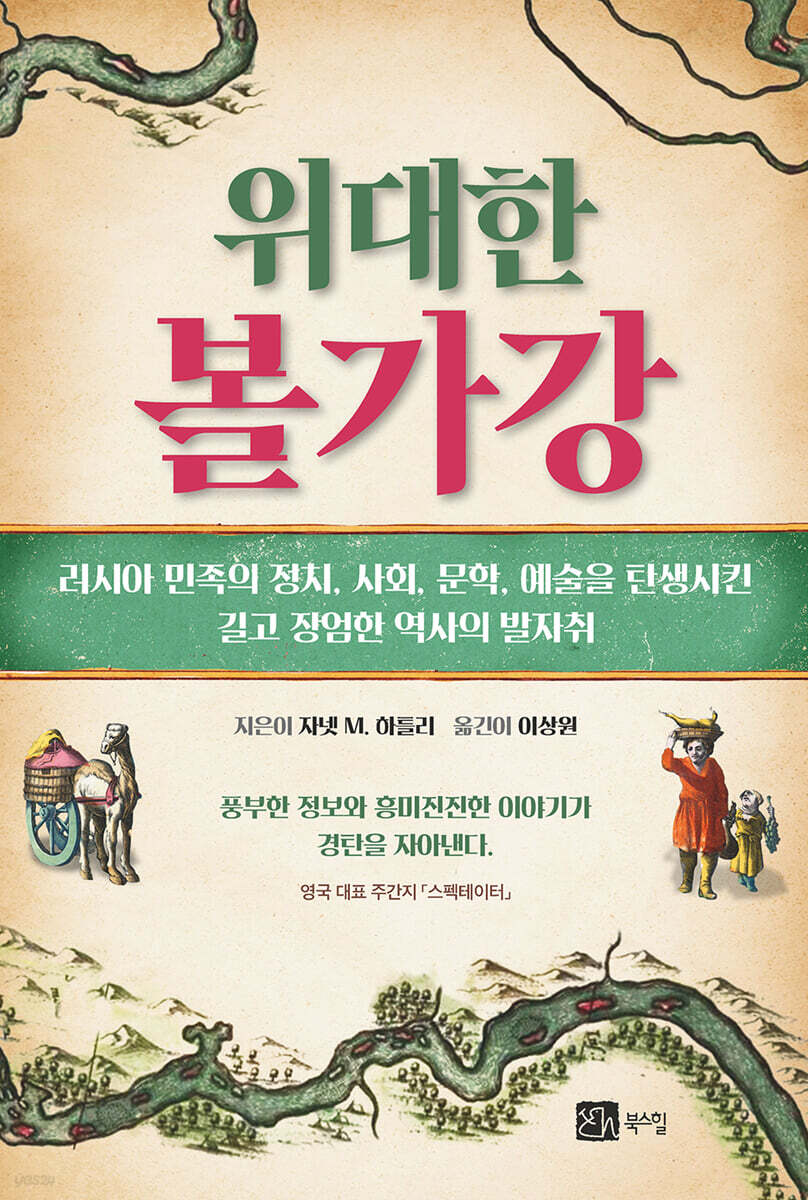
The Great Volga River
 |
Description
Book Introduction
The Volga River, a majestic waterway of history
“Without the Volga, there is no Russia!”
A compilation of Russian history through the history of the Volga River basin, the lifeline of Russia!
It is impossible to imagine Russian history without the Volga River.
The Volga River was the lifeline of the Russian people, running through the heart of Russia, and was the center of upheaval as lands were conquered and new states were established.
Janet M.
Hartley explores the impact of the Volga River on Russia by systematically examining the historical events and cultural developments centered around the Volga River.
It also examines Russia's long history from a multifaceted perspective, offering insightful interpretations that encompass its ethnicity, religion, and culture.
This book will be a must-read for anyone interested in Russia, from beginners to those seeking a deeper understanding of Russian history.
Let's take a trip to Russia along the majestic Volga River, the longest river in Europe.
“Without the Volga, there is no Russia!”
A compilation of Russian history through the history of the Volga River basin, the lifeline of Russia!
It is impossible to imagine Russian history without the Volga River.
The Volga River was the lifeline of the Russian people, running through the heart of Russia, and was the center of upheaval as lands were conquered and new states were established.
Janet M.
Hartley explores the impact of the Volga River on Russia by systematically examining the historical events and cultural developments centered around the Volga River.
It also examines Russia's long history from a multifaceted perspective, offering insightful interpretations that encompass its ethnicity, religion, and culture.
This book will be a must-read for anyone interested in Russia, from beginners to those seeking a deeper understanding of Russian history.
Let's take a trip to Russia along the majestic Volga River, the longest river in Europe.
- You can preview some of the book's contents.
Preview
index
Part 1: Early History of the Volga River
01 The first states of the Volga region - the Khazars, Volga Bulgarians, and Rus' principalities
02 Conquest of the Volga River - Mongolian Khanates and Moscow
Part 2: The Volga River in the Russian Empire - Violence and Control
03 Non-Russians and Russians in the new border area
04 Violence on the Volga - Pirates, Marauders, and Cossacks
05 Taming the Volga - The Russian Empire on the Border
06 Russian Orthodoxy and Islam on the Volga River
07 Diseases and Science of the Volga River
Part 3: The Volga River in the Russian Empire - Life and Culture
08 Villages in the Volga River region
09 Cities in the Volga region
10 Trade and Labor in the Volga Region
11 The Volga River and Russian Consciousness - Literature, Art, and Tourism
12 Reform, Conflict, and Russification in the Volga Region
Part 4: The Volga River in the Soviet and Post-Soviet Periods
13 Revolution and Civil War in the Volga Region
14 Collectivization and oppression in the Volga region
15 World War II in the Volga Region
16 Non-Russians in the Volga Region - Autonomy and Identity
17 Control and protection of the Volga River
01 The first states of the Volga region - the Khazars, Volga Bulgarians, and Rus' principalities
02 Conquest of the Volga River - Mongolian Khanates and Moscow
Part 2: The Volga River in the Russian Empire - Violence and Control
03 Non-Russians and Russians in the new border area
04 Violence on the Volga - Pirates, Marauders, and Cossacks
05 Taming the Volga - The Russian Empire on the Border
06 Russian Orthodoxy and Islam on the Volga River
07 Diseases and Science of the Volga River
Part 3: The Volga River in the Russian Empire - Life and Culture
08 Villages in the Volga River region
09 Cities in the Volga region
10 Trade and Labor in the Volga Region
11 The Volga River and Russian Consciousness - Literature, Art, and Tourism
12 Reform, Conflict, and Russification in the Volga Region
Part 4: The Volga River in the Soviet and Post-Soviet Periods
13 Revolution and Civil War in the Volga Region
14 Collectivization and oppression in the Volga region
15 World War II in the Volga Region
16 Non-Russians in the Volga Region - Autonomy and Identity
17 Control and protection of the Volga River
Detailed image
.jpg)
Into the book
By taking Kazan and Astrakhan, Russia gained control of the entire Volga River from its source to the Caspian Sea.
This meant that the Mongol-Tatar forces were replaced by Russian forces.
From this time on, Russia was a multi-ethnic, multi-religious empire.
The ruler ruled all of Russia, proclaiming himself the head of the Eastern Christian Church and even ruling over Kazan and Astrakhan, which were predominantly Muslim.
---From "Conquest of the Volga River - Mongolian Koreas and Moscow"
The Volga River was a symbol of the freedom that the Cossacks longed for and were promised.
The Volga River was our home, our comrades, and our defense.
It was a means of attacking the enemy, a route of refuge from a superior enemy, a passage south to the rich Caspian Sea, and a route leading to the capital, Moscow.
---From "Violence on the Volga"
Catherine's tours were meticulously planned to demonstrate her authority over her new subjects and territories.
It was no coincidence that his first destination was the Volga River in 1767, and that he concluded his journey with a visit to Kazan, a multi-ethnic city.
Catherine set out in May 1767.
The expedition was accompanied by four galleys specially built for the purpose, and 10 to 20 ships carrying a crew of about 2,000.
Over a period of just over six weeks, we visited villages, monasteries, and historical sites, and passed through the major cities of the upper and middle Volga: Tver, Uglich, Libnaya Sloboda, Yaroslavl, Kostroma, Nizhny Novgorod, Cheboksary, Kazan, and Simbirsk.
---From "Taming the Volga"
The Volga River was so wide that peasants rarely encountered other settlers when crossing it.
On either side of the river, the world of farmers was centered around their villages, but it was not completely closed off.
The Volga countryside was home to not only Russian peasants but also Tatars, Chuvash, Mari, Udmurts, and, from the late 18th century onwards, German settlers.
The Russian Orthodox villages included Tatars and pagans who had converted alongside the Russians, some of whom retained their original faith.
Peasants of different ethnicities, languages, cultures, and religions mostly lived separately, but they coexisted in the same area.
---From "Villages of the Volga Region"
Cities and regions located along the route from the lower reaches of the Volga River upstream played a crucial role in this prosperity.
Astrakhan was the undisputed center of Russian fishing.
The diversity and scale of the seafood trade at that time left a deep impression on foreign travelers.
John Bell, an 18th-century Scottish physician and traveler, commented on the Volga's fish, saying, "There is no fish of greater variety, better quality, or greater quantity in any river in the world."
By the late 19th century, Astrakhan was described as a 'great golden fish market'.
Even today, the city's fish market boasts a remarkable variety and quantity of seafood.
---From "Trade and Labor in the Volga Region"
The Volga River was also associated with pirate and popular revolts in the 17th and 18th centuries.
The Volga features prominently in songs and poems depicting Razin and Pugachev.
In this case, the Volga is a river of freedom, a river that resists rather than obeys state power, and a river that protects those who resist the state.
---From “The Volga River and the Russian People’s Perception”
The sentimentalism of literature, poetry, and painting overlooking the Volga River was in line with sacralization.
Poetry and paintings depicting the Volga as a truly Russian river have inextricably linked it with Russian Orthodoxy.
It was an early theme of Russian poetry and was linked to Russia's unique history and culture.
---From “The Volga River and the Russian People’s Perception”
Armed clashes broke out in Saratov.
Some members of the Provisional Executive Committee, with the help of armed officers and cadets, barricaded themselves in the city hall and attempted armed resistance against the Bolsheviks.
This may have been an incident that occurred because there was a military academy within the city, or it may have been due to a lack of sense of reality among some members of the provisional executive committee.
In any case, the committee's attempt at resistance failed due to the Bolshevik shelling of the building.
One officer was killed, one cadet was critically injured, and seven were seriously injured.
The surrendered commissioners were led out with their hands raised above their heads and paraded through the streets.
An angry crowd surrounded them and shouted, "Go to the Volga! Go to the Volga!"
---From “Revolution and Civil War in the Volga Region”
To promote national projects, the Soviet Union trained far more engineers and scientists than Western countries.
The Soviet Union was a country with vast resources of electricity and minerals, including water, timber, and fossil fuels, and was brimming with enthusiasm and confidence that these resources would be used for the benefit of all its people, not just for a few wealthy individuals or foreign investors.
What were the consequences of these policies? Why did a country with such great potential for prosperity make such poor environmental choices?
This meant that the Mongol-Tatar forces were replaced by Russian forces.
From this time on, Russia was a multi-ethnic, multi-religious empire.
The ruler ruled all of Russia, proclaiming himself the head of the Eastern Christian Church and even ruling over Kazan and Astrakhan, which were predominantly Muslim.
---From "Conquest of the Volga River - Mongolian Koreas and Moscow"
The Volga River was a symbol of the freedom that the Cossacks longed for and were promised.
The Volga River was our home, our comrades, and our defense.
It was a means of attacking the enemy, a route of refuge from a superior enemy, a passage south to the rich Caspian Sea, and a route leading to the capital, Moscow.
---From "Violence on the Volga"
Catherine's tours were meticulously planned to demonstrate her authority over her new subjects and territories.
It was no coincidence that his first destination was the Volga River in 1767, and that he concluded his journey with a visit to Kazan, a multi-ethnic city.
Catherine set out in May 1767.
The expedition was accompanied by four galleys specially built for the purpose, and 10 to 20 ships carrying a crew of about 2,000.
Over a period of just over six weeks, we visited villages, monasteries, and historical sites, and passed through the major cities of the upper and middle Volga: Tver, Uglich, Libnaya Sloboda, Yaroslavl, Kostroma, Nizhny Novgorod, Cheboksary, Kazan, and Simbirsk.
---From "Taming the Volga"
The Volga River was so wide that peasants rarely encountered other settlers when crossing it.
On either side of the river, the world of farmers was centered around their villages, but it was not completely closed off.
The Volga countryside was home to not only Russian peasants but also Tatars, Chuvash, Mari, Udmurts, and, from the late 18th century onwards, German settlers.
The Russian Orthodox villages included Tatars and pagans who had converted alongside the Russians, some of whom retained their original faith.
Peasants of different ethnicities, languages, cultures, and religions mostly lived separately, but they coexisted in the same area.
---From "Villages of the Volga Region"
Cities and regions located along the route from the lower reaches of the Volga River upstream played a crucial role in this prosperity.
Astrakhan was the undisputed center of Russian fishing.
The diversity and scale of the seafood trade at that time left a deep impression on foreign travelers.
John Bell, an 18th-century Scottish physician and traveler, commented on the Volga's fish, saying, "There is no fish of greater variety, better quality, or greater quantity in any river in the world."
By the late 19th century, Astrakhan was described as a 'great golden fish market'.
Even today, the city's fish market boasts a remarkable variety and quantity of seafood.
---From "Trade and Labor in the Volga Region"
The Volga River was also associated with pirate and popular revolts in the 17th and 18th centuries.
The Volga features prominently in songs and poems depicting Razin and Pugachev.
In this case, the Volga is a river of freedom, a river that resists rather than obeys state power, and a river that protects those who resist the state.
---From “The Volga River and the Russian People’s Perception”
The sentimentalism of literature, poetry, and painting overlooking the Volga River was in line with sacralization.
Poetry and paintings depicting the Volga as a truly Russian river have inextricably linked it with Russian Orthodoxy.
It was an early theme of Russian poetry and was linked to Russia's unique history and culture.
---From “The Volga River and the Russian People’s Perception”
Armed clashes broke out in Saratov.
Some members of the Provisional Executive Committee, with the help of armed officers and cadets, barricaded themselves in the city hall and attempted armed resistance against the Bolsheviks.
This may have been an incident that occurred because there was a military academy within the city, or it may have been due to a lack of sense of reality among some members of the provisional executive committee.
In any case, the committee's attempt at resistance failed due to the Bolshevik shelling of the building.
One officer was killed, one cadet was critically injured, and seven were seriously injured.
The surrendered commissioners were led out with their hands raised above their heads and paraded through the streets.
An angry crowd surrounded them and shouted, "Go to the Volga! Go to the Volga!"
---From “Revolution and Civil War in the Volga Region”
To promote national projects, the Soviet Union trained far more engineers and scientists than Western countries.
The Soviet Union was a country with vast resources of electricity and minerals, including water, timber, and fossil fuels, and was brimming with enthusiasm and confidence that these resources would be used for the benefit of all its people, not just for a few wealthy individuals or foreign investors.
What were the consequences of these policies? Why did a country with such great potential for prosperity make such poor environmental choices?
---From “Control and Protection of the Volga River”
Publisher's Review
The Financial Times' Best Books of 2021!
“Mother Volga” – a vast territory and traces of a long history!
A Russian Journey Along the Volga, Europe's Longest River
'Mother Volga', which flows through the heart of European Russia, is a uniquely precious being that provides fertile fields to the various peoples living along the river and gives life to its children, the Russian people.
The Volga River symbolizes 'Mother Russia', which ultimately means the entire Russian Empire.
Janet M.
Hartley divides Russian history into four parts, looking at the Volga River, the root of Russian identity.
Part 1 explores the early prosperous states of the Volga region, including the Khazars, Volga Bulgarians, and the Rus' principality, and the impact of the Mongol invasions.
Part 2 explores the governance of Russia, which became a multi-ethnic and multi-religious empire with the conquest of Kazan and Astrakhan, and examines the rebellion in the Volga region, represented by Stenka Razin and Emelyan Pugachev, and its impact.
Part 3 explores life in the villages and cities of the Volga region and discusses the painful exploitation of the people.
Part 4 describes Russia's transition from the modern era to the present, from the revolution and civil war that took place in the Volga region, to the collapse of the Soviet Union, and Putin, and offers suggestions on how to manage the Volga River, which is facing environmental pollution.
The goal of this book is not to write another political history, such as that of World War II, Catherine the Great, or the Soviet Union.
Hartley does not dwell on any one period of Volga history for long.
By looking into the historical events of the land that constantly changes along the river, she instead portrays the people who lived here.
Through this book, we will be able to understand the lives of the Russian people more deeply.
Immerse yourself in Russia's rich history along the Great Volga River.
“Mother Volga” – a vast territory and traces of a long history!
A Russian Journey Along the Volga, Europe's Longest River
'Mother Volga', which flows through the heart of European Russia, is a uniquely precious being that provides fertile fields to the various peoples living along the river and gives life to its children, the Russian people.
The Volga River symbolizes 'Mother Russia', which ultimately means the entire Russian Empire.
Janet M.
Hartley divides Russian history into four parts, looking at the Volga River, the root of Russian identity.
Part 1 explores the early prosperous states of the Volga region, including the Khazars, Volga Bulgarians, and the Rus' principality, and the impact of the Mongol invasions.
Part 2 explores the governance of Russia, which became a multi-ethnic and multi-religious empire with the conquest of Kazan and Astrakhan, and examines the rebellion in the Volga region, represented by Stenka Razin and Emelyan Pugachev, and its impact.
Part 3 explores life in the villages and cities of the Volga region and discusses the painful exploitation of the people.
Part 4 describes Russia's transition from the modern era to the present, from the revolution and civil war that took place in the Volga region, to the collapse of the Soviet Union, and Putin, and offers suggestions on how to manage the Volga River, which is facing environmental pollution.
The goal of this book is not to write another political history, such as that of World War II, Catherine the Great, or the Soviet Union.
Hartley does not dwell on any one period of Volga history for long.
By looking into the historical events of the land that constantly changes along the river, she instead portrays the people who lived here.
Through this book, we will be able to understand the lives of the Russian people more deeply.
Immerse yourself in Russia's rich history along the Great Volga River.
GOODS SPECIFICS
- Date of issue: August 15, 2024
- Page count, weight, size: 594 pages | 152*225*28mm
- ISBN13: 9791159715983
You may also like
카테고리
korean


korean

![GQ KOREA Mark (Monthly): December [2025]](http://librairie.coreenne.fr/cdn/shop/files/8ef265dbbfbf186523ed75ba7319009d.jpg?v=1765340328&width=3840)


