

Anthropocene book
 |
Description
Book Introduction
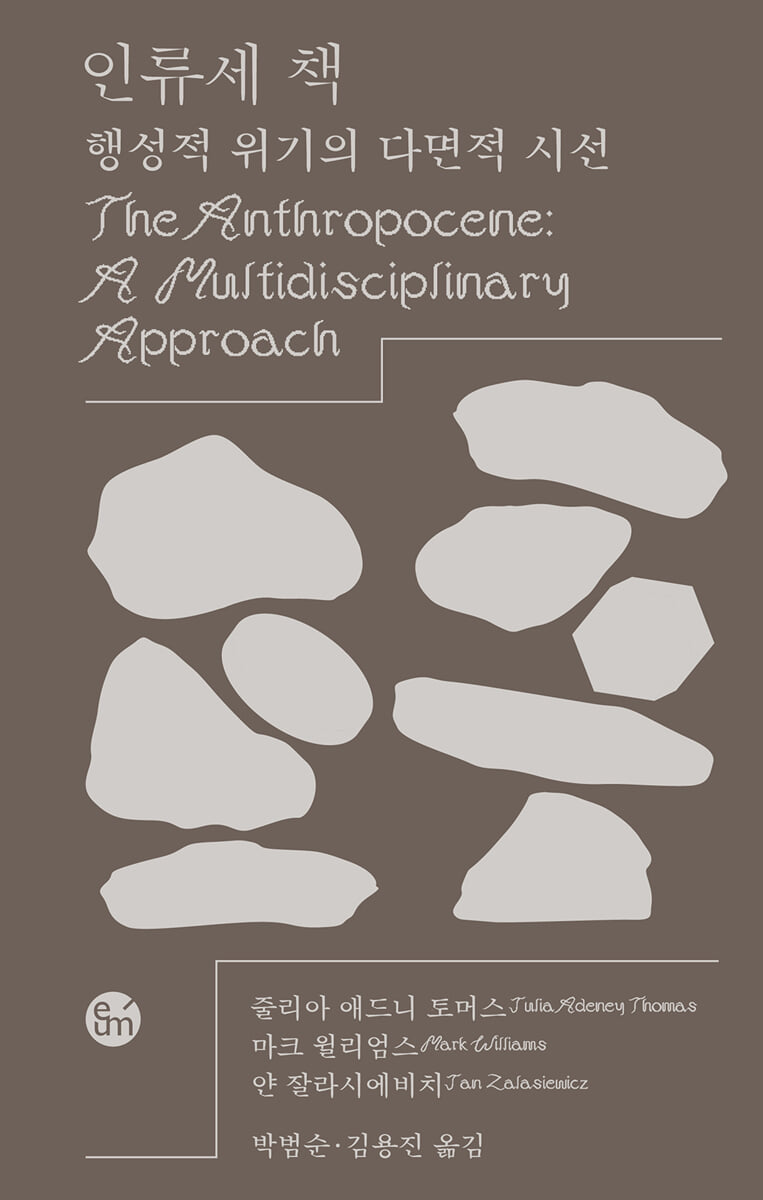
It is like a reference book that organizes a vast amount of discussion about the Anthropocene, so much so that it could be called the book of Anthropocene books.
However, the intention of writing this book is not to compile the discussion on the Anthropocene, but to provide a 'multifaceted perspective.'
The core argument is that because the Anthropocene is so vast and complexly intertwined, solving its problems requires the perspectives of various disciplines, and that these perspectives should be loosely connected, remaining distinct and temporarily linked rather than integrated.
This book, which may seem somewhat disorganized, introduces and discusses perspectives from various disciplines, including geology, earth system science, biology, economics, political science, anthropology, and history, and is itself an effort to approach the truth of the Anthropocene.
The compilation of the Anthropocene debate was a natural consequence of such efforts.
The translation adds to its uniqueness by including a special Korean-language article reflecting the latest developments following the failure to officially recognize the Anthropocene in March 2024.
However, the intention of writing this book is not to compile the discussion on the Anthropocene, but to provide a 'multifaceted perspective.'
The core argument is that because the Anthropocene is so vast and complexly intertwined, solving its problems requires the perspectives of various disciplines, and that these perspectives should be loosely connected, remaining distinct and temporarily linked rather than integrated.
This book, which may seem somewhat disorganized, introduces and discusses perspectives from various disciplines, including geology, earth system science, biology, economics, political science, anthropology, and history, and is itself an effort to approach the truth of the Anthropocene.
The compilation of the Anthropocene debate was a natural consequence of such efforts.
The translation adds to its uniqueness by including a special Korean-language article reflecting the latest developments following the failure to officially recognize the Anthropocene in March 2024.
- You can preview some of the book's contents.
Preview
index
Translator's Note
Special contribution to the Korean edition
Preface to the Korean edition
introduction
1. Multidisciplinary Anthropocene
2. Geological context of the Anthropocene
3. The Anthropocene and the Great Acceleration as a Unit of Geologic Time
4. The Anthropocene and Climate Change
5. The Anthropocene and the Biosphere Transition
6. Anthropos of the Anthropocene
7. The Economics and Politics of Planetary Limits
8. The existential challenges of the Anthropocene
Acknowledgements
References
Search
Special contribution to the Korean edition
Preface to the Korean edition
introduction
1. Multidisciplinary Anthropocene
2. Geological context of the Anthropocene
3. The Anthropocene and the Great Acceleration as a Unit of Geologic Time
4. The Anthropocene and Climate Change
5. The Anthropocene and the Biosphere Transition
6. Anthropos of the Anthropocene
7. The Economics and Politics of Planetary Limits
8. The existential challenges of the Anthropocene
Acknowledgements
References
Search
Detailed image

Into the book
The Anthropocene's greatest message is that endless economic growth, limitless resources, and easy technological fixes to global problems are almost fantasies or myths.
This is not to say that technological development efforts are unnecessary, but rather that they must be accompanied by a change in perspective on human life and the natural environment, and the development of rational policies.
It is precisely for this reason that Anthropocene research has revealed uncomfortable truths that we would rather ignore, and will continue to face numerous challenges.
This book will serve as a good guide to understanding such challenges.
---From the Translator's Note
While our collective efforts are unlikely to achieve a "grand integration" of all disciplines and worldviews, we can hope to build a global network of data and stories, much as Humboldt once did.
Facing the Anthropocene is a scientific and humanistic task.
---From "1. The Multidisciplinary Anthropocene"
How could the Anthropocene, a time unit spanning only the average human lifespan, be proposed as an official unit of geological time? This question, which reveals much about humanity and the state of the Earth, is the core of this book.
To fully understand the importance of this question, we need to look at the history of humanity and the Earth and see how the two are intertwined.
---From "2. Geological Context of the Anthropocene"
Should the Anthropocene be officially designated as a geological epoch? Some geologists argue that global changes caused by human influence have not yet reached their peak, and that it would be wiser to reserve judgment on the Anthropocene until a clearer picture of its future unfolds (e.g., Wolff 2014).
Could it be that the Anthropocene strata are too thin and meaningless to be justified as a new, official unit of geological time? Could the term Anthropocene be more appropriate for human history than geological history? Furthermore, could the concept of the Anthropocene be rooted in the future rather than the past? Could it be that the Anthropocene reflects a desire to make a political statement rather than scientific inquiry? (See, e.g., Autin and Holbrook 2012; Gibbard and Walker 2014; Finney and Edwards 2016.) All of these alternatives and critiques deserve consideration.
---From "3. The Anthropocene and the Great Acceleration as a Unit of Geologic Time"
Economic and political strategies for the Anthropocene will inevitably be diverse.
The impact will vary from region to region, and the scale will range from neighborhood-level practices to international efforts.
There is no single "solution" that will enable human communities to thrive and be resilient enough to cope with rapidly changing climates and biomes, accelerating or slowing population growth rates, the threat of new diseases, the flood of hazardous substances, refugee movements, and pressures on social cohesion.
---From "7. Economics and Politics of Planetary Limits"
'Modernity' is a word that encapsulates the eradication of illiteracy and the spread of education, the social mobility and increased opportunities for women, the wondrous discoveries of science, the widening access to the arts, the elevation of democratic ideals and self-determination, and the hope that all can enjoy these things.
If 'this civilization' meant only fear, we would wish for it to disappear.
As Scranton puts it, it's hard to accept that modernity was nothing more than a "delusion" because it was so seductive, and still is.
To realize the Anthropocene is to kill a dream.
To understand the new world is to accept the end of the old world.
The challenge of the Anthropocene is to identify elements of old dreams that can survive in the new world.
---From "8. The Existential Challenges of the Anthropocene"
According to the 2003 UN Human Development Index, which combines life expectancy, education level, and GDP per capita, Cuba has actually succeeded in creating a well-off society without consuming more than its fair share of the planet (Wilkinson and Pickett 2009: 217).
In another analysis combining life expectancy, life satisfaction, and ecological footprint, Costa Rica also ranked first (Agyeman 2013: 14).
What these studies suggest is that ecological and social sustainability can be achieved by abandoning the goal of capitalist growth per se and embracing the goal of expanding social welfare and equity.
This is not to say that technological development efforts are unnecessary, but rather that they must be accompanied by a change in perspective on human life and the natural environment, and the development of rational policies.
It is precisely for this reason that Anthropocene research has revealed uncomfortable truths that we would rather ignore, and will continue to face numerous challenges.
This book will serve as a good guide to understanding such challenges.
---From the Translator's Note
While our collective efforts are unlikely to achieve a "grand integration" of all disciplines and worldviews, we can hope to build a global network of data and stories, much as Humboldt once did.
Facing the Anthropocene is a scientific and humanistic task.
---From "1. The Multidisciplinary Anthropocene"
How could the Anthropocene, a time unit spanning only the average human lifespan, be proposed as an official unit of geological time? This question, which reveals much about humanity and the state of the Earth, is the core of this book.
To fully understand the importance of this question, we need to look at the history of humanity and the Earth and see how the two are intertwined.
---From "2. Geological Context of the Anthropocene"
Should the Anthropocene be officially designated as a geological epoch? Some geologists argue that global changes caused by human influence have not yet reached their peak, and that it would be wiser to reserve judgment on the Anthropocene until a clearer picture of its future unfolds (e.g., Wolff 2014).
Could it be that the Anthropocene strata are too thin and meaningless to be justified as a new, official unit of geological time? Could the term Anthropocene be more appropriate for human history than geological history? Furthermore, could the concept of the Anthropocene be rooted in the future rather than the past? Could it be that the Anthropocene reflects a desire to make a political statement rather than scientific inquiry? (See, e.g., Autin and Holbrook 2012; Gibbard and Walker 2014; Finney and Edwards 2016.) All of these alternatives and critiques deserve consideration.
---From "3. The Anthropocene and the Great Acceleration as a Unit of Geologic Time"
Economic and political strategies for the Anthropocene will inevitably be diverse.
The impact will vary from region to region, and the scale will range from neighborhood-level practices to international efforts.
There is no single "solution" that will enable human communities to thrive and be resilient enough to cope with rapidly changing climates and biomes, accelerating or slowing population growth rates, the threat of new diseases, the flood of hazardous substances, refugee movements, and pressures on social cohesion.
---From "7. Economics and Politics of Planetary Limits"
'Modernity' is a word that encapsulates the eradication of illiteracy and the spread of education, the social mobility and increased opportunities for women, the wondrous discoveries of science, the widening access to the arts, the elevation of democratic ideals and self-determination, and the hope that all can enjoy these things.
If 'this civilization' meant only fear, we would wish for it to disappear.
As Scranton puts it, it's hard to accept that modernity was nothing more than a "delusion" because it was so seductive, and still is.
To realize the Anthropocene is to kill a dream.
To understand the new world is to accept the end of the old world.
The challenge of the Anthropocene is to identify elements of old dreams that can survive in the new world.
---From "8. The Existential Challenges of the Anthropocene"
According to the 2003 UN Human Development Index, which combines life expectancy, education level, and GDP per capita, Cuba has actually succeeded in creating a well-off society without consuming more than its fair share of the planet (Wilkinson and Pickett 2009: 217).
In another analysis combining life expectancy, life satisfaction, and ecological footprint, Costa Rica also ranked first (Agyeman 2013: 14).
What these studies suggest is that ecological and social sustainability can be achieved by abandoning the goal of capitalist growth per se and embracing the goal of expanding social welfare and equity.
---From "8. The Existential Challenges of the Anthropocene"
Publisher's Review
“The Anthropocene can be a springboard for us to dream of and create a ‘better system’ and a ‘better life.’
“The breadth of the topics covered and the remarkable insights it offers will leave you feeling both awe-struck by the Anthropocene and hopeful and determined to work toward a better world.”
-Cho Cheon-ho (atmospheric scientist, former director of the National Institute of Meteorological Sciences)
The International Union of Geosciences' General Assembly will be held in Busan in August 2024, approximately three months from now.
The world's attention was focused on this conference, as it was where the final decision would be made on whether the Anthropocene would be recognized as an official time unit on the geologic time scale.
However, as I said in the past tense, in March 2024, about three months ago, the official recognition of the Anthropocene was canceled due to failure to pass the Fourth Stratigraphic Subcommittee, the previous stage of the General Assembly.
Many of us who have worked to formalize the Anthropocene are currently in a time between what was hope and what has become despair.
But as the International Union of Geosciences said in announcing its decision, the Anthropocene concept will spark further research, generate new evidence, and enable a range of reflections on human activity.
The authors of "The Anthropocene Book: A Multifaceted Look at the Planetary Crisis" also wrote the same opinion, with the rejection in mind.
While it is important that the Anthropocene be recognized within the geological community, it is not the only important thing.
The Anthropocene will remain important until we create a world where humanity can coexist with non-humans.
The Book of Anthropocene Books, "The Anthropocene Book"
This book compiles a vast discussion of the past, present, and future of the Anthropocene, making it an excellent reference as we seek to create that world.
Most of the sentences in the Anthropocene book have a citation indicating where they were quoted.
If we were to illustrate this book, which stretches out in various directions, it would become a mandala of the Anthropocene.
There are times when it can be so much that it can easily become a distraction from reading, so you might wonder if it's necessary to be this detailed, but this format was created naturally while embodying the core of the book.
The intention behind writing the book, "The Anthropocene Book," is not to compile the entire discussion of the Anthropocene, but rather to offer a "multifaceted perspective," as its subtitle suggests.
The core argument is that because the Anthropocene is so vast and complexly intertwined, solving its problems requires the perspectives of various disciplines, and furthermore, these perspectives should remain distinct rather than integrated.
So, the authors argue that, at least in the Anthropocene, a melting pot-style 'synthesis' that melts and merges all disciplines may not be the right approach.
We tend to tend to favor the 'one' most important issue.
For example, if we look at it only through a certain lens, we end up arguing that capitalism is the root cause of the Anthropocene.
If we follow that argument, the Anthropocene will be solved by simply solving capitalism.
but,
“There is no single ‘solution’ that will enable human communities to thrive and be resilient enough to cope with rapidly changing climates and biomes, accelerating or slowing population growth rates, the threat of new diseases, the flood of hazardous substances, refugee movements, and pressures on social cohesion.”
A cleanly cut cross-section is nice to look at, but it's only nice to look at.
If you cut off what should remain, you get further from the truth.
This book, which may seem somewhat disorganized, introduces and discusses perspectives from various disciplines, including geology, earth system science, biology, economics, political science, anthropology, and history, and is itself an effort to approach the truth of the Anthropocene.
However, this does not mean that it is okay for various perspectives to remain scattered.
'It will be diverse.
But it won't be integrated.
And yet, it will be connected.' Even though it may seem contradictory, 『The Anthropocene Book』 encourages us to walk that subtle path.
“The goal of a multidisciplinary approach is to find ways to connect diverse perspectives, even if only in a makeshift way.” This book, of course, writes to put its own argument into practice.
Naturally, the content and format were aligned, and the discussion was compiled into a book that resembled a collection of books on the Anthropocene.
That's how the title 'The Anthropocene Book' came about.
Special contribution to the Korean edition
The Post-Anthropocene World: A Broken Attitude
As the final work on the publication of the translated version was in progress, the authors, led by Jan Zalasiewicz, urgently sent us a special contribution for the Korean edition.
In a special contribution titled “10 Misconceptions About the Anthropocene,” the authors accompany a hand-drawn diagram to explain why we still need the Anthropocene.
For the convenience of readers, I cannot include the original picture, but if you look at the article written in April 2024, you will feel warmth in many ways.
A veto is a veto, and the Anthropocene is the Anthropocene.
What matters is the unbreakable Anthropocene.
Cover image that soothes the regret of the original book
The authors wished to include perspectives from all disciplines in keeping with the book's purpose, but they regret that due to limitations in their capabilities, they were unable to sufficiently cover "visual arts," such as literature and fine arts.
So, on the back cover of the translated version, we included an image and text by author Lee So-yo, who participated in the research project “Anthropogenic Wastes” (2023).
If you unfold the back flaps and cover and look at them together, you can savor the author's meticulously organized text and images even more richly.
I hope that this translation, even if only a little, can alleviate some of the shortcomings of the original book.
“The breadth of the topics covered and the remarkable insights it offers will leave you feeling both awe-struck by the Anthropocene and hopeful and determined to work toward a better world.”
-Cho Cheon-ho (atmospheric scientist, former director of the National Institute of Meteorological Sciences)
The International Union of Geosciences' General Assembly will be held in Busan in August 2024, approximately three months from now.
The world's attention was focused on this conference, as it was where the final decision would be made on whether the Anthropocene would be recognized as an official time unit on the geologic time scale.
However, as I said in the past tense, in March 2024, about three months ago, the official recognition of the Anthropocene was canceled due to failure to pass the Fourth Stratigraphic Subcommittee, the previous stage of the General Assembly.
Many of us who have worked to formalize the Anthropocene are currently in a time between what was hope and what has become despair.
But as the International Union of Geosciences said in announcing its decision, the Anthropocene concept will spark further research, generate new evidence, and enable a range of reflections on human activity.
The authors of "The Anthropocene Book: A Multifaceted Look at the Planetary Crisis" also wrote the same opinion, with the rejection in mind.
While it is important that the Anthropocene be recognized within the geological community, it is not the only important thing.
The Anthropocene will remain important until we create a world where humanity can coexist with non-humans.
The Book of Anthropocene Books, "The Anthropocene Book"
This book compiles a vast discussion of the past, present, and future of the Anthropocene, making it an excellent reference as we seek to create that world.
Most of the sentences in the Anthropocene book have a citation indicating where they were quoted.
If we were to illustrate this book, which stretches out in various directions, it would become a mandala of the Anthropocene.
There are times when it can be so much that it can easily become a distraction from reading, so you might wonder if it's necessary to be this detailed, but this format was created naturally while embodying the core of the book.
The intention behind writing the book, "The Anthropocene Book," is not to compile the entire discussion of the Anthropocene, but rather to offer a "multifaceted perspective," as its subtitle suggests.
The core argument is that because the Anthropocene is so vast and complexly intertwined, solving its problems requires the perspectives of various disciplines, and furthermore, these perspectives should remain distinct rather than integrated.
So, the authors argue that, at least in the Anthropocene, a melting pot-style 'synthesis' that melts and merges all disciplines may not be the right approach.
We tend to tend to favor the 'one' most important issue.
For example, if we look at it only through a certain lens, we end up arguing that capitalism is the root cause of the Anthropocene.
If we follow that argument, the Anthropocene will be solved by simply solving capitalism.
but,
“There is no single ‘solution’ that will enable human communities to thrive and be resilient enough to cope with rapidly changing climates and biomes, accelerating or slowing population growth rates, the threat of new diseases, the flood of hazardous substances, refugee movements, and pressures on social cohesion.”
A cleanly cut cross-section is nice to look at, but it's only nice to look at.
If you cut off what should remain, you get further from the truth.
This book, which may seem somewhat disorganized, introduces and discusses perspectives from various disciplines, including geology, earth system science, biology, economics, political science, anthropology, and history, and is itself an effort to approach the truth of the Anthropocene.
However, this does not mean that it is okay for various perspectives to remain scattered.
'It will be diverse.
But it won't be integrated.
And yet, it will be connected.' Even though it may seem contradictory, 『The Anthropocene Book』 encourages us to walk that subtle path.
“The goal of a multidisciplinary approach is to find ways to connect diverse perspectives, even if only in a makeshift way.” This book, of course, writes to put its own argument into practice.
Naturally, the content and format were aligned, and the discussion was compiled into a book that resembled a collection of books on the Anthropocene.
That's how the title 'The Anthropocene Book' came about.
Special contribution to the Korean edition
The Post-Anthropocene World: A Broken Attitude
As the final work on the publication of the translated version was in progress, the authors, led by Jan Zalasiewicz, urgently sent us a special contribution for the Korean edition.
In a special contribution titled “10 Misconceptions About the Anthropocene,” the authors accompany a hand-drawn diagram to explain why we still need the Anthropocene.
For the convenience of readers, I cannot include the original picture, but if you look at the article written in April 2024, you will feel warmth in many ways.
A veto is a veto, and the Anthropocene is the Anthropocene.
What matters is the unbreakable Anthropocene.
Cover image that soothes the regret of the original book
The authors wished to include perspectives from all disciplines in keeping with the book's purpose, but they regret that due to limitations in their capabilities, they were unable to sufficiently cover "visual arts," such as literature and fine arts.
So, on the back cover of the translated version, we included an image and text by author Lee So-yo, who participated in the research project “Anthropogenic Wastes” (2023).
If you unfold the back flaps and cover and look at them together, you can savor the author's meticulously organized text and images even more richly.
I hope that this translation, even if only a little, can alleviate some of the shortcomings of the original book.
GOODS SPECIFICS
- Date of issue: May 31, 2024
- Page count, weight, size: 352 pages | 140*220*30mm
- ISBN13: 9791190944908
- ISBN10: 1190944901
You may also like
카테고리
korean


korean

![GQ KOREA Mark (Monthly): December [2025]](http://librairie.coreenne.fr/cdn/shop/files/8ef265dbbfbf186523ed75ba7319009d.jpg?v=1765340328&width=3840)


