

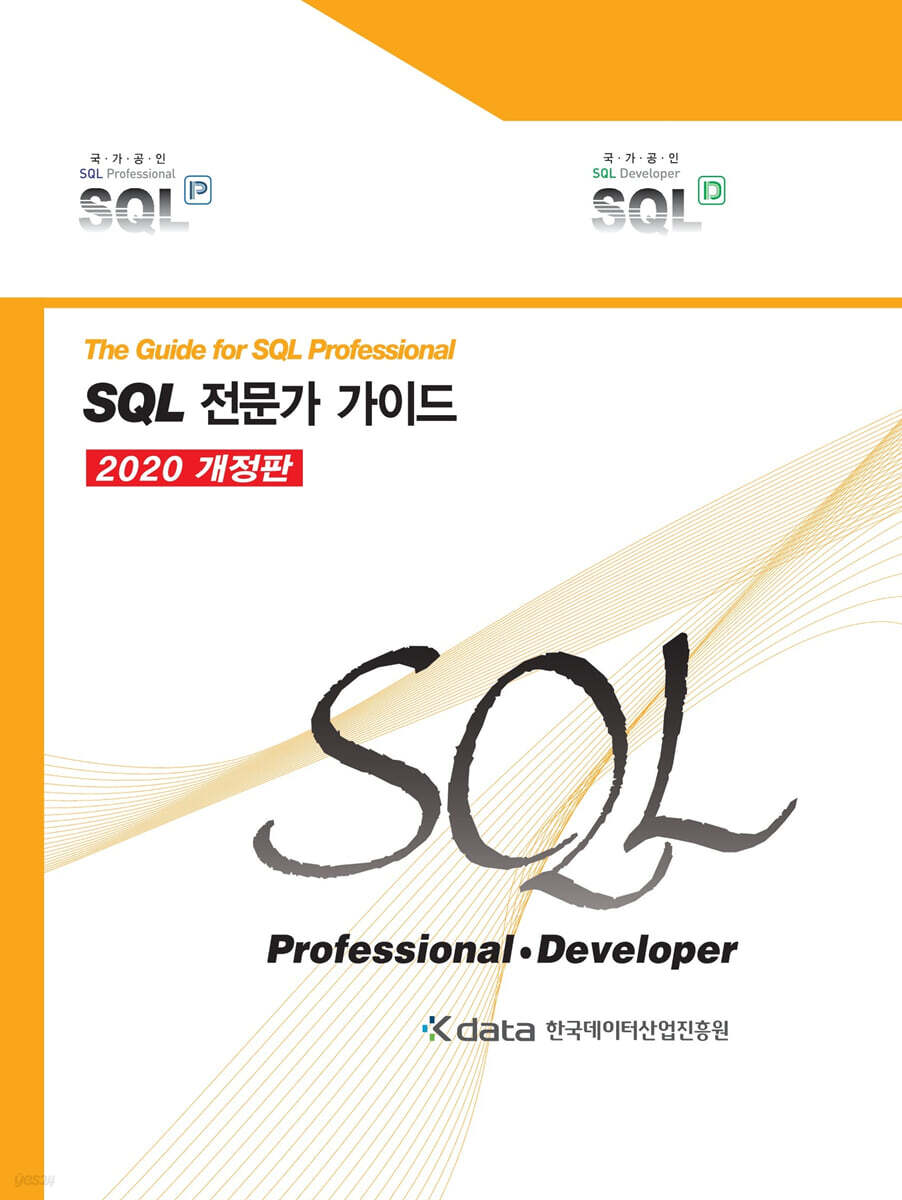
SQL Expert Guide
 |
Description
Book Introduction
The "SQL Expert Guide" is a study guide for the SQL qualification exam. It is composed of practical guides such as understanding data modeling, basic SQL and utilization, advanced SQL utilization and tuning, etc. for writing SQL to achieve optimal performance based on knowledge of database and data modeling, optimizing the performance of database programs or application software, and designing and implementing database objects.
index
Guide to Nationally Certified SQL Expert/Developer Qualification Examinations
What is a SQL expert/developer?
The Need for SQL Expert/Developer Qualification Exams
Duties of SQL experts and developers
Qualification Test Subject Guide
Qualification Examination Application Guide
Subject I.
Understanding Data Modeling
Chapter 1: Understanding Data Modeling
Section 1 Understanding the Data Model
Section 2 Entity
Section 3 Attributes
Section 4 Relationships
Section 5 Identifiers
Chapter Summary
Practice problems
Chapter 2 Data Model and SQL
Section 1 Normalization
Section 2 Understanding Relationships and Joins
Section 3: Understanding Transactions Represented by the Model
Section 4 Understanding the Null Attribute
Section 5. Essential Identifier vs.
artificial identifier
Chapter Summary
Practice problems
Subject II. SQL Basics and Applications
Chapter 1 SQL Basics
Section 1 Overview of Relational Databases
Section 2 SELECT statement
Section 3 Functions
Section 4 WHERE clause
Section 5 GROUP BY, HAVING Clause
Section 6 ORDER BY clause
Section 7 Join
Section 8 Standard Join
Chapter Summary
Practice problems
Chapter 2 Using SQL
Section 1 Subqueries
Section 2 Set Operators
Section 3 Group Functions
Section 4 Window Functions
Section 5 Top N Queries
Section 6 Hierarchical Queries and Self-Joins
Section 7 PIVOT and UNPIVOT Clauses
Section 8 Regular Expressions
Chapter Summary
Practice problems
Chapter 3 Management Syntax
Section 1 DML
Section 2 TCL
Section 3 DDL
Section 4 DCL
Chapter Summary
Practice problems
Subject III. Advanced SQL Utilization and Tuning
Chapter 1 SQL Execution Structure
Section 1 Database Architecture
Section 2 SQL Processing Process
Section 3 Database I/O Mechanism
Chapter Summary
Practice problems
Chapter 2 SQL Analysis Tools
Section 1 Expected Implementation Plan
Section 2 SQL Trace
Section 3 Response Time Analysis
Chapter Summary
Practice problems
Chapter 3 Index Tuning
Section 1: Basic Principles of Indexing
Section 2 Minimizing Table Access
Section 3 Improving Index Scan Efficiency
Section 4 Index Design
Chapter Summary
Practice problems
Chapter 4 Join Tuning
Section 1 NL Join
Section 2 Sort Merge Join
Section 3 Hash Join
Section 4 Scalar Subqueries
Section 5 Advanced Join Techniques
Chapter Summary
Practice problems
Chapter 5: SQL Optimizer
Section 1: SQL Optimization Principles
Section 2 SQL Sharing and Reuse
Section 3 Query Transformation
Chapter Summary
Practice problems
Chapter 6 Advanced SQL Tuning
Section 1 Sort Tuning
Section 2 DML Tuning
Section 3 Minimizing Database Calls
Section 4 Partitioning
Section 5 Tuning large-scale batch programs
Section 6: Advanced SQL Utilization
Chapter Summary
Practice problems
Chapter 7 Locks and Transaction Concurrency Control
Section 1 Lock
Section 2 Transactions
Section 3 Concurrency Control
Chapter Summary
Practice problems
Appendix A.
Data types, function comparison
Appendix B.
Practice Problem Answers and Explanations
Appendix C.
Glossary of Key Terms
Appendix D.
Search
References
GOODS SPECIFICS
- Publication date: March 15, 2021
- Format: Hardcover book binding method guide
- Page count, weight, size: 839 pages | 1,750g | 195*247*47mm
- ISBN13: 9788988474860
- ISBN10: 8988474864
You may also like
카테고리
korean


korean


