

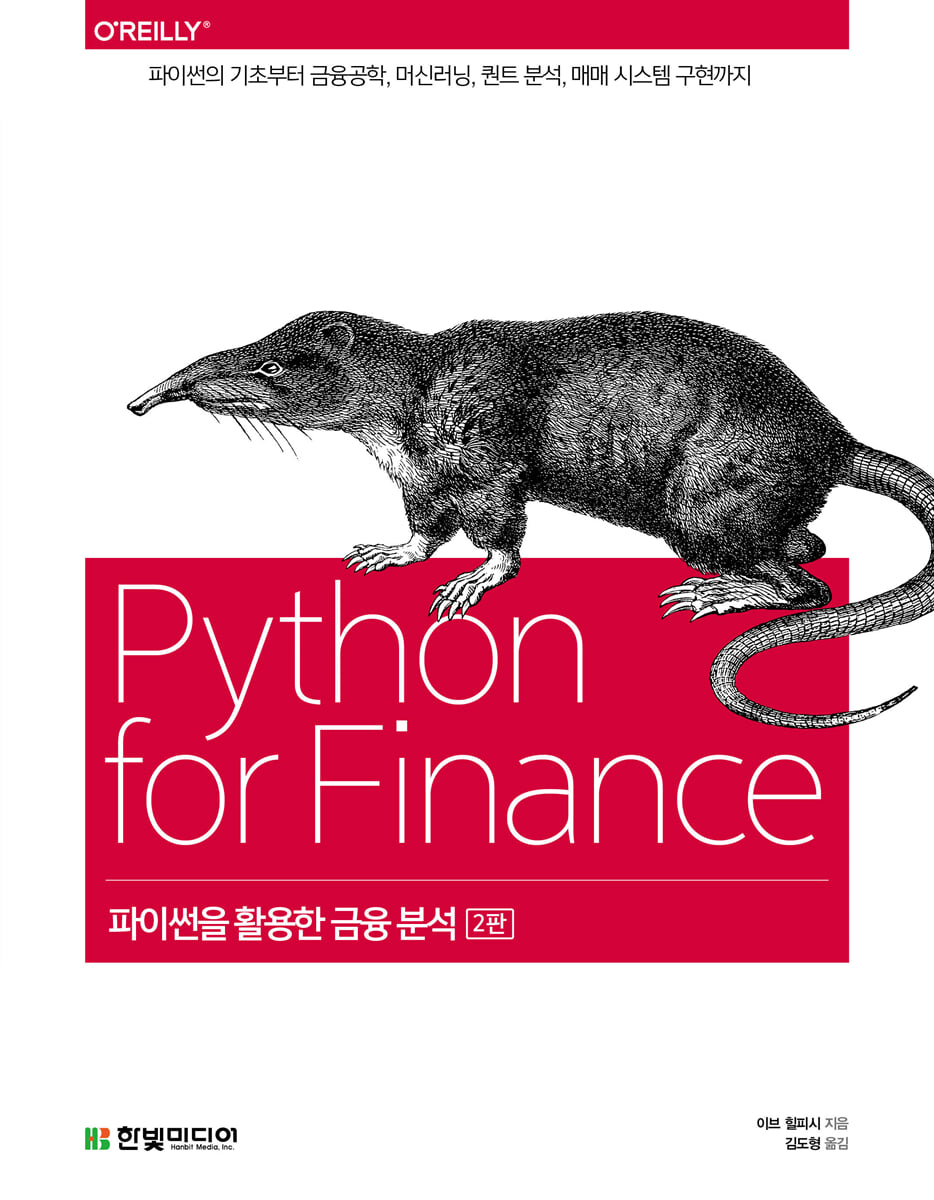
Financial Analysis Using Python
 |
Description
Book Introduction
Mastering Data-Driven Financial Analysis with Python
Currently, Python is used as a representative programming language in the field of financial analysis driven by data and artificial intelligence.
Some large investment banks and hedge funds are using Python to build core trading and risk management systems.
This book explains how to use various Python packages and tools for financial data science, algorithmic trading, and computational finance.
I want to emphasize that this book is not an introduction to Python programming or a general introduction to finance.
This book sits somewhere between these two fields.
This book is written with the assumption that readers have some background in programming (though not necessarily Python) and some financial knowledge, and will learn how to apply Python and its ecosystem to the financial sector.
Because this book has been updated for Python 3, the example code included can be run using Jupyter Notebook, an interactive development environment.
The example code and Jupyter notebooks in this book can be run directly on the author's Quant Platform.
The website address is http://py4fi.pqp.io and user registration is free.
Currently, Python is used as a representative programming language in the field of financial analysis driven by data and artificial intelligence.
Some large investment banks and hedge funds are using Python to build core trading and risk management systems.
This book explains how to use various Python packages and tools for financial data science, algorithmic trading, and computational finance.
I want to emphasize that this book is not an introduction to Python programming or a general introduction to finance.
This book sits somewhere between these two fields.
This book is written with the assumption that readers have some background in programming (though not necessarily Python) and some financial knowledge, and will learn how to apply Python and its ecosystem to the financial sector.
Because this book has been updated for Python 3, the example code included can be run using Jupyter Notebook, an interactive development environment.
The example code and Jupyter notebooks in this book can be run directly on the author's Quant Platform.
The website address is http://py4fi.pqp.io and user registration is free.
- You can preview some of the book's contents.
Preview
index
PART I: Python and Finance
CHAPTER 1: Why Use Python for Financial Analysis?
1.1 Introduction to Python
1.2 Technologies used in finance
1.3 Python for Financial Engineering
1.4 Data-Driven Finance and AI-First Finance
1.5 In conclusion
1.6 References
CHAPTER 2 Python Infrastructure
2.1 Conda as a Package Manager
2.2 Conda as a Virtual Environment Manager
2.3 How to Use Docker Containers
2.4 How to Use Cloud Instances
2.5 In conclusion
2.6 References
PART II Mastering the Basics of Python
CHAPTER 3 DATA TYPES AND DATA STRUCTURES
3.1 Basic data types
3.2 Basic data structures
3.3 In conclusion
3.4 References
CHAPTER 4 Numerical Computation with NumPy
4.1 Data Array
4.2 Regular NumPy arrays
4.3 Structured NumPy Arrays
4.4 Code Vectorization
4.5 In conclusion
4.6 References
CHAPTER 5 Data Analysis with Pandas
5.1 DataFrame class
5.2 Basic Analysis
5.3 Basic Visualization
5.4 Series Class
5.5 GroupBy Operation
5.6 Advanced Selection Methods
5.7 Merge, Join, and Merging
5.8 Performance Aspects
5.9 In conclusion
5.10 References
CHAPTER 6 OBJECT-ORIENTED PROGRAMMING
6.1 Introduction to Python Objects
6.2 Python Class Basics
6.3 Python Data Model
6.4 Vector Class
6.5 In conclusion
6.6 References
PART III Financial Data Science
CHAPTER 7 DATA VISUALIZATION
7.1 Static 2D plots
7.2 Static 3D plots
7.3 Interactive 2D Plots
7.4 In conclusion
7.5 References
CHAPTER 8 Financial Time Series
8.1 Financial Data
8.2 Movement Statistics
8.3 Correlation Analysis
8.4 High-frequency data
8.5 In conclusion
8.6 References
CHAPTER 9 I/O Operations
9.1 Basic Python Input/Output
9.2 Input/Output Using Pandas
9.3 Input/Output Using PyTables
9.4 Input/Output Using TsTables
9.5 In conclusion
9.6 References
CHAPTER 10 Improving Python Performance
10.1 Loops
10.2 Algorithm
10.3 Binomial tree
10.4 Monte Carlo Simulation
10.5 Recursive pandas algorithms
10.6 In conclusion
10.7 References
CHAPTER 11 Mathematical Tools
11.1 Approximation
11.2 Optimization
11.3 Integration
11.4 Symbolic Operations
11.5 In conclusion
11.6 References
CHAPTER 12 Stochastic Processes
12.1 Random number generation
12.2 Simulation
12.3 Valuation
12.4 Risk Measures
12.5 Python Script
12.6 In conclusion
12.7 References
CHAPTER 13 STATISTICAL ANALYSIS
13.1 Normality Test
13.2 Portfolio Optimization
13.3 Bayesian Statistics
13.4 Machine Learning
13.5 In conclusion
13.6 References
PART IV Algorithmic Trading
CHAPTER 14 FXCM Trading Platform
14.1 Getting Started
14.2 Receiving data
14.3 Handling APIs
14.4 In conclusion
14.5 References
CHAPTER 15 TRADING STRATEGIES
15.1 Simple Moving Average
15.2 Random walk hypothesis
15.3 Linear Regression Analysis
15.4 Clustering
15.5 Frequentist Methodology
15.6 Classification Algorithms
15.7 Deep Neural Networks
15.8 In conclusion
15.9 References
CHAPTER 16 Automating Trading
16.1 Fund Management
16.2 Machine Learning-Based Trading Strategies
16.3 Online Algorithms
16.4 Infrastructure and Deployment
16.5 Logging and Monitoring
16.6 In conclusion
16.7 Python Script
16.8 References
PART V DERIVATIVES ANALYSIS
CHAPTER 17 VALUATION FRAMEWORK
17.1 Fundamentals of Asset Pricing
17.2 Risk-Neutral Discounting
17.3 Market Environment
17.4 In conclusion
17.5 References
CHAPTER 18: FINANCIAL MODEL SIMULATION
18.1 Random number generation
18.2 General Simulation Classes
18.3 Geometric Brownian motion model
18.4 Jump Diffusion Model
18.5 square root diffusion model
18.6 In conclusion
18.7 References
CHAPTER 19 VALUATION OF DERIVATIVES
19.1 General Value Assessment Class
19.2 European Event Format
19.3 American Event Style
19.4 In conclusion
19.5 References
CHAPTER 20 PORTFOLIO VALUATION
20.1 Derivatives Positions
20.2 Derivatives Portfolio
20.3 In conclusion
20.4 References
CHAPTER 21 MARKET-BASED VALUATION
21.1 Option Data
21.2 Model Calibration
21.3 Portfolio Valuation
21.4 Python Code
21.5 In conclusion
21.6 References
APPENDIX A Date and Time
A.1 Python
A.2 NumPy
A.3 pandas
APPENDIX B Black-Scholes-Merton Option Class
B.1 Class Definition
B.2 Class Usage
CHAPTER 1: Why Use Python for Financial Analysis?
1.1 Introduction to Python
1.2 Technologies used in finance
1.3 Python for Financial Engineering
1.4 Data-Driven Finance and AI-First Finance
1.5 In conclusion
1.6 References
CHAPTER 2 Python Infrastructure
2.1 Conda as a Package Manager
2.2 Conda as a Virtual Environment Manager
2.3 How to Use Docker Containers
2.4 How to Use Cloud Instances
2.5 In conclusion
2.6 References
PART II Mastering the Basics of Python
CHAPTER 3 DATA TYPES AND DATA STRUCTURES
3.1 Basic data types
3.2 Basic data structures
3.3 In conclusion
3.4 References
CHAPTER 4 Numerical Computation with NumPy
4.1 Data Array
4.2 Regular NumPy arrays
4.3 Structured NumPy Arrays
4.4 Code Vectorization
4.5 In conclusion
4.6 References
CHAPTER 5 Data Analysis with Pandas
5.1 DataFrame class
5.2 Basic Analysis
5.3 Basic Visualization
5.4 Series Class
5.5 GroupBy Operation
5.6 Advanced Selection Methods
5.7 Merge, Join, and Merging
5.8 Performance Aspects
5.9 In conclusion
5.10 References
CHAPTER 6 OBJECT-ORIENTED PROGRAMMING
6.1 Introduction to Python Objects
6.2 Python Class Basics
6.3 Python Data Model
6.4 Vector Class
6.5 In conclusion
6.6 References
PART III Financial Data Science
CHAPTER 7 DATA VISUALIZATION
7.1 Static 2D plots
7.2 Static 3D plots
7.3 Interactive 2D Plots
7.4 In conclusion
7.5 References
CHAPTER 8 Financial Time Series
8.1 Financial Data
8.2 Movement Statistics
8.3 Correlation Analysis
8.4 High-frequency data
8.5 In conclusion
8.6 References
CHAPTER 9 I/O Operations
9.1 Basic Python Input/Output
9.2 Input/Output Using Pandas
9.3 Input/Output Using PyTables
9.4 Input/Output Using TsTables
9.5 In conclusion
9.6 References
CHAPTER 10 Improving Python Performance
10.1 Loops
10.2 Algorithm
10.3 Binomial tree
10.4 Monte Carlo Simulation
10.5 Recursive pandas algorithms
10.6 In conclusion
10.7 References
CHAPTER 11 Mathematical Tools
11.1 Approximation
11.2 Optimization
11.3 Integration
11.4 Symbolic Operations
11.5 In conclusion
11.6 References
CHAPTER 12 Stochastic Processes
12.1 Random number generation
12.2 Simulation
12.3 Valuation
12.4 Risk Measures
12.5 Python Script
12.6 In conclusion
12.7 References
CHAPTER 13 STATISTICAL ANALYSIS
13.1 Normality Test
13.2 Portfolio Optimization
13.3 Bayesian Statistics
13.4 Machine Learning
13.5 In conclusion
13.6 References
PART IV Algorithmic Trading
CHAPTER 14 FXCM Trading Platform
14.1 Getting Started
14.2 Receiving data
14.3 Handling APIs
14.4 In conclusion
14.5 References
CHAPTER 15 TRADING STRATEGIES
15.1 Simple Moving Average
15.2 Random walk hypothesis
15.3 Linear Regression Analysis
15.4 Clustering
15.5 Frequentist Methodology
15.6 Classification Algorithms
15.7 Deep Neural Networks
15.8 In conclusion
15.9 References
CHAPTER 16 Automating Trading
16.1 Fund Management
16.2 Machine Learning-Based Trading Strategies
16.3 Online Algorithms
16.4 Infrastructure and Deployment
16.5 Logging and Monitoring
16.6 In conclusion
16.7 Python Script
16.8 References
PART V DERIVATIVES ANALYSIS
CHAPTER 17 VALUATION FRAMEWORK
17.1 Fundamentals of Asset Pricing
17.2 Risk-Neutral Discounting
17.3 Market Environment
17.4 In conclusion
17.5 References
CHAPTER 18: FINANCIAL MODEL SIMULATION
18.1 Random number generation
18.2 General Simulation Classes
18.3 Geometric Brownian motion model
18.4 Jump Diffusion Model
18.5 square root diffusion model
18.6 In conclusion
18.7 References
CHAPTER 19 VALUATION OF DERIVATIVES
19.1 General Value Assessment Class
19.2 European Event Format
19.3 American Event Style
19.4 In conclusion
19.5 References
CHAPTER 20 PORTFOLIO VALUATION
20.1 Derivatives Positions
20.2 Derivatives Portfolio
20.3 In conclusion
20.4 References
CHAPTER 21 MARKET-BASED VALUATION
21.1 Option Data
21.2 Model Calibration
21.3 Portfolio Valuation
21.4 Python Code
21.5 In conclusion
21.6 References
APPENDIX A Date and Time
A.1 Python
A.2 NumPy
A.3 pandas
APPENDIX B Black-Scholes-Merton Option Class
B.1 Class Definition
B.2 Class Usage
Detailed image

Publisher's Review
Financial professionals and related developers are starting with Python.
This will help you perform important financial analysis tasks.
The Best Practice Guidebook
This book is not a specialized textbook that explains financial engineering theory or algorithms.
This book explains how the Python programming language can be broadly utilized in the financial sector. Therefore, it's more like an introductory or cookbook, covering everything from the basics of Python to the core of financial analysis tasks and finally implementing a trading system.
I hope this book will be an incredibly enjoyable experience exploring Python's diverse capabilities, not only for those working in the financial field or studying financial engineering, but also for anyone interested in this field and pursuing personal study.
※ Key contents by part
This book presents the technical framework that Python and its ecosystem provide to businesses and individuals working in the financial industry, divided into five parts:
● Python and Finance: An Introduction to Python for Interactive Financial Analysis and Application Development
● Mastering Python Basics: Python data types and data structures, NumPy, pandas, and DataFrame classes, object-oriented programming
● Financial Data Science: Python skills for data visualization, financial time series data, data input/output operations, and machine learning.
● Algorithmic Trading: Backtesting and automated algorithmic trading strategy deployment using Python
Derivatives Analysis: Developing a powerful and flexible Python package for options and derivatives pricing and risk management.
This will help you perform important financial analysis tasks.
The Best Practice Guidebook
This book is not a specialized textbook that explains financial engineering theory or algorithms.
This book explains how the Python programming language can be broadly utilized in the financial sector. Therefore, it's more like an introductory or cookbook, covering everything from the basics of Python to the core of financial analysis tasks and finally implementing a trading system.
I hope this book will be an incredibly enjoyable experience exploring Python's diverse capabilities, not only for those working in the financial field or studying financial engineering, but also for anyone interested in this field and pursuing personal study.
※ Key contents by part
This book presents the technical framework that Python and its ecosystem provide to businesses and individuals working in the financial industry, divided into five parts:
● Python and Finance: An Introduction to Python for Interactive Financial Analysis and Application Development
● Mastering Python Basics: Python data types and data structures, NumPy, pandas, and DataFrame classes, object-oriented programming
● Financial Data Science: Python skills for data visualization, financial time series data, data input/output operations, and machine learning.
● Algorithmic Trading: Backtesting and automated algorithmic trading strategy deployment using Python
Derivatives Analysis: Developing a powerful and flexible Python package for options and derivatives pricing and risk management.
GOODS SPECIFICS
- Date of issue: March 31, 2022
- Page count, weight, size: 796 pages | 183*235*40mm
- ISBN13: 9791162245170
- ISBN10: 1162245174
You may also like
카테고리
korean


korean

![GQ KOREA Mark (Monthly): December [2025]](http://librairie.coreenne.fr/cdn/shop/files/8ef265dbbfbf186523ed75ba7319009d.jpg?v=1765340328&width=3840)


