

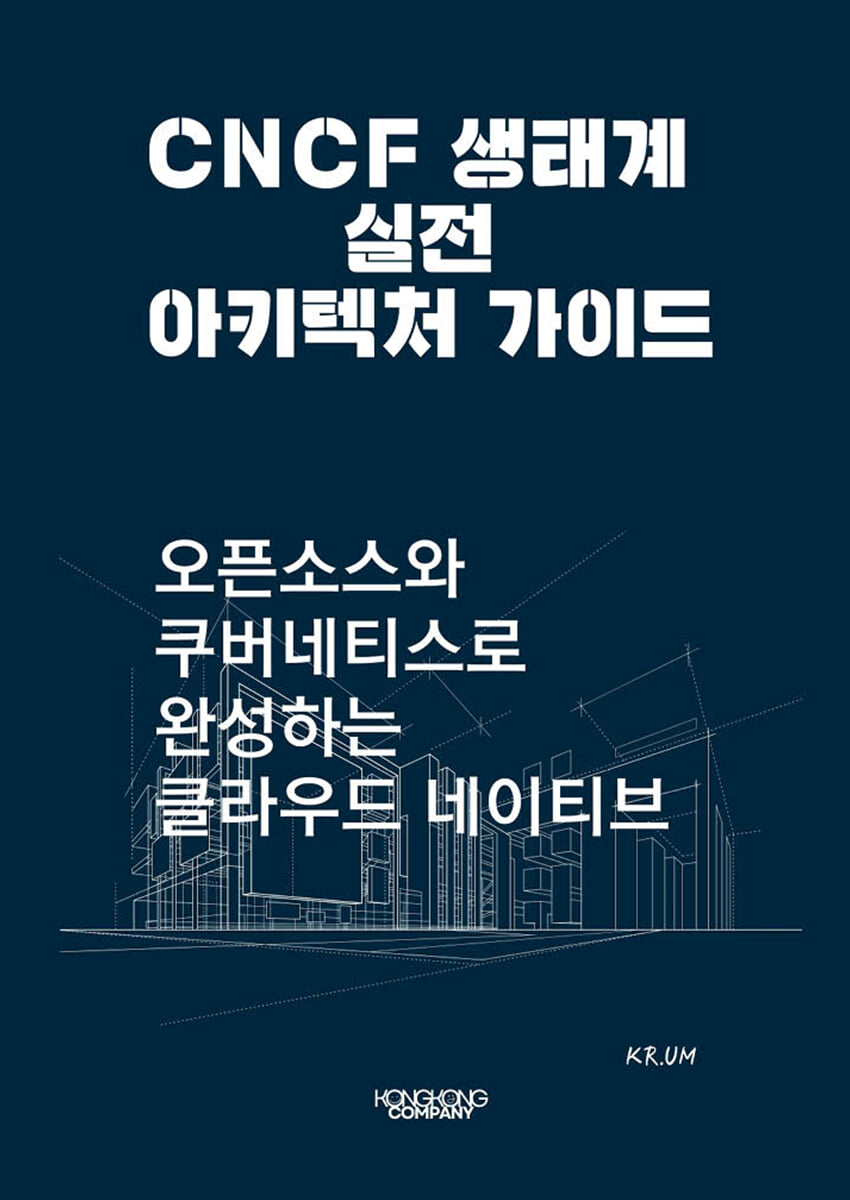
CNCF Ecosystem Practical Architecture Guide: Cloud Native Completion with Open Source and Kubernetes
 |
Description
Book Introduction
Your desk is littered with hundreds of Lego blocks, where are the instructions?
Kubernetes, Prometheus, Istio, ArgoCD, Sillium… The world of cloud native is like a giant box of Legos poured out without instructions.
Every block holds powerful and exciting possibilities, but we often get lost in the confusion of where to start, what to build, and how to build it.
"Which block should I choose first?"
"Can these blocks be connected to each other?"
“Will what I am building now be a solid castle, or a sandcastle that will soon collapse?”
For all those lost navigators in this technological deluge, a 'verified navigational map' has finally arrived.
This book is not a simple technical encyclopedia.
This is a well-written 'architectural guide' and an exciting 'exploration'.
Instead of listing fragmented, individual technical knowledge, the "CNCF Ecosystem Practical Architecture Guide" tells a single, overarching "story" that runs through it all.
We will embark on a journey together, leaving behind the old monolithic era and embarking on a new continent called cloud native, exploring its great cities (core projects) one by one, and ultimately becoming "practical architects" who build our own cities.
What you will gain from this book:
Seeing the Forest: Beyond the "What" of individual technologies, you gain deep insight and systems thinking into why those technologies are needed and how they connect with other technologies.
Practical Architecture Patterns: Based on three highly realistic scenarios—"Startup," "Enterprise," and "Data Platform"—learn proven CNCF project combinations and design principles, enabling you to confidently select and build the optimal technology stack for your situation.
Wisdom to Read the Future: Analyze the latest trends disrupting the cloud native landscape, such as AI/ML, WebAssembly, and platform engineering, and gain a "pioneer's perspective" that goes beyond simply following current technologies and prepares for the future.
An invitation to a growing community: Understand how all these great technologies thrive on the power of community, and take concrete steps toward becoming a "contributor" who creates history together, rather than just a passive consumer of this ecosystem.
This book is for you:
Developers and students taking their first steps into the vast world of cloud native.
DevOps/SRE engineers who want to see the bigger picture in their daily operations.
Architects and technical leaders who must determine the team's technical direction
Planners and managers who want to understand the flow of technology and connect it to business
The days of being overwhelmed by the complexity of technology are over.
It's time to string the scattered beads together and make them into treasures.
The final page of this book won't be the end of your cloud native learning journey, but the first page of "Great Architecture"—building your own robust and beautiful system.
Kubernetes, Prometheus, Istio, ArgoCD, Sillium… The world of cloud native is like a giant box of Legos poured out without instructions.
Every block holds powerful and exciting possibilities, but we often get lost in the confusion of where to start, what to build, and how to build it.
"Which block should I choose first?"
"Can these blocks be connected to each other?"
“Will what I am building now be a solid castle, or a sandcastle that will soon collapse?”
For all those lost navigators in this technological deluge, a 'verified navigational map' has finally arrived.
This book is not a simple technical encyclopedia.
This is a well-written 'architectural guide' and an exciting 'exploration'.
Instead of listing fragmented, individual technical knowledge, the "CNCF Ecosystem Practical Architecture Guide" tells a single, overarching "story" that runs through it all.
We will embark on a journey together, leaving behind the old monolithic era and embarking on a new continent called cloud native, exploring its great cities (core projects) one by one, and ultimately becoming "practical architects" who build our own cities.
What you will gain from this book:
Seeing the Forest: Beyond the "What" of individual technologies, you gain deep insight and systems thinking into why those technologies are needed and how they connect with other technologies.
Practical Architecture Patterns: Based on three highly realistic scenarios—"Startup," "Enterprise," and "Data Platform"—learn proven CNCF project combinations and design principles, enabling you to confidently select and build the optimal technology stack for your situation.
Wisdom to Read the Future: Analyze the latest trends disrupting the cloud native landscape, such as AI/ML, WebAssembly, and platform engineering, and gain a "pioneer's perspective" that goes beyond simply following current technologies and prepares for the future.
An invitation to a growing community: Understand how all these great technologies thrive on the power of community, and take concrete steps toward becoming a "contributor" who creates history together, rather than just a passive consumer of this ecosystem.
This book is for you:
Developers and students taking their first steps into the vast world of cloud native.
DevOps/SRE engineers who want to see the bigger picture in their daily operations.
Architects and technical leaders who must determine the team's technical direction
Planners and managers who want to understand the flow of technology and connect it to business
The days of being overwhelmed by the complexity of technology are over.
It's time to string the scattered beads together and make them into treasures.
The final page of this book won't be the end of your cloud native learning journey, but the first page of "Great Architecture"—building your own robust and beautiful system.
index
introduction
Cloud Native: Beyond Technology, Becoming the Heart of Business
Part 1: The Beginning of the Cloud Native Expedition: The CNCF Ecosystem
Chapter 1.
What is cloud native?
1-1.
Why Cloud Native Now: Beyond MSA, DevOps, and CI/CD
1-2.
Core Philosophy: Containers, Service Mesh, Immutable Infrastructure, Declarative APIs
1-3.
[Advanced] Value from a Business Perspective: Agility, Scalability, and Cost-Efficiency
Chapter 2. CNCF: The Compass for Cloud Native
2-1.
Establishment Background and Mission: Preventing Technology Fragmentation and Setting Standards
2-2.
Project Grades: Sandbox, Incubating, Graduated
2-3.
[Advanced] CNCF Trail Map: The Official Guide to Your Journey
2-4.
[Advanced] Contribution and Governance: How CNCF Works (contribute.cncf.io)
Chapter 3. Reading the CNCF Project Topography
3-1.
11 Areas: Understanding Project Classification by Function
3-2.
Project Matrix by Maturity and Functional Areas
3-3.
[Advanced] Technology Trend Preview: Why You Need to Know About Various Projects
Part 2: Exploring CNCF Projects by Domain
Chapter 4.
Container Runtime and Orchestration: The Heart of Your Infrastructure
4-1.
Kubernetes: The de facto standard for container orchestration.
4-2.
containerd & CRI-O: The Hidden Powerhouses of Kubernetes
Chapter 5.
Networking, Service Mesh, and Security: Trusted Connectivity
5-1.
Envoy: The Foundation of All Service Meshes, the King of L7 Proxies
5-2.
Cilium: eBPF, a Game Changer in Networking
5-3.
Istio vs.
Linkerd: A Blitzkrieg Comparison of Service Mesh Control Planes
5-4.
Open Policy Agent (OPA): A unified policy engine for all layers
Chapter 6.
Observability: Diagnosing the health of a system
6-1.
Prometheus: The Standard for Monitoring and Time Series Data
6-2.
Jaeger: A Must-Have for the Microservices Era, Distributed Tracing
6-3.
Fluentd: Leave the logs to Fluentd.
6-4.
[Advanced] Integrating the Three Pillars of Observability: How OpenTelemetry Connects It All
6-5.
[Advanced] Scaling for Large-Scale Environments: Thanos and Cortex
Chapter 7.
Application Definition and Deployment: Faster and More Secure
7-1.
Helm: The Essential Kubernetes Package Manager
7-2.
Argo: Declarative Continuous Delivery with GitOps
7-3.
Buildpacks: Turning sources into images without a Dockerfile
7-4.
Backstage: A unified developer portal for complex development environments.
Chapter 8.
Data, Storage, and Databases: The Future of Stateful Applications
8-1.
TiKV & Vitess: Cloud-Native Distributed Databases
8-2.
Rook: Kubernetes-Native Storage Orchestration
8-3.
Beyond Persistent Volumes (PV): Data Management Challenges and Solutions
Chapter 9.
Edge, Multi-Cluster, Serverless: Beyond the Boundaries
9-1.
KubeEdge & K3s: The Evolution of Kubernetes for Edge Computing
9-2.
Knative: Implementing Serverless on Kubernetes
9-3.
[Advanced] The Era of Multi-Cluster Management: Case Studies on Karmada and Clusternet
Chapter 10.
Automation and Operations Tools: The Complete DevOps Process
10-1.
Flux: Another powerful GitOps tool
10-2. KEDA: All About Event-Driven Autoscaling
10-3.
[Advanced] Cost Optimization and Governance: OpenCost, Kubecost
Chapter 11.
Exploring Sandbox Projects: A Glimpse into Future Technologies
11-1.
Why should you pay attention to the Sandbox project?
11-2.
[Advanced] Exploring Next-Generation Technology Leadership: Wasm (WasmEdge), Service Mesh (Meshery), AI/ML (KubeFlow)
11-3.
A message to readers: An eye for discovering the 'next wave'
Part 3: Practical Introduction and Architecture Design
Chapter 12.
Checklist for Selecting a Successful Project
12-1.
Technology maturity, community activity, documentation, and commercial support
12-2.
[Advanced] Is this technology right for your team? Consider technical debt and the learning curve.
Chapter 13.
Putting It All Together: Project Integration Architecture
13-1.
[Advanced] Scenario-Based Architecture Patterns
13-2.
Analysis of interactions, overlapping functions, and integration difficulty
Chapter 14.
Operations and Maintenance Strategy
14-1.
Day 2 Operations: Upgrades, Monitoring, and Disaster Recovery
14-2.
[Advanced] Special Tips for the Korean Market and Startups
Part 4: Future Prospects and Ecosystem Participation
Chapter 15. Evolution of the CNCF Ecosystem
15-1.
Analysis of emerging trends: AI/ML, WebAssembly, Platform Engineering, and Green Computing
15-2.
Expanding the influence of underlying technologies such as Rust and eBPF
15-3.
[Advanced] The Role and Voice of the End User Community
Chapter 16.
You too can become a contributor
16-1.
How Individuals and Organizations Participate in the Ecosystem: Contribute Code, Translate Documents, and Engage in Community Activities
16-2.
The Impact of Open Source Participation on Your Career
Conclusion: Cloud Native: The Journey Continues
supplement
A.
CNCF Project Status Table at a Glance
B.
Cloud Native Glossary
Cloud Native: Beyond Technology, Becoming the Heart of Business
Part 1: The Beginning of the Cloud Native Expedition: The CNCF Ecosystem
Chapter 1.
What is cloud native?
1-1.
Why Cloud Native Now: Beyond MSA, DevOps, and CI/CD
1-2.
Core Philosophy: Containers, Service Mesh, Immutable Infrastructure, Declarative APIs
1-3.
[Advanced] Value from a Business Perspective: Agility, Scalability, and Cost-Efficiency
Chapter 2. CNCF: The Compass for Cloud Native
2-1.
Establishment Background and Mission: Preventing Technology Fragmentation and Setting Standards
2-2.
Project Grades: Sandbox, Incubating, Graduated
2-3.
[Advanced] CNCF Trail Map: The Official Guide to Your Journey
2-4.
[Advanced] Contribution and Governance: How CNCF Works (contribute.cncf.io)
Chapter 3. Reading the CNCF Project Topography
3-1.
11 Areas: Understanding Project Classification by Function
3-2.
Project Matrix by Maturity and Functional Areas
3-3.
[Advanced] Technology Trend Preview: Why You Need to Know About Various Projects
Part 2: Exploring CNCF Projects by Domain
Chapter 4.
Container Runtime and Orchestration: The Heart of Your Infrastructure
4-1.
Kubernetes: The de facto standard for container orchestration.
4-2.
containerd & CRI-O: The Hidden Powerhouses of Kubernetes
Chapter 5.
Networking, Service Mesh, and Security: Trusted Connectivity
5-1.
Envoy: The Foundation of All Service Meshes, the King of L7 Proxies
5-2.
Cilium: eBPF, a Game Changer in Networking
5-3.
Istio vs.
Linkerd: A Blitzkrieg Comparison of Service Mesh Control Planes
5-4.
Open Policy Agent (OPA): A unified policy engine for all layers
Chapter 6.
Observability: Diagnosing the health of a system
6-1.
Prometheus: The Standard for Monitoring and Time Series Data
6-2.
Jaeger: A Must-Have for the Microservices Era, Distributed Tracing
6-3.
Fluentd: Leave the logs to Fluentd.
6-4.
[Advanced] Integrating the Three Pillars of Observability: How OpenTelemetry Connects It All
6-5.
[Advanced] Scaling for Large-Scale Environments: Thanos and Cortex
Chapter 7.
Application Definition and Deployment: Faster and More Secure
7-1.
Helm: The Essential Kubernetes Package Manager
7-2.
Argo: Declarative Continuous Delivery with GitOps
7-3.
Buildpacks: Turning sources into images without a Dockerfile
7-4.
Backstage: A unified developer portal for complex development environments.
Chapter 8.
Data, Storage, and Databases: The Future of Stateful Applications
8-1.
TiKV & Vitess: Cloud-Native Distributed Databases
8-2.
Rook: Kubernetes-Native Storage Orchestration
8-3.
Beyond Persistent Volumes (PV): Data Management Challenges and Solutions
Chapter 9.
Edge, Multi-Cluster, Serverless: Beyond the Boundaries
9-1.
KubeEdge & K3s: The Evolution of Kubernetes for Edge Computing
9-2.
Knative: Implementing Serverless on Kubernetes
9-3.
[Advanced] The Era of Multi-Cluster Management: Case Studies on Karmada and Clusternet
Chapter 10.
Automation and Operations Tools: The Complete DevOps Process
10-1.
Flux: Another powerful GitOps tool
10-2. KEDA: All About Event-Driven Autoscaling
10-3.
[Advanced] Cost Optimization and Governance: OpenCost, Kubecost
Chapter 11.
Exploring Sandbox Projects: A Glimpse into Future Technologies
11-1.
Why should you pay attention to the Sandbox project?
11-2.
[Advanced] Exploring Next-Generation Technology Leadership: Wasm (WasmEdge), Service Mesh (Meshery), AI/ML (KubeFlow)
11-3.
A message to readers: An eye for discovering the 'next wave'
Part 3: Practical Introduction and Architecture Design
Chapter 12.
Checklist for Selecting a Successful Project
12-1.
Technology maturity, community activity, documentation, and commercial support
12-2.
[Advanced] Is this technology right for your team? Consider technical debt and the learning curve.
Chapter 13.
Putting It All Together: Project Integration Architecture
13-1.
[Advanced] Scenario-Based Architecture Patterns
13-2.
Analysis of interactions, overlapping functions, and integration difficulty
Chapter 14.
Operations and Maintenance Strategy
14-1.
Day 2 Operations: Upgrades, Monitoring, and Disaster Recovery
14-2.
[Advanced] Special Tips for the Korean Market and Startups
Part 4: Future Prospects and Ecosystem Participation
Chapter 15. Evolution of the CNCF Ecosystem
15-1.
Analysis of emerging trends: AI/ML, WebAssembly, Platform Engineering, and Green Computing
15-2.
Expanding the influence of underlying technologies such as Rust and eBPF
15-3.
[Advanced] The Role and Voice of the End User Community
Chapter 16.
You too can become a contributor
16-1.
How Individuals and Organizations Participate in the Ecosystem: Contribute Code, Translate Documents, and Engage in Community Activities
16-2.
The Impact of Open Source Participation on Your Career
Conclusion: Cloud Native: The Journey Continues
supplement
A.
CNCF Project Status Table at a Glance
B.
Cloud Native Glossary
GOODS SPECIFICS
- Date of issue: October 27, 2025
- Page count, weight, size: 308 pages | 182*257*30mm
- ISBN13: 9791124025925
You may also like
카테고리
korean


korean

![GQ KOREA Mark (Monthly): December [2025]](http://librairie.coreenne.fr/cdn/shop/files/8ef265dbbfbf186523ed75ba7319009d.jpg?v=1765340328&width=3840)


