

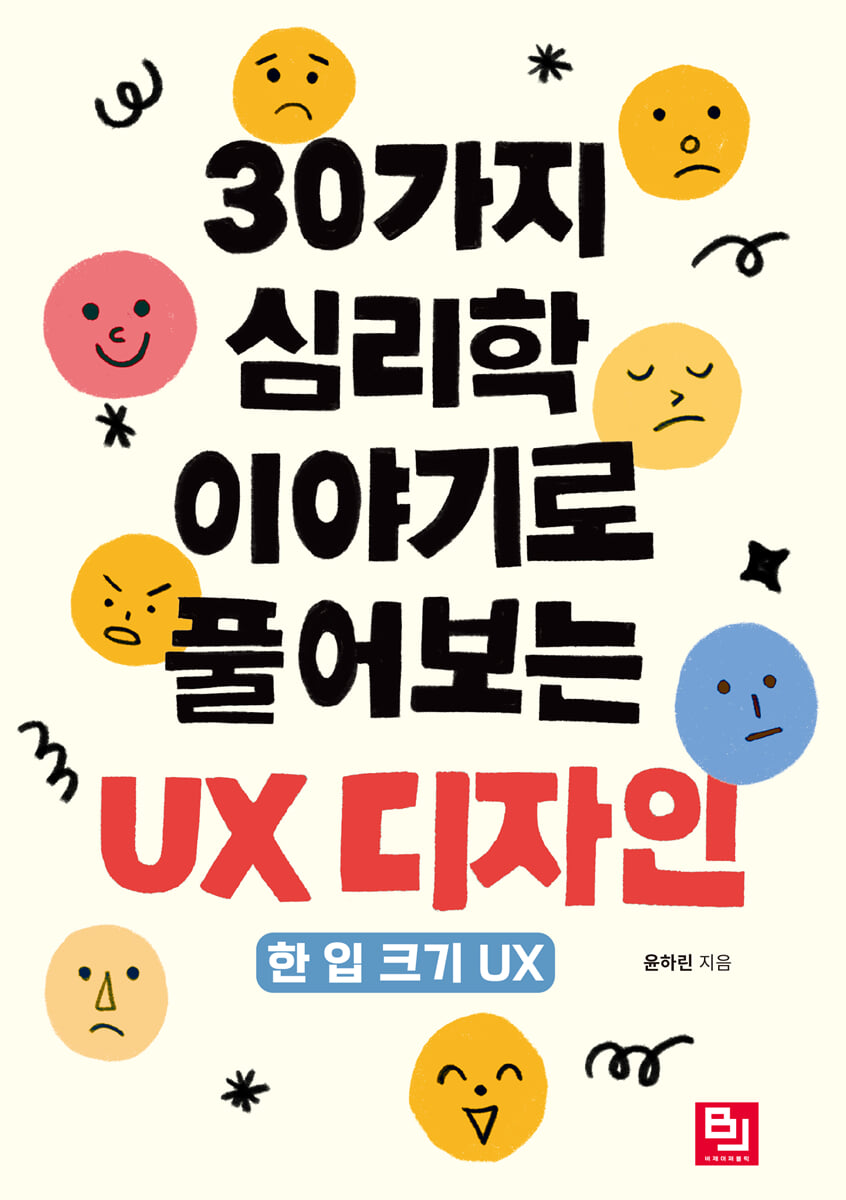
UX Design Explained Through 30 Psychological Stories
 |
Description
Book Introduction
Design that moves the user's heart,
Finding answers in psychology.
Various social media platforms, generative AI like ChatGPT, mobile games, and financial services incorporate not only design strategies like biophilic design and gamification design, but also psychology, including the peak-end law, response resistance, the flaming effect, and the bandwagon effect.
To fully understand users and create captivating services and products that captivate them, we must understand human psychology as well as strategic thinking.
In "UX Design Explained Through 30 Psychology Stories," human emotions and behaviors are divided into five categories: anger, happiness, persuasion, anxiety, and memory, and are combined with service examples.
And it helps you to immerse yourself in the real world and combine the two disciplines through various situations and examples.
Explore the essence of UX design, not just how to use tools, and delve into the core so you can apply it to any background, linking services and products with human psychology.
With this book, we'll delve into the psychology of user experience, using everyday examples to explore the complexities of everyday life, yet deeply enough to provide insight into the depths of our users.
Finding answers in psychology.
Various social media platforms, generative AI like ChatGPT, mobile games, and financial services incorporate not only design strategies like biophilic design and gamification design, but also psychology, including the peak-end law, response resistance, the flaming effect, and the bandwagon effect.
To fully understand users and create captivating services and products that captivate them, we must understand human psychology as well as strategic thinking.
In "UX Design Explained Through 30 Psychology Stories," human emotions and behaviors are divided into five categories: anger, happiness, persuasion, anxiety, and memory, and are combined with service examples.
And it helps you to immerse yourself in the real world and combine the two disciplines through various situations and examples.
Explore the essence of UX design, not just how to use tools, and delve into the core so you can apply it to any background, linking services and products with human psychology.
With this book, we'll delve into the psychology of user experience, using everyday examples to explore the complexities of everyday life, yet deeply enough to provide insight into the depths of our users.
- You can preview some of the book's contents.
Preview
index
Chapter 1: UX that makes users angry
1 A typhoon caused by the designer's flapping wings
2 It may have been easy to come in, but it's not easy to leave.
3 What if my daily life was broadcast live without me knowing?
4. Twenty questions have started, what is the cheapest price?
5 Boomerang Throws with Failed Power Control
6 It ain't over till it's over
Chapter 2: UX that Makes Users Happy
1. The reason why the manager asks us to go hiking every weekend
2 Reasons why I am addicted to fishdom
3. Give and Take of Services
4 The Psychology Hidden in Data Settlement Services
5 Services that Save Users in the Chaos of the Attention Economy
6 My Friend AI
Chapter 3: UX that Persuades Users
1. Why a UX that's just too fast is bad
2 UX that whips users
3 Dull↘dull↘dududu→ What is this song?
4 King's Eye on the Road
5 Reasons Why the Stanley Tumbler Reversed Its Trend
6. Price Design That Leads to Overconsumption
Chapter 4: UX that makes users anxious
1. Modern people's Hamlet syndrome
2 You wouldn't make such a stupid choice, would you?
3. Design that does not tolerate mistakes
4 Why Proper Shutdown Timing Is Important
5 Dark Patterns to Induce Purchases
6. Forced Design vs. Confident Design
Chapter 5: UX that Users Remember
1 How to Deal with Negative Users
2. A service that communicates through senses
3. Glamour in simplicity, simplicity in glamour
4 Plan, remember, and act
5 How to Digest Information
6. The longer you look at something, the more beautiful it becomes. The same goes for service.
1 A typhoon caused by the designer's flapping wings
2 It may have been easy to come in, but it's not easy to leave.
3 What if my daily life was broadcast live without me knowing?
4. Twenty questions have started, what is the cheapest price?
5 Boomerang Throws with Failed Power Control
6 It ain't over till it's over
Chapter 2: UX that Makes Users Happy
1. The reason why the manager asks us to go hiking every weekend
2 Reasons why I am addicted to fishdom
3. Give and Take of Services
4 The Psychology Hidden in Data Settlement Services
5 Services that Save Users in the Chaos of the Attention Economy
6 My Friend AI
Chapter 3: UX that Persuades Users
1. Why a UX that's just too fast is bad
2 UX that whips users
3 Dull↘dull↘dududu→ What is this song?
4 King's Eye on the Road
5 Reasons Why the Stanley Tumbler Reversed Its Trend
6. Price Design That Leads to Overconsumption
Chapter 4: UX that makes users anxious
1. Modern people's Hamlet syndrome
2 You wouldn't make such a stupid choice, would you?
3. Design that does not tolerate mistakes
4 Why Proper Shutdown Timing Is Important
5 Dark Patterns to Induce Purchases
6. Forced Design vs. Confident Design
Chapter 5: UX that Users Remember
1 How to Deal with Negative Users
2. A service that communicates through senses
3. Glamour in simplicity, simplicity in glamour
4 Plan, remember, and act
5 How to Digest Information
6. The longer you look at something, the more beautiful it becomes. The same goes for service.
Detailed image

Publisher's Review
Anger, happiness, persuasion, anxiety, memory
Direct and colorful situations and examples in five categories
When we examine everyday products that provide a good experience through theoretical frameworks like psychology or ergonomics, we often discover secrets to user experience that meet users' needs.
If author Oh Ui-taek's "UX×AI Insight," published last July, summarized the secrets into answers and rules, then "UX Design Explained Through 30 Psychology Stories" explores ways to get closer to users through service and product examples commonly encountered in everyday life.
Chapter 1 examines the UX and psychology behind user frustration, including terms and conditions agreement UI, subscription renewal notifications, and accommodation booking services.
And in Chapter 2, we'll explore product design that leverages natural elements, user experiences that captivate and ultimately immerse users, gift-like rewards, and the psychology of following trends.
In Chapter 3, you'll learn how to reduce anxiety and build trust in your service, and in Chapter 4, you'll learn principles for reassuring users, including confirmation shaming examples and 10 usability heuristics.
In the final five chapters, we explore and research what kind of UX users remember, using situations and examples related to psychological theories such as negativity bias, sensory appeal, and the picture superiority effect.
Direct and colorful situations and examples in five categories
When we examine everyday products that provide a good experience through theoretical frameworks like psychology or ergonomics, we often discover secrets to user experience that meet users' needs.
If author Oh Ui-taek's "UX×AI Insight," published last July, summarized the secrets into answers and rules, then "UX Design Explained Through 30 Psychology Stories" explores ways to get closer to users through service and product examples commonly encountered in everyday life.
Chapter 1 examines the UX and psychology behind user frustration, including terms and conditions agreement UI, subscription renewal notifications, and accommodation booking services.
And in Chapter 2, we'll explore product design that leverages natural elements, user experiences that captivate and ultimately immerse users, gift-like rewards, and the psychology of following trends.
In Chapter 3, you'll learn how to reduce anxiety and build trust in your service, and in Chapter 4, you'll learn principles for reassuring users, including confirmation shaming examples and 10 usability heuristics.
In the final five chapters, we explore and research what kind of UX users remember, using situations and examples related to psychological theories such as negativity bias, sensory appeal, and the picture superiority effect.
GOODS SPECIFICS
- Date of issue: September 1, 2025
- Page count, weight, size: 320 pages | 148*210*30mm
- ISBN13: 9791165923310
- ISBN10: 1165923319
You may also like
카테고리
korean


korean

![ELLE 엘르 스페셜 에디션 A형 : 12월 [2025]](http://librairie.coreenne.fr/cdn/shop/files/b8e27a3de6c9538896439686c6b0e8fb.jpg?v=1766436872&width=3840)


